
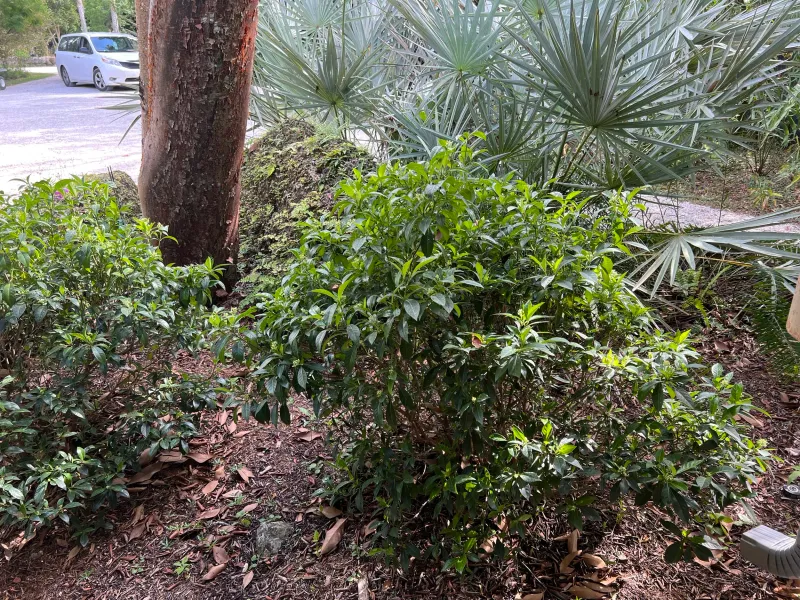
A privacy hedge can do more than hide the neighbor’s driveway. The right Florida native shrubs also give birds food, nesting spots, and shelter while making your yard feel greener.
Some handle salty breezes, others welcome damp soil, and several fit neatly beside a patio. Pick the ones that match your part of Florida, and you can build a living screen with more to offer than clipped ligustrum.
1. Wax Myrtle
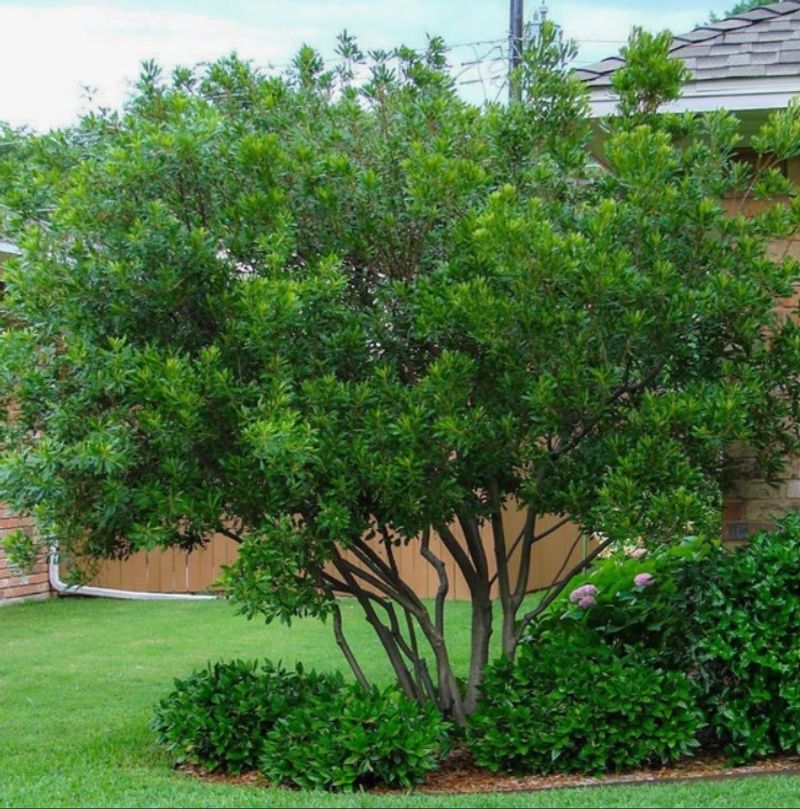
Need to soften a long fence without waiting forever? Wax myrtle (Morella cerifera) grows fairly quickly and develops a loose, leafy screen that feels more like a woodland edge than a green wall.
This evergreen Florida native often reaches 10 to 20 feet tall, sometimes more, so give it room away from windows and narrow walkways. It grows in sun or partial shade and handles a broad range of soils, including sandy ground and occasionally wet areas.
Female plants produce small, waxy fruits that feed birds, including yellow-rumped warblers. Male and female flowers usually occur on separate plants, so ask a native nursery about fruiting plants and nearby pollen sources rather than assuming every shrub will carry berries.
For privacy, allow branches to remain close to the ground instead of pruning every plant into a small tree. Water during establishment, then adjust irrigation to your soil and rainfall; established plants generally need little extra water in suitable sites.
Its main trade-off is size. Choose it for a roomy boundary, and prune selectively rather than repeatedly shearing it into a tight box.
2. Yaupon Holly
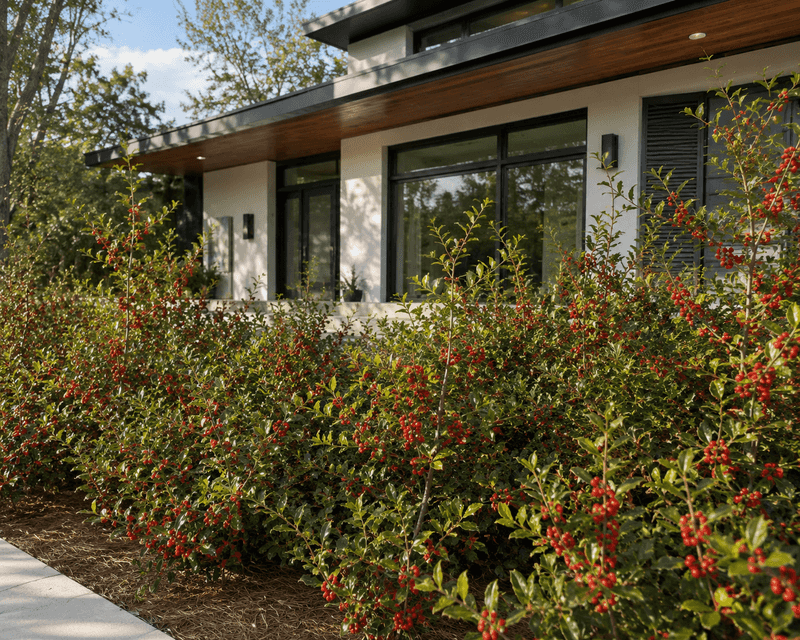
Bright red berries can turn a plain boundary into the busiest corner of the winter garden. Yaupon holly (Ilex vomitoria) pairs that seasonal color with small evergreen leaves and branches that offer birds useful cover.
Full-size plants commonly reach 15 to 20 feet, with some growing taller. For a screen, buy a standard upright form rather than a dwarf cultivar, since many dwarf selections stay too short and may not produce fruit.
Yaupon suits much of Florida and tolerates sun, partial shade, drought after establishment, and a range of soils. A sunny position usually encourages denser growth, which matters when your goal is blocking a driveway or neighboring patio.
Only female plants bear berries, and they need compatible male pollen nearby. Ask the nursery to help you select fruiting females and a male plant if your neighborhood lacks yaupons.
Birds eat the fruit, but it is not a snack for people. Keep the hedge broad at its base, remove unwanted suckers as needed, and use light pruning instead of constant clipping so you preserve flowering and fruiting wood.
3. Dahoon Holly
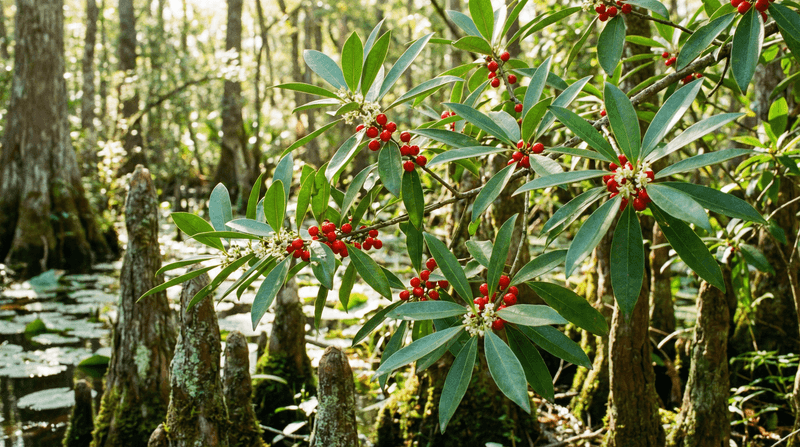
A low spot that stays damp after rain calls for a different plant than a hot, dry fence line. Dahoon holly (Ilex cassine) is a strong candidate for that wetter corner, where its evergreen foliage can build a tall, attractive screen.
Although often sold as a small tree, dahoon can serve as a large screening plant when its lower branches remain intact. Expect roughly 20 to 30 feet at maturity, so place it where that eventual height makes sense.
Its natural habitats include swamps and other moist areas across Florida. Plant in sun or partial shade, and do not treat it as a drought-proof choice for an unirrigated ridge of loose sand.
Female plants carry red fruits that birds eat, provided a male pollen source is available. Buying identified plants is the simplest way to plan for berries rather than leaving the outcome to chance.
Use dahoon behind shorter shrubs to block higher sight lines while the front layer fills gaps near the ground. It tolerates wet conditions, but a suitable planting site still matters; saltwater flooding and every poorly drained landscape are not interchangeable with its freshwater habitat.
4. Simpson’s Stopper
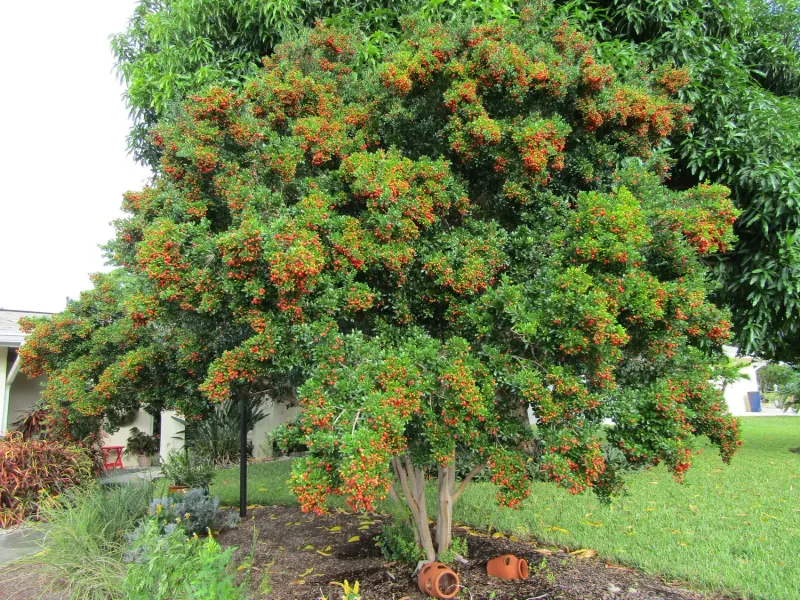
Privacy beside a patio should look good up close, too. Simpson’s stopper (Myrcianthes fragrans) brings small evergreen leaves, fragrant white flowers, and orange-red fruits to a screen you can enjoy from a chair.
Best suited to Central and South Florida, it can grow into a large shrub or small tree, often reaching 10 to 20 feet. Cold exposure and plant selection affect performance, so gardeners near its northern limits should ask a local native nursery about suitability.
Give it sun or partial shade and well-drained soil. Once established, it handles dry spells well, making it useful where sandy soil drains quickly but the planting still needs a polished appearance.
Birds eat the fruits, while flowers attract pollinating insects. Repeated hard shearing removes much of that benefit, so trim lightly and let the plant keep some of its natural outline.
For a dense screen, choose nursery plants branched near the base rather than specimens trained with bare trunks. Leave enough space for mature width, and keep new plants watered through establishment instead of expecting immediate drought tolerance after planting.
5. Walter’s Viburnum
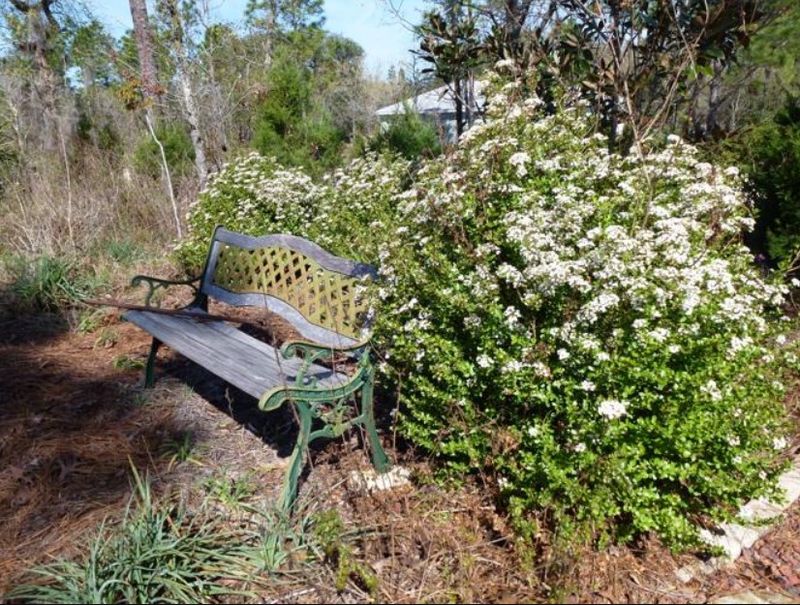
Clouds of tiny white flowers make a working hedge feel like part of the garden rather than just a barrier. Walter’s viburnum (Viburnum obovatum) offers that spring display along with dense branching that shelters small birds.
The full-size species can reach about 10 to 20 feet, while named cultivars range from compact mounds to taller screens. Check the mature size on the label carefully, because a three-foot selection will not hide a six-foot fence.
It is especially useful in North and Central Florida, with suitability farther south depending on local conditions. Foliage may remain evergreen or become partly deciduous during cold weather, so do not promise yourself identical winter coverage in every location.
Plant in sun or partial shade with steady moisture during establishment. It tolerates a range of soils and can spread by suckers, which helps form a thicket but may require control beside a narrow bed.
Small fruits ripen dark and provide food for birds when present. If shaping is needed, prune after flowering rather than repeatedly clipping throughout the year, and leave some flowered branches to develop fruit.
6. Wild Coffee
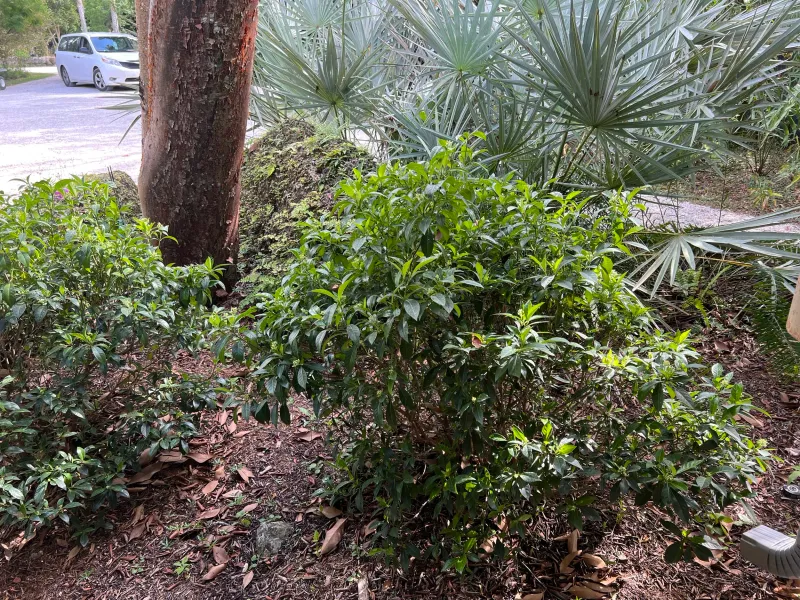
Under a tree canopy, many sun-loving hedge plants turn thin and disappointing. Wild coffee (Psychotria nervosa) takes a different approach, using broad, glossy leaves to fill a shaded border with rich green texture.
This frost-sensitive native belongs mainly in warm Central and South Florida landscapes. It commonly grows about 4 to 8 feet tall, making it useful for screening a seating area or the lower portion of a fence rather than an upstairs window.
Partial shade is a comfortable fit, especially where intense afternoon sun would stress the foliage. Provide well-drained soil and enough moisture during establishment; drought tolerance later does not mean a newly planted shrub can be ignored.
Small white flowers support insects, and the red fruits attract birds. Despite the familiar name, this plant is not the source of commercial coffee and should not be treated as a substitute kitchen crop.
Group several plants in a broad bed for a fuller visual barrier. Let fallen leaves remain as mulch where practical, and place wild coffee behind a lower border if you want its informal outline to look more intentional.
7. Florida Privet
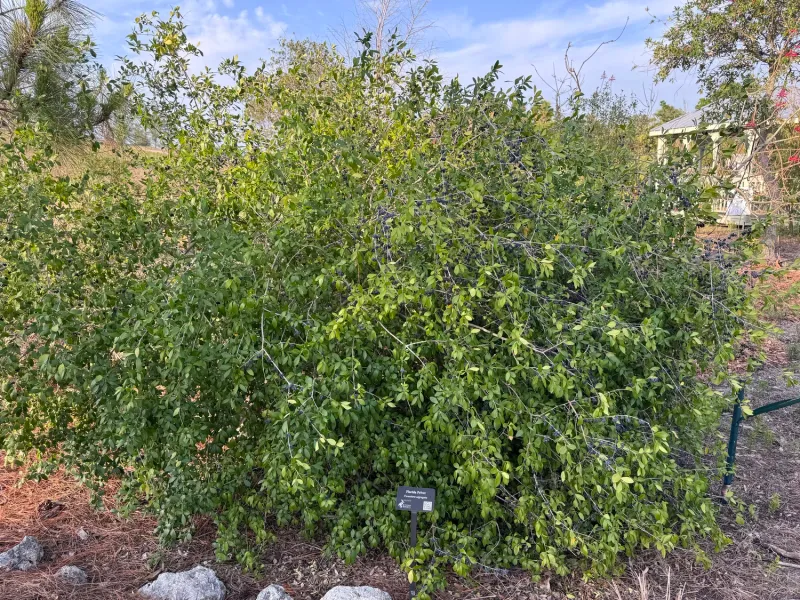
The name sounds like a step back toward ligustrum, but Florida privet (Forestiera segregata) is a different native plant. Its small leaves and twiggy growth make it a useful choice for gardeners who want a hedge-like appearance without planting another Ligustrum.
Often reaching 8 to 15 feet, it fits sunny or partly shaded boundaries in warmer parts of Florida. It handles well-drained sandy soil, established drought, and coastal exposure, though direct oceanfront conditions still deserve a site-specific recommendation.
Female plants produce dark fruits that birds eat when a male pollen source is nearby. Its branching also supplies shelter, giving the planting value even when fruit is absent.
Expect a looser, more seasonal look than a tightly clipped evergreen wall. Florida privet can lose some foliage during cold or dry conditions, so pair it with reliably evergreen neighbors if uninterrupted coverage is essential.
Use selective pruning to encourage fullness without removing every flower-bearing tip. Before buying, check the botanical name on the tag, since common names involving privet can easily lead to the wrong plant at a general garden center.
8. Cocoplum
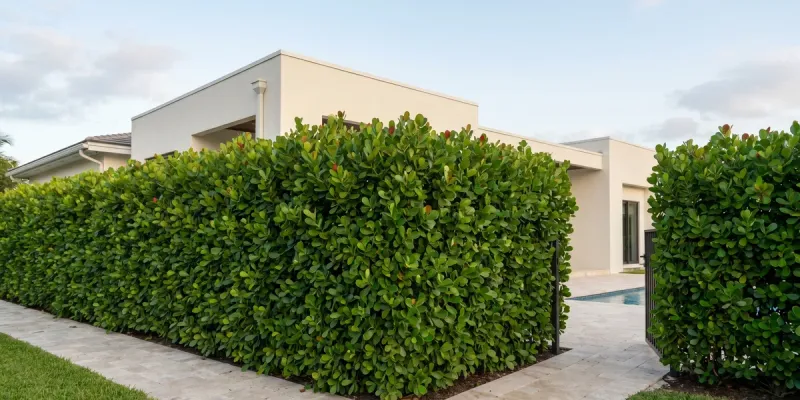
For a broad-leaved screen with a distinctly South Florida look, cocoplum earns its space. Chrysobalanus icaco forms a thick evergreen mass, and its rounded leaves give a softer finish than many small-leaved hedge plants.
Upright selections commonly grow 10 feet or taller and can conceal a fence or neighboring outdoor area. Buy carefully: low-growing coastal forms are useful groundcovers, but they will not deliver the same tall privacy screen.
Cocoplum prefers sun to partial shade and is best suited to frost-free or nearly frost-free locations. Salt tolerance varies among forms, so ask for a selection matched to your distance from the coast rather than assuming all cocoplums perform alike.
The plumlike fruits provide food for birds and other wildlife. Flowers also draw insects, adding another food source around the hedge without requiring a separate flower bed.
Allow enough bed width for its substantial growth. Light shaping can keep paths clear, but frequent tight shearing reduces flowers and fruit; for a more useful wildlife hedge, accept a slightly relaxed outline and prune only where branches interfere with access.
9. Marlberry
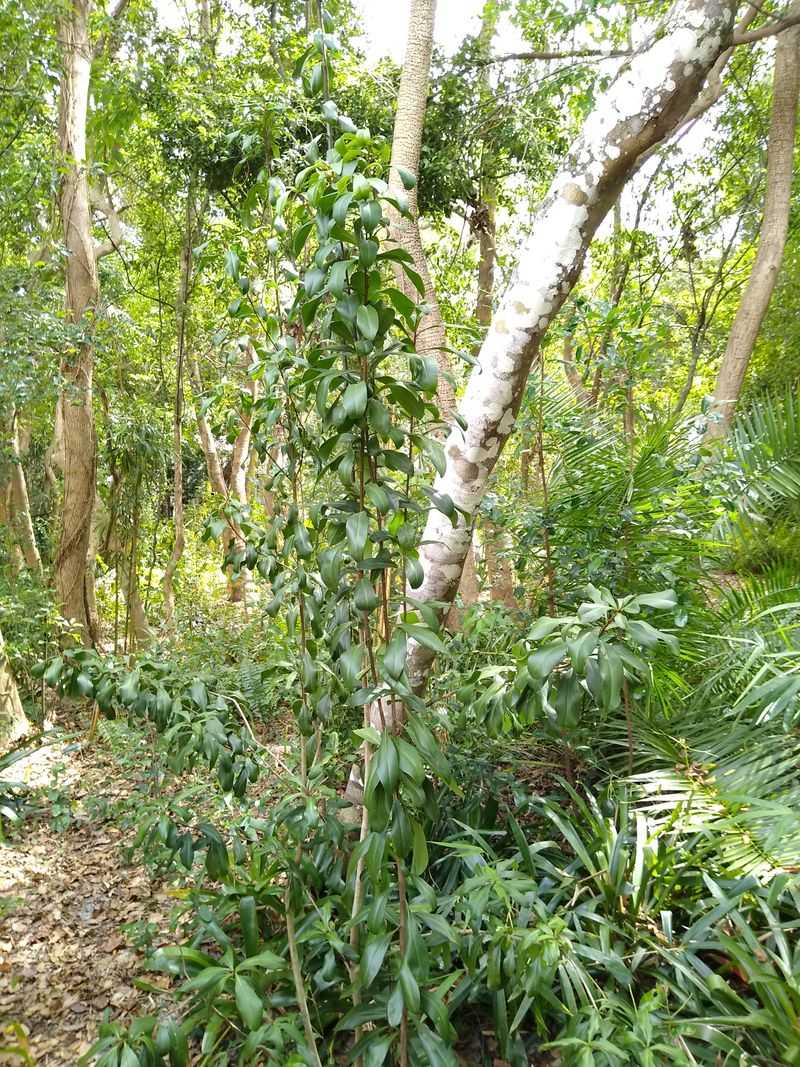
A narrow view into the neighbor’s yard can be hardest to hide where trees already cast shade. Marlberry (Ardisia escallonioides) is worth considering for that sheltered spot, especially in warm Central and South Florida.
Its large evergreen leaves create a bold backdrop, while fragrant pale flowers and dark ripe fruits add seasonal interest. Birds eat the fruit, and the leafy branches contribute cover within a layered backyard habitat.
Marlberry can reach roughly 10 to 20 feet, sometimes taller in favorable conditions. It works best as an informal screen with room to develop, not as a tiny hedge squeezed between a wall and a walkway.
Choose partial shade and well-drained soil, then water regularly while roots establish. Protect young plants from cold exposure near the northern edge of their useful landscape range, and seek locally grown stock when possible.
Check the label for Ardisia escallonioides so you do not confuse it with invasive coral ardisia. For a stronger screen, combine marlberry with other site-matched natives from this list, leaving enough space for each plant’s mature spread rather than crowding them for instant coverage.