
A backyard screen can do more than hide the neighbor’s fence. Florida’s native trees can bring birds, flowers, and year-round greenery while giving you the privacy you want.
Podocarpus is not native to Florida, and it is far from your only choice. These ten native trees and tree-form shrubs offer options for different parts of the state, from damp inland yards to warm coastal lots.
1. Wax Myrtle
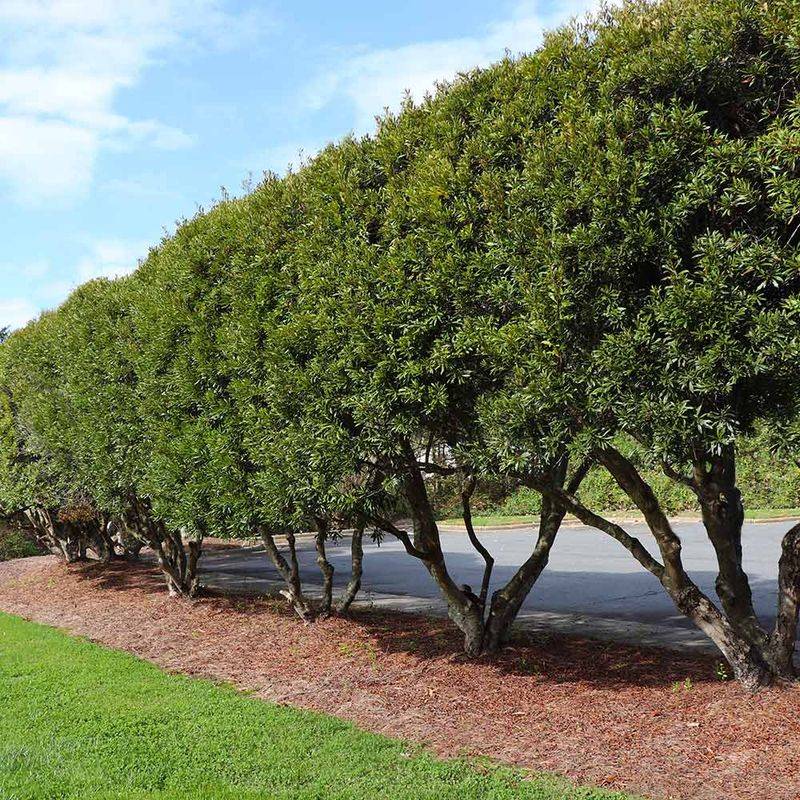
Need to soften a fence without waiting for a slow-growing tree to catch up? Wax myrtle earns its place with relatively quick growth and a leafy, informal shape.
Its fine-textured foliage looks especially natural along a roomy property line.
Morella cerifera grows across Florida and commonly reaches about 10 to 20 feet tall, sometimes more. Give it sun or partial shade, and expect the fullest screening where light reaches the lower branches.
It handles a broad range of soils, including sandy sites, once established.
Female plants produce small, waxy fruits that feed birds when a compatible male is nearby. Ask the nursery about plant sex if berries are part of your plan.
The aromatic leaves add another small reward when brushed or lightly crushed.
Allow enough width for a broad shrub or small tree rather than squeezing it into a narrow strip. Selective pruning usually suits it better than constant shearing.
Water during establishment, keep mulch away from the stems, and remember that fast growth does not make any tree storm-proof.
2. Yaupon Holly
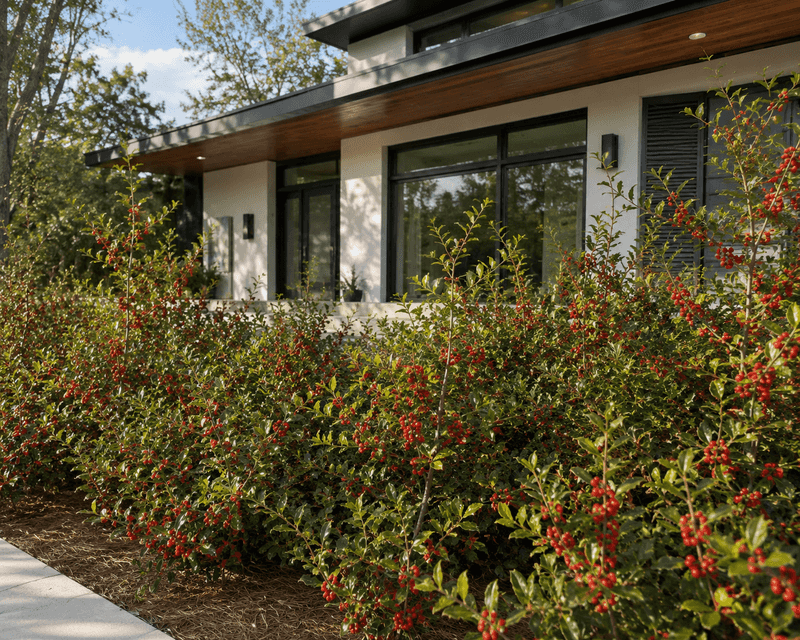
A neat yard does not have to mean a tightly clipped wall. Yaupon holly can provide a tidy evergreen backdrop while keeping the softer outline of a small native tree.
Its small leaves make light pruning less visually obvious than on many large-leaved plants.
Choose Ilex vomitoria in its full-size form if privacy is the goal. Many nursery selections are dwarf plants meant for low borders, not tall screens.
Standard plants often grow 15 to 25 feet tall, with a spread that deserves real space.
Yaupon is particularly useful in North and Central Florida, where it tolerates heat, periods of drought after establishment, and several soil types. Sun encourages thicker growth, though partial shade can work.
Avoid assuming that tolerance of occasional wet soil means it belongs in a permanently flooded spot.
Female plants carry red fruit when pollinated by a nearby male. Birds use the berries, but people and pets should not eat them.
Keep the lower limbs if you want ground-level privacy, and thin crowded branches instead of repeatedly shaving the outside into a dense shell.
3. Dahoon Holly
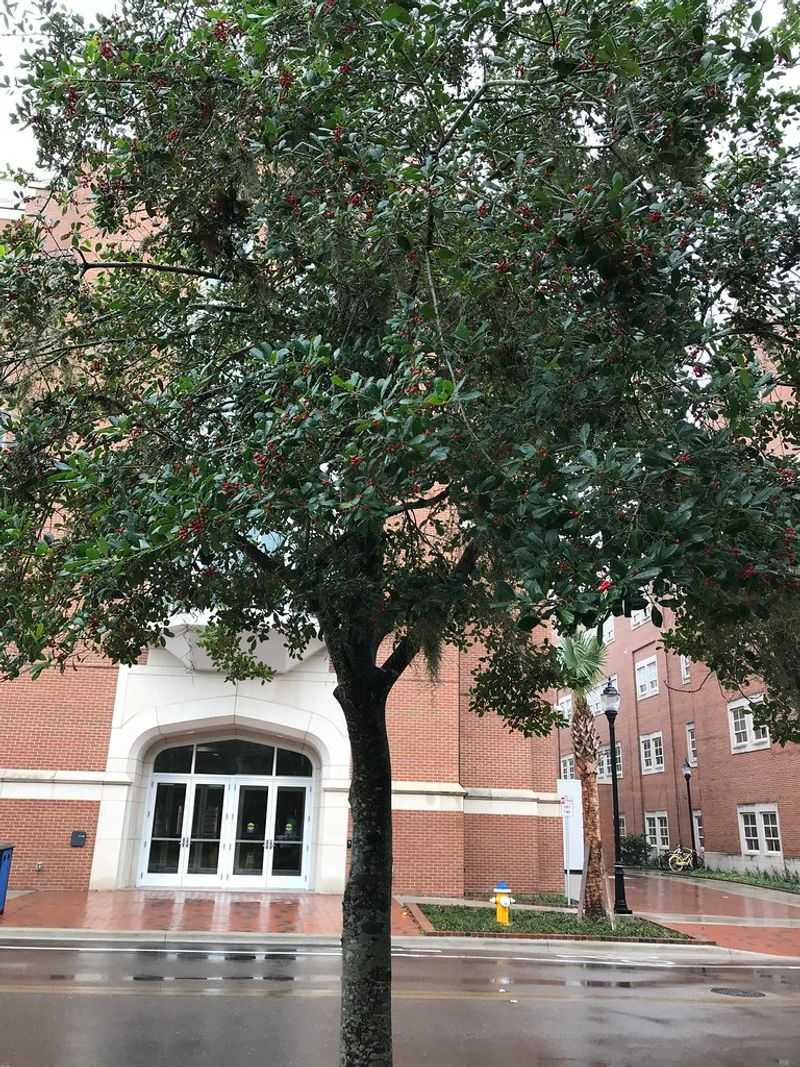
That damp corner near the back fence may be better suited to a holly than another struggling hedge. Dahoon holly naturally occurs in wet habitats, making it a useful choice where moisture stays available.
It brings glossy leaves and a more upright outline to a privacy planting.
Ilex cassine commonly reaches about 20 to 30 feet in landscapes, though older trees can grow taller. It is native across much of Florida and accepts sun or partial shade.
Unlike a drought-focused screen, it needs extra attention on hot, fast-draining sand.
For a stronger visual barrier, retain low branches and combine several trees with moisture-loving native shrubs. A single tree with a raised canopy will block an upstairs view better than it hides a person standing at the fence.
Plan the planting around the view you actually want to cover.
Red berries develop on female trees when a male supplies pollen. Confirm fruiting expectations with the nursery rather than relying on one isolated plant.
Where irrigation is limited and the soil dries quickly, choose another species instead of making dahoon fight the site.
4. Southern Redcedar
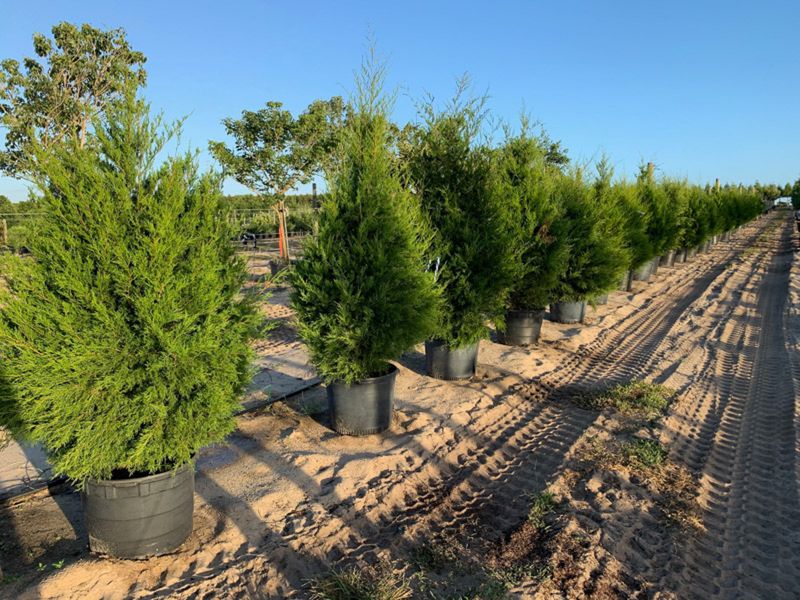
For a taller screen with a strong outline, a native evergreen conifer changes the whole look of the boundary. Southern redcedar has fine foliage and a naturally tapered crown that contrasts with the broad leaves of most Florida hedge plants.
It works best where the yard has room for a real tree.
Often listed as Juniperus virginiana var. silicicola, it can reach roughly 30 to 50 feet tall. Mature width varies, so check the nursery’s information before deciding on spacing.
Planting large trees shoulder to shoulder creates crowding, not a lasting shortcut to privacy.
Sunny, well-drained sites are its strong suit, including many coastal locations. Established trees tolerate drought and salt exposure, but young trees still need regular establishment care.
A soggy depression is a poor substitute for the drainage this tree prefers.
Protect the lower branches because they provide much of the screening value. Do not cut deeply into bare old wood and expect a fresh green surface to return.
Keep its eventual size clear of overhead wires, and use a mixed planting if you need coverage below an older tree’s canopy.
5. Simpson’s Stopper
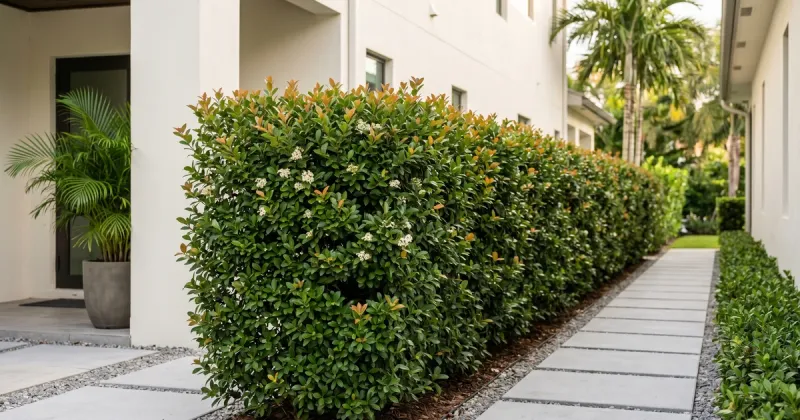
Privacy beside a patio should feel pleasant up close, not just look solid from the street. Simpson’s stopper adds fragrant white flowers, colorful fruit, and attractive bark to its screening duties.
It is a good candidate when your outdoor seating sits near the planting bed.
Myrcianthes fragrans is native to Central and South Florida and can grow as a large shrub or small tree. Landscape plants often reach 10 to 20 feet, with taller growth possible over time.
Choose a full-size selection rather than a compact cultivar if you need substantial height.
Sun to partial shade works, provided the soil drains well. Established plants handle some dry weather, but nursery-grown plants need watering while their roots spread.
Exposed sites near the colder edge of its range deserve extra caution.
Leave several stems and low branches for a fuller screen, or reveal a little bark where complete coverage is unnecessary. Birds visit the fruit, and flowers attract insects.
Light shaping after flowering is usually more useful than constant shearing, which removes much of the display that makes this plant special.
6. Spanish Stopper
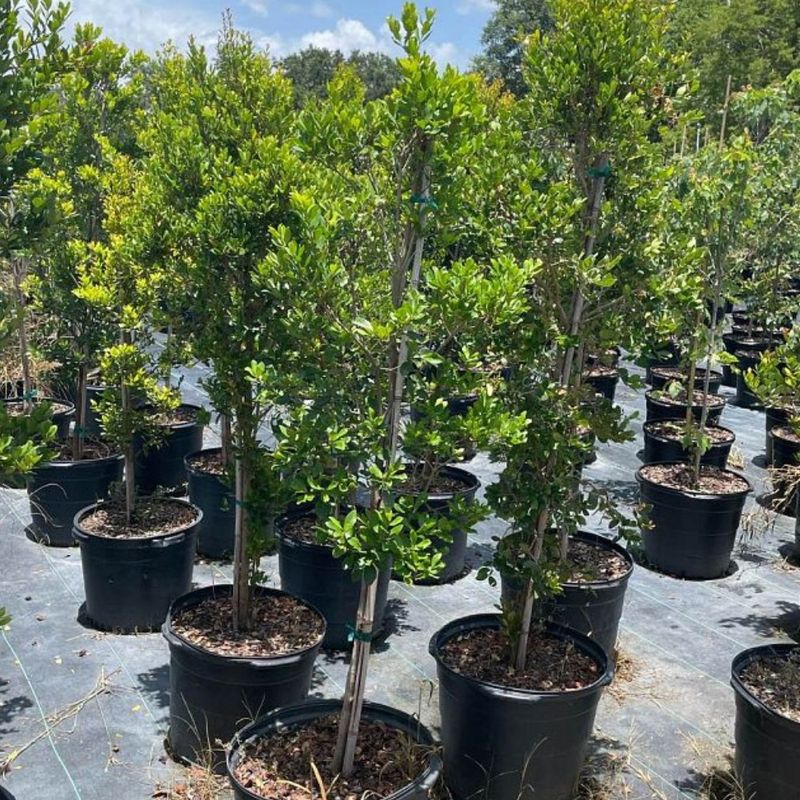
A narrow side yard calls for an upright plant, not a broad tree that spends its life being cut back. Spanish stopper offers a relatively slim natural form with small evergreen leaves.
It can help soften a close neighboring wall without taking over as much ground as a spreading canopy tree.
Eugenia foetida belongs in warm parts of Central and South Florida, with local cold exposure guiding the final decision. It commonly reaches about 10 to 20 feet in cultivation, though mature specimens can exceed that.
Confirm expected width before treating it as a solution for a tiny gap.
Give it sun or partial shade and well-drained soil. It is useful in many coastal gardens and can handle dry conditions after establishment.
Persistent wet feet are a different matter, so avoid low spots that stay saturated.
Small flowers and dark fruit add wildlife value without a large, showy display. Keep pruning selective and preserve foliage near the base for screening.
In a side yard, leave access for painting, fence repairs, and air-conditioning service rather than planting right against the building.
7. Florida Privet
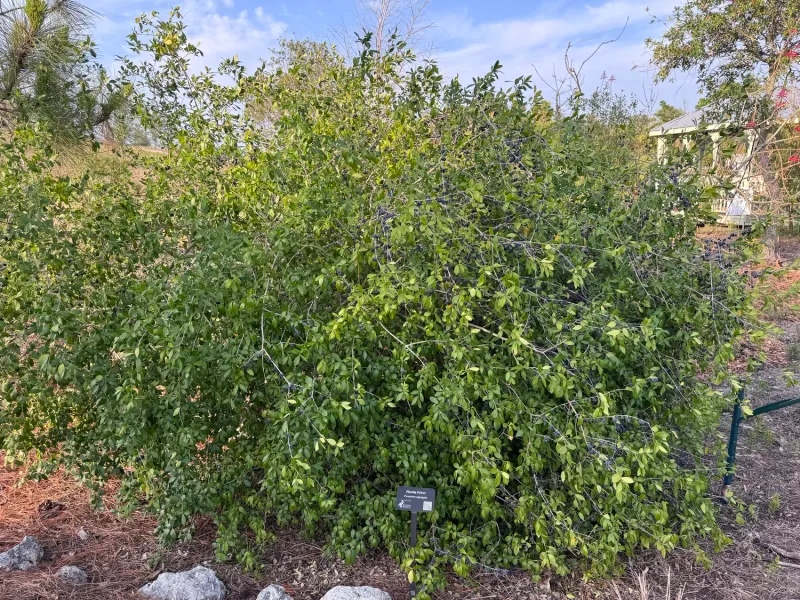
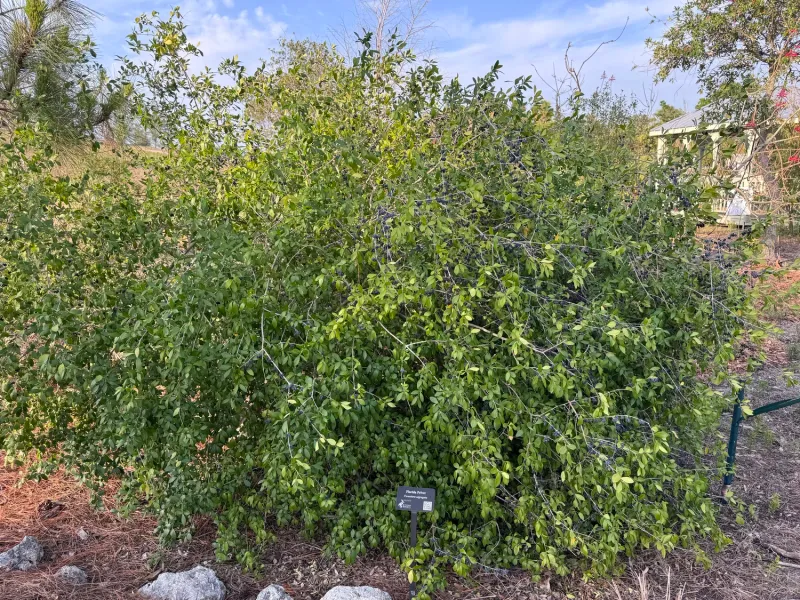
The word privet can cause confusion at the garden center. Florida privet is Forestiera segregata, a native species, not one of the nonnative Ligustrum plants often sold under similar common names.
Checking that botanical name is the first useful step.
Its appeal is a dense, twiggy framework that can become a large shrub or small tree. Plants often reach 10 to 15 feet, sometimes taller, and suit informal boundaries where a little natural texture is welcome.
It is especially useful in Central and South Florida landscapes, including many coastal settings.
Full sun helps build a thicker screen, while partial shade is also possible. Give it drainage and enough water to establish, then adjust irrigation to rainfall and soil conditions.
Cold or drought can cause some leaf loss, so do not promise yourself an equally solid wall every week of the year.
Female plants bear dark fruits when pollinated, attracting birds to the boundary. Use occasional thinning to manage shape instead of forcing a rigid rectangle.
For more dependable visual coverage, pair it with another locally suitable evergreen rather than relying on a single-species row.
8. Cocoplum
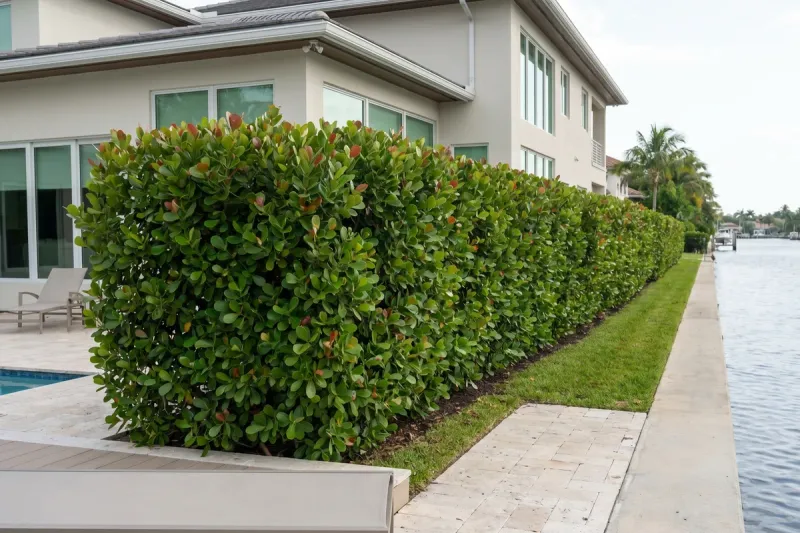
Broad, rounded leaves give a boundary a lush look that fine-leaved hedges cannot match. Cocoplum delivers that effect in warm Florida gardens, along with plum-like fruits that wildlife may visit.
Its dense growth makes it especially useful for hiding everyday clutter beyond the fence.
Chrysobalanus icaco is native to South Florida and can grow as a shrub or small tree. Many landscape selections reach around 10 to 15 feet, with larger sizes possible.
It is not a dependable statewide substitute for podocarpus because freezing weather can damage it.
Choose the form carefully. Low-growing coastal forms are useful groundcovers but will not produce the tall privacy screen pictured on a nursery sign for another selection.
Salt tolerance and growth habit also vary, so ask which plant you are buying.
Sun usually gives the densest growth, though light shade can work. Provide a generous bed and water while roots establish, then prune to keep the base wider than the top.
That shape lets sunlight reach lower leaves and helps prevent a leafy roof over bare stems.
9. Sweetbay Magnolia
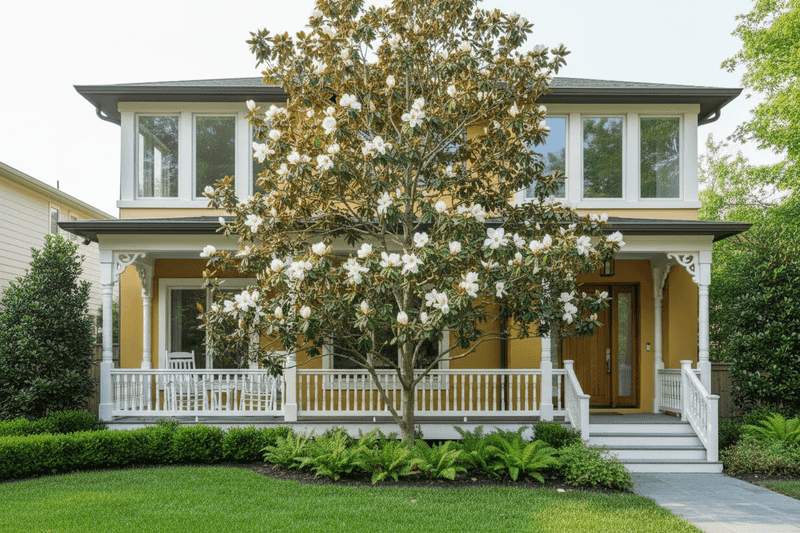
Some boundaries need a leafy woodland edge rather than a hedge. Sweetbay magnolia brings fragrant, creamy flowers and leaves with pale undersides that flash in the breeze.
It is a softer choice for a broad planting bed where privacy can come from several layers.
Magnolia virginiana is native to Florida and favors moist, acidic soil. In Florida, it can become a substantial tree, often 40 feet or more, rather than staying within the smaller sizes listed for northern gardens.
Leave room for its mature crown and keep it away from utility lines.
Foliage retention varies with climate and growing conditions. Trees are generally more evergreen in warmer areas, but they should not be treated as guaranteed year-round walls everywhere.
Combine them with lower evergreen natives if winter screening matters.
A sunny to partly shaded site with reliable moisture is a better match than a dry, alkaline strip beside a driveway. Preserve low branching where practical and avoid repeatedly topping the tree to hedge height.
Choose it for a spacious, natural screen, not a tight formal boundary.
10. American Holly
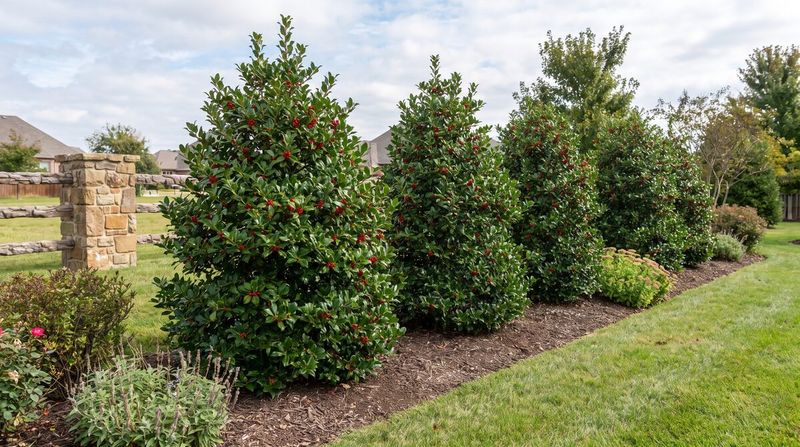
When a nearby roofline needs hiding, a small hedge may never reach the right height. American holly offers a larger, long-term screen with a naturally pyramidal shape.
Its evergreen leaves and red berries also bring a familiar woodland look to North Florida yards.
Ilex opaca is best considered for North Florida and suitable parts of Central Florida, not as a blanket recommendation for the tropical south. It commonly grows 30 to 50 feet tall over time.
Growth is generally slower than wax myrtle, so this is a patient gardener’s choice.
Provide acidic, well-drained soil with reasonable moisture and sun to partial shade. Highly alkaline fill can lead to poor performance, making a soil test worthwhile before buying several trees.
Female plants need a compatible male nearby to produce berries.
Keep the lower limbs if privacy is the main job, and allow space for the mature spread. The spiny leaves make placement beside a narrow walkway less appealing.
Before ordering any screen on this list, compare its mature size and site needs with your county UF/IFAS Extension guidance and the actual conditions along your fence.