
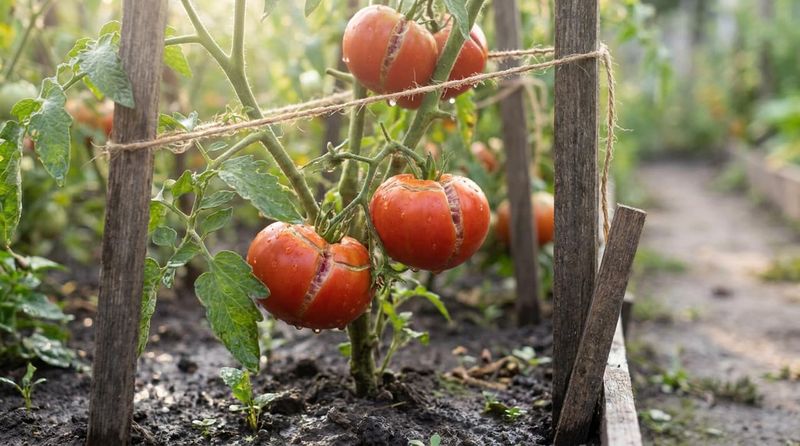
A tomato that looked perfect on Monday can be split down the shoulder by Thursday. Heavy rain is one common trigger, and fall gardeners in the South often get it just as the crop is finishing.
Picking fruit that has started to change color before a downpour may reduce the damage. Here is how to do that, and what else to watch for.
Fall tomato timing varies across Texas and Florida
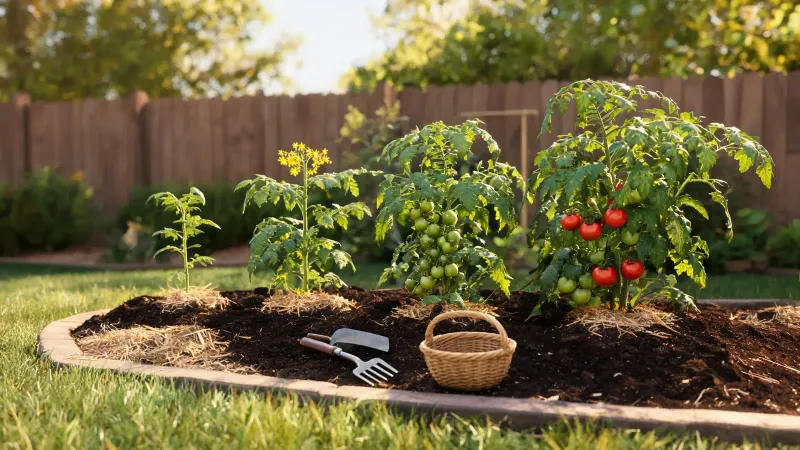
Not every Southern gardener has tomatoes on the vine in November. Central Texas guidance from Texas A&M AgriLife Extension lists fall planting in July and August, with harvest running from October until the first frost.
Other parts of Texas follow different calendars.
Florida varies even more. UF/IFAS lists different open-field planting windows for north, central and south Florida, and notes that north Florida’s July to December fall season can be difficult.
So treat November as an example, not a rule. Fall tomatoes are realistic in some areas, and heavy rain is not typical or imminent everywhere in either state.
Check your own planting date, your local forecast, and how much fruit is actually close to ripe.
Rain can contribute to cracking, but it is not the only cause
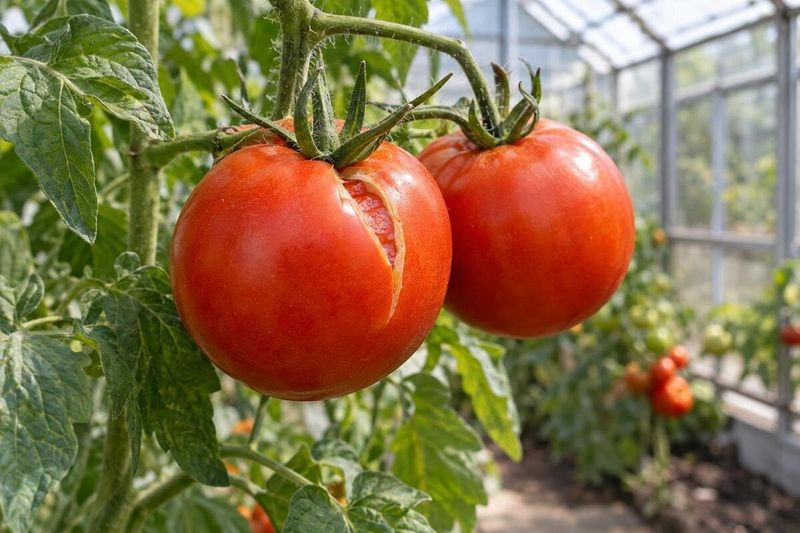
Picture a balloon filled too fast. When soil has been dry and a heavy rain arrives, the plant takes up water quickly and the fruit swells faster than its skin can stretch.
The skin then splits, as Iowa State Extension explains in its guidance on cracking.
Rain is only one possible trigger. Any big swing in moisture can do it, including uneven watering from a hose or irrigation system.
Other factors change the odds too. UC IPM points to variety, fruit maturity, heat, and sun exposure as part of the picture.
A large-fruited type sitting in hot sun may split sooner than a shaded one.
That is why a split tomato does not always mean the rain was to blame. Looking at the whole growing situation helps you pick the right fix.
Recognize the different kinds of cracks
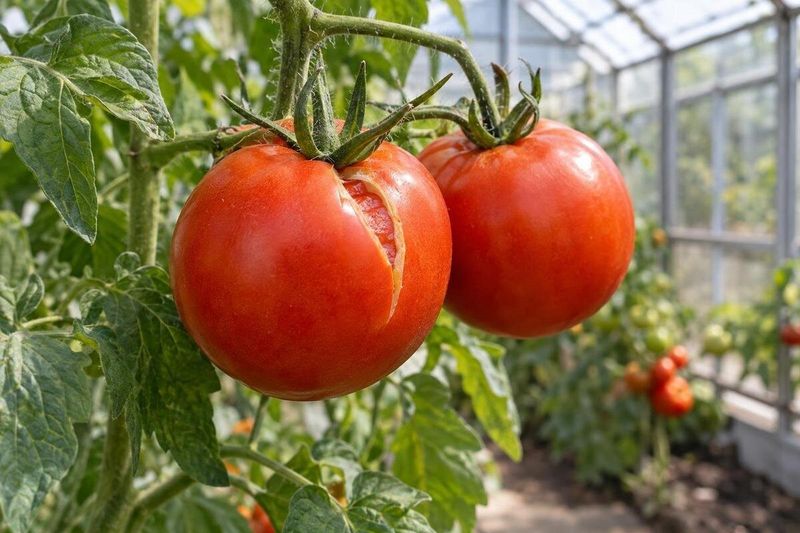
Cracks come in a few shapes, and each tells you something. Radial cracks run outward from the stem end like spokes.
Concentric cracks circle the shoulder of the fruit, as described in a University of Delaware fact sheet.
Then there are fine, shallow lines called rain check. University of Maryland Extension notes these can show up even on green fruit.
Cracking is a physiological disorder, not necessarily a disease. Your plant is not automatically infected just because the skin split.
UConn Extension covers growth cracks in the same way.
Depth still matters. A deep opening exposes the flesh inside, and that raises the chance of rot.
Shallow healed lines are a much smaller worry than a wide, wet split.
Harvest color-changing fruit before forecast heavy rain
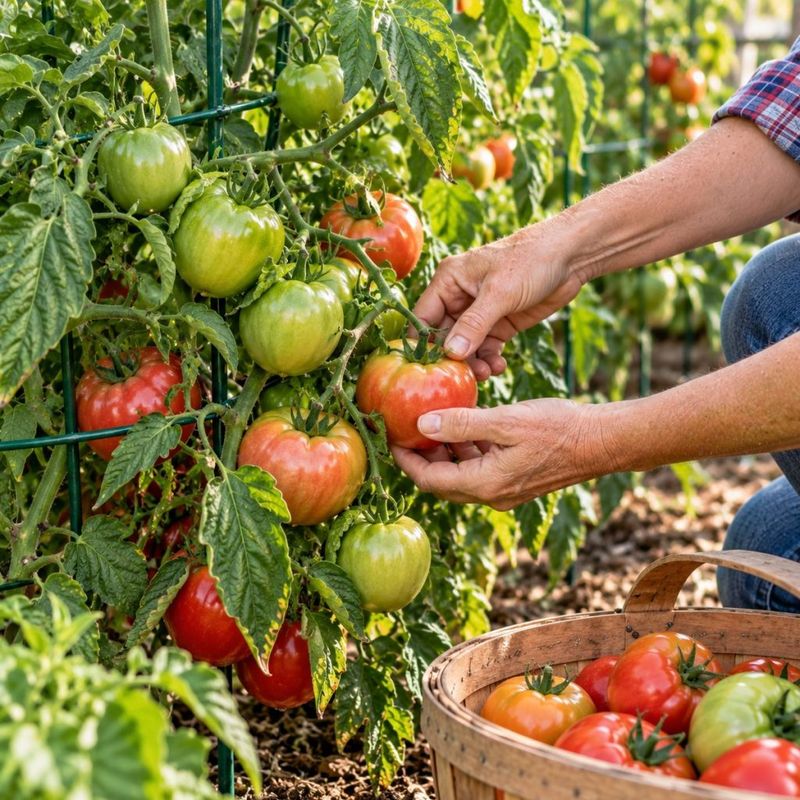
When the forecast shows a downpour, walk the rows first. Pick tomatoes that have begun changing color, including breaker-stage fruit with its first pink or orange tint.
Missouri Extension recommends harvesting nearly ripe fruit before rain, and Illinois Extension gives similar advice.
Here, first blush means fruit that has started to change color. A full-sized green tomato with no color is not ready.
This may reduce exposure to cracking, but it will not protect every tomato. Fruit can crack before it ever blushes, and rain check damage can appear on green fruit.
Check the plants again after the rain. Look for new splits and pick anything that is starting to open before it spoils.
Ripen suitable harvested tomatoes indoors
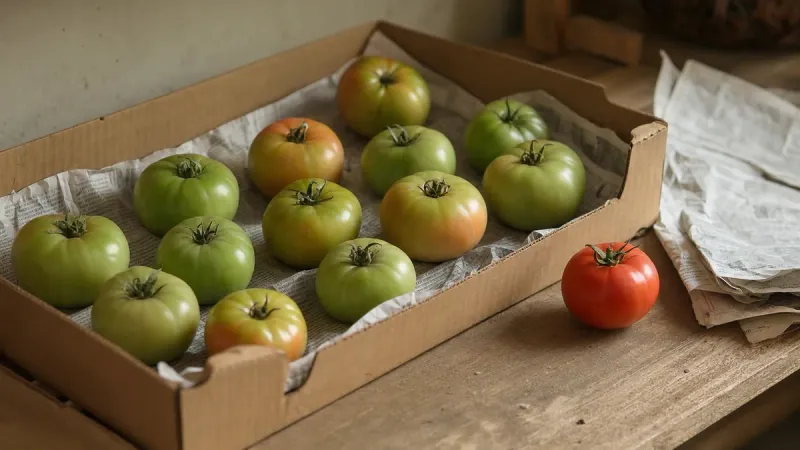
Breaker-stage tomatoes can finish ripening off the vine. Colorado State Extension says mature-green fruit may ripen indoors too, and describes it as shiny green, while matte green fruit is not yet mature.
Immature green tomatoes may never ripen well.
Set the fruit in a single layer at room temperature, out of direct sun. Check daily and use the ripest first.
Expect some difference in taste. Colorado State says breaker fruit can ripen without flavor loss, but Missouri Extension cautions that nearly ripe fruit may be less flavorful than vine-ripened.
Results vary by variety and harvest stage. A tomato that ripens on the counter is usually still better than one split and spoiled on the vine.
Inspect cracked tomatoes promptly and handle them cautiously
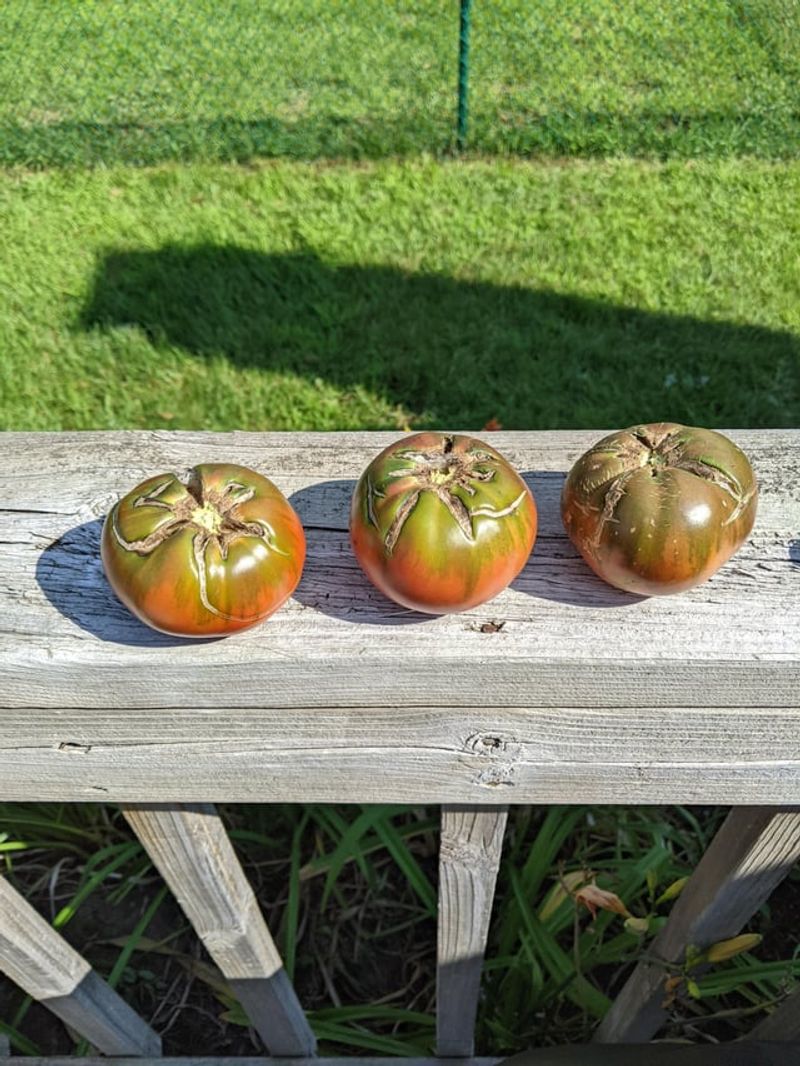
After a storm, go through the crop within a day or so. Look at each split.
Is it shallow and dry, or deep and open?
Do not assume every cracked tomato is safe. North Carolina Extension says cracked fruit can be used promptly if spoiled portions are discarded.
Texas A&M’s safe-handling guidance advises avoiding cracked tomatoes because damaged fruit spoils quickly and may carry pathogens.
Throw out anything moldy, oozing, sour-smelling, very soft, or badly damaged. For fruit you keep, wash your hands and the fruit, cut away damage, and use it soon rather than storing it.
When in doubt, toss it. One lost tomato costs far less than a bad stomach.
Moderate moisture swings to lower future risk
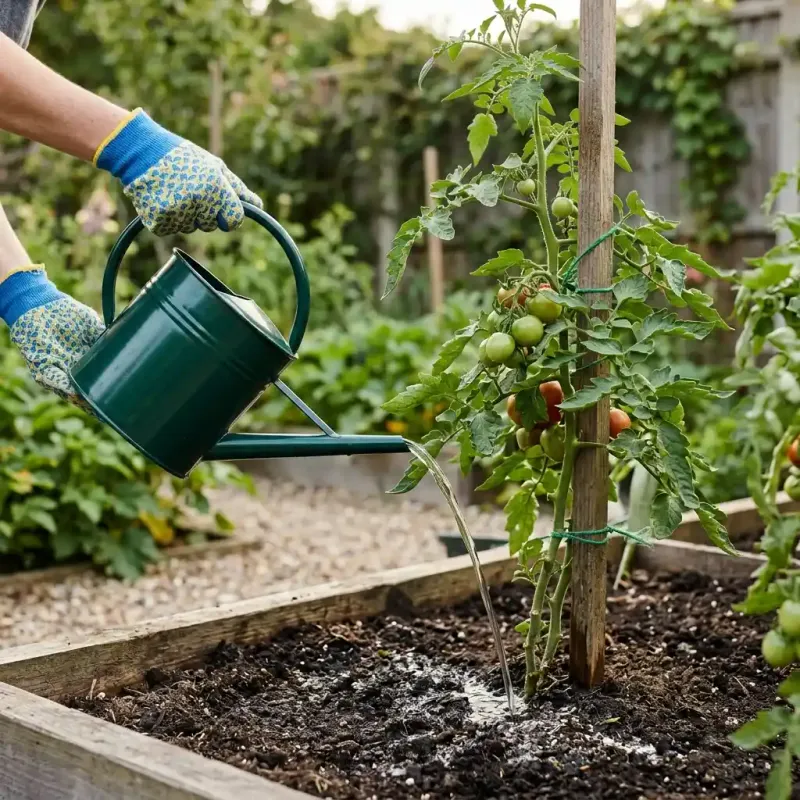
Steady moisture is the best long-term defense. Water on a regular schedule so soil does not swing from bone dry to soaked, a point stressed by Iowa State Extension.
A few inches of mulch slows evaporation and softens the effect of sudden rain. Avoid overwatering, since soggy soil causes its own trouble.
Keep leaves healthy, because good leaf cover shades fruit from strong sun. UC IPM lists these practices among ways to limit cracking.
Next season, consider varieties described as crack-resistant. Large-fruited types are often more prone, though University of Delaware Extension notes cherry tomatoes can crack as well.
None of this guarantees perfect fruit. It simply stacks the odds a bit in your favor.