
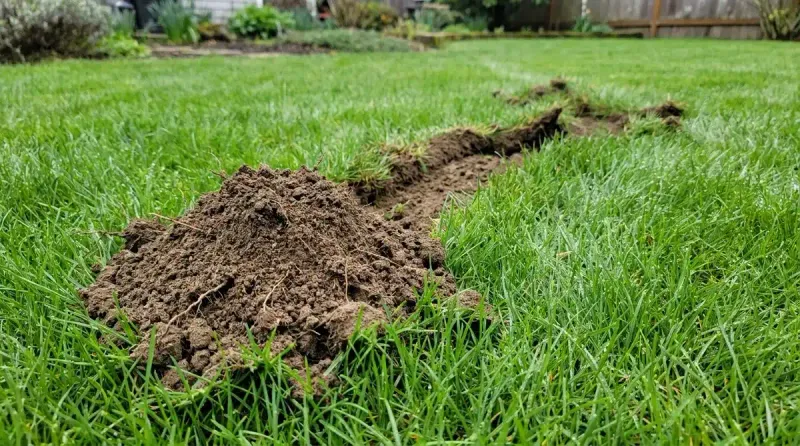
Walking across your yard on a cool fall morning and feeling the ground shift beneath your feet is unsettling, especially when you spot long, winding ridges pushing up through the turf. Those raised trails are a sign that something is actively working just below the surface, and figuring out what it is matters before you reach for any control method.
Moles are the most likely explanation in most lawns, but Southern homeowners in Florida, coastal Georgia, and Texas have another serious possibility to consider. A quick, careful look at the evidence can save you time, money, and a lot of misplaced effort.
Raised soil ridges make moles the leading suspect
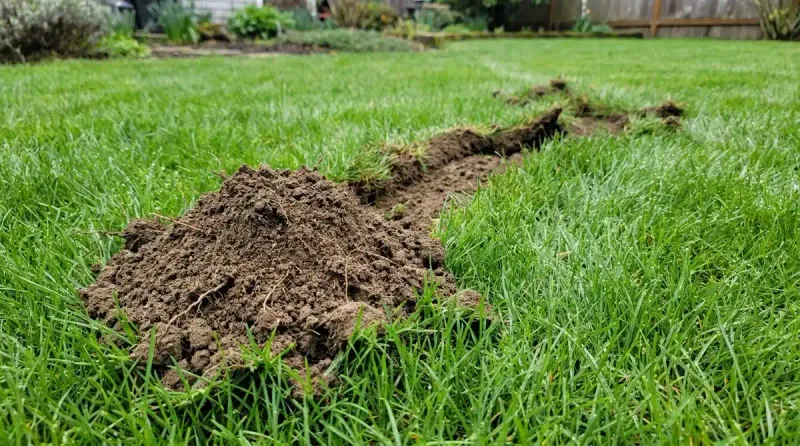
A branching, meandering ridge that pushes soil upward just beneath the turf and feels loose or spongy underfoot is one of the most recognizable signs of mole activity. Moles dig shallow feeding tunnels close to the surface, and as they work, they press soil outward and upward, creating those tell-tale raised lines across the yard.
Rutgers Cooperative Extension guidance on mole management notes that these surface tunnels may form an irregular, branching network and that the surrounding soil often feels loose or spongy.
Even so, a raised ridge by itself does not prove that moles are responsible, and it does not mean the problem demands immediate treatment. Moles primarily eat earthworms, grubs, and other soil invertebrates rather than grass roots.
The turf injury you see, including brown strips, thinning patches, or dried-out grass, mostly results from the physical disruption of tunneling and from roots being lifted away from the moisture they need.
Much of the damage is cosmetic. University of Minnesota Extension’s turf diagnostics tool confirms that raised bumps in turf are commonly linked to burrowing animals and that not all visible ridges require intervention.
Before reaching for a trap or a product, spend a few minutes walking the lawn and noting where the ridges run, whether the turf is actually dying, and whether the pattern keeps spreading.
Compare the ridge with other animal signs
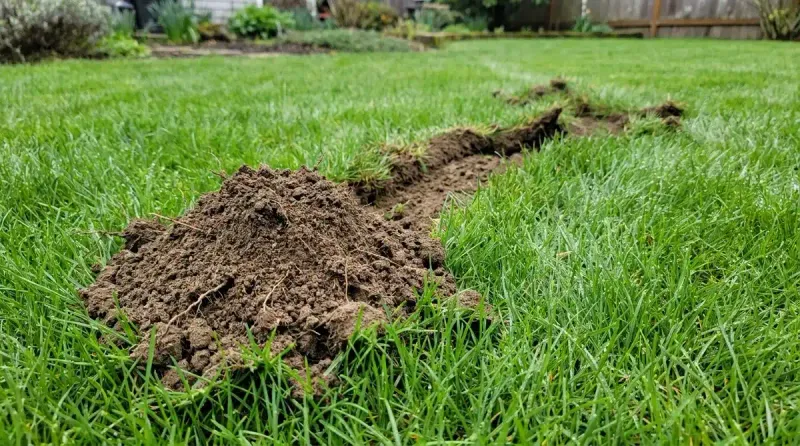
Not every raised trail or disturbed patch of lawn points to a mole. Getting the identification right before acting is the single most useful thing you can do, because the correct control depends entirely on the correct animal.
University of Maryland Extension’s guide to animals digging in lawns lays out the key distinctions clearly: the shape of the disturbed soil, the presence or absence of a true subsurface ridge, and any feeding evidence all matter more than the general feeling that the ground seems soft.
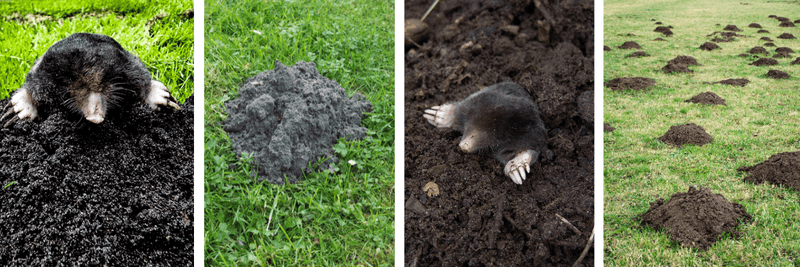
Mole activity often comes with rounded or volcano-shaped soil mounds near tunnel openings. These mounds are symmetrical, with the opening roughly centered.
Pocket gophers, by contrast, tend to leave crescent- or fan-shaped mounds where the plugged opening is offset to one side rather than centered. UC Agriculture and Natural Resources explains that gophers also feed directly on roots and plant parts, unlike moles, which target animal prey underground.
Voles present a completely different picture. They typically leave narrow surface runways that run through grass, thatch, or mulch at ground level rather than pushing up a true soil ridge.
Look for clipped vegetation along the runway edges, small burrow openings, and rice-shaped droppings. Vole runways do not normally lift the soil, so if you can see the grass blades pressed flat but the ground itself is not raised, voles become a more likely explanation than moles.
Flatten a suspected ridge to assess activity
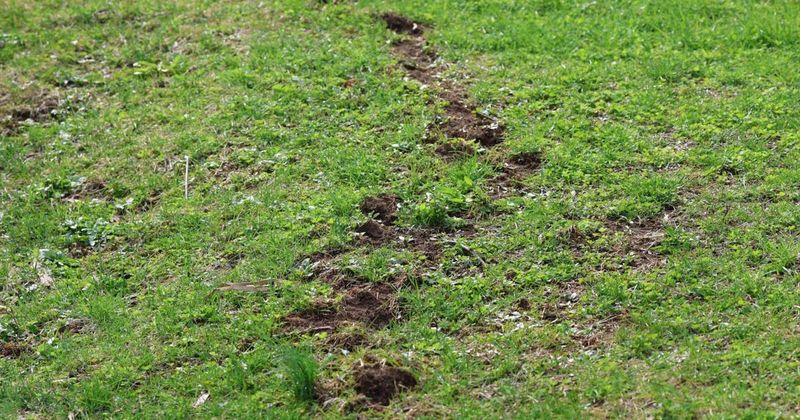
Before placing any trap or spending money on control, press down a short section of the suspected tunnel with your foot and mark the spot. Check it again the next morning.
If the ridge has reopened or the soil has lifted again in that area, active use is more likely, which makes the tunnel worth targeting if you decide to intervene.
This test, recommended by UC IPM’s integrated pest management guidance for moles in turf, is a practical way to separate a spreading, active problem from an old or abandoned ridge. Moles may use a shallow feeding tunnel only briefly before moving on to a new section of the yard, so treating every visible ridge can waste effort and cause unnecessary disturbance.
Compressing a section and watching it overnight costs nothing and takes less than a minute.
Keep the result in context, though. A ridge that reopens supports that the tunnel is active, but it does not tell you which animal is responsible, and it does not automatically mean you need to act.
Rutgers Extension notes that mole feeding tunnels may be temporary, and that compressing inactive ridges and repairing the turf is often all that minor or cosmetic damage requires. Use the activity test to focus your attention, not as a trigger for immediate control.
Southern warm-season lawns need a mole-cricket check
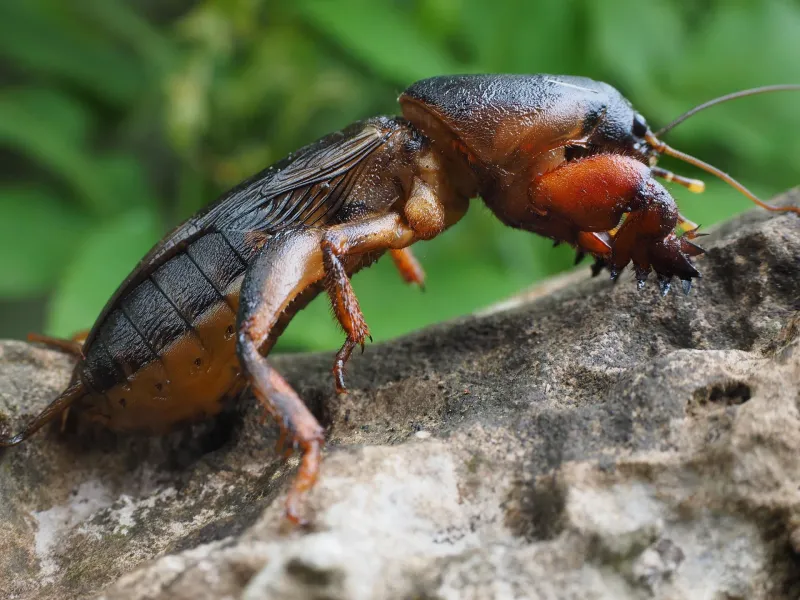
Homeowners in Florida, coastal Georgia, and parts of Texas who spot raised tunnels and dying turf in fall should not assume moles are the only possibility. Mole crickets are insects, not mammals, but they behave in a surprisingly similar way underground.
They tunnel through the upper layer of soil, sever grass roots and shoots as they feed, and can push up narrow raised ridges that look a lot like mole activity at first glance.
The turf damage from mole crickets tends to be more directly destructive than mole tunneling. Grass that pulls up easily, brown patches spreading across the lawn, and a spongy feel in areas where roots have been cut are all consistent with a mole-cricket infestation.
The UF/IFAS Mole Cricket IPM Guide for Florida describes how these insects tunnel close to the surface and cause loosening and death of turf, particularly in bahiagrass and bermudagrass, though other warm-season grasses are also vulnerable.
UF/IFAS Extension’s mole cricket resource identifies late August through early October as a major damage window in Florida, while Texas A&M AgriLife’s mole cricket profile notes that southern mole crickets are concentrated east of a Corpus Christi-San Antonio-Fort Worth line, with tawny mole crickets mainly in southeastern Texas. University of Georgia Cooperative Extension confirms that mole crickets are a significant turfgrass pest across the southeastern Coastal Plain.
Species, latitude, weather patterns, and turf type all affect when and how severely damage appears.
Scout for mole crickets before applying treatment
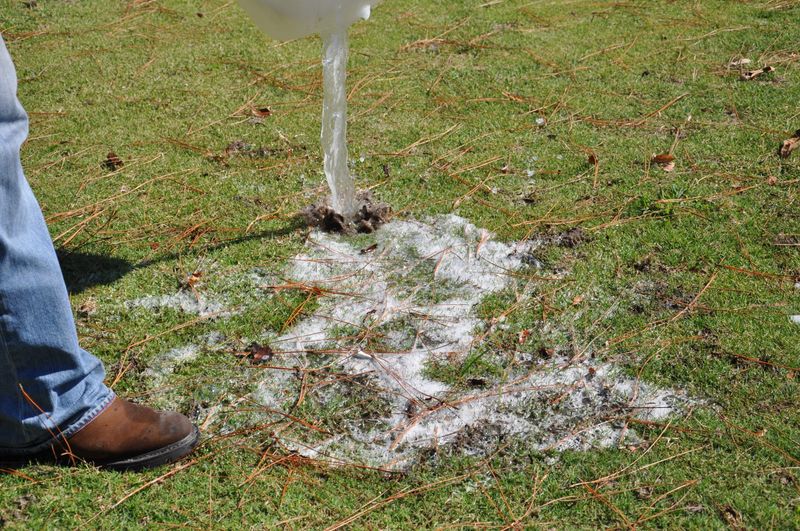
If you are in Florida or a nearby coastal area and suspect mole crickets rather than moles, a soap flush is a straightforward way to check. Mix 1.5 fluid ounces of liquid dish soap with 2 gallons of water and pour the solution evenly over about 4 square feet of the suspect turf.
Watch the area closely for three minutes. Mole crickets irritated by the soapy water will surface, making them easy to count.
UF/IFAS Extension guidance on mole crickets indicates that finding roughly two to four mole crickets in that 4-square-foot area supports considering corrective action. This is a detection step, not a treatment.
The soap itself does not control the population, and a low count in a healthy, undamaged lawn may not require any response at all.
Combine the soap-flush count with a look at actual turf condition. The UF/IFAS Mole Cricket IPM Guide emphasizes that treatment decisions should be based on confirmed insects and unacceptable turf injury together, not on the presence of a few tunnels alone.
If the grass pulls up easily, brown patches are spreading, and the flush produces several insects, those factors together build a case for action. If the turf looks reasonably healthy and the count is low, monitoring and repeating the test in a week or two is a proportionate response.
Trap active moles only when damage justifies control
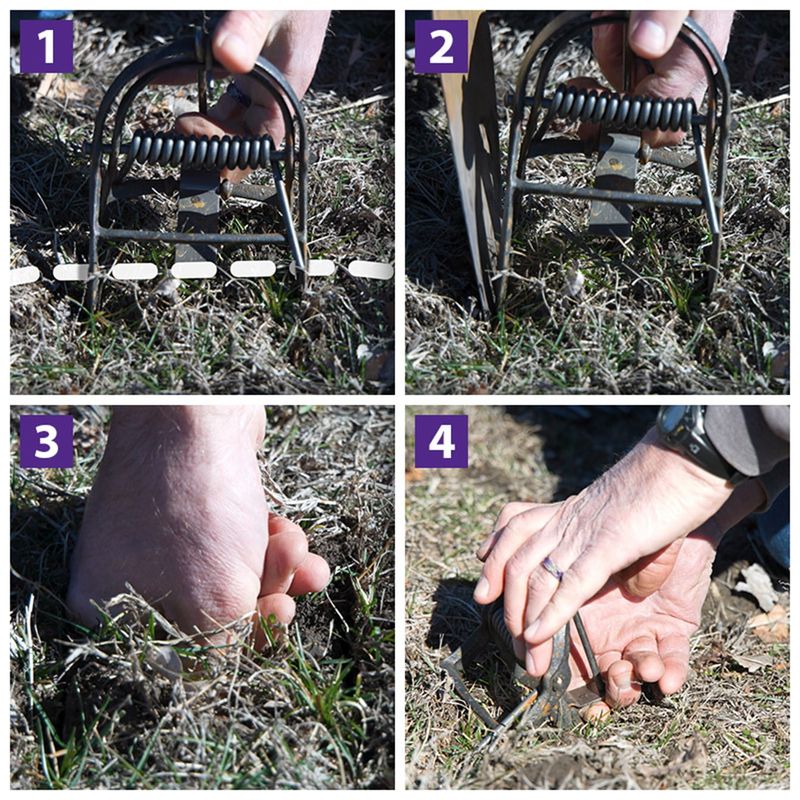
Once you have confirmed active mole tunnels and decided that the damage is significant enough to address, trapping is the most dependable option available. Missouri Department of Conservation guidance on mole control describes trapping as the most reliable method when intervention is warranted, and that framing matters: traps belong in confirmed active tunnels, not scattered randomly across every visible ridge in the yard.
The activity test from the previous section guides placement. After you flatten a section and confirm that it reopened, that tunnel is a reasonable candidate for a trap.
Placing a trap in an abandoned tunnel wastes time and does not address the animal. Common trap types include scissor-jaw and harpoon designs, and following the manufacturer’s instructions for setting depth and trigger sensitivity improves results considerably.
Not every mole problem warrants trapping. UC IPM’s mole management guidance and Rutgers Extension both note that compressing inactive ridges and repairing exposed turf may be sufficient when damage is minor or limited to cosmetic disruption.
The practical threshold for intervention is damage that interferes with mowing, exposes roots, kills a meaningful area of turf, or creates an appearance problem that cannot be addressed by simply flattening and reseeding. A few raised ridges that flatten easily and are not spreading do not necessarily require a trap.
Avoid shortcuts that target the wrong pest
A common mistake after spotting lawn tunnels is reaching for whatever product or trick seems quickest. Grub-control insecticides are a frequent first choice, but applying them to chase moles away is unlikely to work.
Missouri Department of Conservation’s mole control guidance explains that moles eat a wide variety of soil invertebrates, including earthworms, so removing grubs alone does not eliminate their food supply or reliably drive them out. Broad insecticide applications to control a mammal can also harm the lawn ecosystem and beneficial organisms without solving the problem.
Castor oil, ultrasonic or vibration stakes, mothballs, flooding tunnels, sharp objects, chewing gum, and bleach are equally unreliable. UC Agriculture and Natural Resources confirms that flooding is generally ineffective, especially in sandy or deeply connected tunnel systems.
Mothballs deserve a specific warning: they are not registered for outdoor wildlife repelling, and using them outside their labeled application sites can violate federal pesticide law.
Mole control and mole-cricket control also require completely different approaches. Any insecticide for mole crickets must be selected for that specific pest, applied according to the current product label, and registered for use in your state.
Before applying anything, confirm the target pest, read the full label, and follow all precautions for people, pets, water, and turf. UF/IFAS guidance on moles in Florida and Texas Parks and Wildlife Department regulations on nuisance fur-bearing animals both make clear that trapping, relocation, and pesticide rules differ by state.
Florida and Texas each impose specific requirements for handling wildlife, so contact your state wildlife agency or a licensed pest management professional before trapping or relocating any animal.
Confirm the pest and match the response to the damage
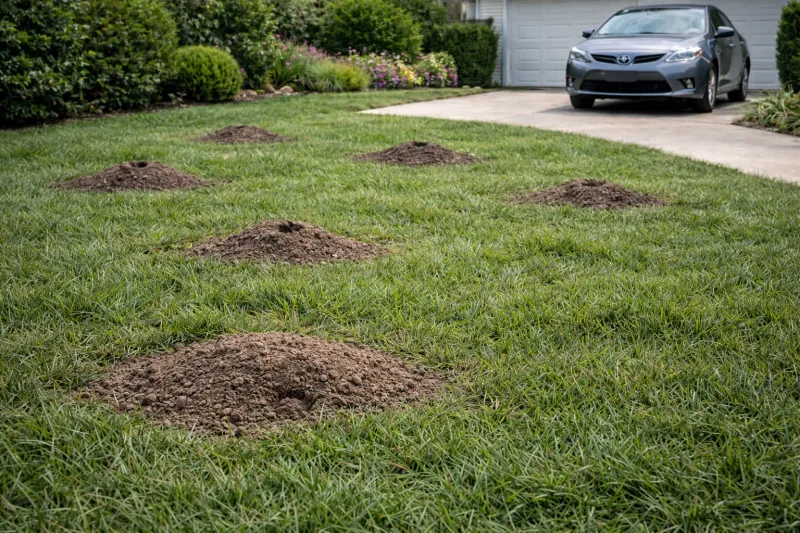
Raised subsurface ridges that push soil upward through the turf favor moles as the leading explanation. Rounded or volcano-shaped mounds near tunnel openings can support that diagnosis, while crescent- or fan-shaped mounds with offset openings, surface runways with clipped grass, or small droppings suggest pocket gophers or voles instead.
University of Maryland Extension’s digging-animals guide is a useful reference for working through those distinctions systematically.
A ridge that reopens after flattening makes active use more likely, but it does not confirm the species or automatically call for control. Southern homeowners in Florida, coastal Georgia, and Texas should run a soap flush before concluding that moles are responsible, because mole crickets produce similar-looking damage in warm-season turf.
The UF/IFAS Mole Cricket IPM Guide and Missouri Department of Conservation mole guidance both reinforce the same principle: confirm the pest and assess real turf loss before escalating.
Minor fall ridges that flatten easily and are not spreading often need nothing more than a boot press and a little patience. The goal is a proportionate response, not a reaction to every disturbance.
A yard that shows you what is living beneath it is telling you something useful, and the right answer starts with listening carefully before acting. UC IPM’s mole resource puts it simply: match the control to the confirmed problem, and repair the turf rather than treating every ridge as an emergency.