
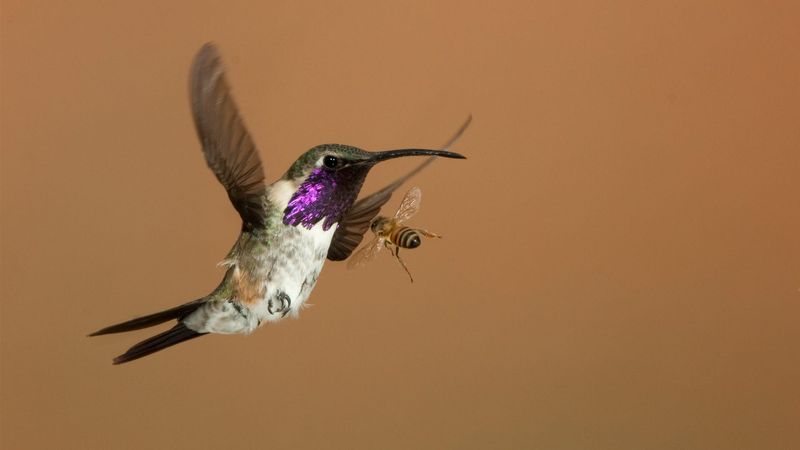
Late summer is prime time to watch hummingbirds fuel up at your backyard feeder, but something else may have already claimed the best spots. Wasps, bees, ants, and other sugar-seeking insects tend to show up in force right around the same time hummingbirds need reliable access most.
The good news is that a few targeted changes to your feeder setup can make a real difference without harming the birds or wiping out every insect in your yard.
Several insects—not one pest—can crowd a hummingbird feeder
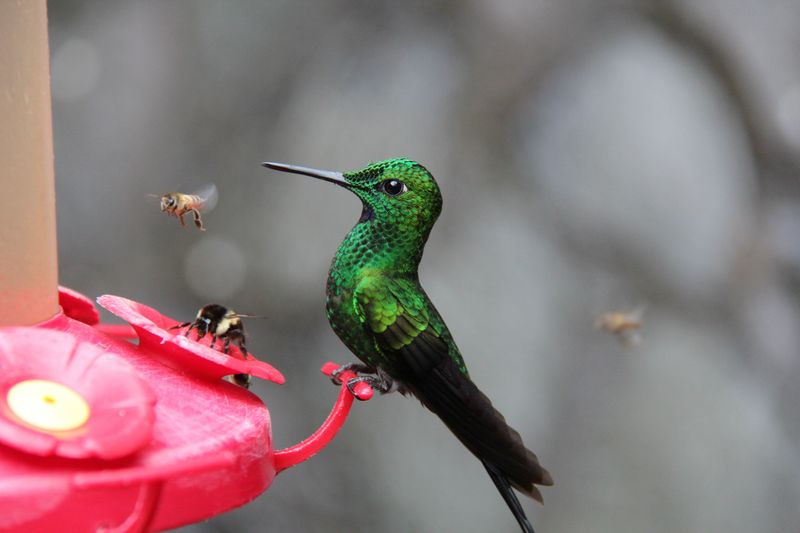
Yellowjackets get a lot of the blame when a hummingbird feeder suddenly fills up with buzzing visitors, and they are a reasonable suspect. But the insect crowding your feeder might just as easily be paper wasps, hornets, honey bees, native bees, or ants.
Iowa State University Extension identifies bees, wasps, and ants as the most common hummingbird feeder insect visitors, and the right response depends on which one you are actually dealing with.
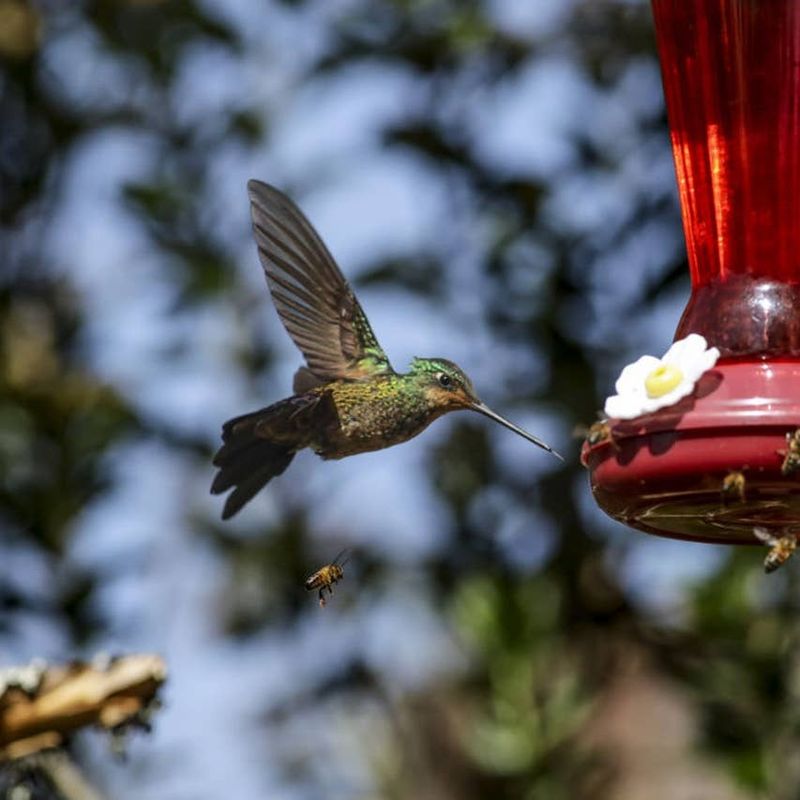
The practical problem is rarely that insects are attacking the birds. Hummingbirds and individual bees or wasps can sometimes feed near each other without incident.
The real concern is when a large cluster blocks the ports, contaminates the nectar, or creates a sting risk for people nearby.
Wasps, including yellowjackets, play useful roles in the garden. UC IPM notes that social wasps prey on caterpillars and other insects and can act as minor pollinators.
The goal here is not to eliminate every insect in your yard but to restore safe, consistent access to the feeder for the hummingbirds that depend on it.
Why yellowjackets become more noticeable in late summer and fall
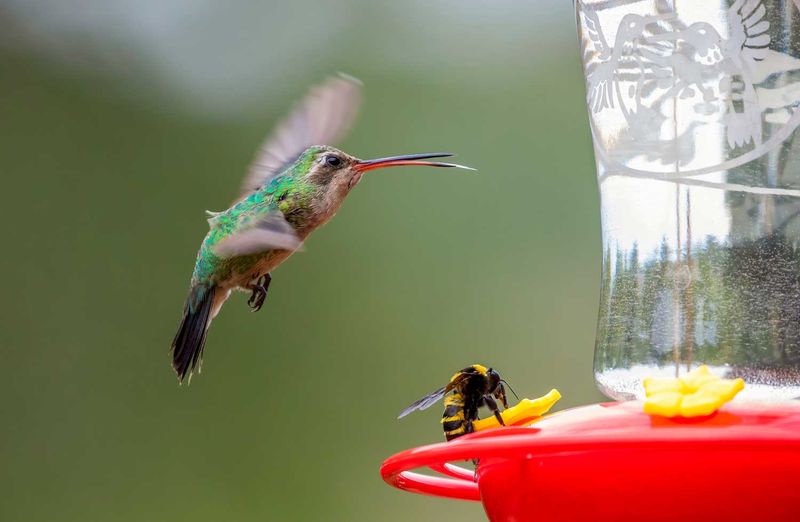
Yellowjacket colonies grow throughout spring and summer, and by late summer or early autumn they can contain thousands of workers. According to UC IPM, adult yellowjackets shift toward carbohydrate-rich foods in late summer as the colony’s protein needs change, which makes exposed or leaking hummingbird nectar an easy target.
That seasonal pattern explains why feeders that were quiet in June can suddenly feel overrun by August.
This timing may overlap with fall migration for certain hummingbird species in parts of the South, but the insect activity and the bird movement are separate events driven by different biology. On the Texas Gulf Coast, ruby-throated hummingbirds build up fat reserves in fall before crossing the Gulf of Mexico, so a well-stocked feeder can genuinely matter during that window.
Texas Parks and Wildlife describes the ruby-throated hummingbird’s fall departure as a concentrated coastal movement that makes late-season feeder access especially valuable in that region.
Florida is a different story. UF/IFAS notes that some hummingbirds remain year-round in southern Florida, so the urgency of migration timing does not apply equally across the whole Southern U.S.
Wherever you garden, the wasp activity increase is a seasonal pattern tied to colony biology, not something hummingbird migration triggers.
Identify the insect before choosing a response
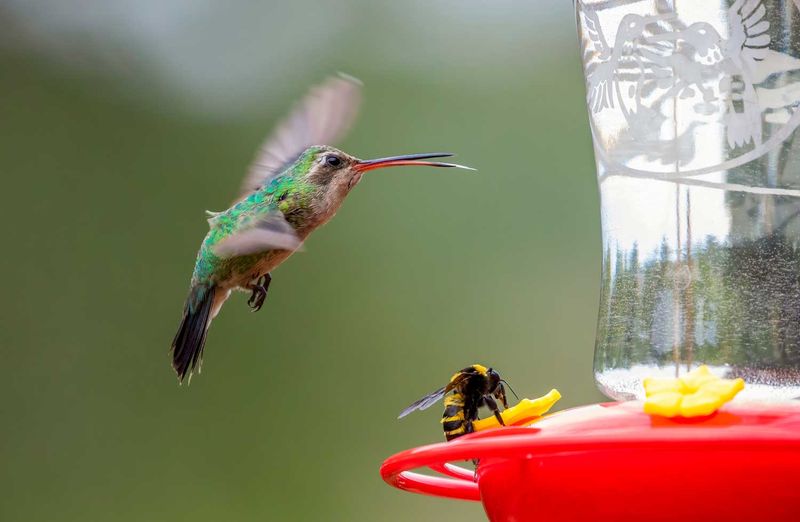
Before reaching for any solution, spend a few minutes watching what is actually visiting the feeder. Many yellowjackets are smooth-bodied, distinctly banded in black and yellow, and move with a quick, darting flight pattern.
Honey bees tend to look hairier and are generally less aggressive when they are away from their hive. University of Minnesota Extension points out that color and markings alone are not always reliable for identification, so body shape and behavior matter too.
Paper wasps are slender with a pinched waist and often hang their legs in flight. Ants, of course, are a completely different problem requiring a different fix.
Knowing which insect you have narrows down what will actually work, since bee guards, moats, and feeder relocation all perform differently depending on the species.
A single bee or wasp at the feeder is not automatically a reason to act. UF/IFAS extension notes that hummingbirds and individual insects can sometimes feed near one another without conflict.
The threshold for intervention is persistent crowding that blocks bird access, aggressive defensive behavior, nectar that looks cloudy or smells fermented, or a nest positioned close enough to a door or play area to be a genuine sting hazard.
Choose a feeder that limits insect access
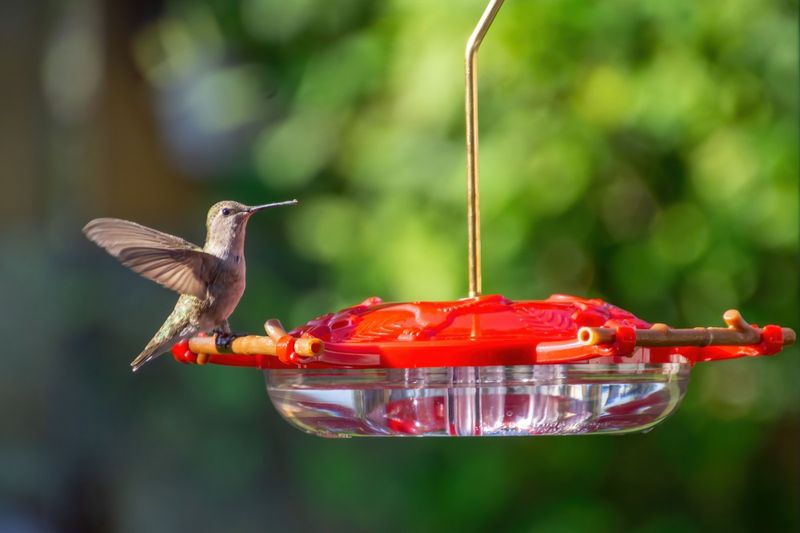
Feeder design is the first practical lever you can pull. Saucer-style feeders hold nectar in a shallow dish below the feeding ports, so the liquid surface sits farther from the opening than it does in a typical inverted-bottle feeder.
Short-tongued insects often cannot reach nectar positioned that low, while a hummingbird’s long tongue handles the distance easily. Cornell Lab of Ornithology recommends saucer feeders as one of the most effective structural changes for reducing bee and wasp access.
Bee guards, which are small mesh or plastic covers that fit over feeding ports, can help reduce access for bees but are not a complete solution against wasps. Wasps can sometimes chew through or work around plastic guards, so consider them one layer of a broader strategy rather than a standalone fix.
Color is worth considering too. University of Arkansas Extension advises avoiding yellow feeder components, including yellow bee guards or decorative accents, because yellow can attract bees and wasps.
Red parts are more than enough to draw hummingbirds. Swapping out yellow guards for red or clear ones is a low-cost change that may reduce insect interest, though it is a risk-reduction preference rather than a guaranteed outcome.
Fix leaks, clean spills, and relocate the feeder if needed
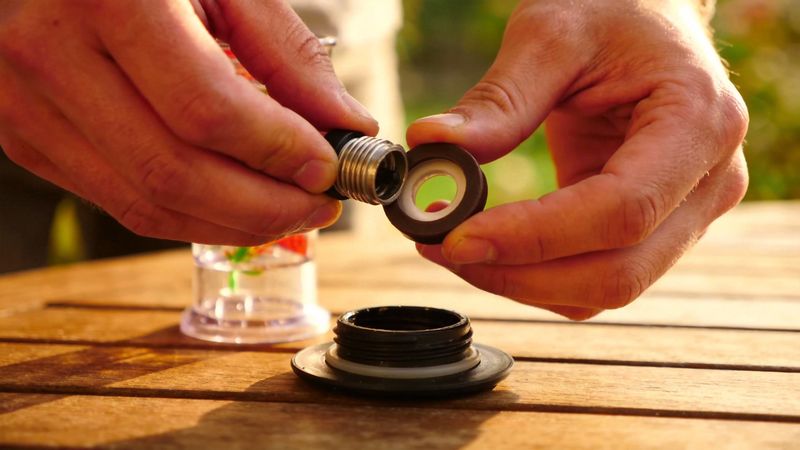
A leaking feeder is essentially a sugar trail that broadcasts itself to every insect in the neighborhood. Check the gaskets, O-rings, and bottle seal regularly.
If a bottle-style feeder drips whenever the temperature swings, it may be time to replace the seal or switch to a saucer-style model, which is less prone to pressure-driven drips. Wipe down the feeder exterior and the hook or hanger after any spill, because dried nectar draws insects just as effectively as fresh liquid.
Shade placement helps on two fronts. Hot direct sun speeds up nectar spoilage and can create mild pressure changes inside bottle feeders that push liquid out through the ports.
Cornell Lab of Ornithology suggests moving the feeder to a new spot in the yard if insects have already discovered it, since wasps and bees rely on scent memory and may search the old location for a while before giving up.
If relocation alone does not break the pattern, taking the feeder down for one to several days is an option. NC State Extension notes that hummingbirds tend to return to reliable food sources more persistently than insects do, so a short removal may cause wasps to abandon the search sooner than the birds do.
Results vary depending on how established the insect foraging route has become, and this step manages insect behavior, not hummingbird migration.
Maintain safe nectar and use nonchemical ant barriers
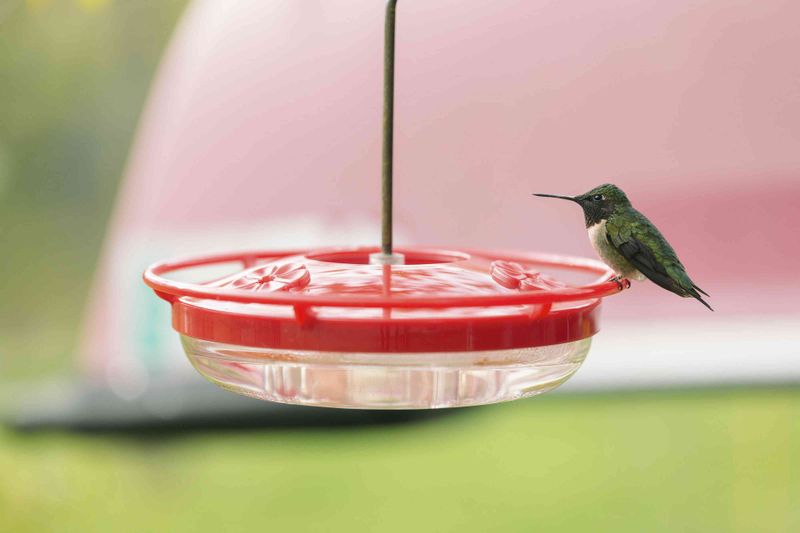
The nectar recipe is straightforward: one part plain white table sugar dissolved in four parts water. That is the standard that wildlife and extension authorities consistently recommend.
The Smithsonian’s National Zoo confirms this 1:4 ratio and advises against honey, brown sugar, artificial sweeteners, red dye, or commercial additives, any of which can harm hummingbirds or accelerate bacterial growth. Red feeder parts attract birds without any dye in the nectar.
In the Southern heat, nectar deteriorates faster than most people expect. UF/IFAS recommends changing the solution every three to five days in Florida, while feeders in direct sun or extreme heat may need a refresh every one to two days.
Discard any nectar that looks cloudy, smells sour, or shows visible mold immediately. Do not top off a partially used feeder; empty, clean, and refill it completely.
Cleaning requires full disassembly and thorough scrubbing of every surface that contacts nectar. Recommendations on whether to use soap, dilute bleach, or plain hot water vary across authoritative sources, so follow your feeder manufacturer’s instructions or check with your local cooperative extension office for guidance that fits your specific feeder material.
For ants, a water moat or commercial ant baffle mounted above the feeder is the recommended approach. Cornell Lab specifically warns against petroleum jelly, cooking oil, or other sticky substances near the feeder because these materials can contaminate hummingbird feathers.
Sugar water supplies energy but not the full diet hummingbirds need, so native flowering plants and the insects birds catch for protein remain essential parts of a yard that genuinely supports them.
Avoid sprays, traps as guaranteed cures, and casual nest disturbance
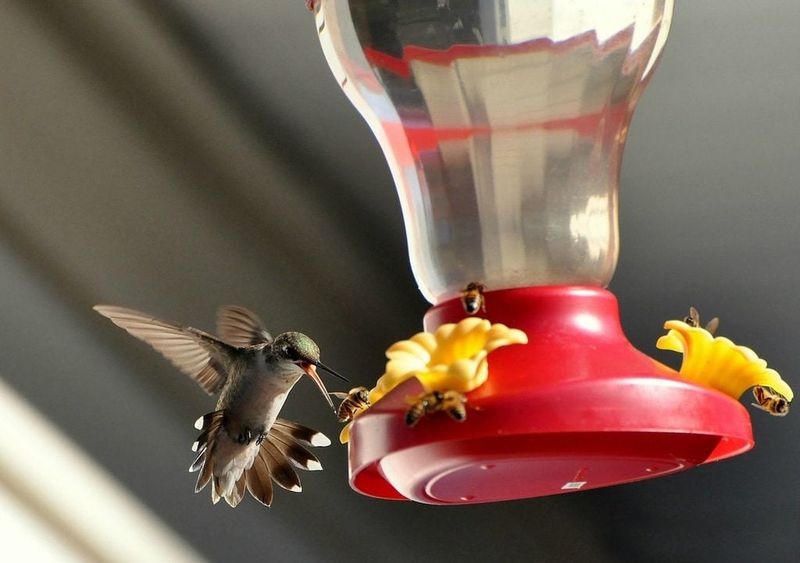
Spraying insecticide on or near a hummingbird feeder is one of the most harmful things you can do to solve an insect problem. University of Maine Cooperative Extension specifically recommends against using pesticides, sprays, or repellents anywhere near hummingbird feeders, because residues can directly expose birds and kill non-target insects including bees and beneficial wasps.
The same caution applies to fogging treatments and any product applied to the feeder ports or the nectar itself.
Traps sold for yellowjackets can catch some foraging workers, but they do not reach the queen or eliminate the colony. University of Minnesota Extension notes that trapping alone generally does not resolve a wasp problem at a specific site because new foragers from the same nest will continue searching.
Use traps only as a supplemental measure, placed away from the feeder, and do not expect them to make the feeder pest-free on their own.
Nest location changes the calculus significantly. A small paper wasp nest tucked under an eave away from foot traffic may not need any action at all.
But a defended yellowjacket nest near a doorway, in a wall void, or along a frequently walked path is a genuine hazard that warrants professional pest control. Penn State Extension strongly recommends calling a professional for nests in high-traffic locations, particularly when anyone in the household has a history of severe allergic reactions to stings.
Keep the feeder available when birds can use it safely
Working through the steps in order, identify the insect, adjust the feeder design, repair any leaks, relocate if needed, refresh the nectar on schedule, and stay away from sprays and pesticides. That sequence covers the majority of feeder-insect situations without causing harm to birds or beneficial insects.
NC State Extension emphasizes that a clean, well-maintained feeder supports birds throughout the season and should not be removed simply because fall migration is underway.
Hummingbirds migrate on internal cues tied to day length, not to feeder availability. UF/IFAS confirms that ruby-throated hummingbirds will migrate even when feeders remain stocked, so there is no reason to take down a functioning feeder out of concern that it will delay departure.
In southern Florida, where some hummingbirds are year-round residents, keeping a feeder going through fall and winter may support birds that never leave.
A few bees or wasps visiting a clean feeder are a nuisance, not a crisis. UC IPM reminds gardeners that yellowjackets and other social wasps contribute to the yard ecosystem as predators of pest insects.
The proportionate goal is protecting reliable hummingbird access, not a feeder free of every wild creature that finds sugar appealing.