
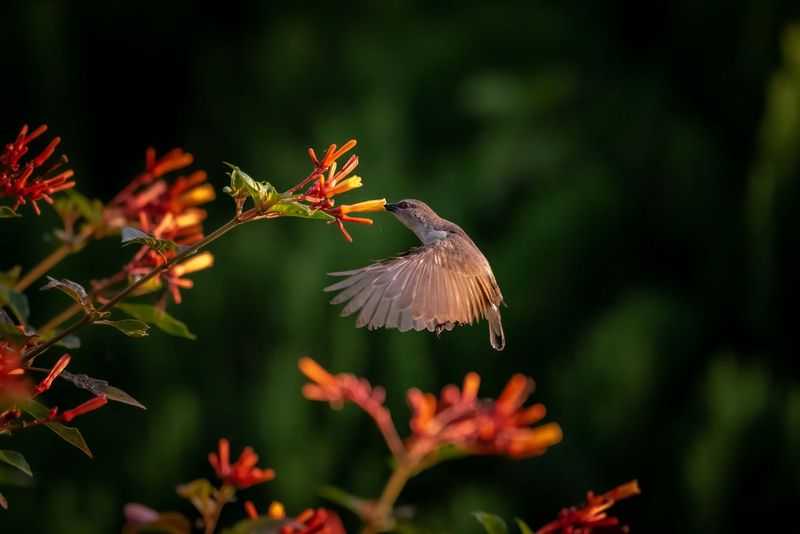
Your hummingbird feeder keeps emptying out, but you never actually see a hummingbird at it. Before assuming the birds are just too quick to spot, there are several other explanations worth checking first.
Adding a flowering plant like firebush to your yard may help make the space more inviting when hummingbirds are already in the area, though no single plant or feeder can guarantee visits on its own.
A Draining Feeder Does Not Confirm Hummingbird Visits
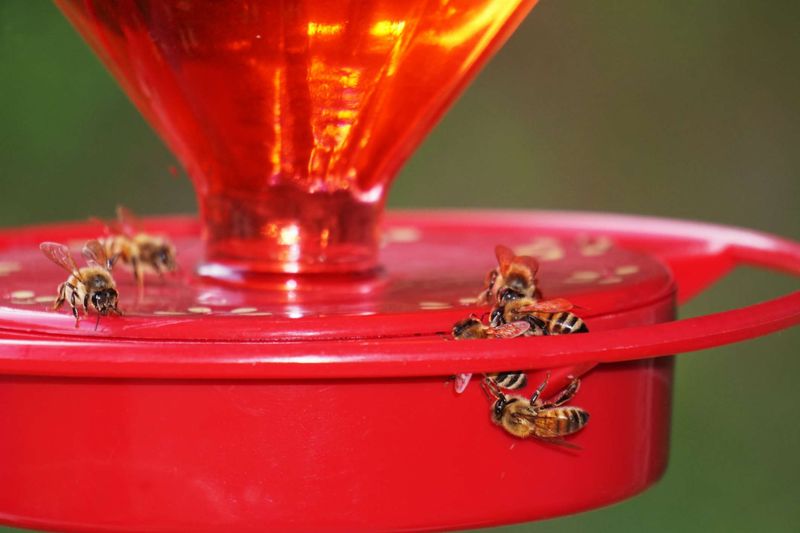
A feeder that empties fast can feel like proof that hummingbirds are stopping by regularly. The reality is more complicated, and jumping to that conclusion can cause you to miss what is actually happening at your feeder.
Audubon’s guidance on feeder pests makes clear that nectar feeders commonly attract ants, bees, and wasps, and that spills, loose parts, and poor seals can account for significant nectar loss without any bird ever taking a sip. Other nectar-feeding birds, such as orioles or house finches, will also visit hummingbird feeders opportunistically.
Evaporation in Southern summer heat can quietly drain a feeder over a day or two as well.
Hummingbirds themselves may be absent for reasons that have nothing to do with your setup. LSU AgCenter notes that many hummingbirds simply are not accustomed to feeders, so a new feeder may go unnoticed for weeks.
Birds may also be using natural flowers elsewhere in the neighborhood, passing through on migration without stopping, or occurring in low numbers in your specific location.
Start by checking your feeder carefully: look for drips at the base, loose ports, and signs of insect access. Solving a leaky seal or adding an ant moat can tell you quickly whether insects, not birds, have been doing the drinking.
A flowering plant like firebush can improve the overall habitat and make your yard more visually conspicuous to any hummingbirds in the area, but it cannot prove that birds are present or guarantee that they will arrive.
Firebush Adds a Strong Regional Nectar Option
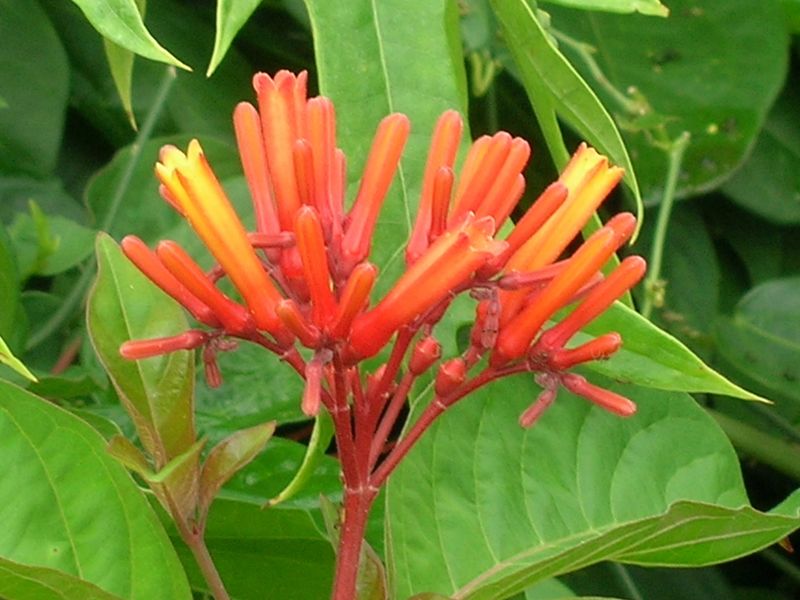
Firebush, known botanically as Hamelia patens, is a shrub with a lot going for it in Florida and the warmer parts of Texas. Its clusters of bright red-orange tubular flowers are the kind of visual cue that hummingbirds respond to well, and the plant can hold those blooms for an impressively long season.
UF/IFAS identifies firebush as a native hummingbird plant that can bloom from late spring until the first frost in suitable Florida conditions, and describes it as heat- and drought-tolerant once established. That combination of a long flowering window and resilience in hot weather makes it a practical choice for Southern gardeners who want a low-maintenance nectar source through the warmest months.
It grows in full sun or partial shade, giving it flexibility for a range of yard layouts.
UF/IFAS’s Hummingbirds of Florida publication lists firebush among the native plants that hummingbirds are known to visit in the state. For Texas gardeners, Texas A&M AgriLife materials include firebush among hummingbird plants suited to warm parts of the state, noting it as a summer-to-fall bloomer.
What the evidence supports is suitability, not certainty. Firebush is a strong regional option that may make your yard more attractive if hummingbirds are already using the area.
Local bird populations, migration timing, nearby natural habitat, and weather all shape whether any individual yard receives visits, regardless of what is planted there.
Flowers Provide More Than Feeder Energy
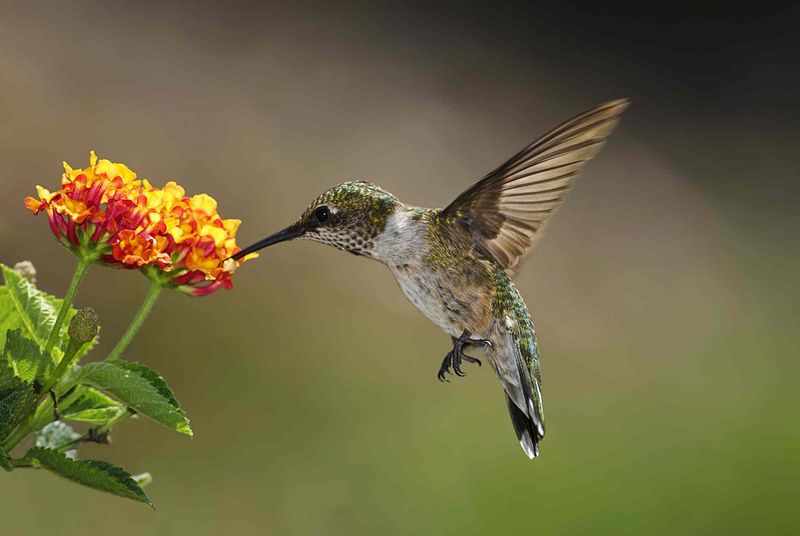
Sugar water in a feeder does one thing well: it delivers quick, concentrated energy. That matters, especially during migration or on hot days when birds are burning calories fast.
But hummingbirds need more than dissolved sugar to thrive, and a feeder alone cannot provide it.
Cornell Lab of Ornithology explains that hummingbirds eat small insects and spiders as a key source of protein and other nutrients that nectar cannot supply. They catch prey in mid-air, glean it from leaves and bark, and even steal it from spider webs.
A yard with flowering plants is more likely to support the insect life that hummingbirds depend on for a complete diet, while a feeder hanging alone in an otherwise bare space offers only one piece of the nutritional picture.
Flowering plants like firebush also provide something a feeder cannot: natural nectar in a form hummingbirds encounter throughout their range. Oklahoma State Extension guidance on hummingbird habitat recommends preserving native plants that supply both nectar and the insects that hummingbirds forage from.
Flowers also add visual structure to a yard, which may help a passing bird register the space as worth investigating.
Audubon’s hummingbird feeding guidance frames feeders as a useful supplement rather than a habitat replacement. Firebush can strengthen a yard that hummingbirds already use by adding natural nectar and insect-friendly foliage, but neither the plant nor the feeder can create bird presence where hummingbirds are simply not visiting the neighborhood.
Match Firebush to the Site and Climate
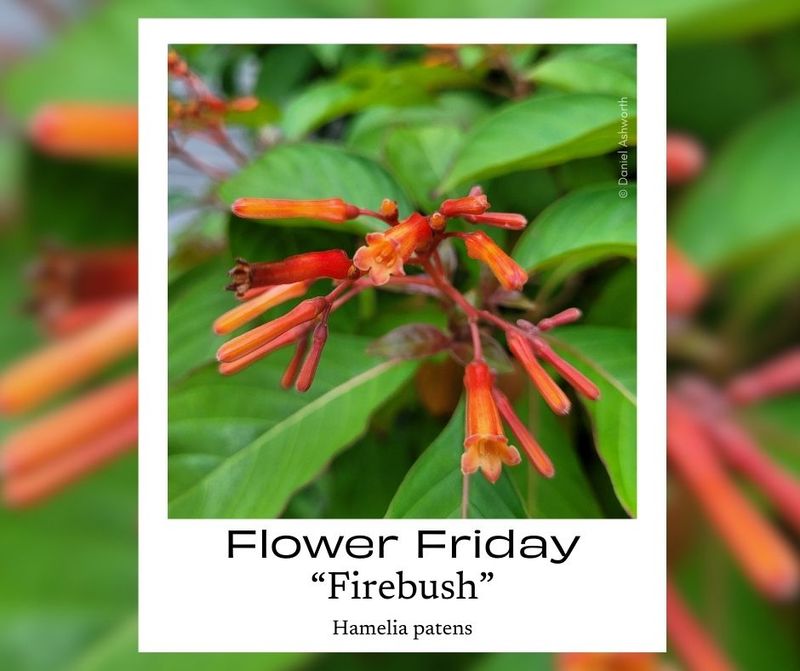
Getting the most from firebush starts with picking the right spot. The plant performs best in full sun, where it tends to bloom most heavily and develop its most vigorous growth.
It can handle partial shade, but flowering may be less prolific under a dense canopy, so a location that gets at least several hours of direct sun each day is a practical first choice.
UF/IFAS describes firebush as heat- and drought-tolerant once it has had time to establish its root system, making it well suited to the long, hot summers common in Florida and warm parts of Texas. Once established, it generally requires less supplemental watering than many ornamental shrubs, which is a practical advantage during dry stretches.
Placing a hummingbird feeder near flowering plants is a commonly recommended approach. Oklahoma State Extension notes that positioning feeders close to nectar plants can encourage birds to use both resources when they are present in the yard.
There is no evidence-based rule requiring a specific distance between a firebush shrub and a feeder, so use your judgment based on visibility and foot traffic.
Climate limits matter here. Florida and the warmest parts of Texas generally offer conditions where firebush can thrive and bloom across a long season.
In colder parts of the South, frost can damage or kill the above-ground growth. UF/IFAS regional guidance notes that firebush may die back to the roots in colder areas but can return in spring.
Gardeners in those zones should plan for possible dieback and consider whether a frost-hardier alternative might suit their site better. Texas A&M AgriLife materials list firebush as a warm-season bloomer suited to the warmer regions of the state, which reinforces the importance of checking your local conditions before planting.
Build a Longer Blooming Season Around Firebush
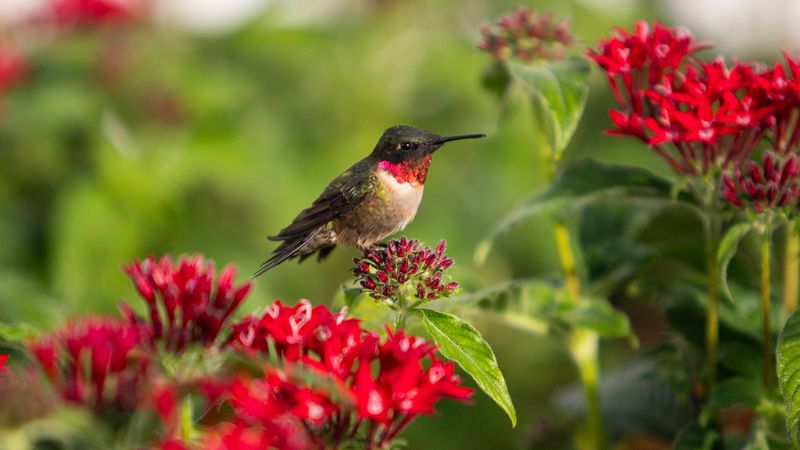
Firebush is a strong anchor plant for a hummingbird-friendly yard in Florida and warm Texas, but one shrub cannot cover every gap in the blooming calendar on its own. Pairing it with other regionally suited flowers that bloom before it peaks or after it winds down keeps natural nectar available across a longer stretch of the warm season.
Oklahoma State Extension’s succession-planting guidance recommends choosing several flowers with overlapping or staggered bloom periods so that as one plant finishes, another is coming into peak flower. For Florida and warm Texas gardens, coral honeysuckle is a native vine option that can extend the blooming window and offers tubular flowers well suited to hummingbirds.
It does need adequate light, air circulation, and something to climb, so it works best where a fence, trellis, or arbor is available.
For spots that stay consistently moist or receive more shade than firebush prefers, cardinal flower is worth considering. UGA Extension describes cardinal flower as a hummingbird favorite that performs well in moist, humus-rich soil with morning sun or partial shade, making it a useful complement where firebush would struggle.
Red and other warm-colored salvias can fill gaps in drier spots and are widely available at Southern garden centers.
Across all of these plantings, OSU Extension strongly advises against applying insecticides around hummingbird plants and feeders. Hummingbirds forage for small insects throughout the day, and treated plants or contaminated prey can pose real risks.
UGA’s pollinator guidance echoes this, noting that a yard where insects are allowed to thrive alongside flowers is a more complete and functional habitat for wildlife overall.
Maintain the Feeder as a Safe Supplement
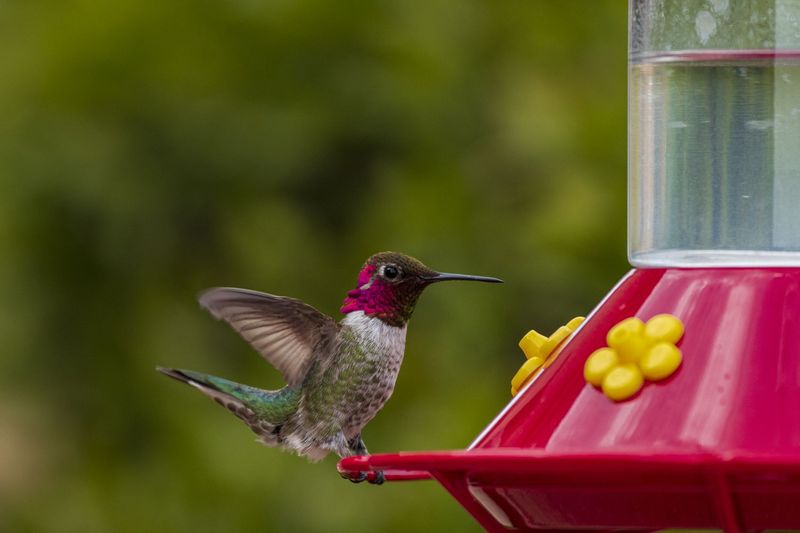
A well-maintained feeder is a genuine asset when hummingbirds are using your yard, but poorly kept nectar can do more harm than good. Getting the recipe and the cleaning routine right is straightforward once you know what actually matters.
The only recommended nectar is plain white sugar dissolved in water at a ratio of one part sugar to four parts water. Audubon’s hummingbird-yard guidance is clear that red dye, honey, artificial sweeteners, fruit juice, sports drinks, and flavored additives should not be used.
Honey can promote dangerous bacterial and fungal growth, and dyes add no benefit while introducing unnecessary chemicals. Plain sugar water closely matches the concentration of natural flower nectar and is safe when kept fresh.
In hot Southern weather, nectar spoils quickly. Audubon’s feeder FAQ recommends changing nectar daily or every other day during summer heat and cleaning the feeder at every change.
If the nectar looks cloudy, smells fermented, or shows any mold, discard it immediately and scrub the feeder before refilling. In milder conditions, every two to three days is a common cleaning interval, but when temperatures climb into the 90s, daily replacement is the safer approach.
Cornell Lab recommends choosing a feeder that fully disassembles so every surface can be scrubbed with a bottlebrush. Smaller feeders reduce waste because you are not discarding large volumes of nectar with each cleaning cycle.
Hanging the feeder in a shaded spot slows spoilage noticeably during summer. If one dominant bird is chasing others away, placing two or three smaller feeders in different parts of the yard can reduce that territorial behavior and allow more birds to feed.
Two additional safety steps are worth building into your routine. Rutgers Cooperative Extension advises keeping feeders at least 15 feet from low vegetation where outdoor cats could hide and ambush birds.
Avoiding insecticides around the feeder area is equally important, since hummingbirds forage for insects throughout the day and can encounter treated prey near feeding stations.
Use Firebush to Improve the Habitat, Not Promise a Result
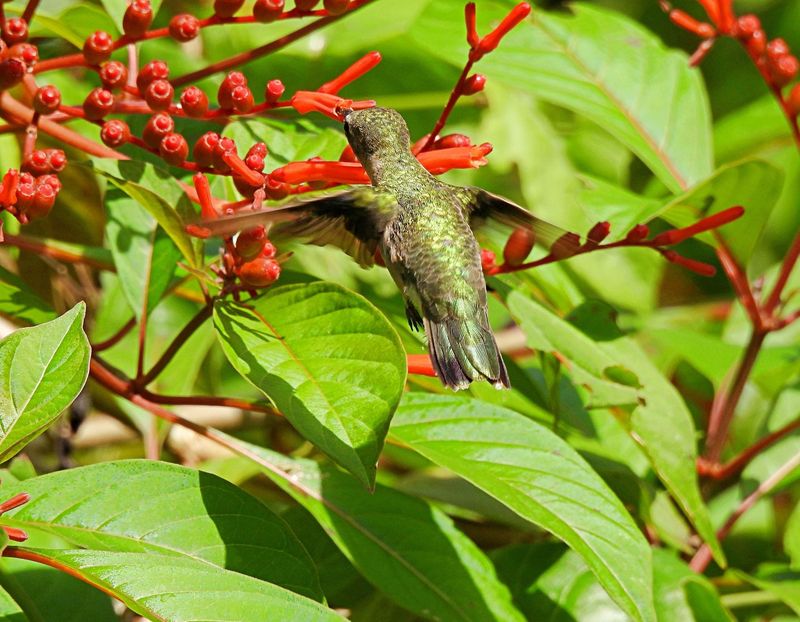
A practical action plan for your yard starts with the feeder itself. Check for leaks, loose ports, and signs of insect access before assuming hummingbirds are responsible for the disappearing nectar.
Solve those problems first, then keep the feeder stocked with fresh plain-sugar nectar and clean it on a schedule that matches your local temperatures.
From there, firebush is worth adding if your site in Florida or warm Texas offers the full sun and well-drained soil it prefers. Plant it where it has room to grow and where its red-orange flowers will be visible from open sky, not hidden behind a fence or dense shrubs.
Position the feeder nearby so that any hummingbird investigating the flowers can easily spot the feeder as well. Oklahoma State Extension’s habitat guidance supports placing feeders near flowering plants as a way to encourage birds to use both resources when they are present.
Preserve the insects in your yard by skipping insecticides around the planting area, and keep Audubon’s feeder-care standards in place throughout the season. Firebush is a suitable regional addition that may make your yard more useful to hummingbirds that already use the area.
It cannot summon birds that are not present locally or fix a feeder that insects have claimed. The most honest measure of success here is a yard that offers clean nectar, natural flowers, and insect-friendly habitat, and then watching carefully to see who actually shows up.