
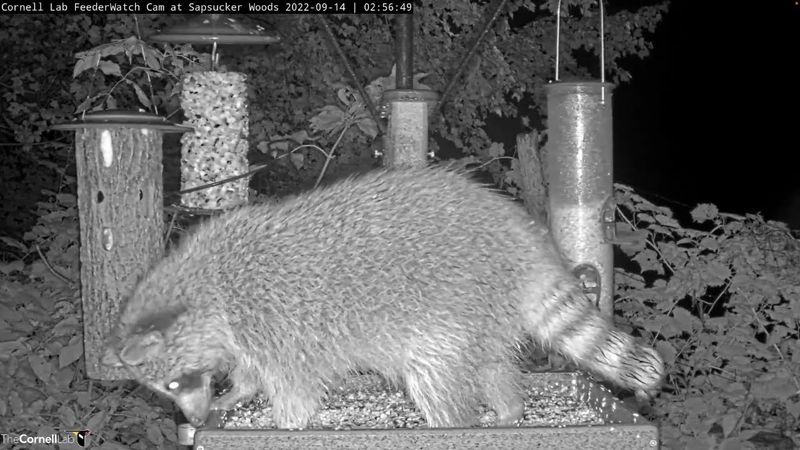
You walk out to your bird feeder in the morning and find seed scattered everywhere, the feeder tipped sideways, or pieces of it chewed and bent out of shape. Something visited after dark, and it was not a songbird.
Figuring out what actually raided your feeder is the first step toward stopping it, because the right fix depends on knowing what you are dealing with. This guide walks through the most likely suspects, how to confirm which one is visiting, and what you can do to protect your feeder without putting yourself or the animal at risk.
A raccoon is the leading suspect—not a confirmed culprit
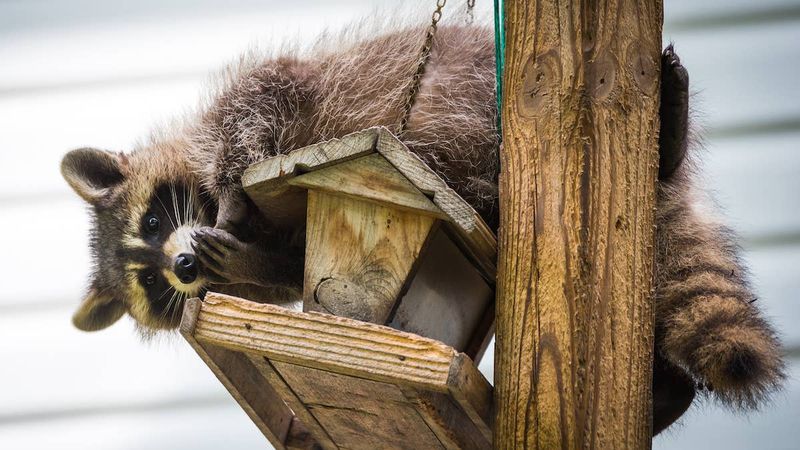
When a bird feeder turns up emptied, overturned, or physically damaged after dark, a raccoon is the most logical place to start looking. Texas Parks and Wildlife describes raccoons as primarily nocturnal animals, common throughout Texas and the broader Southern United States, that eat fruits, nuts, seeds, insects, eggs, and whatever else is available, including bird feed.
Their front paws are remarkably dexterous, which means pulling a feeder off a hook, prying open a port, or tipping a tube feeder off a pole is well within their abilities.
That combination of nighttime activity, seed-based diet, and manipulative paws makes a raccoon a better fit for the evidence than most other suspects when the damage involves handling, dragging, or forceful access. A seed spill caused by birds looks very different from a feeder that has been physically worked over.
Even so, raccoon is a leading suspect, not a field identification. Other animals visit feeders at night, and a common tree squirrel could have caused damage earlier in the day that you are only discovering in the morning.
The title of this article uses the word “likely” deliberately. Treat the raccoon as your working hypothesis and then gather evidence before drawing a firm conclusion.
Read the damage without overidentifying the animal
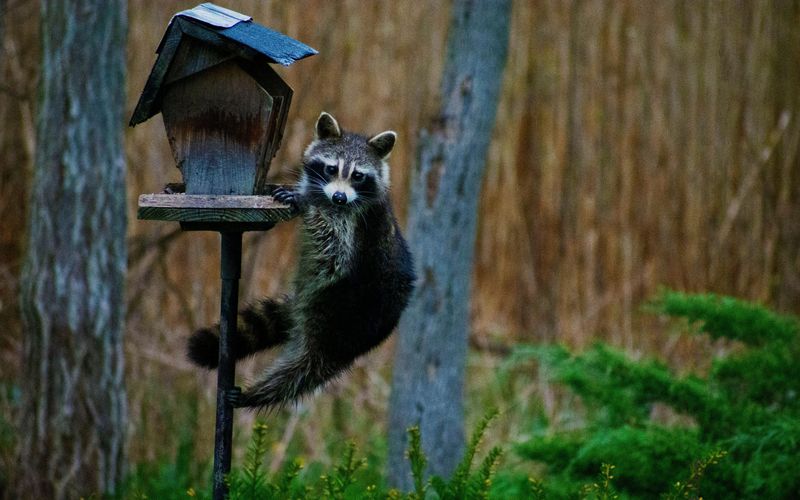
The type of damage left behind can narrow the list of suspects, though it rarely settles the question on its own. A feeder that has been tipped off its hook, dragged across a deck, pulled apart at a seam, or aggressively emptied points toward an animal with enough size and hand-like paws to manipulate the equipment.
That profile fits a raccoon better than it fits a simple seed scatter caused by birds or wind.
Fresh gnaw marks, a chewed plastic opening, or a widened seed port suggest a squirrel instead. University of Florida Extension guidance on backyard bird feeders notes that squirrels are a major cause of feeder damage, especially chewing around openings and perches.
Common tree squirrels are generally daytime animals, so gnaw damage found in the morning may have happened the previous afternoon rather than overnight.
Rats and other nocturnal mammals are also possible visitors, and the evidence they leave can overlap with raccoon activity. One nighttime exception worth knowing about is the southern flying squirrel.
Unlike the gray or fox squirrels most people see during the day, flying squirrels are nocturnal and do visit feeders, particularly in wooded or edge habitats across the South. Scattered seed alone is not enough to identify one; you need additional evidence.
Utah State Extension research on backyard rodent activity reinforces that multiple species can share the same feeding area, so keeping an open mind about the visitor until you have clearer evidence is the right approach.
Use a trail camera to help confirm the visitor
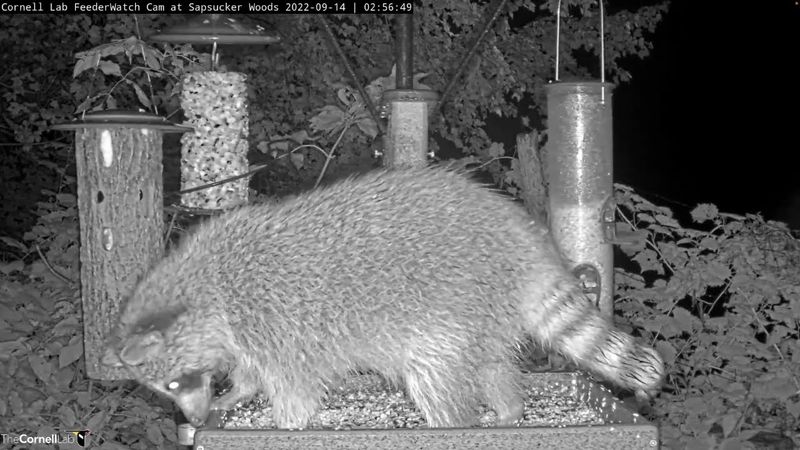
A motion-activated or infrared trail camera aimed at the feeder is the most reliable tool for moving from suspicion to a reasonable confirmation. Set it up before dusk, angle it so the feeder is in the center of the frame, and let it run for several nights.
A single missed recording does not rule an animal out; some visitors trigger cameras inconsistently depending on approach angle or temperature. Give it time before drawing conclusions.
Physical clues around the feeder can support what the camera shows, or fill in gaps when a recording is unclear. Utah State Extension’s raccoon identification guidance describes raccoon tracks as five-toed prints that are substantially larger than those left by skunks or smaller mammals.
Look for tracks in soft soil, mud, or mulch beneath and around the feeder pole. Tooth marks and claw damage on plastic or wood can also help distinguish a gnawing animal like a squirrel from a grabbing, pulling animal like a raccoon.
Spreading a thin layer of flour or fine soil around the base of the feeder pole before dark is an optional low-tech tracking aid. Tracks left overnight can give you a rough size and shape to compare against reference images, though this method is not a guaranteed diagnostic test and can be disrupted by rain or wind.
Whatever the camera or tracks suggest, California Department of Fish and Wildlife guidance on raccoon conflicts is clear that you should not approach, corner, or attempt to handle the animal. Observe from a distance and let the evidence do the work.
Removing the feeder at dusk removes the overnight food source
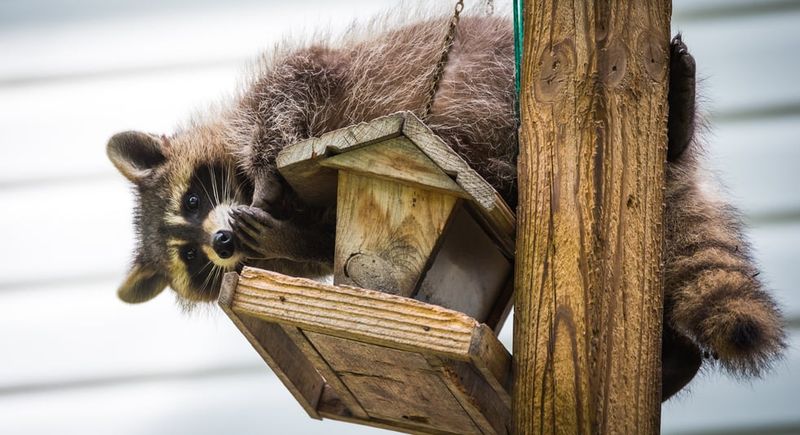
Bringing the feeder indoors at dusk and returning it the next morning is the fastest, lowest-risk step you can take. Cornell Lab’s Project FeederWatch team specifically recommends bringing feeders in at night when raccoons are raiding them, and temporarily removing feeders altogether when rats are a persistent problem.
Repeat this for several nights, or longer if visits continue after you resume normal hours, because a persistent animal may return to check the spot even after a few quiet nights.
Removing the feeder at dusk removes the overnight food source for that period. It does not guarantee the animal stops visiting the yard entirely, especially if other attractants remain.
A raccoon that has learned your yard reliably offers food will keep checking, so the step works best when paired with cleanup.
Rake up spilled seed and hulls from beneath the feeder every day, not just when you notice a mess. University of Florida Extension guidance on discouraging nuisance wildlife recommends removing dropped seed from the ground because it can attract raccoons, rats, and other mammals independently of whether the feeder itself is accessible.
Ground seed sends the same food signal as a full feeder, and cleaning it up is part of breaking the habit that brought the animal to your yard in the first place.
Reduce access and remove competing food signals
Longer-term protection starts with making the feeding station harder to reach and less rewarding. Store unused seed in a securely closed metal container kept indoors or in a locked outbuilding.
University of Florida Extension’s bird feeder selection guide warns that squirrels, rodents, and raccoons can chew through or force open plastic bins and loosely closed bags, so the container material matters.
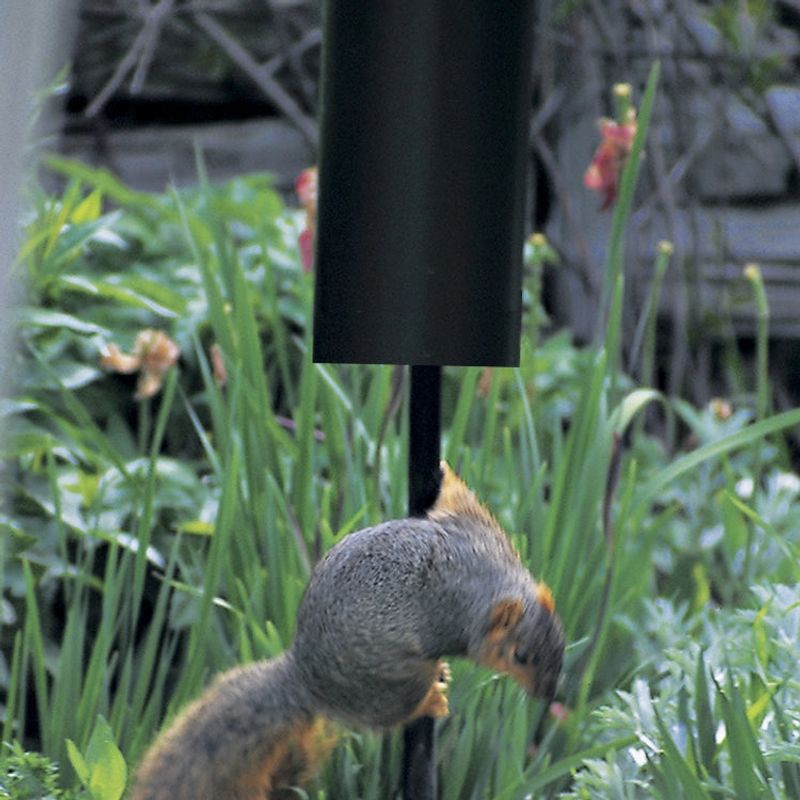
For feeders where squirrels are the main daytime problem, a pole-mounted baffle or a weight-activated squirrel-resistant feeder can reduce access. Penn State Extension’s guidance on squirrels and bird feeders recommends positioning a pole feeder roughly 10 to 15 feet from tree trunks, overhanging limbs, fences, and buildings so squirrels cannot launch themselves onto it.
Baffles reduce access when properly installed, but Penn State’s tree squirrel resource notes that determined squirrels may defeat poorly positioned or inadequate equipment. Neither a baffle nor a squirrel-resistant feeder is guaranteed against a raccoon.
If you use a catch tray beneath the feeder to reduce seed falling to the ground, clean and empty it regularly. Cornell’s FeederWatch team cautions that leaving a tray in place without maintenance effectively creates a ground-level feeding platform for mammals.
Reject scare devices, flashing lights, and odor-based repellents as primary tools. University of Georgia Extension notes that raccoons quickly become accustomed to frightening devices, and University of Florida’s raccoon management guide states that repellents and scare devices are generally unsuccessful against a raccoon seeking a highly attractive food source.
Hot pepper products, mothballs, homemade chemical mixtures, and poisons are not reliable solutions and create risks for pets, birds, and other wildlife.
Keep seed fresh and the feeding station clean
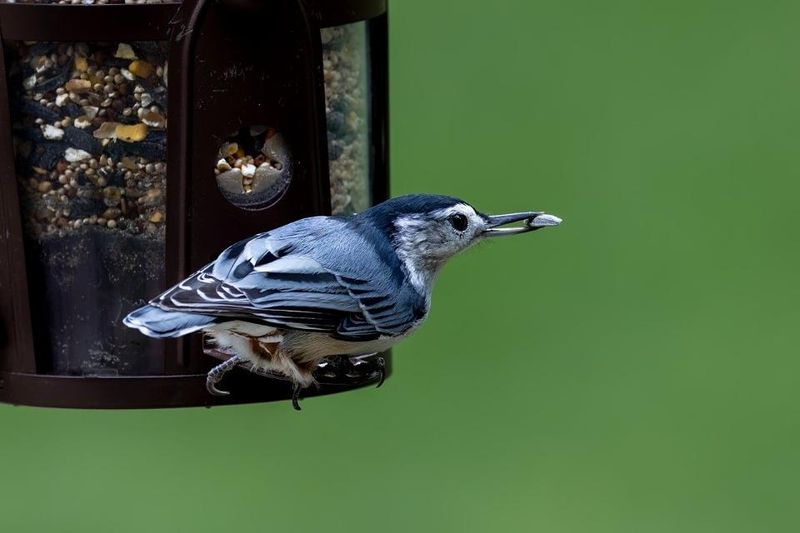
Routine maintenance does two things at once: it keeps the food safe for birds and it reduces the signal that draws mammals back to the station. Sunflower seed, peanuts, corn, and mixed seed all attract squirrels and other mammals as well as birds.
Offering only the amount birds can consume in a day limits how much accumulates in the feeder or falls to the ground. Cornell Lab’s bird seed guide recommends using shelled sunflower within a day or two and keeping peanuts dry and fresh, because both can spoil quickly in humid Southern weather.
Discard moldy or visibly spoiled seed rather than scattering it on the ground. Putting bad seed out as a ground offering does not solve a waste problem; it creates a mammal feeding station at ground level.
Florida guidance on nuisance wildlife habitat modification recommends keeping the area beneath feeders raked clean and storing unused seed in heavy-duty sealed containers indoors.
Clean the feeder itself at least every two to three weeks. Audubon advises cleaning more frequently during hot, humid weather, which describes much of the Southern U.S. for a large part of the year.
A dirty feeder can spread disease among birds and the built-up residue of old seed and hulls adds to the scent signal that attracts mammals.
Safflower seed comes up occasionally as a way to reduce squirrel activity because many squirrels find it less appealing. Audubon’s squirrel deterrence guidance frames safflower as a possible squirrel tactic, not a universal wildlife solution.
It is not a deterrent for raccoons, rats, or other nocturnal mammals, so manage expectations if you try it.
Know when ordinary deterrence is not enough
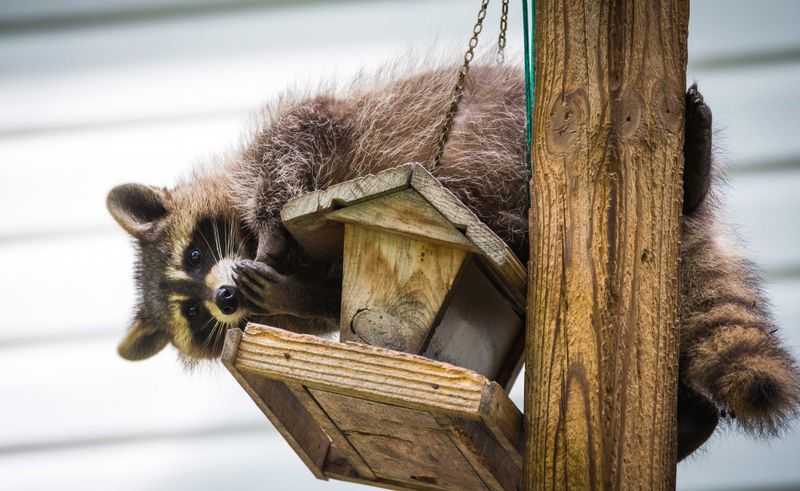
Most backyard raccoon visits can be managed with the steps above, but some situations call for a different level of response. California Department of Fish and Wildlife’s raccoon conflict guidance is direct on this point: do not handle, corner, or attempt to poison raccoons, and do not clean up raccoon feces bare-handed because raccoon droppings may carry a roundworm risk.
If an animal is sick, aggressive, trapped somewhere on your property, or repeatedly denning in a structure, contact local animal control or a licensed wildlife professional rather than trying to resolve it yourself.
Daytime sightings alone do not mean a raccoon is sick or dangerous. Animals sometimes move during the day when searching for food or caring for young.
However, staggering, apparent paralysis, disorientation, or other unusual behavior warrants a call to local authorities rather than any attempt to approach the animal. Texas Parks and Wildlife guidance on living with wildlife advises against feeding raccoons or other wild mammals, as intentional feeding can habituate animals to people and increase the likelihood of conflict.
Bear activity requires a separate response. In parts of the South where black bears are present and active, removing a feeder only at night may not be sufficient protection.
Audubon’s reporting on bears and bird feeders recommends removing feeders entirely during seasons when bears are active in your area, because bears that associate feeders with food can destroy them to reach the seed inside.
Trapping, relocation, and wildlife removal are governed by rules that vary by state and locality across the South. Check with your state wildlife agency before attempting any removal.
The practical action sequence is straightforward: confirm the visitor, remove the overnight food source, clean up spilled seed, secure stored feed, and call a professional when the situation moves beyond a feeder problem. A well-maintained, thoughtfully placed feeding station is still one of the best ways to enjoy backyard birds, and most wildlife conflicts at feeders can be resolved without drama on either side.