
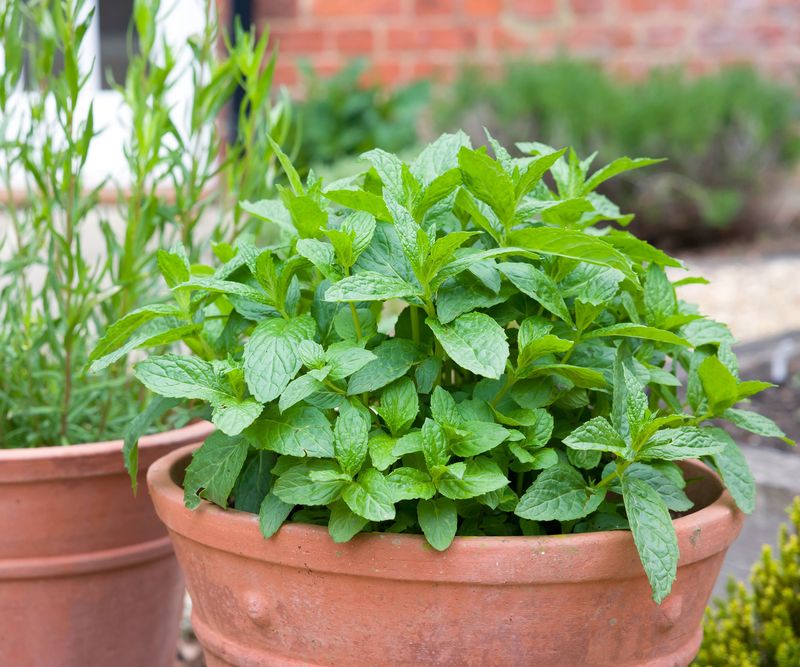
Every summer, Texas porches become prime real estate for wasps looking to build their next nest, and plenty of homeowners are searching for a simple, plant-based fix. A widely shared claim points to a single potted herb as the answer, promising a wasp-free patio all season long.
The plant behind that claim is most likely spearmint, and it is genuinely worth growing on a Southern porch, but the promise attached to it goes further than the evidence allows. Sanitation habits, spring inspections, and smart nest management will do more for your patio than any single container plant.
The original headline overstates what spearmint can do
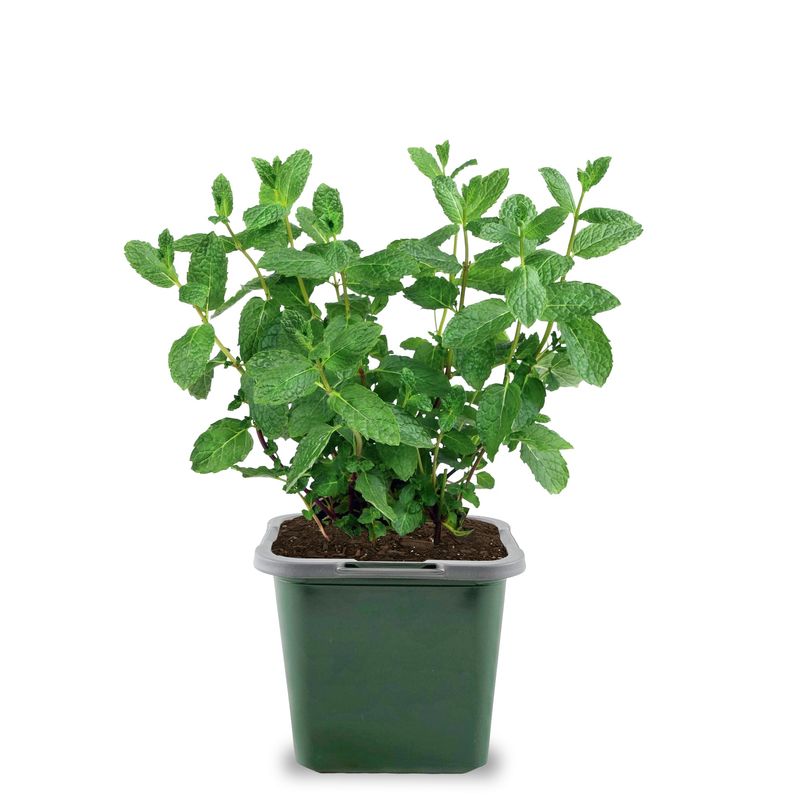
Spearmint (Mentha spicata) is almost certainly the plant behind the viral headline. The identification comes from a near-identical published article that names spearmint directly, and Henderson County Master Gardeners confirm it as a solid Texas container herb.
Finding the plant’s name, though, is not the same as confirming its pest-control effect.
No authoritative source has demonstrated that a living spearmint plant prevents wasps from building nests, protects a specific area of a patio, or delivers reliable results across an entire Texas summer. The plant contains aromatic compounds, and some of those compounds have been studied in the context of wasp behavior, but that research does not test ordinary potted plants or measure what a container herb actually releases into the air around a seating area.
The defensible premise here is narrower and more honest: spearmint is a fragrant, low-maintenance container herb that may add a faint scent-based deterrence layer near a porch, and that is worth something. Any real protection against wasp conflicts, however, comes from the habits covered in the sections that follow.
Texas A&M’s integrated pest-management guidance prioritizes reducing food access and removing nests early, not aromatic plants, as the most productive steps a homeowner can take.
Essential-oil experiments do not prove a live-plant effect
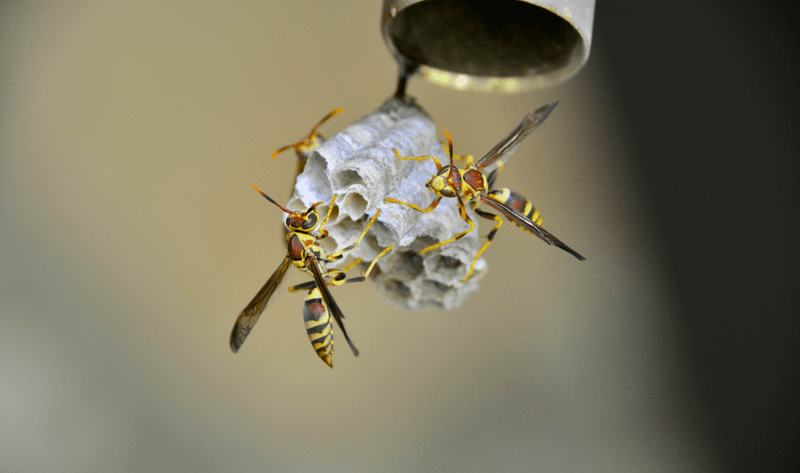
Researchers have tested whether concentrated essential oils repel social wasps, and some of those tests produced encouraging results. A 2013 field study published on PubMed found that certain essential oils, including compounds found in mint, showed repellency against yellowjackets and paper wasps in bait-trap conditions.
A separate screening study published in PMC similarly evaluated plant-derived compounds against vespid wasps under controlled conditions.
Both studies worked with concentrated extracts and purified compounds, not with living plants placed near a seating area. A potted spearmint plant releases volatile compounds at much lower and more variable levels than a lab-prepared essential oil.
The gap between those two situations matters: what repels a wasp from a treated bait station does not automatically translate into a container herb changing where wasps choose to build a nest on your porch ceiling.
One more piece of context deserves mention. The 2013 study listed authors affiliated with Sterling International, a pest-control company.
That connection does not invalidate the findings, but it is a reason to treat the study as a useful data point rather than definitive proof of a consumer gardening treatment. The honest reading of the research is that mint-derived compounds show some promise as wasp repellents under controlled conditions, and that a live potted plant may or may not produce a meaningful effect in a residential setting.
Treating the science as settled would overstate what the experiments actually showed.
Grow spearmint in a container that can handle Texas heat
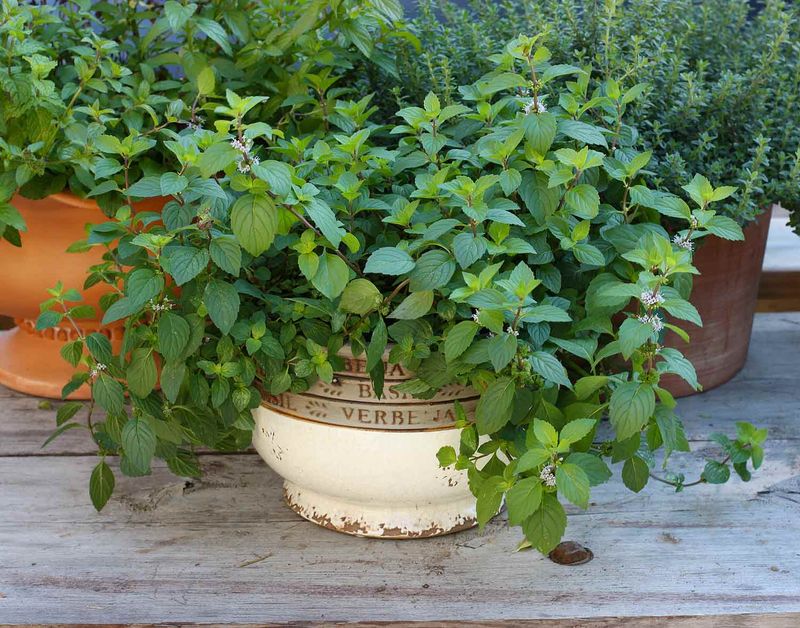
Container growing is the right approach for spearmint in Texas, and not just because of any possible wasp benefit. Spearmint spreads through runners and rhizomes, and UF/IFAS guidance for Southern gardeners recommends keeping it in a pot specifically because it can take over a garden bed quickly if planted directly in the ground.
A container gives you control over the plant and makes it easy to move as light and temperature shift through the season.
Texas Master Gardener records describe spearmint as a perennial herb that tolerates full sun to part shade and prefers consistently moist soil. In practice, a Texas summer means you will likely water more often than the label suggests, especially in July and August when afternoon heat can dry out a small pot within a day.
Choose a container with drainage holes, use a moisture-retentive potting mix, and check the soil daily during heat waves rather than sticking to a fixed watering schedule.
Partial shade during the hottest part of the afternoon helps prevent the leaves from scorching and keeps the plant producing more reliably. Utah State University Extension notes that mint generally prefers some protection from intense midday sun, advice that applies even more strongly in Southern climates.
None of this growing guidance is meant to suggest that a healthy plant will produce measurable wasp control; it simply keeps the herb looking and smelling its best as a porch plant you can also use in the kitchen.
Use the pot as a garden choice, not a promised protection zone

Positioning a spearmint pot near your seating or dining area makes sense as a practical garden decision. You can reach the leaves easily for cooking, the fragrance is pleasant at close range, and the plant stays where you want it.
What that placement cannot do is create a validated scent perimeter. No published study has measured a protective radius, confirmed an effective distance from a pot to a nest site, or established that a living plant changes where wasps decide to build.
A detail worth keeping in mind: spearmint flowers. When the plant blooms, it attracts pollinators, and Virginia Cooperative Extension notes that paper wasps feed on nectar, pollen, ripe fruit, and sugary liquids.
A flowering mint plant could therefore coexist with visiting insects, including the occasional wasp, rather than pushing them away. UF/IFAS confirms that mint flowers draw pollinators actively, so pinching the plant back before it blooms can extend its foliage production and reduce that dynamic if you prefer.
The cleaner way to think about a porch spearmint pot is as an optional ornamental and culinary herb that may contribute a faint deterrence effect, but whose presence alone cannot be counted on to keep wasps away. Pairing it with the sanitation and inspection habits described in the next sections gives you a more complete approach to a more comfortable patio.
Remove the food sources that keep wasps around
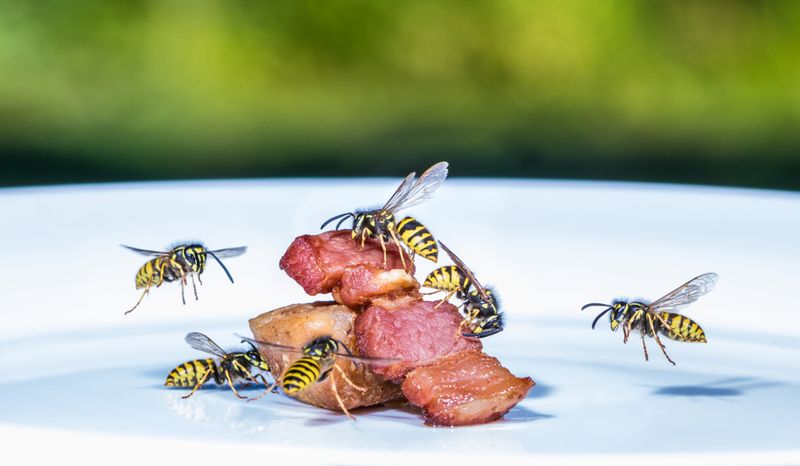
Food access is one of the strongest predictors of wasp activity around a patio, and cleaning it up consistently does more than any plant. Texas A&M’s IPM Action Plan for paper wasps specifically identifies sweets, soda, fruit scraps, picnic food, and garbage as key attractants that draw foraging wasps to outdoor living areas.
Covering drinks and food while you eat, wiping down surfaces after meals, and picking up fallen fruit from nearby trees reduces the signal that tells wasps your porch is worth visiting.
Garbage and recycling containers are easy to overlook. A bin left open near the porch can draw wasps from a surprisingly wide area, especially later in summer when colonies are larger and workers range farther for food.
Keeping lids closed and rinsing out cans and bottles before tossing them makes a real difference. Pet food left outside follows the same logic and should be brought in after feeding.
Sanitation is a reduction strategy, not a guarantee. Some wasp species, particularly paper wasps building under eaves, are attracted to shelter and nesting sites rather than food, so cleaning up will not address every situation.
What it does reliably is lower the number of foraging workers showing up around your seating area, which reduces the chance of accidental disturbance and makes the patio more comfortable through the long Texas outdoor season.
Inspect likely nest sites before colonies become a bigger problem
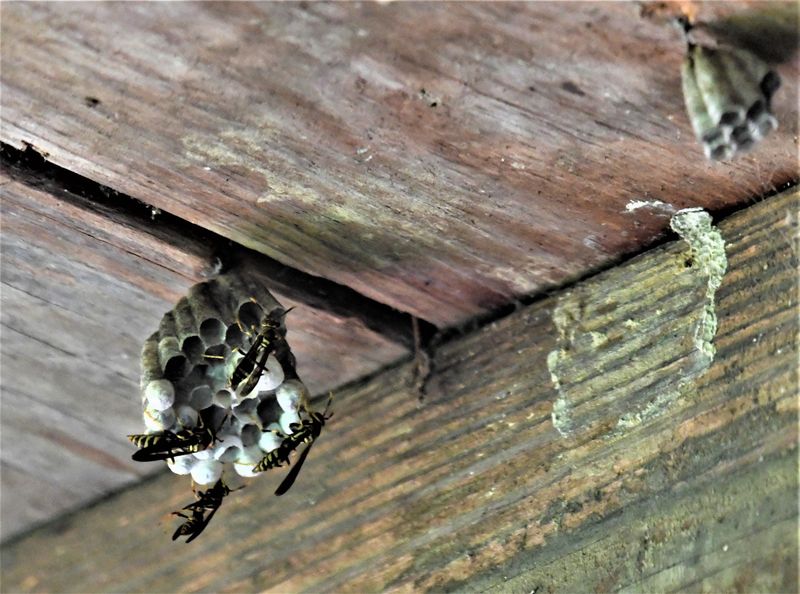
Spring is the right time to walk your porch and look at the spots where wasps commonly build. Paper wasp queens emerge in early spring and start new nests from scratch, so a nest found in March or April is typically small, contains few workers, and is far easier to address than the same nest in July.
Texas A&M recommends checking probable nesting locations beginning in spring and inspecting buildings periodically through the warm season. Check porch ceilings, eaves, window frame corners, vents, railings, the undersides of deck boards, and any sheltered gap or overhang that offers protection from rain.
Very small nests, those with just a few open cells and no more than a handful of wasps, can sometimes be knocked down safely by a homeowner who can reach the nest without standing directly underneath it and who can move away quickly if needed. Act at dusk or dawn when wasps are less active and temperatures are cooler.
Wear long sleeves and eye protection. If the nest is in a spot where you cannot approach it safely or retreat from it quickly, leave it for a professional.
Not every nest warrants removal. A paper wasp nest tucked under a fence rail at the back of the yard, far from foot traffic, poses little daily risk and can be left alone.
The calculus changes when a nest sits directly above a door, over a play area, or anywhere people regularly pass underneath it.
Yellowjackets and hornets require a different approach entirely. UC IPM notes that yellowjackets often nest underground or inside wall cavities, making visual inspection less straightforward and casual removal far more dangerous.
If you find a ground nest or suspect wasps are entering a wall void, do not attempt to seal the opening or treat it without guidance.
Protect beneficial wasps while managing genuine hazards
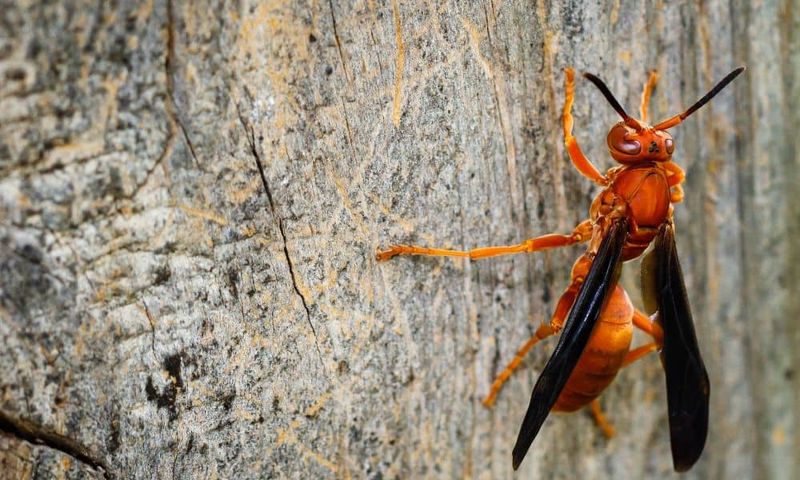
Wasps are not a single category of pest. Paper wasps, yellowjackets, mud daubers, and various solitary species all behave differently, occupy different niches, and pose different levels of risk.
Virginia Cooperative Extension explains that paper wasps are active predators of caterpillars and other soft-bodied insects, making them a functional part of garden pest management. University of Maryland Extension reinforces that predatory wasps contribute to keeping caterpillar and aphid populations in check in ways that benefit home gardens.
A nest that sits well away from foot traffic, in a corner of the garden shed or along a back fence, can often be left in place. The wasps will die off naturally as temperatures drop in fall, and the nest will not be reused the following year.
Removing it in winter, once the colony is gone, is straightforward and carries no risk. The question worth asking before any intervention is whether the nest actually threatens the people and pets who use the space, not simply whether wasps are present.
On the question of spearmint and beneficial insects: UF/IFAS confirms that mint flowers attract pollinators. Whether mint oil or mint foliage affects beneficial wasps, native bees, or other non-target insects has not been established in residential settings.
Growing spearmint as a container herb is a reasonable choice; presenting it as a wildlife-safe insect-management tool goes beyond what the evidence supports.
Know when to step back from an active nest
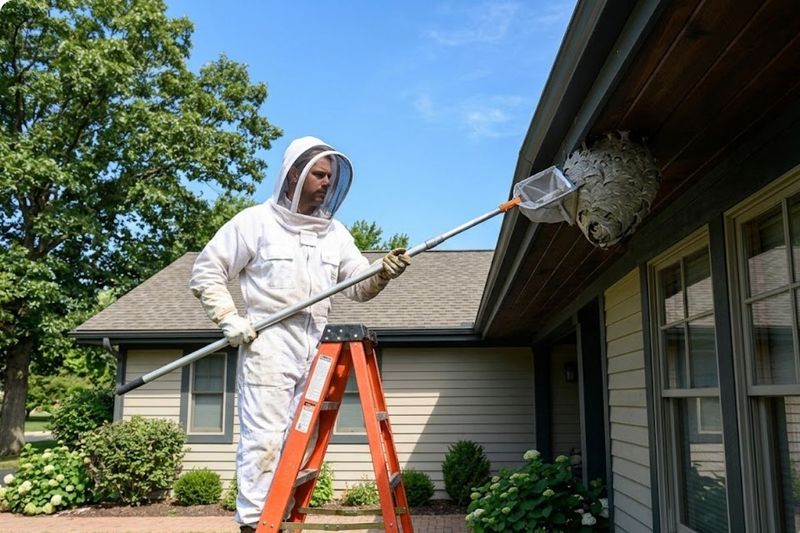
Mature wasp colonies can defend their nests aggressively when disturbed, and some people face a serious medical risk from stings. Texas A&M notes that some individuals can experience anaphylaxis from wasp stings, a potentially life-threatening allergic reaction that requires immediate emergency care.
Anyone with a known sting allergy, or who has never been stung and does not know their reaction level, should not attempt to remove or treat a nest themselves. Call a licensed pest-management professional instead.
Several approaches that circulate online are genuinely unsafe and should be avoided. Do not use gasoline or other flammable liquids near a nest.
Do not attempt to burn a nest. Do not seal an active nest inside a wall void, which can force wasps through interior spaces and create a far worse situation.
Avoid casually swatting at individual flying wasps near a nest, since that can trigger a defensive response from the colony. Targeting the nest directly, at the right time and with the right product, is always safer than attempting to eliminate individual workers.
When pesticide treatment is appropriate, University of Connecticut Extension cautions that even lower-toxicity options, including essential oil-based sprays, can irritate skin and eyes and require repeated application because they volatilize quickly. For any chemical treatment, use only a product registered for the intended site and follow its current label exactly.
The EPA wasp and hornet spray label instructs users to treat at low-activity periods, stand clear of the nest rather than directly beneath it, protect nearby vegetation and water, and wait before attempting nest removal. Label directions exist for safety reasons and should not be substituted with generalized advice.
Spearmint remains a worthwhile container herb for a Texas porch, useful in the kitchen and pleasant to have nearby, but it is not a substitute for these decisions. A fragrant pot and a sound management plan are two different things, and the second one is what actually keeps a summer patio comfortable.