
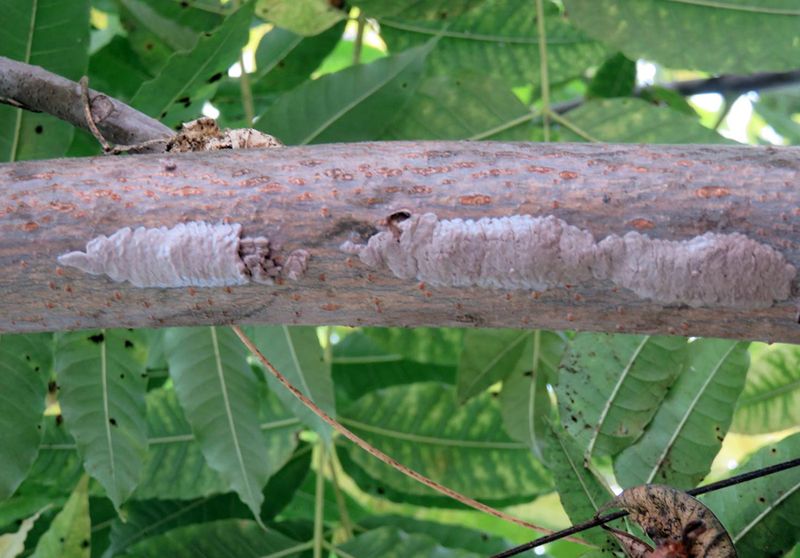
Spotted lanternfly egg masses are showing up on tree bark, fences, and outdoor gear across parts of North Carolina, and fall is a good time to start looking. These invasive insects damage a wide range of fruit, ornamental, and forest plants, and they leave behind sticky honeydew that coats surfaces and encourages sooty mold.
Removing the egg masses you can safely reach kills the eggs inside those masses and reduces the number of nymphs that may hatch, though it won’t wipe out every lanternfly in your neighborhood. Knowing what to look for, where to search, and how to dispose of what you find gives you a practical head start before spring hatch begins.
Fall Starts the Inspection Window, Not the End of the Problem
Spotted lanternfly egg masses don’t disappear when temperatures drop. NCDA&CS guidance places visible egg masses in North Carolina from approximately September through May, which means the window for finding and removing them stretches across fall, all of winter, and well into spring.
Early nymph activity can begin as soon as late March, so the practical advice is to start inspecting now and keep checking until hatch arrives.
Fall carries a real advantage: leaves are dropping or already gone, which makes surfaces easier to scan. Masses laid in September and October are fresh and conspicuous before weathering dulls them further.
That said, treating autumn as the only useful inspection period misses the bigger picture. A mass you overlook in November is still there in February and still worth removing in March, as long as nymphs haven’t emerged yet.
What removal accomplishes matters just as much as when you do it. Scraping off the egg masses you can safely reach kills the eggs inside those specific masses and reduces the number of nymphs that could hatch from them.
Cornell IPM notes that many masses are high in the canopy or hidden on surfaces away from the tree, so hand removal is always a partial measure. Adults can also move in from surrounding properties, and nearby masses you never find will still produce nymphs.
The goal is a targeted reduction in potential hatch from accessible masses, not the elimination of a local population. Keeping that expectation honest makes the effort more useful, not less.
Learn the Gray Putty and Cracked-Mud Appearance
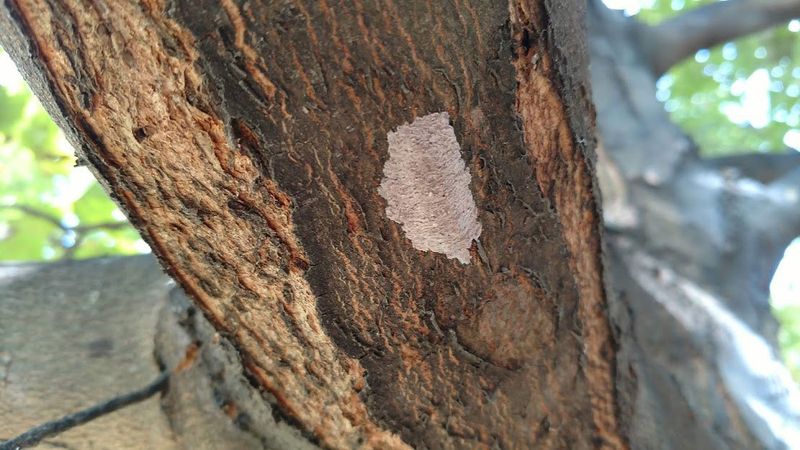
Knowing what you’re actually looking at saves a lot of second-guessing. A freshly laid spotted lanternfly egg mass looks like a smear of gray putty or modeling clay pressed onto a surface.
The coating is smooth and slightly waxy when new, roughly an inch long, and easy to mistake for a smudge of dried mud or a fungal patch if you’re not looking closely.
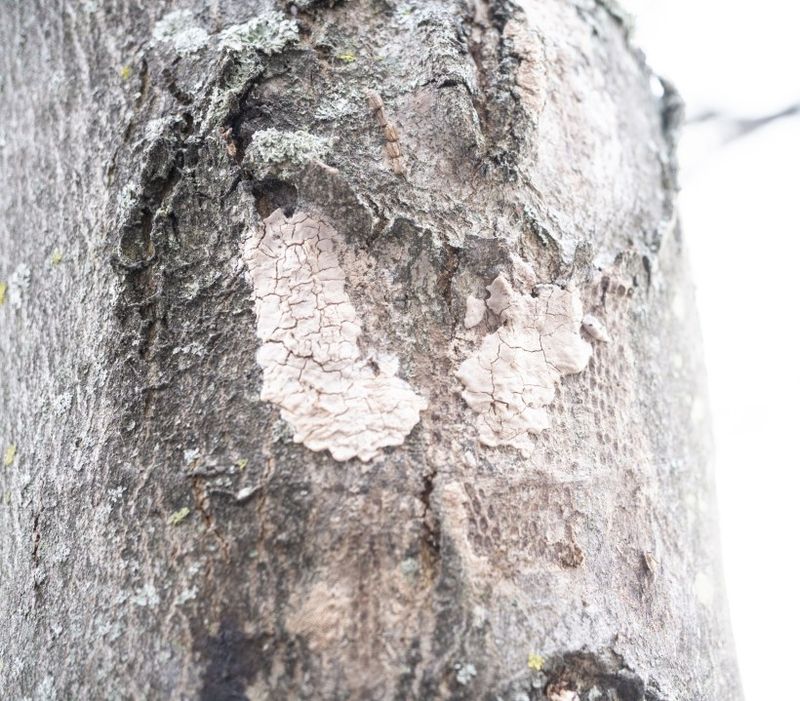
As the mass ages through fall and winter, that putty coating dries, shrinks, and cracks. Older masses take on a dull gray or brown tone and develop a texture that genuinely resembles cracked, dried mud.
USDA APHIS describes both appearances and notes that masses commonly turn up on trees, bricks, stones, fences, grills, equipment, and vehicles. The visual shift between fresh and old masses is significant enough that you might walk past an older one thinking it’s just weathering on the bark.
Inside the coating sit the eggs themselves. NCDA&CS describes each mass as containing roughly 35 eggs, while other extension sources put the range at approximately 30 to 50 eggs per mass.
Neither figure is exact for every mass, but the range gives you a sense of why removing even a single mass has practical value. When in doubt about an identification, photograph what you find before scraping, and report it if you’re outside an area where spotted lanternfly is already established.
Misidentifying a different insect’s egg case is a real possibility, and a photo keeps your options open.
Search Bark, Branches, Equipment, and Other Hard Surfaces
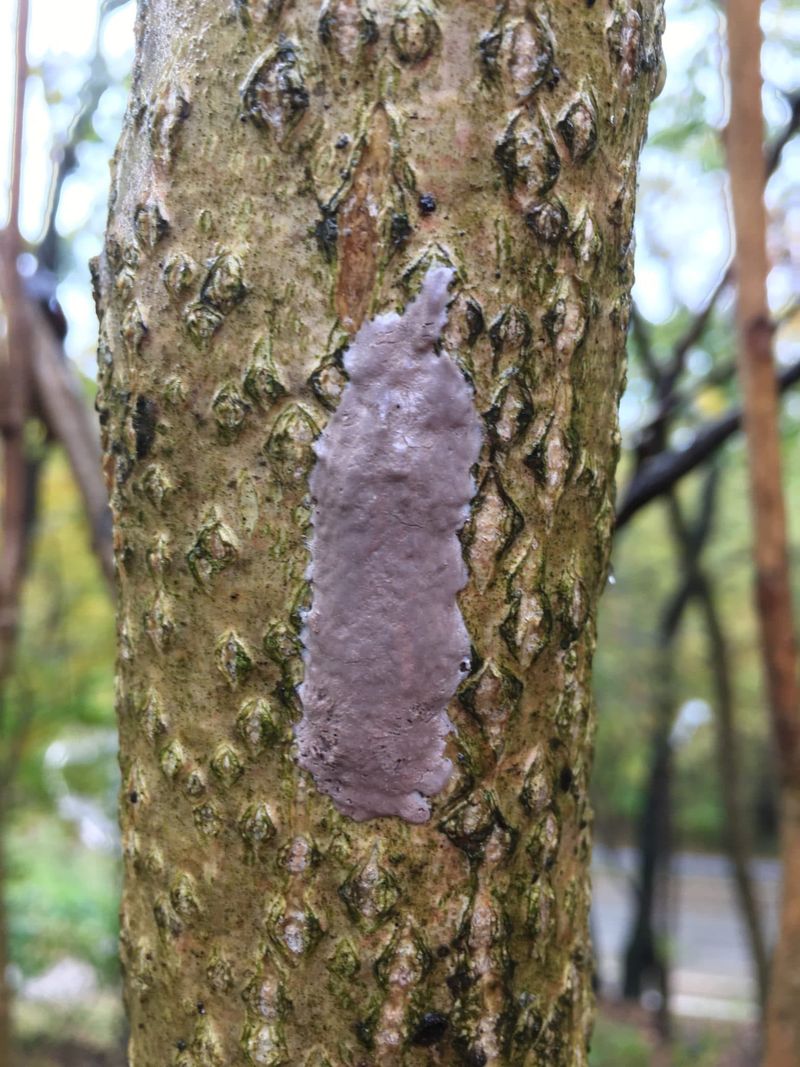
Tree bark is the surface most people check first, and it’s a reasonable place to start. Run your eyes along the lower trunk from ground level up to about shoulder height, paying attention to rough or furrowed bark where a mass can blend in easily.
Then move to the undersides of low branches, which are sheltered spots that lanternflies use regularly. Work outward from any tree where you’ve seen adult lanternflies feeding, since those trees are more likely to have masses nearby.
The search shouldn’t stop at the tree line. USDA APHIS confirms that egg masses turn up on bricks, stones, fences, decks, grills, lawn equipment, trailers, and vehicles, meaning a thorough inspection covers the whole yard and anything parked or stored in it.
Check the legs and undersides of outdoor furniture, the frames and axles of trailers, the flat surfaces of firewood stacks, and the undercarriages of vehicles that have been parked near infested trees. These non-tree locations are easy to overlook and are exactly how egg masses get transported to new areas.
Tree-of-heaven is a well-known preferred host for later nymphs and adult lanternflies, so any tree-of-heaven on or near your property deserves careful attention. Cornell IPM points out that egg masses are laid on many different tree species and on nonliving surfaces, so limiting your search to tree-of-heaven alone will leave gaps.
Maples, willows, black walnut, and other common yard trees can all host egg masses. A systematic sweep that moves from trees to structures to stored items gives you the most complete picture of what’s actually on your property.
Crush and Scrape Only Masses You Can Reach Safely
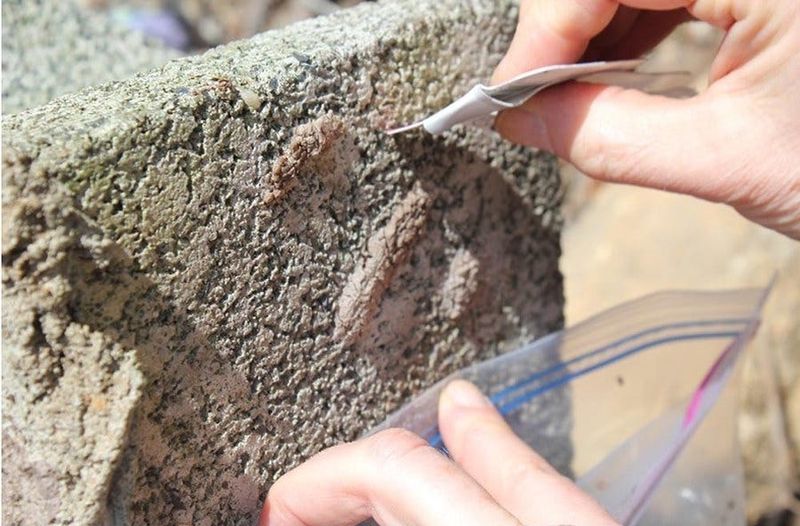
Gather your supplies before you start: a stiff plastic card, scraper card, or putty knife; a sealable plastic bag or container; and rubbing alcohol or hand sanitizer to put inside it. Pour a small amount of the alcohol or hand sanitizer into the bag first, so the collection vessel is ready before you make contact with any mass.
Having everything within arm’s reach means you won’t be fumbling with an open bag while trying to hold a scraper.
Position the scraper at the top edge of the mass and press firmly enough to crush or pop the eggs as you drag downward. The goal is to break the eggs during the scraping motion, not just dislodge the coating intact.
USDA APHIS recommends smashing and scraping the mass directly into the collection bag rather than onto the ground. Scraped material left on soil or a hard surface may still contain viable eggs, so skipping the bag step undermines the whole effort.
Work only from the ground or another stable, secure position. Cornell IPM guidance makes clear that masses high in the canopy or on upper trunks are outside the safe working range for most homeowners.
If a mass is above what you can reach comfortably without stretching, leave it alone. Removing the masses you can get to safely is still genuinely useful, and an injury from a fall is a far worse outcome than leaving a few high masses in place.
After scraping, seal the bag, wipe down your scraper with alcohol if you plan to reuse it, and move on to the next surface in your inspection route.
Seal the Eggs in Alcohol or Hand Sanitizer Before Disposal
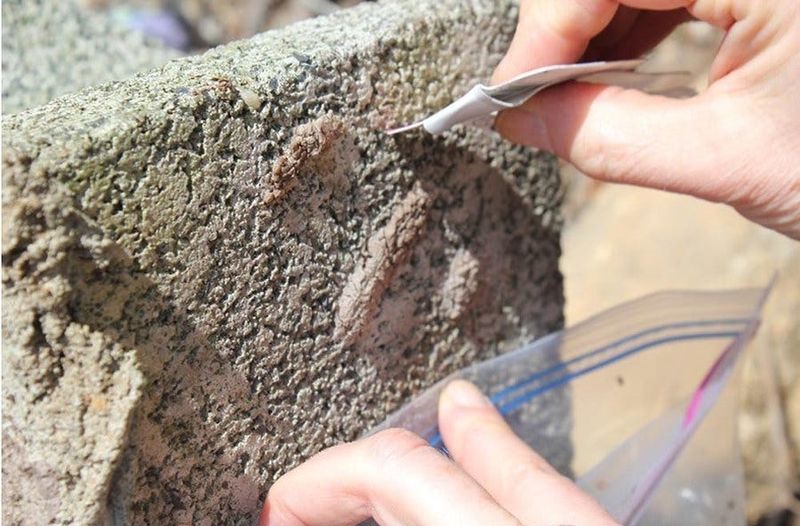
The disposal step is where the removal actually becomes effective. Before you scrape a single mass, put a small amount of rubbing alcohol or hand sanitizer into a sealable plastic bag or a lidded container.
That liquid is what kills the eggs once they’re scraped in. Without it, you’re just moving the problem from one surface to another.
Scrape the mass directly into the prepared bag, keeping the opening close to the surface so material doesn’t scatter. Once the mass is inside, press out any excess air, seal the bag tightly, and give it a moment to make sure the scraped material is in contact with the alcohol or hand sanitizer.
Cornell IPM guidance specifies leaving the material in the solution before sealing and placing the sealed bag in the trash. The sealed bag goes into your household garbage, not into a compost bin or open recycling container.
Dropping scraped material onto the ground or brushing it off onto a hard surface is not a reliable disposal method. Spotted lanternfly eggs are protected by a waxy coating that helps them survive environmental exposure, and an intact or partially intact mass on the ground may still hatch.
USDA APHIS guidance is consistent on this point: smash, scrape, collect in alcohol or hand sanitizer, seal, and trash. Following the full sequence for every mass you remove is what makes the work count.
One sealable bag can hold material from multiple masses, so you don’t need a separate bag for each one you find.
Leave High Masses Alone and Avoid Whole-Tree Sprays
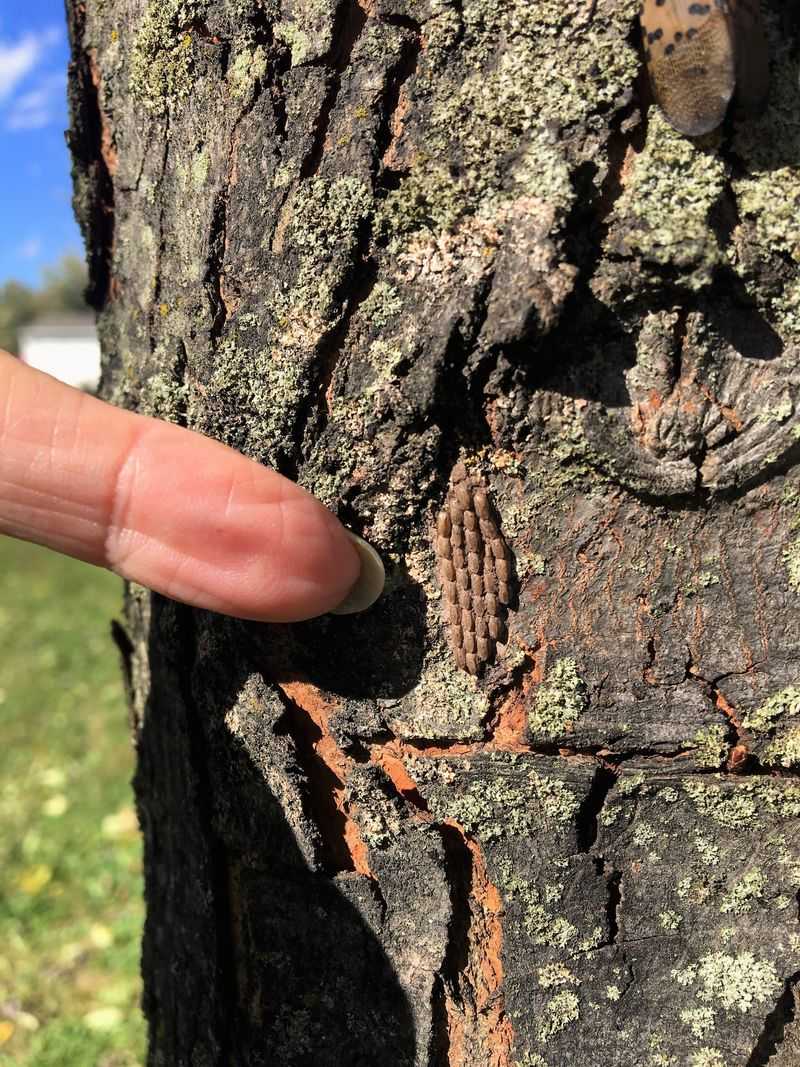
Reaching for a mass that’s 10 feet up a trunk is not worth the risk. Penn State Extension specifically warns against using ladders to access hard-to-reach egg masses.
A fall from even a modest height can cause serious injury, and the benefit of removing one additional mass doesn’t come close to justifying that risk. If a mass is above comfortable arm’s reach from the ground, note its location, move on, and focus your effort on what’s accessible.
Research makes clear that high masses are common, not exceptional. A peer-reviewed survey study in Environmental Entomology found that more than half of egg masses in surveyed plots occurred above 3 meters, and that experienced observers detected only about 52% of masses on average.
Those figures put hand-removal in honest perspective: accessible inspection still reduces the number of potential nymphs from the masses you can reach, but a large portion of any population’s egg masses may be beyond practical removal for most homeowners. That’s a limitation worth understanding, not a reason to skip the inspection.
Oil treatments and insecticide sprays come up regularly as alternatives for high or numerous masses, but they carry real complications. Penn State’s management guide reports variable results with oil treatments, notes that direct coverage of each mass matters for any effect, and flags the risk of phytotoxic injury to plants.
Spraying an entire tree with oil or insecticide is not straightforward homeowner guidance. Penn State’s pesticide safety guidance emphasizes following product-label directions precisely, considering non-target effects on pollinators and other beneficial insects, and consulting local Extension recommendations before applying any pesticide for spotted lanternfly.
If chemical treatment is something you’re considering, start with your county Extension office rather than a general internet search.
Check Movable Items Before They Leave the Property
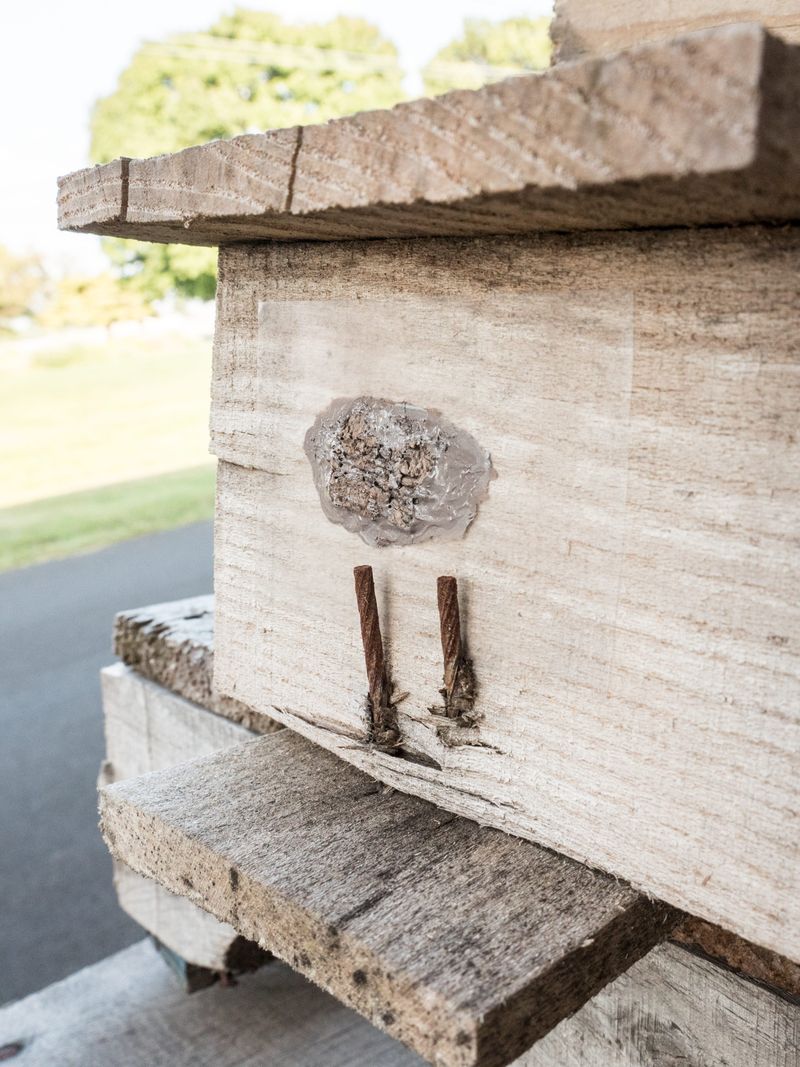
Spotted lanternfly has spread to new areas largely because egg masses ride undetected on vehicles, trailers, and outdoor equipment. A mass laid on a car bumper, a trailer axle, or a stack of firewood looks exactly the same as one on a tree trunk, and it travels just as well.
Checking movable items before you transport them from an infested area is one of the most direct ways to reduce the risk of carrying eggs somewhere they haven’t established yet.
USDA APHIS guidance on cleaning outdoor items before moving covers vehicles, trailers, outdoor furniture, lawn equipment, and firewood as priority items to check. Run through the same visual inspection you’d do on a tree: look at flat surfaces, undercarriages, recessed areas, and anywhere a mass could settle without being immediately obvious.
Pay particular attention to items that have been sitting outdoors near trees or vegetation for an extended period.
USDA APHIS also recommends scraping any masses found on movable items using the same alcohol-and-sealed-bag method you’d use on a tree. Don’t assume a quick visual pass is enough if the item has been parked for weeks near an area with known lanternfly activity.
Checking and cleaning movable items reduces the risk of transporting egg masses to a new location, though no inspection process can guarantee that every mass is found. The effort still matters, especially if you’re hauling firewood, towing a camper, or moving equipment across county lines into areas where the pest hasn’t yet established.
Report Suspected Finds and Keep the Benefit in Perspective
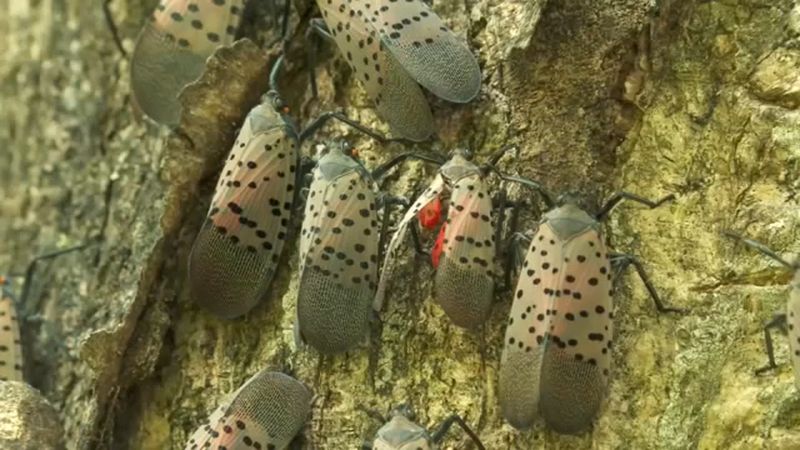
Photographing a suspected egg mass or adult lanternfly before you scrape it is a simple step that can have real value. If you find something outside an area where spotted lanternfly is already established, NCDA&CS asks that you report the find with a photo, the location, and the date.
Early detection in new counties helps the state respond before a population gets a foothold, and a clear photograph makes it possible for specialists to confirm or rule out the identification.
As of NCDA&CS’s February 10, 2026 announcement, established spotted lanternfly populations had been confirmed in seven North Carolina counties: Forsyth, Guilford, Caldwell, Rockingham, Davidson, Rowan, and Caswell. That list reflects the status at that date; the state continues active surveillance, and the situation may have changed since.
Homeowners in counties not on that list should be especially attentive to reporting, since a find in a new area is exactly the information state agencies need.
Keeping the benefit of removal in honest perspective makes the work more sustainable. The Environmental Entomology survey research and Cornell IPM guidance both make clear that hand removal is a partial measure.
Safe inspection and careful disposal reduce the number of potential nymphs from the masses you can reach, and checking movable items reduces the risk of spreading the pest further. Neither action eliminates spotted lanternfly from your property or neighborhood, but both contribute something real.
Every mass removed is a batch of eggs that won’t hatch, and that’s a reasonable return on an afternoon spent walking your yard with a scraper and a bag.