
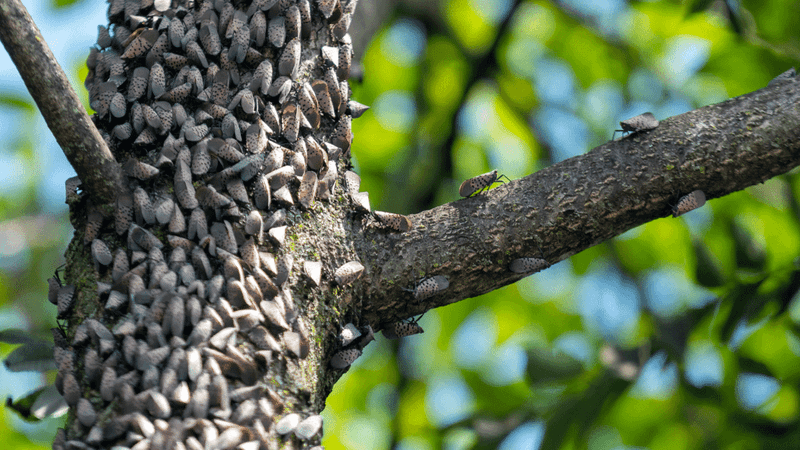
An invasive insect that first made headlines in Pennsylvania has now put down roots in parts of North Carolina, and homeowners in several counties are starting to notice it in their yards. Spotted lanternfly feeds on dozens of trees and plants, leaving behind a sticky residue that draws other pests and coats leaves in black mold.
Knowing what to look for, which trees attract the most activity, and how to respond without harming backyard wildlife can make a real difference for North Carolina families trying to protect their outdoor spaces.
North Carolina has established spotted lanternfly populations—but not statewide
Spotted lanternfly (Lycorma delicatula) is a sap-feeding planthopper native to Asia that has spread across multiple U.S. states since its first detection in Pennsylvania in 2014. According to North Carolina Department of Agriculture and Consumer Services reporting from February 10, 2026, the state has confirmed established populations in seven counties: Forsyth, Guilford, Davidson, Rowan, Caswell, Rockingham, and Caldwell.
That finding reflects where the pest is known to be reproducing and surviving, not a declaration that every North Carolina yard is affected.
Outside those seven counties, residents may still encounter individual lanternflies that have hitchhiked on vehicles, trailers, or outdoor equipment. The pest is not considered uniformly established statewide, and homeowners in other parts of North Carolina should treat any sighting as something worth reporting rather than assuming a full infestation is underway.
In residential landscapes, spotted lanternfly feeds by piercing plant tissue and drawing out sap. USDA APHIS guidance on spotted lanternfly notes that feeding produces honeydew, a sugary liquid waste that drips onto surfaces below and attracts ants, wasps, and flies.
That honeydew can also support black sooty mold, which coats leaves and bark and reduces a plant’s ability to photosynthesize effectively.
Heavy feeding can stress ornamental plants and create messy, unappealing conditions in a yard. However, spotted lanternfly should not be treated as an automatic death sentence for landscape trees.
NC State Extension reporting on spotted lanternfly in North Carolina makes clear that healthy, mature trees may tolerate moderate feeding, and documented severe damage has been concentrated in specific situations such as grapevines and young saplings rather than across every infested property.
Late summer and fall bring the clearest signs
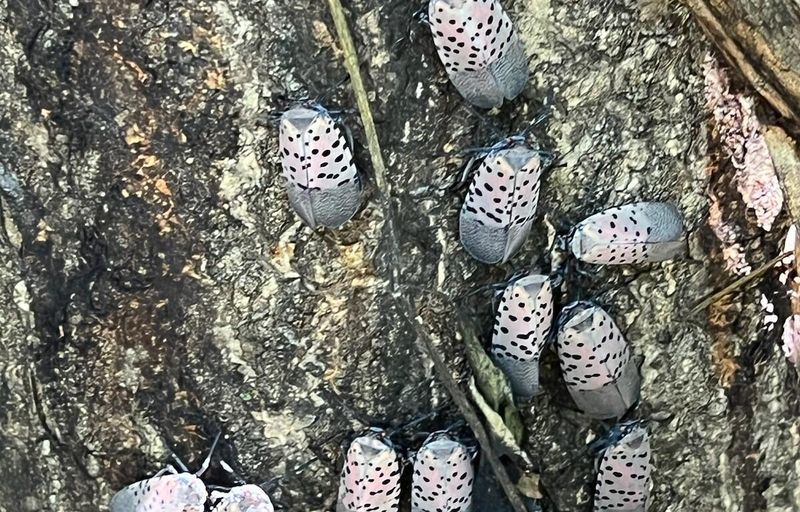
Recognizing spotted lanternfly at the right time of year is half the battle. North American populations generally follow a single-generation annual cycle, with adults becoming active and highly visible in late summer and continuing through fall.
During that window, adults gather on host plants to feed and begin laying eggs before temperatures drop. USDA Forest Service spotted lanternfly research confirms that eggs overwinter on bark and a wide range of hard outdoor surfaces, which is why fall and winter inspections are especially productive for finding egg masses before they hatch.
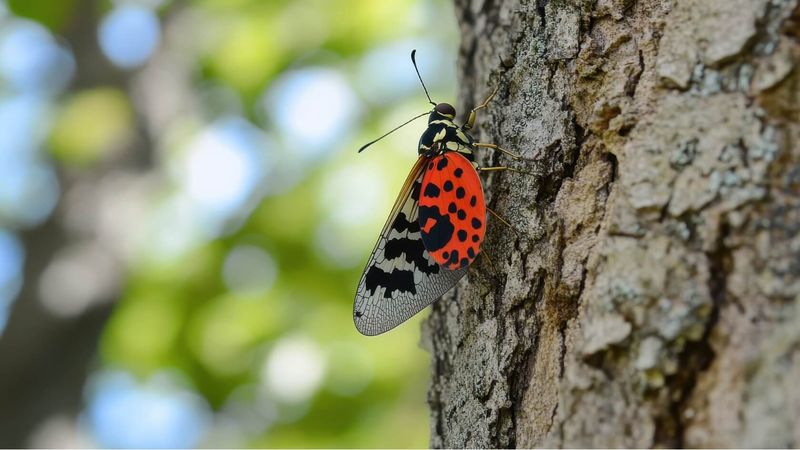
Adults are roughly one inch long and easier to identify than most people expect. Their forewings are gray-brown with distinct black spots arranged in rows.
When the wings open, the hindwings flash red near the base, transitioning to black and white toward the edges. That burst of color is often the first thing homeowners notice when a group takes flight from a tree trunk.
Egg masses look very different from the adult insect. APHIS identification guidance describes them as gray or brown patches that resemble dried mud or cracked putty, typically one to two inches long and laid in rows of twelve to thirty eggs.
They can appear on tree bark, wooden fencing, stone walls, and many other surfaces.
Before destroying a suspected egg mass, take a moment to confirm what you are looking at. Several other insects also deposit egg masses on bark and hard surfaces, and mistaking an unrelated cluster for spotted lanternfly eggs could lead to unnecessary destruction.
University of Maryland Extension spotted lanternfly guidance recommends comparing photographs with verified reference images or submitting a photo to your local extension office when uncertain. Timing also varies: temperature, local conditions, and latitude all affect when adults peak and when egg laying begins, so fall is a general pattern rather than a fixed calendar date that applies uniformly across the state.
Tree-of-heaven is a preferred host, not the whole explanation
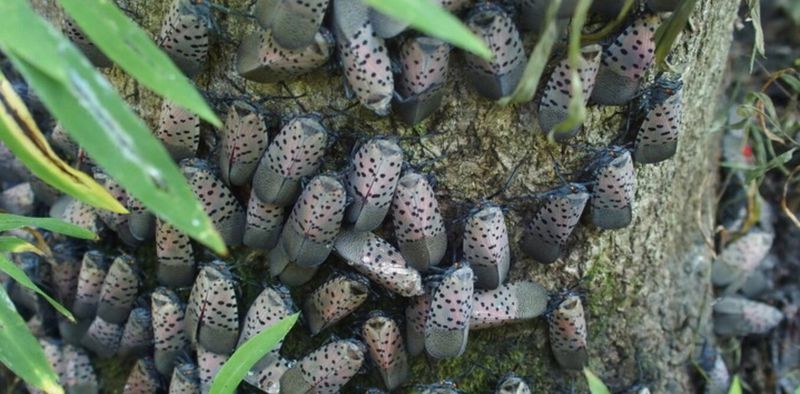
Walk past a tree-of-heaven (Ailanthus altissima) in late summer and you may find dozens of spotted lanternflies clustered on the bark. That pattern makes sense biologically: tree-of-heaven is the insect’s most preferred host, particularly for late-stage nymphs and adults that are feeding intensively before the cold season.
The tree is also an invasive species in its own right, common in disturbed areas along roadsides, fence lines, and the edges of wooded lots throughout North Carolina.
The connection between this tree and spotted lanternfly is real, but the idea that one backyard tree is solely responsible for a recurring infestation does not hold up. A peer-reviewed study documenting spotted lanternfly host associations identified feeding relationships with more than 103 plant taxa worldwide, including maples, walnuts, willows, sycamores, fruit trees, grapevines, and many native and ornamental woody plants.
NC State Extension’s spotted lanternfly resource reinforces that the pest’s host range in North America is broad and continues to be studied.
What makes tree-of-heaven particularly significant is that it improves the insect’s performance. Adults that feed on it tend to be more successful reproductively, and the tree provides both a feeding resource and a congregation site.
However, tree-of-heaven is not biologically required. A peer-reviewed study on spotted lanternfly host plant suitability found that the insect can complete its development and reproduce under experimental conditions without access to tree-of-heaven at all.
Removing a tree-of-heaven from your property may reduce a favored feeding and aggregation site, cut down on honeydew dripping beneath that tree, and eliminate an invasive plant that was causing its own problems. Those are real benefits.
But adults can fly onto your property from neighboring yards or wooded areas, and they can continue feeding on maples, fruit trees, or grapevines long after the tree-of-heaven is gone. Penn State Extension management guidance for landscape professionals specifically notes that host removal alone is unlikely to consistently reduce spotted lanternfly numbers on a property.
Inspect the whole property for egg masses
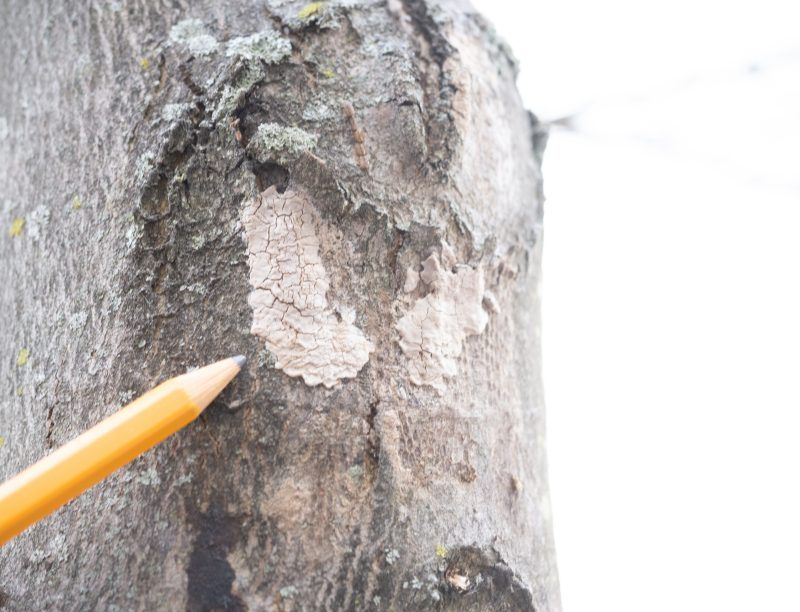
Most people check the trees where they see the most adult activity and stop there. That approach misses a lot of egg masses.
Spotted lanternfly females do not limit their egg laying to the trunk of the nearest tree-of-heaven. They deposit eggs on almost any hard surface that offers a stable resting spot, and those surfaces travel.
USDA APHIS guidance on spotting egg masses asks homeowners to check vehicles, trailers, campers, firewood, outdoor furniture, grills, fences, stone walls, and any equipment stored outside, particularly before moving those items from one location to another. A car parked under a tree in an established county and then driven across the state can carry egg masses hundreds of miles without the driver knowing.
Fall and winter are the most productive inspection seasons because leaves are off the trees and egg masses on bark become easier to spot. Work systematically around the property, checking the bark of any large tree at eye level and below, then moving to manufactured surfaces.
The tree where you saw the most adults in August may not be the same surface where females chose to lay eggs.
For confirmed egg masses within reach, the response is straightforward. University of Maryland Extension spotted lanternfly home garden guidance recommends scraping the mass off the surface with a card or putty knife and crushing it, or dropping it directly into a container of rubbing alcohol or hand sanitizer.
Scraping the mass onto the ground and walking away leaves viable eggs behind.
Residents who live outside the seven established counties and spot what looks like a spotted lanternfly or an egg mass should report it rather than simply destroying it. Photographs with a clear view of the insect or egg mass, along with the location, are exactly what state officials need.
The North Carolina Department of Agriculture and Consumer Services spotted lanternfly reporting page explains how to submit a sighting and what information to include.
Identify tree-of-heaven before reaching for a saw
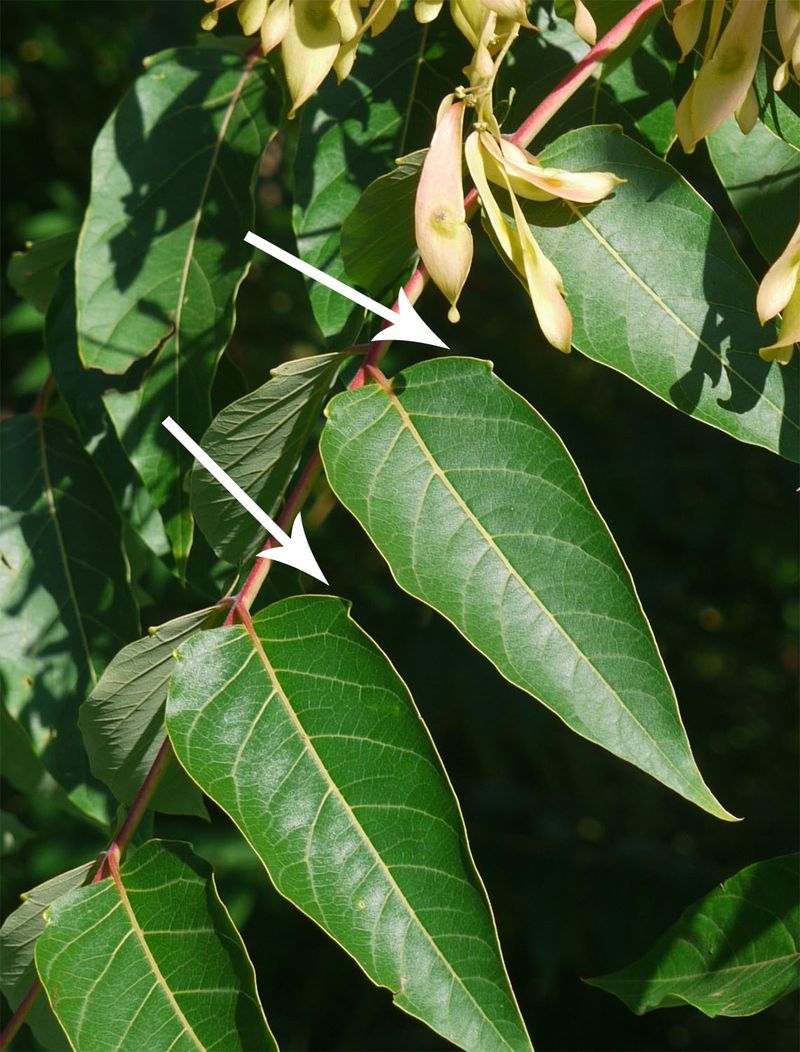
Before removing any tree suspected of attracting spotted lanternflies, spend a few minutes confirming what species you are actually looking at. Tree-of-heaven can look strikingly similar to two native plants that belong in North Carolina landscapes: staghorn sumac and black walnut.
Cutting down a native tree by mistake eliminates a valuable wildlife resource and does nothing to address your spotted lanternfly problem.
NC State Extension’s plant profile for Ailanthus altissima describes tree-of-heaven as a fast-growing tree with large alternate compound leaves that can reach two to three feet in length, each made up of eleven to forty-one leaflets. The base of each leaflet has one or two small rounded teeth near the stem, a detail that sumac leaflets lack.
In late summer, the tree produces large, showy clusters of winged seeds that turn from green to tan as they mature.
The smell test is one of the most reliable identification tools available without any equipment. Crush a leaf or break a small twig and tree-of-heaven releases a strong, unpleasant odor often described as rancid peanut butter or burned rubber.
Native sumac and black walnut have their own distinctive smells, but neither matches that particular sharpness.
Once you are confident in the identification, assess the situation before doing anything else. APHIS spotted lanternfly information notes that tree-of-heaven is a common feature of disturbed urban and suburban landscapes, which means the tree may be larger, more established, or closer to structures than a simple backyard removal project can handle safely.
A tree with a trunk more than a few inches in diameter, one growing near power lines or a fence line, or one on a slope may require professional assessment before any cutting begins.
Control the root system instead of making a quick cut
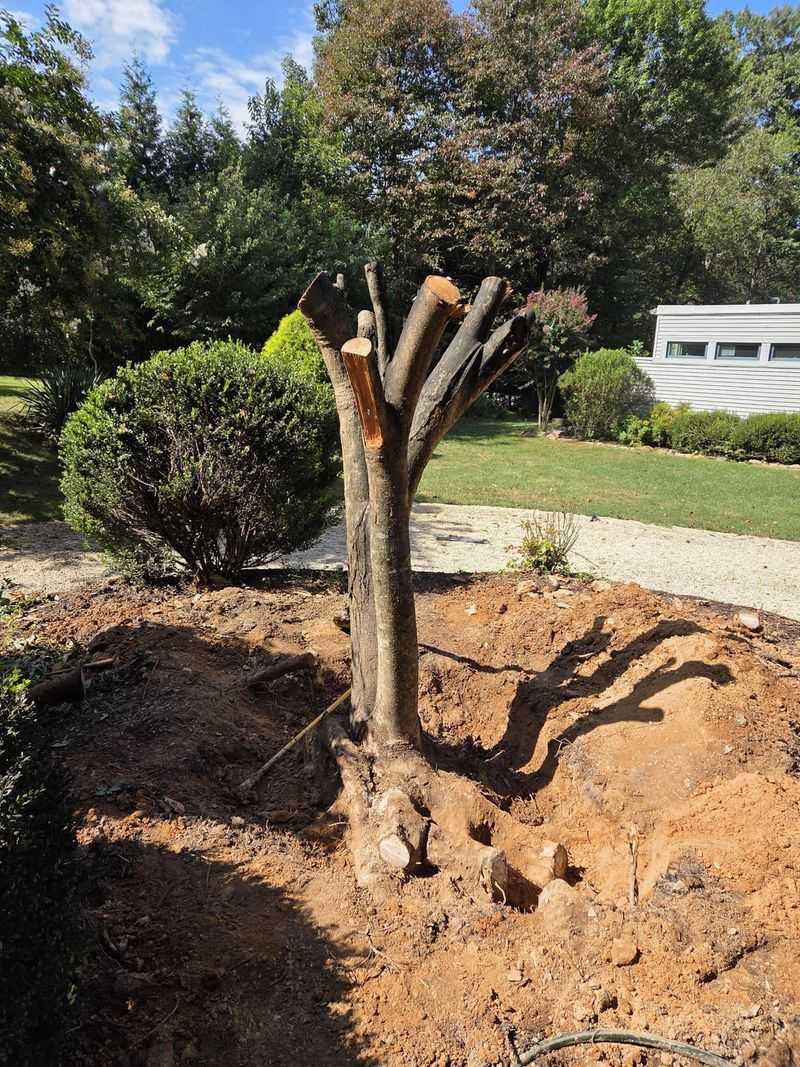
Cutting tree-of-heaven at the base feels like a decisive action, but it often makes the problem worse before it gets better. The root system responds to cutting by sending up dozens of stump sprouts and root suckers, sometimes within weeks.
A single tree that was a manageable presence in your yard can turn into a thicket if the roots are not addressed at the same time as the trunk.
NC State Extension’s tree-of-heaven control guidelines describe removal as a root-system management challenge rather than a simple cutting job. Effective control typically involves applying a label-compliant herbicide to the freshly cut stump immediately after cutting, or using a basal bark or hack-and-squirt treatment on standing trees during the appropriate season.
Timing matters because the tree’s physiology affects how well herbicide moves into the root system.
Penn State Extension’s tree-of-heaven management resource emphasizes that follow-up monitoring over multiple growing seasons is standard practice, not optional. Root suckers will likely appear even after a well-executed initial treatment, and those sprouts need to be addressed before they re-establish.
Homeowners should plan for at least two to three seasons of follow-up rather than expecting a one-time effort to resolve the problem.
For spotted lanternfly treatment on other plants, the same principle of targeted, label-compliant application applies. Penn State Extension’s spotted lanternfly management guide recommends basing any pesticide decision on confirmed identification of the pest, the population level observed, the specific plant being treated, and the directions on the product label.
Spraying the entire yard with a broad pesticide can harm beneficial insects, soil organisms, and wildlife without meaningfully reducing a spotted lanternfly population.
Penn State Extension guidance on avoiding home remedies for spotted lanternfly is direct on this point: homemade sprays, essential oils, vinegar solutions, and off-label pesticide applications are not approved for spotted lanternfly control and may be illegal under federal pesticide law. For large trees, high populations, valuable plantings, or any situation involving systemic insecticides, a licensed or certified pesticide professional is safer and more likely to produce a useful result than improvised household treatments.
Use a measured, wildlife-aware response
A practical response to spotted lanternfly does not require treating every tree on the property or panicking at the first sighting. Start by confirming the insect through photographs compared with verified reference images or a submission to your county extension office.
Once identification is solid, walk the property systematically and check bark, fences, vehicles, and outdoor furniture for egg masses during fall and winter, when they are easiest to spot.
Destroy confirmed egg masses within reach by scraping and crushing them or submerging them in rubbing alcohol. Monitor the trees most likely to attract feeding activity, including any tree-of-heaven, maples, fruit trees, or grapevines on the property.
If you live outside the seven established counties and find what looks like spotted lanternfly, report it to the North Carolina Department of Agriculture and Consumer Services with photographs and the specific location before taking any other action.
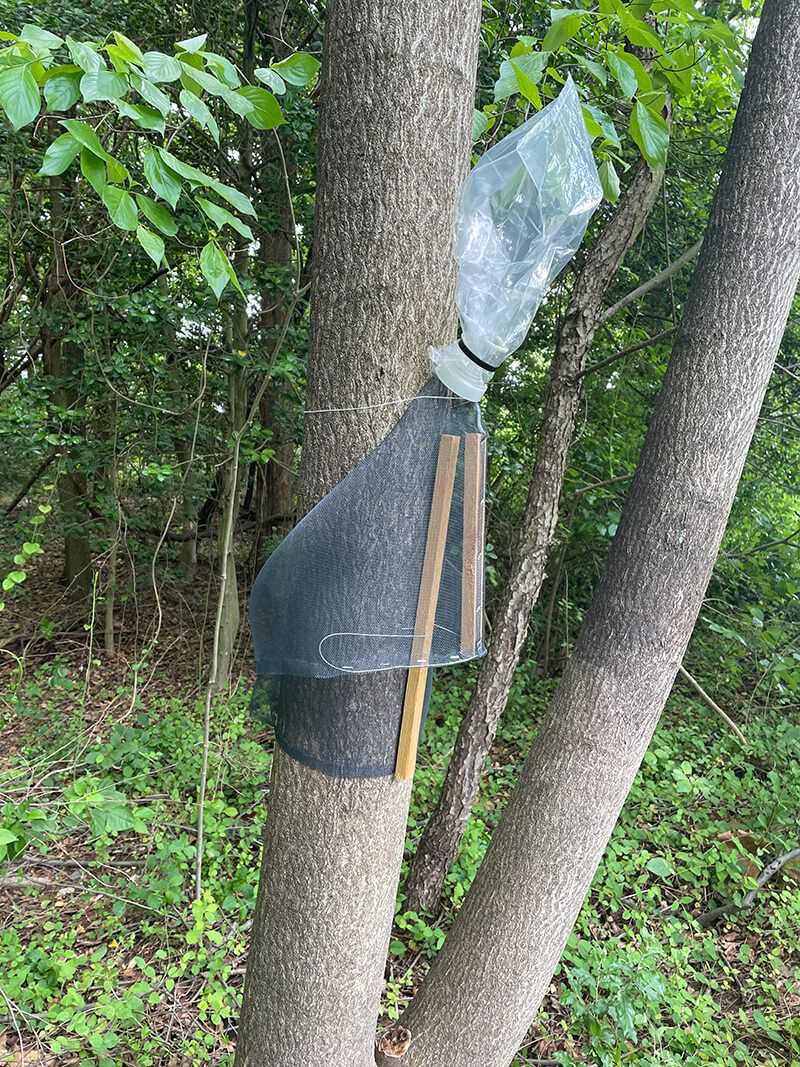
Trapping is sometimes discussed as a way to reduce nymph movement, but the standard sticky band approach carries a real wildlife risk. Unprotected sticky bands placed around tree trunks can trap songbirds, small mammals, butterflies, native bees, and other beneficial insects that have nothing to do with spotted lanternfly.
Penn State Extension management guidance is clear that any sticky band must include a physical wildlife-exclusion barrier around the outside of the band, and the trap should be checked frequently so non-target animals can be freed quickly. Wildlife-safer circle traps are a better alternative for homeowners who want a trapping option that reduces the risk to birds and beneficial insects.
When tree removal, systemic insecticide applications, or high-population situations exceed what a household project can handle safely, a licensed professional is the right call. University of Maryland Extension spotted lanternfly guidance for home gardens reinforces that targeted management, not yard-wide spraying, is the standard for responsible residential response.
Managing tree-of-heaven may improve conditions on your property and reduce a favored gathering spot, but flying adults from neighboring properties and woodlands can continue arriving regardless. The goal is steady, informed management, not a single action that promises to make spotted lanternfly disappear.