
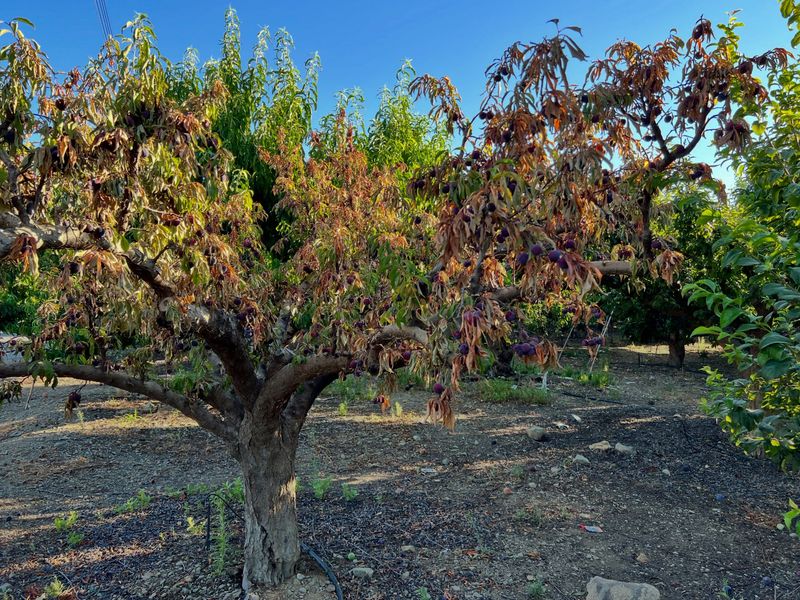
Your peach tree may look perfectly healthy right now, but the cure for next spring’s curled, reddish leaves has to happen while the tree is asleep. Peach leaf curl is a common fungal disease in California backyards, and once leaves pucker it is too late to fix that season’s infection.
The good news is that the prevention window is clear and simple to follow. Here is how to time it, apply it safely, and plan ahead.
How peach leaf curl gets started
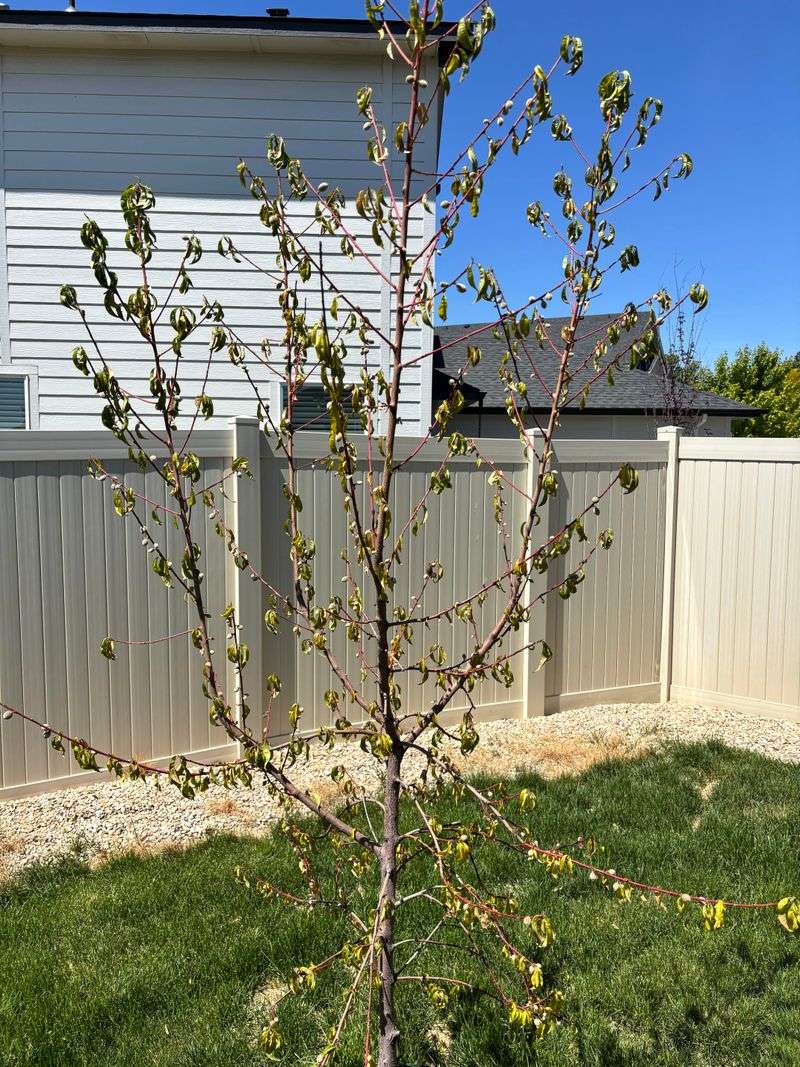
Peach leaf curl is caused by a fungus, and its spores can stick around on the outside of a tree all winter. They persist on tree surfaces, including twigs and buds.
Think of a bud as a surface where spores may sit, not a hiding spot where an active infection is growing.
According to UC IPM guidance on peach leaf curl, rain or irrigation water can move those spores around. Moving spores alone does not cause trouble, though.
Infection depends on cool, wet conditions at the moment young leaves are emerging in spring.
That is why a single rainy day in November does not doom your tree. The real risk comes later, when buds swell and tender new leaves open while the weather is still cool and damp.
Spores already on the branches can reach those fresh leaves and get established.
This timing explains why prevention has to happen before spring growth. Once new leaves are out and infected, there is nothing in a spray bottle that reverses it for that year.
The protective step belongs in the dormant season, when the tree has dropped its leaves and the buds have not yet started to grow.
The disease is also not an automatic outcome. Severity varies from year to year with weather, and some seasons are mild.
Still, if your tree is one that gets it, a little planning in winter saves a lot of frustration in spring.
Which trees may need preventive treatment?
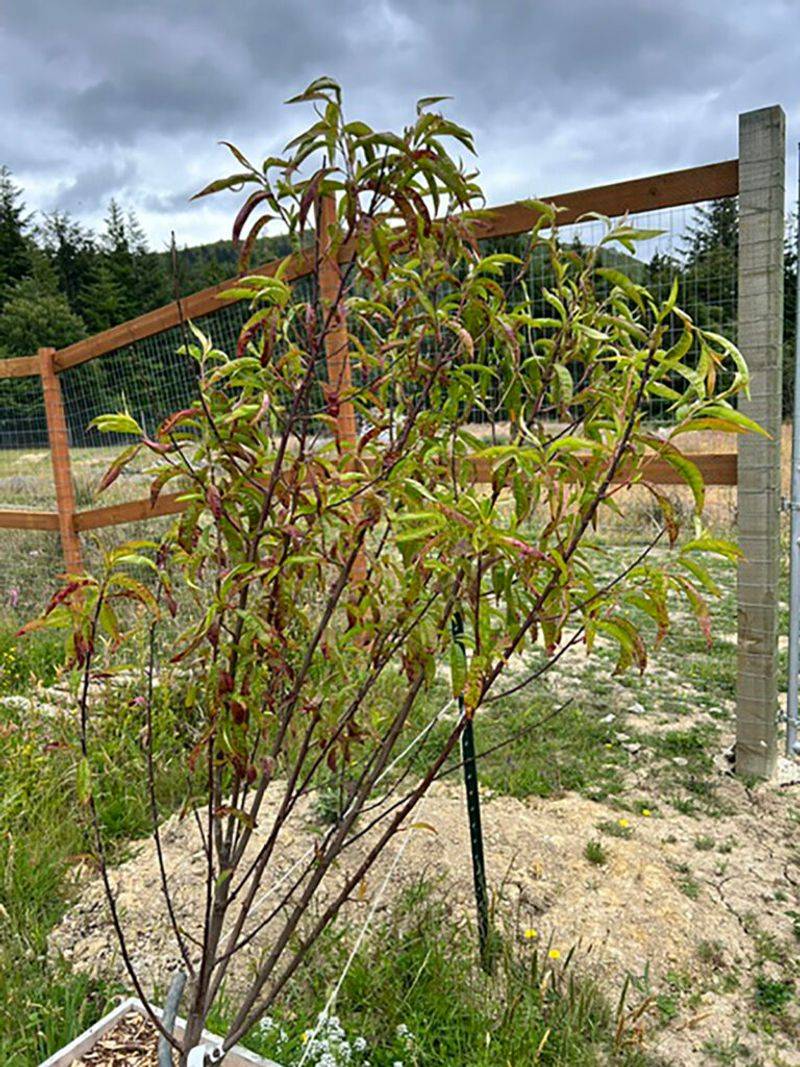
Peach and nectarine trees are the ones to watch. If you grow either one in a California yard and it has had curled, reddish leaves in the past, it is a good candidate for a preventive dormant treatment.
Even a tree with no history may be susceptible, so the variety matters.
Some varieties offer another way to cut down on the problem. UC IPM lists Frost, Indian Free, Muir, and Q-1-8 among peaches, and Kreibich among nectarines, as resistant or partially resistant choices.
They can be a smart pick when you are planting a new tree or replacing an old one.
Resistant does not mean immune. Frost, for example, may still need fungicide during its first two to three years.
Treat the label on the nursery tag as a head start, not a guarantee.
A quick way to sort your yard: check the tag or your purchase records for the variety name. If you cannot find it, look back at past springs.
Did leaves thicken, pucker, or turn red and yellow? That history tells you a lot.
If you are shopping for a new tree this winter, ask your local nursery which varieties do well in your part of California. Climate differs from the coast to the Central Valley, and local staff often know which trees perform best nearby.
Time the first treatment by dormancy
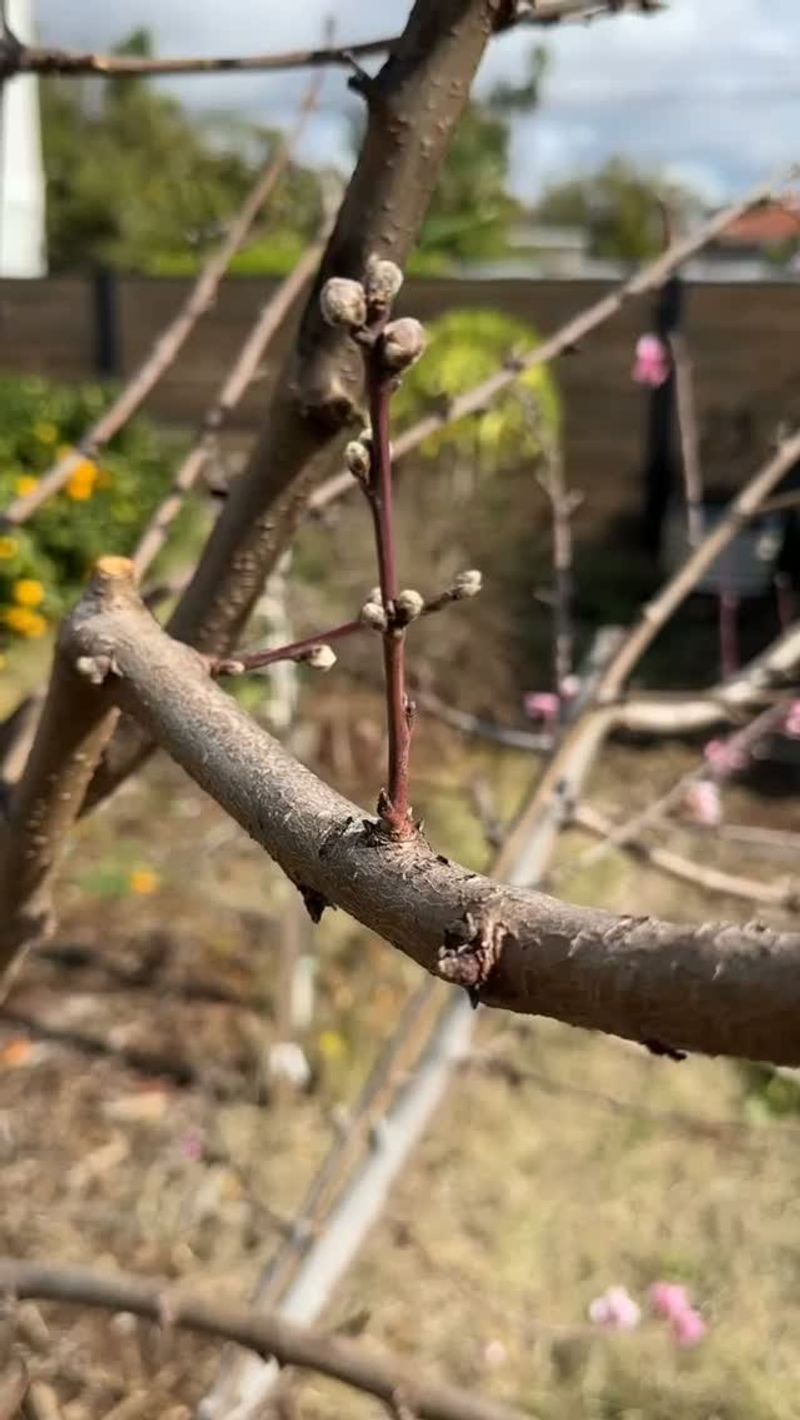
The main preventive window runs from after the leaves fall until before new buds develop. The tree tells you when you are in it.
A bare tree with tight, closed buds is ready, while a tree with swelling buds or green tips is running out of time.
In many California locations, UC IPM notes that late November or December is common for this step. Warmer southern locations may hold their leaves later, sometimes into early January.
A tree that still has leaves is not yet dormant, so waiting is fine.
This is why there is no single date that works for the whole state. A tree in a cool northern foothill yard and one near the southern coast can be weeks apart.
Go by what your own tree is doing rather than the calendar.
The first storm of the season is not the timing rule either. Rain can move spores, but spraying does not need to beat the first rain.
Plan around dormancy, and choose a day when conditions let you apply the product properly, following the label.
For commercial orchards, UC IPM agriculture guidelines follow the same dormant-season logic. Home gardeners can borrow that thinking: treat during dormancy, not after growth begins.
A handy habit is to mark a reminder for the weekend after the last leaves drop. Then check the buds before you spray, so you know you are still ahead of spring growth.
Consider a second treatment only in especially wet conditions
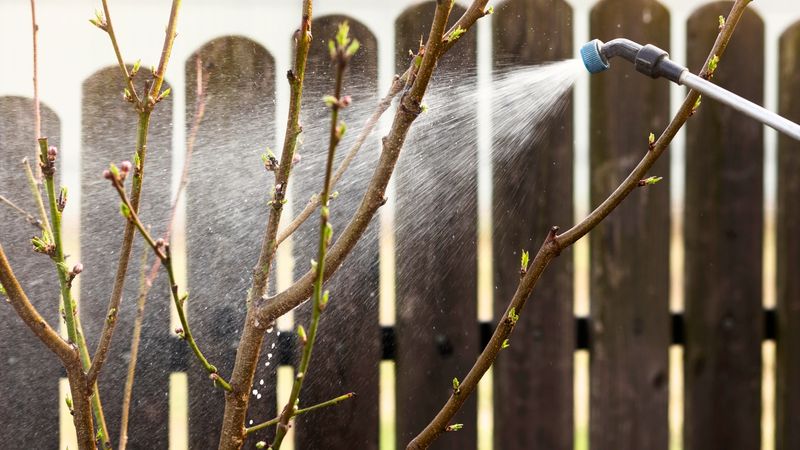
For most backyard trees, one early dormant treatment does the job. A second one is not a routine chore.
It is an option for certain situations.
According to UC IPM, a second late-dormant treatment may be considered in high-rainfall areas or in especially wet winters. Think of a North Coast yard that gets soaked for weeks, or a year when storms keep rolling through late winter.
The deadline matters. Any second treatment has to be finished before green leaf tips are visible.
Once those little green points show up, the dormant window has closed.
A simple way to decide is to look at your own conditions in late winter. Has it been unusually wet where you live?
Is your tree one that has struggled before? If the answer is no and your first treatment went on well, you can likely skip the second.
Walk out to the tree every week or so as winter fades. Buds will swell and loosen before leaves emerge, and that is your signal.
If you plan to apply again, do it while the buds are still closed, and follow the same label directions as the first time.
Keeping it conditional protects your time, your money, and the environment around your yard.
Apply a labeled product carefully
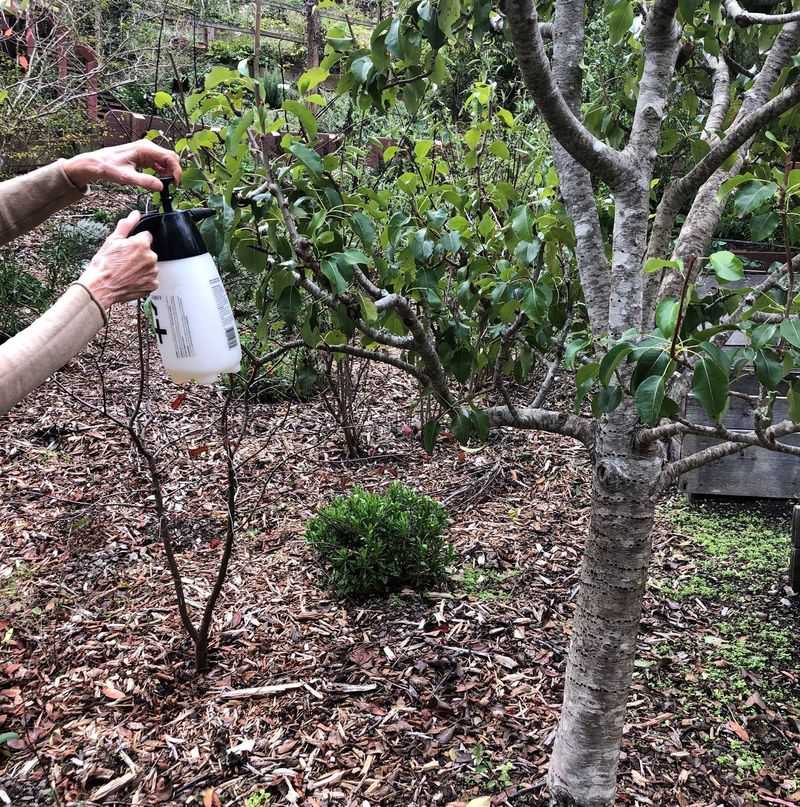
Coverage is the heart of this job. The product needs to reach branches and twigs thoroughly, since that is where spores can persist.
Take your time and work around the whole tree, including the inner branches.
Product choice comes down to the label. Use only a product whose current label permits the crop, site, and target disease.
Labels and registrations can change, so read the one on the container you are holding rather than relying on last year’s memory. This article does not offer a homemade mix, a dose, or a brand pick, because the label is the authority.
Follow the directions on that label for mixing, timing, and restrictions. Wear whatever protective equipment it requires.
EPA pesticide safety tips also stress reading directions closely and storing products safely.
Watch the weather. Pick a calm day so the spray does not drift onto neighbors’ plants, pets, or play areas.
Avoid applying right before heavy rain, which can cause runoff into storm drains and creeks.
That matters in California, where winter runoff often ends up in waterways. UC IPM guidance also cautions that some products, such as copper, can build up in soil when used repeatedly.
Finish by cleaning your equipment away from drains and storing leftovers as the label directs.
What to do when symptoms appear
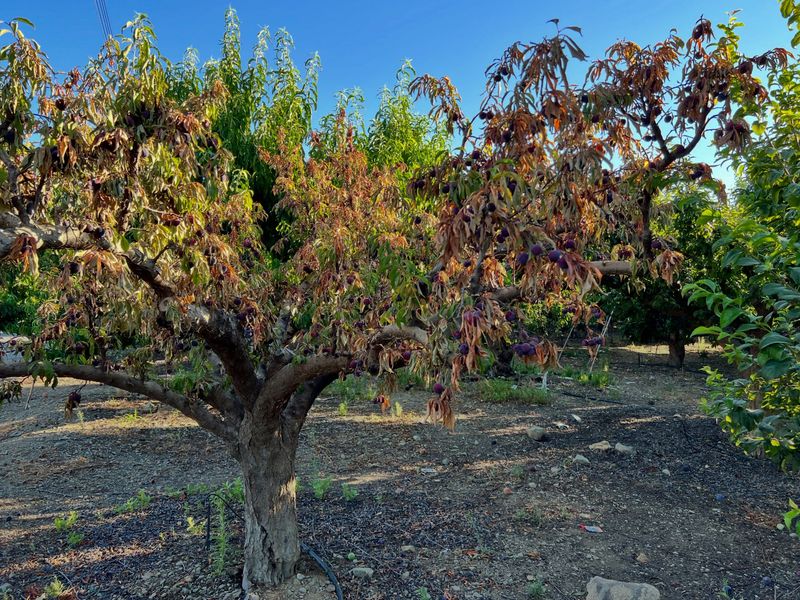
Spring symptoms are hard to miss. Leaves can turn reddish, thicken, pucker, curl, or fade to yellow or gray.
Shoots may look distorted too.
If you spot these signs, spraying will not help that season. UC IPM says post-symptom treatment is ineffective, and sprays during the growing season may even harm foliage.
Please hold off on the sprayer.
Picking off curled leaves or pruning infected shoots has not been shown to control the disease either, so you do not need to feel guilty about leaving them. Keep the tree healthy with regular watering and care, and let the season play out.
There is reassuring news. Affected leaves often drop and are replaced by healthier ones once the weather turns warm and dry.
Fruit infection is uncommon, so a curled spring does not mean your harvest is lost. Repeated severe infection over several years can reduce growth and fruit production, though.
Healthy-looking replacement leaves do not mean the problem is gone. The spores can still be on the tree, so next year’s prevention still matters.
A smart move now is to take notes and photos. Jot down the date symptoms appeared and the variety, so you can plan your dormant treatment with confidence next winter.
Plan next season’s prevention
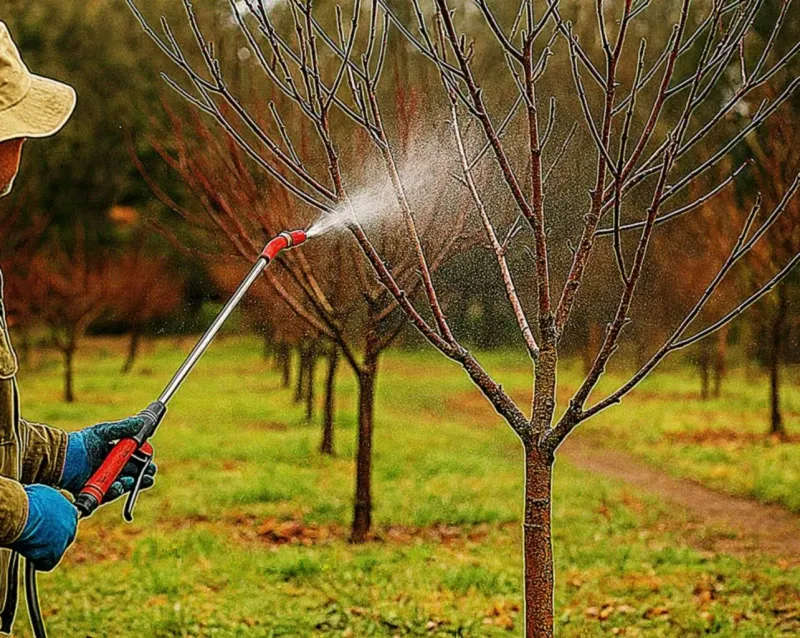
Here is your winter checklist. First, confirm whether your peach or nectarine is a susceptible variety.
Second, wait for the leaves to fall. Third, apply a labeled product before buds begin to grow.
Fourth, consider a second treatment only in a high-rainfall area or very wet winter, and finish it before green leaf tips appear, as UC IPM outlines.
A sleeping tree is the cue, and the calendar is only a guess.