
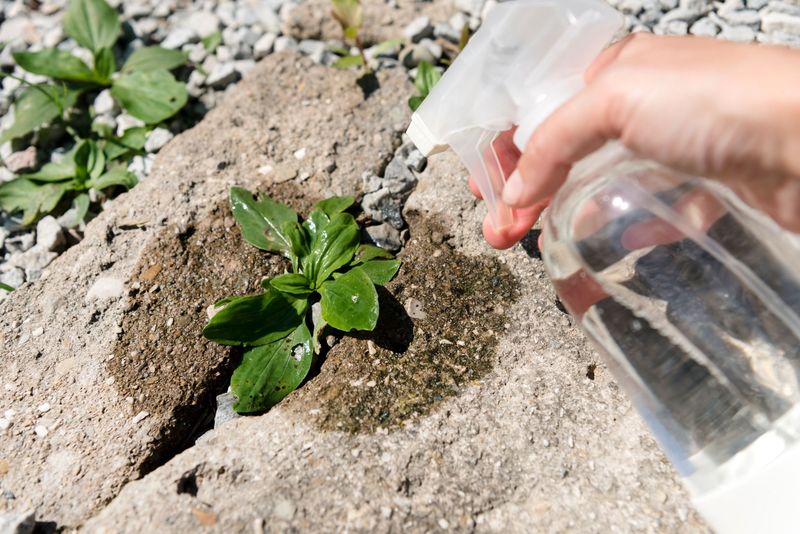
Every fall, weeds seem to surge back just when you thought the garden was winding down, and the idea of pouring another bottle of expensive herbicide on them gets old fast. Plenty of gardening advice online promises that plain white vinegar from your kitchen cabinet can wipe them all out for pennies.
The reality is narrower and more useful than that promise suggests, and understanding the difference could save your lawn, your vegetable bed, and your time.
Vinegar Burns Foliage Without Promising Eradication
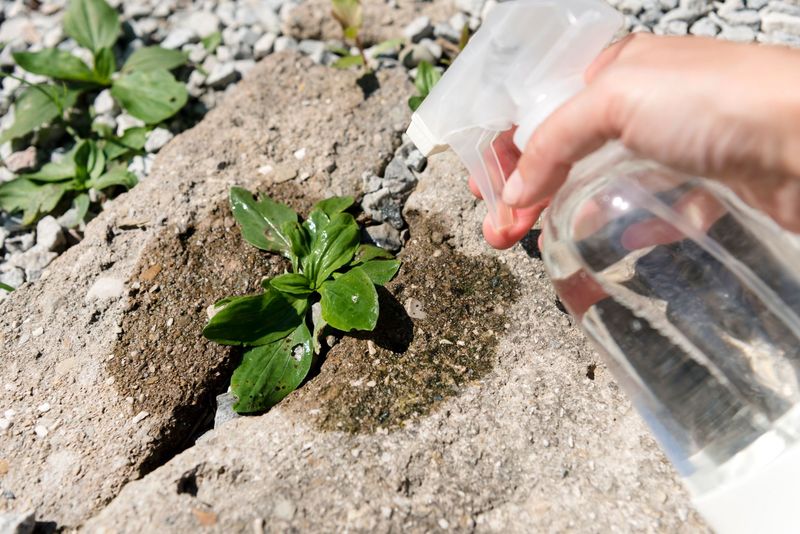
Acetic acid, the active compound in white vinegar, works by disrupting the waxy coating on leaf surfaces and letting moisture escape rapidly. Foliage that is thoroughly wetted can turn brown within hours, which looks dramatic and feels satisfying.
That speed is real, but it tells you only that the leaves were damaged, not that the plant is finished.
Roots, rhizomes, and any tissue the liquid never touched can survive the treatment entirely. A weed whose top growth browns off but whose root system stays intact underground often pushes out new leaves within days, especially in the warm soils common across Florida and Texas in late fall.
Oregon State University Extension notes that vinegar does not move reliably into root tissue the way systemic herbicides do.
Household vinegar, at roughly 5% acetic acid, has a narrow potential use against certain small annual weeds under the right conditions. Framing it as a complete replacement for a weed-control program, or as a product that reliably eliminates the need for labeled herbicides, goes further than the evidence supports.
Visible browning is a foliage response, not a death certificate, and extension guidance consistently cautions against reading too much into that rapid surface change.
Small, Young Annual Weeds Offer the Narrowest Use Case
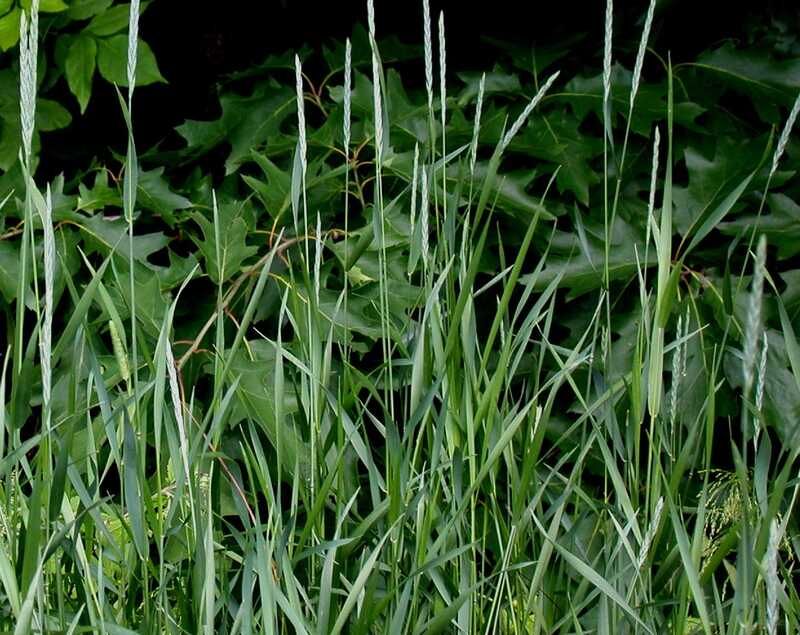
Before reaching for any acetic-acid product, look closely at what is actually growing. Young annual weeds, seedlings with only two or three leaves that are actively growing and not drought-stressed, represent the most plausible targets for a household-vinegar spot treatment.
Their leaf tissue is tender, their root systems are shallow, and a good soaking of the foliage is more likely to cause lasting damage than it would on a mature plant.
Contrast that with what vinegar handles poorly. Mature weeds with hardened cuticles, drought-stressed plants that have already reduced their metabolic activity, and established grasses tend to show less response.
OSU Extension guidance specifically flags deep-rooted or rhizomatous perennials as poor candidates, and that list matters enormously in Southern gardens.
Florida betony, nutsedge, bermudagrass, dandelion, and poison ivy all have underground structures that can regenerate after foliage is burned back. Results also shift with temperature, spray coverage, and the concentration used, so even within the annual-weed category, outcomes are not guaranteed.
Extension sources confirm that species identity, plant age, and moisture status can each change whether a treatment causes lasting injury or merely a temporary setback. Identifying the weed before choosing a control method is the most useful first step.
Direct Contact Also Creates Direct Plant Risk
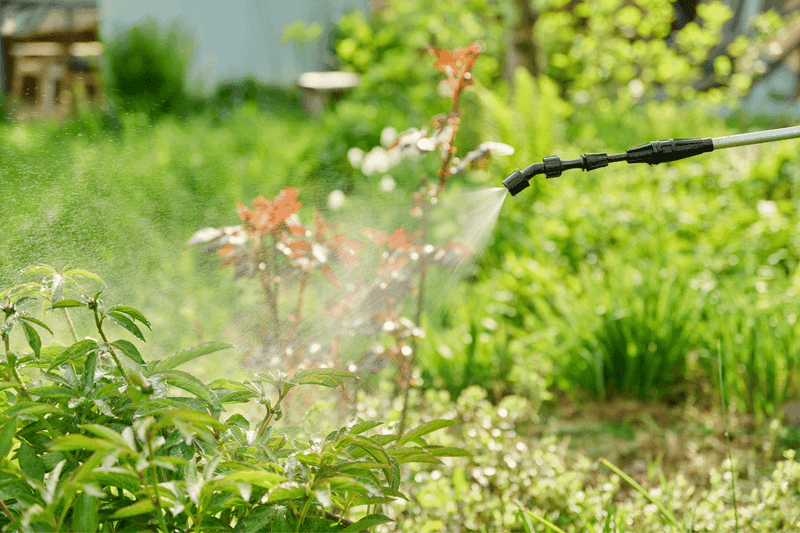
Contact action cuts both ways. For acetic acid to cause foliage burn, it must reach and thoroughly wet the leaf surface, meaning light misting or partial coverage leaves untreated tissue and the entire root system unaffected.
Getting adequate coverage on a target weed often means applying enough liquid that drift or runoff becomes a real concern for nearby plants.
Acetic acid is nonselective, which means it damages whatever green tissue it contacts, not just weeds. Turfgrass blades, vegetable leaves, flower petals, and shrub foliage can all show injury if they are hit by overspray.
The EPA biopesticide fact sheet for acetic acid confirms its contact, nonselective mode of action, which is why broadcast application across areas containing desirable plants is a poor choice regardless of the concentration used.
Spot treatment, meaning directing the spray tightly onto the target weed only, is the safer approach. Shielding neighboring plants with a piece of cardboard or plastic while spraying can reduce the chance of accidental contact.
OSU Extension warns that applying vinegar to weeds growing in turf risks injuring the surrounding grass, which is a straightforward trade-off that many readers underestimate before they try it. Discussing what acetic acid can do to foliage is different from recommending that anyone use an unlabeled food product as an herbicide.
One Vinegar Spray May Not Prevent the Next Weed Flush
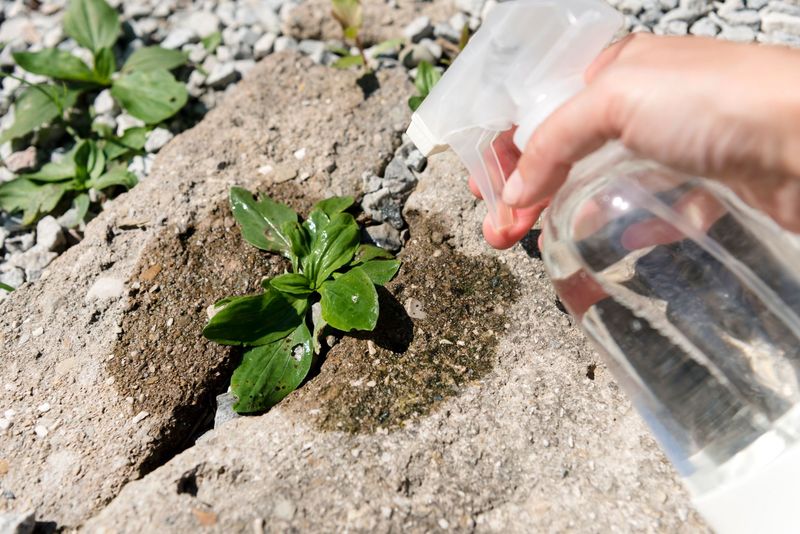
Hoping that a fall vinegar application will keep weeds from coming back through winter or into spring is a reasonable wish, but acetic acid does not work that way. Its contact action burns what is present at the moment of application and leaves no lasting residual in the soil that would stop new seeds from germinating afterward.
Weed seeds already waiting in the soil are unaffected by a surface spray.
Repeat treatments are the predictable outcome when relying on any contact-only product, and OSU Extension notes that multiple applications are commonly necessary even when the first spray produces visible browning. A Florida-based comparison reported by UF/IFAS Extension Marion County found that plots treated with 5% acetic acid required five to nine retreatments over the course of a year, while plots using 20-30% acetic-acid products required three to five, and glyphosate plots required fewer retreatments in that same experiment.
That comparison involved specific products, concentrations, sites, and conditions. It does not prove that every household-vinegar fall spray will fail in your yard, and it does not guarantee that any particular number of reapplications will produce lasting control.
What it does illustrate is that contact-only treatments tend to demand ongoing attention rather than delivering one-and-done results. A separate finding from the same research context noted that fall herbicide applications did not reduce spring weed competition in that experiment, which further weakens the premise that a late-season spray reliably sets up a cleaner spring.
Household Vinegar Is Not a Labeled Acetic-Acid Herbicide
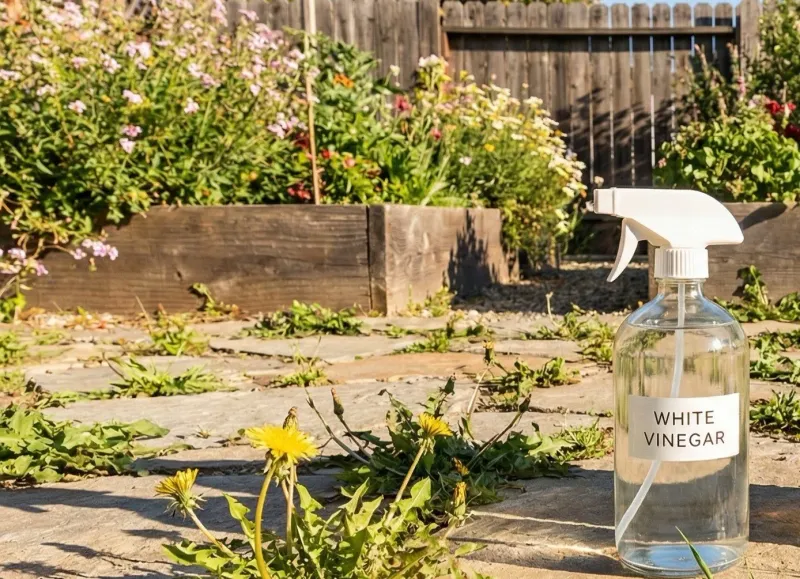
Kitchen white vinegar and commercial acetic-acid herbicides share the same active compound, but they are not the same product. Food vinegar is typically around 5% acetic acid, a concentration that is strong enough to burn tender foliage under the right conditions but considerably weaker than what registered herbicidal products contain.
Commercial products formulated for weed control may carry acetic acid concentrations of roughly 15%, 20%, 25%, or 30%.
Higher concentrations can produce faster and more pronounced foliage burn, but they also introduce serious safety concerns that a kitchen bottle does not. The EPA biopesticide fact sheet for acetic acid notes that stronger formulations can cause irreversible eye injury and significant skin irritation, and products carrying a “Danger” signal word require the protective equipment listed on the label.
Calling a product food-grade, natural, or organic does not make it automatically safe at higher concentrations.
Florida readers face an additional consideration. UF/IFAS Extension guidance on postemergent herbicides makes clear that only products labeled for herbicide use are legally authorized for that purpose in Florida.
Ordinary kitchen vinegar is not registered or labeled as a pesticide, which means applying it as one may conflict with state requirements. The Florida Homeowner Herbicide Guide from UF/IFAS directs readers to check product labels and state requirements before using any acetic-acid product as an herbicide, and that step applies whether the product is a familiar kitchen staple or a commercial formulation.
Avoid Homemade Weed-Killer Mixes That Add New Hazards
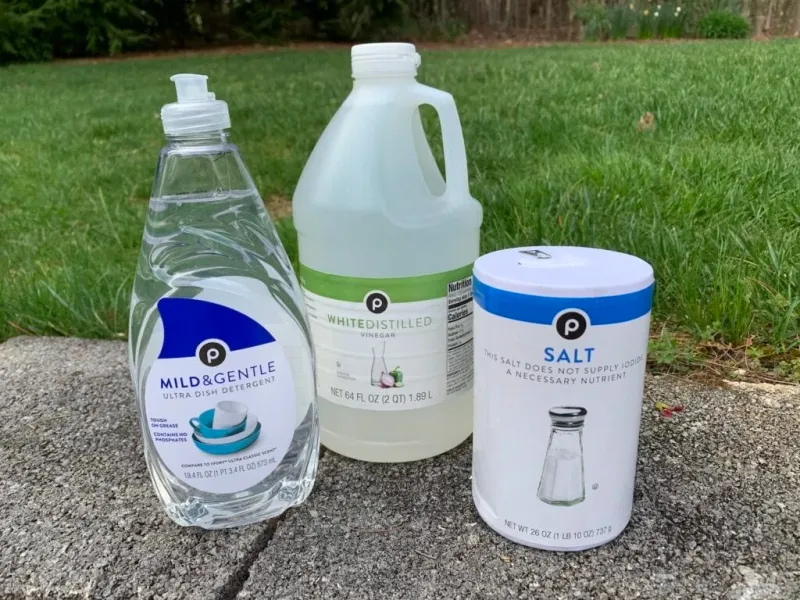
Adding other kitchen ingredients to vinegar does not upgrade it into a safer or more effective herbicide. Salt is the most common addition, but it carries a serious downside: sodium chloride accumulates in soil, can impair the growth of desirable plants long after the weeds are gone, and moves with water into areas you did not intend to treat.
Beds, borders, and lawn edges treated with a vinegar-salt mix can end up with compacted, salt-damaged soil that resists replanting.
Dish detergent is often included in homemade formulas as a surfactant to help the liquid stick to leaves. Dish soap is a cleaning product with additives designed for washing dishes, not a validated herbicide adjuvant, and it has not been evaluated for routine landscape herbicide use.
UF/IFAS Extension’s Florida Homeowner Herbicide Guide specifically cautions that homemade vinegar, salt, and detergent mixtures may be ineffective against established weeds and can cost more per application than a labeled herbicide.
Bleach and ammonia present chemical hazards beyond plant injury. Penn State Extension and similar guidance warn against using household chemicals such as bleach as weed-control substitutes because they can harm soil organisms, injure nontarget plants, create exposure risks for the applicator, and react dangerously with other substances.
The availability of a chemical in your kitchen does not establish its safety, legality, or effectiveness for landscape use, and UF/IFAS postemergent herbicide guidance reinforces that only labeled products should be used for weed control in Florida landscapes.
Match Durable Control to the Weed and the Site
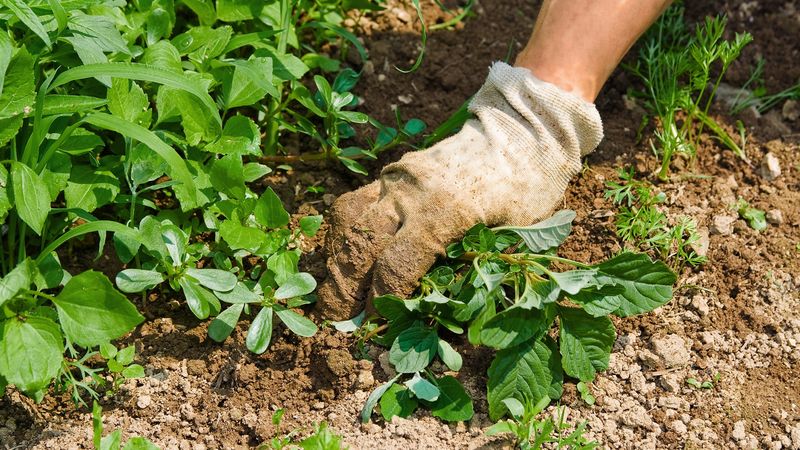
Long-term weed management starts with knowing what you are dealing with. Perennial weeds with deep roots, rhizomes, or tubers, including nutsedge, Florida betony, bermudagrass, and dandelion, do not respond reliably to contact treatments of any kind.
For those, the most practical nonchemical approach is pulling or digging when the soil is moist enough to release roots cleanly. Removing as much of the underground structure as possible, and cutting off any flowers before seeds can set, gradually reduces the weed’s ability to spread and regenerate.
OSU Master Gardener guidance on mechanical weed removal reinforces that preventing seed production is one of the highest-value steps a gardener can take, since a single plant left to flower can release hundreds of seeds into soil that may remain viable for years. For landscape beds, applying roughly 3 to 4 inches of mulch over bare soil blocks the light that many weed seeds need to germinate, and extension sources recommend keeping mulch pulled back from plant stems and trunks to prevent rot.
In Texas vegetable areas and other managed growing spaces, Texas A&M AgriLife Extension’s weed management guidance emphasizes identifying the weed species first, then choosing a targeted method that protects the crop and complies with label requirements. When a registered herbicide is the right tool, the Florida Homeowner Herbicide Guide and equivalent state resources can help readers match the product to the weed and the site, which produces better results than any single-ingredient kitchen remedy applied broadly.
Use Acetic Acid Only Within a Clear Decision Rule
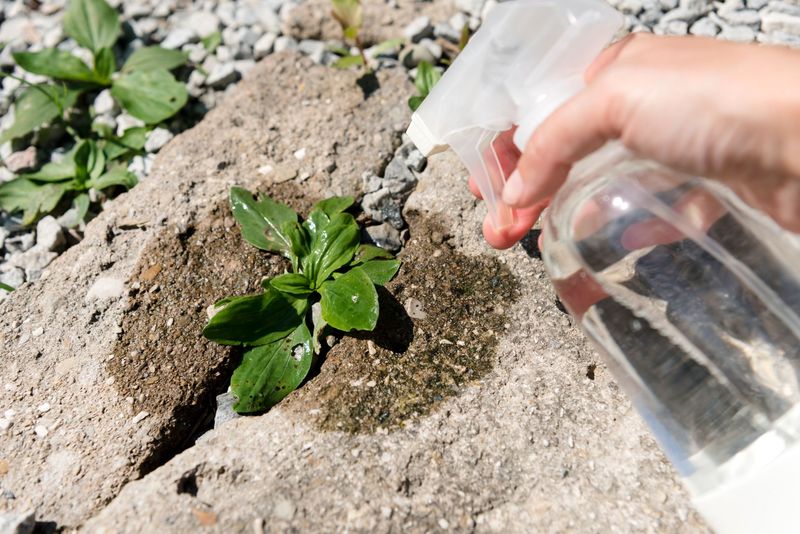
Household vinegar’s documented effect is short-term foliage injury on some small, young annual weeds under favorable conditions. That is a real but narrow outcome, not universal late-season eradication, not a guaranteed cost savings, and not a substitute for understanding what is actually growing in your yard.
The decision rule is straightforward: identify the weed, determine whether it is a young annual or a persistent perennial, and choose the method that fits the target and the site.
For areas where desirable plants are nearby, mechanical removal or mulch is the safer starting point. When an acetic-acid product is appropriate, use only one that is registered and labeled for herbicide use, follow the label’s directions for the site and target weed, and wear the protective equipment the label requires.
Extension guidance consistently points back to label compliance as the baseline for any chemical weed-control decision.
Florida readers carry a specific obligation here. The Florida Homeowner Herbicide Guide from UF/IFAS is clear that using any product as a pesticide requires it to be labeled for that purpose, and ordinary kitchen vinegar does not meet that standard.
Knowing the weed, matching the method, and following the label are less exciting than a one-spray promise, but they are what actually produces a cleaner yard over time.