
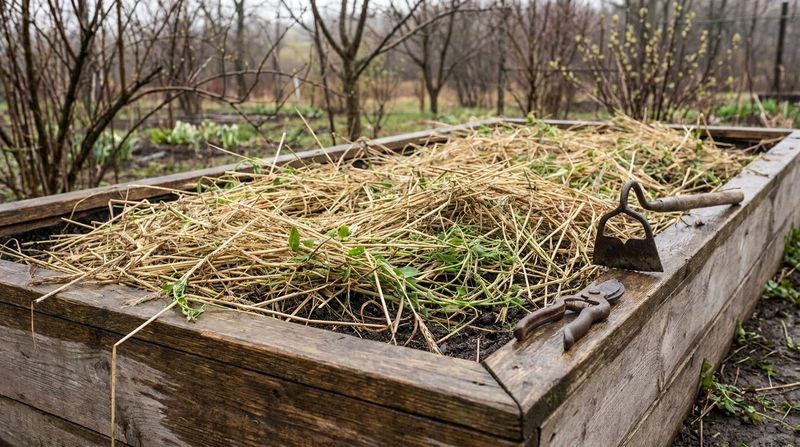
Fall lettuce beds in the South can turn into green carpets of chickweed almost overnight. It crowds young plants and steals light, water, and space.
Straw mulch can help, but only if you use it the right way. Here is how to clear the bed, pick the right layer, and keep chickweed from taking over again.
Why chickweed can appear in cool-season beds
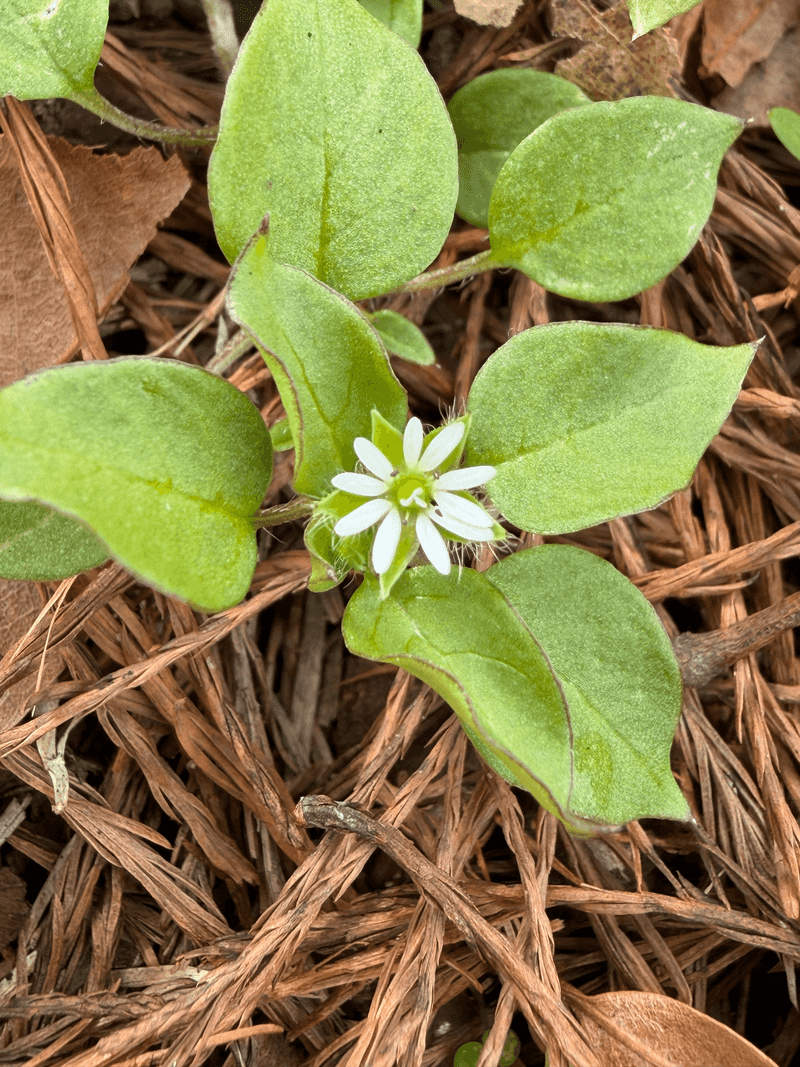
Chickweed loves cool weather, which is why it pops up right when your lettuce goes in. UF/IFAS describes common chickweed as typically growing and flowering from November through May in Florida, though it can flower year-round under some conditions.
Seeds germinate best when temperatures run about 54 to 68°F, and flowers can show up four to five weeks after germination.
That timing fits a Florida fall and winter garden well. It does not mean every Texas bed gets a November flush on the same schedule.
Texas is huge, and conditions swing from the Panhandle to the Gulf Coast.
The Texas A&M AgriLife vegetable guide supports mulching vegetable beds in general, but it does not give a statewide chickweed calendar. So in Texas, trust what you see in your own bed.
When small, low, mat-forming seedlings appear among your lettuce, that is your cue to act.
Clear established chickweed before mulching
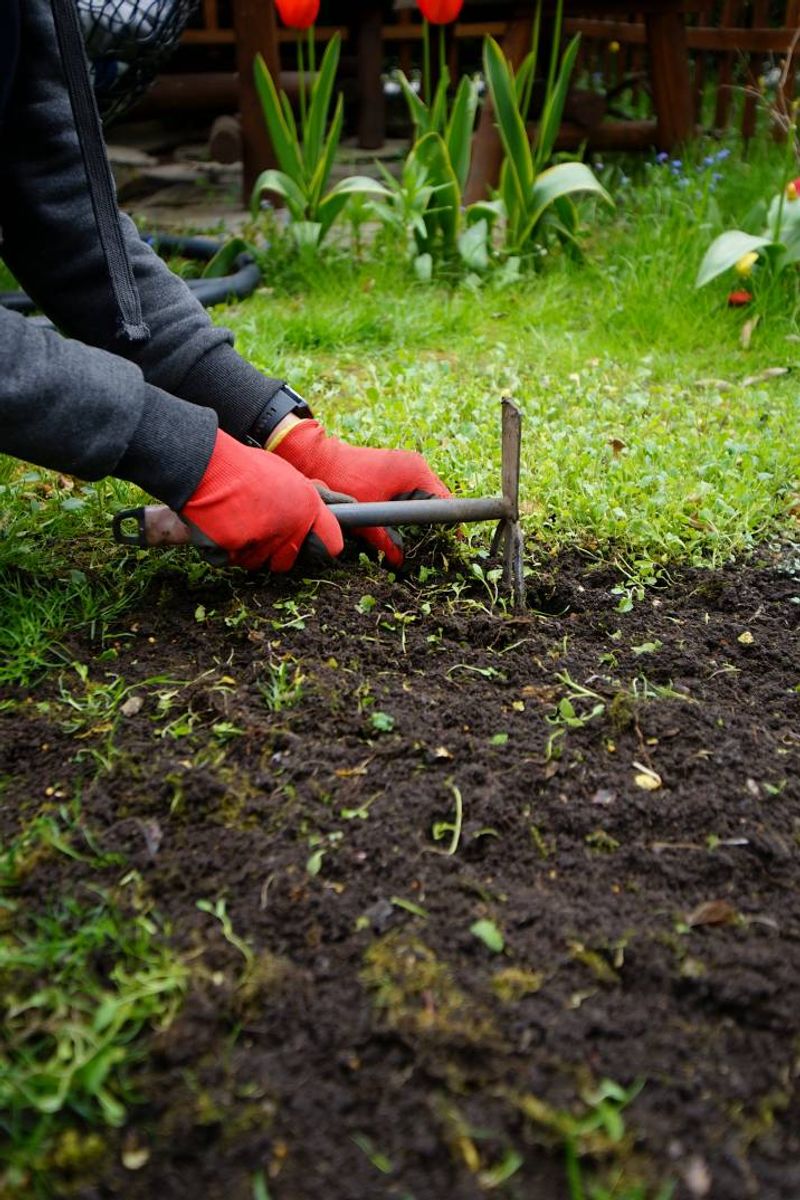
Mulch goes on after the weeding, not instead of it. Straw laid over visible chickweed is not a dependable way to get rid of it, since established plants can keep growing or poke through.
Walk the bed and take out what you can see first.
Timing matters most while plants are small and before they flower. UC IPM advises pulling or lightly hoeing chickweed when the soil is dry.
Small plants come out easily, and shallow hoeing keeps you from disturbing lettuce roots nearby.
Larger plants need extra care. If they are growing in moist soil, pieces can reroot after you pull them, so carry the debris out of the bed instead of leaving it on the surface.
Toss it in the trash or a hot compost pile rather than back among your lettuce. A quick pass with hand tools around tight spots finishes the job before any straw goes down.
Use mulch to slow new seedlings
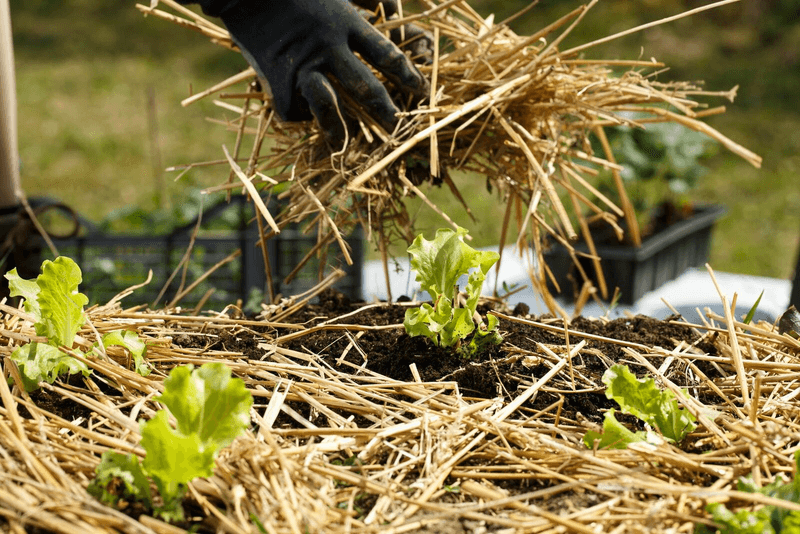
Think of straw as a lid on the weed seeds already waiting in your soil. Organic mulch blocks light and acts as a physical barrier, and UC IPM lists organic mulch as a way to suppress chickweed seedlings.
Fewer seedlings get the light they need to establish.
That is prevention, not rescue. Mulch works on new seedlings, so it will not clear out plants that are already growing.
Its example is wood chips rather than straw or a planted lettuce bed, so treat it as a guide, not a guarantee.
Expect some surprises. Chickweed is a winter annual that sets seed, and UF/IFAS notes its long season in Florida.
Seedlings can still sprout through thin spots, along bed edges, or in soil that gathers on top of the straw. A bed with a few stragglers is normal, and far easier to manage than one with a solid mat.
Match straw depth to lettuce size
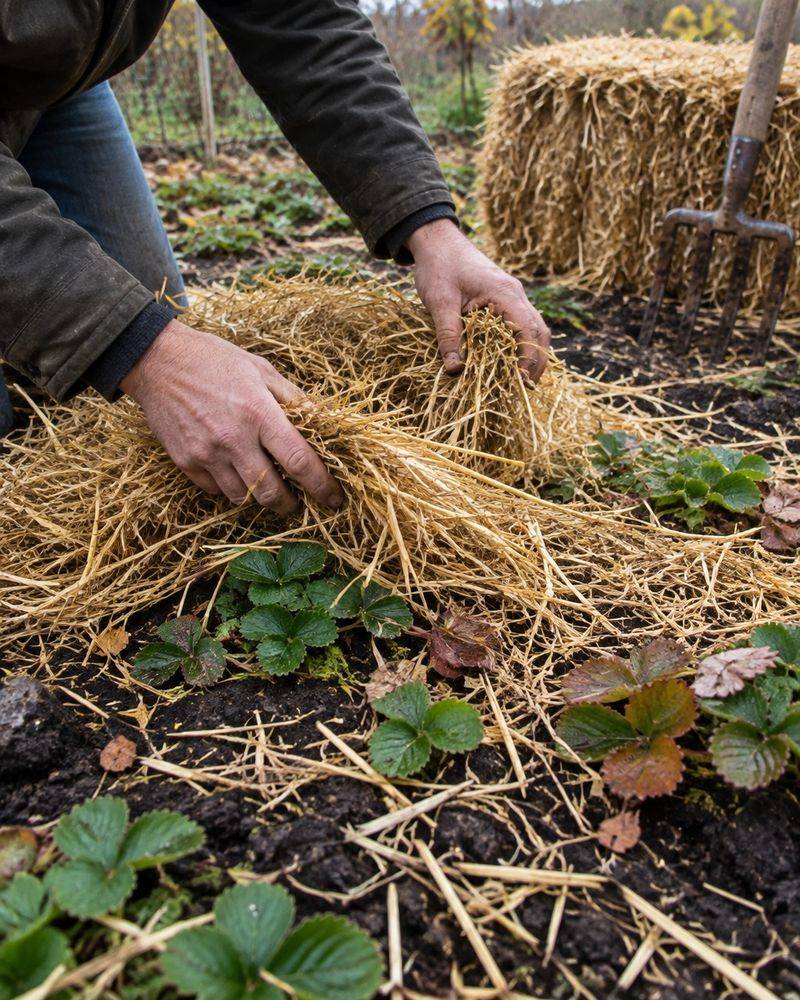
No single depth fits every lettuce bed. UF/IFAS edible-landscape guidance shows 2 to 3 inches of straw for vegetable gardens.
For seedlings and small vegetables, it advises 1 inch or less to avoid growth problems.
Texas gardeners have a middle-ground number. The Texas A&M AgriLife guide recommends 1 to 2 inches of organic mulch around growing garden plants, with straw among the options, and calls mulch an effective weed-control method.
Here is a simple way to use all three. Freshly transplanted or tiny lettuce gets a light layer of an inch or less.
As plants fill out, you can build toward the thicker range your local guidance suggests, staying within 1 to 2 inches in Texas if you follow Texas A&M.
At every stage, pull the straw back a couple of inches from each plant’s base. That gap keeps stems drier and leaves room to spot trouble early.
Match the layer to your crop stage, not to the thickest number you read.
Choose straw with a known source
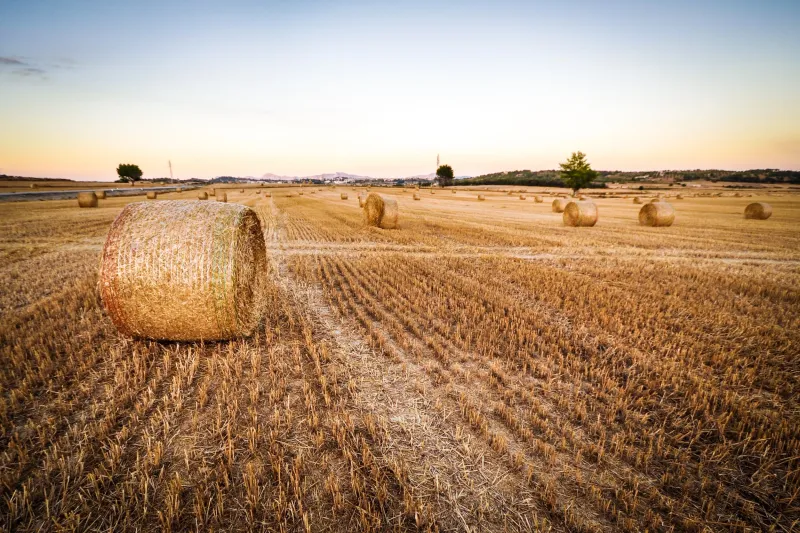
Straw and hay are not the same thing. Straw is the dry stalk left after grain is harvested, and Virginia Cooperative Extension says straw generally contains fewer weed seeds than hay.
Fewer is not none, so even a good bale can sprout a few unwanted plants.
The bigger question is what the field was sprayed with. The same Virginia source warns that herbicide-treated straw can injure broadleaf garden plants, and lettuce is a broadleaf crop.
Persistent herbicide residues in plant materials can last, as Oregon State University Extension explains in its guidance on herbicide-contaminated compost and soil mix.
Before you buy, ask the seller where the straw came from and whether the field was treated with herbicides. If they cannot say, look for a source that can.
A bale with a known history is worth more than a mystery bale.
Check for chickweed after mulching
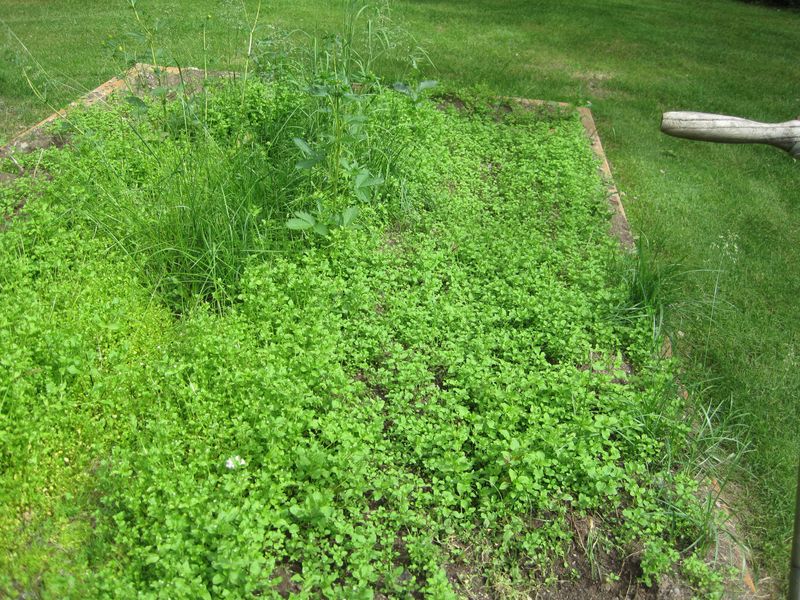
Once the straw is down, make a habit of a quick weekly look. Chickweed can show up through gaps, along edges, or in a little soil that has blown onto the mulch.
Pull those small plants right away, before they flower, using the dry-soil approach from UC IPM’s chickweed guidance.
Seeing a few sprouts does not mean the mulch failed. Mulch lowers how many seedlings establish, and it does not promise a weed-free bed.
Because UF/IFAS describes a long chickweed season in Florida, Florida gardeners may keep scouting into spring. Texas gardeners can watch their own beds and adjust.
The routine stays simple: remove visible weeds, lay an appropriate layer of straw, and keep checking. Fluff thin spots and refresh the layer as it settles, keeping it back from the lettuce stems.
A mulched bed will not stay perfect, but a few minutes of checking keeps it manageable.