
Watching a healthy squash plant suddenly flop over in the afternoon heat is genuinely alarming, especially when you watered it just that morning. Before assuming the worst, though, the cause matters enormously – because the right fix depends entirely on what is actually wrong. Midday wilt has several possible explanations, and squash vine borer is only one of them. Knowing how to read the clues on your plant can save you time, protect your garden, and maybe even rescue a plant that still has a fighting chance.
Midday Wilt Can Be Normal—But Recovery Changes the Diagnosis
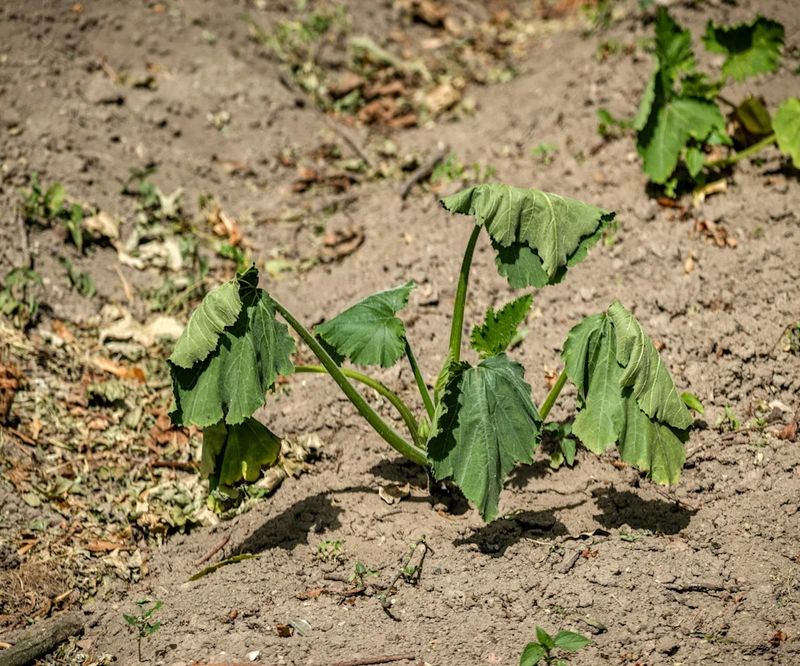
Seeing squash leaves go limp at noon on a hot day does not automatically point to a hidden pest. Hot, dry, or windy conditions can pull moisture out of large squash leaves faster than the roots can replace it, and temporary afternoon wilt is surprisingly common even when the soil is not actually dry. According to University of Minnesota Extension guidance on heat stress, squash and other cucurbits can show visible wilting during peak heat even when soil moisture is adequate – because transpiration outpaces uptake under intense sun and wind.
The most important thing to do first is check soil moisture below the surface, not just at the top inch. Push a finger or a screwdriver several inches into the soil near the root zone. If it comes back dry, water slowly and deeply at the base of the plant, and then watch what happens. Colorado State University Extension notes that temporary wilting that resolves on its own as evening temperatures drop is generally a sign of heat or water stress, not a pest problem.
Recovery is the key test. A plant that perks back up by evening or the next morning is likely responding to ordinary stress, and no further action may be needed beyond consistent watering. Persistent wilt that does not ease overnight, wilt that appears in the morning before temperatures climb, or a plant that looks progressively worse over several days – those patterns warrant a closer look at the plant itself.
The Lower Stem Holds the Key Clues
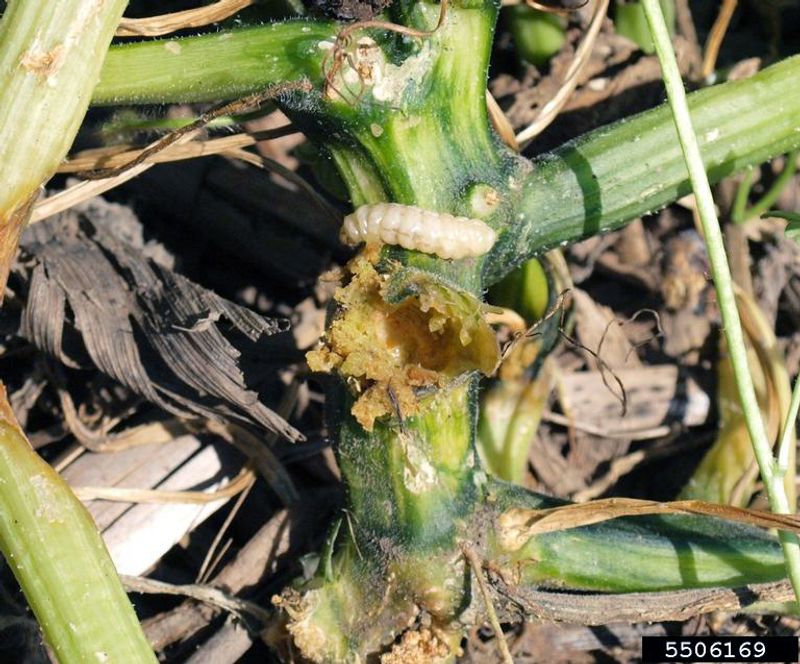
When wilt does not resolve, or when a susceptible squash declines steadily over a few days, squash vine borer becomes a leading possibility worth investigating. The adult is a day-flying clearwing moth that mimics a wasp in appearance, with an orange-and-black body and clear wings. According to University of Minnesota Extension, the female lays flat, reddish-brown eggs on stems and leaf stalks near the base of the plant, and once the larvae hatch, they bore directly into the stem and feed from the inside – disrupting the plant’s ability to move water upward.
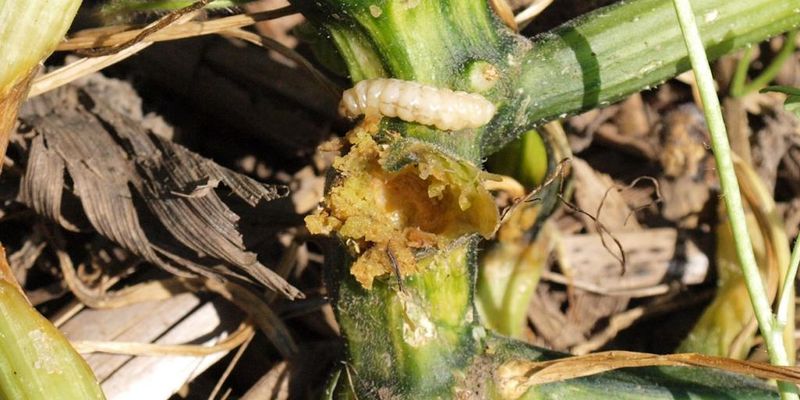
Get down close to the base of the plant and examine the main stem from the crown up to about twelve inches. You are looking for a small entry hole or a slit in the stem, often surrounded by wet, greenish, orange, or sawdust-like material called frass. That combination – a hole plus frass – is a key clue that supports a borer diagnosis, though it is not a guarantee on its own. A mushy or discolored stem base adds further weight to the suspicion.
Susceptibility varies meaningfully by squash type. University of Illinois Extension and NC State Extension both note that zucchini, summer squash, acorn squash, Hubbard squash, and many pumpkins are commonly attacked, while butternut and other Cucurbita moschata types tend to be less vulnerable. Cucumbers and melons are rarely targeted compared with squash and pumpkins.
Other Problems Can Make Squash Collapse
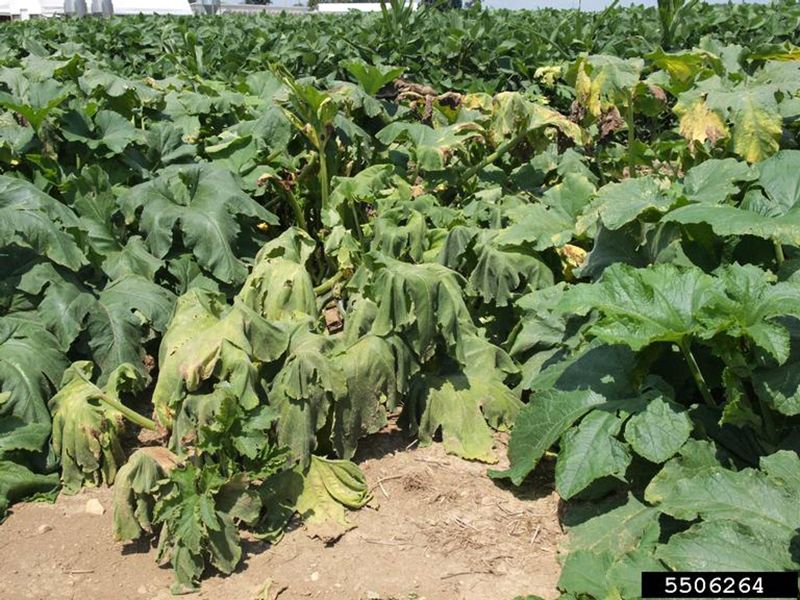
Not every wilting squash is hiding a borer. Squash bugs are a common culprit that can look similar at first glance, but they leave a very different trail of evidence. University of Minnesota Extension on squash bugs explains that heavy infestations disrupt water and nutrient flow by feeding on plant tissue, causing leaves to wilt and eventually blacken. The clues to look for are flattened, gray-brown adults, clusters of small nymphs, or neat rows of shiny bronze eggs on the undersides of leaves – not stem holes and frass.
Cucumber beetles present a different kind of threat. Penn State Extension notes that striped and spotted cucumber beetles can transmit bacterial wilt, a disease that causes rapid vine collapse without the characteristic borer entry hole. University of Illinois Extension similarly flags bacterial wilt as a possible cause when beetles are present and the plant declines without obvious stem damage.
Dry soil, waterlogged roots, physical root damage from cultivation, severe heat, and vascular diseases like Fusarium wilt can all produce similar symptoms. University of Minnesota’s squash growing guide and their Fusarium wilt resource both emphasize getting the diagnosis right before choosing a response. When symptoms do not fit a clear pattern, submitting a plant sample to a local extension diagnostic clinic is the most reliable next step – treatment should always follow diagnosis, not precede it.
A Careful Stem Check May Give a Plant a Chance
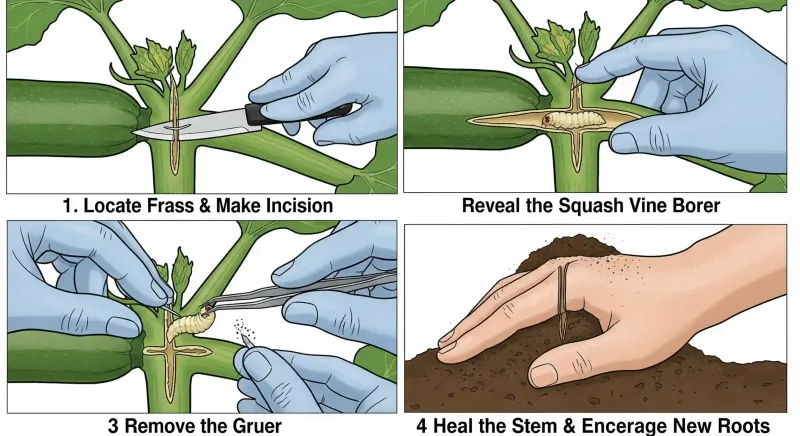
Finding frass and a stem hole does not mean the plant is already lost. If the damage appears early and the plant still has some healthy tissue above the entry point, a careful physical rescue is worth attempting. Start by confirming that external signs actually support borer activity before reaching for a knife – cutting into a stem unnecessarily creates stress and wound sites that can invite disease.
When the evidence points clearly to a larva inside, use a clean, sharp blade to make a lengthwise slit along the affected section of stem. Work slowly and look for the cream-colored, brown-headed larva tunneling through the pith. Remove it carefully and completely. University of Minnesota Extension recommends covering the cut stem section with moist soil afterward and maintaining consistent moisture at the root zone.
Recovery is possible, but it is not guaranteed – some plants rebound well, and others do not, depending on how much internal damage has already occurred. Keep in mind that University of Illinois Extension’s borer management guide notes that several larvae can attack a single plant, so check the full length of the lower stem rather than stopping after finding one.
For vining squash varieties like pumpkins or certain winter squash, burying several healthy stem nodes along the vine can encourage the plant to produce additional roots at those points. Those extra roots may help the plant tolerate damage to the crown area, but this technique works best as a mitigation strategy started before severe damage sets in. A stem that is already rotted through or severed at the base cannot be saved by rooting the vine further along.
The Most Useful Control Window Comes Before Entry
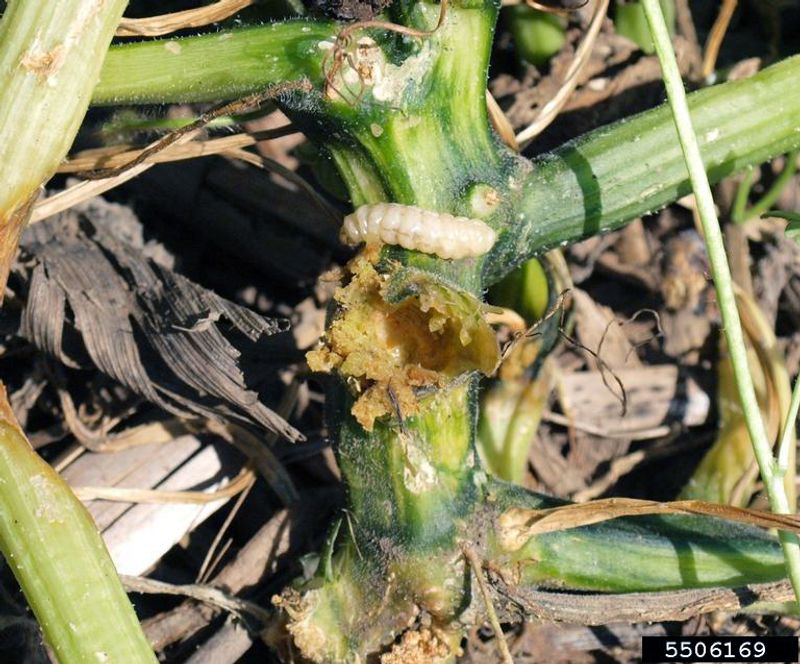
The honest reality of squash vine borer management is that the best opportunity to protect your plants comes before a larva ever reaches the stem interior. Once a larva bores in, it feeds in a protected tunnel where ordinary foliar sprays – including organic options – generally cannot reach it. University of Minnesota Extension is direct on this point: insecticides are most useful when applied against adult moths or newly hatched larvae before they enter the stem, and Bt (Bacillus thuringiensis) is not effective against larvae already inside because larvae must ingest it and are physically shielded from foliar applications.
Timing your monitoring to match your region’s actual adult-flight period matters more than following any single calendar date. University of Illinois Extension commonly describes adult activity beginning in early to mid-summer, but flight timing shifts by latitude and local conditions, and some southern locations may see more than one generation per season. Check with your local cooperative extension office for regional flight timing rather than relying on a generalized date.
Yellow water traps placed near your squash can help you detect when adults are active in your yard. University of Illinois Extension’s borer management blog and their 2022 garden guide describe both yellow water traps and pheromone traps as monitoring aids that can signal adult presence – not as stand-alone controls and not as thresholds that automatically trigger treatment. They tell you when to be alert, not what to spray.
Prevent Future Damage by Excluding Moths and Clearing Vines
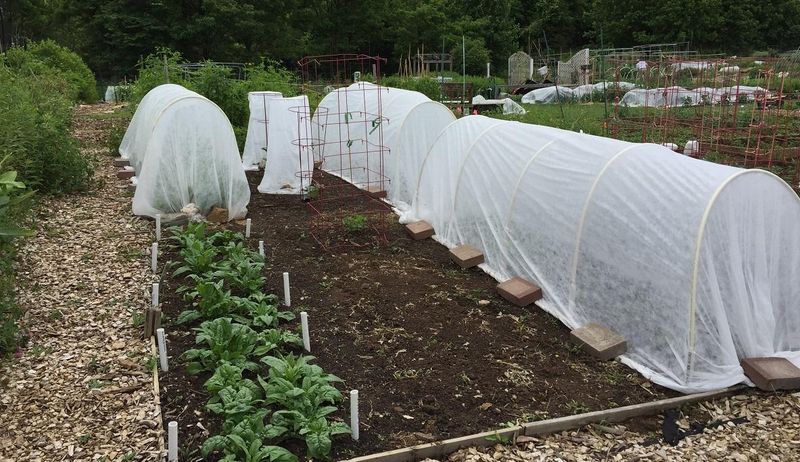
Row covers are one of the most reliable physical tools available to home gardeners trying to keep squash vine borer moths away from their plants. A floating row cover placed over young transplants or seedlings – before adults begin flying in your area – can prevent egg-laying by blocking adult access entirely. The covers must be secured firmly at the edges so moths cannot find a gap, and they need to be removed once plants begin to flower, because squash requires pollinator visits for fruit to set. If you prefer to leave covers on longer, you will need to hand-pollinate the flowers yourself each morning.
There is an important placement caution: do not lay row covers over a bed where cucurbits grew the previous season. University of Minnesota Extension and Penn State Extension both note that borer pupae overwinter in the soil, and a cover placed over an infested bed could trap emerging adults beneath it right next to your new plants.
End-of-season cleanup matters just as much as spring preparation. Remove and destroy any plants killed by borers rather than leaving infested vines in the garden, because larvae exit the stem and pupate in nearby soil. Rotating cucurbit crops to a different part of the garden each year can reduce the population building up in one spot over time. University of Illinois Extension also notes that butternut squash and other Cucurbita moschata types tend to be less susceptible to borer attack than zucchini or acorn squash, so choosing less-vulnerable varieties can reduce pressure – though no variety offers a guarantee of protection.
Pesticides Must Follow Diagnosis, Labels, and Pollinator Protections
Reaching for a spray when you see a wilted squash is understandable, but applying a pesticide without a confirmed diagnosis is rarely helpful and can cause real harm. A foliar insecticide applied to a plant already harboring larvae deep inside the stem will not reach those larvae – they are protected by the stem tissue around them. Spraying a wilted plant in that situation does not address the actual problem and may expose beneficial insects to unnecessary risk.
Any pesticide you consider must be labeled specifically for the crop you are growing and the pest you have identified. EPA guidance on pesticide labels is clear that the label is a legally enforceable document – it controls the application rate, harvest interval, required protective equipment, state-specific restrictions, and timing of applications. EPA’s pesticide registration information explains why no product should be applied in a way that contradicts its label, regardless of what you read elsewhere.
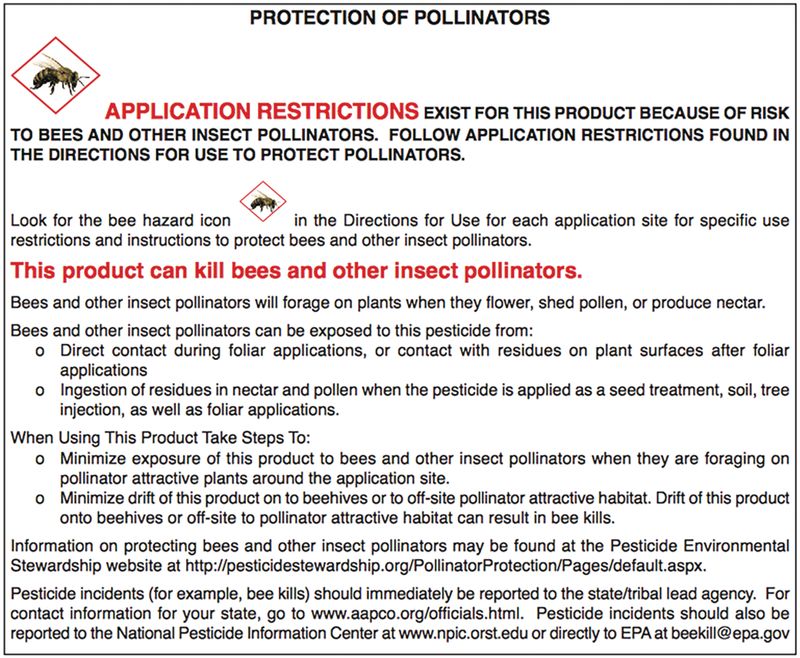
Squash plants in bloom attract bees and other pollinators that are essential for fruit set, and some insecticides applied during bloom can harm those visitors. EPA pollinator protection guidance identifies bloom restrictions and time-of-day limitations as key safeguards – check the specific product label for those restrictions before applying anything. University of Minnesota Extension also recommends avoiding applications to blooming cucurbits while moths or pollinators are active. When in doubt about whether a product is appropriate, contact your local extension office before applying.
Inspect the Stem Instead of Guessing
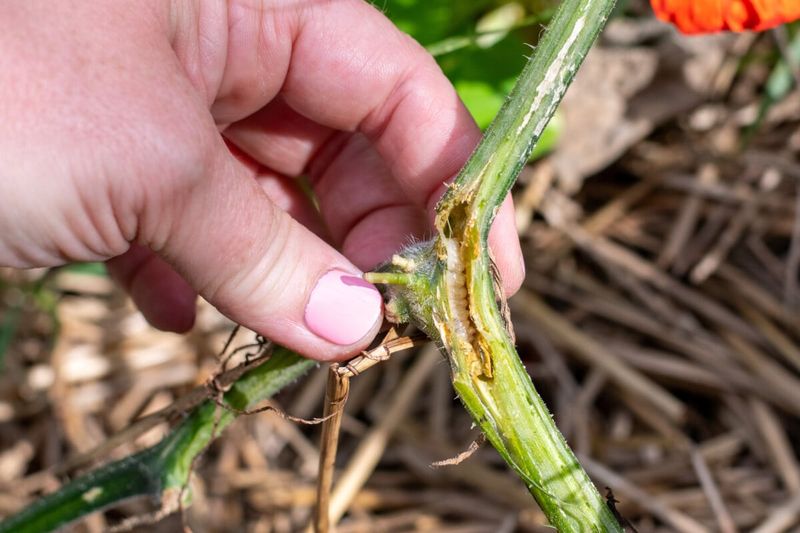
Afternoon wilt raises a question – it does not answer one. The practical path forward starts with checking subsurface soil moisture and watching whether the plant recovers as evening cools. If wilt persists into the next morning or gets worse over several days, move to a hands-on stem inspection at the crown and lower stem, looking for the entry hole and frass that support a borer diagnosis.
When that evidence is present and the plant is still worth saving, attempt a careful physical rescue and cover the wound with moist soil. Then use that experience to plan ahead: clear infested vines at season’s end, rotate your cucurbit beds, and start monitoring for adult moths before they fly next year. University of Minnesota Extension, Colorado State University Extension, and UMN’s heat-stress guidance all reinforce the same underlying principle: multiple causes can produce identical-looking wilt, and local extension assistance is the right next step when the evidence conflicts. A squash plant that collapses at noon deserves a proper look before it gets a treatment.