
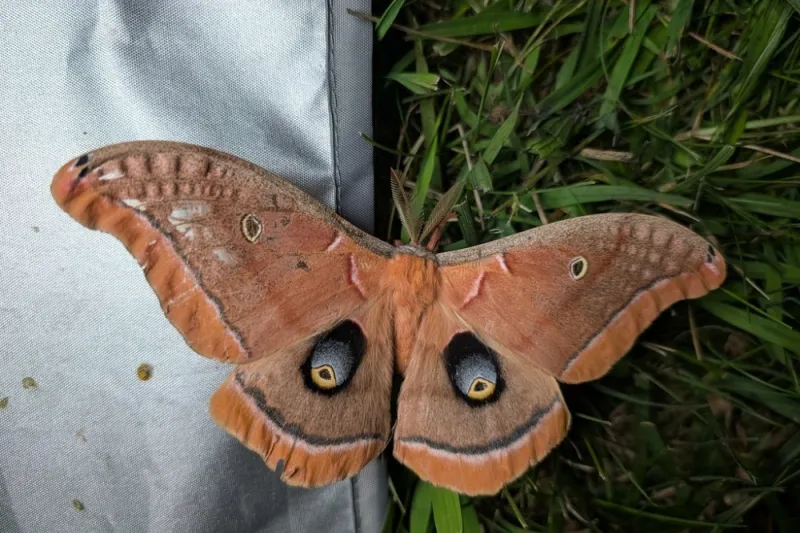
You flip on the porch light after dark and spot a huge tan moth clinging to the screen, with round spots that look like eyes. It could be a Polyphemus moth, one of Florida’s largest silk moths.
Knowing what to look for helps you tell it apart from a luna moth and understand what it does and does not say about your yard. Here is how to sort out what you are seeing.
Tan wings and round eyespots suggest a Polyphemus moth
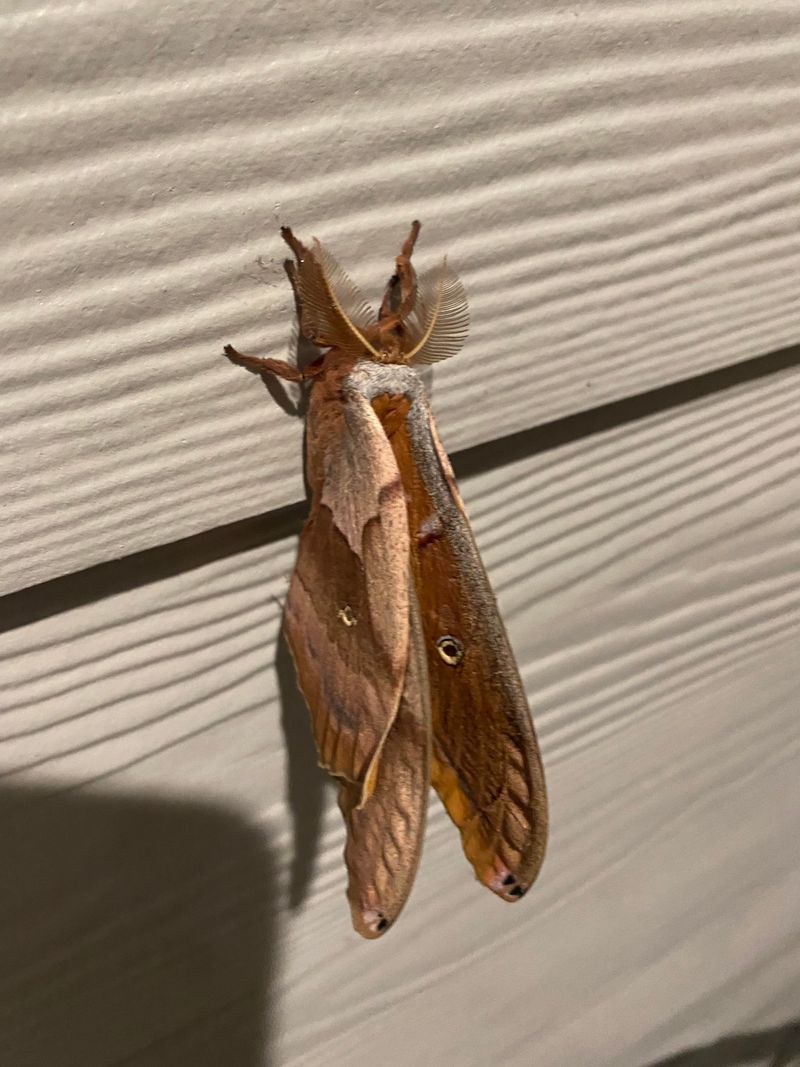
Picture a moth so big it looks more like a small bird fluttering at your screen door. Tan-to-brown wings and bold, round eyespots are traits consistent with a Polyphemus moth (Antheraea polyphemus).
UF/IFAS Gardening Solutions describes this species as a large silk moth with a wingspan of about six inches.
That six-inch figure describes the species in general. It is not a measurement of the moth on your screen, and individual moths vary.
Try holding a ruler or a familiar object, such as a coffee mug, near the moth for a rough comparison, without touching it.
Color and eyespots make a Polyphemus a plausible match, but they are not proof. Several other large moths are brownish, and lighting at night can change how colors look.
A clear photo of the wings, ideally with the hindwing spots visible, is what turns a hunch into a solid likely identification.
Take pictures from a few angles, including one from the side and one with the wings open if the moth cooperates. Add the date and your city, then compare your photos with the UF/IFAS Featured Creatures profile.
Without a clear look at those traits, the honest answer is that it could be a Polyphemus moth, and that is as far as a quick glance can go.
A luna moth has a different look
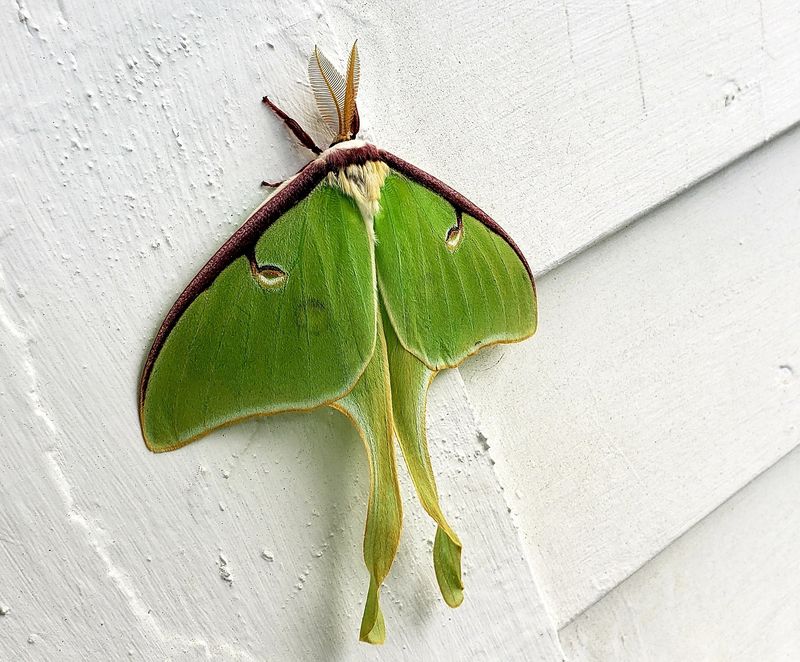
Many Floridians first think of the luna moth when a giant night visitor lands on the porch. The two are cousins, since both are large silk moths, but they look quite different.
The luna is pale green and has long, trailing tails on its hindwings.
A Polyphemus moth is tan or brown and carries large eyespots, as UF/IFAS Gardening Solutions explains. It lacks those long tails, so the hindwings look rounder and broader.
A quick checklist can help. Is the body color green or tan?
Do the hindwings stretch into long streamers? Are there big round spots, and are they visible?
Color alone will not always settle it. Porch bulbs can tint what you see, and a worn or faded moth may look duller than a fresh one.
Wings can also be folded in ways that hide the key features. If the color and tails do not clearly match either moth, treat your guess as a possibility and snap a few photos before deciding.
The eyespots may be hidden while the moth rests
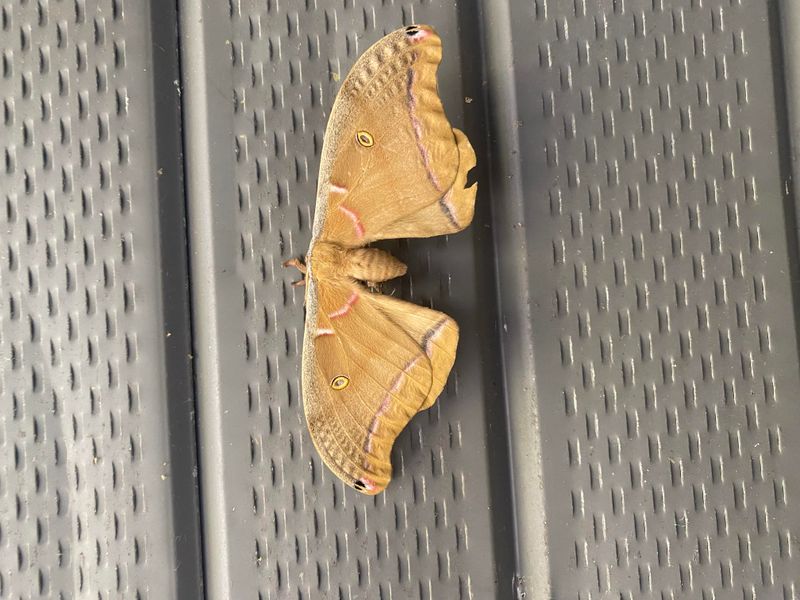
Here is a twist that fools plenty of people: the most famous feature may not be showing. A resting Polyphemus moth usually keeps its large hindwing eyespots tucked out of sight, according to UF/IFAS Gardening Solutions.
What you see instead may be mostly tan or brown forewings.
When threatened, the moth can expose those spots. The sudden flash of big round eyes likely startles predators, though that is a probable function rather than a settled fact.
For your identification, that means a moth with no visible eyespots is not automatically something else. Look at the overall size, the thick furry body, and the wing shape and color.
Check again after a few minutes if the moth shifts position on its own.
Please do not poke or prod the moth to make it show off. Stressing it for a better photo is unfair to the moth, and a calm look from a respectful distance is usually enough.
If the spots stay hidden, a side photo and a later daylight check can still help you narrow things down.
Porch lights offer a chance to see moths, not a guarantee
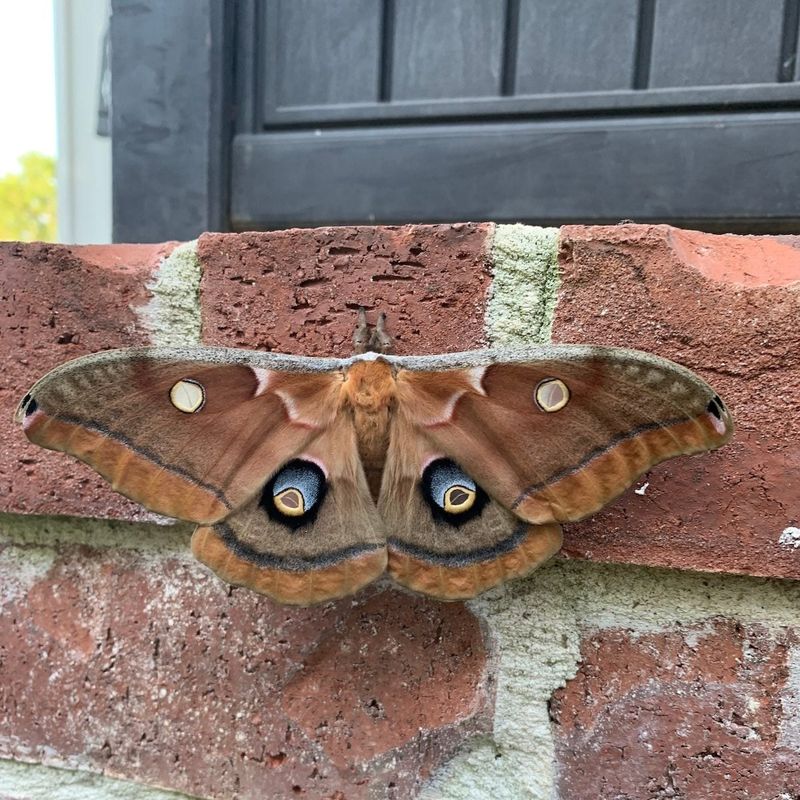
Polyphemus moths are strongly attracted to light, so a lit porch after dark is a reasonable place to look. The UF/IFAS Featured Creatures profile documents this behavior.
A visit is never guaranteed, though, and not every moth species is drawn to lights.
UF/IFAS also offers a guide to moth watching that suggests checking porch lights after dark for visitors. A white sheet and a light can work too.
Early morning checks of screens and walls near lights are another way to catch moths that stayed put.
Timing is looser than many people expect. Because adults emerge at staggered times, they may be found in Florida in any month of the year.
That does not mean sightings are frequent or predictable, so a quiet porch on a given night is normal.
There is also no single settled explanation for why moths gather at lights, so it is best not to repeat tidy stories about them mistaking bulbs for the moon. Stick to what you can see.
Note the date, the weather, and what else was around, and you will build a useful record over time.
Several Florida yard-tree genera can host its caterpillars
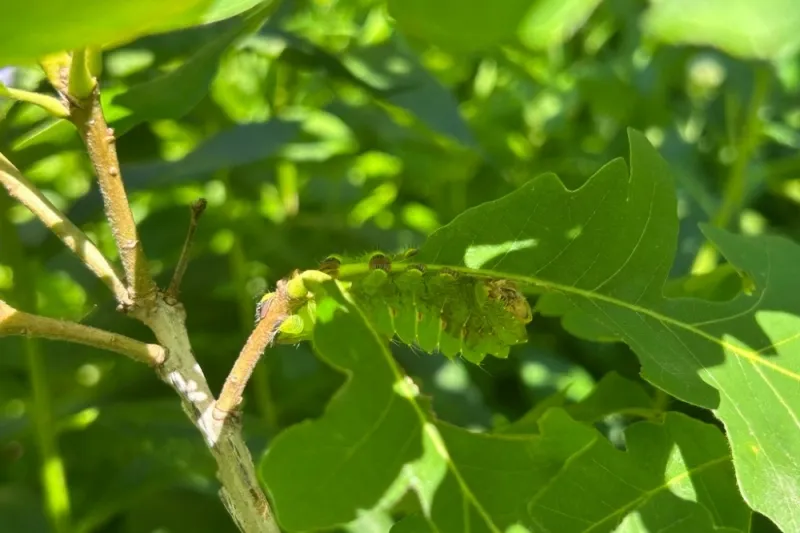
Polyphemus caterpillars are not picky eaters. The UF/IFAS Featured Creatures profile reports that they feed on many broad-leaved plants, with over 50 reported host species.
That wide range is why so many yard trees show up on the list.
Documented hosts include oak, willow, birch, maple, elm, and hickory. A UF/IFAS Natural Area Teaching Laboratory handout also lists Carolina basswood.
If you have a live oak, a red maple, or an American elm, you have a tree in a genus with documented use.
Treat that list as background, not a planting plan. A tree in one of these groups will not necessarily host caterpillars in every yard.
Sources describe a broad host range, not a Florida-specific recipe for attracting this moth.
A practical next step is simply to look. In a tree you already own, check leaves for a plump, bright green caterpillar.
If you are choosing new trees, pick them for your soil, space, and storm-resilience needs first, and consider hosts as a possible bonus.
One porch visitor does not prove nearby trees host caterpillars
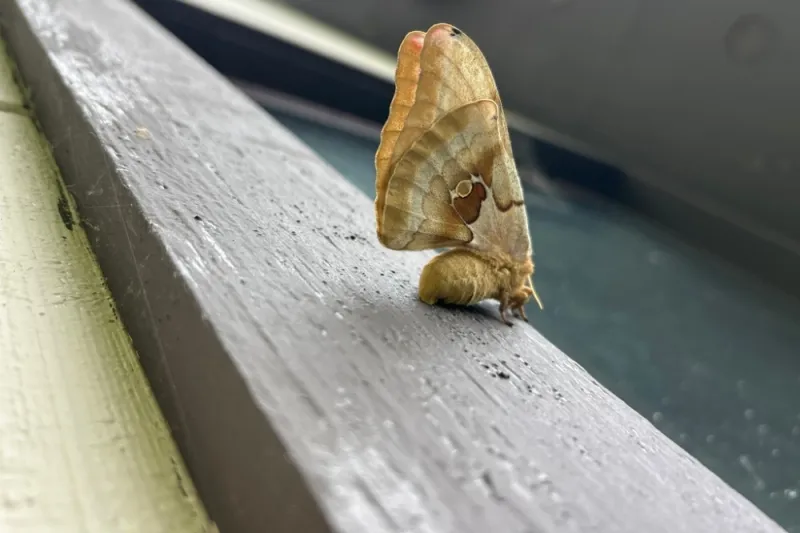
A moth at your light tells you the adult was out flying. It does not tell you where it grew up.
A light-attracted adult may have come from another yard or a distant patch of woods, so a sighting does not show that nearby trees host larvae, as the UF/IFAS Featured Creatures profile notes in describing the species’ many host plants.
Tree worries can stay small. UF/IFAS says these caterpillars are rarely numerous enough to cause significant damage, and a UF/IFAS Extension account reports they rarely permanently injure host trees.
A casual moth sighting is not a reason to spray pesticides.
If you do find an unfamiliar caterpillar, watch it without handling it. UF/IFAS describes stinging species in its guide to stinging caterpillars, and Poison Control advises avoiding contact with unfamiliar ones.
A photo from a few inches away is plenty.
So keep both ideas loose: the moth may be a Polyphemus, and your trees may or may not be hosts. Either way, the porch screen gave you a good look at something wild.