
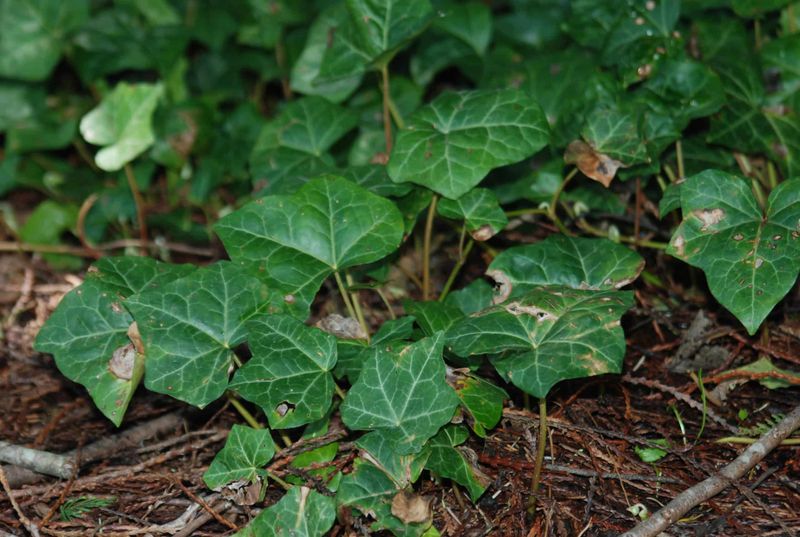
That shiny green ivy filling your shady bed may look tidy, but it can behave very differently once it gets going. In some parts of the South, English ivy escapes yards and moves into woods and natural areas.
Knowing how to spot the problem, what the rules really say, and how to remove it safely can save you work later. Here is a clear look at the risks, the limits of the warnings, and what to plant instead.
English ivy can be invasive in parts of the South
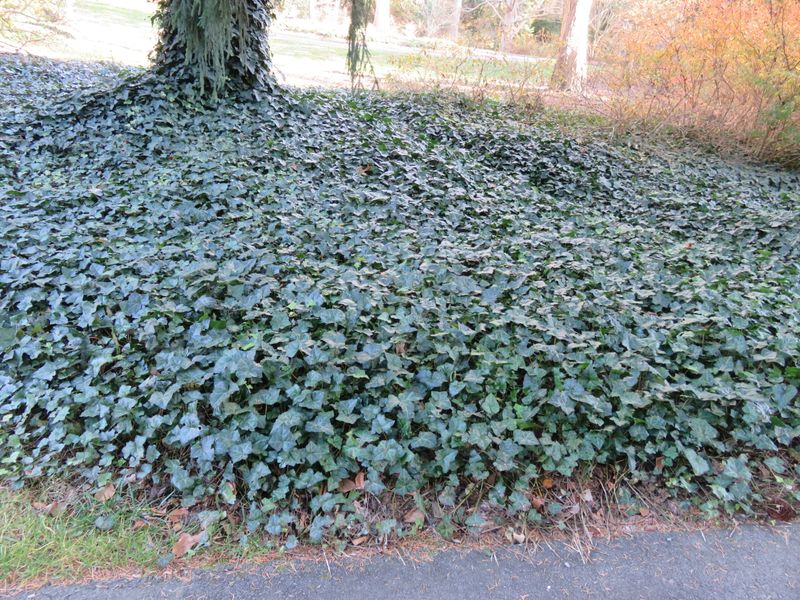
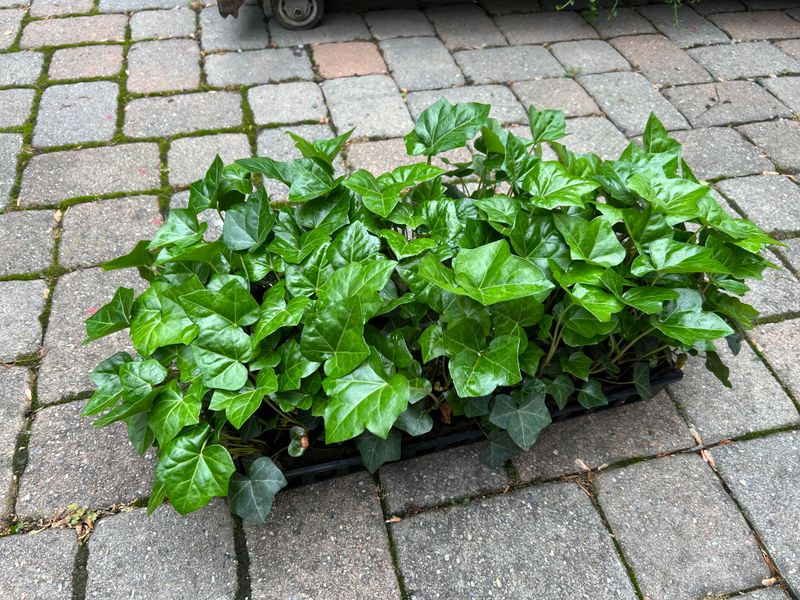
English ivy (Hedera helix) is a nonnative evergreen that works as both a groundcover and a climbing vine. Its leaves are glossy, dark green, and usually lobed, which is why so many gardeners planted it in shade.
Where it causes trouble depends on location. UF/IFAS rates it as a high invasion risk in all three Florida zones and does not recommend planting it there.
Texas Invasives documents the vine and its ecological threats, and North Carolina extension staff list it among problem plants.
That does not mean every ivy planting is equally harmful in every state, habitat, or yard. Ivy spreads along the ground by creeping stems, and mature climbing growth can produce berries that birds carry elsewhere.
A bed near a woodland edge deserves more caution than a contained planter.
Dense ivy mats can shut out other plants
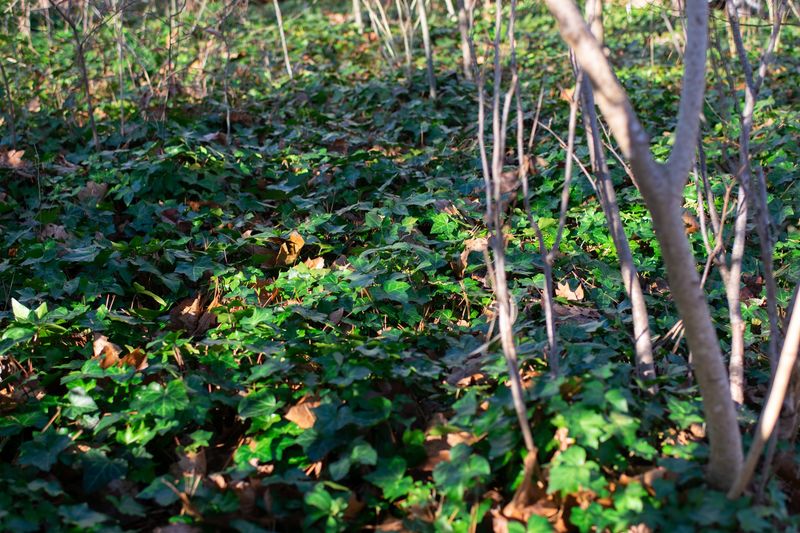
Picture a thick green blanket laid over the soil. As ivy stems creep and root, they form a mat that blocks light and restricts the growth of other plants.
This is the sense in which ivy smothers a bed: it shades out what is underneath.
A study in a southeastern Piedmont forest in Georgia put numbers on the concern. In the Biggerstaff and Beck study, no seedlings germinated in the ivy-covered control plots.
Removal did not give one simple answer, though. Results varied depending on how the ivy was taken out, so pulling it does not guarantee a forest or garden will bounce back on its own.
In a home bed, plan to replant or mulch cleared ground so something else fills the space.
Ivy can stress trees without feeding on them
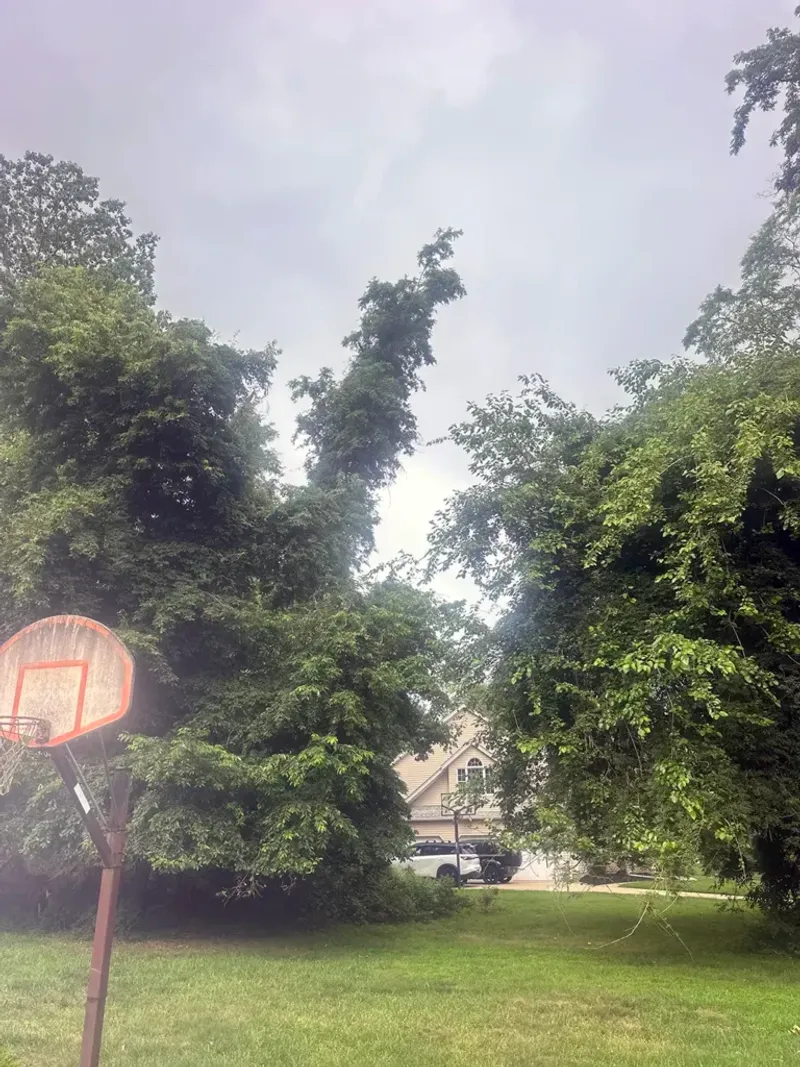
Ivy is not a parasite. It clings with small aerial rootlets and does not draw food from the tree, which is why University of Arkansas Extension notes it does not kill healthy trees by parasitizing them.
Trouble comes from the way heavy growth sits on a tree. Extension guidance describes shading of foliage and added vine weight, and the USDA Forest Service review covers how ivy grows and spreads in forests.
Bark or moisture-related problems can also develop under thick ivy. Effects depend on the tree and how extensive the vine is.
A young or already stressed tree with ivy through its crown is at more risk than a healthy mature tree with a few stems on the trunk.
An invasive label does not mean a Southern-wide ban
Ecologists rate how risky a plant is. Lawmakers decide what is allowed.
Those are two different things, and mixing them up leads to wrong claims.
Legal examples exist outside the South. Maryland’s current list gives English ivy a July 15, 2026 effective date with phase-out dates.
In Washington, quarantine rules prohibit specified ivy plants or parts from being transported, bought, sold, or distributed.
Neither rule applies to the South. In Florida, the UF/IFAS high-risk assessment is a planting recommendation, not a legal ban by itself.
FDACS says plants on the voluntary FLEPPC list are not state-regulated unless they are also on the noxious-weed list. Check your local rules before assuming anything.
Cut climbing vines low and let them die back
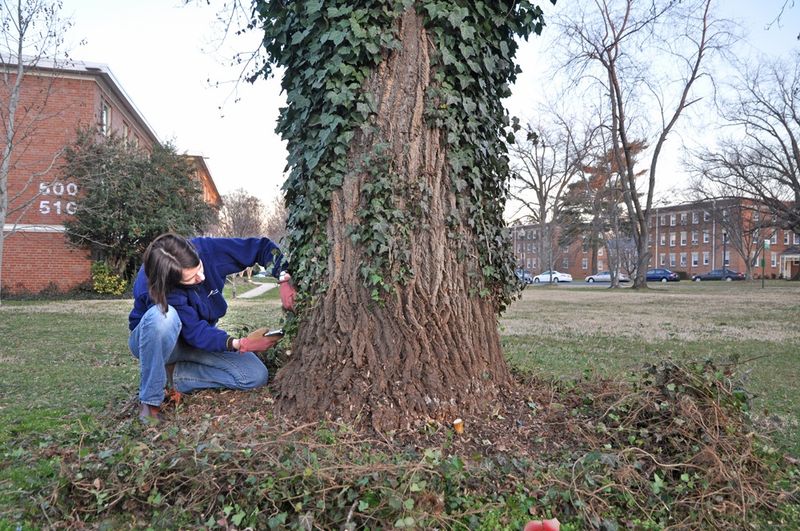
For ivy climbing a tree, the safest first move is a low cut. Use pruners or loppers to sever the stems near ground level, then let the attached vines die.
NC State Extension cautions about tree damage during removal.
Once the cut vines have died and dried, take off only what you can reach safely without harming the bark. Leave the rest to loosen and fall away over time.
Do not climb a ladder to tug vines down, and do not yank firmly attached old growth off the trunk. UGA guidance says not to pull ivy from above chest height.
Ripping can tear bark, and a fall is a bigger risk than leftover leaves.
Also clear a ring of bare ground around the trunk so new stems cannot climb back up.
Ground infestations need persistent, careful removal
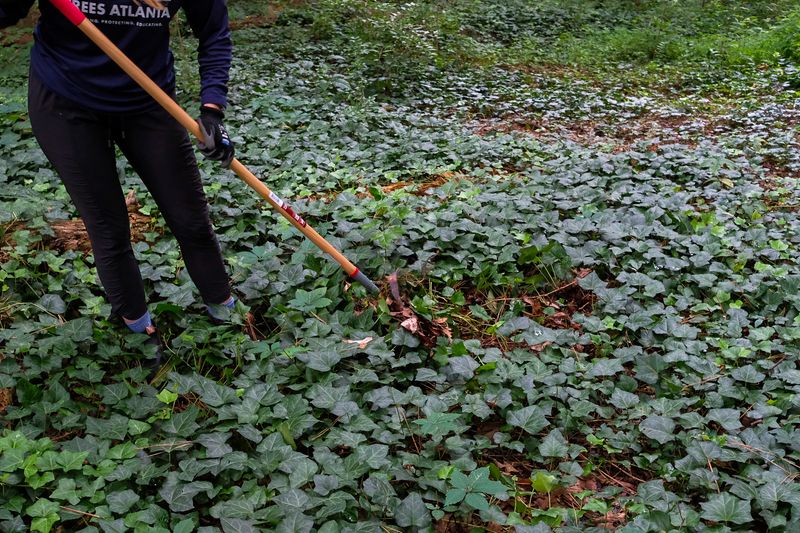
Clearing a ground bed is slow work. Hand-pulling and lifting out rooted sections can work, but expect to repeat it.
NC State Extension notes the effort and the need for follow-up as regrowth appears.
Bag and discard what you pull. UGA guidance also points to removing material rather than leaving pieces where they can re-root, so skip the compost pile and the loose pile at the edge of the bed.
Wear gloves and long sleeves. The NC Extension Gardener Plant Toolbox notes contact can cause dermatitis in some people, and UF/IFAS lists ivy among poisonous plants, so keep leaves and berries away from children and pets.
Herbicide results vary with product, timing, and site, and waxy leaves make control harder. If you use one, follow the current label and protect nearby desirable plants.
No single recipe or one-time fix works everywhere.
Choose a replacement for your region and growing conditions
No single plant replaces ivy everywhere. Start by checking light, moisture, hardiness, intended use, and how much the plant spreads.
Very dense shade, dry or wet soil, and tree roots can all limit success, as UF/IFAS Gardening Solutions explains, since some choices tolerate shade better than others.
In Florida, UF/IFAS Hillsborough County lists native options such as twinflower, partridgeberry, frogfruit, and lyre-leaved sage.
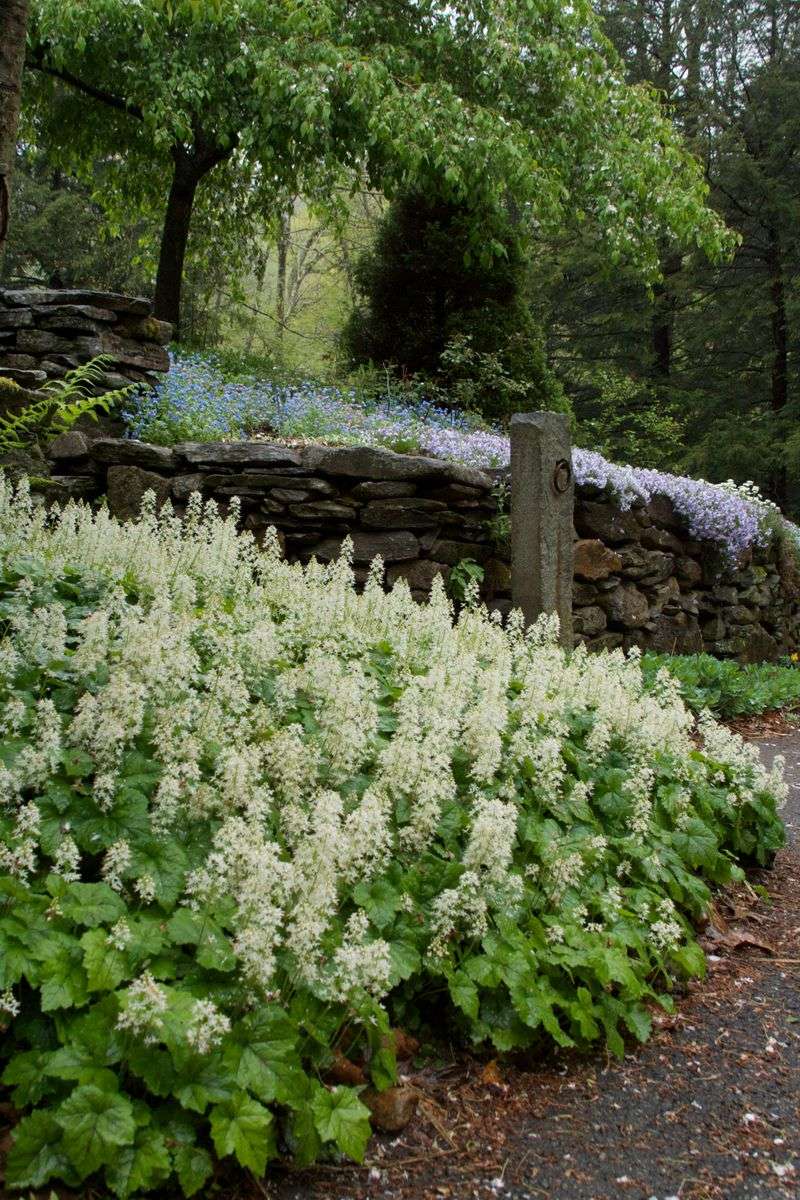
For Georgia and North Carolina, UGA and NC State Extension suggest foamflower, native sedges, coral bells, and Allegheny spurge. Check each plant’s light needs first.
In Texas, horseherb is a native, shade-tolerant groundcover, while Texas frogfruit suits sun to part shade. Both spread, so give them room.
Even the best substitute still needs watching, because bare shade rewards whatever grows in first.