
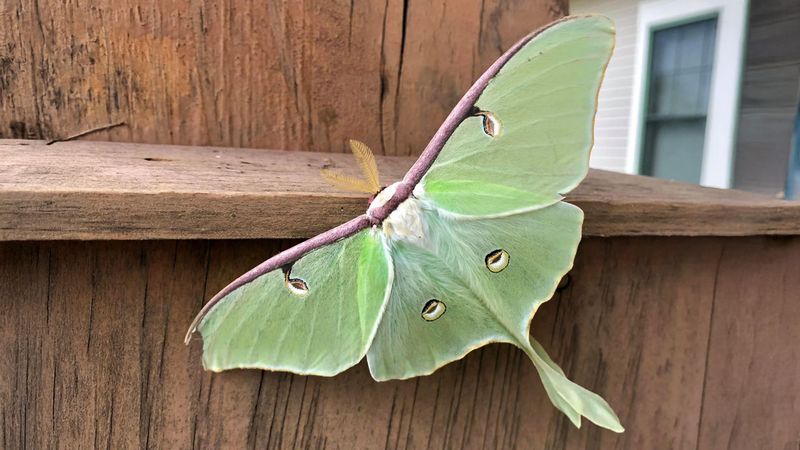
You flip on the porch light and spot a big, pale green moth clinging to the wall. If it has the right wing features, you may be looking at a luna moth, one of the most striking insects in Florida.
Its adult stage is short, and the story behind it starts long before it reaches your porch. Here is how to identify it and what your yard can do for its life cycle.
Check the wings before calling it a luna moth
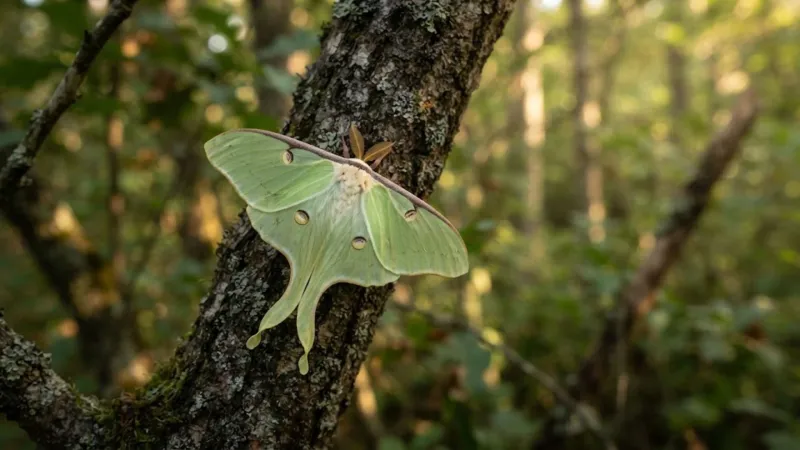
Pale green color alone does not make a moth a luna. Look closely at the wings.
A likely luna moth has soft green wings, a long curved tail trailing from each hindwing, and one eyespot on each of its four wings, according to UF/IFAS Featured Creatures.
Size gives helpful scale, but it is not a test. The wingspan is roughly 3 to 4 inches, though reported measurements vary.
A moth that fits that range and lacks the tails or eyespots is something else, so check the details before you decide.
The best move is to take a photo without touching the moth. Snap a shot of the wings spread or at rest, then compare the tails and spots.
A phone picture from a few feet away is usually enough to see them.
The place you found it does not confirm the species either. Porch lights attract many kinds of insects, and several moths show green or pale tones.
If you cannot get a clear look at the tail shape and all four eyespots, it is safest to say the moth is a possible luna rather than a sure one.
The USA National Phenology Network also describes the species, and its notes are useful when you want to compare your photo with a second reliable description.
Why the adult moth does not stay long
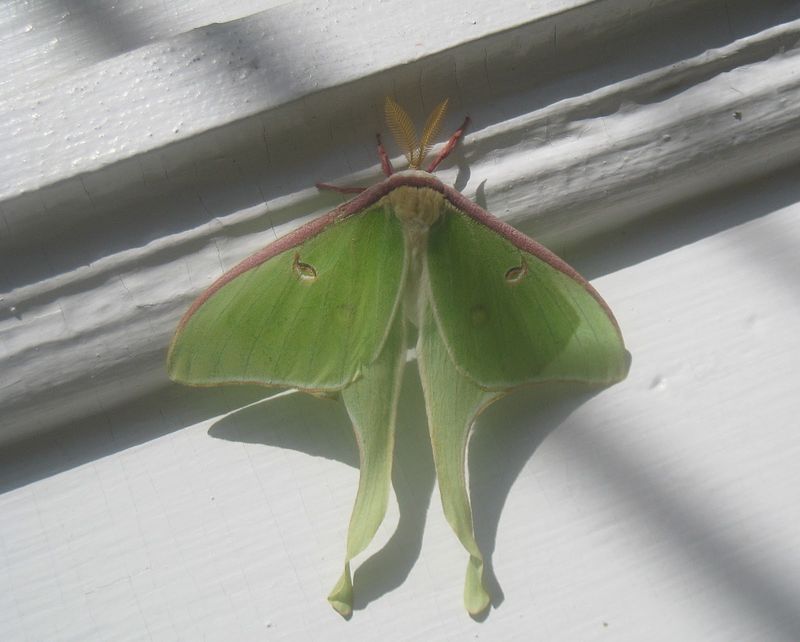
Adult luna moths have no working mouthparts for eating. They do not feed at all, so they rely on energy stored during the caterpillar stage.
That is a big reason the adult stage is brief.
UF sources describe adult life as about a week on average, as noted in a UF/IFAS Sarasota County post and a UF reference sheet. The Missouri Department of Conservation gives a similar picture.
Other sources vary a little. The Smithsonian describes a shorter span of four to five days for luna moths and some other giant silk moths.
That means a week is a useful average, not a promise.
You also cannot tell how old the moth on your porch is. It might have emerged last night or several days ago, so nobody can say how many days it has left.
Keep in mind that this is only the adult stage. The moth first lives as an egg, a caterpillar, and a pupa inside a cocoon, and those earlier stages take much longer.
A short adult life does not mean a short life cycle.
Florida sightings can span the calendar
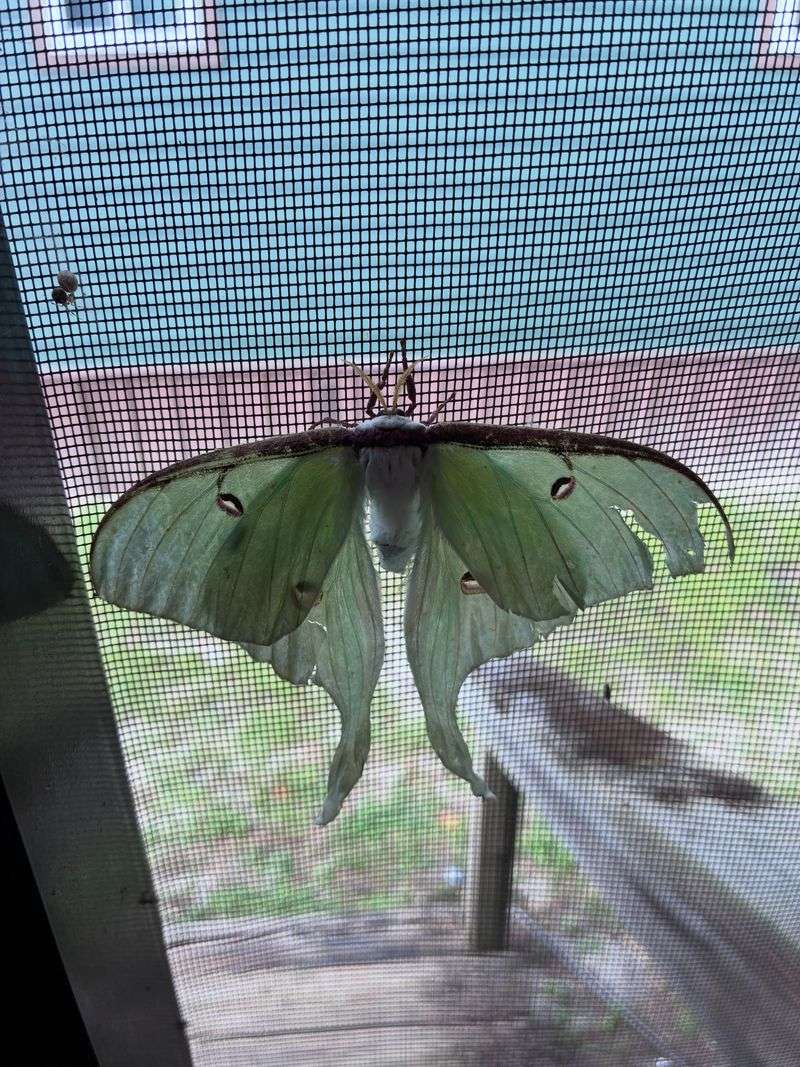
Florida gives luna moths a long window. UF/IFAS reports that adults may be found in every month of the year in the state.
Part of the reason is repeat breeding. A UF resource reports two to three reproductive cycles each year, so new adults can emerge at different times.
That does not mean a single moth lives all year. Each adult is around only briefly.
What lasts across the calendar is the chance that some adult, somewhere in Florida, is flying.
It also does not mean every region or month is equally good for a sighting. A yard in the Panhandle and a yard in South Florida can have different timing, and local conditions shape what you see.
Seeing one in January does not mean your neighbors will too.
Be careful with seasonal peaks you read about for other states. Dates given for Texas or the northern states do not map neatly onto Florida.
For your own yard, a simple log of dates and photos will tell you far more than a generic calendar.
A porch light does not reveal where the moth came from
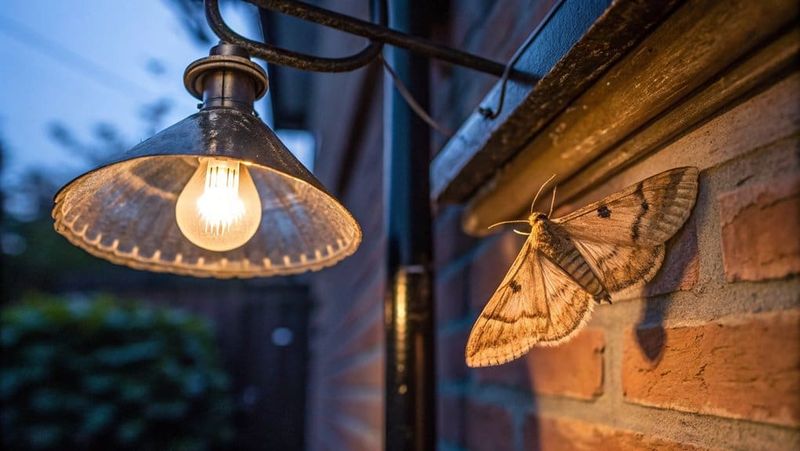
Porch lights are where many of us notice moths, but they tell us little about the moth’s past. A luna on your wall might have grown up on a tree in your yard, or it might have come from farther away.
Nothing about the sighting shows which.
Research on artificial light is broader than luna moths. A study in Nature Communications looked at flying insects in general and suggests lights can disrupt flight and hold insects near them.
That work was not about luna moths, so its findings should not be treated as settled luna moth behavior.
Explanations of why moths gather at lights, such as one from Butterfly Conservation, point to confusion rather than a simple attraction.
What you can reasonably say is simple: a luna moth, or a likely one, was here tonight. Treat the sighting as a nice moment, not as proof of breeding nearby.
Caterpillars use several familiar Florida trees
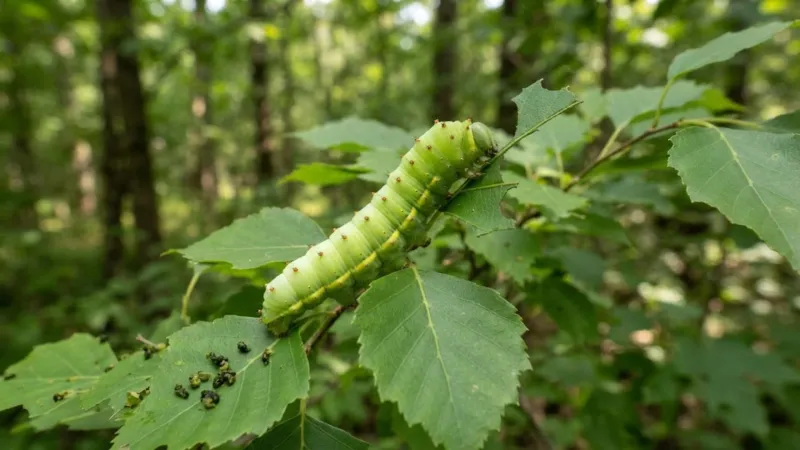
Every adult luna started as a caterpillar chewing leaves. The UF list for Florida includes persimmon, sweetgum, hickory, walnut, sumac, birch, willow, and oak.
The UF/IFAS Sarasota County post highlights hickory, walnut, sumac, sweetgum, and persimmon. Texas A&M Forest Service lists hickory, persimmon, sweetgum, oak, and willow.
These are host plants, meaning caterpillars can eat them. They are not a checklist for attracting adults.
Planting one does not guarantee a visit, and whether caterpillars use a tree depends on local conditions.
If you already have one of these trees, you may spot a caterpillar someday. That is a good reason to look before you spray anything on the tree.
You do not need to worry about damage. Texas A&M notes that luna caterpillars generally do not get numerous enough to harm host trees.
They are not a serious pest, just a small part of a healthy yard.
Some leaf litter can shelter pupae
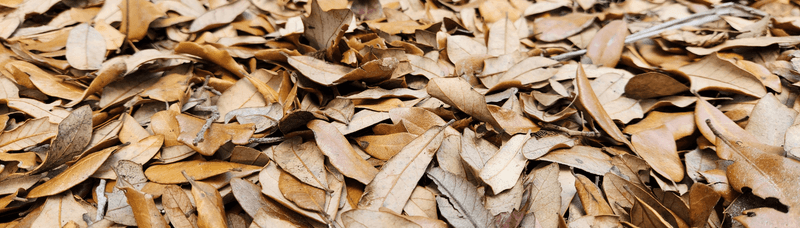
Luna moth pupae spend the cool months in cocoons tucked among fallen leaves, as the USA National Phenology Network notes. Leaves you rake away may be hiding more than you think.
Where your site allows, leave a modest layer of leaves under trees or in a back bed. That can shelter moths and many other insects.
A tidy yard is not required for a healthy one.
There is one firm caution from the UF/IFAS Sarasota County team: do not leave leaves where they can wash into ponds, storm drains, or other waterways. Keep leaf piles off driveways, curbs, and slopes that drain toward water.
Think of this as helping habitat, not a promise. Leaving leaves will not summon a luna moth, but it costs you very little and benefits wildlife in Florida’s sandy yards.
Make a careful identification, then let the sighting be
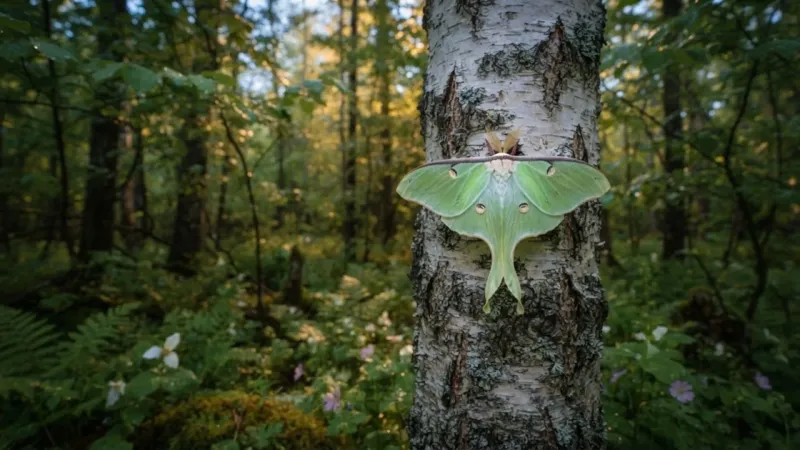
Next time a pale green moth lands by your light, check the wings first: long curved tails and eyespots on all four, as described by UF/IFAS. Snap a photo, then give it space.
Remember that the adult stage is brief, and host trees and leaf litter support other parts of the life cycle, as the UF/IFAS Sarasota County post explains. No yard change can promise a return.
Some nights, the best thing you can do is turn off the light and watch it glow green in the dark.