
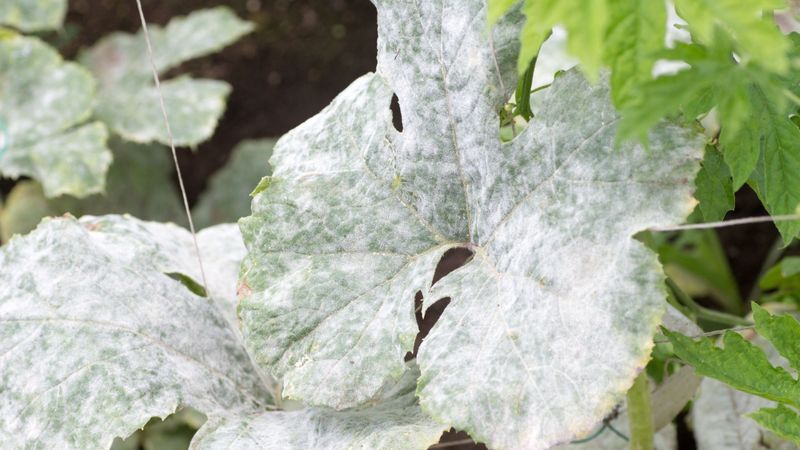
Walk out to your zucchini patch on a late-summer morning and you might find the leaves dusted with a chalky white coating that was not there a week ago. Before you blame downy mildew, the diagnosis deserves a closer look.
The most common cause of that powdery surface film on zucchini is powdery mildew, and telling the two diseases apart changes everything about how you respond.
A chalky coating usually points to powdery mildew
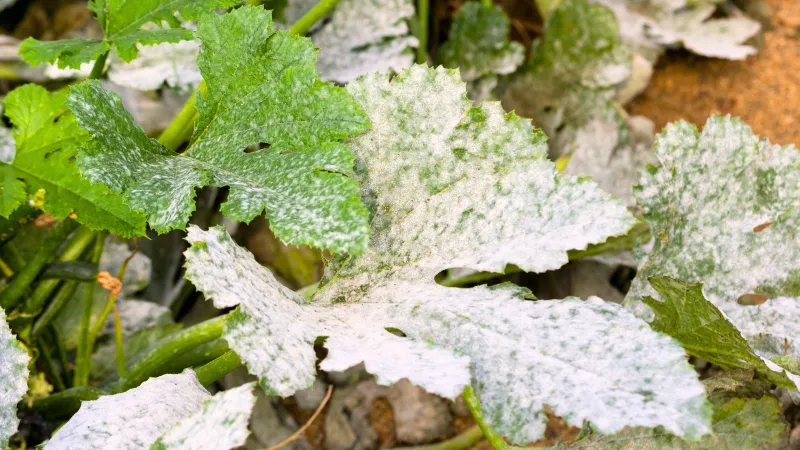
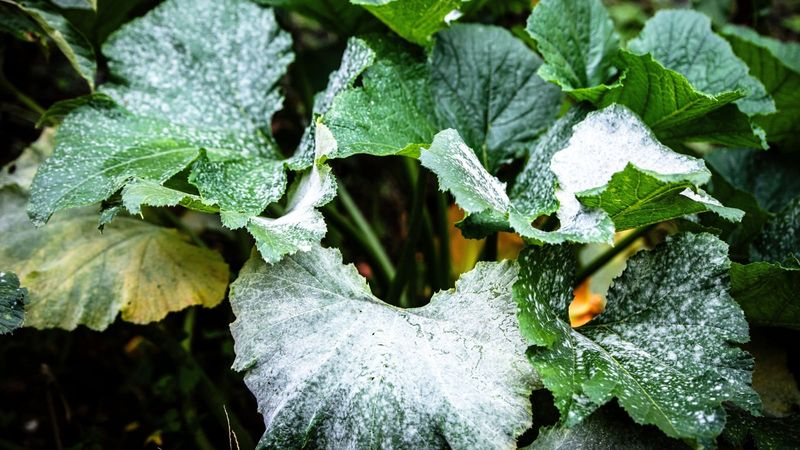
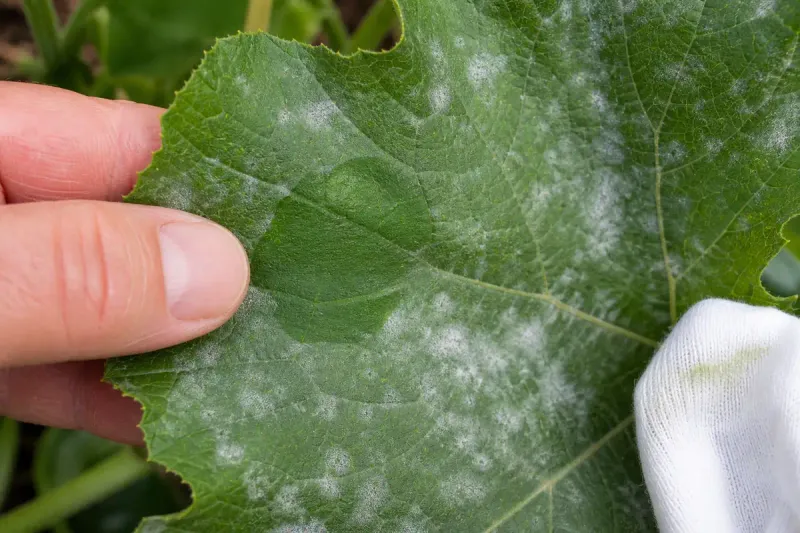
When zucchini leaves develop a diffuse, chalky film that looks like someone dusted them with flour, powdery mildew is the most likely explanation. University of Minnesota Extension guidance on powdery mildew in cucurbits describes the disease as producing visible white, powder-like growth on leaf surfaces, and notes that it affects the full cucurbit family, including zucchini, squash, cucumbers, melons, pumpkins, and gourds.
The coating often starts as small pale or yellowish spots before spreading into the familiar chalky patches across leaves, petioles, and stems.
Severe infection can cause leaves to yellow, brown, and die prematurely, which reduces the plant’s ability to feed developing fruit and lowers overall productivity. Not every pale or faded leaf signals mildew, though.
Sun bleaching, nutrient stress, and other problems can cause leaf discoloration that has nothing to do with fungal disease.
Downy mildew looks different and behaves differently, and the distinction matters before you decide on a response. The sections below walk through a side-by-side inspection that will help you read both leaf surfaces and reach a more reliable diagnosis before taking action.
Inspect both sides of the leaf before diagnosing
Grab a few of the older leaves near the base of the plant and carry them into good light. Look at the top surface first and ask what you actually see: a diffuse white or grayish powder spread across the leaf blade, or distinct pale-green, yellow, or brown lesions that sit below the surface texture?
A powdery surface coating points toward powdery mildew. Lesions that look more like discolored patches in the leaf tissue raise the possibility of downy mildew, which typically starts as pale-green or yellowish areas on the upper surface.
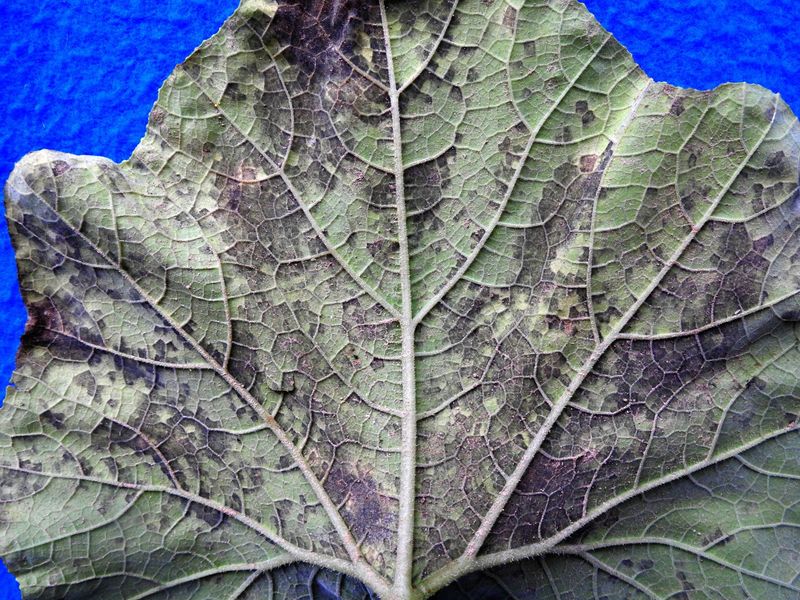
The critical next step is to flip the leaf over. University of Minnesota Extension’s downy mildew resource explains that under humid or wet conditions, downy mildew produces gray, brown, purple, or nearly black sporulation on the underside of affected areas.
That dark, fuzzy or dusty growth underneath is a key sign that separates downy mildew from powdery mildew.
Do your inspection during a cool, humid morning when spore growth is most visible. A hand lens helps a great deal if you have one.
NC State Plant Pathology guidance on diagnosing cucurbit downy mildew notes that on zucchini and other squash crops, lesions may be less sharply angular than they are on cucumber, so shape alone is not a reliable diagnostic clue. Rely on the combination of lesion color, surface location, and underside sporulation rather than any single feature.
When the pattern is unclear after a careful inspection, contact your county Extension office or a local plant clinic. White and gray symptoms on squash can also result from white mold, viral infection, insect feeding, or environmental stress.
Late-summer heat does not make downy mildew the default
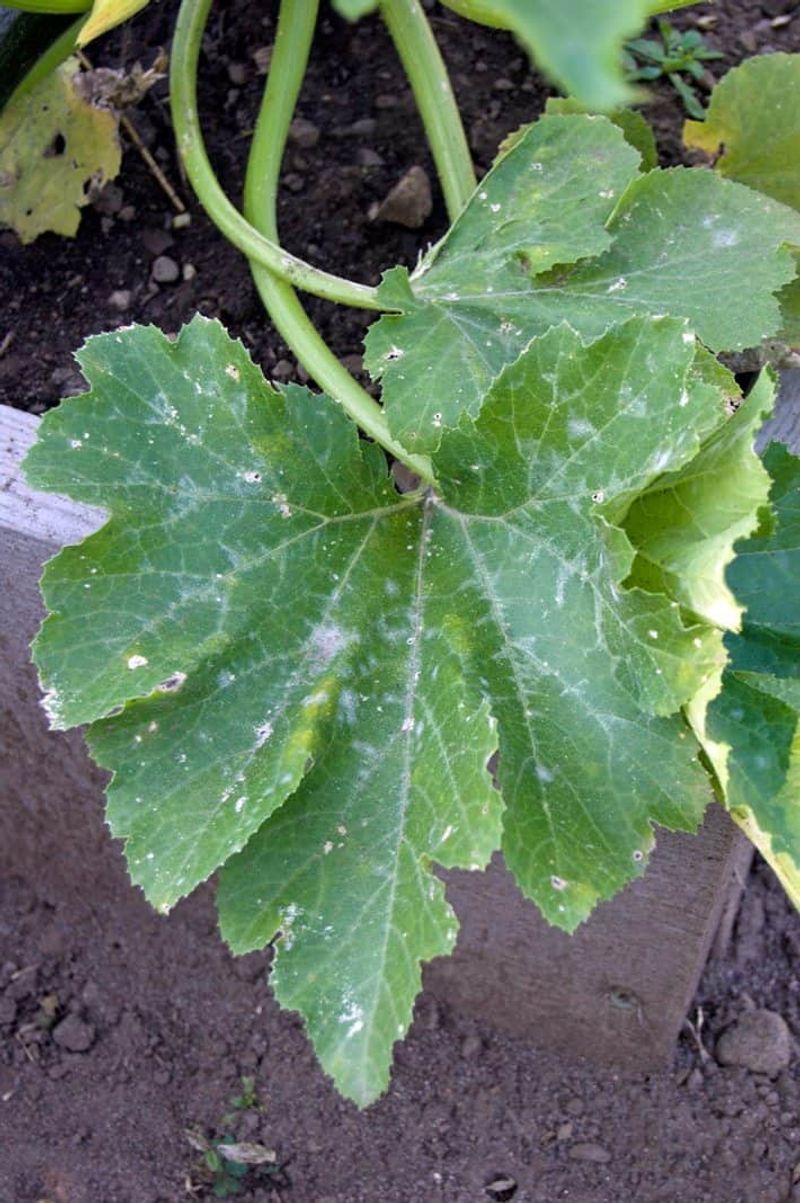
Heat alone does not set the stage for downy mildew. UC IPM guidance on powdery mildew of cucurbits makes clear that powdery mildew does not need rain or free water on the leaf to spread.
It can develop in warm, humid canopies even during relatively dry weather, especially where plants are crowded, shaded, or poorly ventilated. Those are exactly the conditions inside a dense late-summer zucchini patch.
Downy mildew works differently. UF/IFAS publication PP325 on cucurbit downy mildew identifies wet leaves, high humidity, and nighttime temperatures around 55-75 degrees Fahrenheit as the conditions that favor rapid disease development.
The University of Minnesota places the full development range at 41-86 degrees Fahrenheit, with greatest severity near 59-68 degrees. That is cooler than a typical Southern late-summer afternoon, though it can overlap with nighttime or early-morning conditions during certain weather patterns.
Regional timing also varies. UF/IFAS describes downy mildew as a near-constant concern in southern Florida, where warm and humid conditions persist for much of the year.
Texas is a different story: Texas A&M AgriLife cucurbit leaf disorder guidance lists both powdery and downy mildew among common squash problems, but local weather, crop timing, and canopy density determine which disease poses the greater risk at any given moment. Check local Extension alerts and disease reports rather than assuming the season alone tells you what you are dealing with.
Reduce disease pressure with careful garden changes
Once you have a working diagnosis, the first practical moves are low-risk changes that reduce the conditions both diseases need to spread. Start with airflow.
Crowded plants trap humidity in the canopy and keep foliage wet longer after rain or irrigation. University of Minnesota Extension guidance on managing plant diseases in the home garden recommends improving spacing and air movement as a foundational disease-reduction step, alongside controlling weeds that compete with crops and add to canopy density.
Watering habits matter just as much as spacing. Water at the soil line rather than overhead, and aim for morning irrigation so any moisture that does reach the leaves has time to dry before temperatures drop in the evening.
Wet foliage overnight creates exactly the humid surface conditions that favor downy mildew development. Trellising is worth considering for any vining squash in your garden because it lifts foliage off the ground and opens the canopy to better air circulation.
Removing heavily diseased leaves can reduce the amount of spore-producing tissue in the garden, but do this carefully. University of Georgia Extension’s disease management guide for home vegetable gardens advises removing foliage only when it is dry, and cautions against stripping more than roughly one-third of a plant’s leaves at once.
Taking too much foliage stresses the plant and can reduce its ability to recover. When disease is severe and most of the canopy is affected, removing the entire plant and cleaning up all residue may be a more practical choice than repeated pruning.
Use treatments to protect new growth, not erase old damage
Fungicides and other disease-control products are most useful before infection takes hold or at the very first signs of disease. They work by protecting healthy tissue and, in some cases, slowing the spread of active infections.
UGA Extension’s home vegetable garden disease management publication is direct on this point: these products generally cannot restore tissue that is already damaged. Leaves that are already yellowed, brown, or dead will not recover after an application.
Before purchasing anything, read the label carefully. EPA guidance on pesticide labels explains that the label is a legal document, and every direction on it must be followed.
That means confirming the product is registered for use on zucchini or squash specifically, that the target disease is listed, and that the pre-harvest interval is compatible with your harvest schedule. Products labeled for cucumber or pumpkin are not automatically approved for zucchini.
Sulfur-based fungicides are commonly recommended for powdery mildew, but they carry a real risk in Southern late-summer conditions. Utah State University Extension guidance on powdery mildew of cucurbits advises against applying sulfur when temperatures exceed 90 degrees Fahrenheit because it can burn foliage.
In Texas and Florida during August and September, that threshold is easy to cross. Always defer to the product label and your local Extension office for specific timing and rate recommendations.
Household mixtures such as baking soda, milk, vinegar, or neem oil are sometimes promoted online as cures, especially for powdery mildew. Colorado State University Extension’s powdery mildew resource notes that results from these approaches vary and that some can injure plants.
None of them should be treated as reliable treatments for downy mildew.
Prepare next season before the canopy closes
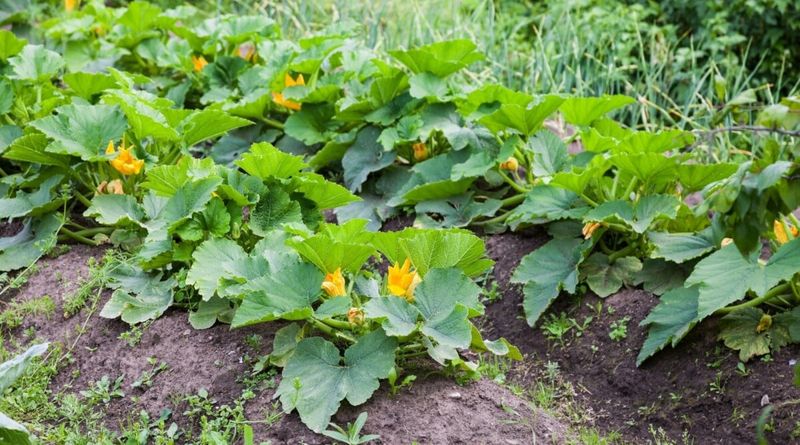
The best time to reduce mildew pressure next season is before the plants go in the ground. Spacing plants farther apart from the start prevents the dense canopy conditions that favor both powdery and downy mildew.
University of Minnesota Extension’s guide on preventing plant diseases in the garden recommends removing diseased plant residue at the end of the season, since spores and infected tissue left in the bed can carry disease into the next planting.
Resistant or tolerant cultivars are worth looking for at the seed stage. Utah State University Extension’s cucurbit powdery mildew page notes that some resistance is available in squash and pumpkin, though it is more extensively developed in cucumber and melon varieties.
Resistance is also disease-specific and not absolute, meaning a cultivar labeled tolerant to powdery mildew may still be susceptible to downy mildew, or vice versa.
Local disease pressure matters more than a general national calendar. Texas A&M AgriLife’s vegetable growers handbook chapter on disease management reflects how variable conditions are across the state.
Watch for local Extension alerts and regional disease tracking reports as the season progresses. One more important note: NC State Plant Pathology reporting on cucumber downy mildew specifically cautions that cucumber and squash commonly involve different pathogen clades, so a confirmed downy-mildew outbreak on cucumbers nearby does not automatically mean your zucchini faces the same risk or the same strain behavior.
Match the pattern before choosing the fix
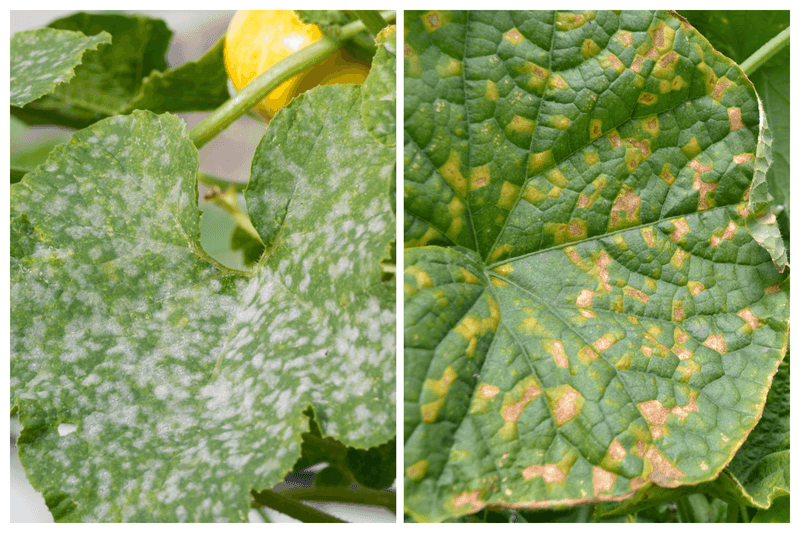
A powdery white or gray coating spread across the surface of a zucchini leaf points toward powdery mildew as the more likely cause. Yellow or brown lesions on the upper surface paired with gray, brown, or purple fuzzy growth on the underside raise concern for downy mildew, especially when conditions have been humid or wet.
These two patterns call for different responses, so the inspection step is not optional.
The practical plan is the same regardless of which disease you are dealing with: limit leaf wetness, improve airflow, remove damaged tissue carefully, and choose any treatment product based on what the label actually covers. When the symptoms do not clearly match either pattern, University of Minnesota Extension guidance on managing plant diseases recommends reaching out to a county Extension office or plant clinic rather than guessing.
Catching either disease early gives you the best chance of protecting the leaves and fruit that are still healthy. A careful look at both sides of the leaf is the cheapest tool in your garden shed.