
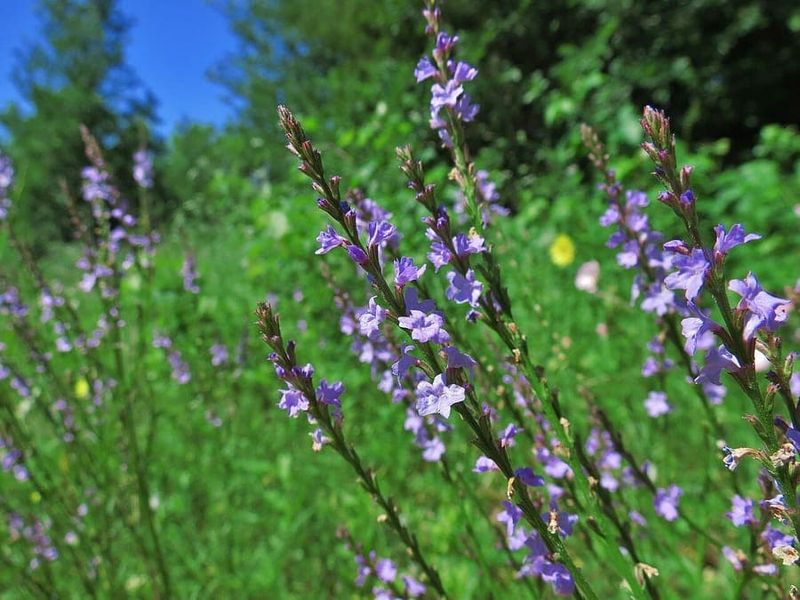
Every spring, Central Texas yards fill up with small purple-flowered plants that most homeowners yank out without a second thought. Before you pull the next one, take a closer look, because it may be Texas vervain, a Texas-native perennial that feeds bees and butterflies from April through fall.
Knowing what you have growing in your lawn could change how you handle it.
That purple lawn plant may be Texas vervain
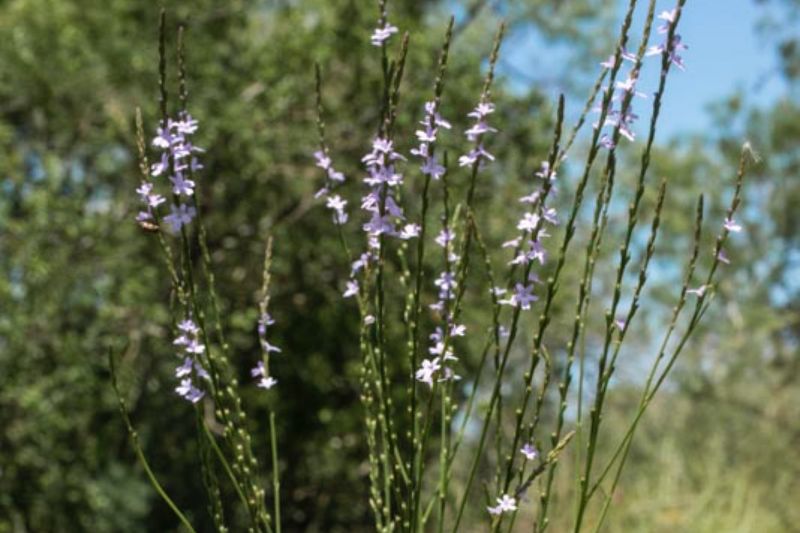
Purple flowers popping up in your Central Texas lawn in spring are easy to dismiss as weeds, but one of those plants may actually be worth a second look. The plant in question could be Texas vervain, known scientifically as Verbena halei and also called Texas verbena or slender vervain.
Before treating that as a certainty, though, it helps to understand why flower color alone cannot confirm what you have.
Several unrelated plants produce purple flowers in lawns during the same season. Extension weed guidance points to henbit, purple deadnettle, and ground ivy as common purple-flowered lawn plants that homeowners regularly encounter.
Any one of those could be what you are looking at, which is why the identification step matters before you decide how to respond.
Texas vervain is a different plant entirely. The Native Plant Society of Texas lists it as a nectar and pollen source for bees, butterflies, and other nectar insects, and describes it as drought-tolerant and suited to prairies, open woodlands, roadsides, wildflower meadows, and pocket prairies.
That documented ecological value is the reason this article exists: if the plant growing in your lawn turns out to be Texas vervain, you have a free native volunteer doing real work for local pollinators.
The article’s practical promise is straightforward. Spend a few minutes looking at the whole plant before you pull or spray it.
If the features match Texas vervain’s profile, you can make an informed choice about whether to leave it, move it, or remove it based on your yard’s actual needs, not out of reflex.
Identify the whole plant, not only its purple flowers
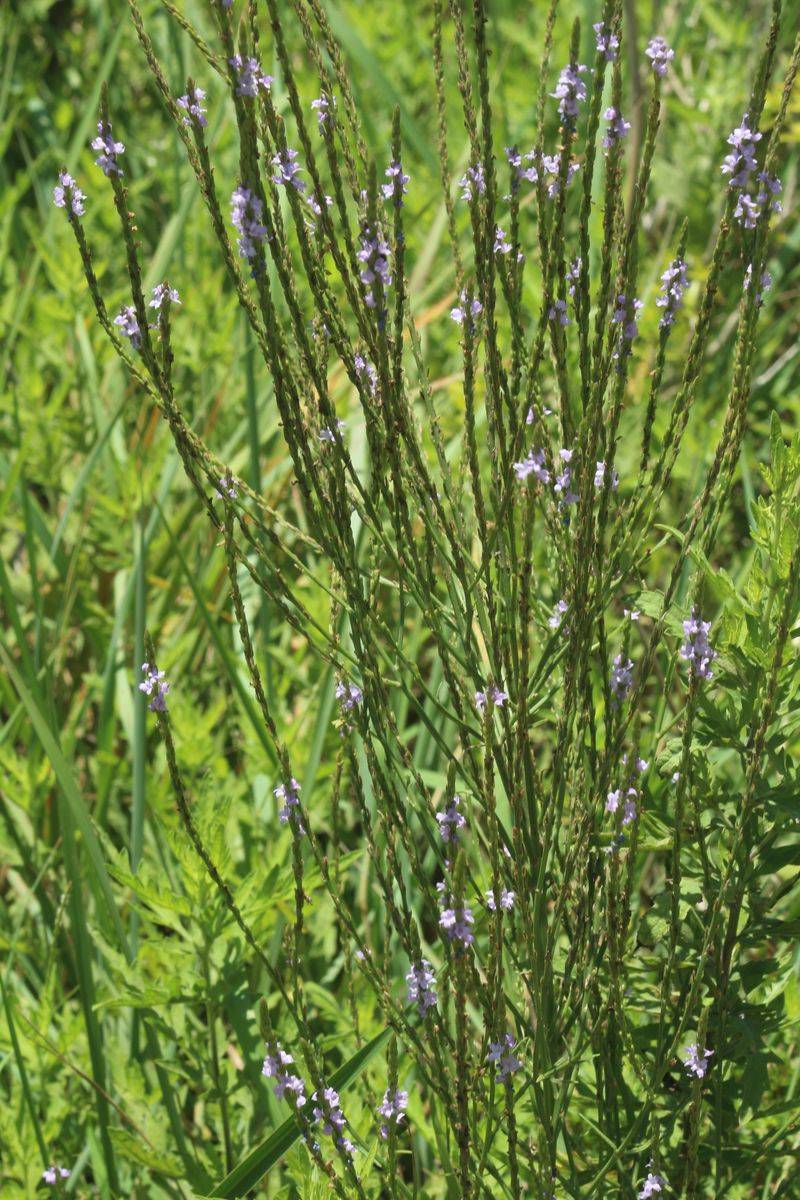
Flower color is the most obvious thing you notice, but it is the least reliable feature for telling Texas vervain apart from other purple-flowered lawn plants. A proper identification starts at the base of the plant and works upward through stems, leaves, and flower structure before drawing any conclusion.
Start with the stems. Texas vervain produces erect stems that feel rough and bristly to the touch, are clearly hairy, and have a distinctly square cross-section rather than a round one.
That combination of upright posture, rough texture, and square shape is one of the more dependable early clues. A plant with soft, round, or trailing stems is pointing you toward a different species.
The leaves present a challenge because they are variable. The Native Plant Society of Texas describes Texas vervain’s leaves as potentially toothed, lobed, or deeply dissected, meaning two plants from the same species can look noticeably different at the leaf level.
That variability is exactly why a photograph of a single leaf is not enough. You need to look at several leaves on the same plant and note the overall pattern rather than trying to match one leaf to a reference photo.
The flowers themselves are small, lavender to purple, and shaped like narrow trumpets. They are arranged along slender, branched spikes rather than clustered together in a dense head or a broad flat cluster.
That spike arrangement, with tiny flowers spaced along thin branching stems, is a useful structural detail that helps separate Texas vervain from plants like henbit, which produces whorled clusters of tubular flowers around its stem at the leaf nodes.
Taken together, rough hairy square stems, variable toothed or dissected leaves, and small trumpet-shaped flowers on slender spikes give you a working description to compare against your plant. If several of those features line up, you have a reasonable basis for a tentative Texas vervain identification, though confirming with a reliable Texas plant database or local expert is always the safer call when you plan to act on that identification.
What a confirmed Texas vervain contributes
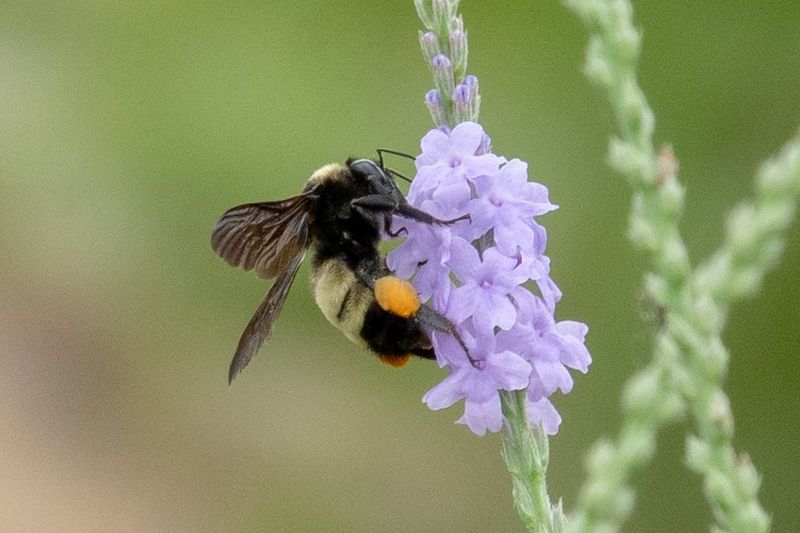
Once you have confirmed the plant is Texas vervain, the next question is what it actually does for your yard’s wildlife. The short answer is that it provides nectar and pollen to bees, butterflies, and other nectar insects during a long seasonal window.
The Native Plant Society of Texas documents Texas vervain as a nectar and pollen plant with bees, butterflies, and other nectar insects among its beneficiaries. The Texas Parks and Wildlife Department includes it in native pollinator management guidance as a recommended plant for native pollinator habitat.
Those are meaningful endorsements from authoritative Texas sources, and they reflect documented real-world value rather than general enthusiasm for purple flowers.
That said, a single plant or a small lawn patch is one food source within a much larger foraging territory. Pollinators visit many plant species across a landscape, and Texas vervain is not their only option or their most critical one.
Keeping a patch of it does not guarantee you will attract more bees or butterflies than your neighbors, and pulling one clump will not collapse local pollinator populations.
The more useful way to think about it: a confirmed Texas vervain plant is doing something productive in your yard from roughly spring through fall. It is not decorative filler or an aggressive invader.
It is a native forb that happens to have volunteered itself in a space where it can feed visiting insects without any effort or expense on your part. That is a fair trade-off to weigh when you are deciding whether to leave it where it is.
Expect performance to vary by Texas site
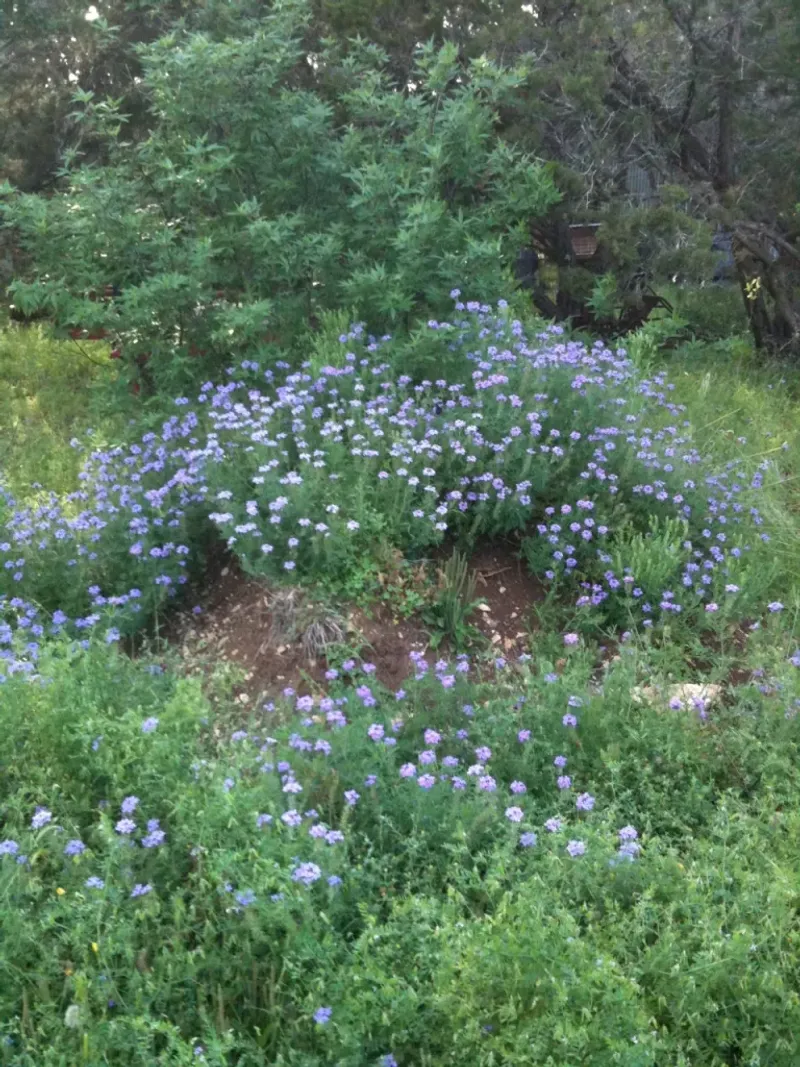
Knowing that Texas vervain is drought-tolerant and suited to Texas conditions is a good starting point, but it does not mean the plant will perform identically in every yard. Real-world results depend on where you are in Texas, what your soil looks like, how much sun the spot gets, and how the plant was established.
Documented habitats for Texas vervain include prairies, open woodlands, roadsides, wildflower meadows, pocket prairies, and xeriscape gardens. The Native Plant Society of Texas describes it as adaptable to a variety of soils and suited to xeriscape settings, which aligns with Central Texas’s rocky, often shallow soils and long dry stretches.
A yard that offers full to partial sun and reasonable drainage is a reasonable match for this plant.
For height and bloom timing, a regional USDA/Natural Resources Conservation Service plant guide puts Texas vervain at approximately 1 to 3.5 feet tall with a bloom period running roughly April through October. Those figures are approximate, and local conditions can shift both.
A plant in thin rocky soil with full afternoon sun may stay shorter and bloom earlier or later than one in a richer spot with afternoon shade. Rainfall, regional temperatures, and competition from surrounding turf or other plants all play a role.
Drought tolerance also does not mean zero water needs. A newly transplanted or recently germinated plant may need supplemental watering during establishment, especially through a hot Central Texas summer.
Once rooted in, the plant handles dry periods better than many garden ornamentals, but expecting it to thrive with no attention at all during establishment is setting the bar too high.
The practical takeaway is that Texas vervain is a genuinely adaptable native plant, not a guaranteed performer in every setting. A volunteer that has already sprouted in your lawn is showing you it can handle that specific spot.
One you move or transplant into a bed may need a little more patience while it settles in.
Several common lawn plants also bloom purple
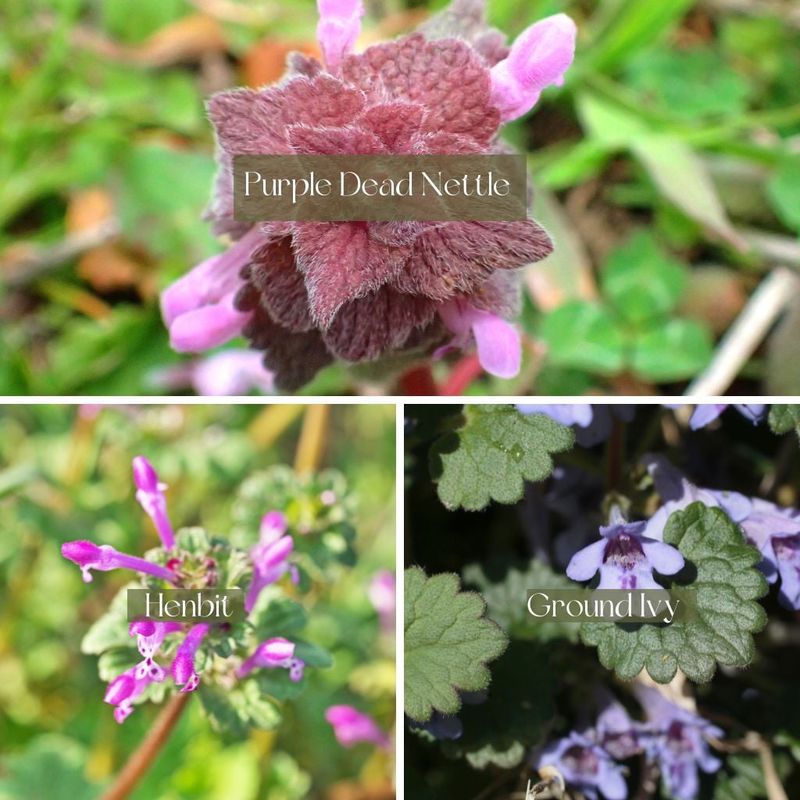
Purple flowers in a Central Texas lawn in early spring are more likely to belong to henbit or purple deadnettle than to Texas vervain. Knowing the difference matters because the plants are unrelated, and the native status and documented pollinator value of Texas vervain do not transfer to the others just because they share a flower color.
Extension weed identification guidance identifies henbit and purple deadnettle as nonnative winter annuals, meaning they germinate in fall, grow through winter, bloom in late winter and early spring, and then die off as temperatures rise. Ground ivy is a third common purple-flowered lawn plant, a spreading perennial that can form dense mats in moist, shaded areas.
None of these three are Texas-native plants, and describing them as native pollinator plants would be inaccurate.
Henbit produces small tubular purple flowers in whorled clusters around upright square stems, with rounded leaves that clasp the stem near the top of the plant. Purple deadnettle looks similar but has a more distinctly reddish-purple tinge to its upper leaves and a triangular leaf shape.
Ground ivy has rounded, scallop-edged leaves on creeping stems and produces small lavender-blue flowers in clusters at the leaf nodes.
Texas vervain’s profile separates it from all three. The upright, rough, hairy stems; the variable toothed or dissected leaves that do not clasp the stem; and the slender spike arrangement of its flowers are structurally different from what you see on henbit, purple deadnettle, or ground ivy.
Growth habit is the clearest separating feature: Texas vervain grows as an upright branching plant, not as a low mat or a soft-stemmed annual with clasping leaves.
When you are comparing possibilities in your lawn, focus on stem texture, leaf attachment, and how the flowers are arranged on the plant rather than on color alone. Color gets you to the right general neighborhood; structure tells you which house you are actually standing in front of.
Match your lawn response to your actual needs
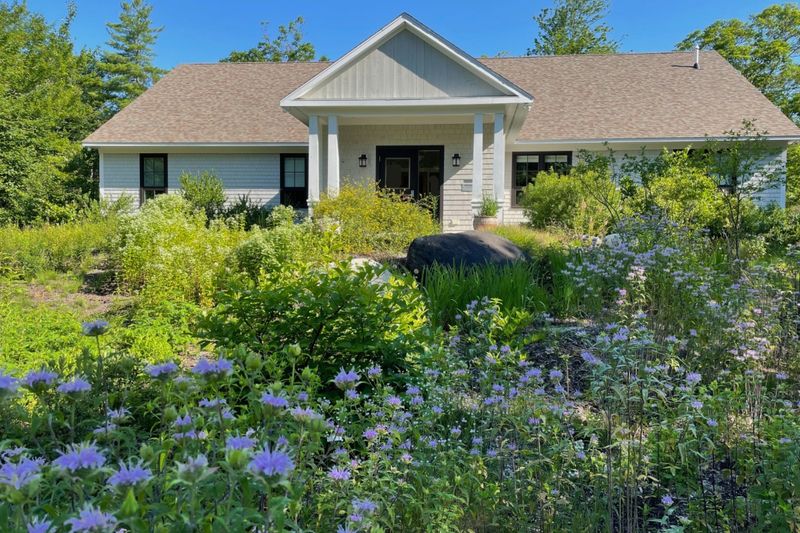
A confirmed Texas vervain in your lawn does not automatically mean you are obligated to keep it. The right response depends on where it is growing, how your yard is used, and what standards you or your HOA expect from the space.
If the plant is in a low-traffic area, along a fence line, at the edge of a bed, or in a spot that does not interfere with mowing, leaving it in place is a practical wildlife-friendly option. The Native Plant Society of Texas documents it as suited to xeriscape gardens and wildflower meadows, which means a designated unmowed corner or a naturalized strip of lawn can work well for it.
Preserving even a small patch gives visiting bees and butterflies a food source during its long bloom period without requiring any planting effort on your part.
Moving the plant into a bed is worth considering if the lawn location is genuinely problematic but you want to keep the plant. Texas vervain’s adaptability to a range of soils means a sunny, well-drained bed is a reasonable destination.
Transplanting works best in cooler weather, and the plant will likely need some supplemental water while it re-establishes.
Removal is a reasonable choice when the plant is in a high-traffic area, where pets play, or where appearance standards or HOA rules make it impractical to leave a volunteer plant. Pulling it by hand or cutting it at the soil line is the most targeted option.
If you are considering an herbicide, Texas Parks and Wildlife pollinator guidance is clear that pesticides can harm native pollinators or alter their foraging and nesting behavior, and that product labels may not fully describe risks to native bees. Avoid spraying around any flowering plants, minimize drift, use the least damaging control method available, and follow the label directions precisely.
The broader point is that a native plant with real ecological value still has to fit the yard it grows in. Knowing what the plant is gives you a better basis for that decision than pulling first and wondering later.
Build pollinator value beyond one volunteer
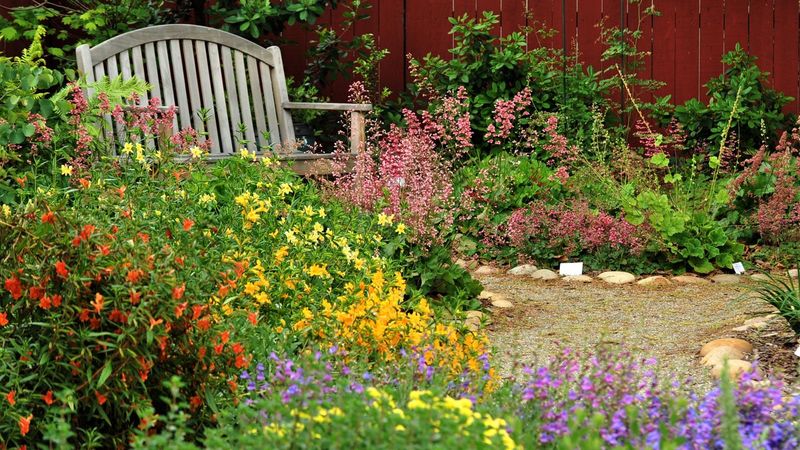
A single patch of Texas vervain is a useful addition to a yard, but it works best as one piece of a larger picture. Pollinators need food sources across the entire active season, not just during one plant’s bloom window, and a yard that offers only one or two flowering species will serve them less effectively than one with a planned sequence of blooms.
Texas Parks and Wildlife’s native bee guidance recommends a diversity of native flowering plants that provide a succession of blooms from spring into early fall, along with nesting habitat and pesticide-free areas. That recommendation reflects how pollinators actually forage: across a landscape, across multiple plant species, and across the full growing season rather than in concentrated visits to one yard feature.
Texas vervain’s approximate April-through-October bloom period gives it a long overlap with other Texas natives you might add to the yard. Pairing it with early spring bloomers and late-fall natives means your yard is offering something useful for a longer stretch of the year.
TPWD pollinator management materials also emphasize nesting habitat alongside food sources, so leaving some bare soil patches, avoiding heavy mulching in every corner, and limiting pesticide use all contribute to a more complete pollinator-friendly yard.
Think of a confirmed Texas vervain volunteer as a starting point rather than a destination. It is already there, already working, and already free.
Building around it with other documented Texas natives turns a single lawn discovery into a yard that supports pollinators across the season without requiring a complete overhaul of how you use your outdoor space.
Confirm before you pull or spray
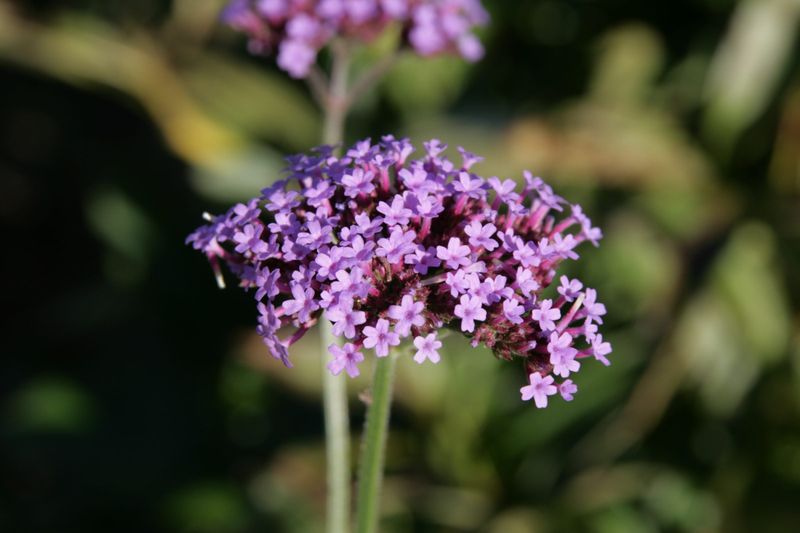
A simple four-step workflow keeps you from making an irreversible decision on a misidentified plant. Photograph the whole plant first, then move in for close shots of the stem, a few leaves from different positions on the plant, and the flower arrangement.
Those four views together give any identification resource, or any expert you contact, enough to work with.
Compare those photos against a reliable Texas plant database such as the Native Plant Society of Texas listing for Verbena halei or the extension guide to common purple lawn weeds. If the features match Texas vervain’s profile across stems, leaves, and flowers, you have a reasonable tentative identification.
If something does not line up, or if you are genuinely uncertain, contact your county extension office, a local Native Plant Society chapter, or a qualified botanist before applying any herbicide.
The decision rule that follows from a confirmed identification is practical and yard-specific. A confirmed Texas vervain can stay where it is if the location works, move to a bed if the lawn spot is impractical, or come out entirely if your yard’s use and standards require it.
What it should not do is get pulled or sprayed automatically because it was unfamiliar. Texas yards grow a lot of plants worth a second look, and this one has earned it.