
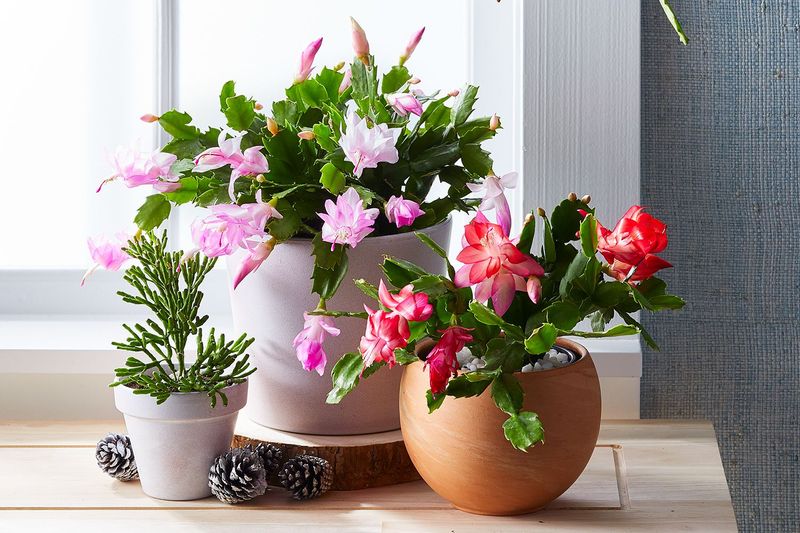
If you have a plant sitting on your windowsill that everyone calls a Christmas cactus, September is the month that can make or break its winter flower show. Most of what people call Christmas cacti are actually Thanksgiving cacti or hybrids, and those plants respond especially well to a simple fall change you can make right now.
The move itself costs nothing – it just means putting your holiday cactus in the right light and darkness conditions so it gets the signal to form buds. Get this one thing right, and you give the plant its best realistic shot at blooming when you actually want it to.
The right fall move protects the flowering signal
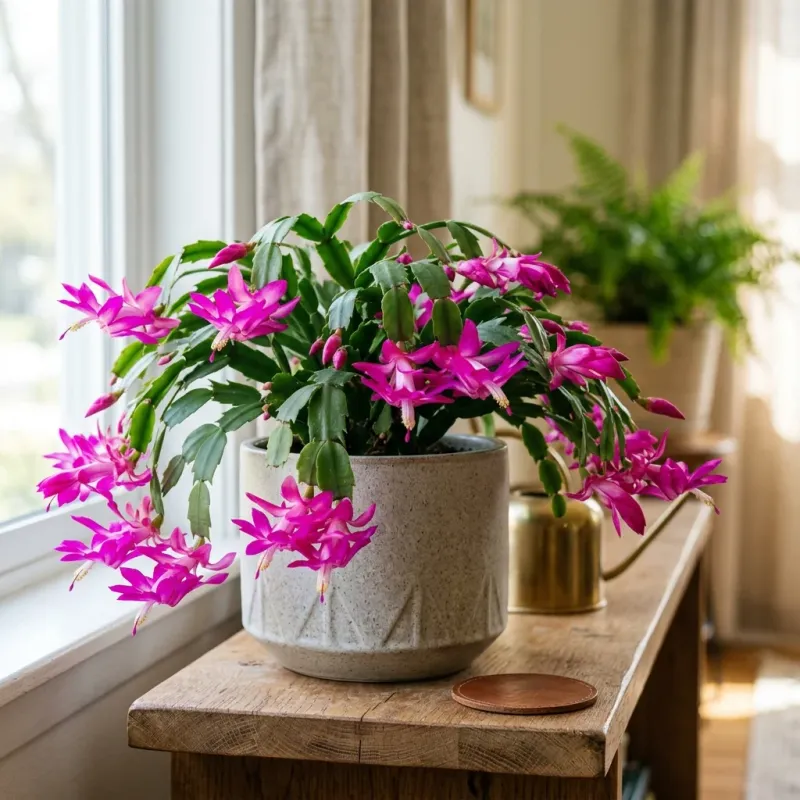
Many plants sold at garden centers and grocery stores as Christmas cacti are actually Thanksgiving cacti or hybrids, and that distinction matters more than most people realize. UConn Extension guidance places the start of short-day treatment for Thanksgiving cactus around September 1, while true Christmas cactus may not need that treatment until closer to October.
Starting in September makes good sense for the majority of holiday cacti in most homes, but calling it a universal rule for every plant sold under that label overstates the case.
The practical action is straightforward: move your holiday cactus away from any location where lamps, porch lights, or nearby rooms expose it to light after sundown. A spare bedroom with no nighttime light, a shaded porch that stays dark from dusk onward, or a closet you open each morning can all work well.
Iowa State Extension confirms that photoperiod and temperature are the main flowering signals, not a single fertilizer application or commercial bloom booster.
Relocation improves the odds of winter buds forming – it does not guarantee a bloom on any specific date. UF/IFAS notes that holiday cacti need bright, indirect daytime light to stay healthy through the treatment period, so a naturally dark room that also catches good morning light is an ideal starting point.
Identify the holiday cactus before choosing the calendar
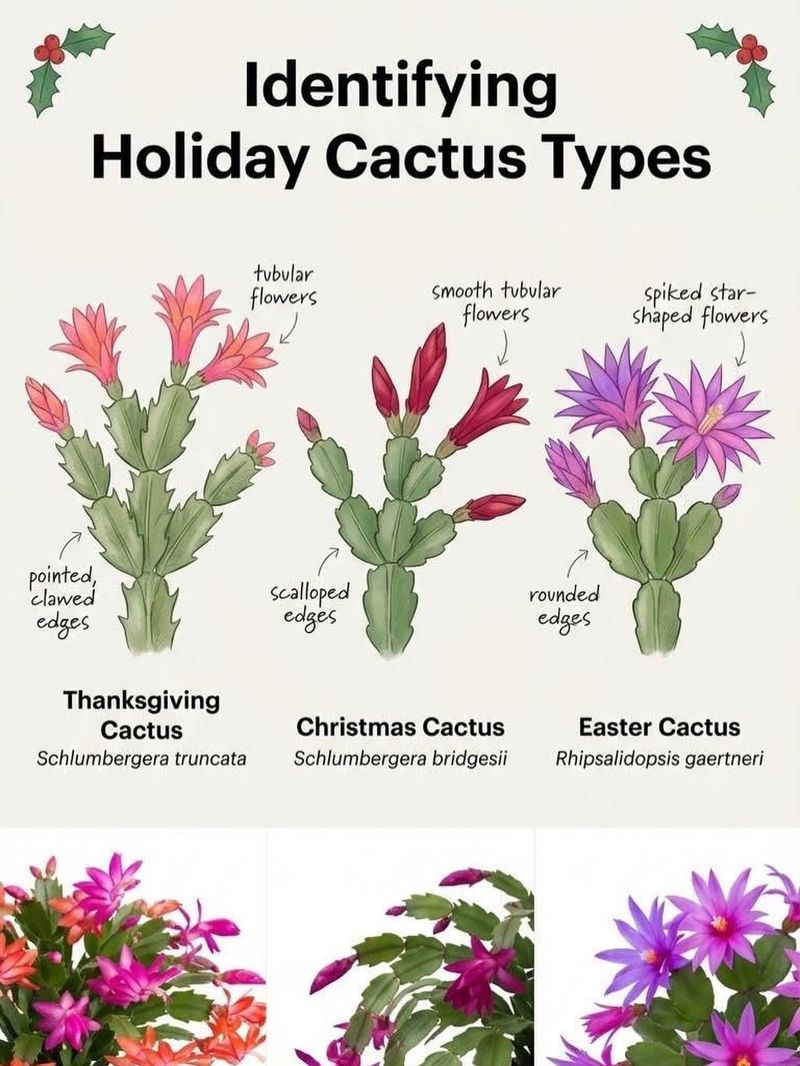
Before picking a start date for fall treatment, take a close look at the stem segments on your plant. UF/IFAS Okaloosa County Extension explains that Thanksgiving cactus, Schlumbergera truncata, typically has pointed, claw-like projections along the edges of each segment, while true Christmas cactus, Schlumbergera x buckleyi, has smooth, rounded scallops with no sharp teeth.
The catch is that retail labels are notoriously unreliable. NC State Extension points out that Thanksgiving cactus is the species most commonly sold in stores under the Christmas cactus name, and many plants on shelves today are hybrids that fall somewhere between the two.
Appearance alone cannot always settle the question with certainty.
Why does this matter for your September calendar? Iowa State Extension notes that Thanksgiving cacti and early hybrids tend to bloom several weeks before true Christmas cacti, so early September treatment lines up well with their natural flowering window.
A true Christmas cactus may respond better to treatment starting closer to October. When you cannot identify your plant with confidence, use the term holiday cactus and start treatment in mid-September as a reasonable middle ground.
Build a long, uninterrupted night
The core of the fall treatment is giving your holiday cactus roughly 12 to 14 hours of complete, uninterrupted darkness every night for about 4 to 6 weeks. UConn Extension and NC State Extension both confirm this general range, while noting that some cultivars respond at 12 hours and others perform more reliably with closer to 14 to 16 hours.
No single number works perfectly for every plant.
Common household light sources can quietly undermine the treatment. University of Illinois Extension warns that lamps left on in the same room, porch lights, streetlights shining through a window, and even light spilling under a door from an adjacent hallway can interrupt the dark period and delay or prevent bud formation.
Repeated or substantial nighttime light exposure is the bigger concern – one very brief accidental exposure does not necessarily destroy the entire induction cycle, but consistent interruptions will work against you.
Workable setups include a spare bedroom with blackout curtains, a closet you open each morning to restore daytime light, or a cardboard box placed over the plant at dusk and removed at sunrise. Iowa State Extension emphasizes that the plant needs bright daytime light and good ventilation every day throughout the treatment period.
Keeping it covered around the clock is not the goal – the dark period is for nighttime hours only.
Use cool nights without exposing the plant to cold stress
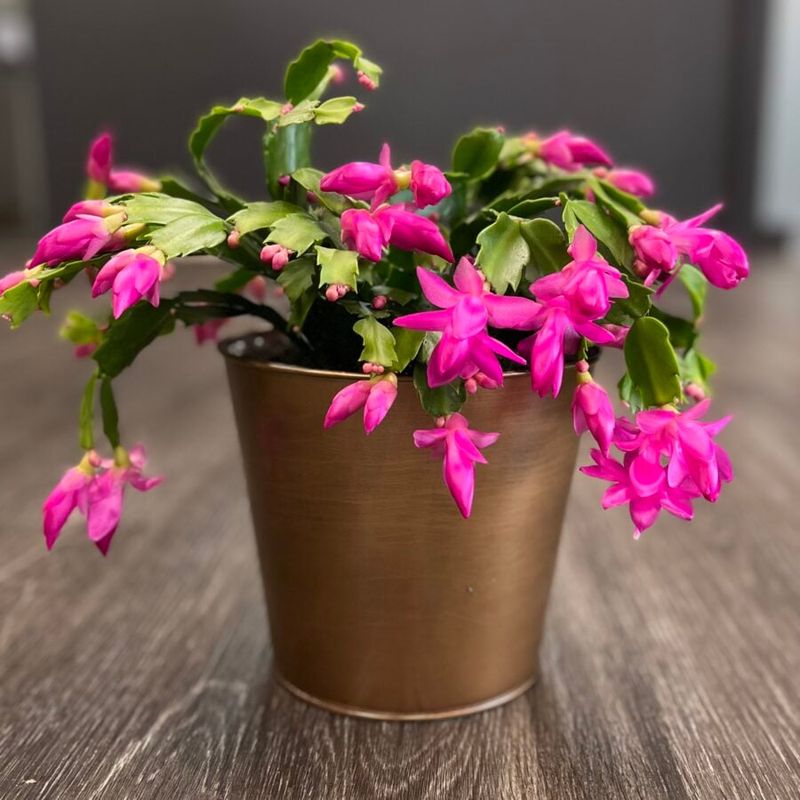
Darkness is not the only flowering cue your holiday cactus responds to. Temperature plays a supporting role, and Iowa State Extension recommends nighttime temperatures near 55 to 65 degrees F as a practical target during the induction period.
Research published in Acta Horticulturae shows that cooler conditions can reduce the plant’s dependence on strict light control, while warmer nights make uninterrupted darkness more critical for reliable bud set.
For Southern gardeners in Florida, Texas, and similar warm states, truly cool September nights are not always available. Texas A&M AgriLife Extension acknowledges that holiday cacti can be kept outdoors in warm regions during fall, but only in bright shade with protection from full sun, heavy rain, and artificial nighttime light.
UF/IFAS advises bringing the plant indoors before temperatures fall below about 50 degrees F.
Abrupt temperature swings are as problematic as outright cold. UF/IFAS Bay County Extension notes that moving a holiday cactus from a warm indoor setting to a cool outdoor spot overnight – or vice versa repeatedly – can stress the plant and interfere with bud development.
UConn Extension adds that freezing temperatures should always be avoided. If your outdoor nights stay reliably above 55 degrees F and the spot is shaded and dark after sunset, the natural shortening days of fall may provide much of the photoperiod signal on their own.
Keep water, light, and fertilizer from working against you
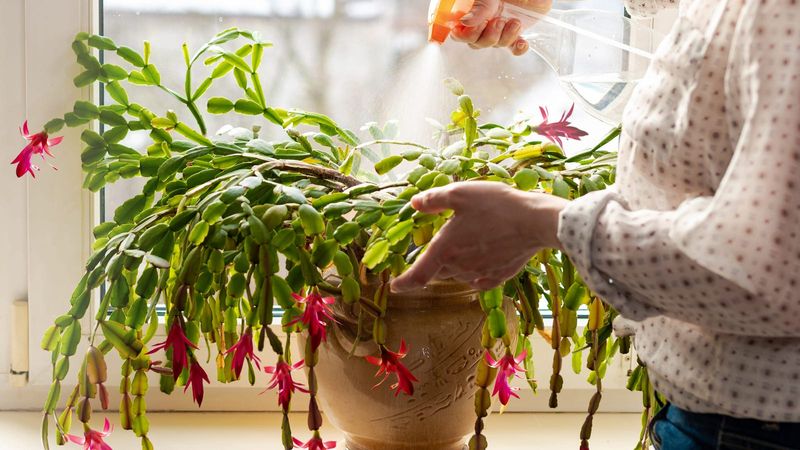
Holiday cacti are rainforest epiphytes – they grow in the crooks of trees in humid tropical forests, not in desert sand. UF/IFAS and Penn State Extension both point out that strong direct sun can scorch the stems, especially outdoors in the Southern summer heat or behind hot south-facing glass.
Bright, indirect light during the day is the right target throughout the treatment period and beyond.
Water management matters more than many people expect. Iowa State Extension recommends a well-drained potting mix and a container with drainage holes, with consistent watering that keeps the soil from staying saturated.
Letting the plant dry out severely during bud formation is a known contributor to bud drop. Deliberate drought or a dry-down period is sometimes suggested online as a way to force blooms, but UMass Extension’s commercial production guidance does not support withholding water as an established flowering trigger, and water stress can actually reduce bud set.
Fertilizer belongs in the growing season, not the flowering induction window. UConn Extension explains that the primary flowering controls are darkness and temperature, not a phosphorus booster or Epsom salt application.
Some extension programs suggest reducing or stopping fertilizer in late summer or fall; others allow a diluted balanced fertilizer into October. Either way, no fertilizer product should be framed as the main solution for getting buds to form.
Focus your energy on getting the light and temperature conditions right first.
Protect developing buds from sudden changes
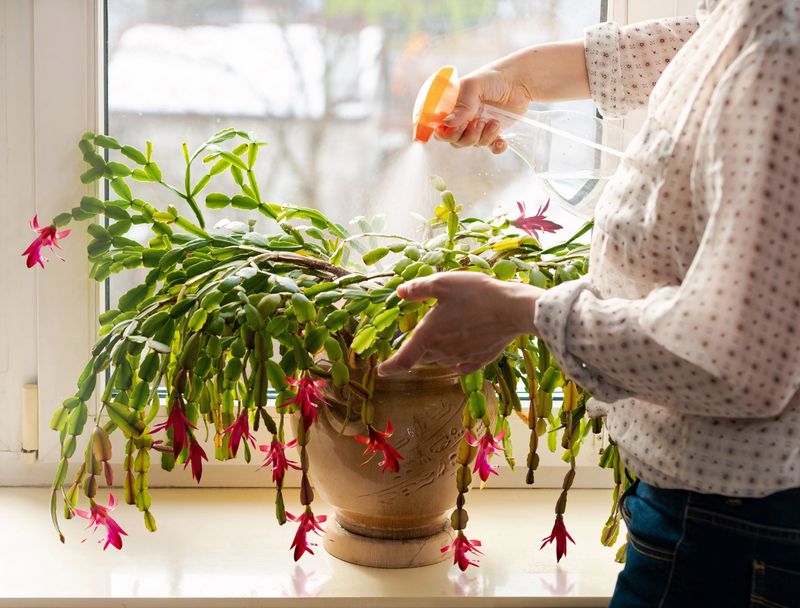
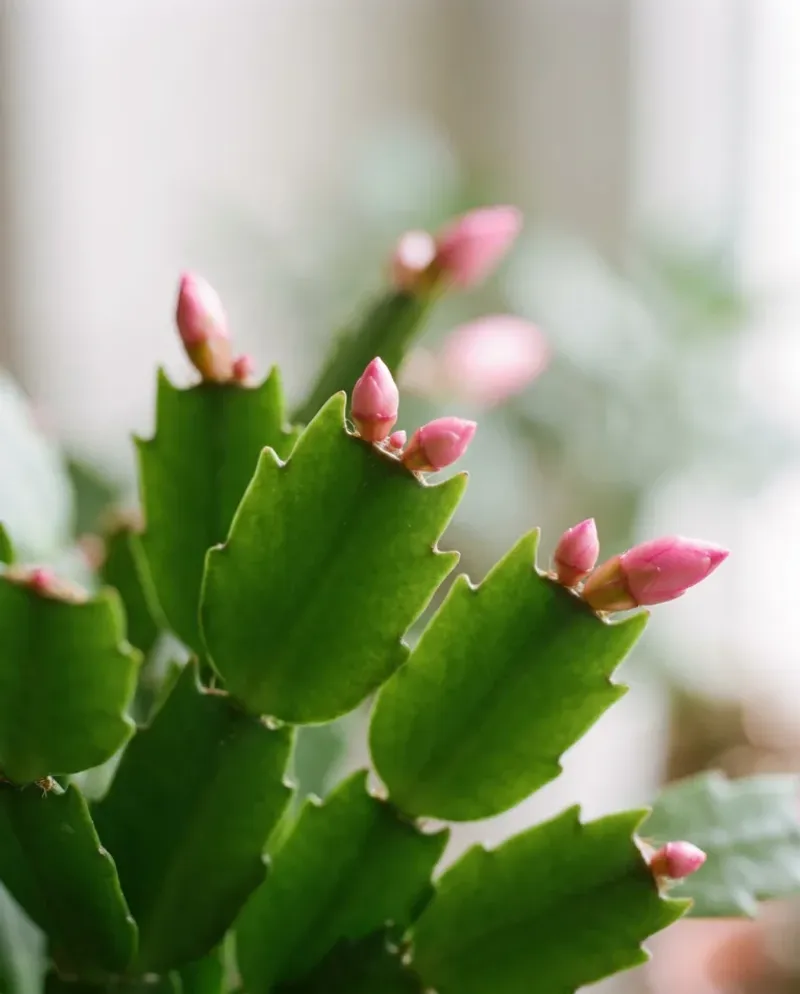
Once you can see small buds forming at the tips of the stem segments, the most important thing you can do is leave the plant alone. Iowa State Extension lists sudden changes in light, temperature, watering, and humidity as the leading causes of premature bud drop.
Moving the plant from a cool, dark-at-night location into a warmer, brightly lit room – even briefly – can trigger the plant to shed buds before they open.
Practical bud protection means picking a display spot before buds appear and committing to it. UConn Extension and University of Wisconsin Extension both emphasize that stable conditions – consistent light, temperature, and moisture – give developing buds the best chance of opening fully.
Drafts from heating vents, air conditioning, and exterior doors are easy-to-miss stressors worth checking for once buds are visible.
When buds do not appear on schedule, run through a short checklist before adding any product to the plant. Review whether nighttime light was consistently interrupted, whether temperatures stayed warm enough to undercut the photoperiod response, and whether the plant might be a true Christmas cactus that responds to a later treatment window.
When buds appear but then drop, look first at environmental changes and watering consistency rather than reaching for a bloom booster. Adding fertilizer or moving the plant to a sunnier spot after bud drop has already started rarely reverses the loss.
Consistency improves the odds but cannot set the date
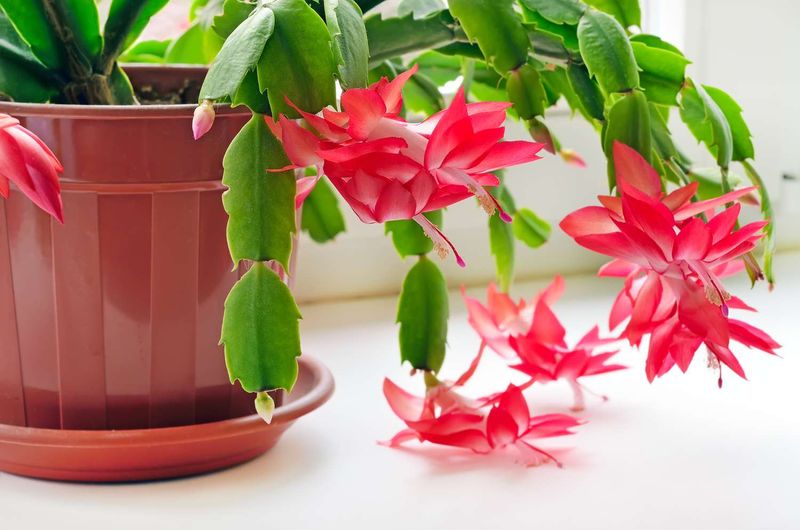
Pulling together everything from the previous sections gives you a clear sequence to follow. Identify your plant as accurately as you can using stem shape, then set a treatment start date that fits – early September for most Thanksgiving cacti and hybrids, closer to October for a likely true Christmas cactus.
Provide bright, indirect light during the day and reliable darkness for 12 to 14 hours every night. Aim for cool nighttime temperatures near 55 to 65 degrees F when your region allows it, and keep conditions stable once buds appear.
UConn Extension and UMass Extension’s commercial production research both note that cultivar, plant identity, growing conditions, and temperature history all affect when and how abundantly a holiday cactus blooms. University of Wisconsin Master Gardener guidance adds that flowering time can vary by a week or more between cultivars and from one year to the next under similar care.
A September relocation genuinely improves the chances of winter flowers for many holiday cacti, particularly the Thanksgiving cactus and hybrid types that fill most store shelves. What it cannot do is override cultivar genetics, undo a season of inconsistent care, or guarantee that every plant blooms on December 25.
Treat the September move as the start of a consistent 4-to-6-week routine rather than a single magic fix, and the plant has a much better chance of rewarding you when the holidays arrive.