
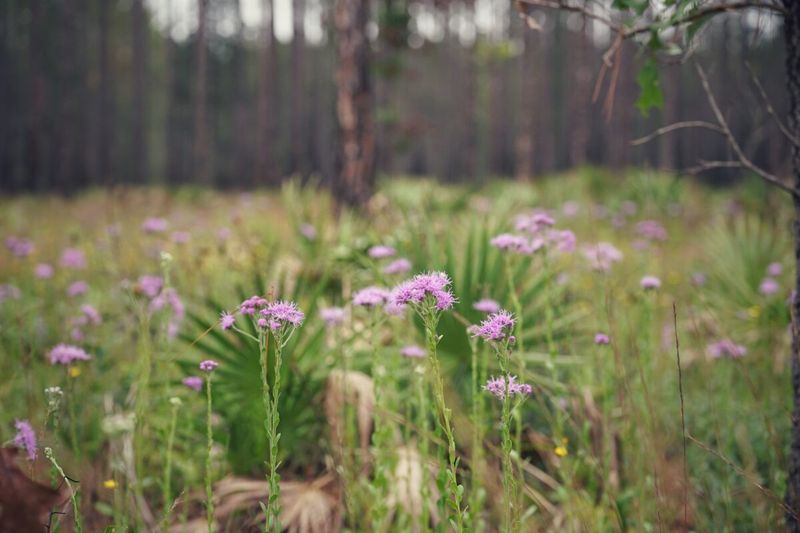
A monarch crossing your yard needs more than a pretty place to land. Fall flowers offer nectar that helps fuel its travels, especially when nearby lawns have little to give.
These 10 Florida native wildflowers can keep feeding spots open before November, if you match them to your soil and region. Not every monarch seen in Florida is migrating, but a yard with plenty of fall nectar can support passing butterflies and local visitors alike.
1. Seaside Goldenrod
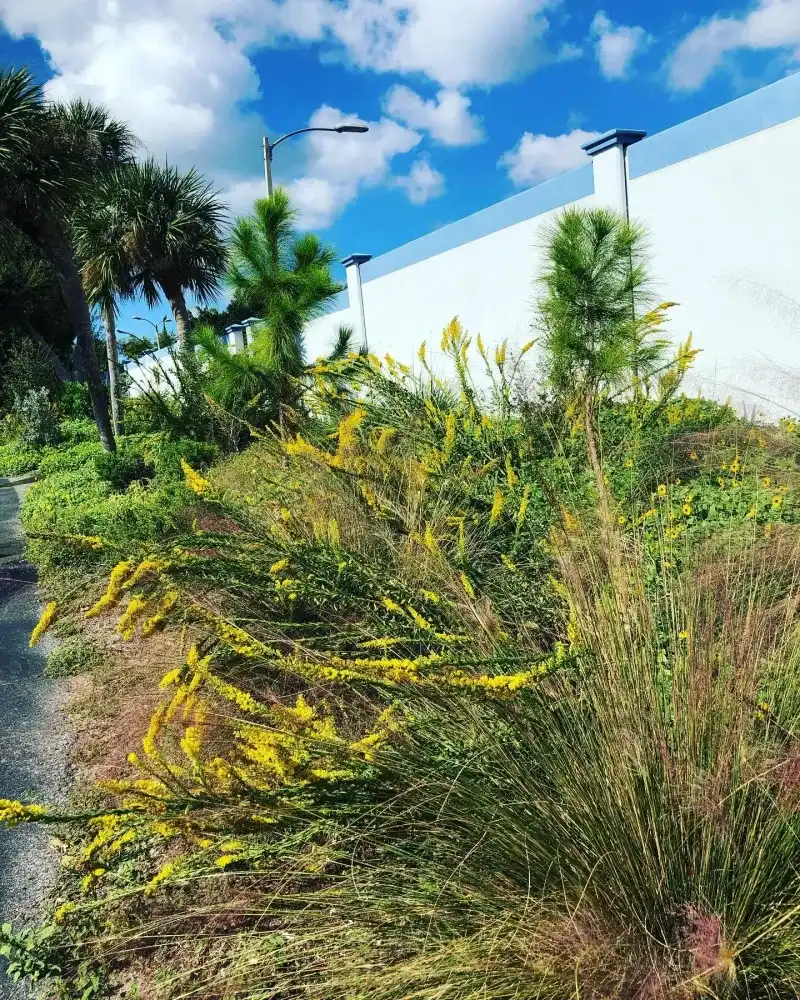
Bright yellow flower plumes can turn an ordinary sandy corner into a fall feeding station. Seaside goldenrod, Solidago sempervirens, offers many small nectar flowers packed onto sturdy stems, giving monarchs plenty of places to feed within one patch.
Its special strength is handling coastal conditions. Salt spray, sandy soil, and strong sun make life difficult for many garden flowers, but an established seaside goldenrod is well suited to those challenges.
Give it full sun and enough room for its mature size, which can reach several feet tall. Place it behind shorter flowers rather than beside a narrow walkway, where leaning stems could become a nuisance.
Buy plants from a Florida native nursery and ask when that stock usually flowers locally. Bloom timing varies across the state, so plants already forming buds are a better fall purchase than seedlings if you want nectar before November.
Leave flowering stalks standing through the monarch window instead of tidying them away early. Goldenrod pollen is mostly carried by insects, while windblown ragweed is a more common cause of fall pollen allergies.
2. Narrowleaf Sunflower
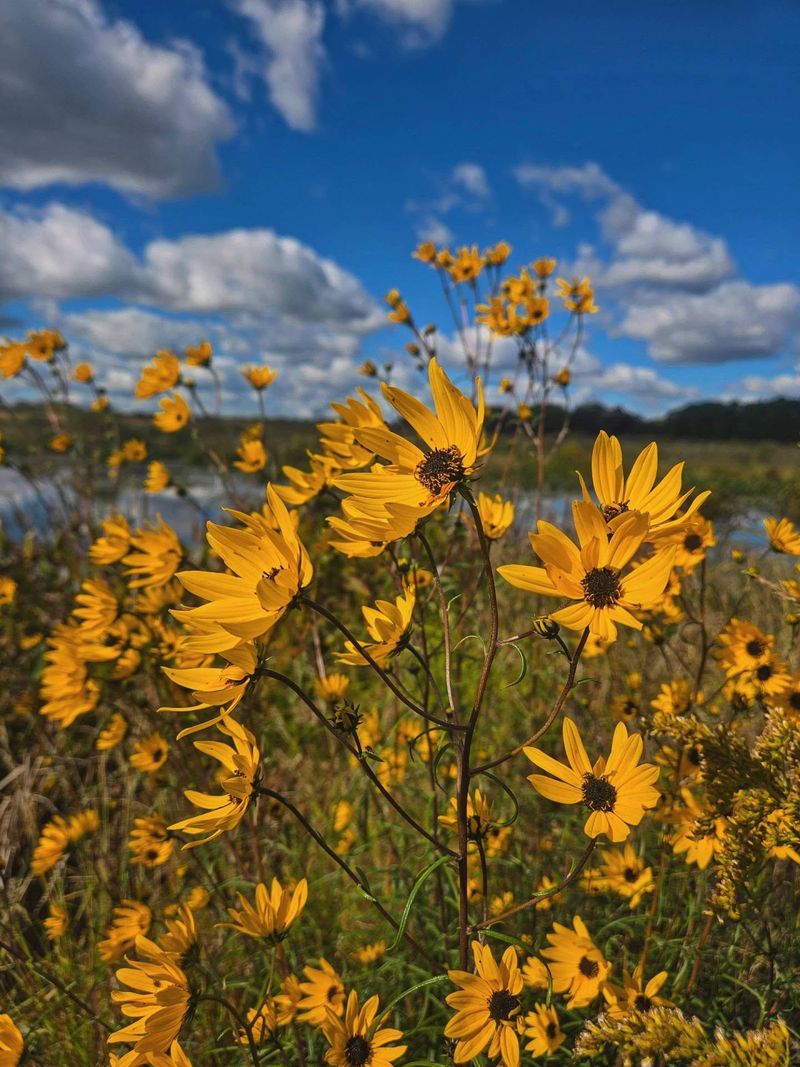
When a damp backyard needs a burst of color, a tall cloud of yellow daisies earns its space. Narrowleaf sunflower, Helianthus angustifolius, brings a strong fall display that can overlap with monarch movement through Florida.
Unlike plants chosen for dry beach sand, this sunflower suits moist ground. Use it near a rain garden or in a sunny low area that stays damp without becoming a permanent pond.
Expect height and spreading growth rather than a small, tidy mound. A generous bed along a fence usually works better than a tight foundation planting, and nearby sturdy plants can help support the stems.
Earlier-season pinching can encourage a shorter, bushier shape, but avoid a hard trim once fall buds develop. Cutting then removes the flowers you were growing for butterflies.
Plant several together if space allows, and water new transplants while their roots settle in. Established clumps can provide an impressive seasonal nectar patch, though flowering dates depend on local conditions.
Divide an expanding patch when needed so its enthusiasm does not crowd out smaller wildflowers.
3. Dense Blazing Star
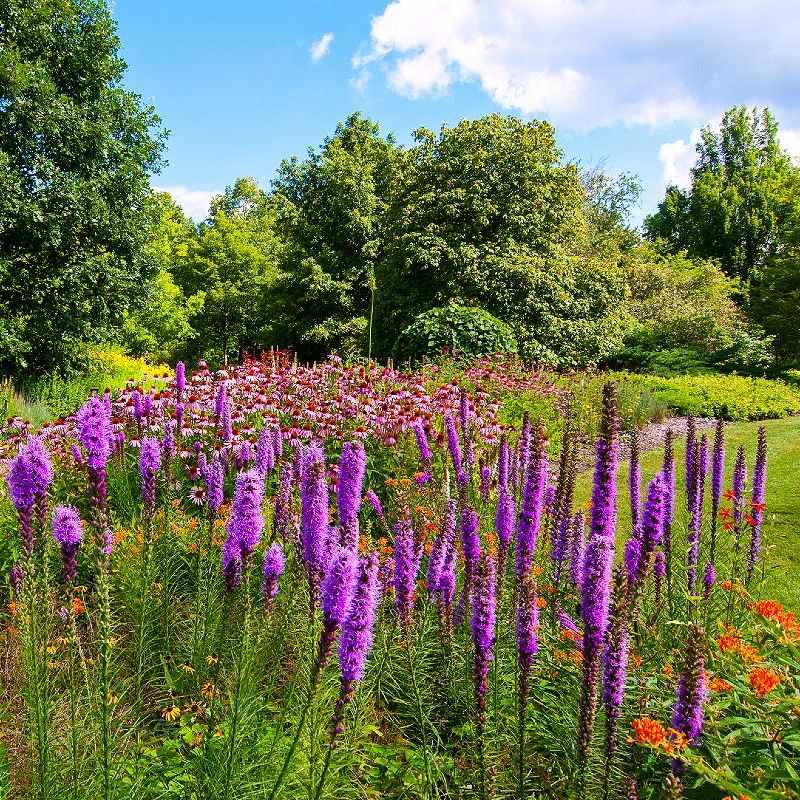
Purple flower spikes give butterflies a different kind of feeding stop from the usual daisy-shaped bloom. Dense blazing star, Liatris spicata, carries many small flowers along upright stems, creating a striking accent without a broad, bushy outline.
Its flowers open from the top downward, extending the show along each spike. Monarchs can use the nectar when bloom overlaps their passage, but flowering time varies enough that local nursery advice matters.
Choose a sunny bed with moist, well-drained soil. Although several blazing star species grow in Florida, they do not all want the same conditions, so check the scientific name rather than buying any plant labeled liatris.
Group a few plants among lower wildflowers where the purple stems remain visible. Avoid heavy fertilizer, which can encourage weak growth rather than the sturdy flower stalks you want.
For a September or October nectar goal, purchase locally grown plants with developing spikes instead of expecting newly planted seed to perform immediately. Pair them with a later-flowering species so butterflies still have food after the last purple flowers fade.
4. Blue Mistflower
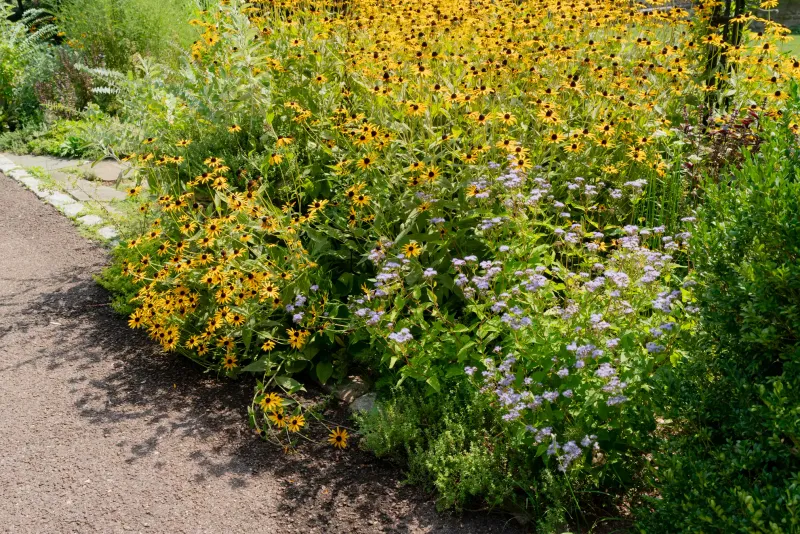
A soft blue patch beneath taller flowers can be just as useful as a dramatic flower spike. Blue mistflower, Conoclinium coelestinum, supplies clusters of fuzzy blooms that attract many butterflies, including monarchs.
Its main advantage is filling the middle and lower layers of a planting. Where a bed looks bare beneath tall goldenrod or ironweed, mistflower can knit the space together and add another nectar source.
Give it moist soil and sun to partial shade, with enough light for good flowering. In Florida’s hotter locations, some afternoon shade can make a suitable moist site easier to manage.
Be prepared for spreading stems and seedlings. A roomy wildlife border is a better home than a tiny formal bed, and unwanted shoots are easier to remove before they become an established patch.
Ask for the native species by its botanical name because similar common names appear on other nursery plants. Avoid mowing or shearing the patch as its fall buds develop.
If you need to control its size, leave a generous flowering portion untouched so a cleanup does not erase the whole feeding area.
5. Dotted Horsemint
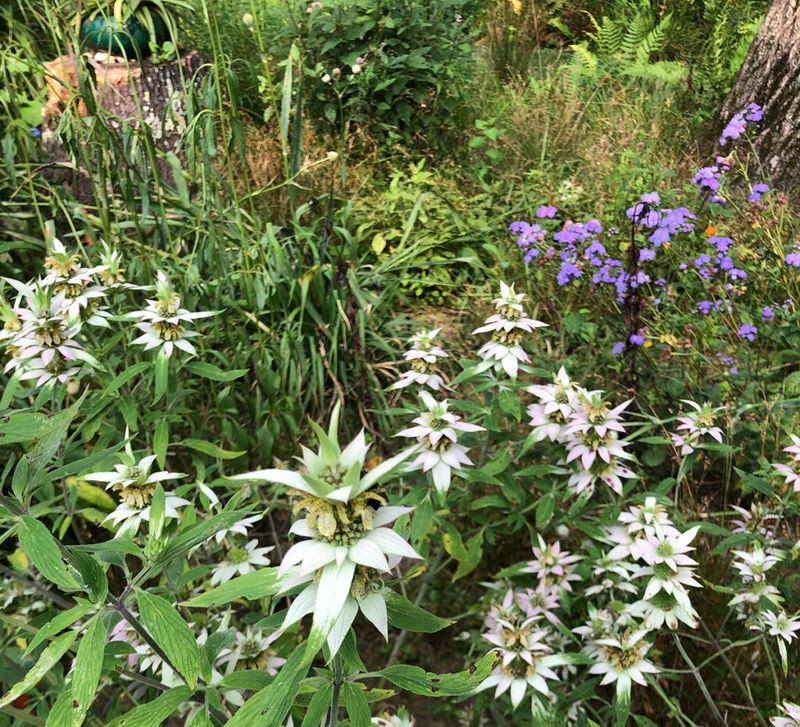
Look closely at those pinkish tiers: the showiest parts are leafy bracts surrounding small, spotted flowers. Dotted horsemint, Monarda punctata, brings unusual texture to a Florida flower bed while offering nectar to butterflies and many native bees.
For homeowners with sunny, fast-draining sand, it is a useful alternative to thirsty bedding flowers. Good drainage matters more than rich soil, and a site that stays soggy is a poor match.
Plant it near the front or middle of an informal border, where its stacked blooms are easy to see. The aromatic foliage adds interest even when a butterfly is not visiting, although leaves should be left on the plant rather than crushed around feeding insects.
Flowering can stretch from summer into fall, depending on location and growing conditions. Select budded plants for an immediate seasonal display, and avoid relying on a fresh seed sowing for this year’s migration period.
Allow some seed heads to mature if you want future volunteers. Because individual plants may be short-lived, that small amount of natural renewal helps keep the patch going without frequent replacement.
6. Giant Ironweed
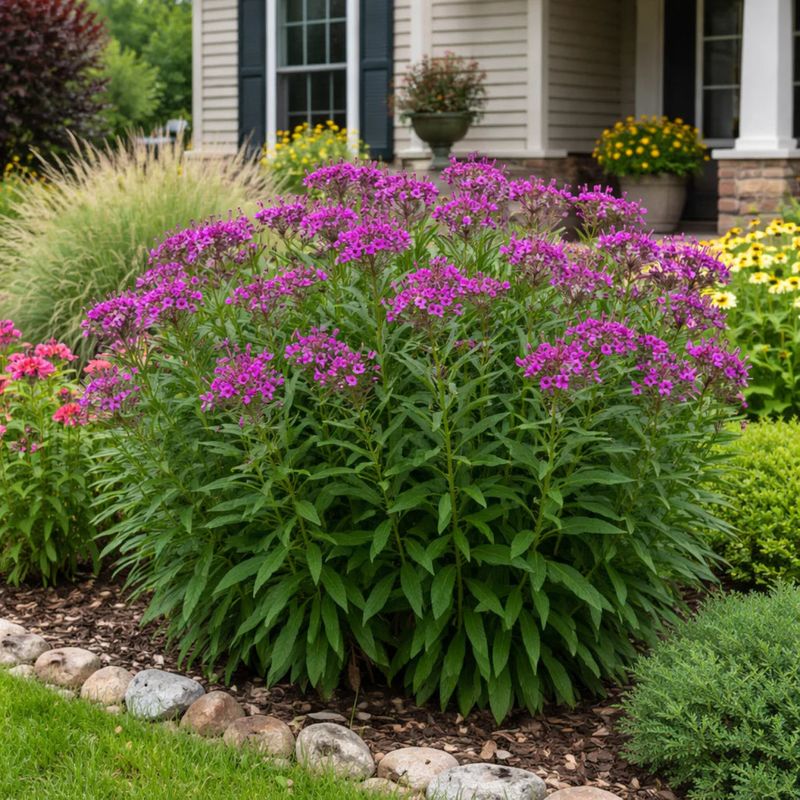
A back-of-the-border plant should do more than hide the fence. Giant ironweed, Vernonia gigantea, adds height, purple flowers, and a nectar stop for large butterflies when its late-season bloom overlaps their travels.
The payoff is especially appealing in North Florida gardens with room for a tall native perennial. This is not a compact porch plant, so check the expected mature size before bringing a nursery pot home.
Choose full sun and moist soil for strong growth. In a dry, sandy bed, keeping it comfortable may require more watering than a drought-adapted wildflower would need, making site selection the real low-maintenance trick.
Its flower clusters pair well visually with yellow sunflowers or goldenrod. Leave space between young plants for their adult spread, rather than crowding them together to make the first week look full.
If shorter growth is needed, manage the stems earlier in the growing season instead of cutting off developing fall flowers. Ask a local native nursery whether giant ironweed fits your county and bloom schedule, since a good North Florida choice is not automatically the best choice for the Keys.
7. Spanish Needles
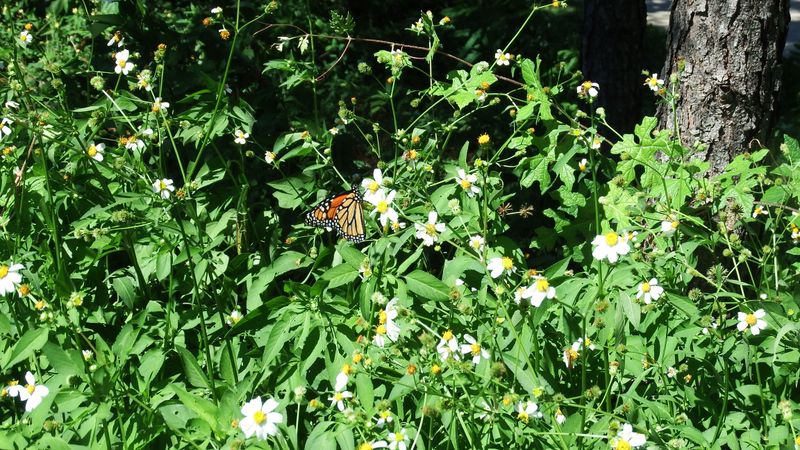
The flower many people pull first can be one of the busiest feeding spots in the yard. Spanish needles, Bidens alba, produces small white-and-yellow blooms that monarchs and many other butterflies readily visit.
Its strength is availability. Across much of Florida, it can flower over a long season, helping cover gaps when a carefully planned perennial bed has temporarily run out of blooms.
You do not need to surrender the whole yard to it. Keep a managed patch behind a vegetable garden or along an informal fence, then remove seedlings that appear in paths and more formal beds.
The drawback arrives after flowering: barbed seeds cling to clothing and pet fur. Placing the patch away from a dog run or frequently used walkway makes that habit much less annoying.
Trim selected sections before seeds mature while leaving other sections in flower. Never preserve a roadside patch that may have been sprayed just because butterflies visit it.
A small, pesticide-free area at home offers better control over both plant spread and insect exposure, without pretending this enthusiastic native is a tidy bedding plant.
8. Climbing Aster
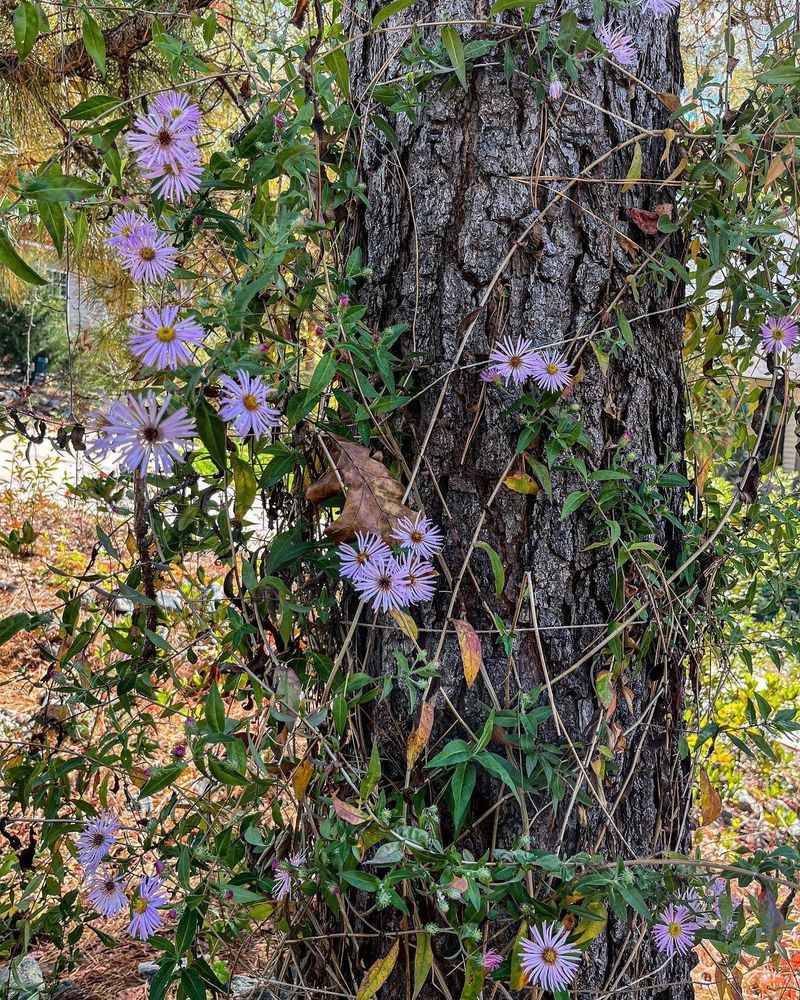
A fence can become a late-season flower display instead of a blank boundary. Climbing aster, Symphyotrichum carolinianum, sends long, arching stems through nearby support and produces pale lavender flowers that attract nectar-feeding butterflies.
Despite its name, it does not attach itself like a true climbing vine. Give it a sturdy fence or broad trellis, and guide the stems as needed rather than expecting them to grip a smooth post.
Its natural fit is a sunny, moist site with plenty of room. A small, dry bed beside the front door will usually create more work than satisfaction, while a roomy rain-garden edge can suit it well.
Fall flowering is the main attraction here, but the start date is not identical everywhere in Florida. Check plants at a local nursery before counting on flowers in October, since some displays extend well into November and beyond.
Save major pruning for after flowering rather than cutting away the developing display. For monarch support before November, combine climbing aster with an earlier-blooming nectar plant instead of asking one late starter to cover the entire season.
9. Garberia
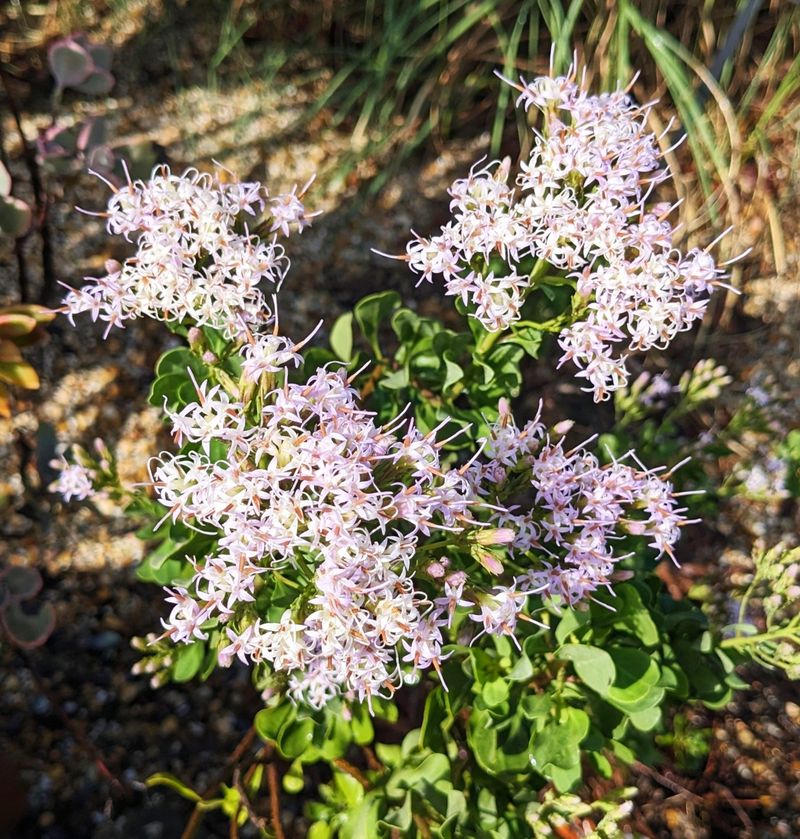
Dry sand does not have to mean an empty fall garden. Garberia, Garberia heterophylla, is a Florida native flowering shrub whose pink-purple clusters offer nectar while giving a wildflower planting some lasting structure.
That woody framework makes it different from the softer perennials on this list. Use it as an anchor in a scrub-style bed, with smaller seasonal flowers around it rather than treating it like a replaceable annual.
Excellent drainage and plenty of sun are essential. It belongs in suitable sandy upland conditions, especially within its Central Florida range, not in a frequently flooded corner or a heavily irrigated flower bed.
Water during establishment, then adjust irrigation to the actual site rather than keeping the soil constantly wet. A native nursery can help confirm whether your location and soil are a sensible match.
Its bloom period can overlap autumn monarch activity, although local weather and plant maturity affect the schedule. Buy nursery-propagated plants, never dig them from scrub habitat, and keep pruning light enough to preserve developing flower clusters.
The result is a durable landscape feature with seasonal nectar value.
10. Florida Paintbrush
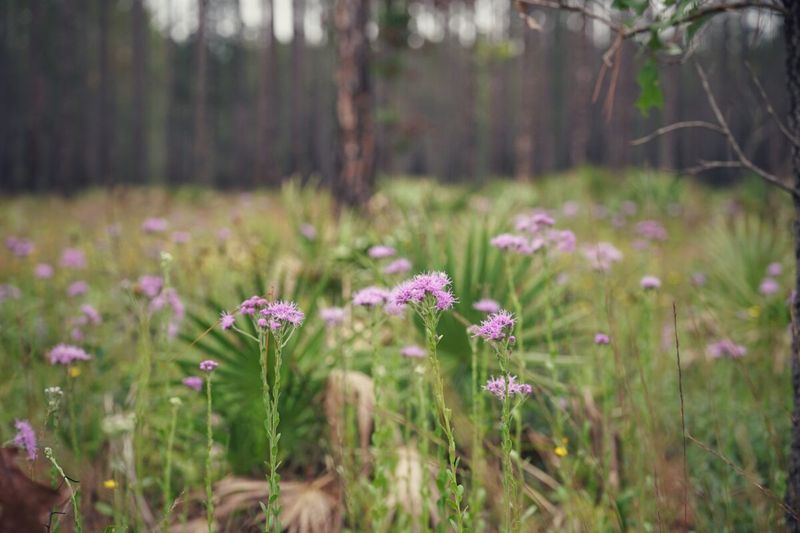
Flat-topped purple flower clusters make an easy-to-spot landing area above a low base of leaves. Florida paintbrush, Carphephorus corymbosus, is a fall-flowering native that brings a meadow feel to a sunny home landscape.
Its appeal is the combination of seasonal timing and an open, airy shape. Tuck a group among native grasses or other modest-sized wildflowers rather than hiding single plants behind a dense hedge.
Choose a sunny site with sandy, well-drained soil, and ask a native nursery about the moisture needs of its stock. The goal is to match the plant’s natural conditions, not improve the bed with heavy fertilizer or rich, wet amendments.
For flowers before November, shop for established plants showing buds. Seed is useful for building future habitat, but it is not a dependable shortcut to a nectar display just weeks away.
Keep the whole planting free of insecticides, including routine mosquito treatments that can drift onto flowers. Adult monarchs need nectar, while their caterpillars need milkweed, so these flowers serve a different role from host plants.
Several compatible species blooming in sequence offer better coverage than one impressive but short-lived display.