
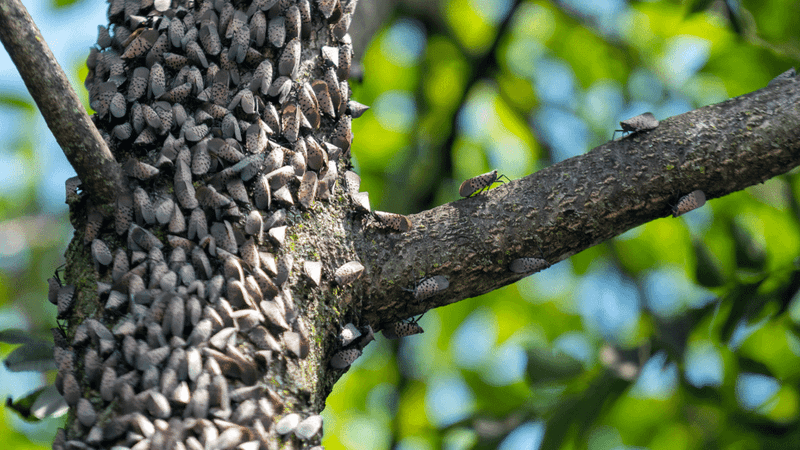
A weedy, fast-growing tree called tree-of-heaven is already growing in many North Carolina backyards, and it turns out spotted lanternflies have a strong preference for it. That connection matters because knowing which tree draws the insects gives homeowners a practical place to start looking, inspecting, and acting. Tree-of-heaven does not spread spotted lanternflies on its own, but finding and managing it can be a useful part of protecting your yard from this invasive pest.
The tree in question is tree-of-heaven
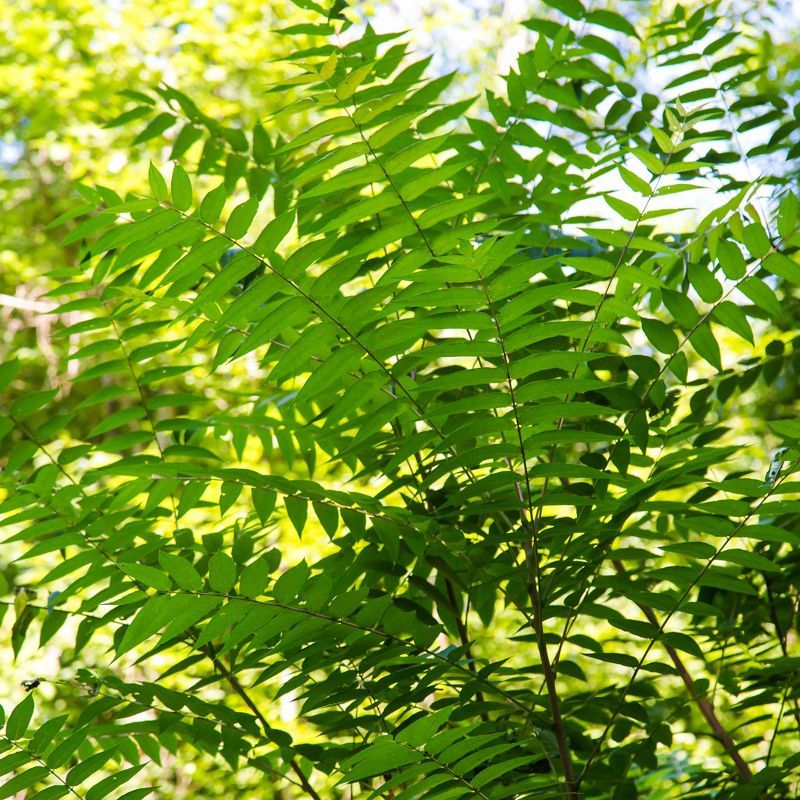
Ailanthus altissima, commonly called tree-of-heaven, is the invasive tree at the center of this story. To be precise about what the title suggests: this tree does not spread spotted lanternflies through your backyard on its own. What it does do is serve as a strongly preferred host, one that can concentrate lanternfly activity locally and give homeowners a useful starting point for monitoring and invasive-plant management.
NC State Extension’s tree-of-heaven profile describes it as an invasive, rapidly growing species that has spread across North Carolina into urban lots, roadsides, field edges, woodland margins, rail corridors, and residential areas. It arrived from China in the 1700s, was planted widely as an ornamental, and has since naturalized aggressively across the state’s Piedmont, coastal plain, and mountain regions.
Finding tree-of-heaven growing near your home is not a guarantee that spotted lanternflies will appear or that a damaging swarm is imminent. But the tree’s presence does give you a focused place to inspect, and managing it carries the added benefit of removing an invasive plant that competes with native vegetation regardless of any lanternfly connection.
NCDA&CS guidance on spotted lanternfly identifies tree-of-heaven as a major host and notes that it is widespread throughout the state, which is why the two species so often show up together in North Carolina yards and neighborhoods.
Why lanternflies gather around this invasive host
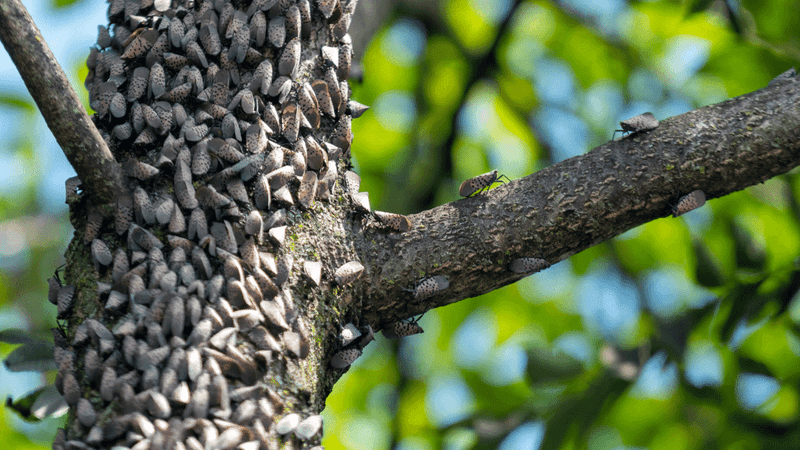
Spotted lanternflies feed on a remarkably wide range of plants. Research published in Environmental Entomology documents more than 100 plant species that the insect has been recorded using, covering ornamental trees, fruit crops, vines, and weedy vegetation. That breadth matters because it means a yard without tree-of-heaven can still support spotted lanternflies.
Even so, tree-of-heaven occupies a different tier in the insect’s preferences. Adults and late-stage nymphs show a consistently strong pull toward it compared with most other hosts. A controlled host-suitability study found that spotted lanternflies completed development and reproduced on several alternative plants, but development was slower and egg production was substantially lower when tree-of-heaven was not available. The tree appears to offer nutritional or chemical advantages that other hosts do not fully replicate.
What that means practically is that a tree-of-heaven in or near your yard may attract and concentrate adult lanternflies more reliably than your grape, maple, or walnut. The insects can aggregate on the trunk and branches, produce sticky honeydew that drips onto surfaces below, and lay egg masses on the bark. That local concentration can make the nuisance feel worse than it would in a yard without the tree.
Penn State Extension’s professional management guide is careful to note that preferred-host removal has not been specifically evaluated for its effect on overall spotted lanternfly populations and is unlikely to consistently reduce numbers by itself. The honest framing is this: tree-of-heaven can concentrate lanternflies locally and may increase nuisance pressure at your specific property, but it did not single-handedly create the population, and removing it will not guarantee the insects leave.
A separate Environmental Entomology study confirmed that spotted lanternflies can develop and reproduce without tree-of-heaven, reinforcing that “preferred host” and “required host” are not the same thing.
Identify the tree before you treat it

Rushing to remove a tree without confirming its identity is one of the most common mistakes homeowners make. Tree-of-heaven shares enough visual traits with several native and naturalized trees that a cautious, multi-feature checklist is worth the extra few minutes.
Start with the leaves. NC State Extension’s identification guide describes long compound leaves, typically 1 to 4 feet in length, made up of many individual leaflets, often 11 to 41 per leaf. The key detail on those leaflets is their edges: tree-of-heaven leaflets are smooth along most of their margin, with only one or two small gland-tipped teeth near the base of each leaflet, not the toothed or serrated edges you see on sumac or walnut. Leaf stems are often reddish or green, and the leaves attach alternately along the twig rather than in opposite pairs.
The smell test is one of the most reliable single clues. Crush a leaf, a twig, or a small piece of bark and take a sniff. Tree-of-heaven produces a strong, unpleasant odor often described as rancid peanut butter, burned rubber, or cat urine. If the smell is neutral or pleasant, reconsider your identification.
On mature trees, look for clusters of papery, twisted winged seeds called samaras, which can remain on the branches well into fall and winter. The bark on young trees is smooth and gray; older trees develop a rougher, interlaced texture.
Trees commonly mistaken for tree-of-heaven include staghorn sumac, chinaberry, black walnut, and hickory. Penn State’s spotted lanternfly management guide echoes the caution: do not act on a single characteristic. Confirm compound leaf structure, smooth leaflet margins with basal teeth, the distinctive odor, and seed clusters together before removing or treating any tree.
If you are uncertain after working through the checklist, your county Cooperative Extension office can help confirm the identification, often from a photograph or a small leaf sample.
Inspect the tree, plants, and hard surfaces
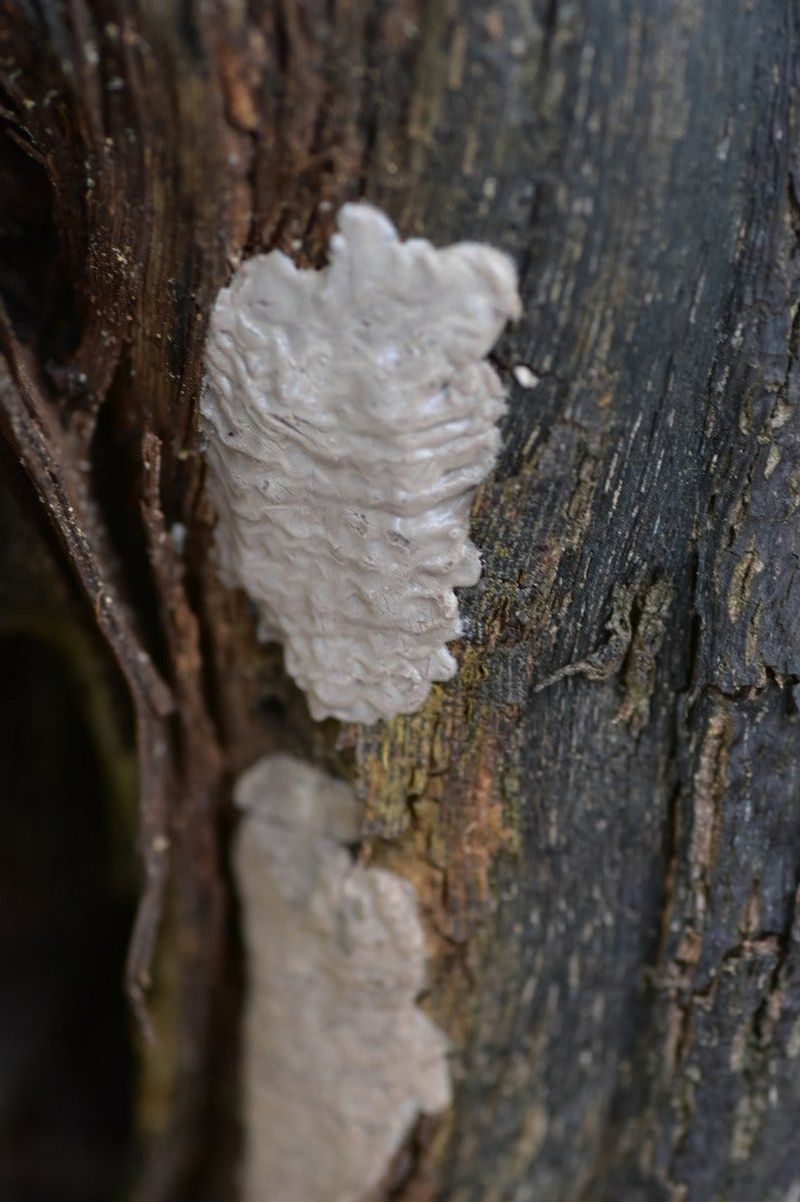
Once you have confirmed tree-of-heaven, make a thorough inspection of it and the surrounding area before deciding on any next step. Spotted lanternfly looks different depending on its life stage, and each stage tends to show up in slightly different spots.
Young nymphs, which emerge in spring, are small and black with white spots. As they grow into late-stage nymphs, they develop a striking red-and-black pattern with white spots. Adults, present from late summer through fall, have gray forewings covered with black spots and bright red hindwings that flash when the insect is disturbed. Egg masses are gray and waxy, about an inch long, and can look like a smear of dried mud on bark.
On the tree itself, check the trunk from the base up to head height, the undersides of large branches, and the junctions where branches meet the trunk. The NC Forest Service homeowner management guide recommends extending the inspection beyond the tree to nearby ornamental plants, grape vines, maples, willows, and walnuts, all of which spotted lanternflies use.
Hard surfaces deserve equal attention. NCDA&CS guidance specifically calls out outdoor furniture, vehicles, trailers, firewood stacks, lawn equipment, and other objects stored near trees as common egg-mass locations. Egg masses on these items are one of the main ways the insect moves to new areas.
Finding lanternfly activity near your tree-of-heaven tells you the insects are present locally. It does not confirm that the tree alone caused them to appear. Other host plants, neighboring properties, or transported materials may have played a role, and that distinction matters when you are deciding how much effort to put into a single tree.
Manage roots before reaching for a saw
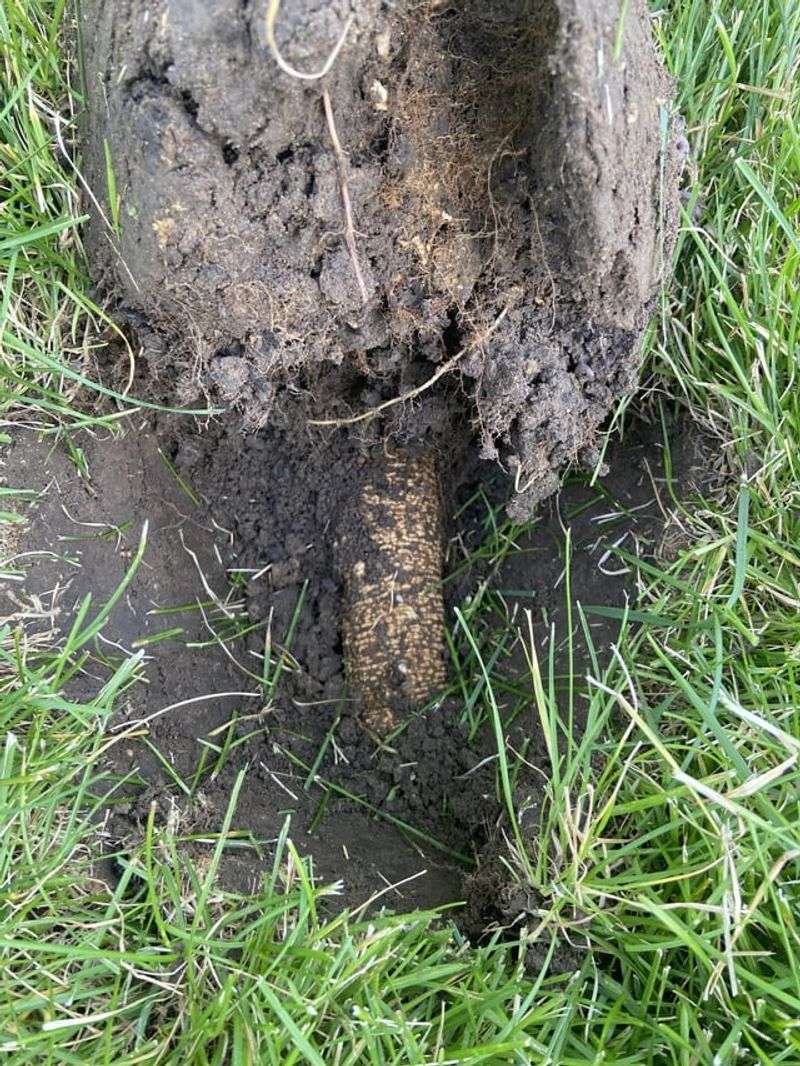
Finding a confirmed tree-of-heaven in your yard raises a practical question: what do you do with it? The answer depends on the tree’s size, location, and accessibility, and the most important thing to understand upfront is that cutting alone often makes the situation worse before it gets better.
Small seedlings and saplings, generally those with a trunk diameter under an inch or two, can sometimes be removed by pulling or digging out the entire root system. Getting every fragment of root matters because even small pieces left in the ground can resprout. NC State Extension’s tree-of-heaven management guidance explains that larger trees cut without root control reliably produce vigorous stump sprouts and root suckers, sometimes dozens of new stems from a single stump. That response can leave you with more stems than you started with.
For larger trees, professionals typically use a root-targeting systemic herbicide strategy before or alongside cutting. Penn State’s tree-of-heaven control strategies page outlines approaches such as foliar treatment, basal-bark application, and hack-and-squirt methods, each suited to different tree sizes and site conditions. These methods move herbicide into the root system, reducing regrowth after the stem is removed.
Penn State’s general tree-of-heaven page recommends treating the tree before cutting when feasible and allowing time for the herbicide to take effect. Exact products, application rates, timing windows, and any site-specific restrictions must come from the current pesticide label and applicable North Carolina guidance, not from a generic online recipe.
The EPA’s pesticide label guidance explains clearly why reading and following the label is a legal requirement, not a suggestion. For any tree that is large, leaning toward a structure, or difficult to access safely, a qualified arborist or invasive-plant professional should assess the situation before any cutting begins. Managing the tree is a worthwhile goal, but it will not guarantee that spotted lanternflies disappear from your property.
Monitor without putting wildlife at risk
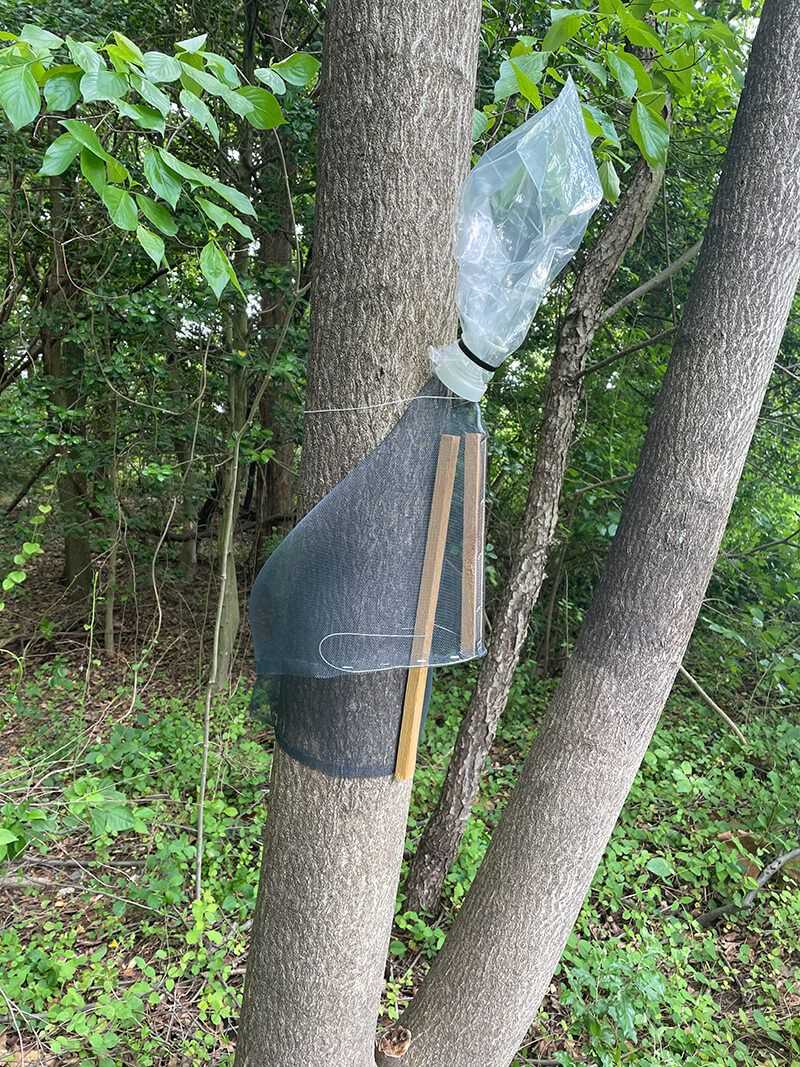
Keeping an eye on spotted lanternfly activity around tree-of-heaven and nearby plants is a reasonable ongoing task, especially during summer and fall when adults are most active. How you monitor matters as much as whether you monitor, because some common trapping methods can harm the native wildlife that NC homeowners want to protect.
Sticky bands wrapped around tree trunks are sometimes used to intercept nymphs as they climb. The problem with exposed adhesive is that it catches far more than lanternflies. Penn State’s spotted lanternfly management guide documents captures of birds, butterflies, pollinators, lizards, bats, and small mammals in unguarded sticky bands. In a yard managed as habitat for native wildlife, that trade-off is hard to justify.
If you choose to use a band-style trap, a wildlife barrier is not optional. Penn State’s wildlife-barrier instructions walk through how to build a wire mesh cage around the adhesive section so that larger animals cannot reach the sticky surface. Even with a barrier in place, the band needs to be checked frequently, cleared of debris, and replaced regularly to remain effective.
A circle trap or funnel trap, which guides nymphs into a collection container without exposed adhesive, is a safer alternative worth considering. The NC Forest Service homeowner guide mentions these trap designs as lower-risk options for residential monitoring.
Homemade sprays made from dish soap, vinegar, salt, oils, garlic, chili, or similar pantry ingredients should not be used on spotted lanternflies or tree-of-heaven. Penn State’s guidance on home remedies is direct: these mixtures may harm people, pets, beneficial insects, and plants, have not been shown to work reliably, and can violate pesticide law when applied in ways not covered by any product label. Stick with approaches that have been evaluated and that carry clear label directions.
Follow North Carolina’s reporting guidance
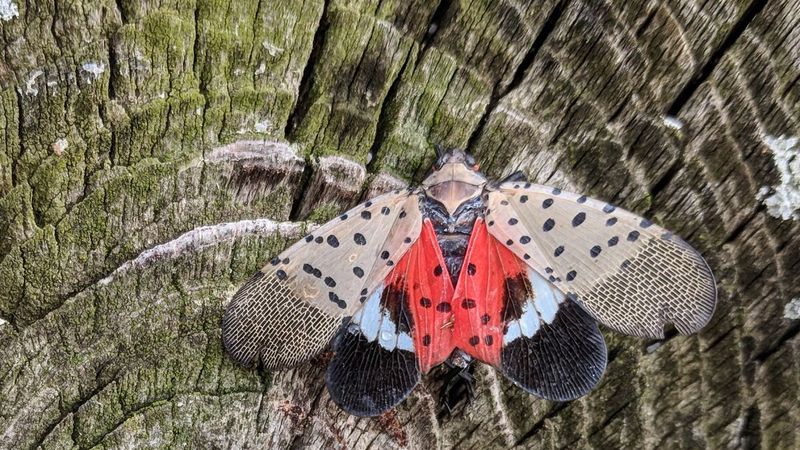
Reporting spotted lanternfly sightings is one of the most direct contributions a homeowner can make to statewide tracking efforts. Whether you need to report depends on where you live relative to the insect’s known range in North Carolina.
As of the NCDA&CS announcement dated February 10, 2026, established spotted lanternfly populations have been confirmed in seven counties: Forsyth, Guilford, Rockingham, Caldwell, Davidson, Rowan, and Caswell. That list reflects the most current state-verified information and may change as surveys continue.
Homeowners who find what they believe is a spotted lanternfly anywhere outside those seven counties should report it to NCDA&CS promptly. A useful report includes a clear photograph of the insect or egg mass, the specific location such as a street address or GPS coordinates, the date of the sighting, and your contact information so state staff can follow up. Submitting an incomplete report without a photo makes verification much harder.
NCDA&CS’s spotted lanternfly information page provides current reporting links and contact details. Bookmark that page rather than relying on third-party reporting tools, since the state’s preferred submission method may be updated as the situation evolves.
For homeowners in established portions of Forsyth and Guilford counties, routine spotted lanternfly sightings generally do not need to be submitted through the state reporting system. In those areas, the more useful call is to your county Cooperative Extension office or a licensed pest management professional, who can give site-specific management advice. That distinction keeps state survey resources focused on areas where new detections carry the most value for tracking the insect’s spread.
What finding tree-of-heaven changes—and what it does not
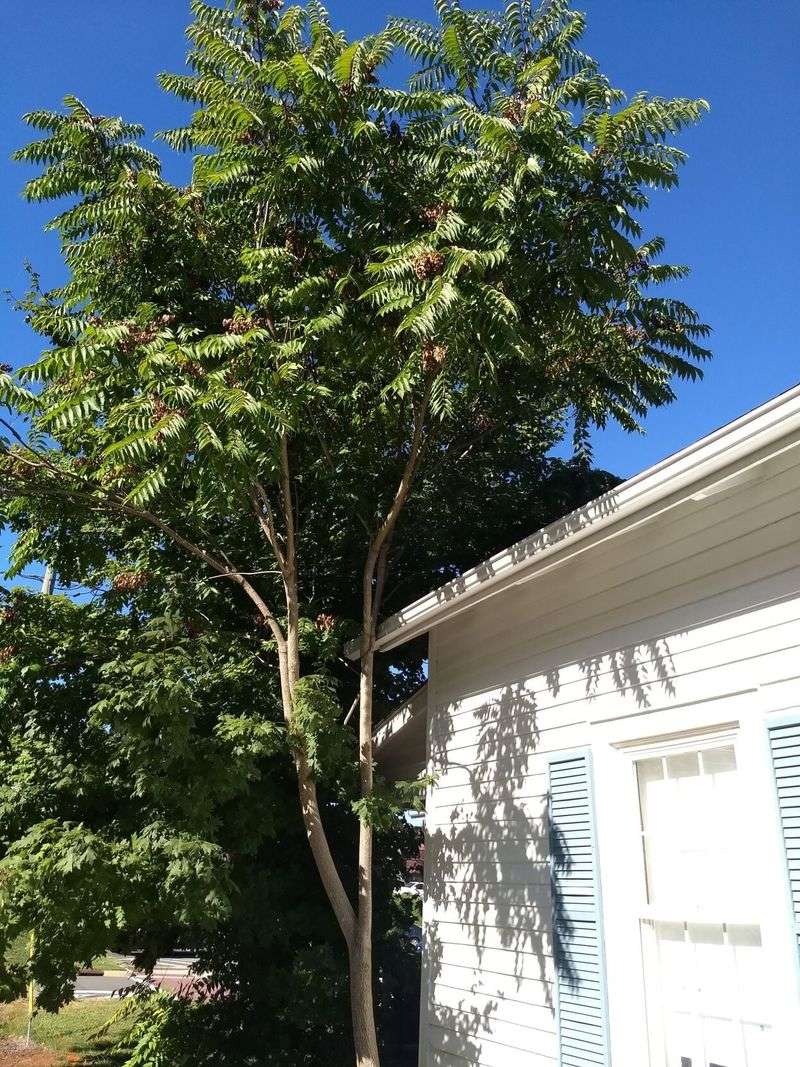
Confirming tree-of-heaven in your yard gives you a concrete starting point. Identify the tree carefully using the multi-feature checklist, then inspect the trunk, nearby plants, and hard surfaces for egg masses, nymphs, and adults. If the tree warrants removal, plan for root control before any cutting, and bring in a qualified professional for anything large or hazardous.
NC State Extension and the NC Forest Service both support managing tree-of-heaven as an invasive plant, independent of any lanternfly benefit. Removing it can give native trees and shrubs a better chance to establish, which is a worthwhile outcome on its own.
On the lanternfly side, managing the tree may reduce feeding activity, honeydew drip, and egg-laying at your specific location. Penn State’s professional management guidance notes that the population-level effect of preferred-host removal has not been specifically evaluated and is not expected to consistently reduce overall numbers. Other host plants, neighboring properties, vehicles, and transported materials can all support reinvasion.
Monitor without harming wildlife, report sightings where required, and keep expectations grounded. Removing one tree is a useful, responsible action. Spotted lanternflies are adaptable insects with a wide host range, and a single removal rarely makes them vanish entirely. What it does do is give your yard one fewer reason to attract them.