
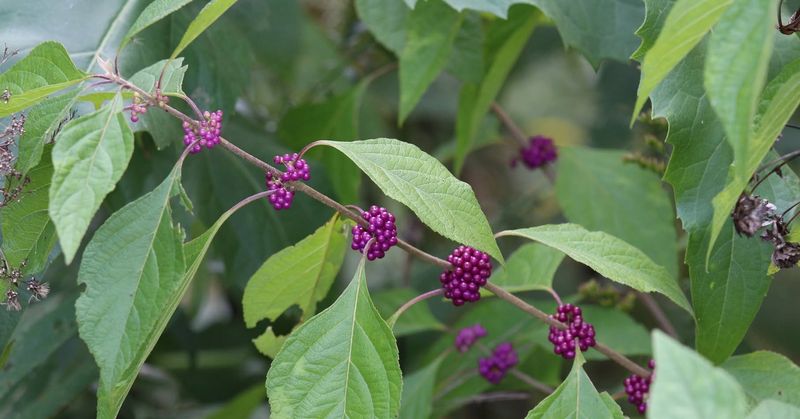
Every fall, North Carolina yards go through a quiet shift when many summer fruits disappear and birds start searching harder for food. American beautyberry, a native shrub called Callicarpa americana, steps in right at that transition with a spectacular flush of purple berries that birds like robins, thrashers, and towhees will eat through late fall.
Most homeowners walk right past it at the native plant nursery without knowing what they are missing. If your yard has a sunny border or an open woodland edge, this shrub is worth a serious look.
A late-season transition leaves room for beautyberry
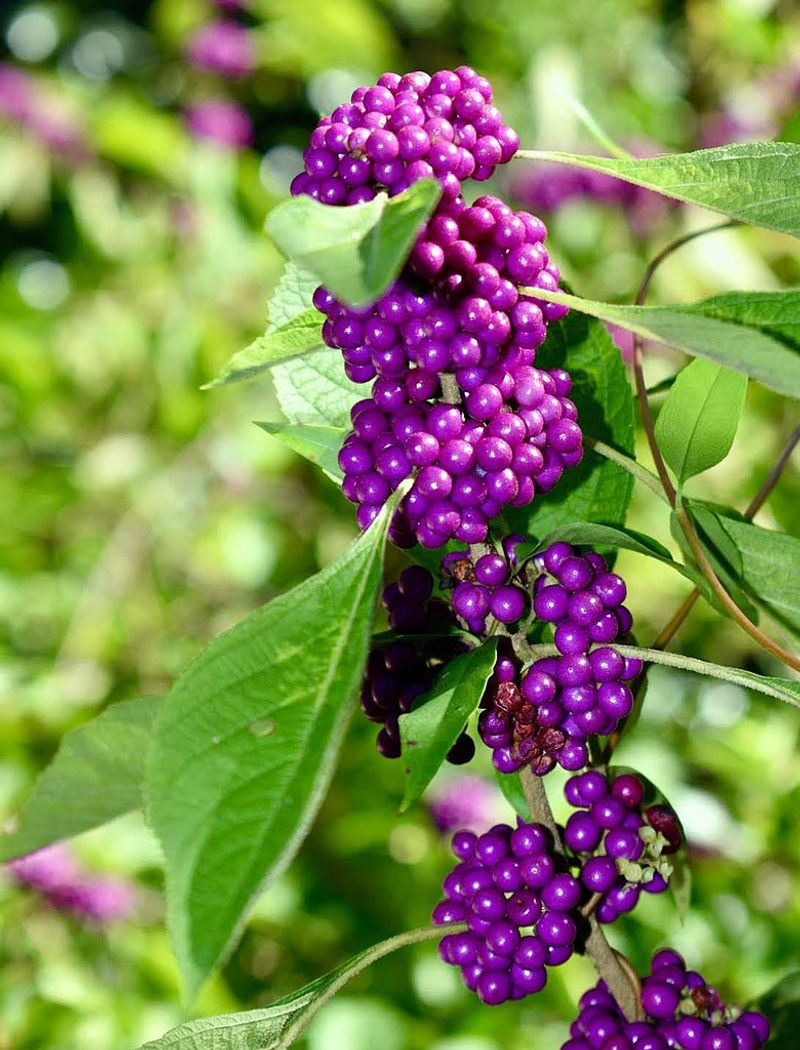
North Carolina does not flip a switch and lose every fruit source at once when summer ends. Native viburnums, gallberry, wax myrtle, winterberry, yaupon, American holly, and eastern redcedar all continue producing into fall and winter, overlapping in ways that keep food available across the seasons.
What does happen is a gradual thinning, a stretch when some of the earlier-ripening plants have peaked and the reliable winter producers have not yet fully taken over.
That transition window is exactly where American beautyberry earns its place. While it is not the only shrub bearing fruit in the fall yard, it is one of the more conspicuous ones during that in-between period, offering berries when several earlier sources have declined and the yard can feel quieter than it did in midsummer.
NC State Extension’s bird-habitat guidance for North Carolina lists beautyberry as a fruit source available from August through November, a window that straddles the late-summer peak and reaches well into fall.
Framing it as a bridge rather than a last resort is more accurate and more useful. Beautyberry works best as one piece of a layered habitat, filling a visible role during a period when some other plants are winding down.
Homeowners in the Coastal Plain, Piedmont, and Mountains who want to support birds through seasonal shifts will find it a practical and visually striking option, not because it stands alone, but because it holds its ground at a moment when the yard benefits from something that does.
American beautyberry puts fall fruit on display
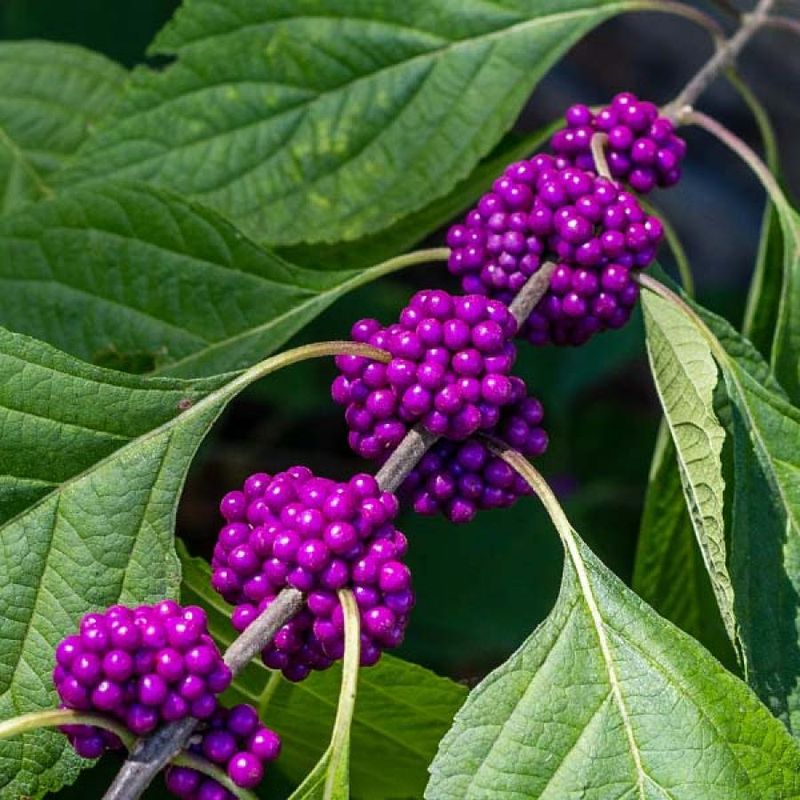
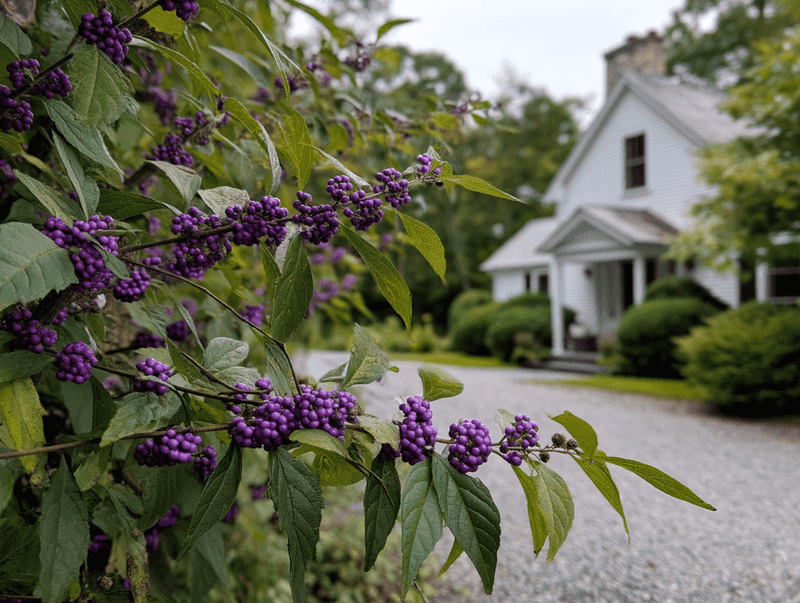
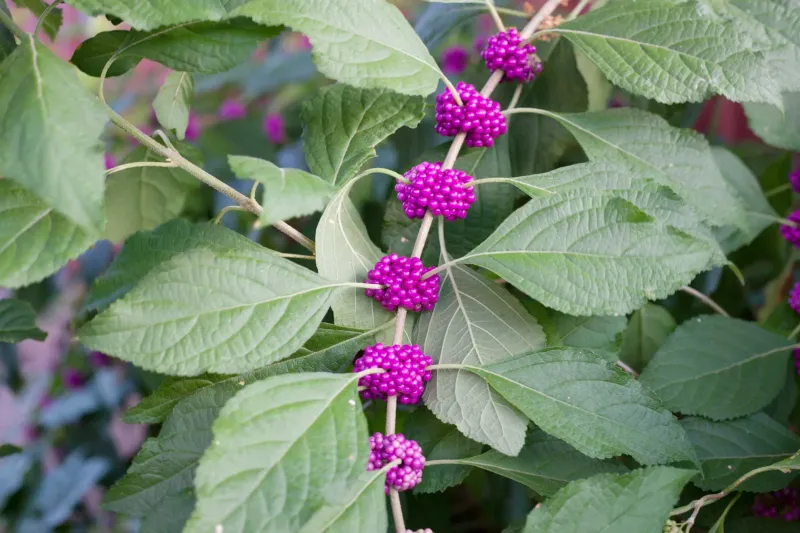
American beautyberry, Callicarpa americana, is a deciduous woody shrub native to North Carolina whose most striking feature is almost impossible to miss. Starting in late summer, tight clusters of purple to bluish berries form in rings around the stems at each leaf node, creating a display that looks almost artificial against the fading greens of early fall.
No other common shrub in a North Carolina yard produces anything quite like it.
According to NC State’s plant profile for Callicarpa americana, berries generally develop from August through October and may persist into early winter depending on bird pressure and weather. The broader availability window documented for bird habitat purposes extends from August through November, which means the shrub is carrying fruit well past the point when many summer-fruiting plants have finished.
That persistence is part of what makes it useful, though it is worth noting that heavy bird traffic can strip a shrub quickly, and a single plant may not hold fruit as long as a group planting would.
The visual impact is the reason beautyberry gets attention, but its ecological role is the reason to actually plant it. Songbirds including American robins, brown thrashers, purple finches, and eastern towhees eat the berries, along with small mammals.
The shrub is also deciduous, meaning it drops its leaves in winter, so the fruit that remains after leaf drop stands out even more against bare stems, making foraging easier for birds to spot from a distance. What it cannot do is provide the year-round evergreen cover that species like yaupon or American holly offer, so it functions best as a seasonal contributor in a broader planting plan.
Match its woodland-edge habit to an informal yard
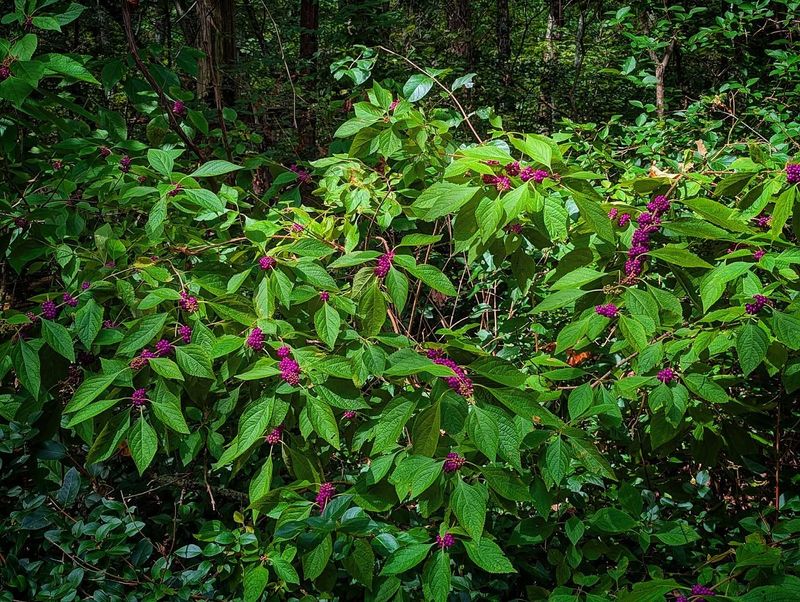
Beautyberry grows naturally along open meadows, thickets, woodland margins, and the edges of ponds, ditches, and streams. That habitat profile translates directly into the kinds of residential spaces where it performs best: the back-of-border spot where lawn gives way to trees, the naturalized strip along a fence line, a pond or rain garden edge, or an informal wildlife planting that gets morning sun and afternoon shade.
It is a shrub that belongs where the yard softens into something less groomed.
Its open, arching form is part of the charm and part of the reason it does not suit tightly clipped formal hedges. Branches sweep outward and downward under the weight of the berry clusters, giving the shrub a loose, relaxed posture that reads as naturalistic rather than structured.
Trying to shear it into a neat box would remove the new growth where flowers and fruit form and would work against its natural character. NC State’s plant profile for beautyberry recommends it for naturalized borders, wildlife gardens, and informal mass plantings, which matches its personality well.
The birds that visit are worth considering when choosing placement. American robins, brown thrashers, purple finches, and eastern towhees are among the songbirds documented eating beautyberry fruit, along with small mammals.
Placing the shrub where it is visible from a window gives you a front-row seat when birds move through in fall. Locating it near shrubby cover or a brush pile gives those birds a place to retreat between feeding visits, which makes the spot more attractive to a wider range of species than an isolated plant in the open would be.
Choose light, drainage, and space before you plant
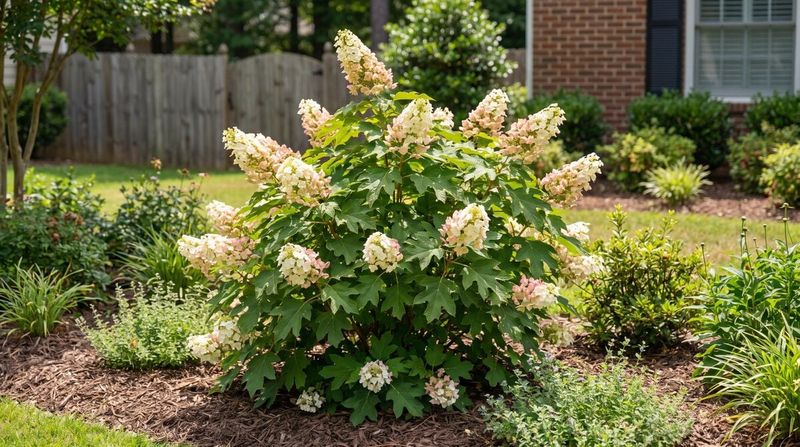
Before putting a beautyberry in the ground, run through three quick site checks: light, drainage, and room to grow. Beautyberry performs in full sun to part shade, and it handles the dappled light of an open woodland edge well.
Deep shade is a different story. Tucking it under a dense canopy where little direct light reaches the shrub will reduce flowering and fruit production, so a spot with at least several hours of direct sun or consistent bright filtered light is the right call.
Drainage matters more than soil type. NC State’s beautyberry profile notes that the shrub tolerates clay, loam, and sandy soils as well as a range of soil pH from acidic to alkaline, which covers most North Carolina yard conditions.
What it does not tolerate well is waterlogged ground where roots sit in standing water after rain. A spot with reasonable drainage, even if the soil is heavy clay, is workable.
A low spot that pools for days after a storm is not the right location.
Space is the factor most homeowners underestimate. Expect a mature beautyberry to reach roughly 3 to 8 feet tall and 3 to 6 feet wide, though actual size varies with conditions and how hard you prune it in late winter.
Planting it too close to a walkway, a foundation, or another shrub that you want to keep visible means you will spend years fighting its natural spread. Give it room from the start, treat it as the informal, arching specimen it is, and let it fill out on its own terms rather than forcing it into a shape that does not suit it.
Fall is generally a good time to establish beautyberry
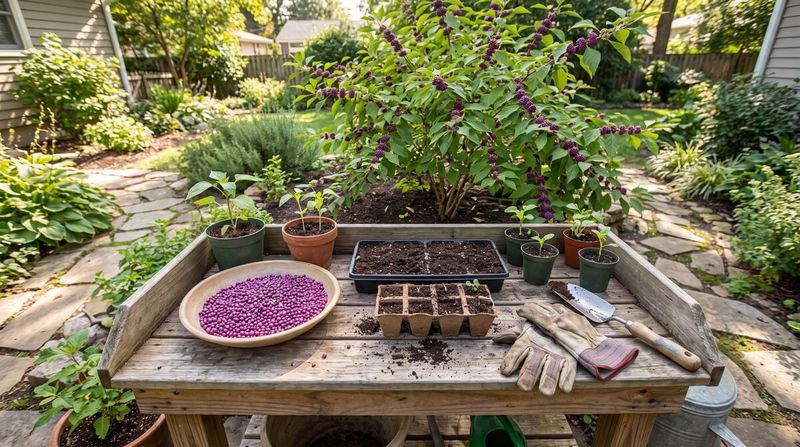
Planting beautyberry in fall gives roots a chance to settle into the soil before the following summer’s heat arrives. NC State’s native plant landscaping guidance generally favors fall installation for most North Carolina natives because the cooler temperatures and more reliable rainfall reduce the stress on a newly planted shrub compared to planting during a hot July or August.
That said, fall planting is not a guaranteed easy ride. A dry October or an early cold snap can still make establishment harder, so local conditions in any given year matter.
The planting sequence itself is straightforward. Dig the hole wider than the root ball but no deeper, so the shrub sits at the same depth it was growing in its container.
Setting it too deep is a common mistake that can cause crown rot over time. NC State’s Extension Gardener Handbook guidance on planting recommends applying about 2 to 3 inches of organic mulch over the root zone after planting, while keeping mulch pulled back from direct contact with the trunk or crown.
That small gap prevents moisture from collecting against the stem where it can encourage rot.
Water the shrub immediately after planting, and keep watering consistently through the first growing season. Newly planted natives are not yet drought-tolerant, no matter how tough they will eventually become.
During hot, dry stretches in the first year or two, plan on supplemental watering rather than assuming the plant will figure things out on its own. Once roots have spread into the surrounding soil, beautyberry becomes considerably more self-sufficient, but it needs that establishment window to get there.
Late-winter pruning prepares the next fruiting cycle
Beautyberry flowers and fruits on new growth produced each spring, which makes the timing of pruning more consequential than it might seem. Cutting the shrub back in fall or early winter removes the berry display before birds have finished with it and does nothing to improve the following year’s fruit production.
Late winter, just before new growth begins, is the right window.
NC State recommends that gardeners can cut beautyberry back hard, potentially to about 1 foot above the ground, to control its loose form and encourage the vigorous new shoots that will carry the next round of flowers and berries. The NC State plant profile for Callicarpa americana supports this approach as a way to keep the shrub from sprawling beyond its space while actually improving fruiting rather than reducing it.
You do not have to cut it back this hard every year, but doing so periodically keeps the plant productive and manageable.
Lighter pruning in late winter, removing crossing branches or stems that have grown into a path or structure, is also fine if you prefer a larger, more established framework. The key principle is to prune before the plant pushes new growth in spring rather than after, and to avoid the temptation to tidy it up in fall when it still has fruit to offer.
Beautyberry is genuinely low maintenance once established, but low maintenance is not the same as no maintenance. Skipping pruning for many years can result in a shrub that gets leggy, produces less fruit at eye level, and becomes harder to manage all at once.
Build a longer wildlife season around one shrub
A single beautyberry shrub can put on a good show, but the shrub reaches its full value as part of a layered habitat rather than a standalone planting. NC State’s bird-habitat guidance is clear that a diversity of native plants providing food across different seasons, combined with layered vegetation, cover, and water, is what supports birds reliably over time.
No single shrub, however productive, substitutes for that broader habitat structure.
Planting several beautyberries near one another can increase fruit production, as NC State’s plant profile notes that nearby plants of the same type may produce more fruit together. There is no universal required number or spacing that guarantees a heavy berry display, so treat a grouping of two or three shrubs as a reasonable starting point rather than a formula.
What matters more is pairing beautyberry with plants that extend seasonal food availability beyond its August-through-November window.
For deeper winter coverage, consider adding possumhaw, yaupon, American holly, or eastern redcedar. Possumhaw can hold fruit from September into January, though it generally needs female plants with at least one male pollinizer nearby for the best berry display.
Wax myrtle offers fruit from August through December and provides evergreen cover, but NC State notes its aromatic leaves and branches can be flammable, so avoid planting it within the closest defensible space around a home structure.
When buying beautyberry, choose nursery-propagated Callicarpa americana rather than digging plants from the wild. NC State’s native plants handbook chapter warns that wild-collected plants often transplant poorly and that removing them can harm natural populations.
A reputable native plant nursery can confirm you are getting the true American species rather than a nonnative Callicarpa variety that may look similar but does not carry the same ecological relationship with North Carolina wildlife.
Choose beautyberry for a vivid fall contribution, not an all-season solution
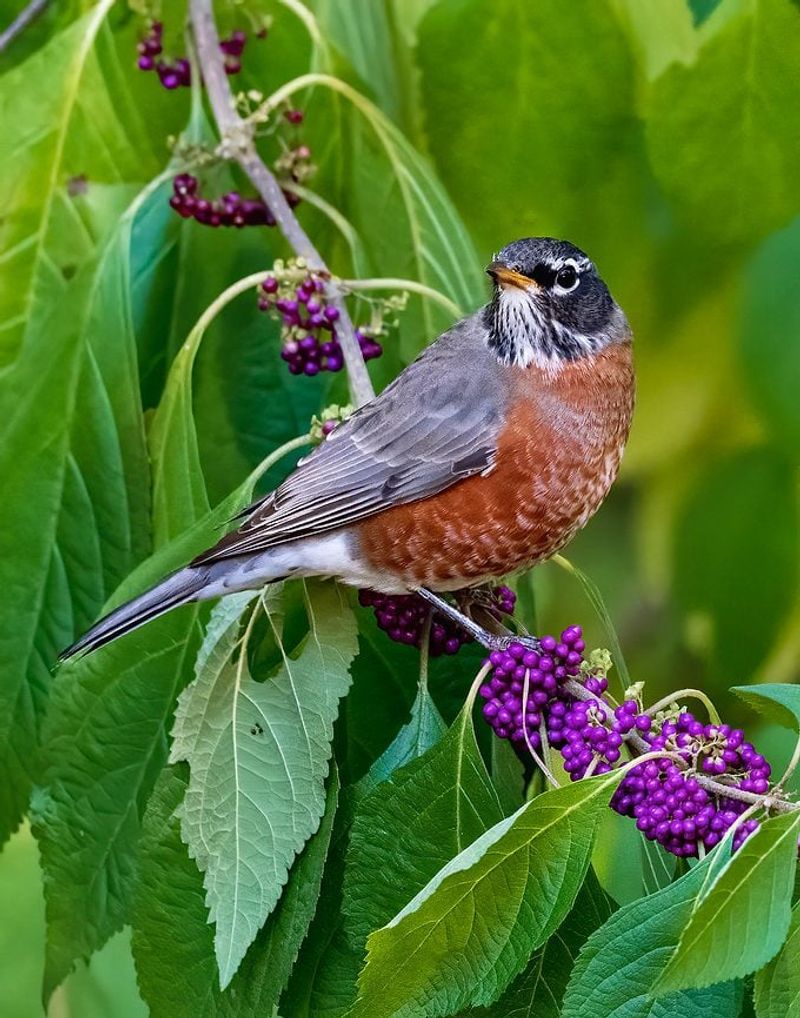
American beautyberry earns a place in a North Carolina wildlife garden because of what it does well in a specific window, not because it does everything. If your yard has a sunny or partly shaded open edge, a naturalized border, or a woodland margin, this shrub gives you a conspicuous late-season fruit display that carries real value for songbirds and small mammals from late summer through fall.
That is a meaningful contribution, and for a native plant that asks relatively little in return, it is a strong trade.
Going in with clear expectations helps. Beautyberry is deciduous, so it offers no evergreen cover in winter.
Its fruit window, while documented through November and sometimes into early winter, is finite and can shorten if bird pressure is heavy or weather turns harsh early. Performance varies by site, light, and soil moisture, and one shrub in the wrong spot will always underperform several shrubs in the right one.
NC State’s plant profile and NC State’s wildlife landscaping guidance both point toward habitat diversity as the real goal, with beautyberry serving as one productive piece of that picture.
The practical next step is simple: find an accurately labeled nursery-propagated Callicarpa americana at a native plant sale or reputable nursery, pick a spot with good light and drainage, give the shrub room to spread, and water it consistently through its first season. A yard that includes beautyberry alongside other natives fruiting at different times is one that works for birds across the seasons, not just during the purple-berry moment in October, which is spectacular enough to be worth the effort on its own.