
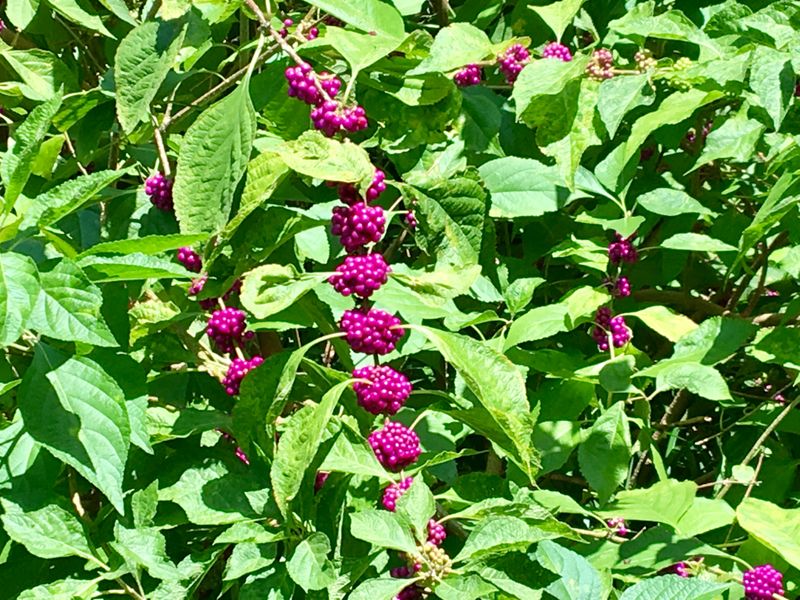
Ticks do not wait for an invitation. They hang at the edge of your lawn, on tall grass and leaf litter, ready to hitch a ride on whoever walks by. A native North Carolina shrub called American beautyberry has drawn real scientific attention for compounds in its leaves that repel certain ticks in laboratory tests, but the full story is more nuanced than the headline suggests. Understanding what the research actually shows, and what it does not, gives you a smarter plan for protecting your family and your yard.
American beautyberry is the likely shrub behind the claim
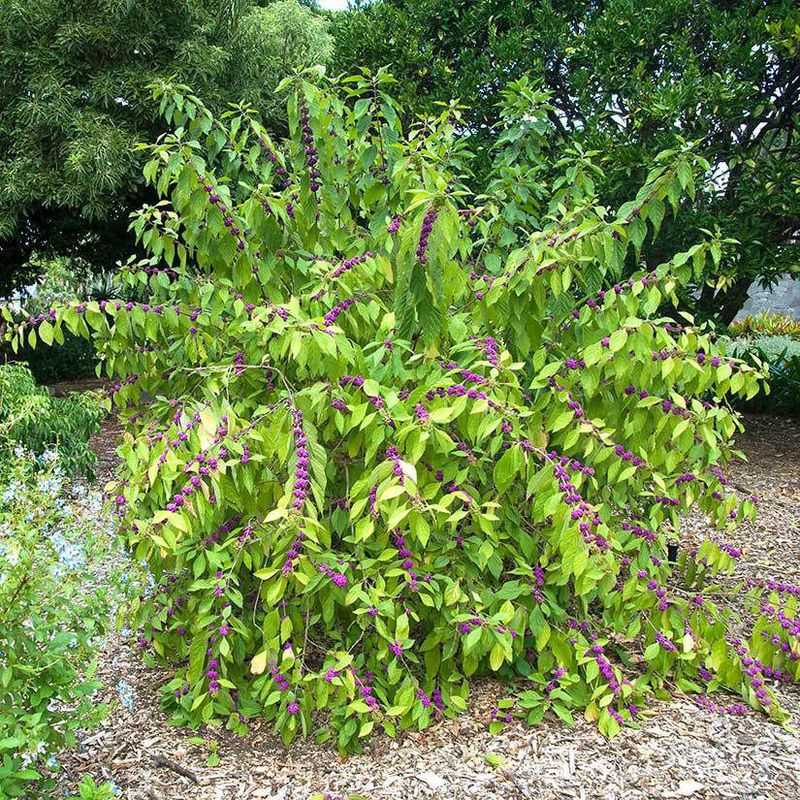
American beautyberry, known botanically as Callicarpa americana, is the native shrub most closely associated with the tick-repellent claim circulating in gardening circles. NC State Extension describes it as a deciduous, fast-growing shrub that typically reaches three to eight feet tall and three to six feet wide, with an open, arching branch structure that gives it a relaxed, naturalistic silhouette.
The shrub is native to North Carolina’s Piedmont and Coastal Plain, where it grows in forest understories, woodland edges, and disturbed areas. It tolerates full sun to partial shade and performs well in well-drained soils, making it adaptable enough for most home landscapes in those regions. Gardeners who have grown it often appreciate how little coaxing it needs once established.
From late spring into early summer, small pink to lavender flowers appear along the stems. By August, and sometimes lasting through October, those stems become lined with tight clusters of vivid purple berries that are genuinely striking. Mockingbirds, brown thrashers, robins, cardinals, and small mammals seek out those berries, so a planting of beautyberry doubles as a feeding station for backyard wildlife.
These landscape and wildlife qualities stand on their own. Beautyberry earns a spot at a North Carolina yard edge because it is native, low-maintenance, and seasonally generous, not because it has been proven to keep ticks out of a yard. The tick-related research is real, but it applies to specific compounds extracted from the plant’s leaves, not to the living shrub standing at the property line. That distinction matters a great deal, and the sections that follow explain exactly where the science starts and where it stops.
What beautyberry researchers actually tested
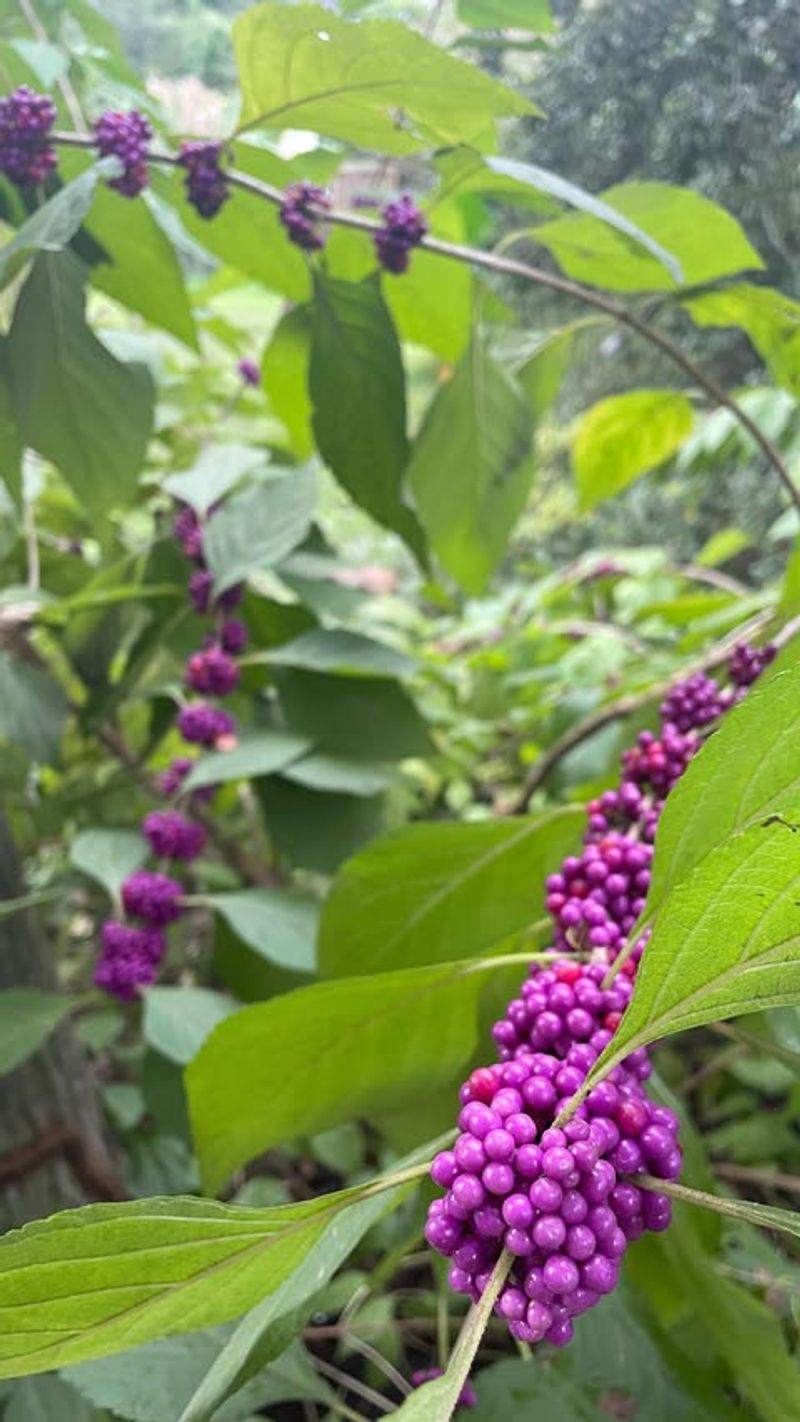
Folk knowledge about beautyberry has existed in the rural South for generations. Farmers reportedly rubbed crushed leaves on themselves and their horses to deter insects, and that tradition eventually caught the attention of scientists. Researchers first identified specific terpenoid compounds in beautyberry leaves, including callicarpenal and related molecules, as the source of activity against mosquitoes, which was documented in a peer-reviewed study on beautyberry terpenoids and insect deterrence.
A follow-up study by USDA researchers extended that inquiry to ticks. The scientists isolated compounds from beautyberry leaves and tested them against tick nymphs under controlled laboratory conditions. The key point is what those conditions actually involved: the researchers applied extracted compounds to cloth or used controlled exposure setups, then measured how many nymphs avoided the treated surface compared to an untreated control. No living beautyberry shrubs were planted.
No residential yards were involved.
Within those controlled conditions, the results for one tick species were striking. The USDA tick repellency study reported more than 95% repellency against blacklegged tick nymphs at tested concentrations for certain beautyberry compounds. That is a meaningful laboratory finding. Blacklegged ticks, sometimes called deer ticks, are the primary vectors of Lyme disease in North Carolina, so a compound that strongly deters their nymphs in a lab setting is worth investigating further.
The mosquito research and the tick research are related but distinct. The mosquito study identified and characterized the compounds. The tick study then took those isolated compounds and tested them specifically against tick nymphs. Neither study involved a homeowner planting a row of shrubs and measuring what happened to the tick population on the other side.
Keeping that methodological gap in mind is essential before drawing any conclusions about what beautyberry can do for a real yard.
Why laboratory repellency does not create a shrub barrier
A compound that repels ticks on treated cloth in a controlled test tells you something genuinely useful, but it does not tell you that a row of living plants will push ticks back from your property line. The USDA research identified active molecules and measured their effect under precise, repeatable conditions. What it did not measure is tick movement, tick abundance, or disease risk across a real residential yard planted with beautyberry. Those are very different questions, and no cited research has answered them for this shrub.
The species gap in the findings is equally important for North Carolina homeowners. The USDA report makes clear that beautyberry compounds were considerably more potent against blacklegged tick nymphs than against lone star tick nymphs. In the study, callicarpenal repelled roughly 20% of lone star tick nymphs at one tested concentration, and intermedeol repelled roughly 40%. Those numbers are modest, and lone star ticks are among the most common ticks in the North Carolina Piedmont and Coastal Plain.
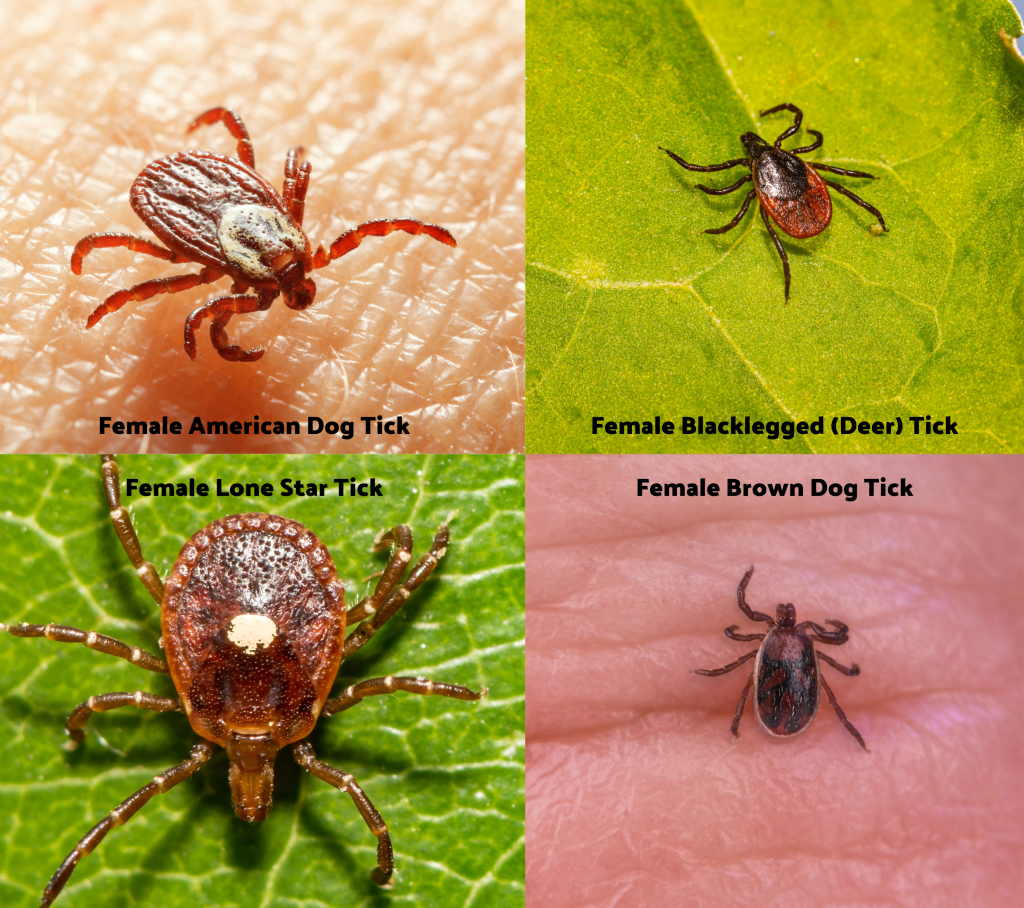
North Carolina hosts several medically relevant tick species, and they do not all behave the same way. NC State Extension’s tick identification guide covers blacklegged ticks, lone star ticks, American dog ticks, and brown dog ticks, each with different habitat preferences, activity seasons, and disease associations. A compound that shows strong activity against one nymph stage of one species under lab conditions does not automatically protect against the full range of ticks a family might encounter.
There is also a practical point about the plant itself. Beautyberry drops its leaves in winter, so even if intact foliage produced a meaningful deterrent effect during the growing season, that effect would disappear entirely from late fall through early spring. Ticks remain active in North Carolina whenever temperatures stay above about 35 to 40 degrees Fahrenheit. Relying on a deciduous shrub’s chemistry as a primary line of defense leaves a significant seasonal window uncovered.
The NC DHHS tickborne disease surveillance summary confirms that tick-related illness is reported across multiple seasons, not only during summer.
Build the real barrier at the lawn-to-woods edge
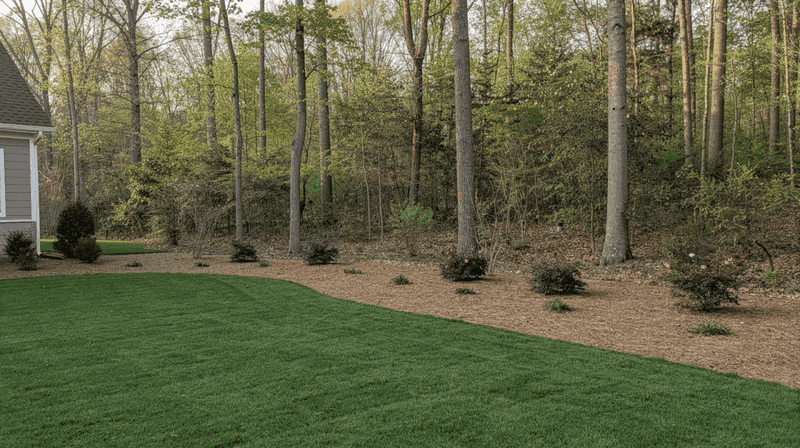
The most reliable tick management at a yard’s perimeter comes from how you manage the landscape, not from any single plant. CDC guidance on preventing tick bites lays out a clear set of yard-management steps: remove leaf litter regularly, clear tall grass and brush from the yard edge, mow consistently, keep wood piles neat and dry in a sunny location, and move play equipment, patios, and decks away from wooded edges when possible. Each of these steps removes or reduces the conditions ticks and their hosts need to thrive.
The structural centerpiece of a tick-managed yard edge is a roughly three-foot-wide strip of wood chips or gravel placed between your lawn and any wooded or brushy area. The Connecticut Agricultural Experiment Station’s Tick Management Handbook, distributed through CDC, explains that this type of buffer may reduce tick movement across the boundary because ticks prefer moist, shaded environments and are reluctant to cross dry, open surfaces. The word “may” is deliberate: the handbook notes that results vary by site, year, shade level, woodland density, and the initial tick population already present.
Maintenance is not optional with a wood-chip buffer. Over time, chips break down and leaves accumulate in the gaps, creating a layer of organic debris that begins to function more like the leaf litter you were trying to remove in the first place. Raking the buffer periodically and refreshing the material keeps it functioning as intended. A neglected buffer can quietly become tick habitat rather than a deterrent.
Nothing about this approach is impenetrable. People walk through the buffer. Dogs cross it. Deer, mice, and other wildlife move freely across it, and those animals carry ticks with them.
Leaves blow in from the woods. The buffer is a friction point that makes tick movement harder, not a wall that stops it. Combining it with regular mowing, cleared edges, and personal protection gives you a layered approach that is considerably more dependable than any single measure on its own.
Use beautyberry without creating an unmanaged thicket
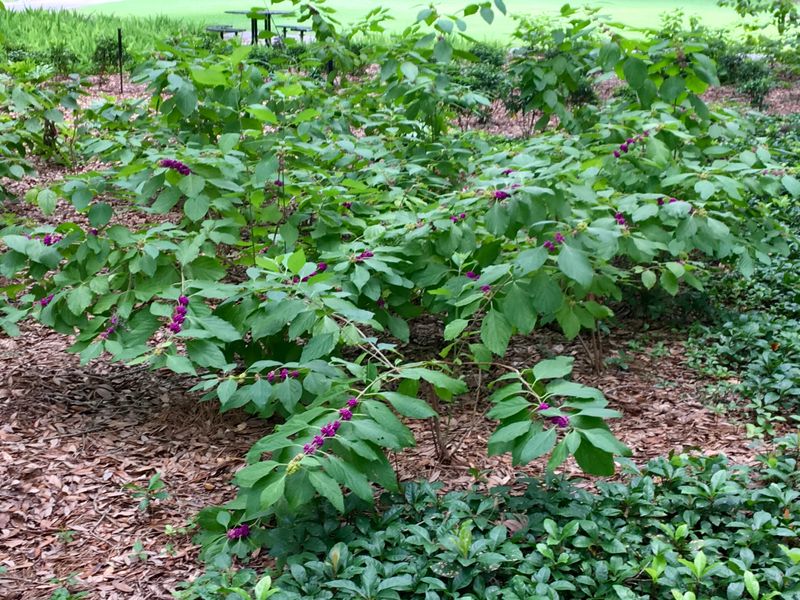
Beautyberry can be a genuinely useful part of a North Carolina yard edge when it is placed and managed thoughtfully. NC State Extension’s plant profile describes its open, arching growth habit, which means it does not naturally form the kind of dense, closed canopy that traps humidity and shades out the ground beneath it. That open structure is an asset here, because it allows light and air to move through the planting rather than creating a sheltered, moist microclimate.
Position beautyberry at the woods-facing side of your transition zone rather than directly beside a path, play structure, or patio. Keep the lawn-facing side of the planting open and sunny, and rake out any leaves that accumulate beneath the shrubs. Beautyberry’s value in this context is as a native anchor plant that feeds birds and provides seasonal interest, not as a living fence that chemically pushes ticks away from the yard.
The caution about dense vegetation is worth taking seriously. Research on Japanese barberry, an invasive shrub found in parts of the Northeast, found that its dense, low-growing thickets supported higher blacklegged tick populations by creating a buffered, humid microclimate that ticks and their hosts preferred. That environmental entomology study on barberry and tick abundance and related research on vegetation and tick-vector abundance do not prove that beautyberry behaves the same way, but they establish a general principle: any shrub that grows into an unmanaged, humid thicket can become a better habitat for ticks rather than a worse one.
Beautyberry does not naturally grow that densely, but it can spread by root sprouts and self-seeding if left unchecked. Pruning it back hard in late winter, which the plant tolerates well and often responds to with vigorous new growth, keeps it from sprawling into adjacent areas. The goal is a maintained, open native border, not a wild tangle at the yard’s edge. Think of it as a managed landscape feature that happens to be native and wildlife-friendly, with the tick-related chemistry as an interesting quality to follow in future research rather than a proven protective function.
Add the protections a shrub cannot provide
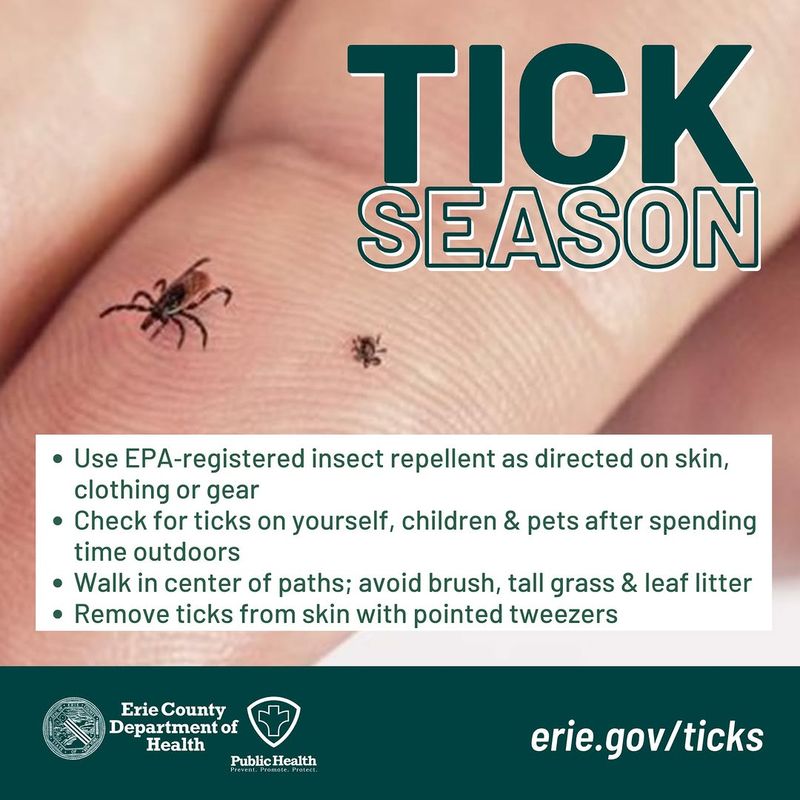
No landscape planting, no matter how well chosen or maintained, substitutes for personal and pet protection in tick country. CDC prevention guidance is straightforward: check yourself, your children, and your pets for ticks after spending time outdoors, especially after being near wooded or brushy areas. Ticks can be very small, particularly nymphs, so a thorough check matters more than a quick glance. Shower within two hours of coming inside to wash off unattached ticks and make it easier to spot any that are still crawling.
Yard habits matter too. Keep wood piles stacked neatly in a dry, sunny spot rather than against a shaded fence or wall, because mice and other small mammals that carry ticks often nest in wood piles. Move children’s play equipment and outdoor seating away from wooded edges and into sunnier, more open areas of the yard whenever the layout allows it.
When people and pets will be spending time in or near tick habitat, EPA-registered repellents are the most reliable personal protection available. EPA-approved skin-applied repellent ingredients include DEET, picaridin, IR3535, oil of lemon eucalyptus (OLE), para-menthane-diol (PMD), and 2-undecanone. Each of these has been reviewed for safety and effectiveness when used according to label directions. Products containing permethrin can be applied to clothing and gear for additional protection.
Beautyberry’s leaf compounds are genuinely interesting to researchers, but they are not a registered repellent product. Rubbing crushed leaves on skin is not a practice supported by formulation testing, established dosing, skin-safety data, or regulatory review. The gap between a promising laboratory compound and a safe, effective consumer product is significant, and filling it requires years of additional research. Until that work is done, stick with products that have already cleared that bar and use them according to their labels every time you or your family head into tick habitat.
Grow beautyberry for its real strengths
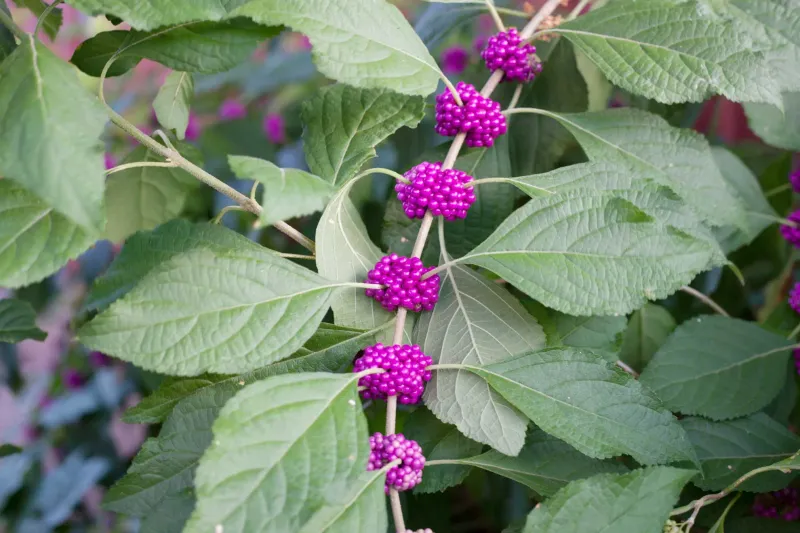
American beautyberry earns a place at a North Carolina yard edge on its own merits. As NC State Extension notes, it is native to the Piedmont and Coastal Plain, adaptable to a wide range of light and soil conditions, and reliably productive from late summer through fall. The berry clusters feed birds and small mammals at a time of year when many other food sources are winding down. Those are solid, independent reasons to grow it.
The tick chemistry is a legitimate scientific finding worth following. The USDA compound study showed real activity against blacklegged tick nymphs in controlled tests, and that result could eventually contribute to new repellent formulations. What it does not show is that a living beautyberry border prevents ticks from entering a yard or reduces disease risk for people on the other side of it.
The practical approach is layered. Plant beautyberry in a maintained, open native border at the woods-facing side of your yard edge. Pair it with cleared leaf litter, regular mowing, and a refreshed wood-chip or gravel buffer between your lawn and the treeline. Check people and pets after outdoor time, and reach for an EPA-registered repellent whenever anyone heads into tick habitat.
CDC’s tick prevention framework remains the most reliable foundation for all of it. Beautyberry belongs in that picture as a native ally with genuine promise, not as the single plant that solves a complex problem.