

A sunny, rocky slope in a North Carolina yard can be one of the hardest spots to plant. The soil drains fast, the sun beats down hard, and most plants give up before summer ends.
Moss phlox, known by science as Phlox subulata, is a low-growing native that handles exactly those conditions on the right kind of bank. Learning where it works, and where it does not, can save you a season of failed planting and a lot of frustration.
Moss phlox fits a particular kind of North Carolina slope
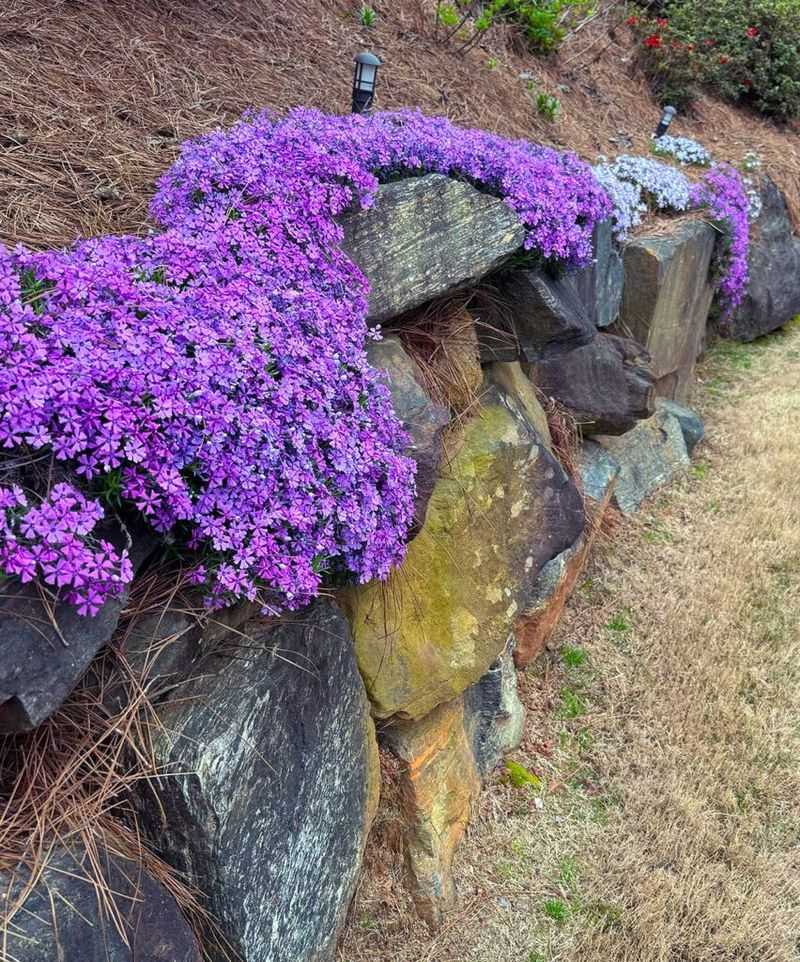
Sunny, sharply drained, and rocky or sandy: those three words describe the slope where moss phlox earns its place. NC State Extension’s plant profile describes Phlox subulata as a dense, spreading, mat-forming native perennial that grows naturally in dry, rocky or sandy habitats, including slopes, ledges, clearings, and open woodlands in North Carolina’s Appalachian Mountains.
That growth pattern, low, creeping, and horizontal, is exactly what makes it useful as surface cover on a bank where taller plants flop or wash away.
The plant does not blanket every dry slope, and its success has nothing to do with a simple comparison between native and store-bought plants. Moss phlox is itself sold at many nurseries, and whether it lives or dies depends on drainage, light, soil texture, and how well you care for it during establishment.
A clay bank, a shaded slope, a wet depression, or an actively eroding cut will not suit it.
What moss phlox does well is cover exposed soil on a sunny, well-drained bank with a tight, low mat that stays close to the ground through the seasons. On the right site, it is a well-supported native option that outperforms many alternatives not because of any statewide ranking, but because its natural habitat and the site requirements line up closely.
Matching the plant to the place is what makes it work.
The right plant is Phlox subulata
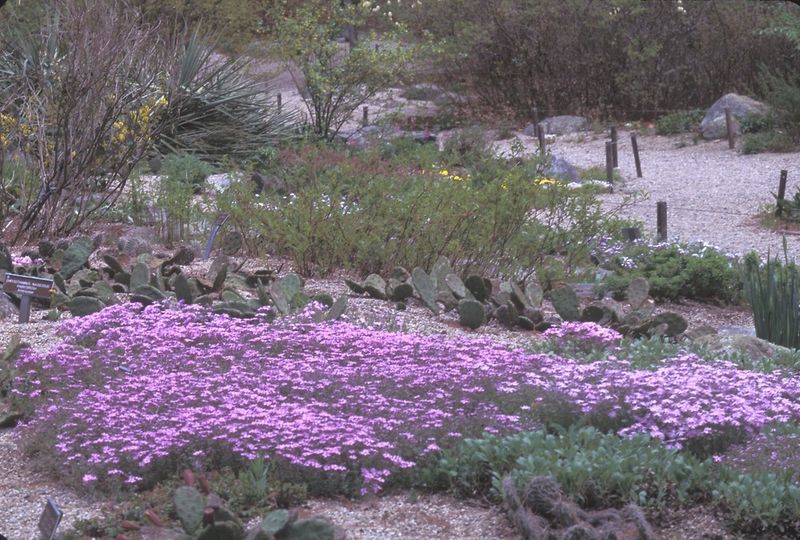
Shopping for creeping phlox at a garden center can lead you to the wrong plant if you are not careful with the name. “Creeping phlox” is attached to at least two different species, and they do not suit the same sites. NC State’s moss phlox profile identifies Phlox subulata by several common names: moss phlox, moss pink, and rock phlox.
Each of those names points to the same sun-loving, dry-slope candidate.
The other species worth knowing is Phlox stolonifera, also sometimes called creeping phlox. According to the North Carolina Native Plant Society’s native groundcovers guide, Phlox stolonifera is associated with shadier, richer, and more consistently moist growing conditions.
Putting it on a hot, exposed, rocky bank is setting it up to fail, just as putting Phlox subulata in a shaded woodland bed is the wrong fit for that plant.
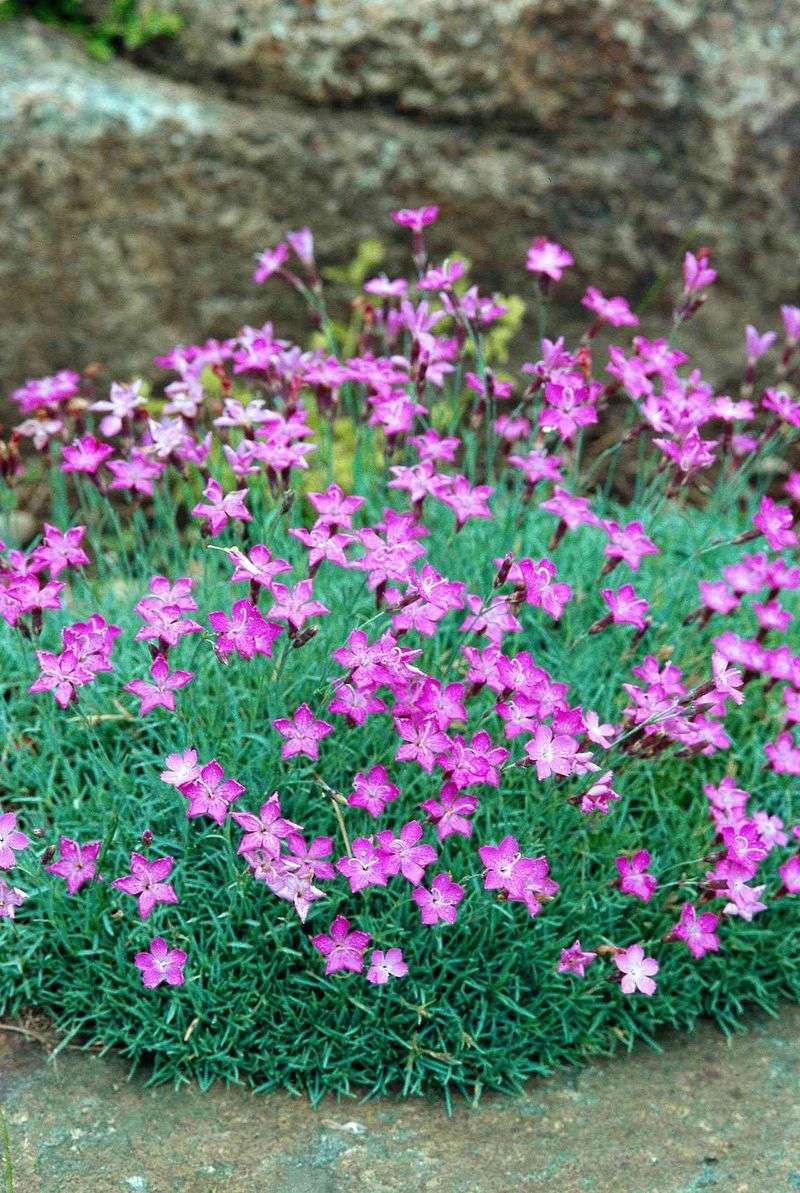
Visually, Phlox subulata is easy to picture once you know its size. It grows about 4 to 6 inches tall and spreads 2 to 3 feet wide, with a horizontal, prostrate habit that stays flat against the slope.
The leaves are short, stiff, and needle-like, which is part of why the common name “moss” phlox stuck. When you shop, ask for the Latin name or look for the needle-leaf foliage to confirm you are getting the dry-slope species and not a shade-garden substitute.
Many cultivars are sold under color names or trademark labels, so the species name is your most reliable guide.
Test the site before you plant
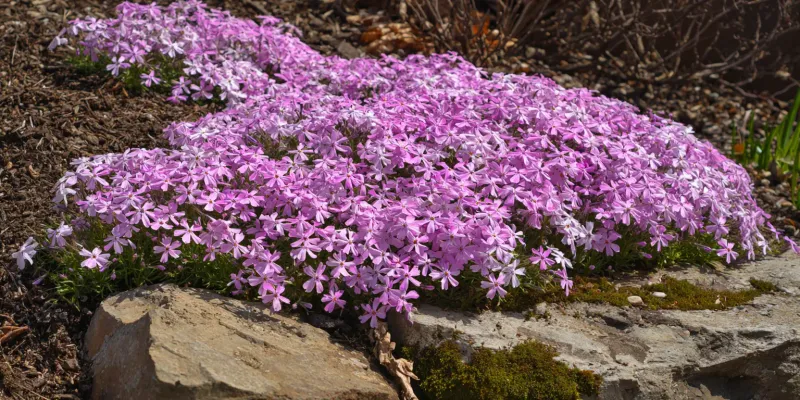
Before buying a single plant, spend a few minutes reading your slope. Full sun is the first requirement: moss phlox needs direct sun for most of the day to flower well and hold a dense mat.
A south- or west-facing bank usually qualifies, though NC State notes that hot, humid summers can make some dappled afternoon relief helpful rather than harmful on the most exposed sites.
Drainage is the second checkpoint, and it matters more than anything else. NC State’s Phlox subulata profile describes the plant as preferring well-drained soil and tolerating hot and dry conditions once established in a suitable site.
That phrase, “once established in a suitable site,” carries a lot of weight. A slope that stays soggy after rain, has dense clay that sheds water in sheets, or sits in a low spot where runoff collects is not a suitable site, regardless of how sunny it is.
Sandy, gravelly, shallow, or rocky soil is the target texture. The NC State moss phlox entry confirms that the plant performs best in those sharply drained conditions.
A quick test: dig a small hole about six inches deep, fill it with water, and watch. If the water drains within an hour, the drainage is likely adequate.
If it sits for several hours or pools, the site needs amendment or a different plant.
Finally, consider the plant’s natural range. Phlox subulata is native to North Carolina’s Appalachian Mountains, where rocky, thin-soiled slopes are common.
NC State lists it for cultivation across the state’s broad landscape regions, but that cultivation range does not mean it is equally adapted everywhere. Gardeners in the Piedmont and coastal plain can grow it successfully on the right site, but matching the soil texture and drainage to the plant’s Appalachian origins gives the best result.
Spring flowers add color and wildlife value
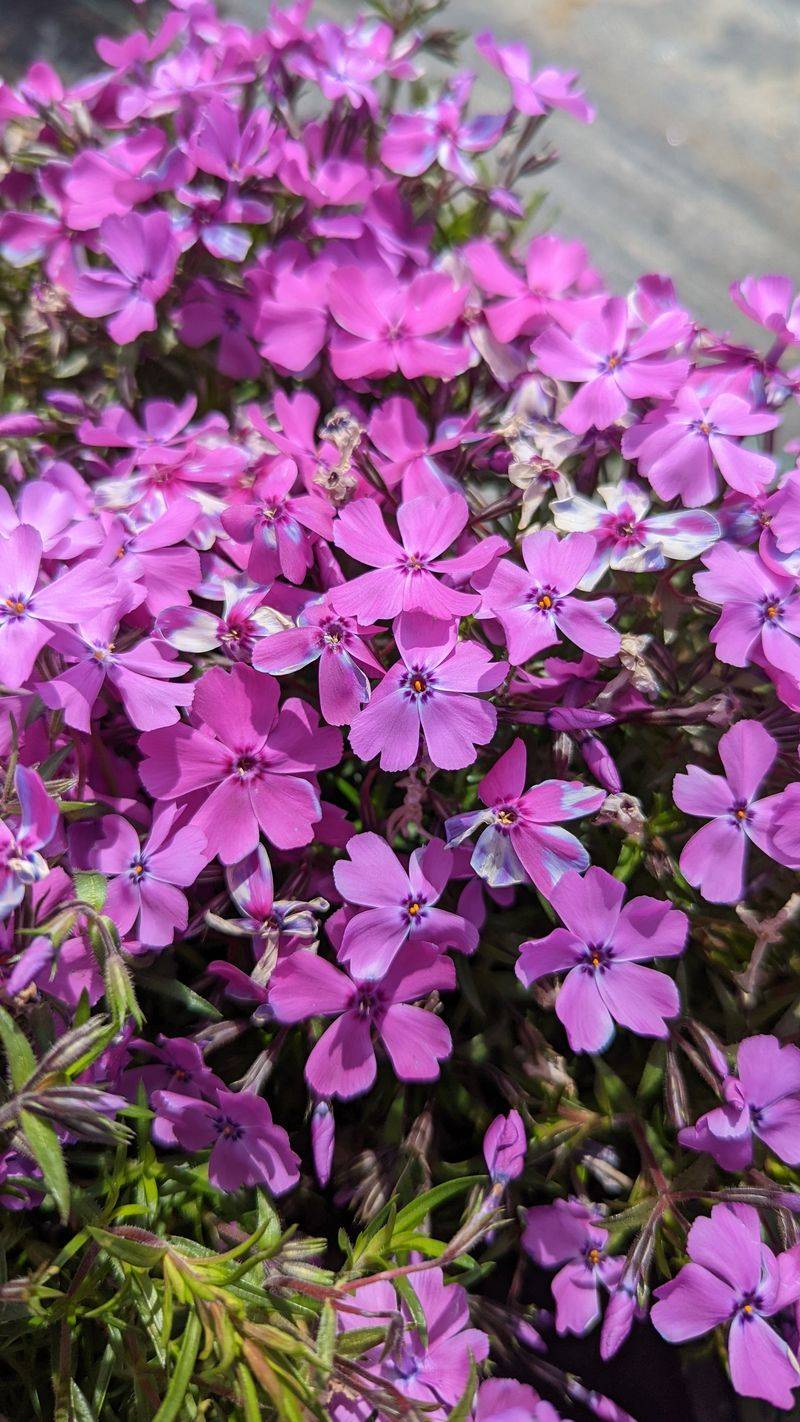
April and May are when moss phlox earns its keep visually. The flowers come in pink, lavender, reddish-purple, or occasionally white, and when a healthy mat blooms all at once, the color is hard to miss.
NC State’s plant profile confirms that the blooms attract bees, butterflies, skippers, and hummingbirds, making the spring display useful for pollinators as well as for curb appeal.
The wildlife value is real but specific. Bees and butterflies get nectar during a period in early spring when many other flowering plants are not yet open, which makes that timing genuinely useful for early pollinators.
Hummingbirds, which return to North Carolina in spring, may visit the flowers during migration or early in the nesting season. That is a concrete benefit, not a vague promise.
The foliage story is more nuanced. NC State classifies moss phlox as semi-evergreen, meaning the leaves provide some off-season ground cover but may not remain fully green and uninterrupted through every winter or during a hard drought.
Expect a useful mat most of the year, not a guaranteed carpet.
On browsing pressure, the picture is mixed. NC State lists moss phlox as deer-resistant or deer-tolerant, which is good news for yards where deer pressure is high.
Rabbits, however, do eat the foliage. If rabbits are active in your yard, the plant may show feeding damage, particularly on the outer edges of the mat where new growth is most accessible.
Deer resistance is not the same as being untouched by every animal, and planning for rabbit activity is worth doing before you plant.
Establish the plants before expecting fill-in
Moss phlox is not a plant-it-and-forget-it groundcover, at least not in the first season. Timing matters: spring and fall plantings give roots time to settle before the extremes of summer heat or winter cold arrive.
Spacing plants about 18 inches apart is a reasonable starting point for a gradual fill-in, keeping in mind that NC State describes the growth rate as medium, not fast.
Penn State Extension’s guidance on native groundcovers recommends watering new plantings until they are fully established and continuing to monitor them during prolonged dry weather. Native status does not exempt a freshly planted specimen from needing water.
A plant that goes weeks without rain during its first summer on a hot, rocky slope can fail even if the species is well adapted to that site type once roots are deep and spread.
A light mulch layer applied around, but not over, the plant crowns helps conserve moisture, moderate soil temperature, and slow weed germination while the mat fills in. Keep the mulch thin: one to two inches is enough.
Burying the crowns or piling mulch against the stems can cause rot and defeats the purpose of a well-drained planting site.
On steeper sections of the slope, Penn State Extension recommends using biodegradable coir or other natural-fiber erosion netting as temporary protection while plants establish. Coir breaks down over time and does not create the long-term runoff and maintenance problems associated with synthetic landscape cloth.
Synthetic weed fabric can actually increase surface runoff on slopes and make it harder for plants to root through the barrier, so skip it in favor of natural-fiber options that disappear as the mat fills in.
Weed pressure is real during the fill-in period. Hand-pulling weeds around young plants is tedious but important, because aggressive weeds can outcompete small transplants before the mat closes in.
Once the phlox is established and spreading, weed pressure typically drops, but the first year or two require attention.
Trim the mat after it flowers
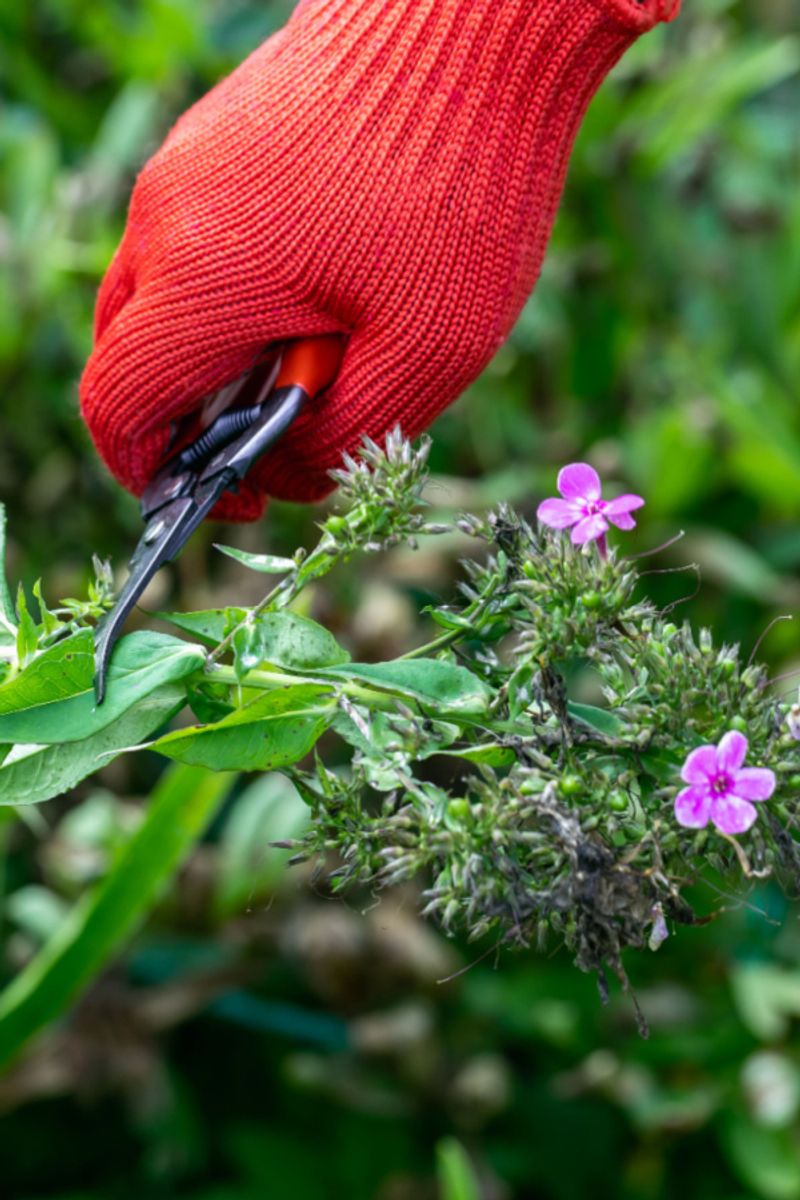
Once the spring bloom fades, the most useful thing you can do for a moss phlox planting is reach for a pair of hand shears. NC State recommends cutting the stems back by about one-half after flowering to help the plant maintain its compact, dense shape and encourage fresh growth from the base.
Skipping this step year after year allows the mat to get woody and open in the middle, which reduces its effectiveness as ground cover and makes the planting look ragged.
Older moss phlox plantings commonly thin in the center as new growth pushes outward along the edges. That outward spread is normal and expected, but the center can become bare and woody if the plant is never cut back.
A post-bloom trim addresses this directly by stimulating new shoots throughout the mat rather than only at the perimeter. Think of it as resetting the plant’s energy toward filling in rather than just expanding.
Realistic expectations matter here. The growth rate is medium, which means a new planting will not produce an instant weed-proof carpet in its first season.
Fill-in is gradual, and weed management by hand is part of the job during the early years. Once the mat is well established and trimmed annually, it holds its form much better and requires less intervention.
The payoff for that early maintenance is a tidy, low-maintenance groundcover that returns reliably each spring with a fresh flush of color.
Groundcover cannot stabilize every slope

A mat of moss phlox covers exposed soil and slows surface splash from rain, but it is not a structural solution for a slope that is actively failing. Roots that stay within a few inches of the surface cannot hold a bank that is slumping, undermined by runoff, or moving because of poor drainage below ground.
Understanding that boundary is important before you plant anything.
Penn State Extension notes that taller native perennials, shrubs, and trees contribute more to erosion reduction than low herbaceous groundcovers alone, because their roots reach deeper into the soil profile. If a slope has significant erosion pressure, layering deeper-rooted native shrubs or woody plants into the planting alongside moss phlox produces a more stable result than relying on a single low groundcover.
NC Cooperative Extension’s erosion control guidance recommends matching plants to the site and notes that terracing or other structural measures may be necessary on steep slopes. Drainage correction, grading, retaining structures, and erosion blankets are tools that address the physical forces driving erosion, and plants work best once those forces are under control.
University of Maryland Extension’s groundcovers resource reinforces the point: vegetation cannot substitute for professional evaluation on a slope that is actively eroding, undermining a structure, or showing signs of slumping. If water is cutting channels through the bank, the soil is visibly moving after rain, or the slope is close to a foundation, retaining wall, or utility line, a professional assessment is the right first step, not a planting plan.
On a stable, gently sloped bank with good drainage and full sun, moss phlox does exactly what it is supposed to do: it covers soil, reduces surface splash erosion, and holds the mat through the seasons. The key word is stable.
Match the plant to a site that is already physically sound, and it can perform well. Ask it to fix a site that is not, and no groundcover will be enough.
Choose moss phlox when the conditions match

The decision to plant moss phlox comes down to three checks. First, does the site match: full sun, sharp drainage, and sandy, gravelly, or rocky soil?
If the answer is yes, Phlox subulata is a well-supported native option for that bank. If the slope is shaded, clay-heavy, wet, or actively eroding, a different plant or a structural fix is the right starting point.
Second, are you prepared to establish it properly? Watering new plants until they root in, applying a light mulch, and managing weeds during the fill-in period are not optional steps.
The plant rewards that early attention with a mat that becomes increasingly self-sufficient over time.
Third, is the slope stable enough for a groundcover to do its job? Slopes with active erosion or structural concerns need professional evaluation before any planting plan makes sense.
When those three checks are satisfied, moss phlox delivers spring color, pollinator habitat, and dependable low coverage on one of the hardest spots in a North Carolina yard. That is a specific promise, and on the right slope, it holds.