
That narrow strip of ground between the sidewalk and the street looks harmless enough, but it might be the hardest planting spot on your entire property. Pavement heat bounces back from both sides, soil gets compacted by foot traffic and vehicle tires, and rain either floods it or runs straight off before roots can drink.
Most plants that look fine in a regular bed give up out there by July. Little bluestem, a perennial grass native throughout North Carolina, is a strong evidence-backed candidate for exactly this kind of punishment, as long as the site is right.
The Curbside Strip Is a Stress Test, Not Just a Sunny Bed
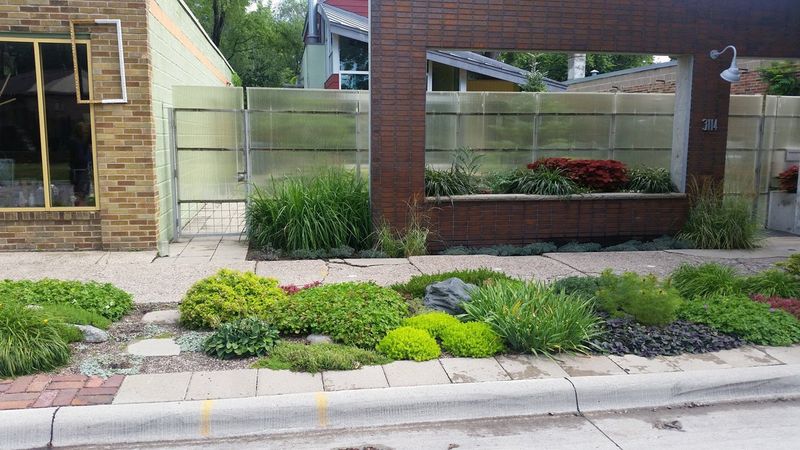
Most homeowners think the hardest part of a curbside strip is the heat. Sunlight is only the beginning.
That narrow slice of ground between the sidewalk and the street absorbs radiated heat from two hard surfaces simultaneously, and temperatures at soil level can run significantly hotter than the air above a nearby lawn or garden bed.
Compaction is the other quiet killer. Foot traffic, parked vehicles, and utility work press soil particles together until roots struggle to penetrate and water drains poorly.
Penn State Extension’s hellstrip gardening guidance notes that curbside strips also face irregular moisture, low organic matter, animal urine, mowing pressure, and salt exposure from road runoff or winter deicing. Any one of those stresses can weaken a plant.
Stacked together, they filter out everything except the most site-tolerant choices.
Before you buy a single plant, walk the strip and take notes. Press a screwdriver into the soil: if it stops within two or three inches, compaction is severe.
Check whether water pools after rain or disappears fast. Count the hours of direct sun on the worst summer day, not on a pleasant spring afternoon.
Look overhead and underground too. Utilities, overhead lines, and right-of-way rules all affect what you can plant and how tall it can grow.
NC State Extension’s native plant guidance is direct on this point: residential planting sites can differ substantially from a plant’s natural habitat, and matching the plant to the actual conditions matters far more than choosing a species with a tough reputation. A plant that sails through drought may still fail in waterlogged or severely compacted soil.
Know your strip before you commit to anything.
Little Bluestem Is a Strong North Carolina Candidate
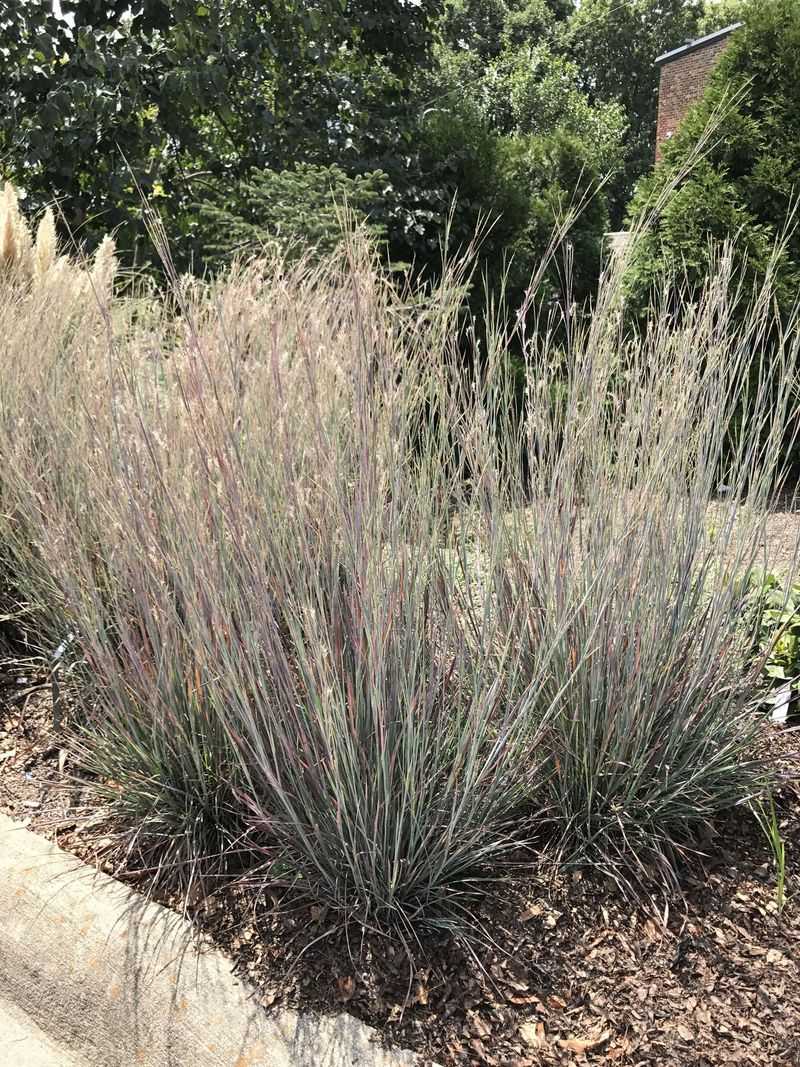
Schizachyrium scoparium, commonly called little bluestem, earns serious consideration for a hot, lean curbside strip in North Carolina without needing to be crowned the single toughest plant in the state. According to the NC State Extension Plant Toolbox, it performs best in full sun and dry-to-medium, well-drained soil, tolerates infertile or clay soil, and develops strong drought resistance once its root system is established.
Those traits line up directly with what a sunny, lean curbside strip demands.
The North Carolina Vascular Plant records describe little bluestem as common to abundant across the state, occurring naturally in dry or xeric woodlands, open fields, trailsides, roadsides, rock outcrops, and powerline corridors. Those are not pampered garden conditions.
That natural range in roadside and xeric habitats is part of why it transfers reasonably well to a curbside planting.
NC Sea Grant’s coastal native plant guidance adds that little bluestem handles high heat and humidity, making it relevant not just to the Piedmont but also to coastal North Carolina strips exposed to salt-laden air and runoff. Salt tolerance is a genuine advantage where road spray or coastal conditions threaten less resilient plants.
None of that makes little bluestem indestructible or the only option. Other North Carolina natives, including butterfly weed, blanket flower, black-eyed Susan, purple lovegrass, and certain switchgrass selections, also tolerate full sun, drought, poor soil, or roadside exposure.
Little bluestem is a strong, evidence-backed candidate for an appropriately sunny, well-drained strip, not a universal fix for every curbside situation in the state.
Is Your Hellstrip a Little-Bluestem Site?
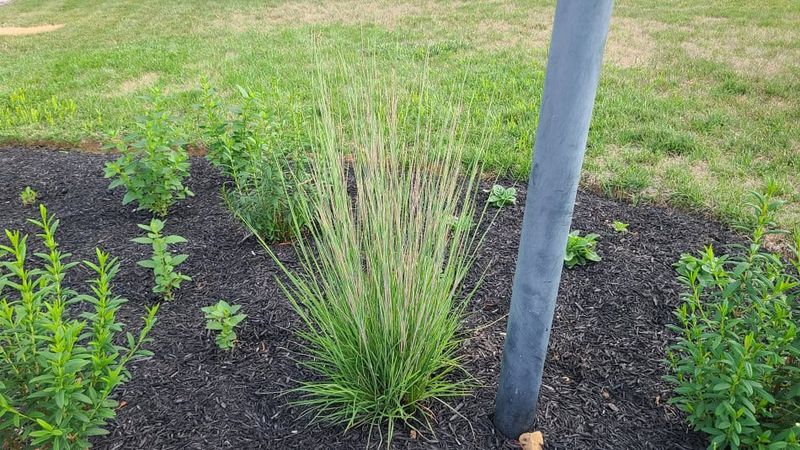
Run through a quick site check before purchasing plants. Target at least six hours of direct sun for best performance.
Lower light is not an absolute barrier, but it can reduce the grass’s vigor, density, and fall color, which are the traits that make it worth planting in the first place. A strip shaded by a large street tree for most of the afternoon is probably not a good fit.
Soil drainage matters as much as sunlight. The NC State Plant Toolbox lists little bluestem as preferring dry-to-medium, well-drained conditions.
It tolerates clay and infertile soil, but that tolerance does not extend to ground that stays soggy after rain. Dig down six inches: if you find standing water or a slick, airless layer, the drainage problem needs to be solved first, or you need a different plant entirely.
Height is the next variable to take seriously. Little bluestem typically reaches two to four feet at maturity, with a clumping spread in a similar range, though Brunswick County Extension’s coastal plant list gives smaller dimensions for some selections.
Cultivars and local ecotypes vary, so check the specific plant’s expected size before placing it near an intersection, a mailbox, or a sidewalk where pedestrian visibility matters.
Penn State Extension recommends keeping hellstrip plants below 36 inches where sightlines are a concern, but local ordinances in North Carolina may set stricter limits. Call your municipality or county before planting.
Also contact NC 811 to locate underground utilities before any soil work begins. NC State’s native plant handbook is consistent on this point: right-of-way responsibilities, access needs, and local rules belong in the planning stage, not as an afterthought once plants are in the ground.
Prepare the Ground Before You Plant
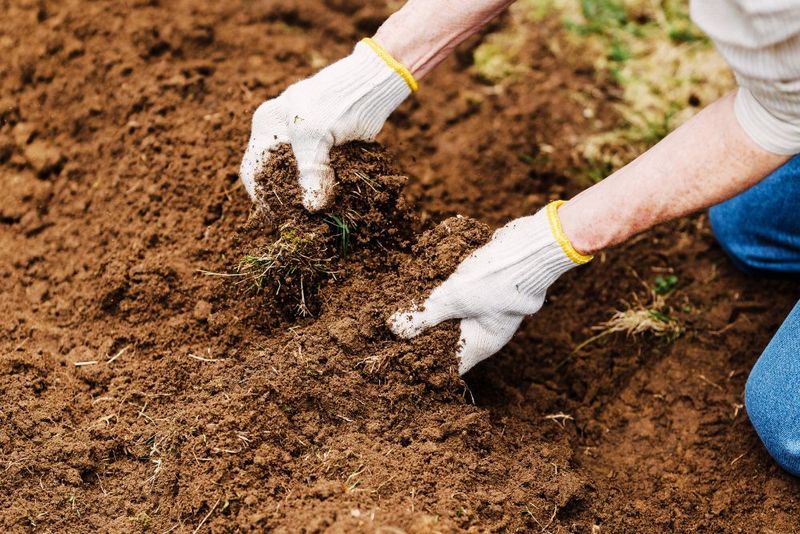
Soil preparation is the step most homeowners skip, and it is the one that determines whether a native planting survives its first summer or limps along for years without ever looking right. Start by addressing compaction across the entire bed, not just the individual holes where plants will go.
A garden fork, broadfork, or rented core aerator can break up the top several inches without hauling in heavy equipment.
Once the soil is loosened, spread approximately one to three inches of compost across the whole planting area and work it in. NC State Extension’s native plant guidance recommends amending across the bed rather than backfilling individual planting holes with rich material, which can create drainage pockets that trap water around roots.
Compost improves soil structure and water retention without turning the strip into a rich, overfed environment that would actually reduce little bluestem’s characteristic lean toughness.
Get a soil test before adding lime or fertilizer. North Carolina’s Cooperative Extension service offers low-cost soil testing, and the results will tell you whether pH adjustment or specific nutrients are needed.
Adding fertilizer without that data can do more harm than good, especially with a grass that naturally thrives in infertile conditions.
Think through the layout before planting day. A mass planting of little bluestem clumps spaced roughly 18 to 24 inches apart suits the strip’s linear shape and still leaves clear access points for meter readers, pedestrians, and utility workers.
Plan those gaps deliberately rather than filling every inch. After planting, apply two to three inches of mulch across the bed, but keep it pulled away from each grass crown.
Piling mulch against the base holds moisture against the plant’s growing point and can cause rot, which is the last problem you want in a planting meant to be low-maintenance.
Establishment Comes Before Drought Tolerance
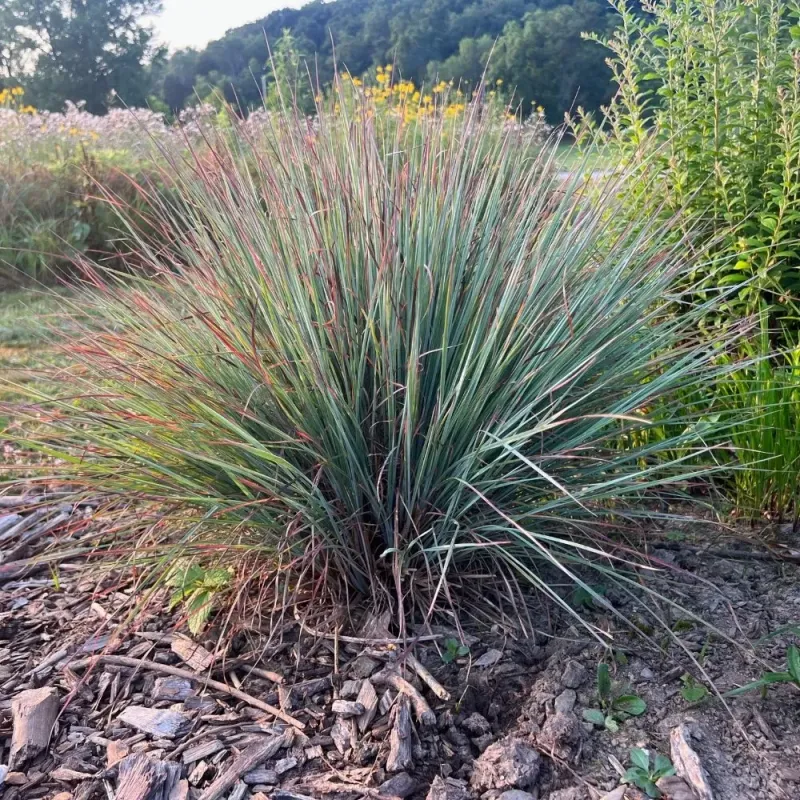
Drought tolerance is a mature-plant trait, not a first-week guarantee. A newly installed little bluestem has a small root system, no stored moisture reserves, and a wall of reflected pavement heat on both sides.
Treating it like an established plant from day one is a reliable way to lose it before fall.
Water new plants regularly for the first several weeks after planting. NC State Extension’s native plant guidance is clear that new plantings need consistent moisture while roots establish, and NC State’s lawn and landscape establishment guidance notes that new plantings beside hard surfaces may need regular irrigation for up to three months depending on conditions.
A curbside strip, with pavement on both sides baking the soil from below, sits at the demanding end of that range.
A two-to-three-inch mulch layer helps considerably. It slows moisture loss from the soil surface, moderates soil temperature, and suppresses weeds that would compete with young plants during the critical first season.
Keep that mulch layer pulled back an inch or two from each grass crown so air can circulate at the base.
Once roots reach deeper into the soil, usually by the second growing season, the grass’s drought resistance kicks in more reliably. Even then, an extended dry stretch during a heat dome or a strip with particularly intense pavement reflection may call for occasional deep watering.
Established does not mean maintenance-free.
Annual pruning is straightforward. NC Sea Grant recommends cutting little bluestem to the ground in early spring, before new growth begins.
Cutting too early in fall removes the winter structure and seed heads that give the planting its off-season visual interest and habitat value. Wait until late February or early March in most North Carolina locations, then cut back to a few inches and let the new season begin cleanly.
Its Payoff Is Structure, Color, and Habitat
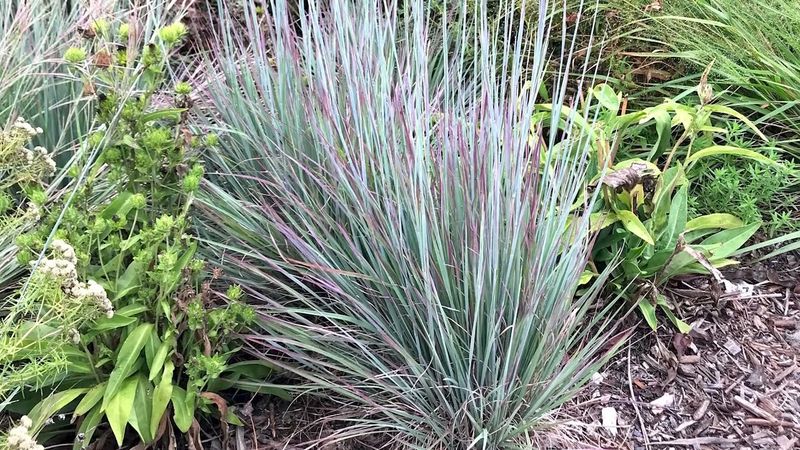
Survival is the floor, not the ceiling. Once little bluestem is settled in, it earns its place through four seasons of visual interest that most curbside plants cannot match.
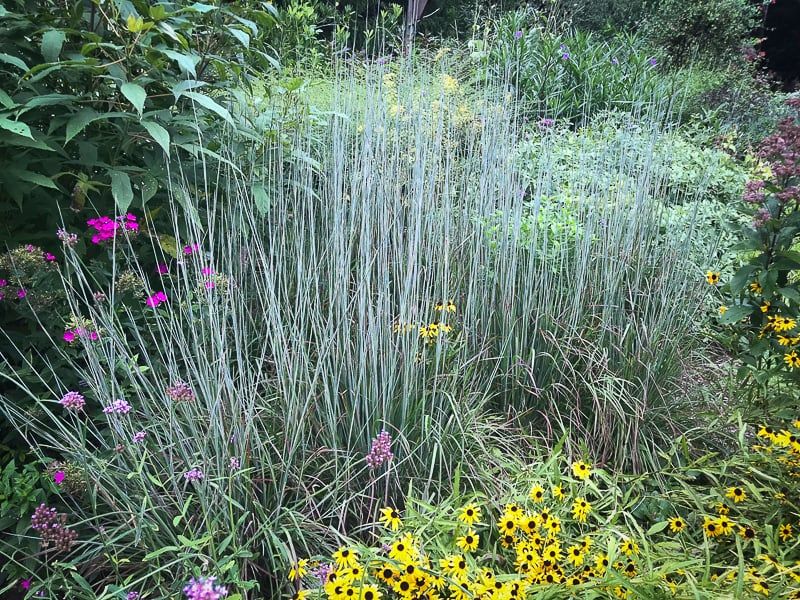
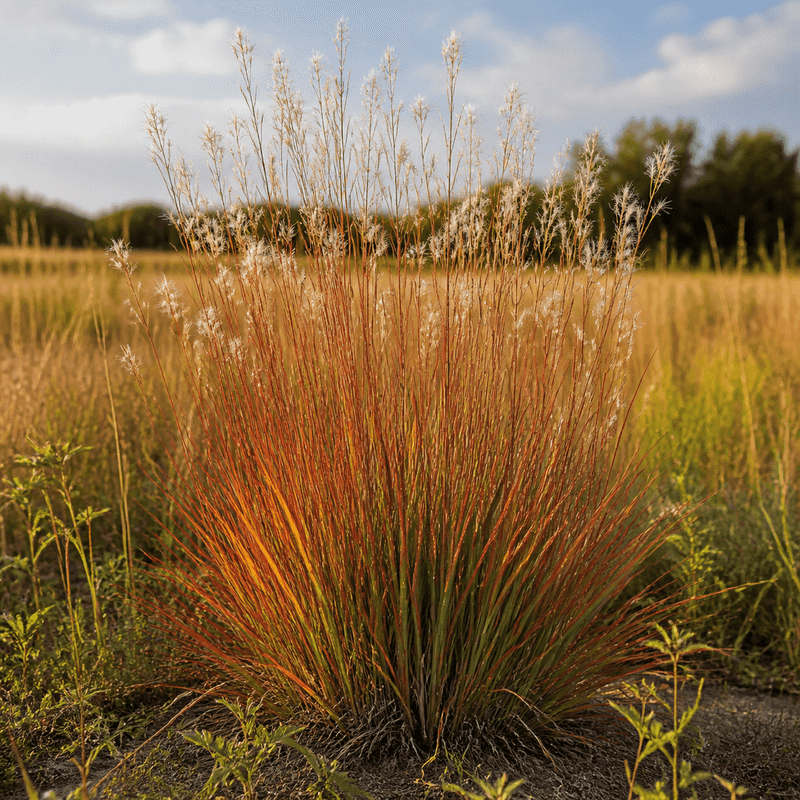
Summer foliage carries a distinctive blue-green cast that stands out against the browns and greens of a typical street planting. By fall, the clumps shift toward copper, bronze, and orange, colors that deepen as temperatures drop and hold through the early weeks of winter.
That winter structure is genuinely useful. The upright seed heads catch low light and add texture to a strip that would otherwise be bare soil or dead sod from November through March.
NC Sea Grant’s native plant material specifically notes the grass’s ornamental value through winter, which matters for curb appeal during the months when most other plants offer nothing.
The clumping form suits a designed strip rather than a lawn replacement. Little bluestem does not spread to fill open ground the way a sod-forming grass does, and it cannot handle regular foot traffic or mowing.
Plan it as an ornamental mass planting with clear access points, and it looks intentional. Expect it to behave like turf, and it will disappoint.
Habitat value is real but specific. USDA NRCS highlights that native grasses like little bluestem provide larval habitat for pollinators that showy flowering plants miss entirely.
The NC State Plant Toolbox identifies it as a larval host for certain skipper species and the common wood-nymph, and the seed heads attract birds looking for winter food. Little bluestem is not primarily a nectar plant, so pairing it with native flowering plants such as black-eyed Susan or butterfly weed gives the planting a more complete habitat function and more visual variety across the growing season.
The Right Native Still Has a Wrong Place
Choose little bluestem when the strip gets strong sun, drains reasonably well, and can accommodate a clumping grass that may reach two to four feet. Those three conditions together are when this plant earns every bit of its reputation for toughness and low upkeep.
Reconsider it when the site stays wet after rain, when soil compaction is severe and cannot be corrected, or when foot traffic crosses the strip regularly. A strip near a busy intersection with strict sightline rules, or one where the municipality expects a mown lawn surface, is not a little-bluestem site regardless of how sunny it gets.
Penn State Extension’s hellstrip guidance reinforces that plant selection has to follow a full site assessment, not just a sunlight count.
Other North Carolina natives fill the gaps where little bluestem does not fit. Butterfly weed stays lower, blooms in vivid orange, and tolerates dry, poor soil.
Blanket flower handles heat and drought with a long bloom season that adds direct floral resources for pollinators. The Brunswick County Extension native plant list documents additional grasses and flowering plants suited to hot, lean coastal and urban sites across North Carolina.
NC State Extension puts it plainly: a native label is not a guarantee of success on any particular site. Match the plant to the strip’s actual constraints, and you will spend far less time replacing dead plants than the homeowner who picked a species based on reputation alone.
The best curbside native is always the one suited to the specific strip in front of your house.