
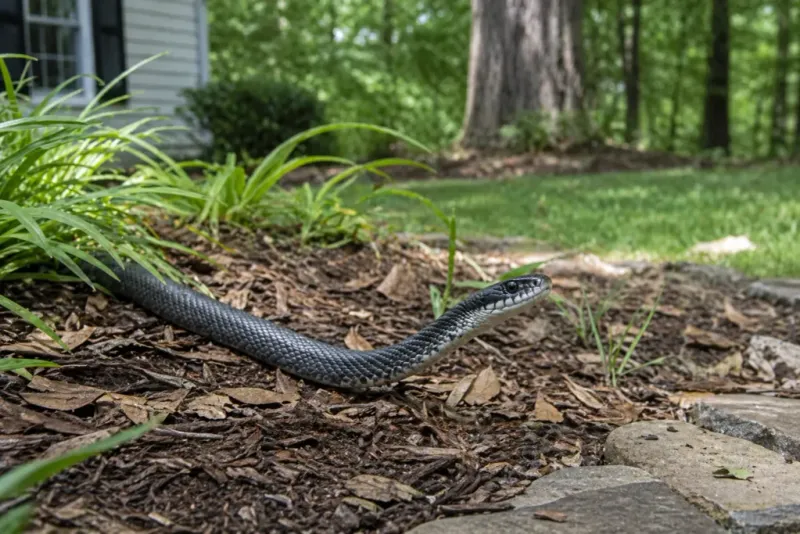
You spread fresh mulch to make your beds look sharp, then a snake slides across the edge of the yard. It is natural to wonder whether the mulch had something to do with it.
Florida guidance points to a narrower story than the title suggests, and it starts with rodents. A few simple checks can keep your beds attractive while cutting down on the clutter that draws pests.
Mulch may contribute indirectly—not provide a proven snake hideout
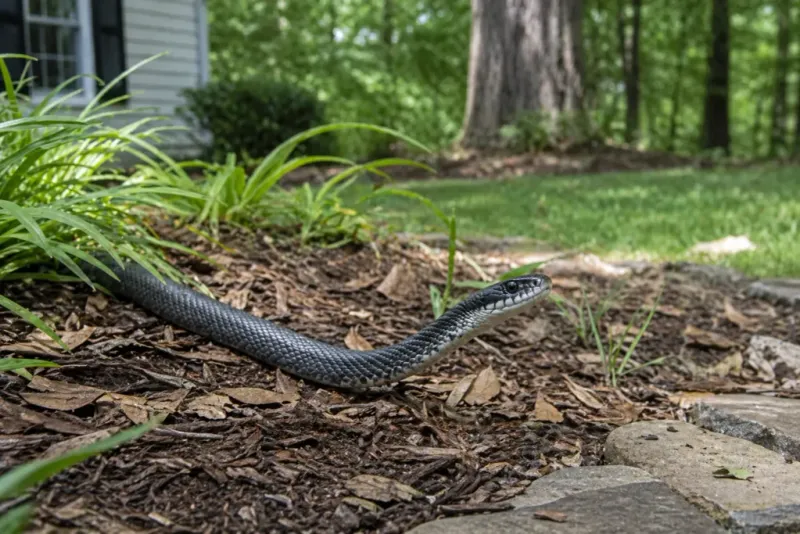
Let’s start by narrowing the claim. Nobody has shown that an ordinary, well-kept mulch bed brings snakes to a Florida yard.
The better-supported idea is about piles. UF/IFAS guidance on snakes in residential areas notes that mulch piles and compost bins can attract rodents, and rodents may in turn attract snakes.
That is a chain of possibilities, not a guarantee. A snake sighting does not prove your mulch caused it, and no one can say exactly why a particular snake showed up.
Shelter, food, and moisture all play a part in what makes a yard appealing to wildlife.
It also helps to separate three things people call mulch. A maintained bed with a modest layer is one.
An unusually deep layer is another, and a big stockpile of loose material or a compost bin is a third. The piles and bins are where the Florida concern is clearest.
Pulling out all your mulch is not the default fix, either. As UF/IFAS Gardening Solutions explains, mulch suppresses weeds, moderates soil temperature, and cuts evaporative water loss, which matters a great deal in sandy Florida soil and summer heat.
So the goal is not a bare yard. It is a bed that stays at a sensible depth, a foundation edge that stays thin, and no big heaps of material sitting around.
The next sections walk through each of those steps.
Check bed depth before topping up
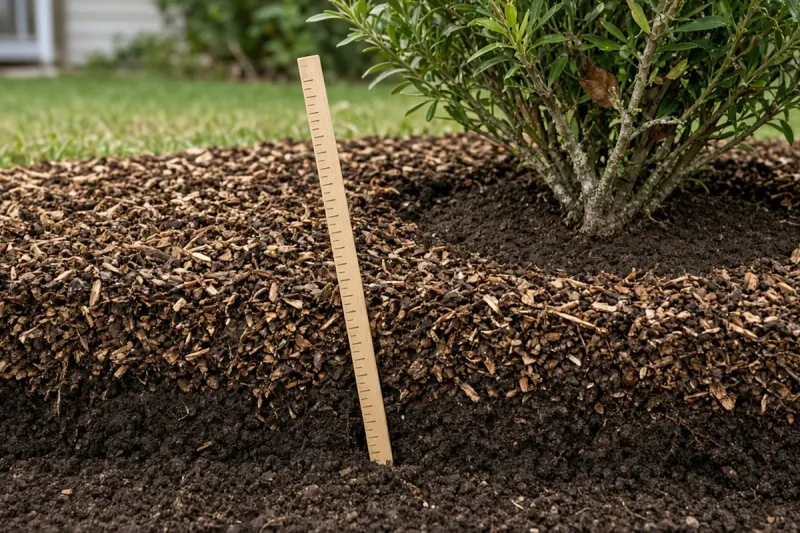
Grab a ruler or a trowel before you buy another truckload. Push it down through the mulch to the soil and read the depth.
If you already see two to three inches, your bed is likely set for now, and adding more only builds a thicker blanket than the plants need.
That range is the general recommendation for established Florida landscape beds, according to UF/IFAS Gardening Solutions. It is a plant-care target.
It is not a promise that snakes will stay away, and it should not be sold to yourself as one.
Thin spots are the usual reason to top up. Mulch breaks down over time, especially in warm, wet Florida weather, so a bed that was thick last spring may be sparse now.
Add just enough to bring those areas back into range instead of layering fresh material over old without looking.
Staying in range keeps the benefits that make mulch worth using. UF/IFAS weed control guidance for planting beds points to mulch as a tool for holding down weeds, and a moderate layer does that job without excess.
A quick routine works well. Measure in a few spots, rake compacted areas loose, and pull mulch back from plant stems and trunks.
Then top up only where the depth has dropped below the low end of the range.
Keep mulch thinner beside the foundation
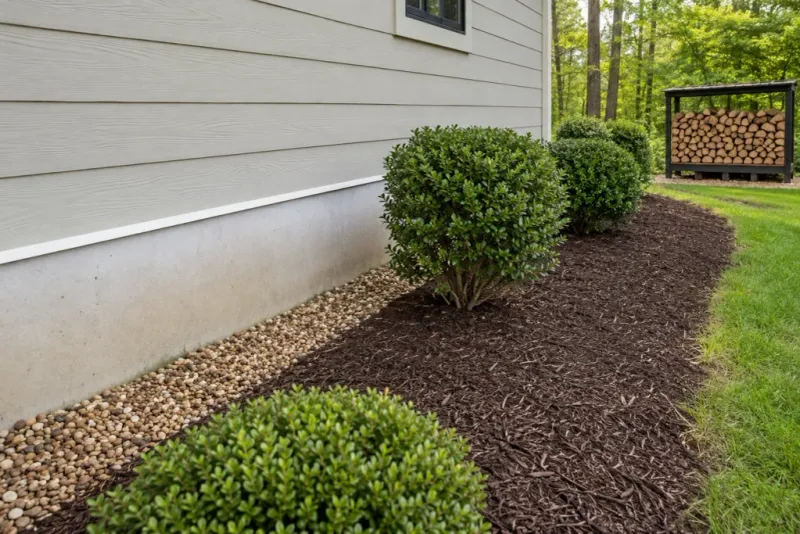
The strip right next to your house gets its own rule. Within 12 inches of the foundation, UF/IFAS pest-prevention guidance says to keep mulch no more than 2 inches deep.
That is a little shallower than the general bed range, and the difference is deliberate.
The reason is moisture and pests, not snakes. Deep mulch against a wall stays damp and can make it easier for insects to hide and travel toward the structure.
UF/IFAS termite guidance likewise recommends a thin layer, under 2 inches, so the soil can dry out naturally.
Nothing here claims that a thin foundation zone works as a snake barrier. Think of it as good housekeeping that protects your home and keeps the area beside the wall easy to see.
To put it into practice, walk the perimeter with a ruler. Rake back any mulch that has crept up the wall or over the slab edge.
Where the layer is too deep, scoop the extra into the main bed, where it fits the two to three inch range.
After heavy rain or a hurricane season cleanup, check again. Storms can wash mulch around or leave debris packed against the house, and a quick reset keeps that edge tidy.
Choose mulch for garden needs, not snake deterrence

Picking a mulch is a plant decision. The sources reviewed for Florida do not identify any snake-proof mulch type, and no material, whether cedar, pine, rubber, or gravel, has been shown to repel snakes reliably.
Mississippi State University Extension cautions that snake repellents generally lack consistent evidence of working, so skip any product that promises otherwise.
Instead, shop for what helps your landscape. UF/IFAS Gardening Solutions recommends organic options such as pine bark, pine straw, fallen leaves, and utility mulch, along with certain bagged products.
These break down slowly, feed the soil, and suit Florida’s sandy ground.
Cypress is the one to pass on. UF/IFAS does not recommend it because its source may include wetland trees, so buying it can carry an environmental cost.
Florida-Friendly Landscaping standards also favor suitable organic mulch at recommended depths, as laid out in the Florida-Friendly Landscaping design standards.
A free option is already in your yard. Fallen leaves raked into a bed make a fine layer, and pine straw from nearby pines is easy to spread.
Choose by cost, look, and how it suits your plants.
Reduce the food and shelter that can draw rodents
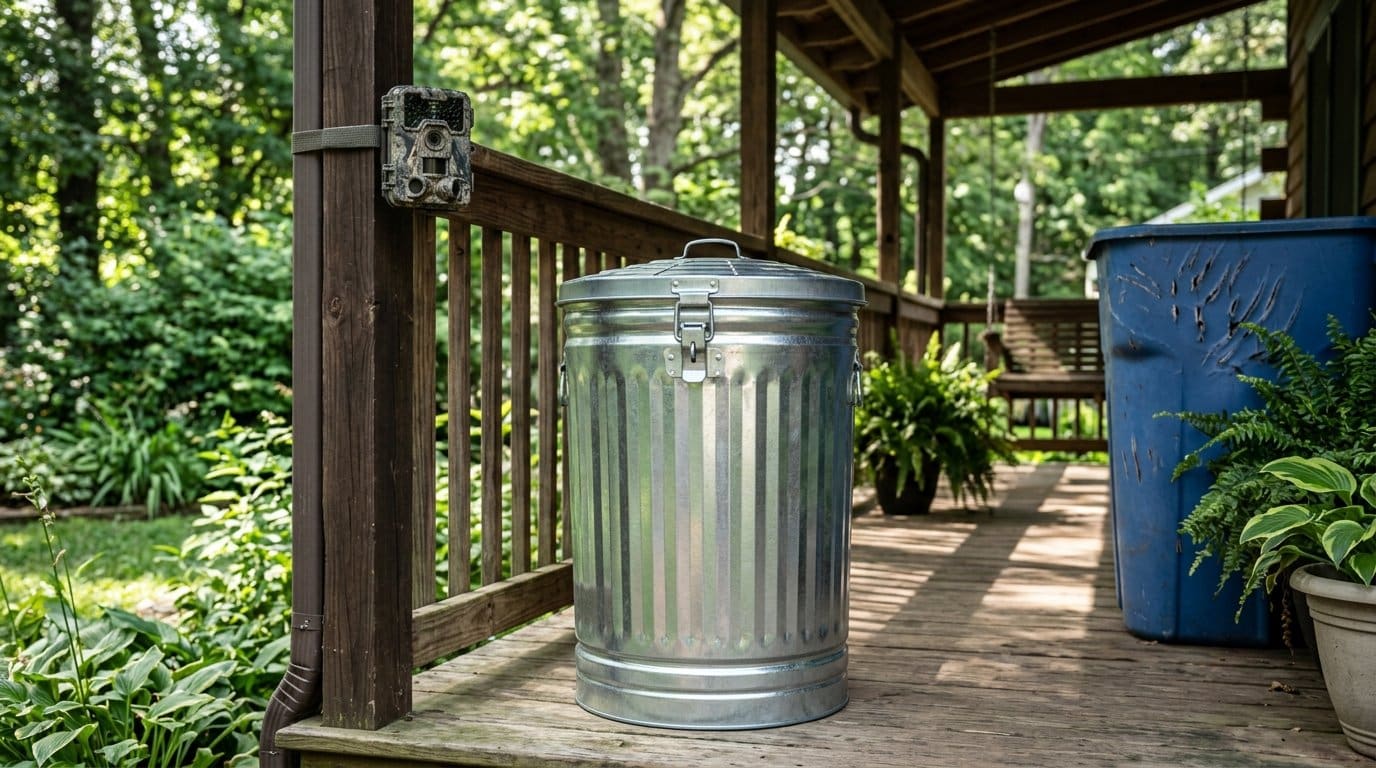
If rodents are the link, then rodent attractants are the real target. Start with the compost bin.
Keep it closed and secure, and bury or avoid adding scraps that smell strong or are easy to reach. An open heap of kitchen waste is an invitation.
Next, look at what you feed on purpose. Birdseed spills under feeders and sunflower hulls pile up quickly, so store seed in a lidded container and sweep up what falls.
Pet food belongs in a closed bin too, and bowls should not sit outside overnight.
These steps follow the same logic as UF/IFAS advice on preventing snake encounters, which treats mulch piles and compost bins as possible rodent attractants. Reducing prey and shelter around the house is a standard part of extension guidance for fewer encounters.
Other extension guidance says the same. Mississippi State University Extension points to removing food and hiding places as the practical way to make a yard less inviting.
Move stray stockpiles too. Bags of old mulch, brush heaps, and stacked debris are the kind of shelter rodents like.
None of this guarantees you will never see a snake, but it keeps the useful beds and trims the extras.
Respond safely if you see a snake
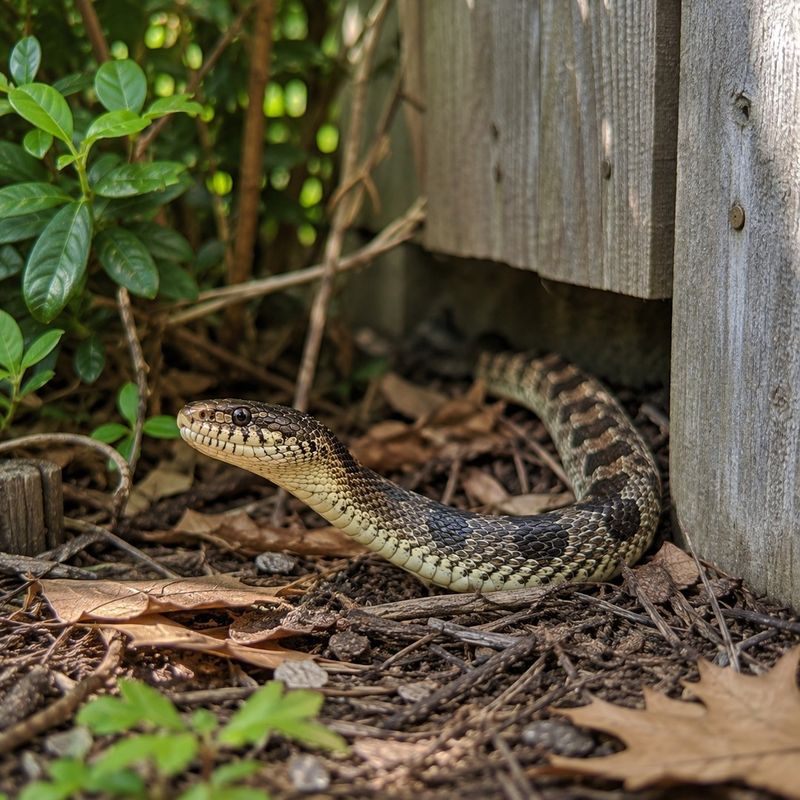
Stand back and give the snake room. Keep children and pets away, and watch from a distance.
The Florida Fish and Wildlife Conservation Commission notes that only six of the state’s 50 snake species are venomous, and most are harmless and helpful because they eat rodents. Still, you cannot always tell which is which at a glance.
Do not try to handle, capture, kill, or move it. UF/IFAS advises against handling an unidentified snake and recommends contacting a licensed wildlife removal specialist if removal is needed.
Most snakes move on by themselves if left alone.
Once things settle, go back to the basics: keep your useful mulch, avoid big piles, check depth before topping up, keep the foundation zone thin, and manage what draws rodents. A sighting does not prove your mulch was the reason.
A tidy bed is good for your plants, and that is reason enough to keep it up.