
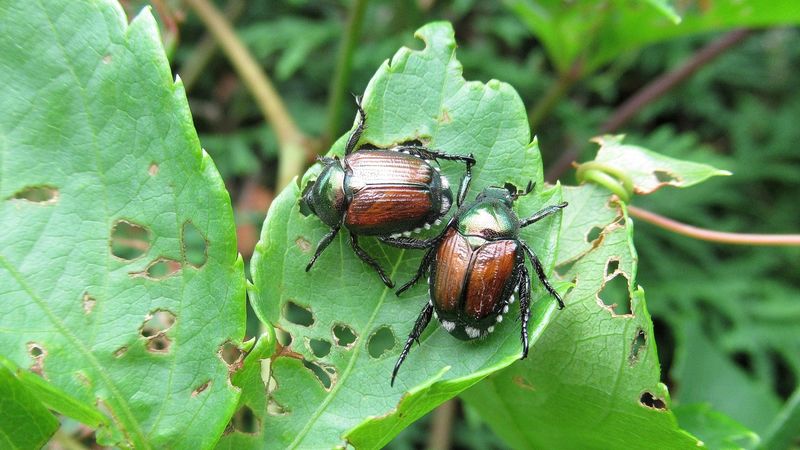
Japanese beetles are a real headache for North Carolina homeowners, but the timing of when to act matters more than most people realize. By September, the beetles have already laid their eggs and young grubs are quietly chewing through grass roots underground.
Skipping an inspection now does not doom your lawn forever, but waiting too long can make treatment less effective as grubs grow larger and move deeper into the soil. Knowing what to look for, and whether to treat at all, starts with getting your hands in the ground.
September Usually Finds Grubs Already in the Soil
Most of the egg-laying is already behind you by the time September arrives in North Carolina. Adult Japanese beetles emerge mainly from spring through midsummer, with peak emergence typically occurring in July.
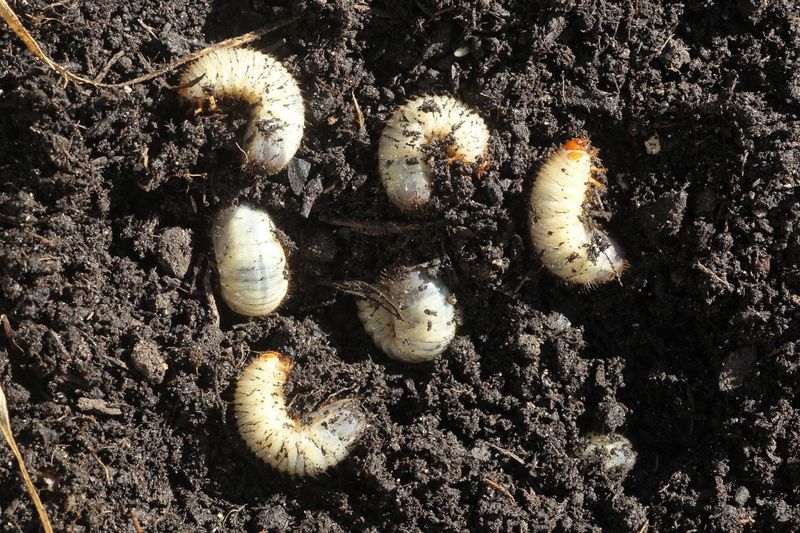
Females deposit eggs a few inches down in the soil, and those eggs hatch in roughly 8 to 14 days, meaning the larvae are well underway before summer ends. NC State Extension’s Japanese beetle profile confirms this seasonal sequence, making a September “prevent egg-laying” strategy a mismatch with what’s actually happening underground.
What September generally brings is a lawn already hosting young or enlarging grubs that are actively feeding on grass roots. The real question at this point is not whether eggs have been laid, but how many larvae are present, how small they still are, and whether treatment is justified.
NC State’s turf-specific beetle guide identifies August through October as a variable curative window, not a single universal deadline.
The risk of waiting is real but measured. As grubs enlarge and move deeper into the soil profile, they become harder to reach with surface-applied treatments, and control becomes reduced or partial rather than reliable.
That is the accurate penalty for delay, not guaranteed total lawn failure. Before any treatment decision is made, the practical first step is to inspect several areas of the lawn and see what is actually there.
Inspect Several One-Square-Foot Sections Before Choosing a Response
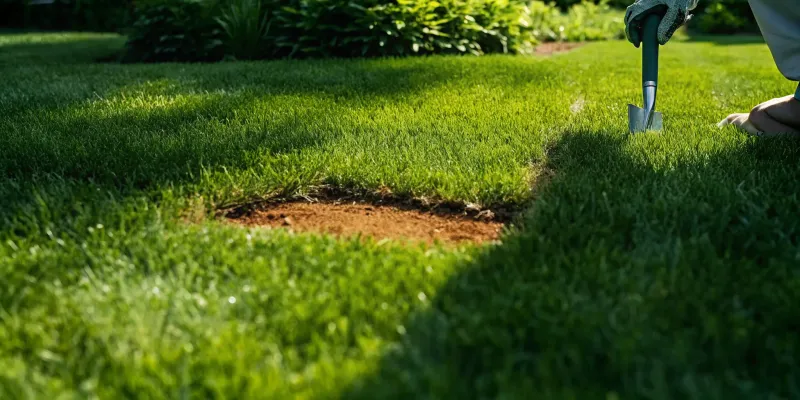
Grab a sharp spade or knife and head to several spots across the lawn before reaching for any pesticide. The standard scouting method is to cut three sides of a roughly one-square-foot section of sod about two inches deep, fold the flap back like a book, and examine the roots and upper soil for grubs.
NC State’s arthropod pest guide for turf recommends checking multiple locations because grub populations are notoriously uneven across a lawn.
One sample is not enough. A single square foot might turn up zero grubs in a healthy corner of the yard while a stressed area ten feet away harbors a dozen.
Pull samples from spots that look suspect, spots that look fine, and a few places in between. Fold the sod back carefully and count every larva you find before recording the number and moving to the next location.
The combined picture from several samples gives you a much more honest read on what is happening across the property.
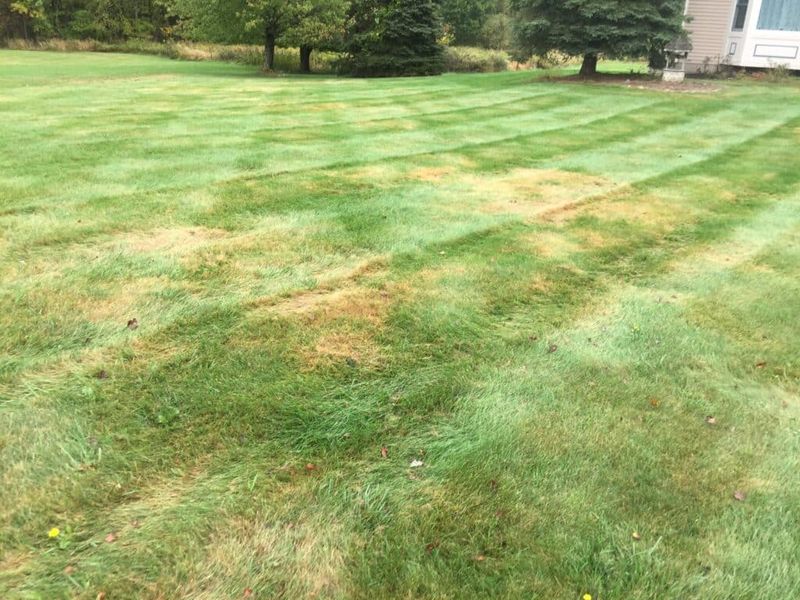
Yellow or brown patches in the turf can feel like an obvious clue, but discoloration alone does not confirm a grub problem. Drought, fungal disease, compaction, irrigation failures, and other insects all produce similar symptoms.
The inspection is meant to generate actual evidence, not to confirm a suspicion you already have. Only after counting grubs across multiple sections does the data become useful for deciding whether any treatment is warranted at all.
Identify the Grub Before Calling It a Japanese Beetle
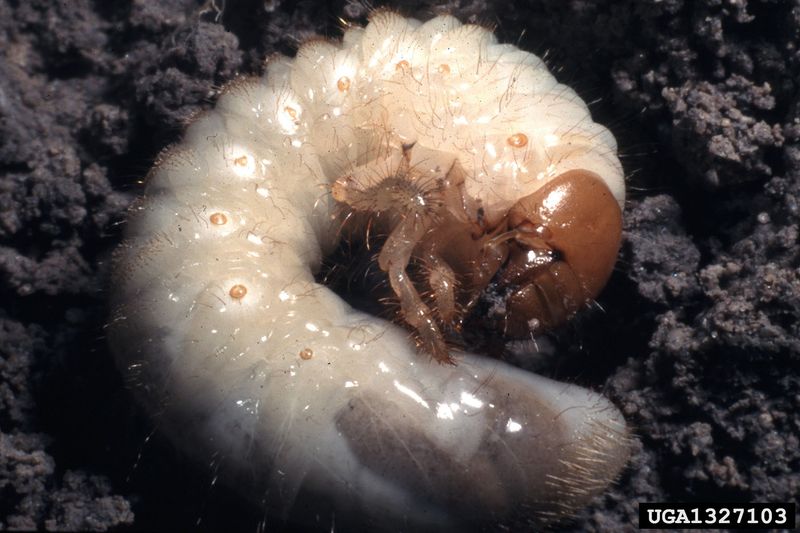
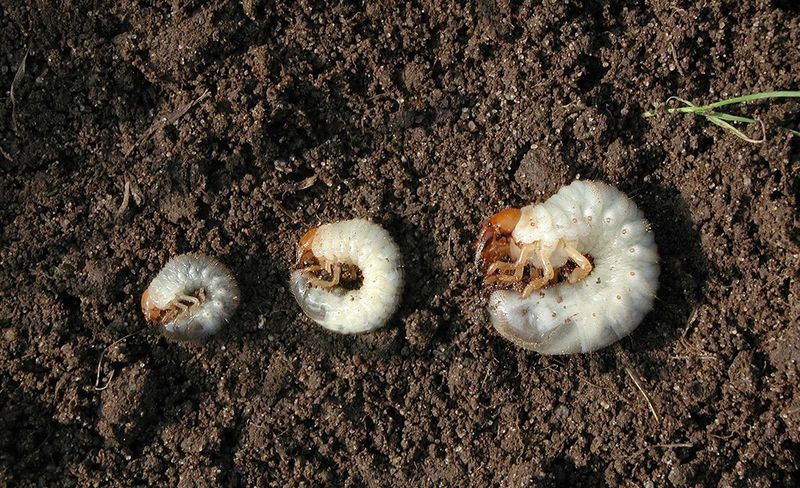
Flipping back that square of sod might reveal a pale, C-shaped larva with a tan or brown head and three pairs of legs clustered near the front end. That description fits a Japanese beetle grub, but it also matches several other scarab species that commonly inhabit North Carolina lawns.
NC State’s white grubs in turf publication lists green June beetles, May or June beetles, masked chafers, and Asiatic garden beetles as species that share similar larval appearances and live in the same soil zone.
Species identity matters more than it might seem. Treatment timing that suits Japanese beetle larvae may not align well with the life cycle of a green June beetle or a masked chafer.
Product performance can also differ by target species, so labeling every cream-colored grub as a Japanese beetle and treating accordingly is not a reliable strategy. If you are uncertain about what you found, your local NC Cooperative Extension office can help with identification or point you toward a diagnostic resource.
Grub damage and non-grub damage can look nearly identical from above the soil. Roots eaten by larvae will cause turf to lift easily, almost like pulling up a loose carpet, which is a fairly distinctive sign.
But drought stress, soil compaction, fungal disease, chinch bugs, and poor fertility can all produce yellowing or thinning turf without a single grub being present. Treating for grubs when the actual problem is a broken irrigation head or a patch of dollar spot wastes money and exposes the lawn to unnecessary chemical use.
The inspection answers the question; the appearance of the grass only raises it.
Use Grub Counts and Turf Condition to Decide Whether to Treat
A number without context is not a treatment order. NC State’s turfgrass pest management manual cites an average of five or more grubs per square foot as a general benchmark for considering treatment, but that figure comes from older guidance and was never meant to function as a universal trigger.
Think of it as a starting point for a conversation, not a line that automatically unlocks the spray tank.
Turf condition shapes the decision as much as the count does. A vigorous, well-rooted stand of tall fescue or bermudagrass can tolerate moderate grub pressure better than a drought-stressed lawn that is already struggling to stay green.
The value you place on the turf matters too: a high-use family lawn near a play area may warrant action at a lower threshold than a low-traffic side yard you rarely see. Bird and mammal activity, such as crows or skunks digging for grubs, can also signal a population worth acting on, even if your sample numbers hover near the threshold.
Grub species can shift the calculus as well. Some species cause more root damage per larva than others, and NC State’s white grub resource notes that the identity of the pest affects both the expected damage and the choice of control method.
When your counts are low, the turf is healthy, and no other stress factors are compounding the situation, monitoring through the season is a perfectly reasonable response. Routine September spraying without evidence of a problem is neither cost-effective nor consistent with responsible pesticide use.
Small, Surface-Feeding Grubs May Be Treatable in September
Three categories of grub control exist, and September generally falls into the curative range rather than the preventive one. Preventive products are timed before or around egg hatch, targeting very young larvae before they establish.
Curative treatments address grubs that are already present but still small and feeding close to the soil surface, which is where September fits for much of North Carolina. Rescue treatment comes after visible damage has appeared and typically delivers reduced or only partial control because larger grubs have moved deeper and feeding has already slowed.
The curative window is variable, not a fixed statewide date. NC State’s turf arthropod guide describes August through October as a period when curative applications may be useful, particularly following significant rainfall that brings grubs closer to the surface where contact products can reach them.
Coastal Plain, Piedmont, and mountain locations in North Carolina can experience different soil temperatures and beetle development timelines, so “September” should be understood as a general window rather than a single actionable date that applies equally across the state.
NC State’s Japanese beetle in turf resource describes trichlorfon-based products as capable of providing some rescue control in August and September, especially when applied near egg hatch. That description reflects a possibility, not a guarantee, and it applies only when the product is currently registered and its label covers your specific turf type, pest, application site, rate, and timing.
Product labels are legally binding documents, and the North Carolina Agricultural Chemicals Manual makes clear that using a pesticide in a way its label does not permit is illegal. Some labels require watering the product into the soil after application; others specify a delay before irrigation or mowing.
An EPA-reviewed turf product label illustrates how specific those requirements can be, with different instructions depending on the active ingredient, application timing, and target pest. Read the current label for the product you have in hand, not a general summary from a third-party source.
Skip Shortcuts and Protect the Lawn’s Non-Target Neighbors
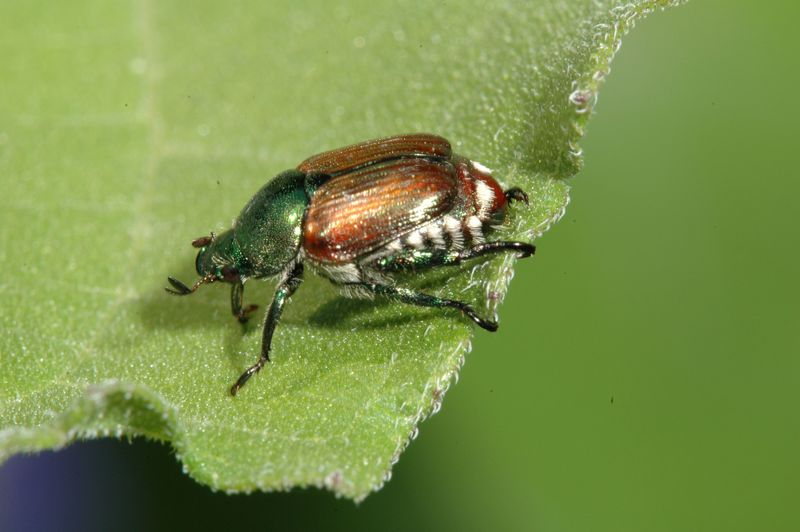
Japanese beetle traps are widely sold and easy to find, but they are not a meaningful way to reduce the grub population in your lawn. NC State’s Japanese beetle overview notes that traps have no real impact on subsequent grub numbers and may actually draw more adult beetles toward ornamental plants near wherever the trap is placed.
Buying a trap and hanging it near the rose bed is more likely to concentrate beetle damage than to prevent it.
Milky spore and beneficial nematodes come up frequently in organic-lawn conversations, and both have genuine limitations worth understanding before you invest in them. Milky spore is specific to Japanese beetle grubs and results vary considerably; University of Minnesota Extension reports that modern university trials have not shown commercial milky-spore products to provide a reliable benefit.
Beneficial nematodes require careful timing, consistently moist soil, and precise application technique, and Penn State Extension’s white grub resource describes their effectiveness as inconsistent. Neither product should be treated as a guaranteed one-and-done fix for a confirmed grub problem.
Chemical treatments carry their own stewardship responsibilities. Several grub-control insecticides can harm bees and other non-target organisms, especially if flowering weeds like clover or dandelion are blooming in the lawn.
Mowing those weeds before applying any product reduces the risk to foraging pollinators. Ground-nesting bees also occupy turf areas and deserve consideration before any broadcast application.
The NC Agricultural Chemicals Manual and individual product labels both include human and pet re-entry requirements that must be followed exactly. Keep children and animals off treated areas for the period the label specifies, and never assume that a grub-control product is harmless simply because it is sold for residential lawn use.
Make Inspection the September Decision, Not Automatic Spraying
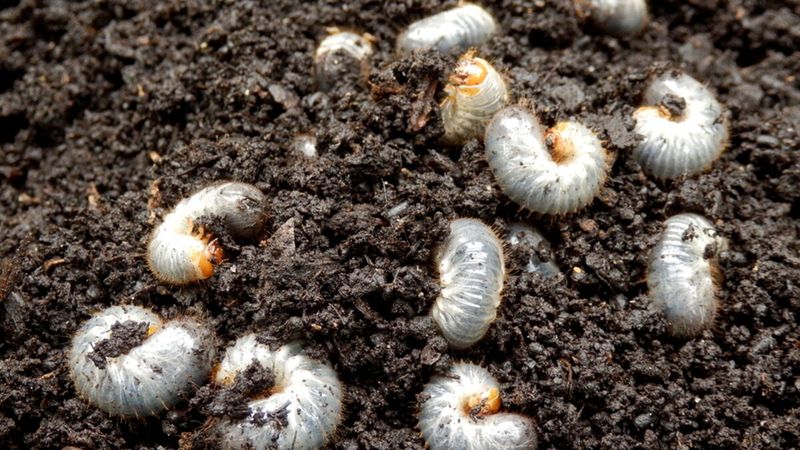
The sequence that actually serves your lawn is straightforward: cut and inspect several roughly one-square-foot sections across different lawn areas, identify the larvae as specifically as you can, count what you find, and weigh those numbers against your turf’s current condition and the factors that influence how much damage those grubs are likely to cause. NC State’s turf arthropod guide and the NC turfgrass pest management manual both frame treatment as a response to confirmed evidence, not a default September task.
Small, actively feeding grubs near the soil surface may respond better to a curative application than larger ones that have already moved deeper. Acting while that window is still open can mean more effective control, but delay leads to reduced or partial results rather than certain lawn destruction.
Choose a currently registered product whose label covers your pest, turf type, site, rate, and timing requirements, and follow every application and safety instruction it contains.
One thing worth keeping in mind after all of this: even a well-timed, effective treatment protects the roots in your lawn, but it cannot stop adult Japanese beetles from flying in from surrounding properties the following summer. A healthy, inspected lawn is a better-defended lawn, not an impenetrable one.