
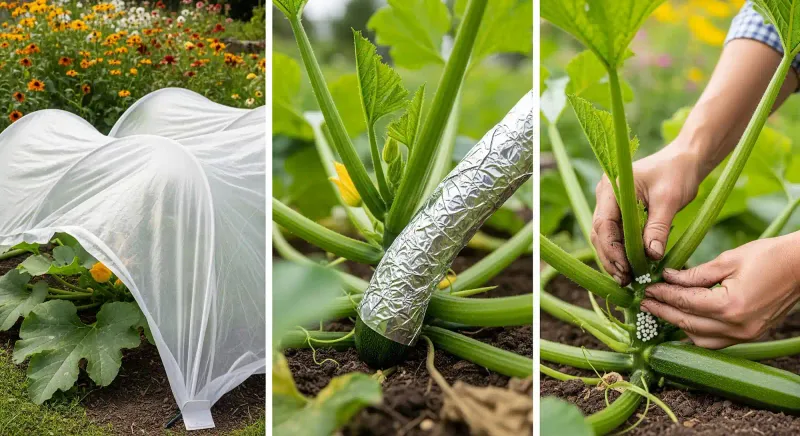
Every summer, North Carolina gardeners watch their squash plants collapse almost overnight, and a small moth larva tunneling inside the stem is usually to blame. Squash vine borers are one of the most damaging pests in the home vegetable garden, and by the time you notice wilting or sawdust-like frass near the base of the plant, the larva is already protected inside.
A loose aluminum-foil collar wrapped around the lower stem before eggs hatch can reduce the moth’s access to that vulnerable section and give your plants a fighting chance. It is not a guaranteed fix, but it is one of the simplest low-cost moves you can make before symptoms appear.
Why squash vine borers become harder to stop inside the stem
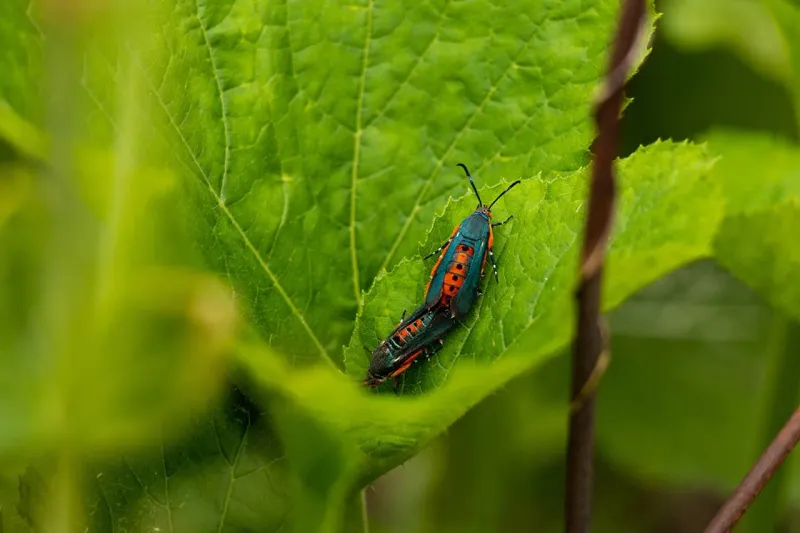
Squash vine borer is not a beetle or a wasp. The adult is a clearwing moth that flies during the day, and according to NC State Extension’s guide to cucurbit pests, the female lays individual eggs near squash stems, leaf petioles, and other tender plant tissue.
That egg-laying behavior is exactly what makes early intervention so critical.
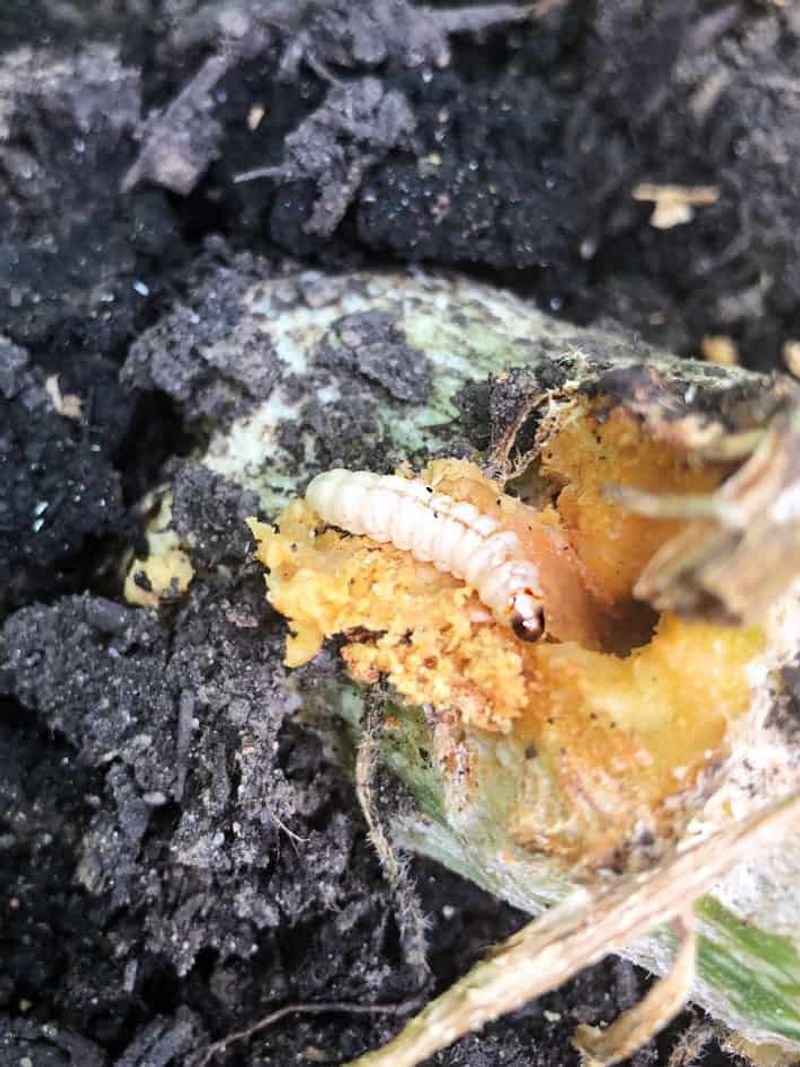
Once an egg hatches, the larva tunnels directly into the stem and begins feeding from the inside. At that point, the plant’s own tissue becomes a shield.
Insecticides applied to the outside of the stem after larvae enter are far less effective because the larva is protected within the plant, a point confirmed by Purdue Extension’s vegetable insect identification guidance.
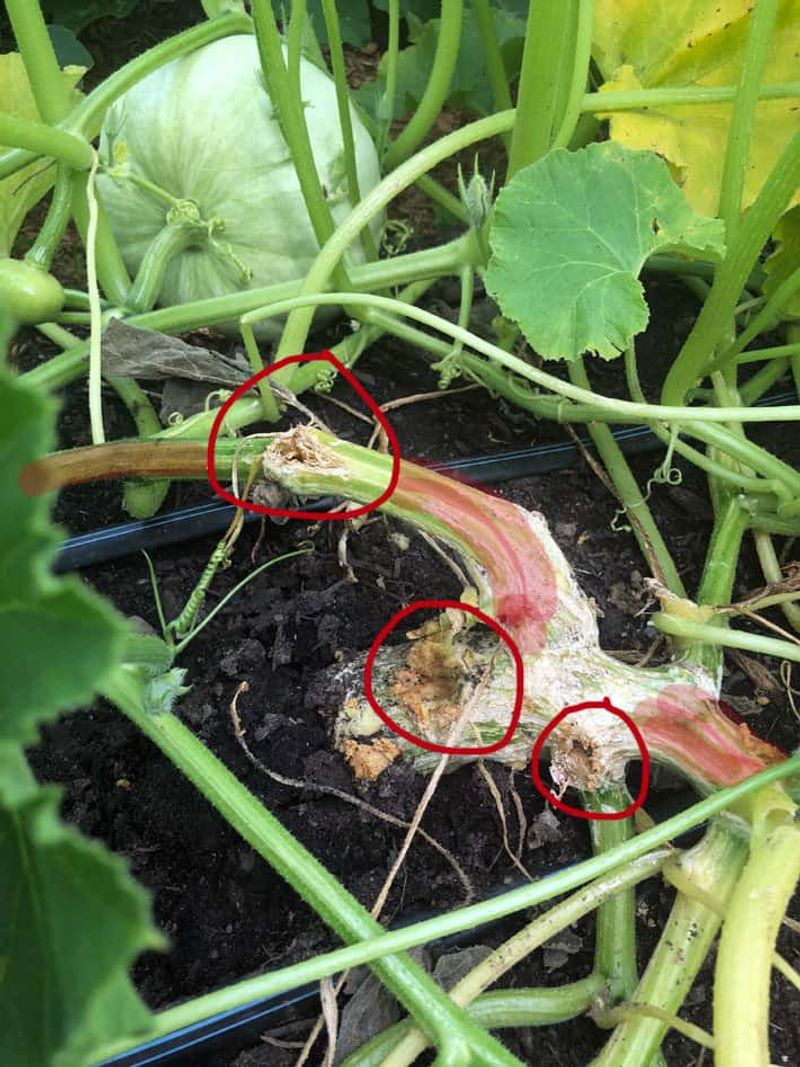
From the outside, the first visible clue is often sudden wilting on a stem that looked healthy the day before. Sawdust-like frass near the base of the plant is another strong indicator.
Left unchecked, one or more larvae can weaken or collapse a vine within days.
Severe losses in home gardens are possible, though how much damage actually occurs depends on the squash variety, local moth pressure, how many plants you are growing, and whether you use any additional controls. Summer squash and many pumpkin types are particularly vulnerable.
A loose foil collar placed around the lower stem before eggs hatch can limit the moth’s access to that section of the stem and reduce the chance that larvae get a foothold there. It is a preventive barrier, not a complete control system, and understanding why larvae are so hard to dislodge once inside makes the case for getting ahead of them.
Use local moth activity instead of one statewide date
Moth flight in North Carolina does not follow a single calendar date that applies from the mountains to the coast. NC State reports spring emergence and egg-laying activity beginning as early as April, continuing through May, and then producing a second generation in August, but those windows shift depending on where you garden, what the weather has been doing, and when you planted your squash.
Waiting for a fixed date to act is less reliable than watching your plants directly.
The practical timing rule is straightforward: get the foil collar on the lower stem of a young plant before eggs hatch and larvae enter. That means acting during the window when adults are flying and laying eggs, not after wilting or frass appear.
NC Cooperative Extension in Stanly County and Burke County Extension both describe adult activity beginning in late spring and emphasize acting early in the season before damage becomes apparent.
The adult moth is worth learning to recognize. It is a striking insect with red and black markings on the abdomen that can make it look wasp-like at a glance, but it is a moth.
Spotting one near your squash bed is a signal to check whether your collar is in place and to step up inspections, not a sign that prevention is already too late.
Seeing an adult does not mean larvae are already inside the stem. It means egg-laying is happening or about to happen, which is precisely the moment when a physical barrier on the lower stem is most useful.
Check plants every few days during the active flight period, and remember that a second round of moths in August can threaten squash planted later in the season.
Limit moth access with a loose foil collar
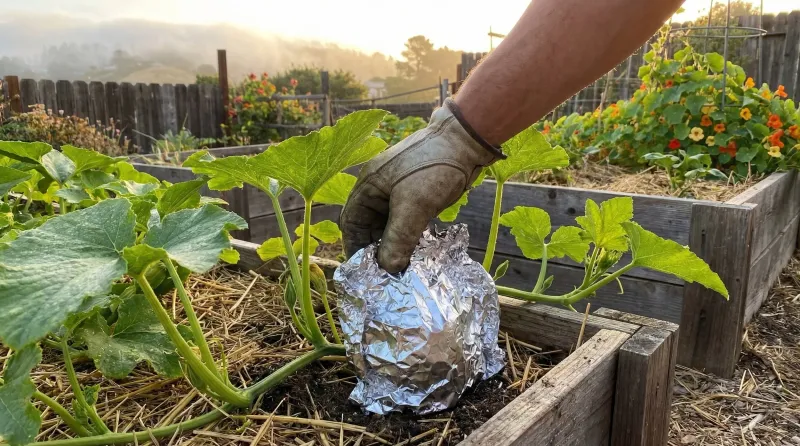
Standard aluminum foil from the kitchen is all you need for this step. Tear off a strip roughly six inches long and two to three inches wide, then hold it loosely against the lower stem of your young squash plant, starting right at the soil line where the stem emerges from the ground.
That junction between stem and soil is where the moth most commonly lays eggs, making it the section most worth covering first.
Wrap the foil gently around the stem so it forms a loose sleeve rather than a snug band. University of Georgia Extension’s home-garden insect guide describes loose aluminum-foil wrapping as providing a level of control by creating a physical obstruction that limits egg-laying access at the plant base.
The key word is loose. A tight wrap can restrict the stem as it expands and injure the plant, which defeats the purpose entirely.
Fold the top edge of the foil down slightly so it stays in position without digging into the tissue. University of Maryland Extension lists foil barriers among its preventive recommendations for squash vine borer, and Ask Extension guidance on vine borer deterrents similarly supports wrapping the stem near the soil as a physical management approach.
What the foil does not do is repel moths through reflection or create an invisible force field around the whole plant. The mechanism is physical obstruction of a specific stem section.
Moths may still lay eggs above the collar, on leaf petioles, or on runners that extend away from the original stem. Installing the collar before larvae enter is what makes it useful.
Once a larva is already inside the stem, wrapping foil around the outside will not remove it.
Adjust the collar as the plant grows
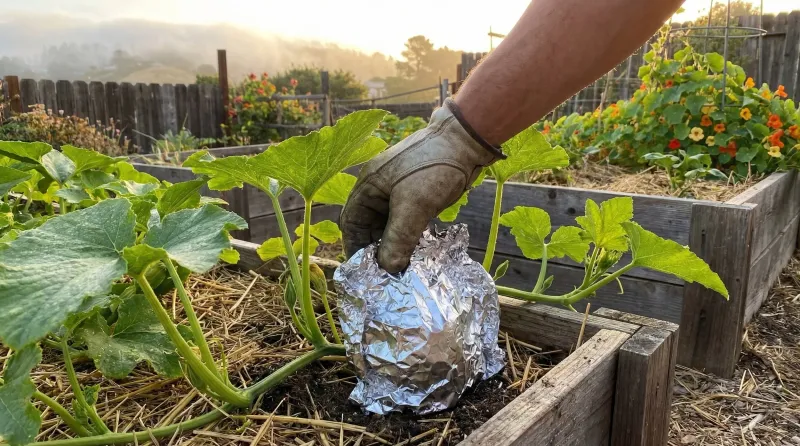
Putting the collar on once and walking away is not enough. Squash stems expand in diameter as the plant matures, and the lower stem lengthens as new growth pushes upward.
Both changes can leave previously protected tissue newly exposed or cause a collar that fit loosely last week to press uncomfortably against the stem this week.
Check the foil every few days during the active borer season. University of Georgia Extension and University of Maryland Extension both note that the barrier should be adjusted upward as the stem grows, so that newly exposed lower stem does not go unprotected.
If the foil has shifted, tightened, or crumpled, replace it with a fresh piece rather than trying to reshape the old one.
North Carolina’s second borer generation in August adds another reason to stay on top of maintenance. A collar you installed for the spring flight may be misshapen or inadequate by the time late-summer moths are active, especially on a plant that has been growing vigorously for weeks.
NC State Extension documents this second generation and its timing, which means the protective window extends well beyond the initial spring installation.
One foil collar on the original young stem also cannot protect the long runners that summer squash and pumpkins send out as the season progresses. Those mature vines develop their own nodes and tissue that moths can target.
Adjusting the collar is about keeping the original lower stem covered and snug enough to stay in place without being tight. Protecting every mature runner is a separate challenge that requires additional scouting and different strategies.
Scout the plant tissue the foil cannot cover
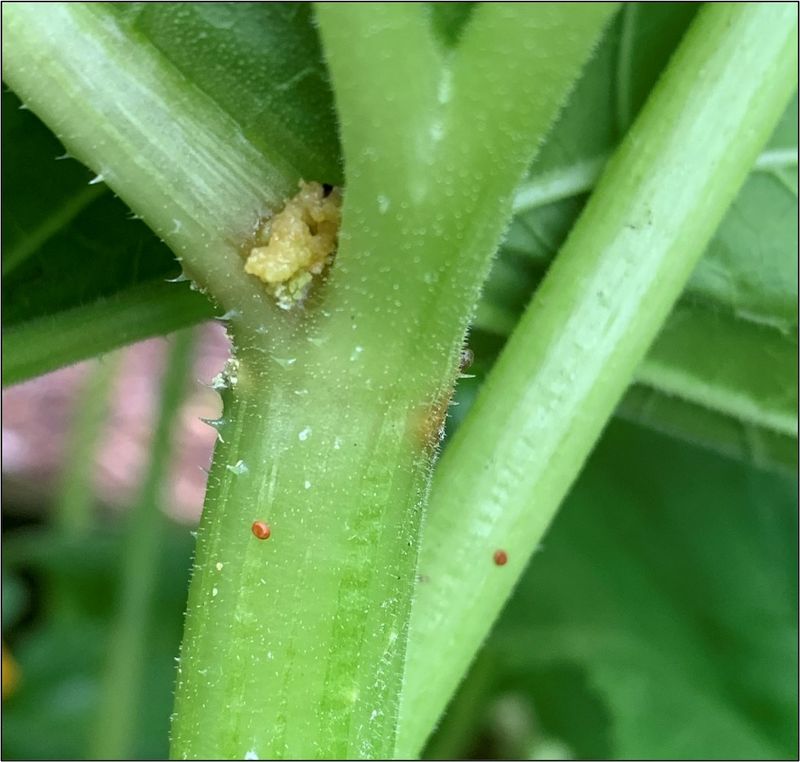
Foil covers one section of stem. Everything above it, including the stem above the collar line, the leaf petioles where they attach to the main vine, exposed runners, and any newer growth that has extended away from the original plant base, remains accessible to egg-laying moths.
Treating the collar as a complete solution while ignoring the rest of the plant is how gardeners get surprised by wilting even after doing everything right at the base.
A practical inspection routine does not need to take long. Work from the base upward, starting just above the foil collar and moving along the main stem.
Look for small, flat, reddish-brown eggs laid individually on the stem surface or on leaf petioles. NC State Extension and University of Maryland Extension both describe the importance of checking these sites regularly because moths use multiple tender locations, not just the soil-line stem.
Entry holes and frass are the next things to look for. Frass looks like coarse, wet sawdust and collects near the base of the stem or at the point where a larva entered.
An entry hole is small and may be partially covered by frass or plant sap. Sudden wilting on an otherwise healthy-looking stem, especially when the soil is moist, is a strong sign that something is feeding inside.
University of Wisconsin Extension notes that foil and similar barriers are difficult to keep in place and rarely cover every vulnerable area, which is a candid reminder that the collar is one layer of protection, not a perimeter fence. Removing visible eggs by hand when you find them is a practical complement to the physical barrier.
Catching them before they hatch is the goal.
Treat wilt and frass as signs that rescue may be needed
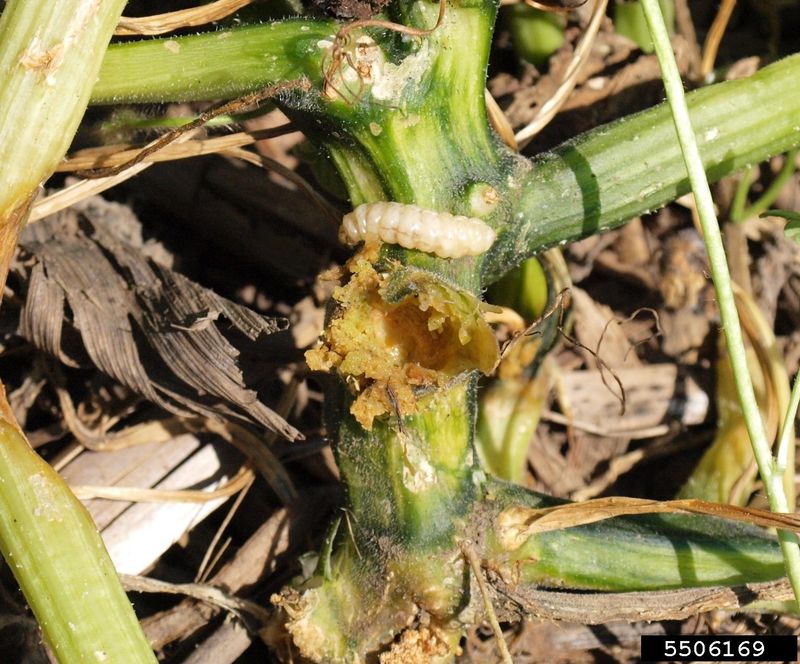
Sudden wilting on a squash plant that had looked healthy the morning before is worth investigating immediately. Check the base of the stem for frass, the coarse sawdust-like material that a feeding larva pushes out of its entry hole.
Finding both wilting and frass together is a strong indicator that a larva is already inside, and at that point, the foil collar cannot help with the larva that is already there.
Extension sources describe a rescue attempt that some gardeners find worthwhile. Using a small, sharp knife, carefully slit the stem lengthwise at the spot where frass is visible.
NC State Extension and Virginia Cooperative Extension describe this approach: remove the larva you find inside, then mound moist soil over the wound to encourage the stem to develop supplemental roots at that node. University of Minnesota Extension’s squash vine borer guide also supports this method as a possible rescue option.
The word “possible” matters here. Slitting the stem and removing the larva does not guarantee that the plant will recover.
The wound itself is stressful, supplemental rooting takes time to establish, and there may be more than one larva inside the same stem. Some plants respond well and push through; others continue to decline.
This procedure is a rescue attempt, not a prevention strategy. A foil collar installed before larvae enter can reduce the chance that you face this situation in the first place.
But if you are already looking at frass and wilt, acting quickly with the slit-and-remove method gives the plant a better chance than doing nothing. After the rescue attempt, replace or add foil above the wound to limit access to undamaged stem tissue.
Reduce risk without treating foil as the whole solution
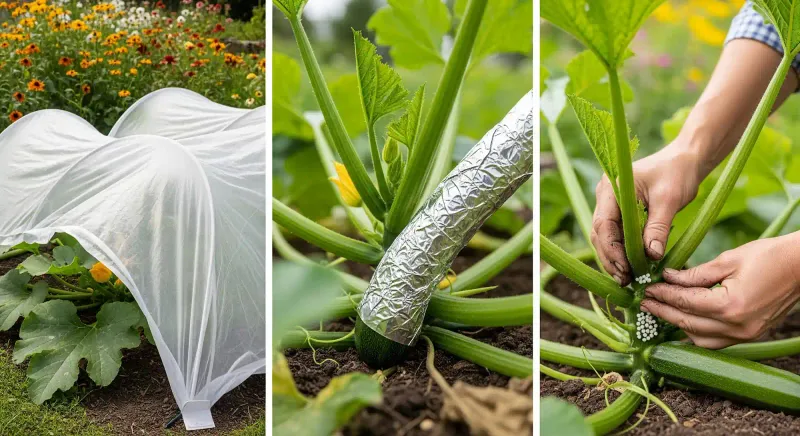
A foil collar is one practical move in a broader set of options. Removing infested vines promptly and clearing crop residue at the end of the season can reduce the number of borers that overwinter in the soil near your garden.
Rotating cucurbit plantings to a different bed each year adds another layer of pressure reduction. Research published in the Journal of Integrated Pest Management supports crop rotation and residue removal as components of an integrated management approach, while also noting that adult moths can fly into a garden from surrounding areas, which limits how much rotation alone can accomplish.
Floating row covers offer stronger whole-plant exclusion than a stem collar, but they come with conditions. University of Minnesota Extension explains that row covers must be installed before moths reach the plants, sealed around the edges to block entry, and removed when flowers open so bees can pollinate.
Leaving them on all season without hand-pollinating will result in no fruit. There is also an important caution: if squash vine borers were present in the same bed the previous year, overwintering insects in the soil could emerge beneath a sealed cover and become trapped with the crop, making the problem worse instead of better.
Insecticides are another option for gardeners who want additional protection before larvae enter the stem. Any treatment needs to be applied according to the product label and local guidance, timed before larvae burrow inside, and managed carefully during bloom to avoid exposing bees and other pollinators.
NC State Extension advises late-evening applications when necessary to reduce pollinator contact, but label directions and harvest intervals remain controlling. These are complementary tools, not substitutes for early physical protection at the stem.
Protect the young stem now, then keep checking
The window for getting ahead of squash vine borers is shorter than most gardeners expect. Place a loose foil collar around the lower stem of each young squash plant while the stem is still small and before eggs hatch.
Cover the section where the stem meets the soil, keep the wrap loose enough to slide a finger underneath, and check it every few days as the plant grows. University of Georgia Extension supports this approach as a measure that can provide a level of control at the plant base.
Adjust the collar upward as the stem expands, and replace it if it has shifted or tightened. NC State Extension documents a second borer generation in August, so maintenance is not just a spring task.
University of Wisconsin Extension is candid that barriers like foil are difficult to keep in place and rarely cover every vulnerable area, which is why continued scouting matters as much as the installation itself.
Inspect the stem above the collar, the leaf petioles, and any runners for eggs, frass, and entry holes throughout the local borer season. The collar reduces access to one section of the plant.
Severe damage is still possible if larvae find unprotected tissue, and outcomes depend on your squash type, local moth pressure, and how consistently you check. Act before symptoms appear, then keep watching: the collar buys time, and your eyes are what use it well.