
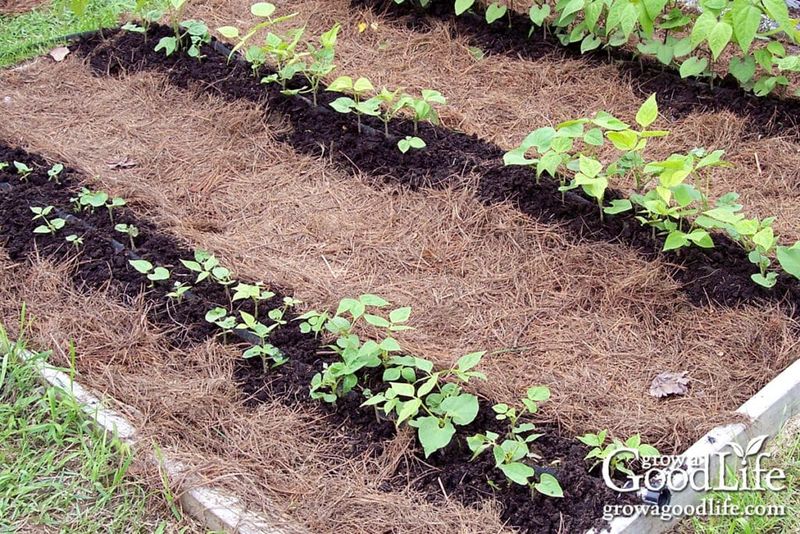
Pine straw is one of the most popular mulches in North Carolina, but a thin or uneven layer can give fall-germinating weeds just enough room to take hold before winter. Many gardeners spread it once and assume the job is done, not realizing that settling, wind, and rain quietly reduce coverage over the weeks that follow.
Getting the depth right, keeping it even, and checking the bed after rough weather can make a real difference in how many weeds you pull come autumn.
Thin or displaced pine straw can give fall weeds an opening

Annual weeds do not wait for an obvious invitation. Winter annuals such as annual bluegrass, henbit, and chickweed commonly begin germinating in late summer or early autumn across North Carolina, and they need only a small window of exposed soil and light to get started.
When pine straw settles, blows to one side, or washes downhill after a hard rain, the thin spots left behind can increase the likelihood that those seedlings will push through before you notice anything is wrong.
The key word here is “can.” Inadequate or displaced coverage is one condition that raises the odds of annual weeds emerging, but a bed’s weed pressure also depends on seeds already waiting in the soil, windblown seed that lands on top of the mulch, and perennial underground structures such as rhizomes, tubers, stolons, bulbs, and crowns. NC State Extension’s weed management guidance makes clear that mulch suppresses many annual weeds but does not eliminate every source of weed pressure in the bed.
Organic mulch works primarily by blocking the light that weed seeds need to germinate and by creating a physical barrier above the soil. Where that barrier is intact and at the right depth, most annual seedlings never reach the surface.
Where it is thin, compressed, or missing entirely, the barrier breaks down and seedlings find their opening.
Calling pine straw a complete solution would overstate the case. NC State’s weed control research consistently frames mulch as suppression rather than total control, which means even a well-maintained layer still calls for occasional scouting and hand-weeding.
The goal is to reduce annual weed pressure, close the gaps that give seedlings their best shot, and stay ahead of the problem before fall germination peaks.
Pine straw settles, so its first appearance can mislead you
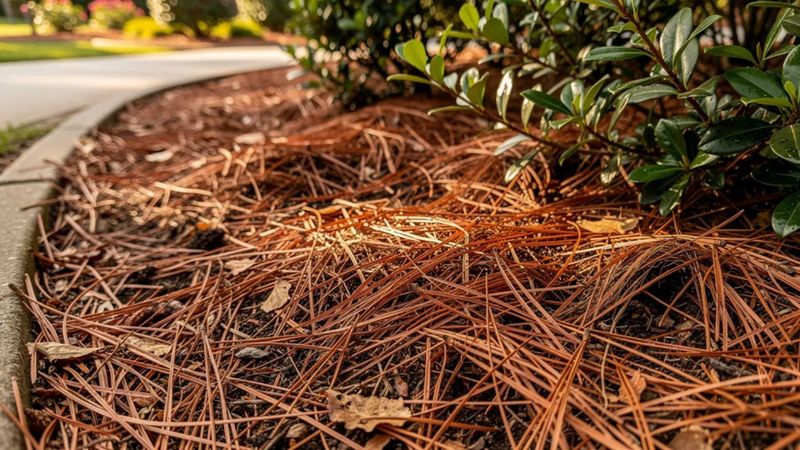
Right after spreading a fresh bale, pine straw looks generous. The needles are airy, the bed looks full, and it is easy to assume the job is finished.
The problem is that first appearance does not hold. Once rain hits the bed, the needles compress, interlock, and lose a significant portion of their original loft, sometimes shrinking by an inch or more depending on the needle type and how loosely the material was spread.
NC State Extension’s organic gardening guidance recommends approximately 3 to 4 inches of organic mulch for established landscape beds, and that range reflects settled, effective coverage rather than the fluffy layer you see the day of installation. The University of Georgia goes further with pine straw specifically, noting that because it is a lighter material, an initial application of approximately 5 inches may be needed to maintain adequate coverage after the material wets and compresses.
Those two figures are not in conflict. NC State’s 3 to 4 inches describes the target settled depth for effective weed suppression, while the UGA recommendation accounts for the settling that happens before you reach that target.
Whether you need to start closer to 4 inches or closer to 5 depends on the needle type, how tightly the bales were packed, your site’s rainfall, wind exposure, and slope. There is no single number that fits every yard.
The practical takeaway is to judge coverage a week or two after installation, after at least one good rain, rather than the afternoon the work is done. NC State’s pre-planting guidance reinforces that the goal is continuous, adequately settled coverage across the bed, not a visually impressive pile on day one.
If the layer looks thin after the first rain, that is the right moment to replenish it, not a sign that you applied it incorrectly the first time.
Clear existing weeds before you add fresh straw
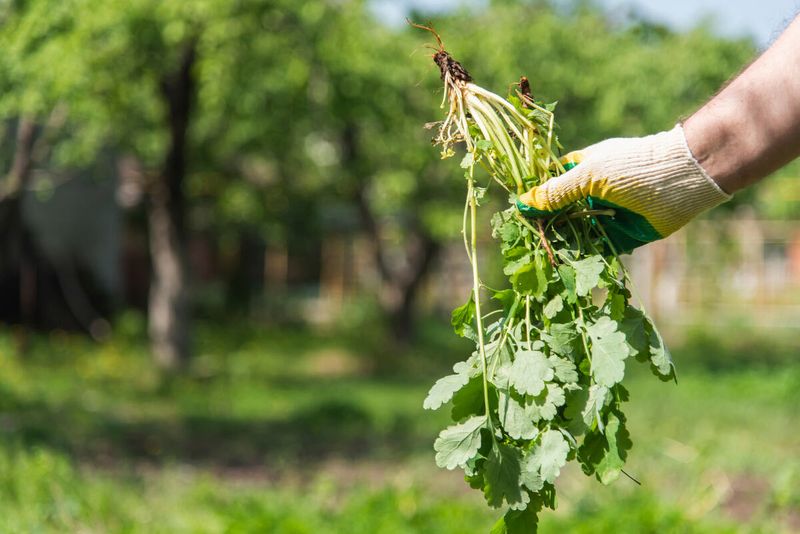
Spreading fresh pine straw over a weedy bed is one of the fastest ways to make the problem invisible without solving it. Small annual seedlings that are just getting started may be slowed down by a new layer, but anything with an established root system will keep growing right through the mulch.
Covering the bed first and weeding later means you have already given the problem a head start.
NC State Extension recommends removing or controlling existing weeds before applying mulch, and the reason comes down to how pine straw actually works. The mulch layer suppresses weeds by blocking light from seeds that have not yet germinated.
It does very little for weeds that are already rooted, leafed out, and drawing nutrients from the soil beneath it.
The distinction between annual and perennial weeds matters here. A small annual seedling pulled before mulching costs you thirty seconds.
An established perennial weed with rhizomes, tubers, stolons, bulbs, or crowns is a different situation entirely. NC State’s weed management resources note that perennial weeds spread through underground structures that survive mulching, which means pine straw cannot reliably stop nutsedge, bermudagrass, or similar creeping perennials from re-emerging season after season.
Before you open a single bale, walk the bed and pull or treat what is already growing. For large perennial infestations, you may need to address the problem over multiple seasons rather than expecting one round of fresh mulch to reset the bed.
NC State’s planning guidance is consistent on this point: mulch works best as a prevention tool against seeds that have not yet germinated, not as a remedy for weeds that are already established and actively growing.
Spread an even layer while protecting plant bases

Even coverage sounds straightforward, but two common errors show up in most beds: thin spots along the edges and outer corners where straw drifts away, and thick piles pushed against plant stems where the mulch looks most visible from the sidewalk. Both work against you.
Thin edges invite weed seedlings from the margins inward, and mulch packed against stems creates a moist, dark environment that encourages bark decay and gives voles a hidden runway.
NC State’s woody ornamentals guidance recommends pulling mulch back approximately 6 inches from stems and tree trunks. That clearance zone is not an accident or a bare spot to be filled in later.
It is a deliberate gap that protects the bark, reduces the risk of crown rot, and removes the shelter that rodents use when foraging close to a plant’s base. Closing it with extra straw does not improve weed control; it trades one problem for another.
Across the rest of the bed, the objective is continuous coverage at a depth that will remain effective after settling. NC State Extension’s organic gardening guidance warns against exceeding the recommended depth range, because mulch that is too thick can hold moisture against the soil surface for too long, restrict the movement of water and oxygen to roots, and actually encourage weed growth within the decomposing mulch layer itself.
A practical approach is to rake the bed after the first rain and note where coverage looks thin or uneven before topping off those areas. NC State’s pre-planting guidance frames the target as settled, even coverage rather than a specific number applied immediately after installation.
Close the thin spots, leave the clearance zone around each plant untouched, and resist the urge to pile extra straw in spots that already look adequate just because more mulch seems safer.
Inspect the bed after weather moves the mulch
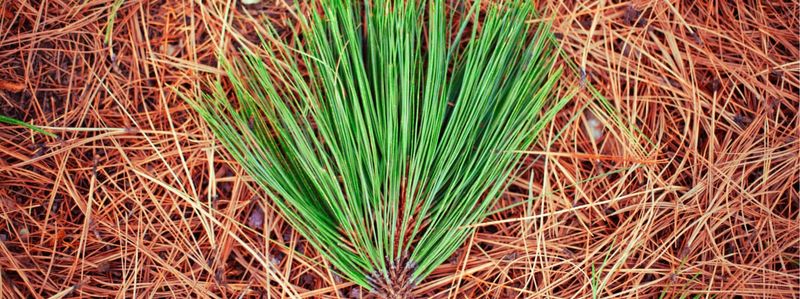
Rain and wind do not respect a finished mulch job. A heavy downpour on a sloped bed can push pine straw to the low end in a matter of minutes, leaving the upper section thin and exposed.
Wind on an open site can scatter needles across the lawn or pile them unevenly against the bed edge. Neither event announces itself, which is why a quick walk-through after rough weather pays off far more than waiting for the next scheduled maintenance visit.
University of Georgia Extension recommends replenishing pine straw as wind disperses it and re-raking displaced material before weed seedlings become established. The window matters.
A weed seedling that is two days old pulls out with almost no effort. The same plant two weeks later has a root system that takes real work to remove, and a mature plant that has already set seed has multiplied your future problem.
Adding new pine straw does not eliminate the need for scouting, either. As organic mulch decomposes over time, it breaks down into a fine, soil-like layer at the surface.
NC State Extension notes that windblown seeds can germinate in decomposed mulch just as readily as in bare soil, so even a bed with adequate depth can grow weeds on its surface if the top layer has aged significantly.
The most effective routine combines post-weather checks with brief scouting sessions every week or two during the fall germination window. NC State recommends hand-pulling when the soil is slightly moist and weeds are still small, which is both easier on your back and more effective than waiting until plants are large enough to see from the driveway.
Keep the goal realistic: reduced annual weed pressure and a bed that stays manageable, not a bed that never grows a single weed.
Use preemergence treatment only when the label fits the bed
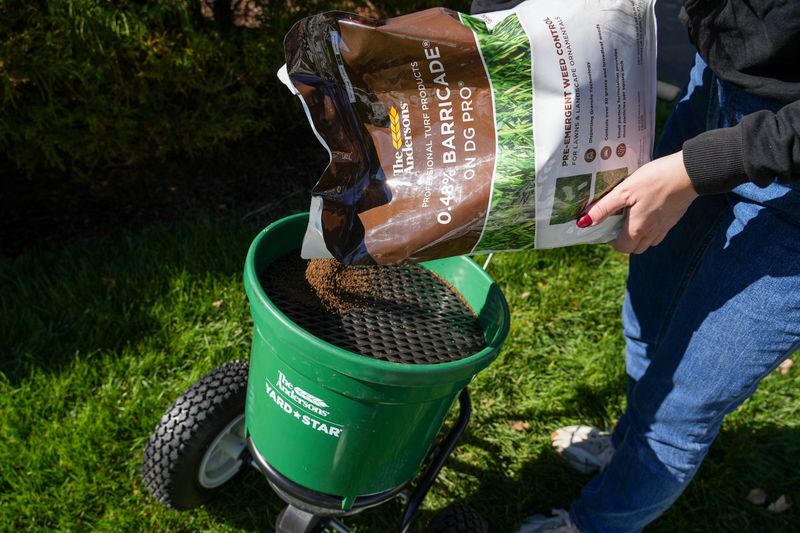
A preemergence herbicide applied in late summer or early autumn can reduce the number of winter annual weeds that germinate in a North Carolina landscape bed. Annual bluegrass, henbit, and chickweed are the typical targets, and catching them before they sprout is far easier than pulling them after they are established.
That said, preemergence treatment is a supplemental option, not a requirement, and it is not appropriate for every bed or every gardener.
The most important step before buying anything is reading the current product label for your specific plants, target weeds, and site. NC State Extension is direct on this point: do not assume that a product labeled for turf, vegetables, or a single ornamental species is safe in a mixed landscape bed.
Labels differ in the ornamentals they list as tolerant, the weeds they control, the rates they specify, and the protective equipment they require. A product that works well in a fescue lawn may injure the perennials growing three feet away in the adjacent bed.
Timing and placement also depend on the specific product. NC State’s weed management guidance notes that some preemergence products should be applied before mulch is added, while others have different placement requirements.
Applying in the wrong sequence can reduce effectiveness or cause problems with the plants you are trying to protect. Water-in requirements vary by product as well, and skipping that step after application can leave the active ingredient sitting on the surface where it does little good.
For North Carolina-specific product recommendations tied to ornamental beds, the NC State 2025 Chemical Weed Control guide is a current and reliable reference. Any timing guidance in that resource, or in this article, should be verified against the product label you are actually using.
Labels are legal documents, and the label in your hand on the day of application governs everything, including rates, placement, watering, and personal protective equipment.
Keep pine straw away from plants, foundations, and fire-prone zones
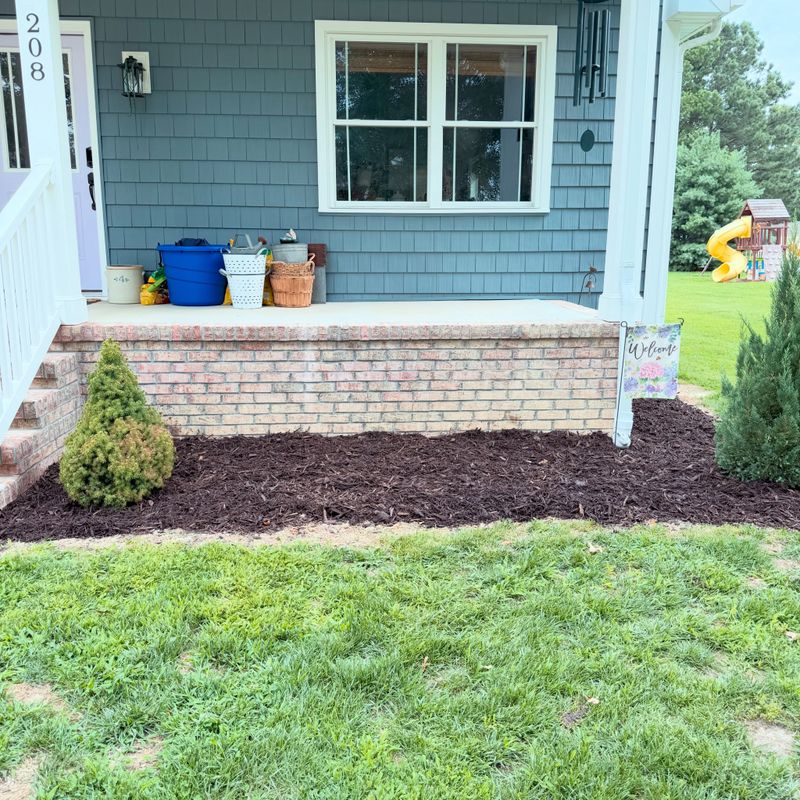
Pine straw is versatile and widely available across North Carolina, but it has real limits that show up when it is placed too close to structures or the wrong plants. Three separate concerns come into play: termite risk near foundations, fire hazard near the home, and plant suitability for specific ornamentals.
Placing pine straw against siding, foundations, or termite-treated soil creates a concealment problem. NC State’s termite monitoring guidance warns that mulch, leaf litter, and pine straw can hide termite activity from view and interfere with treated soil around a foundation.
NC State’s homeowner termite prevention resource reinforces keeping organic material away from the foundation perimeter so that any termite activity remains visible during routine inspections. The risk is not that pine straw attracts termites; it is that it gives them cover to work undetected.
Fire safety adds another layer of caution for homes in or near wooded areas. NC State’s fire-resistant landscaping guidance recommends removing pine needles and organic debris within 5 feet of the home and reducing thick needle layers elsewhere in the defensible space around the structure.
That recommendation applies to elevated-fire-risk situations and defensible-space planning, not necessarily to every suburban lot in the state. Check with your local fire safety guidance to determine what applies to your specific property.
Plant suitability is worth checking before spreading pine straw across every bed. NC State’s herbaceous ornamentals handbook reports that pine-straw mulch can stunt pansy growth and reduce flowering, so beds planted with annual color require a closer look at what mulch type is appropriate.
On the soil chemistry side, pine needles do decompose slightly acidic, but the change in soil pH happens gradually over many years. Pine straw should not be treated as a substitute for a soil test or as a reliable way to acidify a bed for acid-loving plants.
NC State’s woody ornamentals guidance also repeats the 6-inch stem clearance, which works in combination with the foundation and fire-safety setbacks to define where pine straw belongs and where it does not.
Maintain coverage for fewer weeds, not a weed-free promise

Pulling these steps together into a routine makes the whole process manageable. Start by clearing the bed of existing weeds, because pine straw works against seeds that have not yet sprouted, not against plants that are already rooted.
Spread the straw evenly across the bed, applying enough to account for settling, and pull it back approximately 6 inches from every stem and trunk. Keep pine straw away from siding, foundations, and termite-treated soil, and follow local fire-safety guidance for any areas close to the structure.
After the first rain, check the depth and evenness of coverage and replenish any areas that have thinned out. NC State Extension and University of Georgia Extension both frame the target as continuous, adequately settled coverage rather than a fixed number applied once and forgotten.
NC State’s planning guidance is consistent on the broader point: mulch alone rarely provides complete weed control, so brief scouting sessions and prompt removal of young weeds remain part of the job through the fall germination window.
A bed maintained this way will see fewer annual weeds break through and will be easier to manage than one that was mulched once and left alone. The honest measure of success is a bed where annual weed pressure stays low enough that maintenance stays light, not a bed where weeds never appear at all.