
Every spring you reseed the bare patch under your big oak, and every August it turns back into dust. The problem is not you, it is the deep shade and thirsty roots that turf grass simply cannot handle.
North Carolina has its own answer growing wild in our woods: low, soft native sedges that thrive in exactly those tough spots. Here are seven worth planting this year, and why each one earns its place.
1. Appalachian Sedge (Carex appalachica)
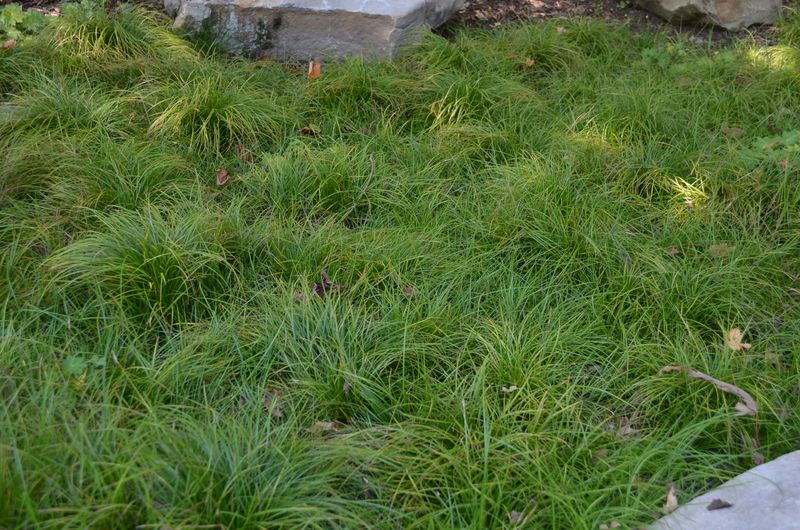
Picture a ponytail of hair-thin green leaves spilling over in every direction. That is Appalachian sedge, and it may be the single best grass replacement for dry oak shade in the state.
It grows wild on rocky, dry slopes from the mountains through the Piedmont, often right beside oaks and hickories. Once established, it handles summer drought with almost no watering.
Clumps reach about 8 to 12 inches and arch gracefully, so a planting looks like a meadow in miniature.
Space plugs about 12 inches apart and they will knit into a loose, flowing mat in two to three seasons. You never have to mow it.
A light trim in late winter keeps it fresh, but plenty of homeowners skip even that.
Leave the oak leaves in place around it, too. That leaf layer feeds the soil and gives fireflies and other beneficial insects a place to overwinter.
2. Pennsylvania Sedge (Carex pensylvanica)
Want something that actually spreads like a lawn? Pennsylvania sedge is the runner of the group.
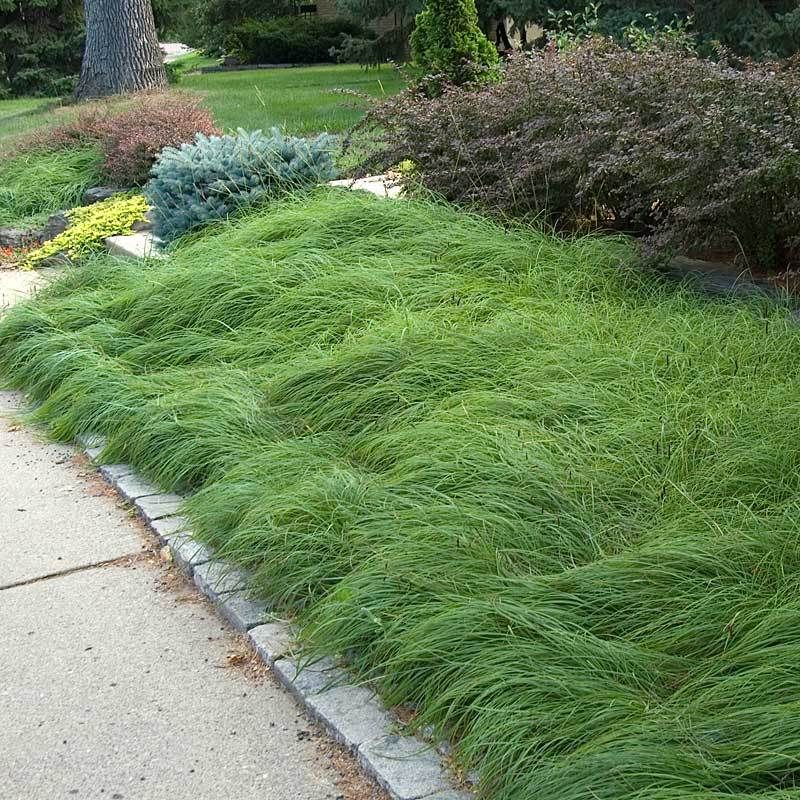
Instead of staying in tidy clumps, it creeps outward on underground stems and fills gaps on its own.
In North Carolina it shows up mostly in the mountains and upper Piedmont, so it is happiest in cooler western yards. Gardeners in hotter eastern counties can still try it in shade, though growth may be slower.
It stays roughly 6 to 8 inches tall, with a windswept look if left unmowed.
If you like a neater appearance, you can mow it high, around 4 inches, once or twice a year. Foot traffic should stay light, so think of it for a shady side yard or garden path edge rather than a soccer field.
3. Eastern Star Sedge (Carex radiata)
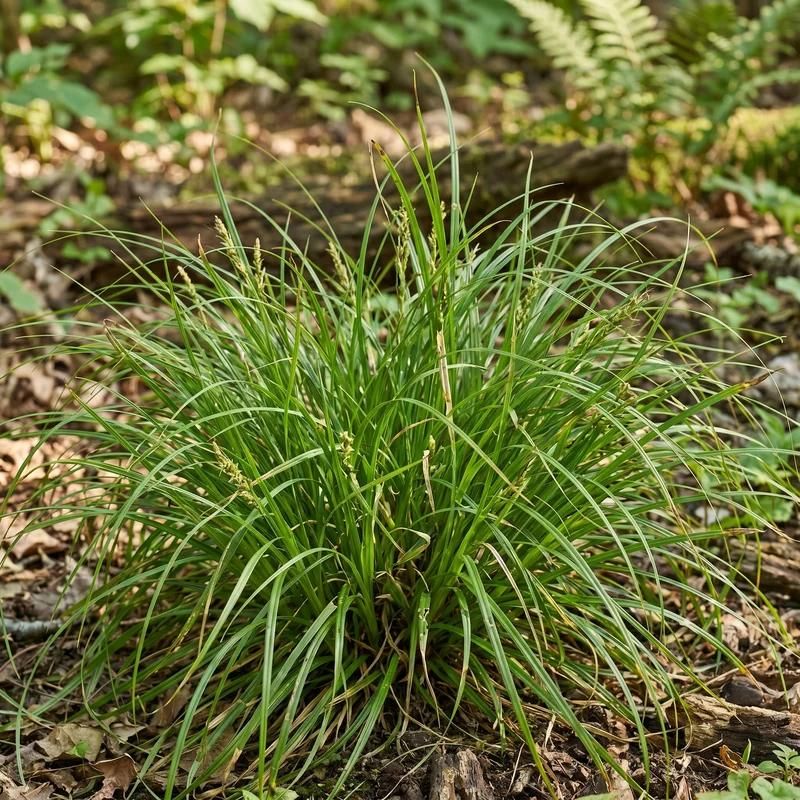
Kneel down in late spring and you will see why it got the name. Tiny seed clusters radiate out like little green stars along slender stems.
Eastern star sedge is a forgiving, fine-leaved clumper. It tolerates dry shade once rooted, yet it also handles the occasional soggy week after a summer thunderstorm.
That flexibility makes it a smart pick for yards with uneven drainage under trees.
Use it to edge a woodland path or tuck it between stepping stones. It also pairs beautifully with native ferns and wild ginger for a layered look.
4. Plantainleaf Sedge (Carex plantaginea)
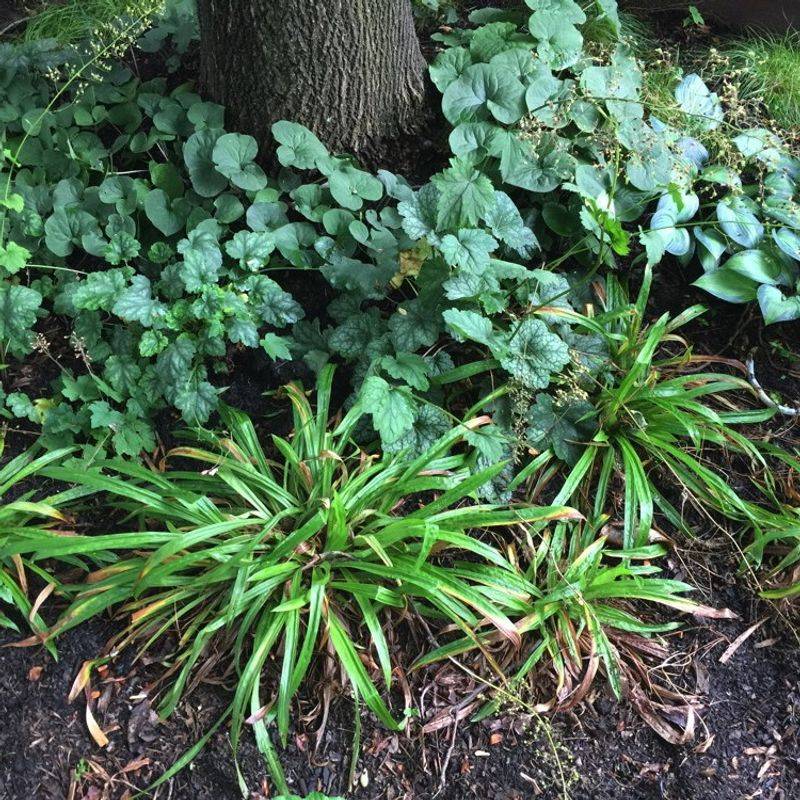
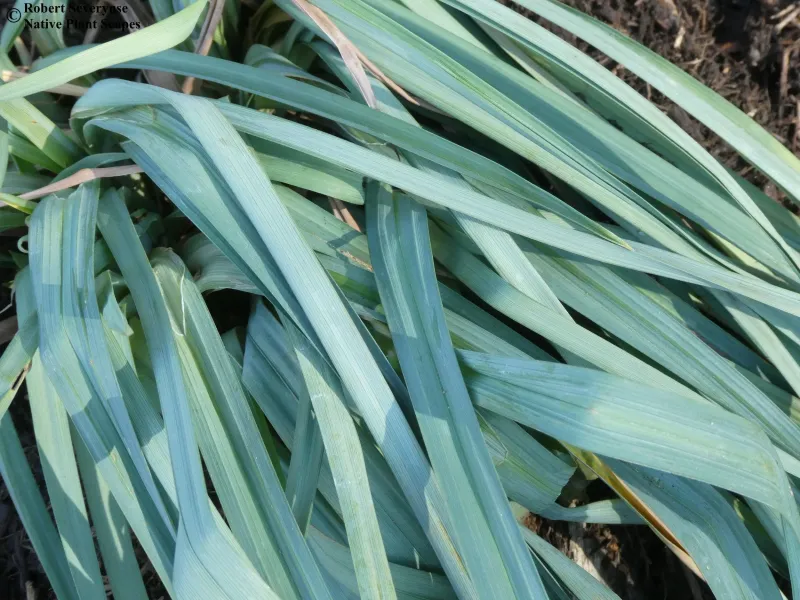
Not every sedge looks like grass. Plantainleaf sedge has wide, crinkled, lime-green leaves up to an inch across, more like a hosta than a lawn.
Here is the swap idea worth stealing: use it where you might have planted imported liriope or hosta. It stays evergreen through most North Carolina winters, and deer tend to leave it alone more than hostas.
It prefers richer soil, so give it a spot with decent leaf mulch rather than bare, baked dirt. Mountain and upper Piedmont gardeners will see the best results.
In early spring, dark purple flower spikes pop up before the new leaves.
5. Blue Wood Sedge (Carex glaucodea)
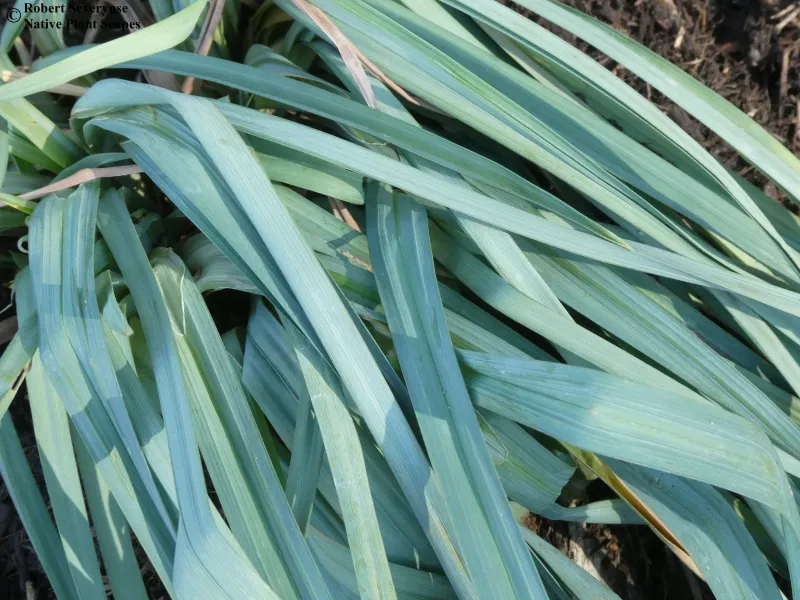
Shade gardens often end up as one flat shade of green. Blue wood sedge fixes that with silvery blue-gray leaves that seem to glow under a tree canopy.
It is native across much of North Carolina and copes with dry, clay-heavy soil better than you would expect from something so pretty. Clumps grow about 8 inches tall and slowly widen each year.
Plant it in drifts of five or seven near a front walk under oaks for real curb appeal. Mixed with greener sedges, it creates a soft, two-toned carpet that looks planned, not patchy.
6. Cherokee Sedge (Carex cherokeensis)
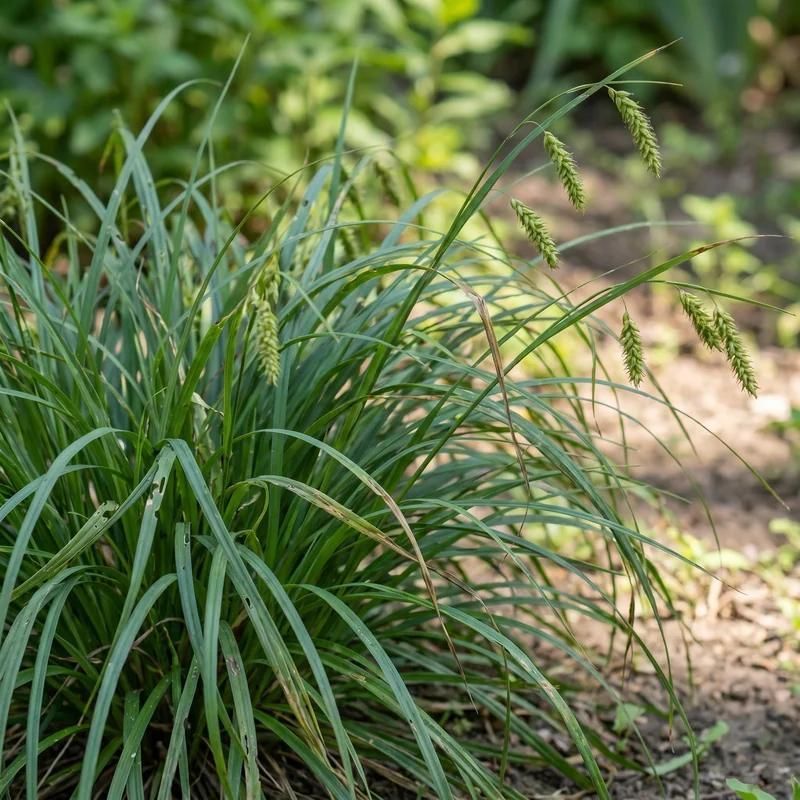
Down east, where summers are long and steamy, Cherokee sedge feels right at home. It is a true Southern native, ranging through the coastal plain and well into Florida and Texas.
The leaves are glossy and deep green, arching to about 12 to 18 inches. It handles heat and humidity that can stress mountain species, and it tolerates both dry spells and wet spots once settled.
Coastal plain homeowners struggling under water oaks or live oaks should start here. It spreads gently by short rhizomes, filling in without becoming a bully.
Bonus: it stays green through most winters in the east.
7. Oak Sedge (Carex albicans)
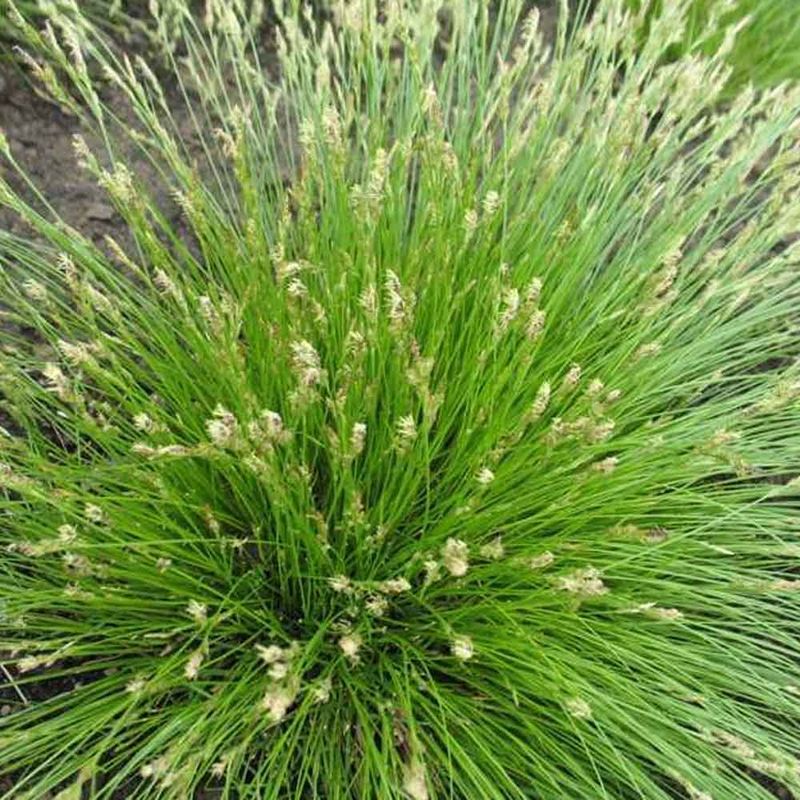
Some plants practically tell you where to put them. Oak sedge, also called white-tinged sedge, grows wild in the dry, acidic soil under oaks throughout North Carolina.
It forms small, dense tufts only about 6 inches tall. That compact size makes it ideal for slopes where bare dirt washes away after every rain.
Its roots help hold soil in place, which may reduce erosion around exposed tree roots.
It is less common in nurseries, so check native plant sales in spring and fall. Plant in fall if you can, since cooler weather and winter rain help roots settle before next summer’s drought.
Done right, the patch you once reseeded every year becomes a living carpet that feeds the soil, shelters insects, and asks almost nothing from you.