
A front yard can look tidy without a weekly date with the hedge trimmer. The right shrubs add shape, color, and a welcoming feel while handling the conditions in your part of Florida.
These nine choices cover sunny borders, shady corners, and spots that need privacy. Give them room and regular water while their roots settle in, and the work gets much lighter.
1. Dwarf Yaupon Holly
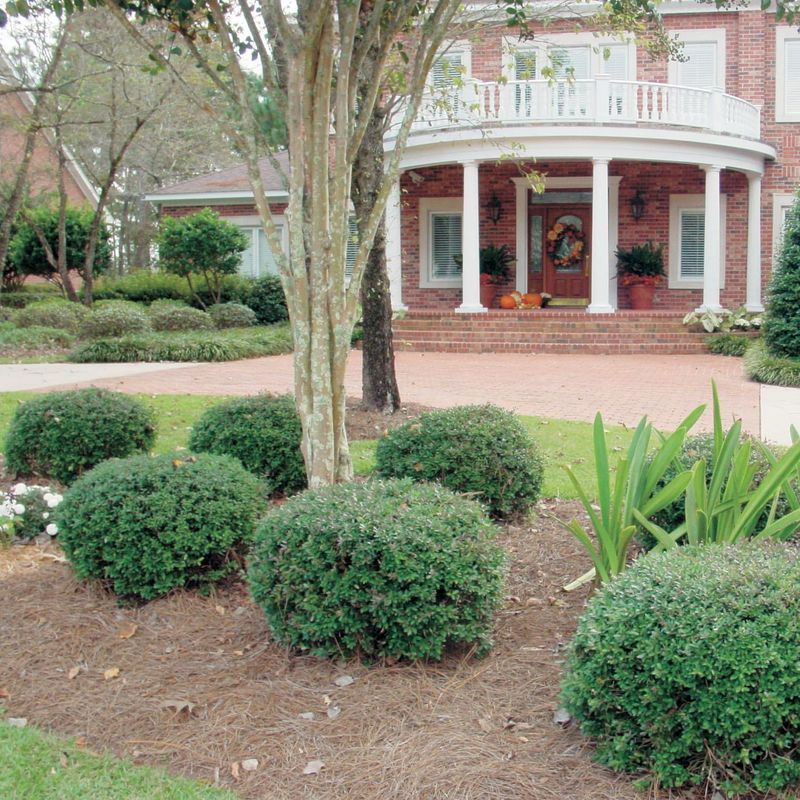
A tidy green mound can do more for curb appeal than a bed full of fussy flowers. Dwarf yaupon holly gives a front walk or foundation planting a steady outline without needing constant clipping.
Look for a named compact cultivar, such as ‘Schillings Dwarf’ or ‘Nana,’ rather than buying a standard yaupon. Many dwarf selections reach about 3 to 5 feet tall and spread wider with time, so check the nursery label before setting your spacing.
Yaupon suits much of Florida and grows in sun or partial shade. Once established, it handles dry spells and sandy soil well, though new plants still need regular watering while roots spread beyond the nursery root ball.
Use three shrubs in a loose group near the entry, leaving their mature width clear of the sidewalk. Remove an occasional stray branch instead of shearing the whole plant into a box.
Choose it mainly for evergreen structure, not berries. Popular dwarf cultivars are often male and will not produce the red fruit associated with female yaupon hollies.
2. Dwarf Walter’s Viburnum
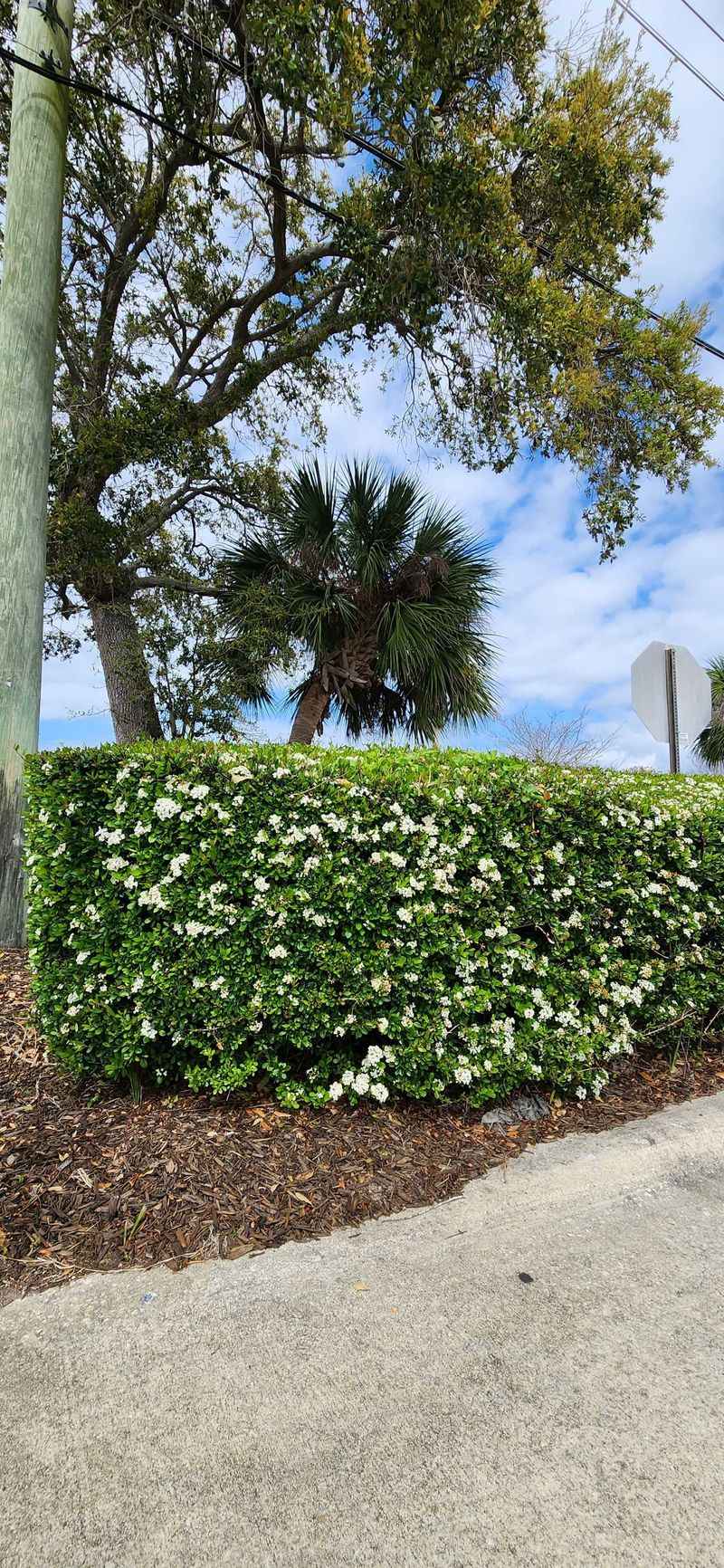
Spring flowers are a bonus when the shrub already looks good the rest of the year. A compact Walter’s viburnum brings small green leaves, a dense shape, and clusters of white blooms to a Florida front yard.
The buying detail matters here: standard Walter’s viburnum can become a large shrub or small tree. Ask for a compact selection such as ‘Densa,’ then confirm its expected height and width with the nursery because dwarf forms vary.
Plant in sun to partial shade, with enough elbow room for its natural outline. It is especially useful in North and Central Florida, where it offers a native alternative to shrubs that need frequent shaping.
Established plants tolerate some drought, but a brutally dry bed may still need supplemental water. Mulch helps protect the root area, provided it stays clear of the stems.
Set a small group beneath windows where the mature height will not block the view. If pruning becomes necessary, do it after flowering so you keep the next spring display, and avoid turning a naturally attractive shrub into a high-maintenance hedge.
3. Simpson’s Stopper
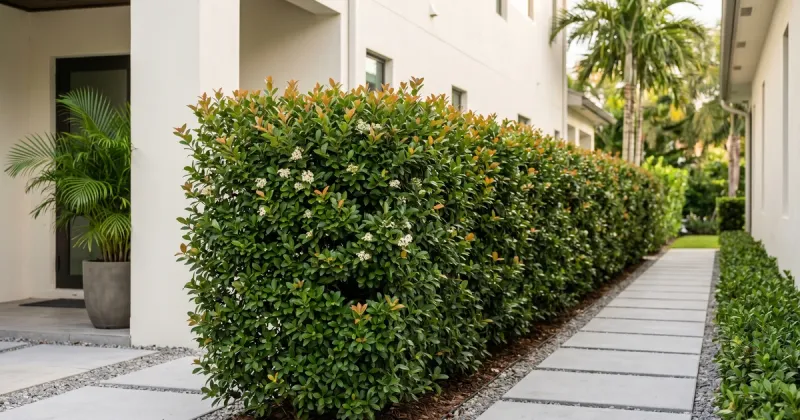
Near an entry, a shrub that offers flowers, fruit, and attractive foliage earns its space. Simpson’s stopper delivers all three, with small white blooms and orange-red fruit that birds may visit.
This Florida native is best suited to Central and South Florida, although cold tolerance depends on the site. Give it sun or partial shade and well-drained soil, then let it develop a relaxed, leafy outline.
Size is the main planning issue. The species can grow into a large shrub or small tree, while compact selections stay smaller, so match the plant to your available space rather than counting on pruning to keep it short.
Use it to soften a blank wall or create a loose screen beside the porch. Keeping it away from narrow paths also leaves room for branches and reduces cleanup where fallen fruit might be unwelcome.
After establishment, it tolerates dry periods and usually needs little routine shaping. Skip frequent shearing if you want flowers and fruit, since repeated trimming removes the growth that makes this shrub more interesting than a plain green barrier.
4. Cocoplum
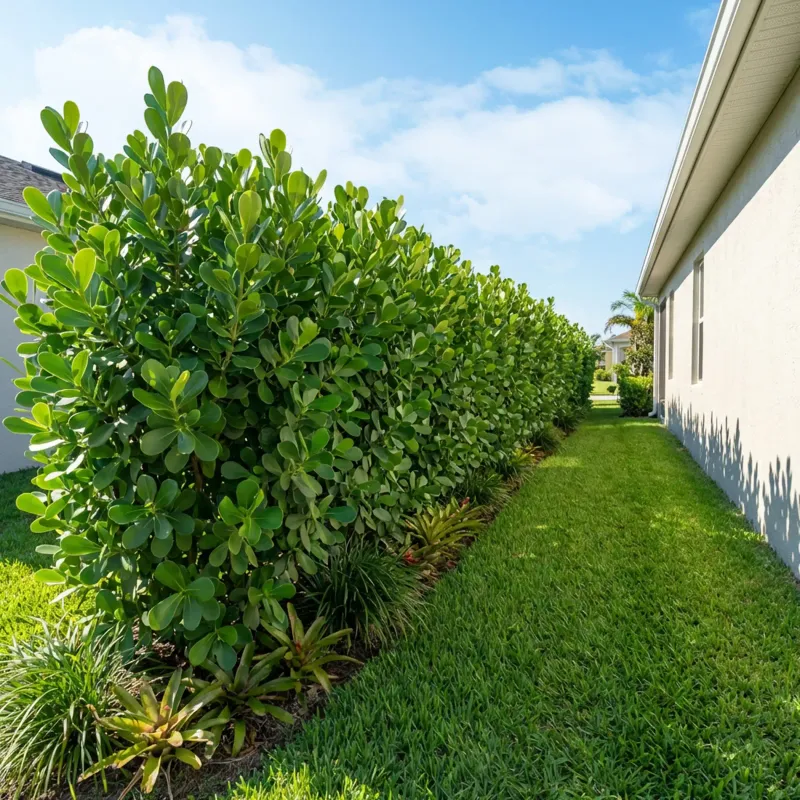
A wide, leafy border can make a driveway feel finished without a row of perfectly clipped squares. Cocoplum fills that role in warm Florida yards, where its rounded leaves create a sturdy-looking green backdrop.
Reserve this shrub for South Florida and suitable warm parts of Central Florida. Cold can damage it, so it is not a dependable low-work choice for exposed North Florida landscapes.
Most upright selections need substantial room and can reach roughly 10 feet or more if left alone. Red-tip forms add coppery new growth, while coastal forms and named cultivars can differ in size and salt tolerance.
Plant it in sun to partial shade in a broad bed, not a skinny strip between pavement and a wall. Established cocoplum tolerates drought, but its appearance is better when roots have space and the site matches the selected form.
For the easiest care, grow an informal screen and thin or shorten branches only when needed. A tightly sheared cocoplum hedge is possible, but it turns an otherwise easy shrub into a recurring trimming job.
5. Silver Buttonwood
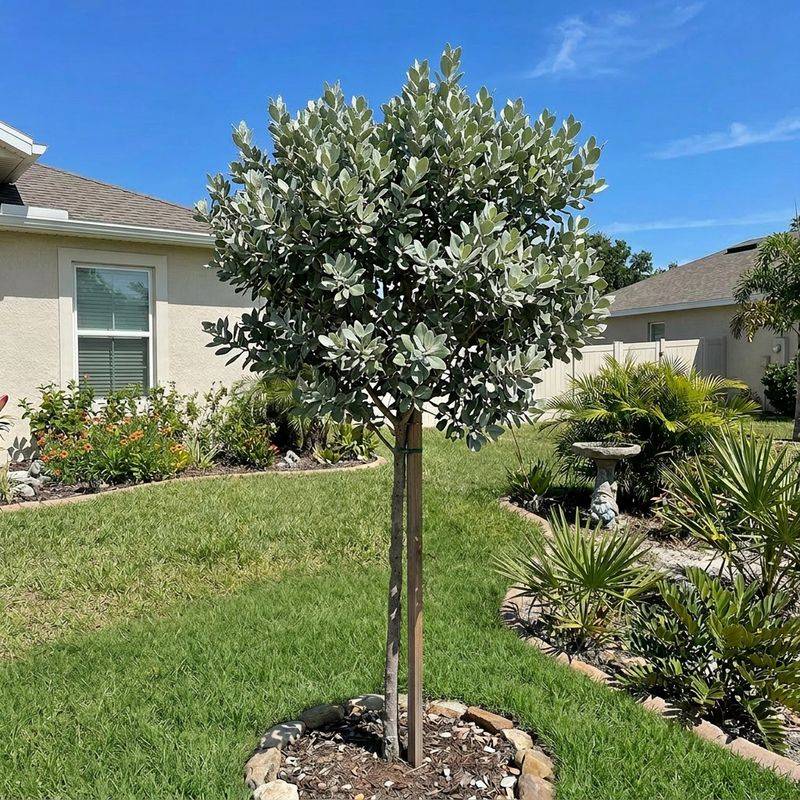
Silver foliage can brighten a bed even when nothing is blooming. Silver buttonwood brings that contrast to coastal South Florida gardens, standing out against dark windows, green lawns, and deep-colored foliage.
Its soft-looking leaves are the attraction, but this is not a small foundation shrub by nature. Buttonwood can become a sizable tree, so choose a compact selection where available or give a shrub-form plant a generous open space.
Full sun helps maintain a dense shape and strong silver color. It tolerates salt exposure and established plants handle dry conditions, making it useful where less suitable ornamentals struggle near the coast.
Cold sensitivity limits its usefulness farther north. It also does not belong in a narrow entrance bed where keeping it below a window would require repeated hard pruning.
Try one as an accent at the outer corner of a large planting bed, with lower plants in front. Occasional selective pruning will preserve its form, but anyone needing a permanently tiny shrub should choose another plant on this list instead.
6. Firebush
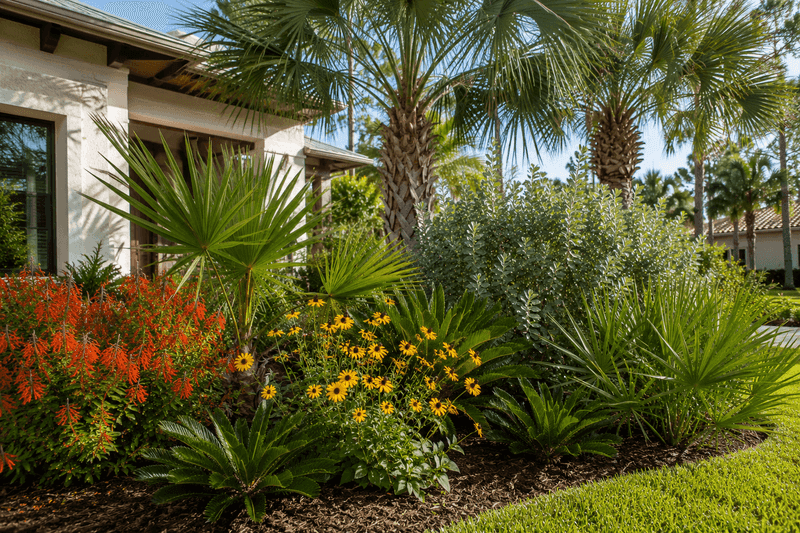
Butterflies bring the movement, and orange-red flowers supply the color. Firebush is a lively choice for homeowners who want a front bed to feel welcoming without replacing seasonal flowers several times a year.
For a Florida-native planting, ask for Hamelia patens var. patens and buy from a nursery that can confirm its identity. Plants sold simply as dwarf firebush may be nonnative forms or hybrids.
Sun produces the best flowering, although some shade is tolerated. In warm Central and South Florida locations, firebush can become a large shrub, so leave several feet between it and paths, windows, or neighboring plants.
North Florida gardeners should expect frost damage or winter dieback rather than year-round screening. Wait until the danger of frost has passed before removing dead stems, and treat its seasonal return as part of the plan.
Once roots are established, firebush handles heat and dry spells well. Let it grow loosely in a roomy bed; constant shearing removes blooms and defeats its biggest advantage, a long-lasting food source for visiting pollinators.
7. American Beautyberry
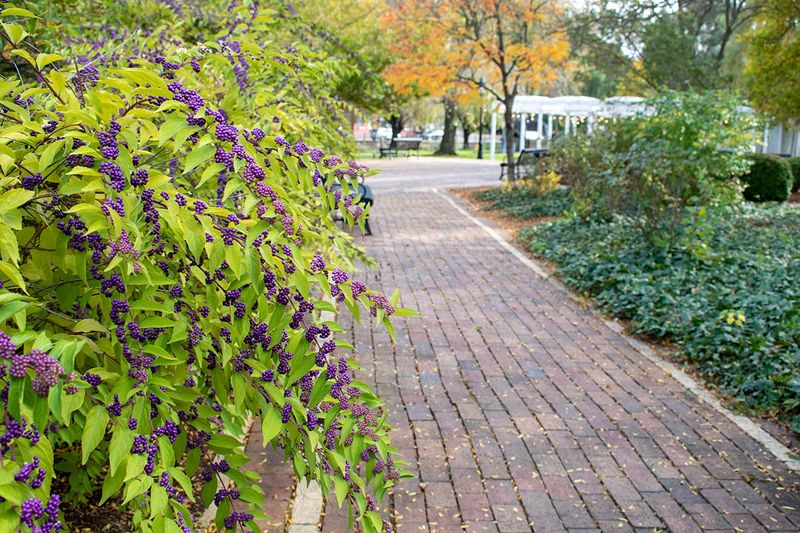
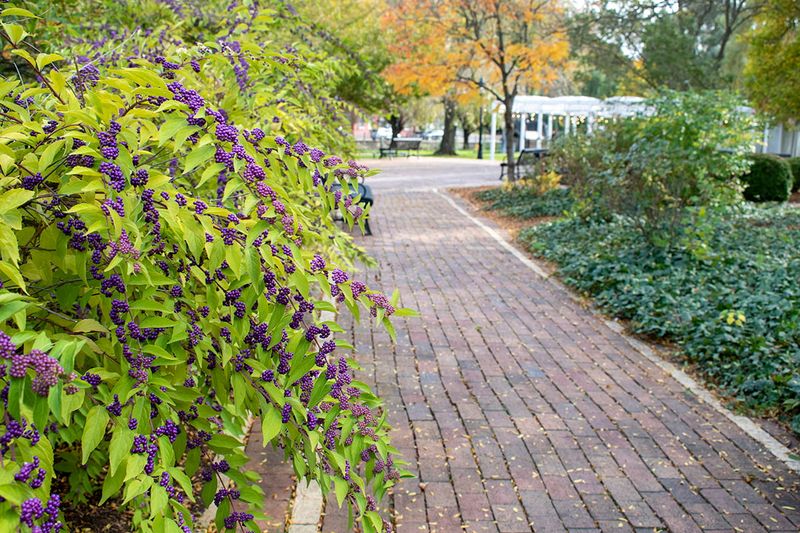
Purple berries lined along arching stems give this shrub a show that clipped evergreens cannot match. American beautyberry is especially useful where a front yard meets a wooded edge or needs a softer, more natural look.
This Florida native commonly grows about 4 to 8 feet tall and wide. Give it partial shade or sun with suitable moisture, remembering that hot, exposed sites may need extra water during extended dry weather.
Beautyberry loses its leaves in winter, so do not rely on it to hide utility equipment year-round. Pair it with evergreen shrubs if you want a bed that still has a clear outline after the berry display fades.
The fruit attracts birds, and fallen seeds may produce volunteers. Pull unwanted seedlings while they are small, or leave a few where an informal planting has room to spread.
Pruning is simple rather than constant. In late winter or early spring, before new growth begins, cut back as needed to control size and encourage fresh stems, then leave it alone to flower and fruit.
8. Florida Anise
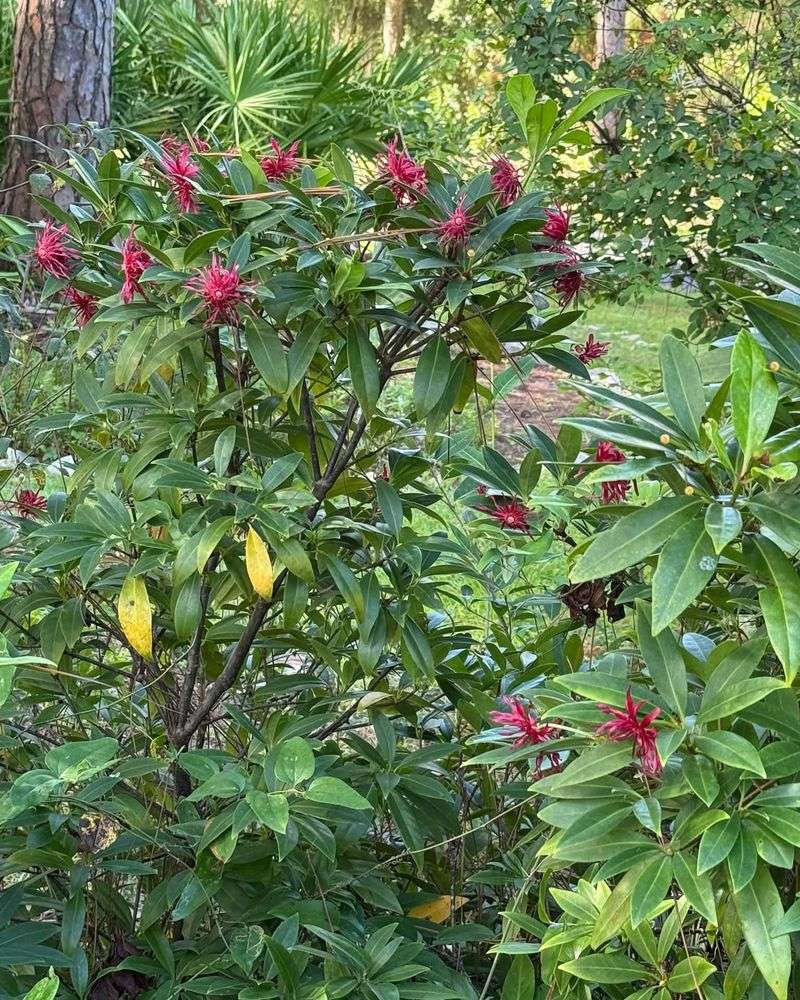
That shaded corner beside the porch does not need to stay bare. Florida anise offers broad evergreen leaves and unusual dark red flowers where sun-loving shrubs would stretch and struggle.
Best suited to North Florida and appropriate Central Florida sites, this native shrub prefers partial to full shade and moist, organic soil. It is a strong candidate for a naturally damp bed, but a poor match for dry sand beside a hot driveway.
Expect the species to reach roughly 6 to 10 feet tall, sometimes larger in favorable conditions. Smaller cultivars are available, and choosing one that fits beneath your windows is easier than repeatedly cutting back a full-size plant.
The leaves release a spicy scent when crushed, but do not use them for cooking. Florida anise is not culinary star anise, and the plant should not be eaten.
Its low-work value comes from matching it to the right spot. Where moisture is already available, mulch and occasional removal of awkward branches may be enough; where irrigation is constantly needed, a more drought-tolerant selection makes better sense.
9. Wax Myrtle
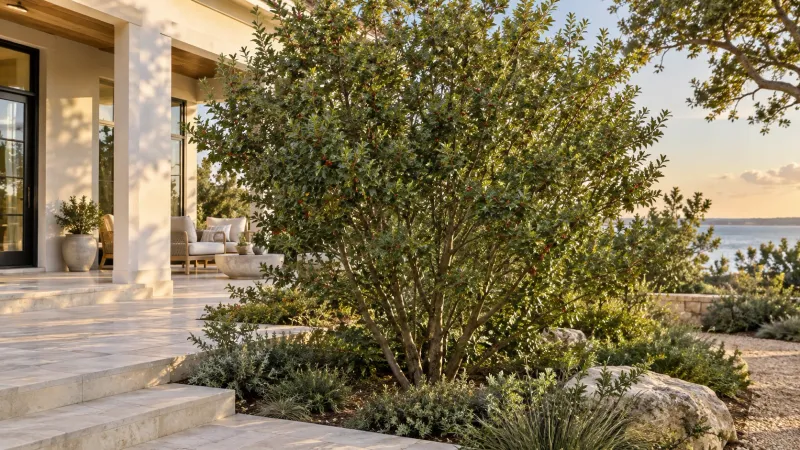
Privacy gets easier when the plant is allowed to be large. Wax myrtle makes a useful informal screen along a front-yard boundary, especially where a small decorative shrub would never provide enough coverage.
This Florida native grows quickly and commonly reaches 10 to 20 feet tall. Compact selections exist, but nursery labels deserve careful reading because even a smaller form may outgrow a narrow foundation bed.
Sun or partial shade works, and established plants tolerate a range of soils, including sandy sites. Wax myrtle can also handle periodic wet conditions, making it helpful in some areas where less adaptable screening plants struggle.
Female plants produce small, waxy berries when pollinated, providing food for birds. Its loose foliage also offers cover without requiring the smooth, clipped surface of a formal hedge.
Plant well away from the house and allow its mature spread rather than forcing it into a tight wall. Remove damaged branches and thin selectively when necessary; for a narrow strip beneath front windows, the dwarf yaupon or a compact viburnum is a better fit.