
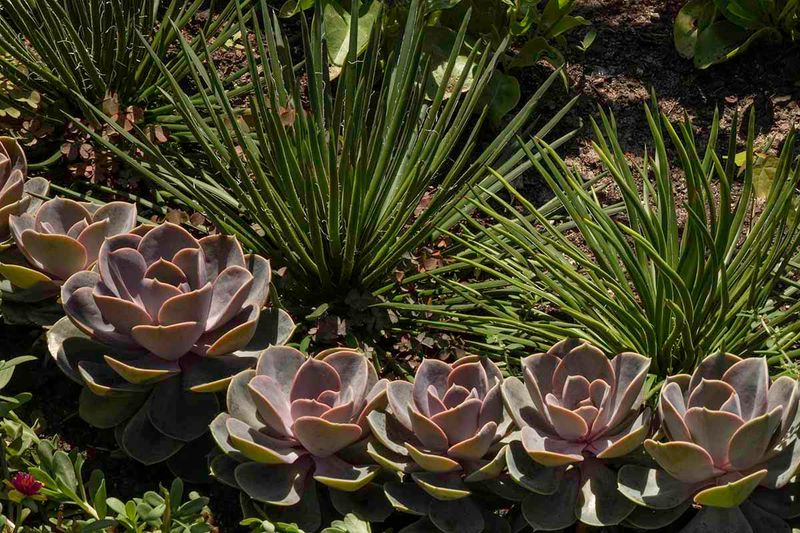
That fat little leaf that snapped off your succulent last week is not trash. In California’s mild winter, many common succulents can grow roots and a brand-new baby plant from one fallen leaf.
Start now, and you could have a shelf full of free, water-wise plants ready for your patio or garden beds by spring. Here are ten easy picks that tend to work best, plus what makes each one worth trying.
1. Ghost Plant (Graptopetalum paraguayense)
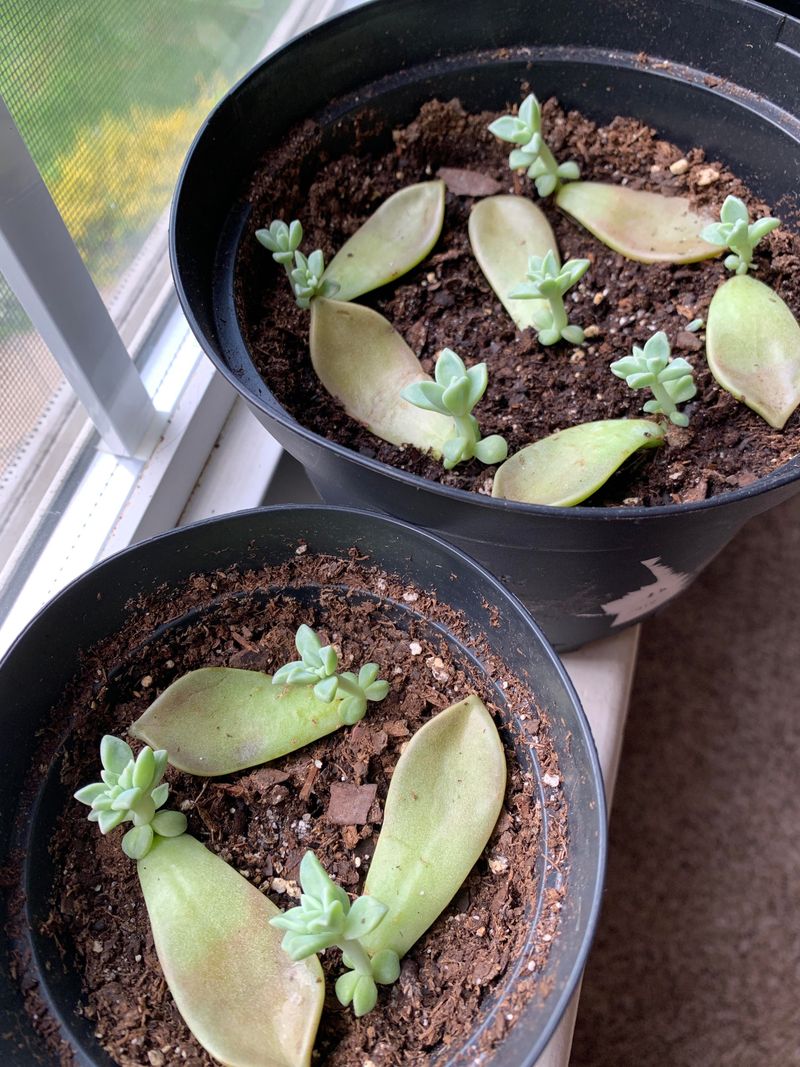
Gardeners joke that ghost plant propagates itself out of spite. Bump a stem with your elbow and leaves rain down, and a few weeks later many of them sprout tiny rosettes right where they landed.
The thick, pearly leaves pop off cleanly, which is exactly what you want. A clean break keeps the growth point at the base intact, and that point is where roots and a new plant usually form.
Lay leaves on top of dry cactus mix in bright shade and wait. Skip watering until you see pink roots, then mist lightly every few days.
In coastal and inland valley yards, ghost plant handles light frost and summer heat, so the babies can go straight into a dry border or rock garden by spring.
2. Jade Plant (Crassula ovata)
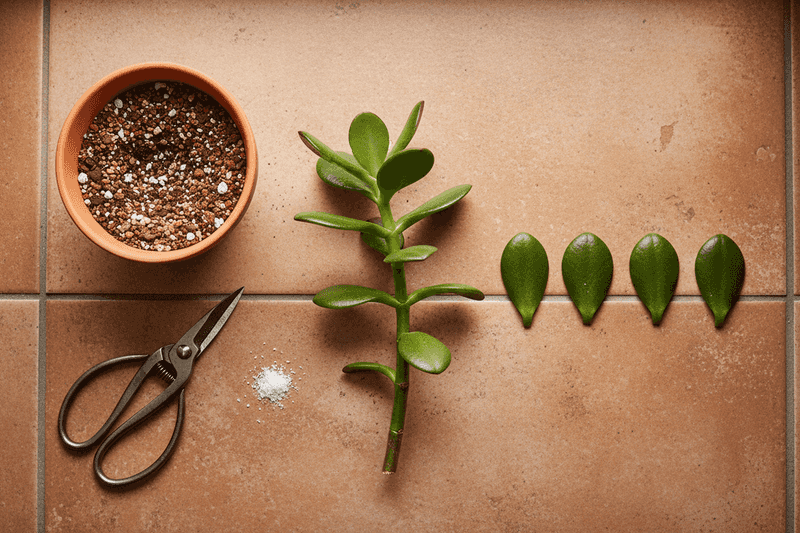
Walk any older neighborhood from San Diego to Sacramento and you’ll spot jade shrubs taller than the mailbox. Most of them probably started as a cutting or a leaf someone passed over the fence.
Jade leaves are slower than some on this list. Expect roots in three to five weeks and a visible baby in two months or more, so winter is a smart time to start.
Let each leaf dry for a few days so the broken end calluses. Then press it gently onto fast-draining soil.
Once established, jade can get by on very little summer water, making it a solid choice for drought-conscious yards.
3. Echeveria ‘Perle von Nurnberg’
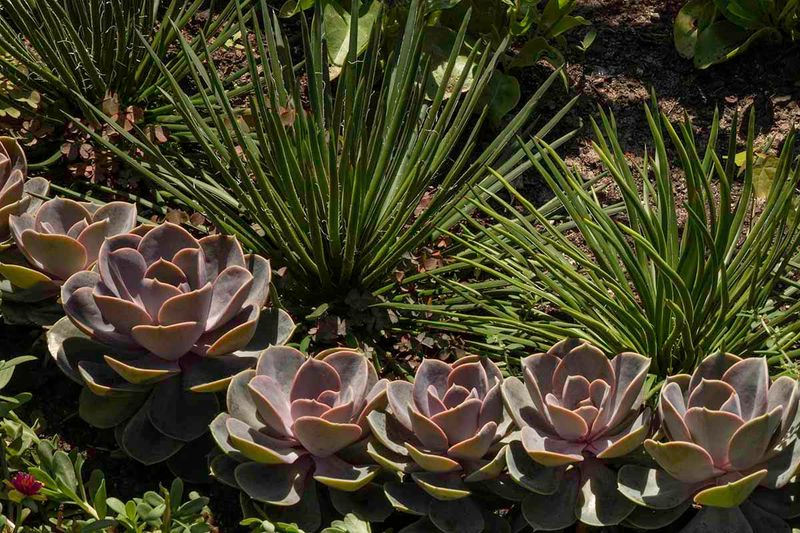
Picture a dusty rose-colored flower made of wax. That’s Perle von Nurnberg, and its leaves root with surprising reliability.
The trick with echeverias is how you remove the leaf. Wiggle it gently side to side until it pops off whole, because a torn leaf with no base often shrivels instead of sprouting.
These babies grow into full rosettes that make lovely front porch bowls. Give them morning sun and afternoon shade inland, since hot afternoon rays can scorch that pretty coloring.
4. Sedum ‘Burrito’ (Burro’s Tail)
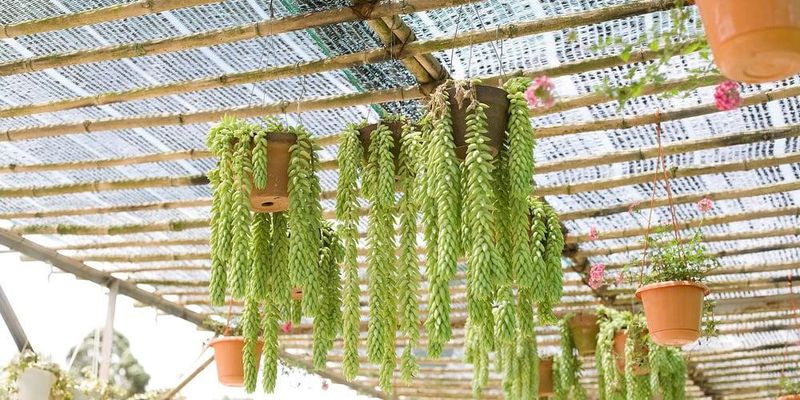
If you’ve ever repotted burro’s tail, you know the pain. Touch it and those plump little bead leaves scatter everywhere like spilled jellybeans.
Good news: almost every one of those beads can become a new plant. Scoop them up, sprinkle them over a shallow tray of gritty mix, and leave them in bright, indirect light.
Within a month you’ll often see miniature stems poking up. Plant several in one hanging basket for a fuller look.
Burro’s tail likes protection from harsh afternoon sun, so a covered patio or north-facing porch suits it well.
5. Jelly Bean Plant (Sedum rubrotinctum)
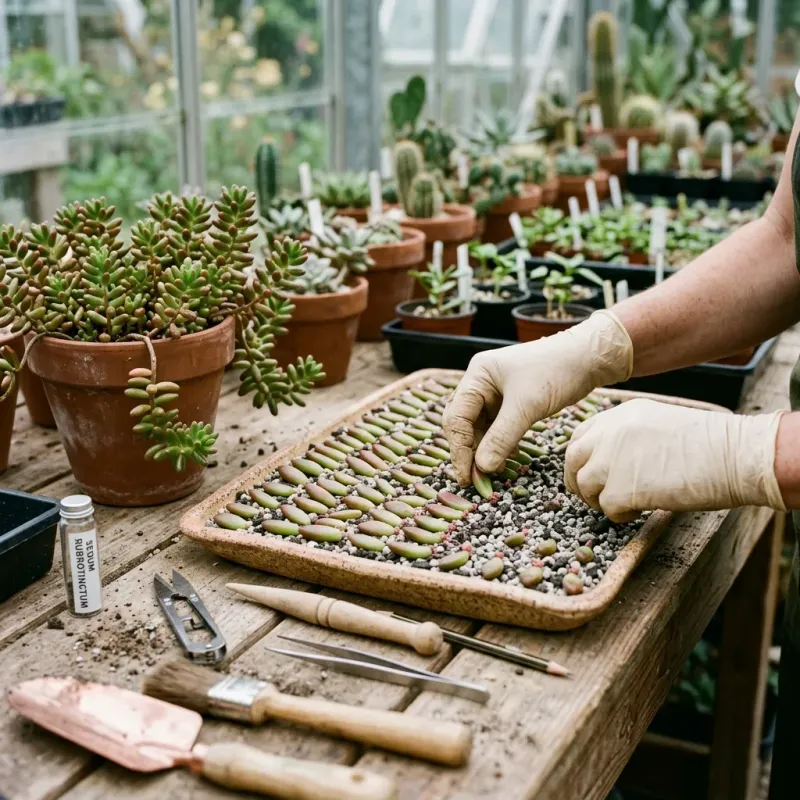
Kids love this one, and honestly so do adults. The glossy green leaves blush cherry red in full sun and cool weather, so a California winter brings out its best color.
Fallen leaves root almost anywhere they land. That makes jelly bean plant a fun way to fill gaps between stepping stones or the edges of a dry garden bed.
One caution: the sap can irritate skin and is not meant for pets to chew. Wash your hands after handling, and plant it where curious dogs won’t snack on it.
6. Graptoveria ‘Fred Ives’
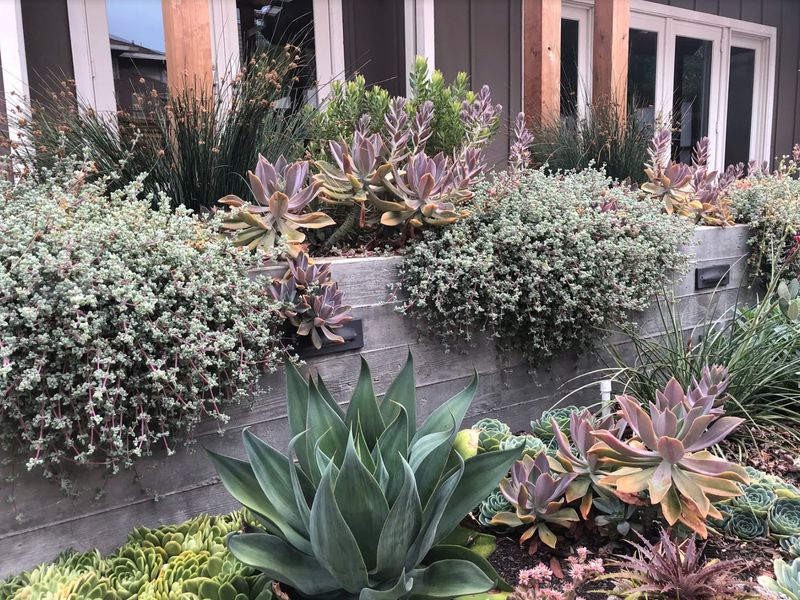
Need volume fast? Fred Ives is a hybrid between ghost plant and echeveria, and it grows big rosettes that can reach eight inches or more across.
Its leaves combine the easy rooting of one parent with the showy color of the other. Shades shift from bronze to pink to lavender depending on sun and temperature.
A dozen leaves started in January can become a tidy row of rosettes along a walkway by late spring. For homeowners replacing thirsty lawn edges, that’s a free and water-wise upgrade.
7. Pachyphytum oviferum (Moonstones)
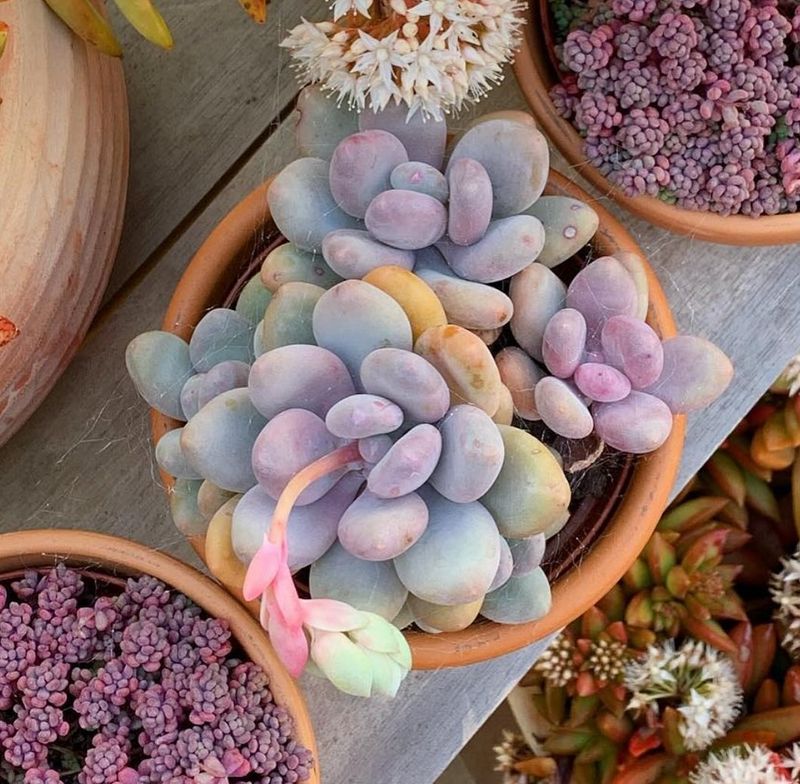
Moonstones look like a nest of pale blue eggs dusted with powder. Collectors adore them, and a single leaf can start a whole new plant.
Handle gently. The powdery coating, called farina, rubs off with fingertips and doesn’t grow back on that leaf, though new growth will have it.
Use tweezers or hold leaves by the edges. Keep them dry, bright, and patient, since moonstones can take a bit longer than sedums to show roots.
8. Kalanchoe ‘Flapjacks’ (Kalanchoe luciae)
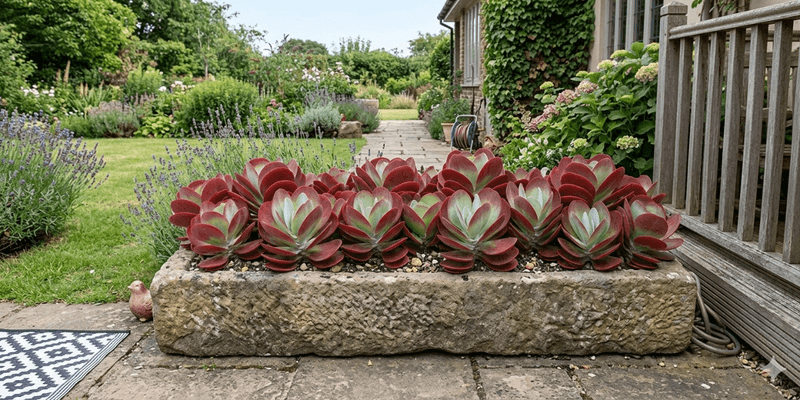
Here’s an honest heads-up: flapjacks are a bit hit-or-miss from a single leaf. Many gardeners have better luck with stem cuttings or the offsets the plant produces after blooming.
Still, it’s worth trying. Stand a mature paddle leaf upright, base pressed slightly into dry gritty mix, and you may get roots within several weeks.
Those big red-rimmed paddles look striking in modern planters and coastal gardens. Bring pots under cover if a hard frost is forecast, since flapjacks can be damaged by cold nights inland.
9. Sedum morganianum x Echeveria (Sedeveria ‘Jet Beads’)
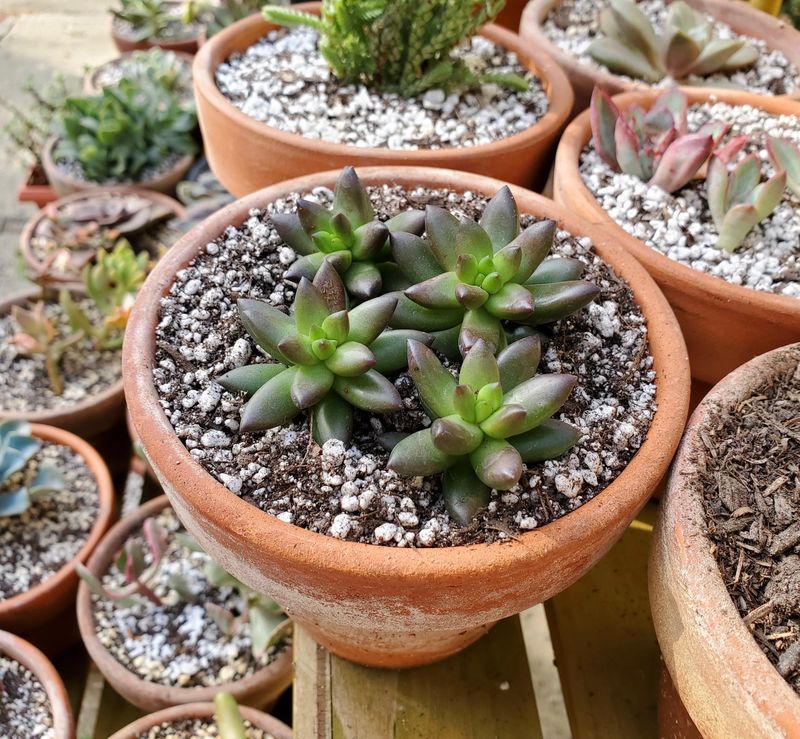
Sedeverias are crosses between sedum and echeveria, and many of them root from leaves as eagerly as their sedum parent. Jet Beads stands out with shiny leaves that turn almost black-bronze in cool sun.
Its compact size makes it a natural filler for dish gardens. Tuck rooted babies between larger rosettes for contrast.
Like most in this group, it prefers dry feet. In wet winter spells, keep trays under an eave so rain doesn’t rot the young plants.
10. Echeveria elegans (Mexican Snowball)
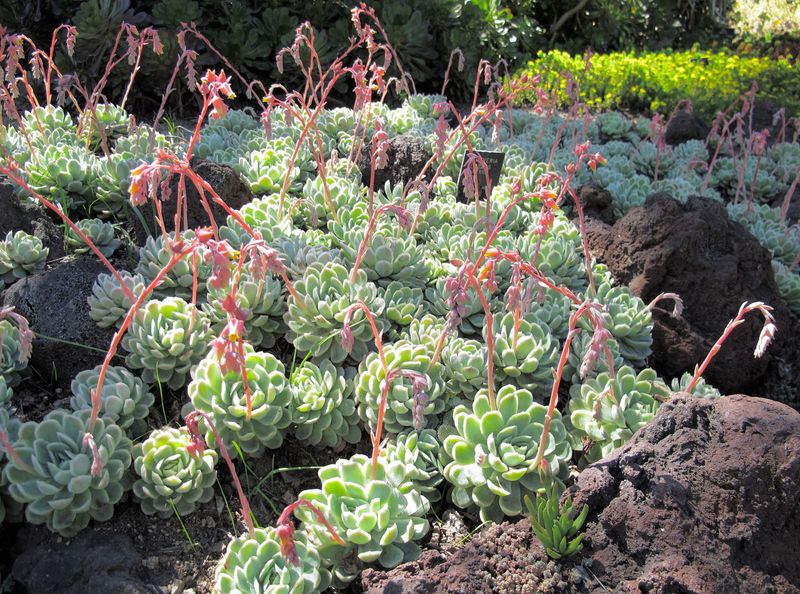
Silvery blue and tightly packed, Mexican snowball forms neat mounds that look great edging a path or filling a front bed.
Leaves root reliably, though many gardeners also pull off the offsets it makes on its own. Use both methods and you’ll have plenty to share with neighbors.
Bonus for wildlife lovers: its coral-pink bell flowers can attract hummingbirds and bees in spring. Pair it with California natives like buckwheat or sage for a water-wise bed that supports pollinators without extra irrigation.