
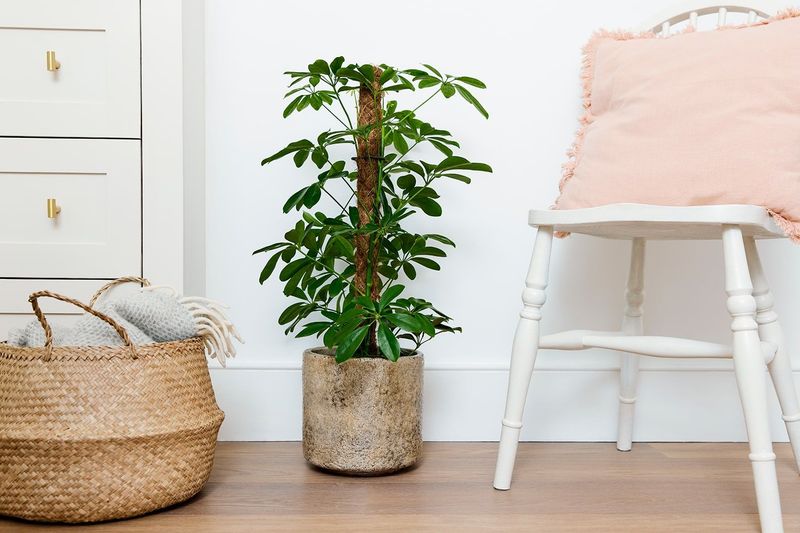
Plenty of Florida yards have a schefflera that looked like a bargain at the nursery and now needs constant cutting back. There is a native shrub that can fill a similar screening job in the right spot.
Wild coffee has glossy leaves, stays evergreen, and grows into a rounded hedge. It looks different from schefflera and has its own list of needs, so here is how to decide if it fits your yard.
Schefflera poses a regional escape concern, not a statewide planting ban
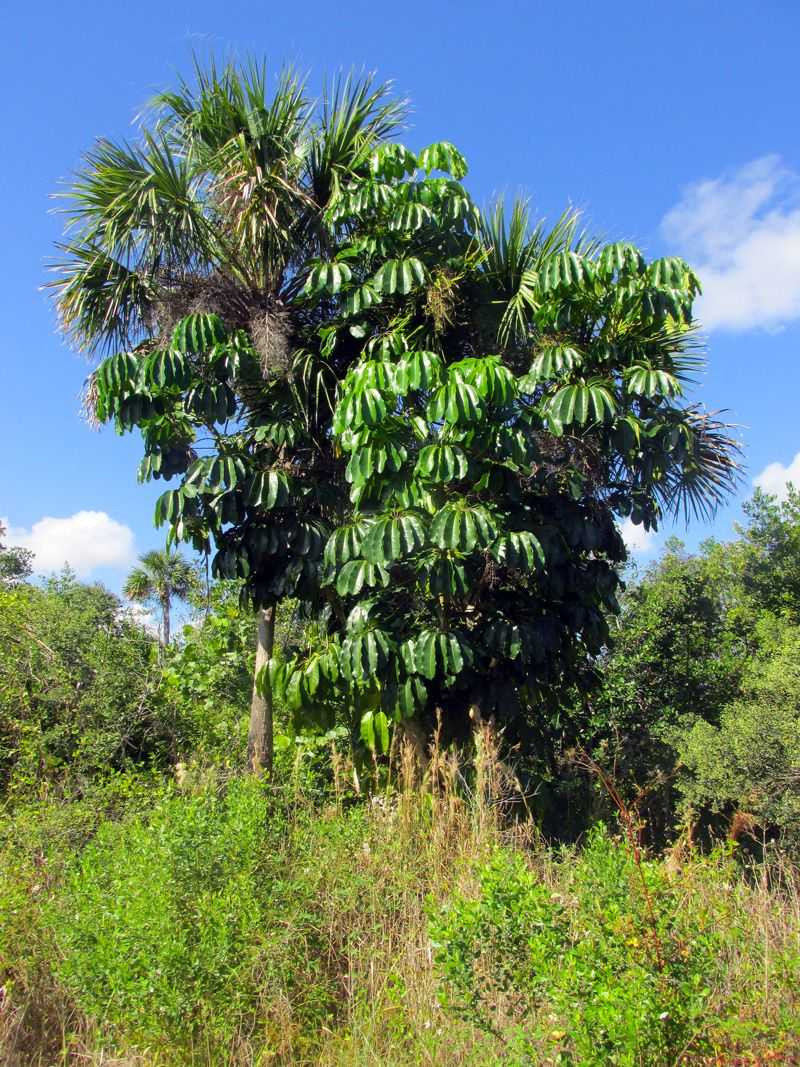
Schefflera is easy to love at first. It grows fast, stays green all year, and makes a tall tropical screen.
Over time, many Florida gardeners find it outgrowing its spot, and that is where the concern starts.
The answer depends on where you live. UF/IFAS assesses schefflera as invasive and not recommended in Central and South Florida.
For North Florida, the same assessment says it is not currently considered a problem and may be recommended there.
The worry is about escape. The Florida Natural Areas Inventory lists schefflera as a Florida Invasive Species Council Category I plant and documents it spreading into natural areas, including hammocks.
Seeds from yard plants can sprout in forests, where the plant competes with native species.
None of this means schefflera is illegal. The Florida Invasive Species Council list is nonregulatory, and the state agriculture department regulates plants that also appear on its noxious weed list.
FNAI reports schefflera is not listed there. A UF/IFAS guide to Florida’s many plant lists explains how the lists differ.
So this is a choice, not a ban, and many gardeners in Central and South Florida simply prefer a native option.
Wild coffee offers lush foliage, not schefflera’s umbrella shape
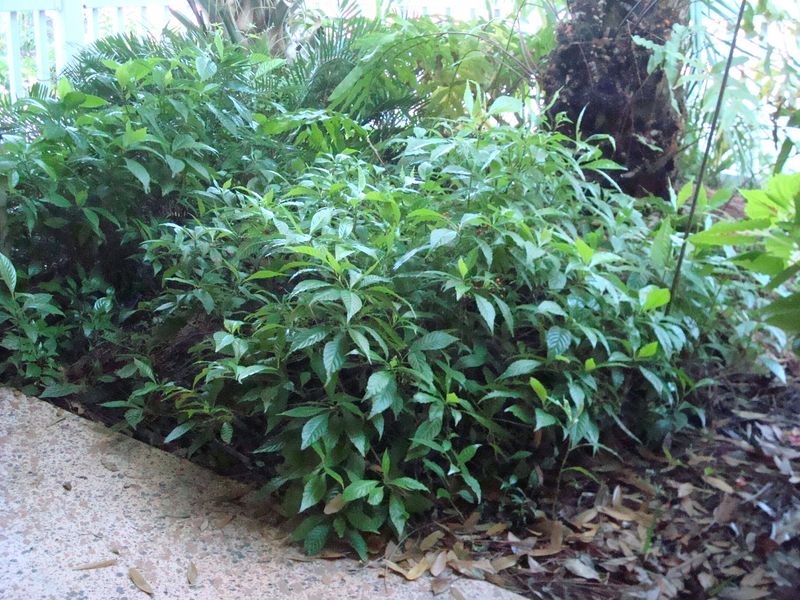
Picture the two plants side by side. Schefflera has big leaves split into several leaflets that fan out like an umbrella.
Wild coffee has simple, glossy, dark green leaves about six inches long, set in opposite pairs along the stem.
Scale is the bigger difference. UF/IFAS describes wild coffee as an evergreen, dense, rounded shrub, typically 4 to 10 feet tall and 4 to 8 feet wide.
The UF/IFAS schefflera fact sheet says that plant can reach 30 to 40 feet.
That means wild coffee will not tower over a fence line or hide a second story. It suits a screen at eye level, a hedge along a patio, or a mass planting under trees.
Think of it as a lush native screen with a different texture. If you want the bold, tropical umbrella look, wild coffee will not copy it.
If you want thick, glossy green that fills space and stays evergreen, it can do that job in the right conditions.
Match wild coffee to the light before planting
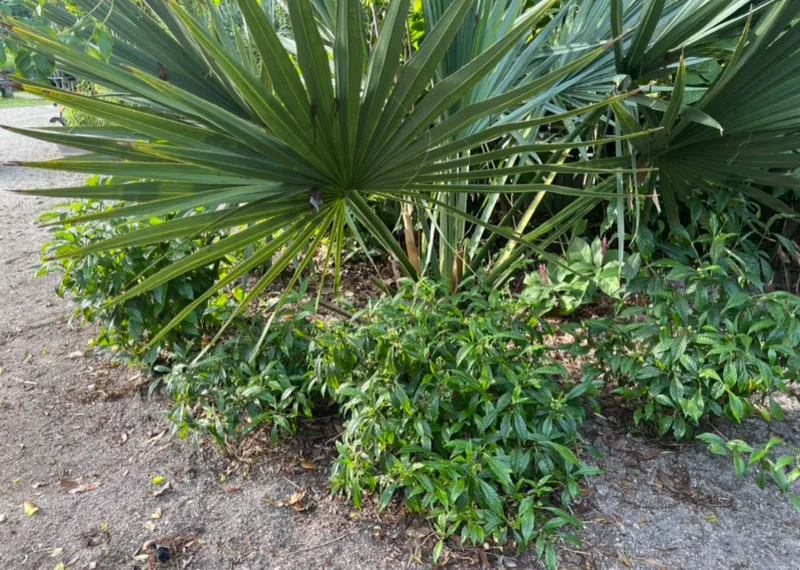
Light decides whether wild coffee becomes the full screen you imagined or a disappointment. Walk your yard in the morning and again in the afternoon, and note which spots stay shaded.
According to UF/IFAS Gardening Solutions, wild coffee performs best in partial to full shade and in well-drained soil. Under oaks, along the north side of a house, or beneath taller palms are the kinds of places that fit.
Full sun is a poor match. It can turn the leaves yellow and keep the plant small, so you may end up with a thin, pale row instead of a dense hedge.
Very deep shade has its own effect. The shrub can grow more open and take on a small-tree form, with leaves held higher and fewer low branches to block views.
If you want a thick screen to the ground, aim for the lighter end of shade.
Soil matters too. The UF/IFAS plant fact sheet points to well-drained ground, which suits most sandy Florida yards.
Avoid low spots where water stands after summer storms.
Space and clip the hedge for the screen you want
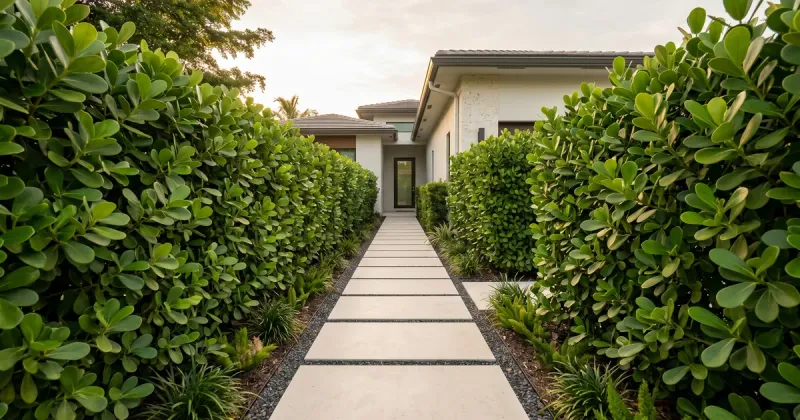
Spacing is where planning pays off. UF/IFAS lists a spacing of 36 to 60 inches for wild coffee, which is three to five feet between plants.
Choose within that range based on patience. Closer spacing will knit together sooner, while wider spacing gives each shrub room and costs less.
No source gives a firm growth rate, so expect to wait rather than count on an instant wall.
Mature size matters as well. Gardening Solutions gives a typical spread of 4 to 8 feet, so keep plants well back from walkways, foundations, and air conditioning units.
Wild coffee can be clipped for hedge use. Light trimming can shape a formal edge, or you can leave it loose for a softer look.
Pick your style before planting so the spacing fits it.
Water needs and cold sensitivity shape the care commitment
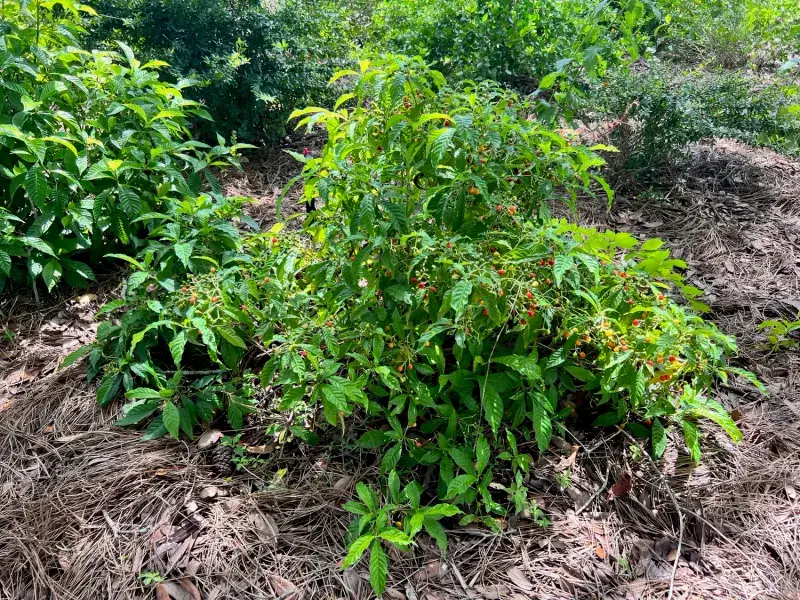
Wild coffee is not a plant you can ignore once it is in the ground. It is moderately drought tolerant, but it is sensitive enough that it needs extra water during dry spells.
Newly planted shrubs need the most attention. UF/IFAS guidance on establishing shrubs covers watering new plantings until roots spread.
Watch for drooping leaves in spring dryness, and add mulch to hold moisture.
Cold is the other limit. UF/IFAS sources do not agree on the exact range.
Gardening Solutions recommends Zones 9 to 11 and cautions about frost north of Zone 9. The plant fact sheet lists Zones 10B to 11 and says to protect it north of 10B.
Treat wild coffee as cold-sensitive. Do not count on it surviving hard freezes, and do not assume it will perform reliably across North Florida.
In a borderline spot, plant it near a house wall or under tree cover and be ready to cover it on frost nights.
Flowers and fruit add value for wildlife
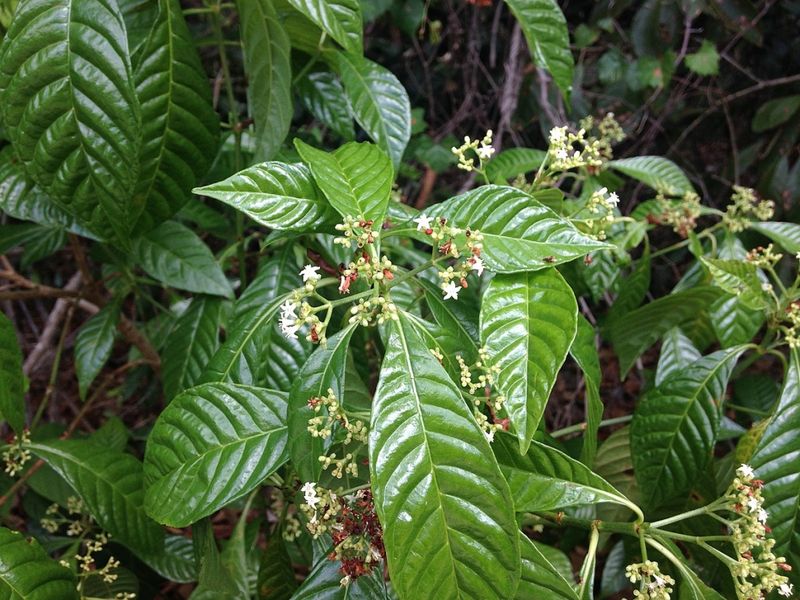
Beyond the leaves, wild coffee has a quiet seasonal show. Small white flowers appear first, followed by red fruit that stands out against the dark green foliage.
The fruit draws wildlife. UF/IFAS notes that birds and other wildlife eat it, which adds movement to a shady corner.
The flowers matter for one rare insect. They provide nectar for the Atala butterfly, found primarily in southeast Florida.
If you garden there, a patch of wild coffee can help support that species.
The fruit looks a bit like coffee beans, but UF/IFAS says it contains no caffeine. Leave it for the birds.
It is not a food or coffee substitute for people.
Choose wild coffee for a suitable shaded screen, not an identical swap
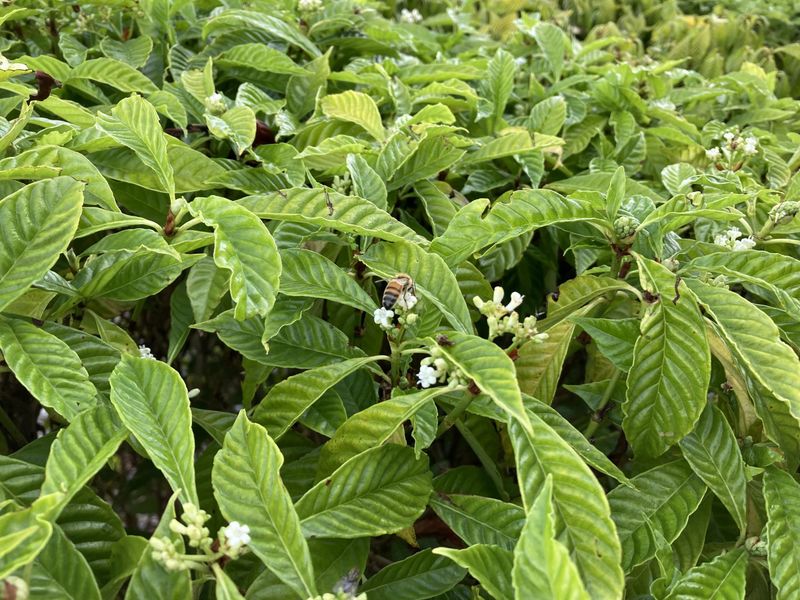
Here is the simple rule: choose wild coffee if you have a shaded, well-drained Florida spot, want a native evergreen hedge, and accept a smaller plant with simpler leaves. Light and frost decide success, and the fact sheet advises protecting it in colder areas.
It can replace what schefflera did as a screen, but not how it looks.
A good swap fills the space without borrowing someone else’s face.