
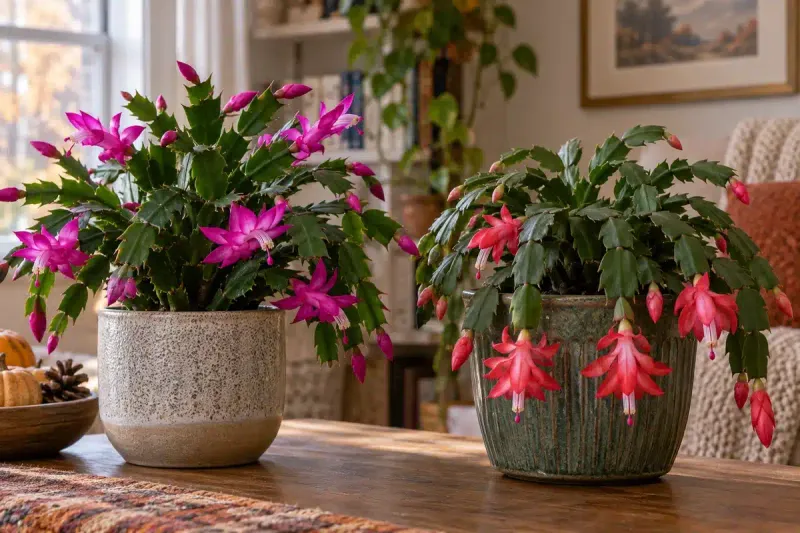
Your Christmas cactus has dropped its last flower, and the green stems look a little plain. What you do next can shape whether buds show up again.
A cool, calm rest with the right light and nights may nudge the plant toward another round of color. Here is how to do it safely, and what no routine can promise.
A cool rest may help, but it cannot promise another bloom
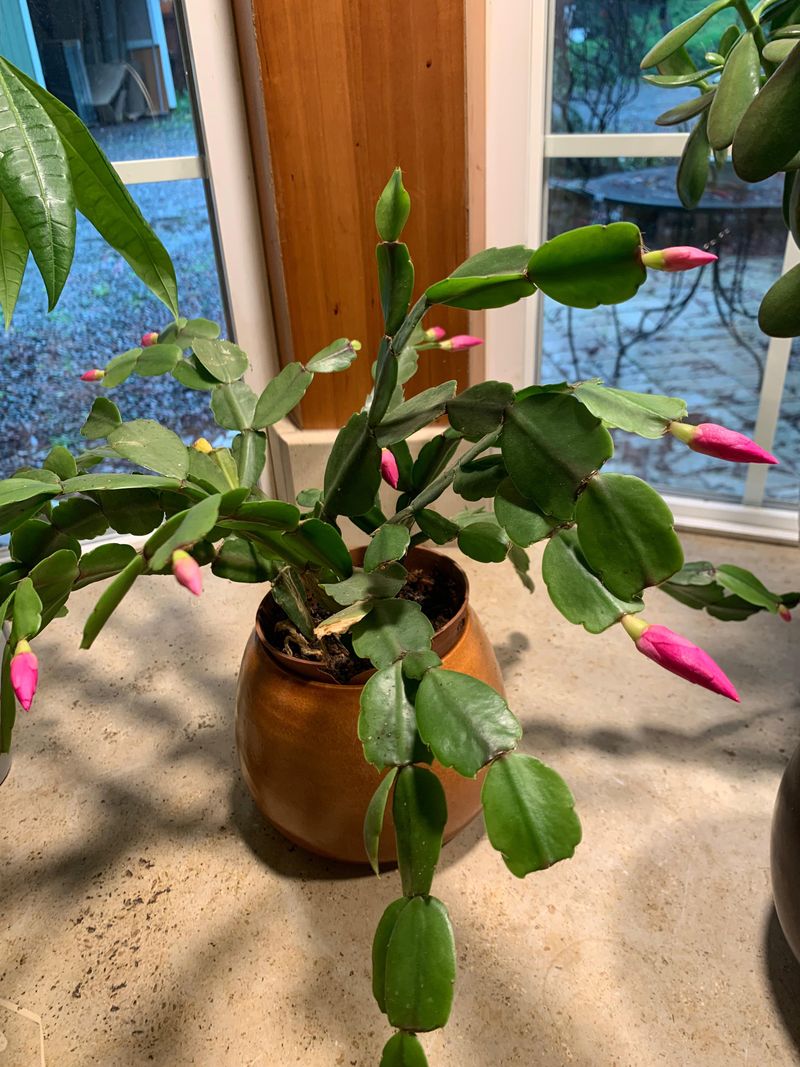
Plenty of gardeners get a second flush from a Christmas cactus, but nobody can schedule it. Penn State Extension notes that repeat flowering is possible with appropriate care, which is encouraging, though it stops short of a promise.
The rest period after flowering mainly gives the plant a chance to recover. Whether buds form depends on several things working together.
University of Minnesota Extension points to cool temperatures and long, uninterrupted nights as key conditions, so cool air alone is not enough.
Names can be misleading too. Christmas, Thanksgiving, and Easter cactus describe roughly when each type may bloom, not a date you can count on.
Christmas and Thanksgiving types usually flower in late fall or winter, while Easter cactus tends to set buds later and flower in late winter or early spring.
Because timing varies with the type of plant and your home conditions, treat this routine as a way to support the plant, not a countdown to a second show before spring.
Give the plant a cool, bright daytime rest
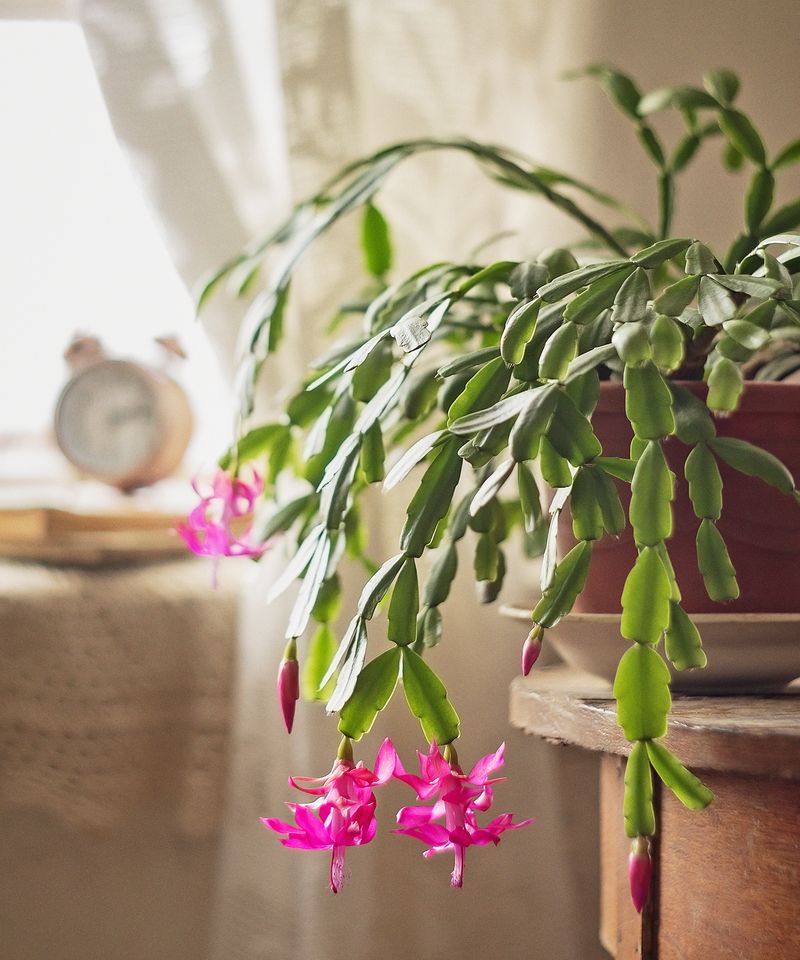
Pick a spot that stays cool but safe, such as a bright spare room, a sunporch that never freezes, or a window in a cooler part of the house. The Royal Horticultural Society suggests a post-flowering rest at about 55 to 59°F, placed in late winter, roughly late January through March.
Think of that as a helpful guideline, not a rule every home must match.
During the day, bright but indirect light suits the plant best. A spot near a window with a sheer curtain works well, and direct afternoon sun through glass can scorch the stems.
Cool should never mean cold shock. Iowa State Extension warns that cold exposure in winter can damage plants or cause buds to drop.
Keep the pot away from frosty glass, unheated entryways, and drafty doors.
If you have to move the plant to find a cooler place, do it in one gentle step rather than hauling it between hot and cold rooms. A simple thermometer on the shelf takes the guesswork out.
Reduce watering without drying the root ball
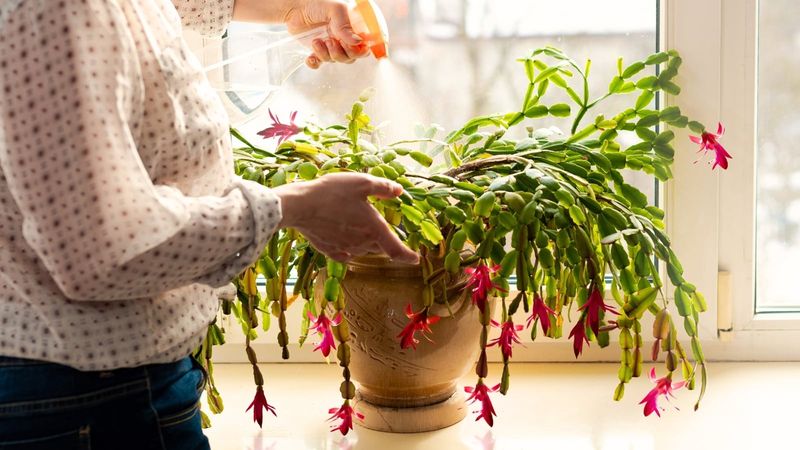
Slow the watering, but do not stop it. A Christmas cactus is a rainforest plant, not a desert cactus, so it does not want to bake dry.
The RHS advises letting only the top few centimeters of compost dry between waterings during the rest, while never letting the whole root ball dry out.
Sources do not agree on exactly how little water is right. The Chicago Botanic Garden says very little water may be needed for about two months, but suggests giving a small amount if the stems start to shrivel.
That mix of advice points to one practical habit: check the plant. Push a finger into the soil, lift the pot to feel its weight, and look at the stems.
Plump, firm segments mean all is well. Wrinkled ones mean it is time for a small drink.
Overwatering is a risk as well, and Iowa State Extension cautions that both extreme dryness and soggy soil can cause problems. Empty the saucer so roots never sit in water.
As spring growth begins, you can gradually water more often.
Long, uninterrupted nights matter too
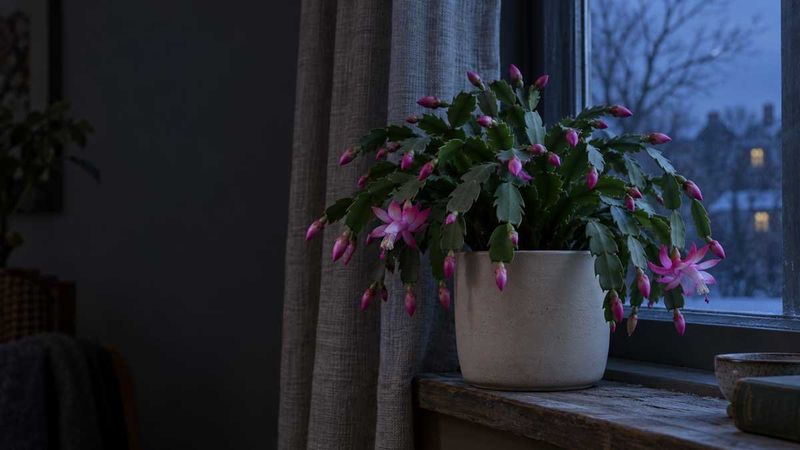
Cool air is only half the story. Buds also respond to the length of the night, and a lamp that flicks on at 9 p.m. can interrupt the darkness the plant is reading.
Choose a room where lights are rarely switched on after dusk, or cover the plant with a breathable cloth at night.
Guidance differs by source, so use it as a starting point. Penn State Extension recommends 12 to 14 hours of darkness after bloom when trying to encourage another round of flowers.
The University of Minnesota takes a slightly different approach. UMN Extension describes about six weeks of short days, with nights of 55 to 65°F.
When nights are 60 to 65°F, it calls for 12 hours of complete darkness.
Those recommendations are not one formula, and none of them guarantees buds. Pick a routine, keep it consistent, and watch for tiny bumps at the stem tips.
If none show up, your plant may simply be on its own schedule this year.
Keep conditions steady once buds appear
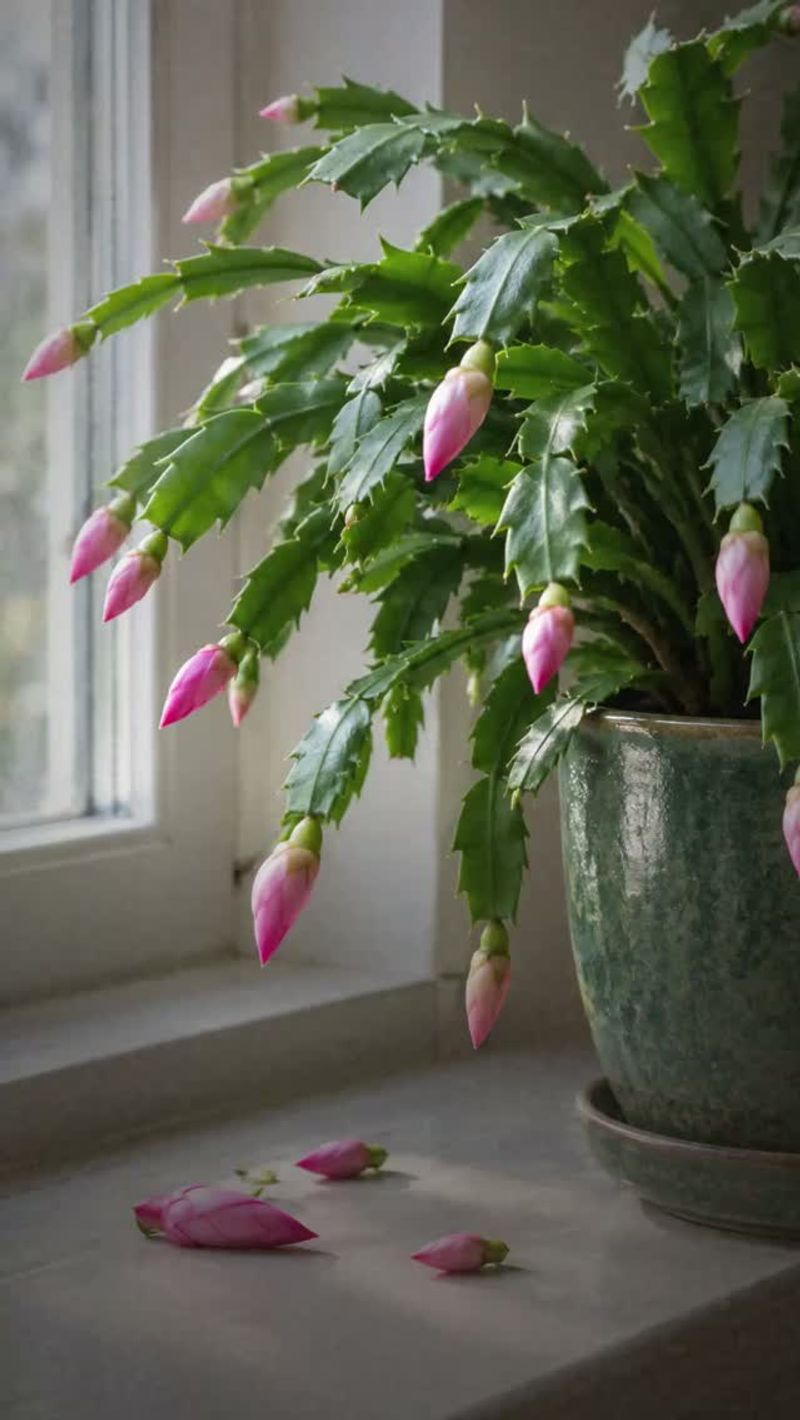
Spotting the first tiny buds feels great, and it is also the moment to hold still. Bud drop is a common heartbreak, and sudden changes in temperature, light, location, or watering can contribute to it.
Iowa State Extension lists these shifts among the reasons buds fall.
Resist the urge to turn the pot for a better view. Mark the side facing the window with a small sticker so you can see if it gets moved.
Keep it out of the path of heating vents, space heaters, and cold drafts.
Water on a steady pattern, keeping the soil lightly moist rather than swinging between soggy and bone dry. The NC State Plant Toolbox is another good reference for the plant’s general needs.
Steady care protects buds that have already formed. It cannot make more of them appear, and a few may still drop even in good conditions.
If that happens, the plant is not necessarily failing.
Resume more frequent watering as growth returns
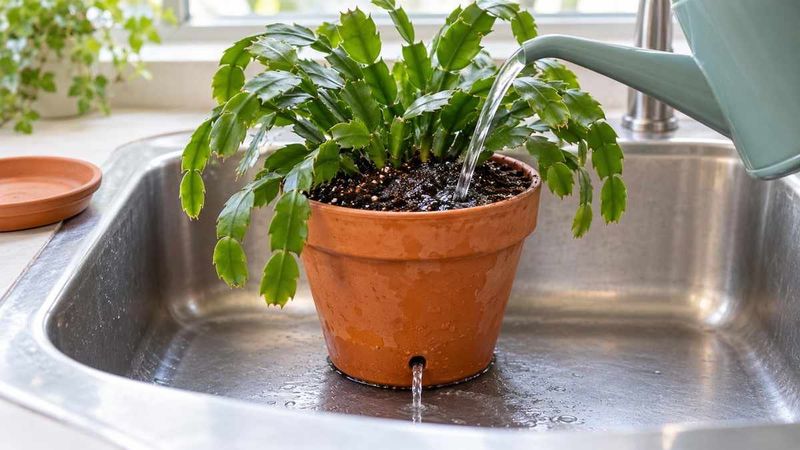
Spring gives the clearest signal. When you see fresh, pale green segments sprouting at the stem tips, the rest is over.
Water a little more often and keep the soil from drying out fully, as the RHS advises as active growth resumes.
Until then, the routine is simple: a cool indoor spot, bright indirect light by day, dark nights, and modest watering that never lets the root ball dry out. Avoid frost, drafts, and abrupt moves.
Remember that University of Minnesota Extension ties flowering to several conditions at once. This care may support another bloom, but it cannot promise a second flush or a date for it.
A healthy plant that skips a round has still done its job. It will be ready for next season.