
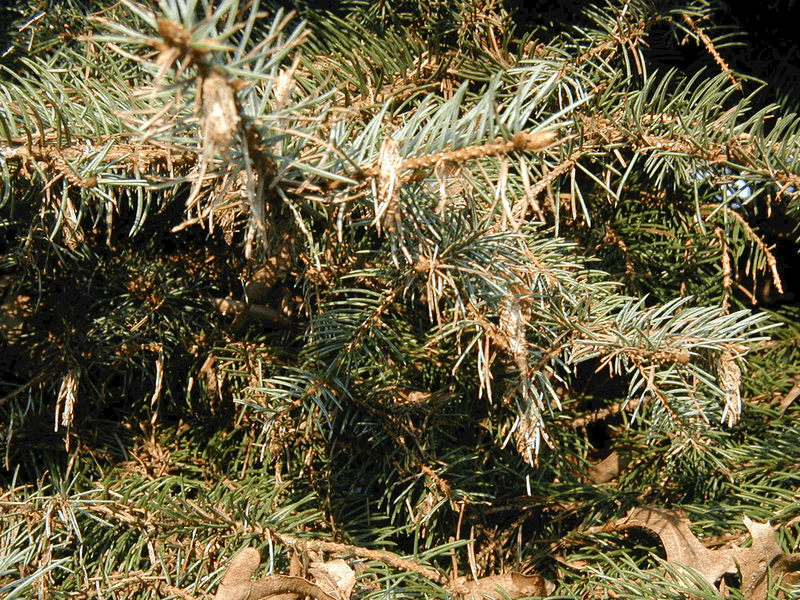
You spot a small brown cone dangling from your arborvitae and wonder if it is a seed pod, a cocoon, or something else. In many North Carolina yards, it could be a bagworm case holding eggs for next spring.
Other brown objects on twigs, like a mantis egg case, look different up close and deserve a different choice. A careful look now, before you reach for the pruners, can save your shrubs and protect helpful wildlife.
A bagworm case is a portable silk shelter
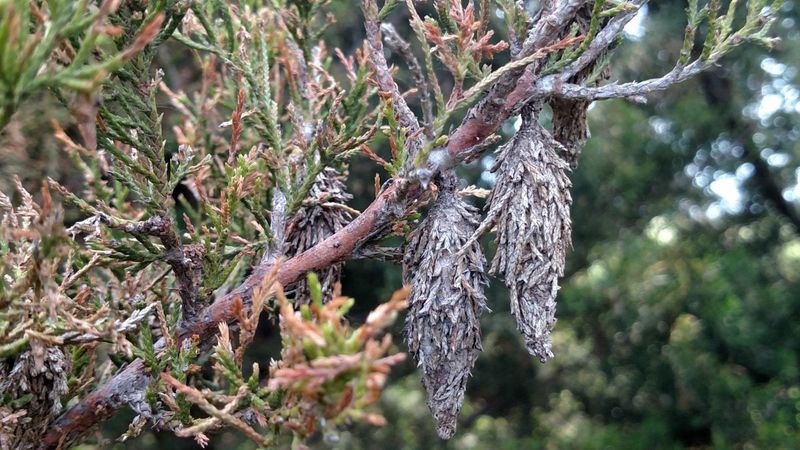
Bagworm caterpillars build a home they carry everywhere. According to NC State Extension, the case is a spindle- or cone-shaped bag of silk covered with bits of the host plant, such as needles or leaf pieces.
The caterpillar lives inside and drags the case along as it feeds and grows.
By fall, a mature case hangs from a twig by a band of silk. At that stage it can look a lot like a small dried cone, which is why so many people mistake it for part of the plant.
The bits of foliage woven into the outside are a helpful clue, since a real cone or seed pod is made of the plant itself rather than stuck-on debris.
Here is the honest limit of that clue. Color and shape alone cannot confirm what a brown object is, and a quick glance from the driveway will not settle it.
Seed pods, cones, and other structures can hang on shrubs too, so none of them can be ruled out without a closer look.
Get near enough to see the surface. Look for a tapered bag with plant bits attached by silk, hanging from a silky band around a twig.
If the object has that look, it is a good candidate for a bagworm case. If you are unsure, leave it for now and keep reading, because the next steps depend on knowing what you have.
Also check how many you see. Bagworms often show up in groups on the same plant, so a cluster of similar bags on one juniper points in a different direction than a single odd lump on a stem.
Compare a possible bagworm case with a mantis egg case
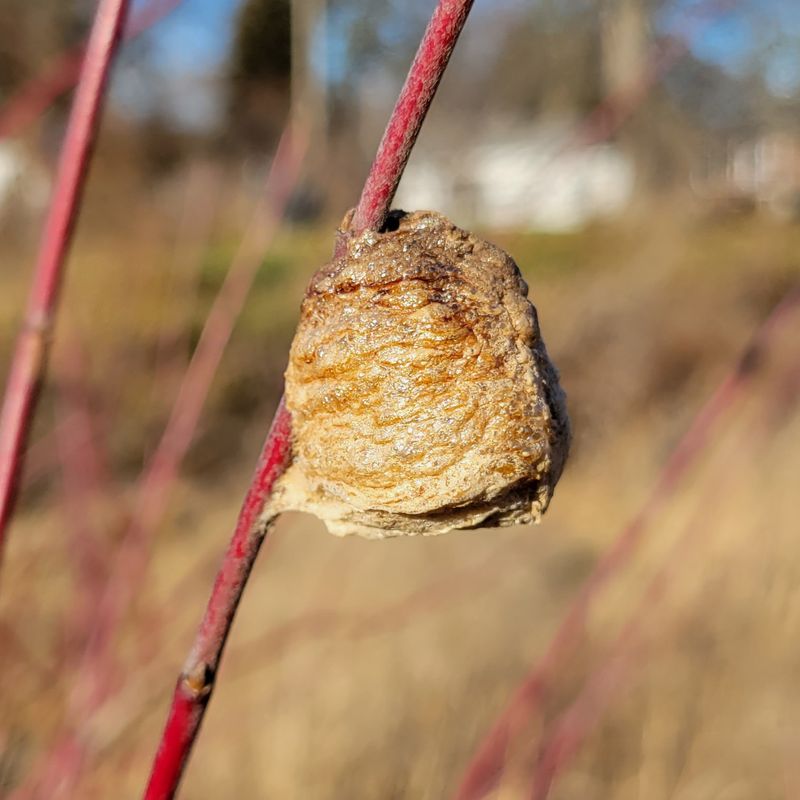
Another brown lump you might find on a twig is a praying mantis egg case, called an ootheca. It is a hardened, foam-like mass that wraps around a stem or twig, often looking tan and bumpy or ridged.
A bagworm case, by contrast, is silk dressed up in pieces of foliage and hangs from a silk band.
Texture is your best tool. Foam that has dried hard and sits flush against the stem points to a mantis.
A tapered bag with needles or leaf bits stuck to it points to a bagworm. Do not remove a structure just because it is brown, since color tells you very little.
If you cannot tell, take a clear photo from a few angles and send it to your county Extension office. They see this question every fall and can often answer from a good picture.
Mantises are not a simple good-guy story. As the University of Maryland Extension explains, they eat a wide range of insects, including beneficial ones, so they are not dependable pest control.
Some species in gardens are also non-native, and NC State has information on the Chinese mantid.
So an identified mantis case calls for a judgment, not a rule. Consider which species it might be and what else lives in your yard.
Extension staff can help you weigh that local context.
Remove confirmed cases before the local spring hatch
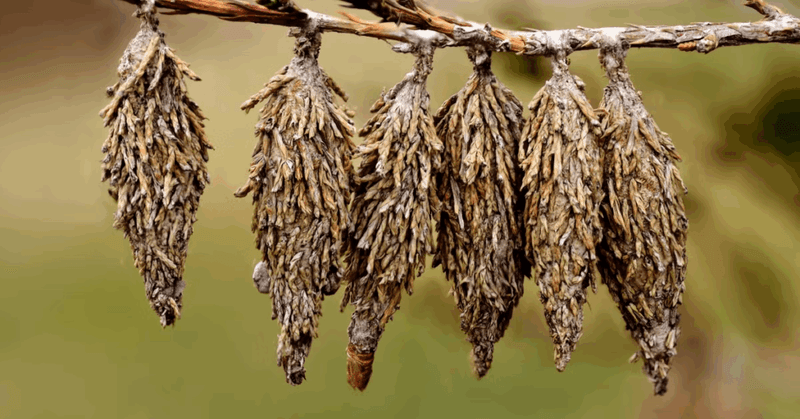
Once you have confirmed a bagworm case, timing matters. The eggs overwinter inside the female’s case, and NC State Extension says they typically hatch in North Carolina in May or June.
Removing cases from fall through early spring, before hatch, can reduce the next generation.
That window is a general guide, not a fixed deadline. Hatch can vary by county, elevation, and the weather that year, so a mountain yard may run later than one on the coastal plain.
Watch your own plants rather than circling a single date on the calendar.
Not every bag you see is worth the effort. A visible case may be old, empty, or full of eggs, and many contain eggs but not all.
Bags from earlier seasons can stay on a plant, so seeing one does not prove viable eggs remain inside.
Expect imperfect results, too. Removal can lower the number of bagworms next year, but it will not wipe them out.
You may miss a few cases, and hatchlings can drift in on silk threads from neighboring plants.
Think of it as trimming the odds, not ending the problem. A few minutes of careful work on reachable cases is still a sensible head start.
Inspect conifers and nearby susceptible plants
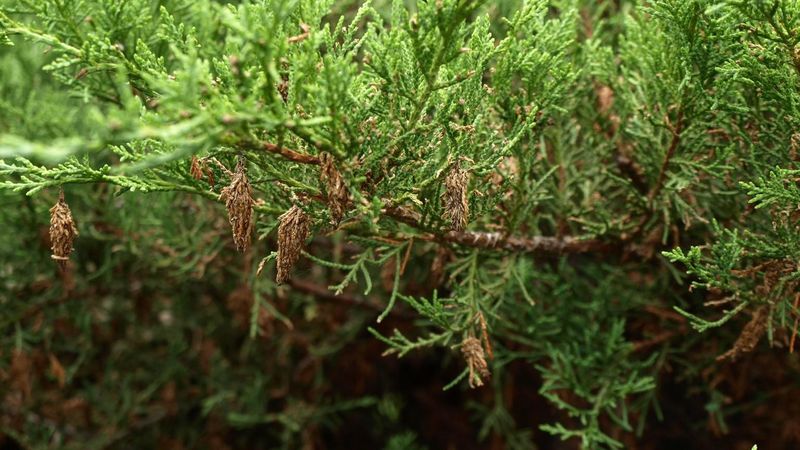
Bagworms eat many kinds of plants, but they turn up most often on conifers. Arborvitae, juniper, cedar, pine, and Leyland cypress are the usual suspects in Carolina landscapes.
If you have a row of Leyland cypress along a property line, that is a good place to start.
Walk the whole plant instead of checking one branch. Cases hide on the inside and on the far side, tucked among needles in the same shade of brown.
Then look at the plants nearby, because hatchlings can spread to neighbors.
Not every plant with a case faces the same risk. A single bag on a large, healthy tree is a different situation than dozens on a small arborvitae.
Count what you see and note which plants carry the most.
Damage is the reason this matters. Heavy or repeated defoliation can harm a plant, especially evergreens that do not regrow needles easily.
Yet one case does not guarantee serious trouble, so keep the response in proportion.
Keep a short note of what you find, such as plant, side, and rough count. Next spring, those notes tell you where to look first, which saves time when the weather warms.
Cut the silk attachment instead of pulling
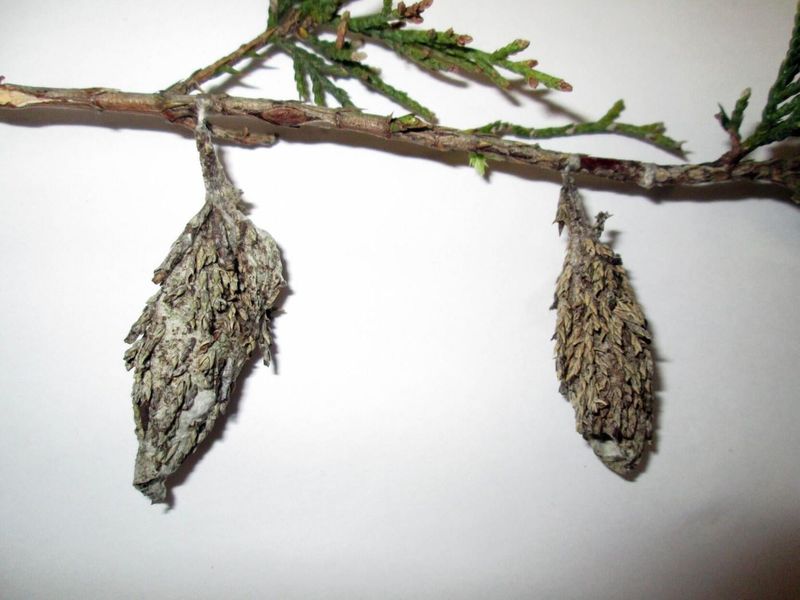
For cases you can reach easily and have confirmed, the method matters. Cut the silk band that attaches the case to the twig instead of yanking it off.
Small snips or scissors work well.
The reason is practical. Per NC State Extension, a sliding case can shear off needles on conifers, and the silk band can sometimes girdle a twig.
Cutting the band avoids both problems.
Work slowly and keep the case in one piece as you go. Drop it into a container rather than letting it fall into the mulch, where it is harder to track.
Check the plant again from another angle, since cases hide well.
Height is where people get into trouble. High cases can be difficult or dangerous to reach, as the NC State IPM guidance notes.
Do not climb a tree or stretch from a wobbly ladder for the sake of a few bags.
If you cannot get to them safely, get help. A certified arborist can handle tall trees, and your county Extension office can suggest options.
Leaving a few unreachable cases behind is a better trade than a trip to the emergency room.
Disposal advice involves a trade-off
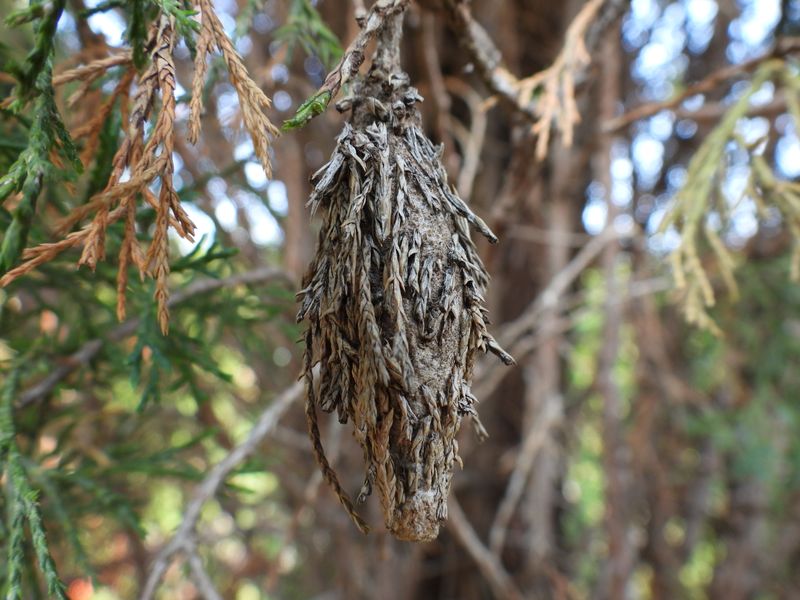
After you remove cases, you face a choice that experts do not agree on. NC State Extension suggests placing them in an open, dry paper bag so parasitoids, which are tiny wasps and flies that attack bagworms, can emerge.
The NC Forest Service recommends destroying removed bags. Maryland Extension advises putting them in the trash rather than leaving them near the plant.
Each approach has a cost. Destroying cases makes sure no bagworm eggs hatch from them, but it also kills any natural enemies inside.
Letting parasitoids emerge supports those helpers, yet it carries some risk that bagworm hatchlings escape too.
No single method is settled for every yard. A homeowner with a few cases on one shrub may weigh it differently than someone with a heavily infested hedge.
Neither choice is reckless, so pick the one that fits your situation.
If you want a locally preferred answer, call your county Extension office. They know what works in your area and can match advice to the number of cases you removed.
Monitor for young larvae in spring
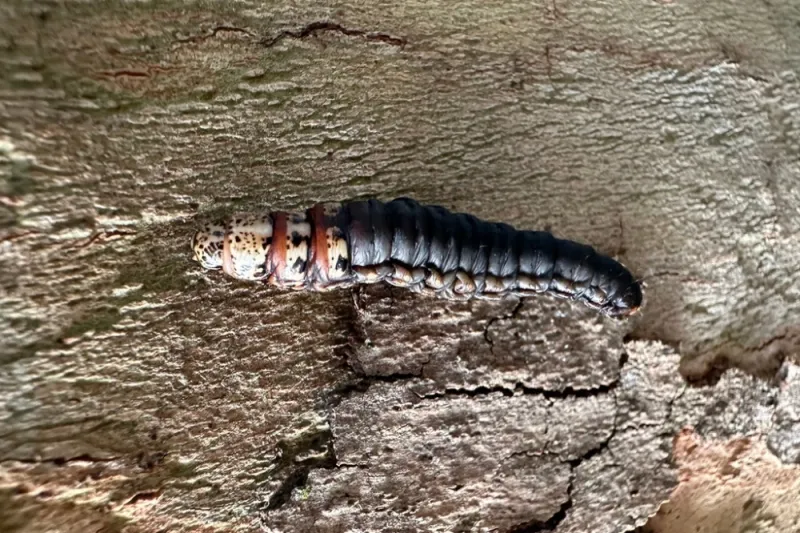
When warm weather returns, check your plants for tiny bagworms starting around late spring, since hatch can come in May or June. NC State Extension notes that small larvae are more susceptible to control than mature caterpillars tucked inside large cases.
Treat that as a reason to look early, not an order to spray. Watch the plants where you found cases, and call Extension if you see signs of an active problem.
Removing cases lowers risk but cannot promise a bagworm-free shrub.
A small bag today is easier to deal with than a big one in August. Spring patience, a sharp eye, and a quick phone call can keep the story short.