
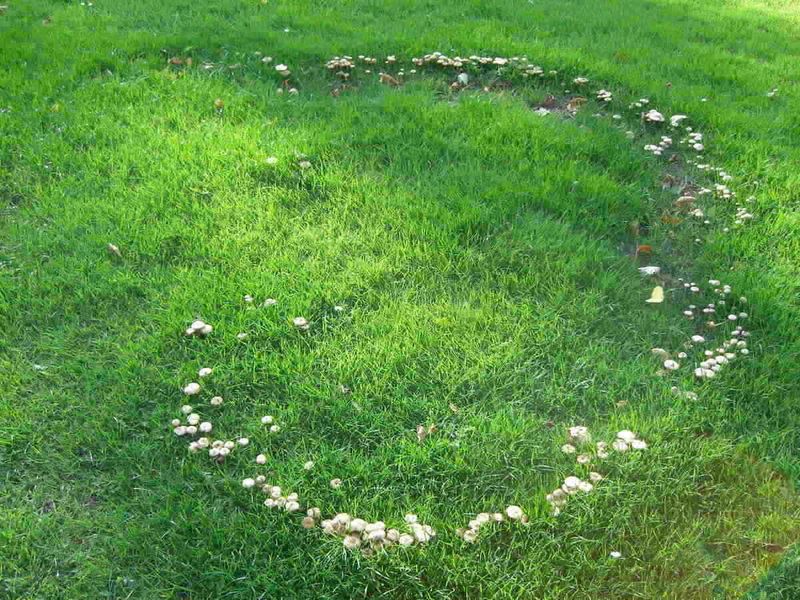
You walk out after a good rain and spot a curve of dark green or dead grass that was not so obvious before. It might even have a few mushrooms along the edge.
A pattern like that could be a fairy ring, which is a clue about what fungi are doing under the turf. Here is how to read the clue, rule out lookalikes, and decide what to do next.
Rain may reveal a ring without creating it
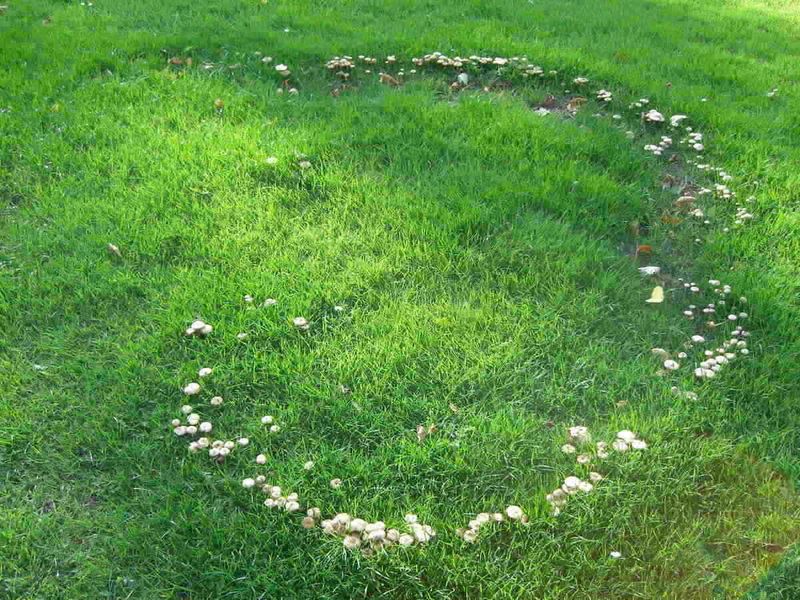
Rain has a way of making lawn oddities jump out. A ring or arc of dark green, brown, or thinning grass may be a possible fairy ring, though a circle alone is not proof.
Some rings show mushrooms or puffballs, and some show none at all.
Wet weather can bring those mushrooms into view, but it does not create the fungus. According to UF/IFAS Extension, the fungus is already growing in the soil before any mushrooms show up.
The rain simply makes the fruiting bodies easier to spot.
Timing also varies. Texas A&M AgriLife Extension describes fairy rings appearing in spring, summer, or fall.
University of Georgia Extension notes that mushroom symptoms tie more to long wet spells, while green and dead turf can stand out in hot, dry weather. So a fall rain is a handy moment to notice a ring, not the reason it exists.
Fungi grow outward through buried organic matter
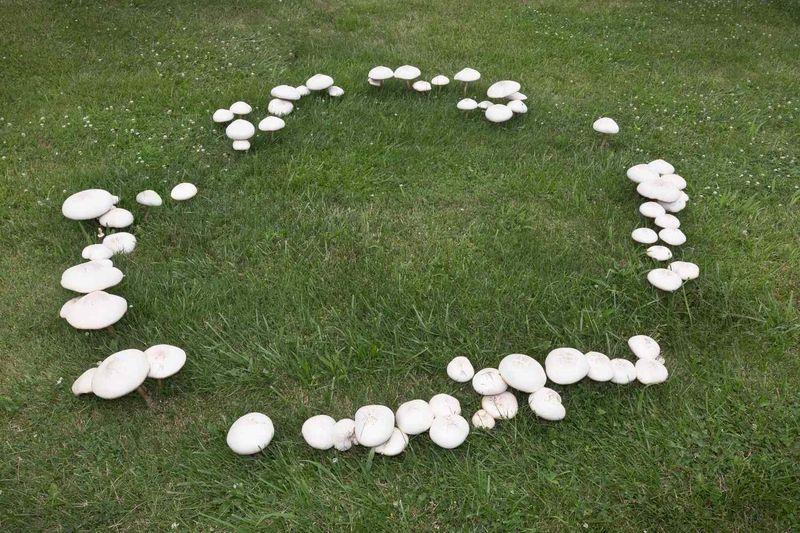
Under the grass, some fungi feed on organic material. That can include thatch, dead roots, old stumps, or buried wood.
As the fungus spreads outward from a starting point, the zone of activity can form a ring or an arc.
While breaking down that material, certain fungi release nitrogen that nearby grass can use. The result can be a greener, faster-growing band, as described by University of Georgia Extension.
That is a possible effect, not something every ring does.
Mushrooms are only the visible fruiting bodies, a bit like apples on a tree. The main body of the fungus stays hidden in the soil, which is why rings can exist with no mushrooms at all.
Texas A&M AgriLife Extension covers these basics too. A ring does not prove a stump is buried below, since thatch and old roots can feed the same kind of fungus.
Brown turf may reflect a local water problem
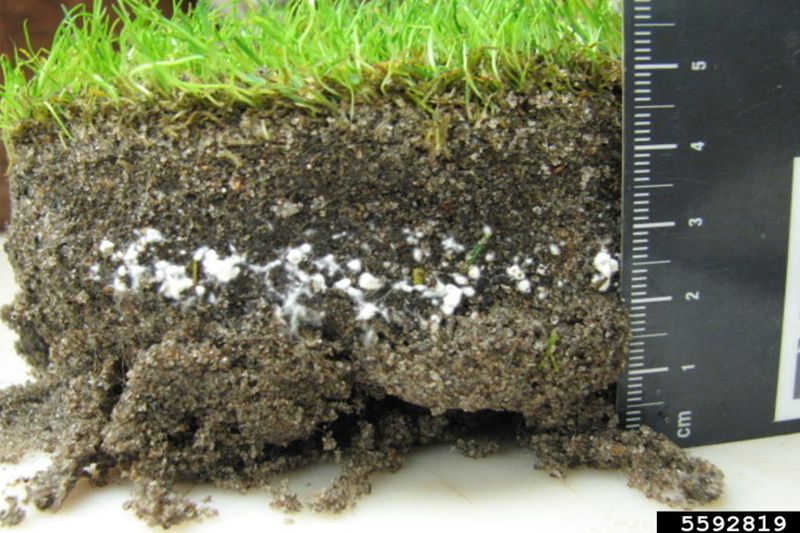
Brown rings have a different story than green ones. In some cases, fungal growth makes the soil repel water, so the grass in that band gets stressed or dies even when rain falls nearby.
University of Georgia Extension describes this as a localized drought for the grass.
Some of these fungi affect turf indirectly, through changes in the soil, rather than by infecting the grass plants themselves. That is why a ring can look dramatic while the grass beyond it looks fine.
UF/IFAS Extension also lists dry, water-repellent soil as a possible problem in affected rings.
Neither color is a report card for your whole yard. A green band does not prove rich soil, and a brown band does not prove poor soil.
Each is a local clue about fungal activity in that one strip of ground.
Check for lookalikes before naming the cause
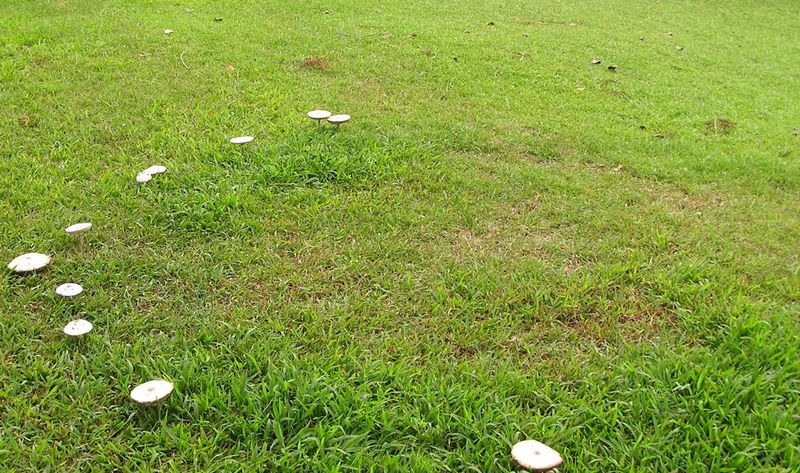
Plenty of things can leave a round or curved dead patch. Dog spots are a common one, and other turf diseases can do it too.
So a circle in the grass is a reason to look closer, not a verdict.
The University of Minnesota Extension diagnostic guide points to a combination of clues. Look for a ring or arc, taller or greener grass along it, and possibly mushrooms in wet weather.
The more of those you see together, the more plausible a fairy ring becomes.
Mushrooms are not required, since University of Georgia Extension notes rings can appear without them. A photo, a circular shape, or the timing of rain alone may not settle it.
If the damage keeps spreading or you are unsure, your county Extension office can help you sort it out.
Compare soil moisture before treating brown grass
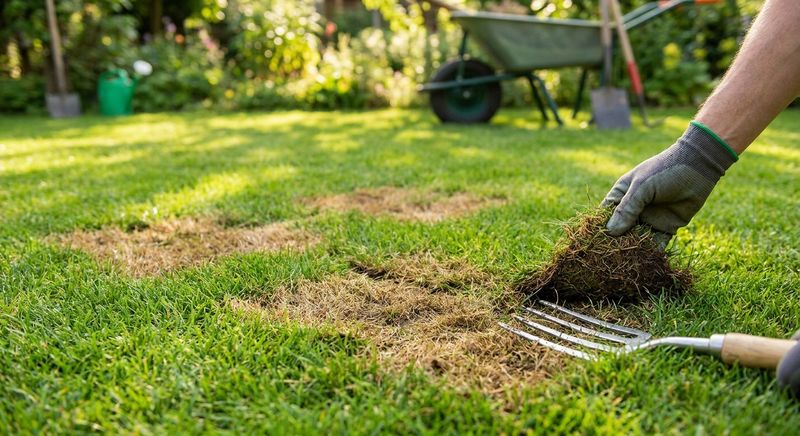
Before you treat brown grass as a dry-soil problem, test it. Push a trowel or screwdriver into the brown strip, then into healthy turf nearby, and compare.
If the brown soil is noticeably drier or water seems to bead up and run off, water repellency may be part of the picture.
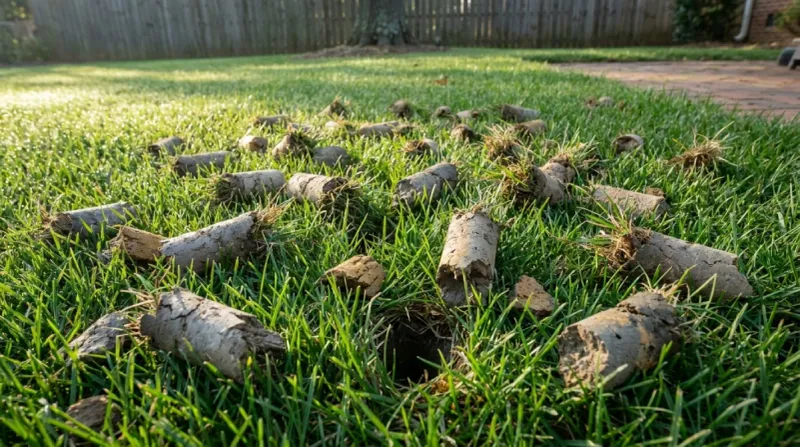
For dry, water-repellent soil, UF/IFAS Extension suggests breaking up or aerating the affected soil, applying a soil-wetting agent, and watering the ring to help it rewet. Follow the product label for the wetting agent.
UC Statewide IPM Program also covers managing nuisance fungi in lawns.
If the soil is moist and the grass is still brown, something else may be going on. Dead turf that does not recover may need repair, such as reseeding or patching.
None of these steps is guaranteed to remove the fungus, so think of them as ways to help the grass.
A green band may not need treatment
A dark green arc that is otherwise healthy is mostly a cosmetic quirk. Brown, dry, or thinning grass is the part that deserves attention.
Sorting out which one you have helps you avoid fixing something that is not broken.
Extra nitrogen can hide the color difference, but it does not remove the fungus, per UF/IFAS Extension. If you fertilize, follow local turf recommendations and the product label, and skip heavy applications.
UF/IFAS guidance on nitrogen warns that misused fertilizer can wash away in runoff or leach through soil.
Fungicides are not a quick fix either. UC Statewide IPM Program guidance notes they do not clear visible green or dead rings or solve a dry-soil problem, and labels carry residential-use limits.
No product promises a cure here, so patience and realistic goals go a long way.
Keep lawn mushrooms away from children and pets
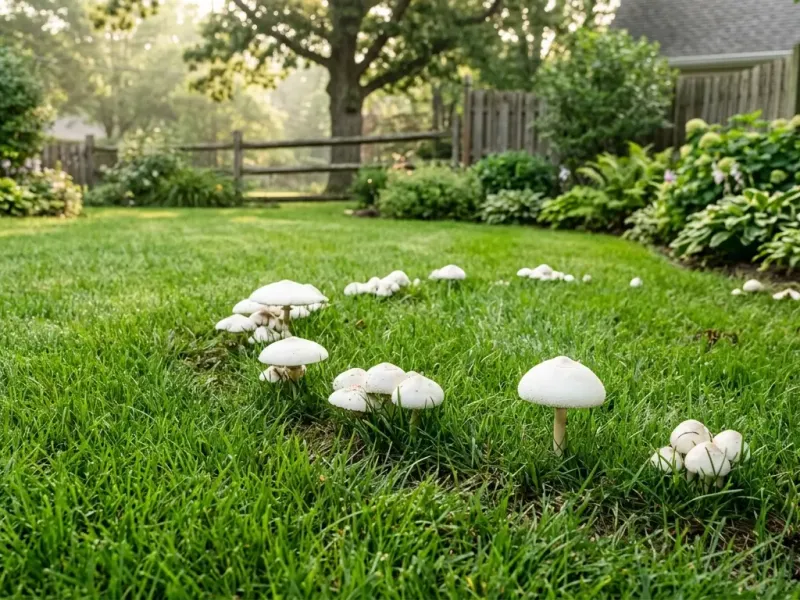
If mushrooms or puffballs pop up where kids or pets can reach them, pull them and throw them away. Wearing gloves and bagging them keeps things tidy.
UF/IFAS Extension notes that some fairy-ring mushrooms are poisonous.
Removal is about safety only. Picking mushrooms does not kill the fungus underground, so more may appear when conditions suit them.
Repeat the cleanup as needed.
Please do not eat any mushroom from your lawn. You cannot judge safety from how it looks, the ring it grows in, or an online photo match.
K-State Extension cautions that some lawn mushrooms are poisonous. If a pet or child may have eaten one, contact poison control or a veterinarian right away.
Treat the ring as a clue, not a soil report
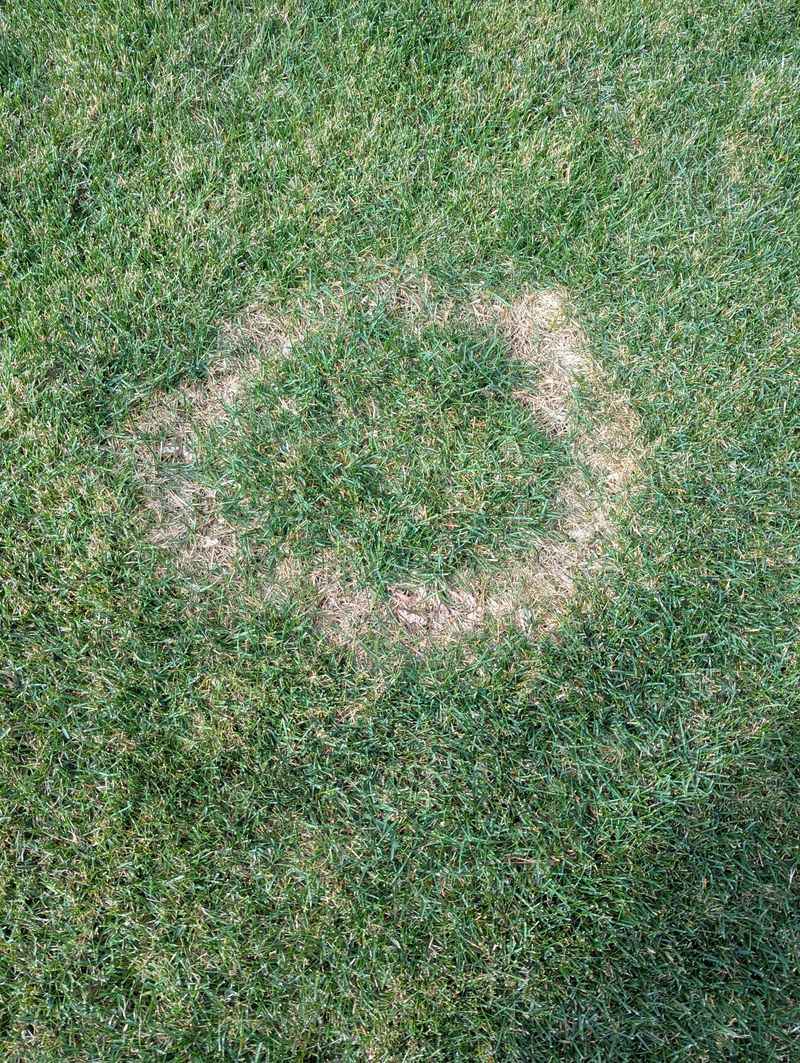
A ring can point to fungal activity in one patch of ground, and brown turf is worth a quick moisture check against healthy grass nearby. What it cannot do is grade your soil or confirm its own cause.
As University of Georgia Extension explains, effects vary by fungus and site.
So confirm the pattern, test the brown spots, and act only when grass damage or mushroom access calls for it. Otherwise, a ring is often just a curious feature.
Think of it as one small note from the soil, not the whole letter.