
Curling leaves and pale, papery patches on your tomato fruit can stop a gardener cold, especially when the plants looked perfectly healthy just a week ago. The instinct is to blame the last thing you changed, and if you recently fertilized, that suspicion is not completely off base. But these two symptoms often have separate causes, and treating them as proof of one simple problem can lead you in the wrong direction. Understanding what each symptom actually tells you is the fastest way to protect what fruit you still have.
Start by identifying the curl pattern
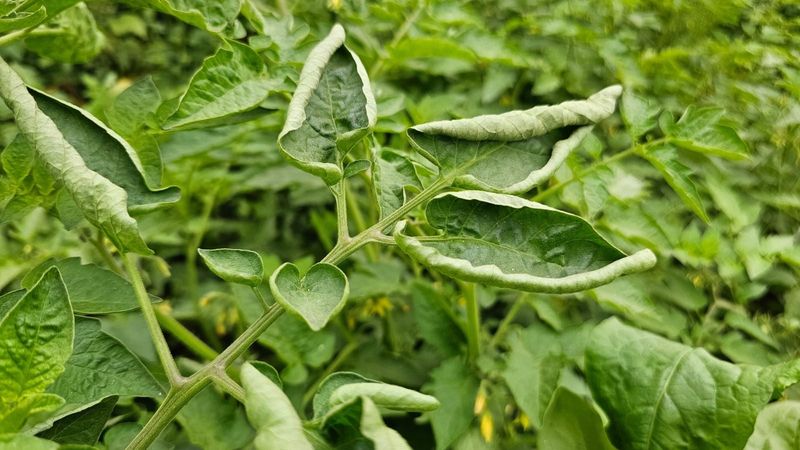
Before reaching for any product or pulling leaves off the plant, spend a few minutes just looking at how the curl is happening. University of Minnesota Extension guidance on tomato disorders describes physiological leaf roll as an upward and inward curling of the leaf margins, often beginning on the older, lower leaves of the plant. The affected leaves feel firm or leathery when you touch them, but the plant generally keeps growing and producing fruit without a dramatic slowdown.
That pattern, on its own, usually calls for observation and stress correction rather than an immediate treatment. Heat, uneven watering, and rapid vegetative growth are all commonly associated with this type of roll, and Oregon State Extension’s publication on physiological leaf roll of tomato notes that the disorder is generally considered non-damaging when the rest of the plant appears healthy.
What you do not want to confuse with physiological roll is a curl that goes downward, affects new growth severely, or comes with distorted, narrow, or shoestring-like leaves. Mottling, yellowing, purple veins, stunting, or malformed fruit alongside a curl are warning signs that something else is at work. The University of Minnesota’s tomato leaf diagnostic tool lists viruses, herbicide injury, insect damage, and other disorders as causes of those more concerning patterns, and those require a different investigation entirely.
Treat fertilizer as a clue, not a verdict
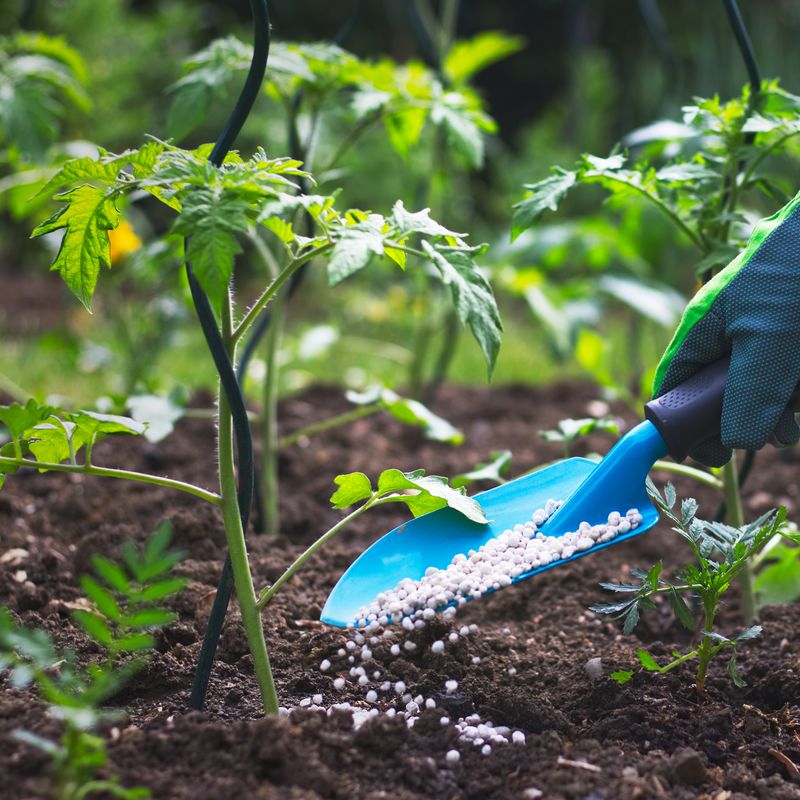
A recent fertilizer application is worth reviewing honestly, but leaf curl by itself cannot confirm that overfeeding is the cause. High nitrogen can push a tomato plant into rapid, overly leafy growth, delay fruiting, and contribute to physiological leaf roll – but tomatoes also need nitrogen to thrive, and the same curl can show up from heat or water stress with no fertilizer involved at all.
University of Minnesota’s guide to growing tomatoes in home gardens recommends basing fertilizer decisions on what the plant actually shows, what inputs like compost or manure have already been added, and the product label rather than a fixed generic schedule. Nitrogen deficiency, for comparison, more typically shows up as yellowing that begins on older, lower leaves – not as curling alone. The University of Minnesota’s fertilizing guide reinforces that nutrient decisions are most reliable when grounded in observed symptoms and, when possible, a soil test.
If you applied fertilizer recently and the amount or method was clearly excessive, the most useful immediate action is simply to stop adding more. Colorado State University Extension’s tomato growing resource cautions that granular fertilizers can burn roots or kill plants outright when overapplied, which means countering one overfeeding with another product is likely to make things worse. Do not add nitrogen, phosphorus, potassium, calcium, or Epsom salt without a confirmed deficiency, a soil test result, or specific product guidance pointing clearly to a need.
Read sunscald as evidence of lost fruit shade
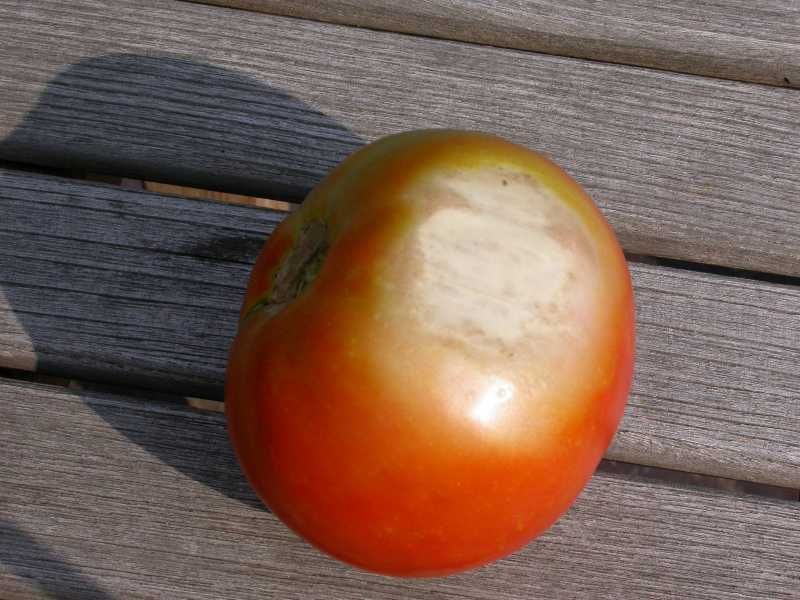
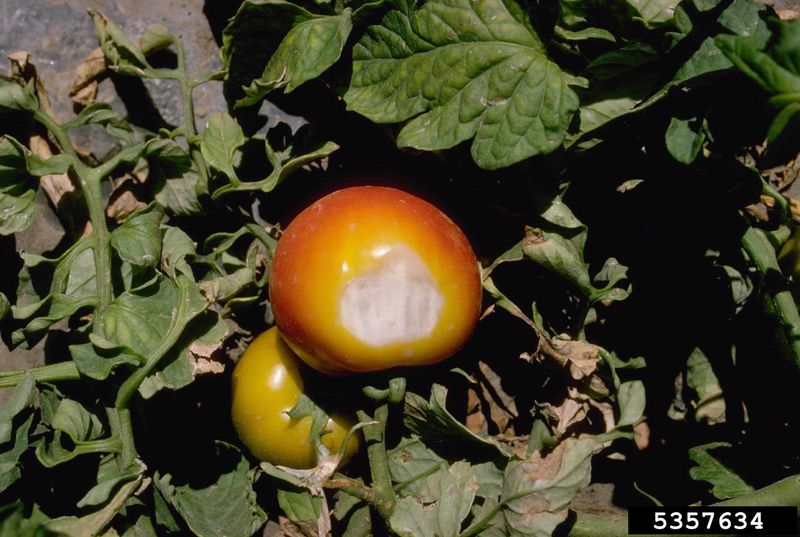
Sunscald on tomato fruit and curling leaves are easy to link together as a matched pair, but they often have different immediate causes. The fruit damage is primarily a story about exposure: when the foliage that used to shade a developing tomato is gone, the sun-facing side of the fruit can bleach, flatten, and dry into a papery or leathery patch. UC Statewide IPM’s sunscald resource describes the affected area as typically pale yellow, white, tan, or gray, located on the side of the fruit that faces the most intense light, with tissue that may eventually collapse and invite decay organisms.
That exposed position on the fruit is the key detail. Fertilizer may contribute to plant stress in some situations, but it does not directly explain why a tomato suddenly lost its canopy cover. Pruning, disease, insect feeding, or wind damage can all strip the foliage that previously kept fruit shaded, and any of those causes can produce sunscald even when feeding has been perfectly appropriate throughout the season.
Once sunscald has formed, the affected tissue will not recover. Minnesota Extension’s tomato disorders page confirms that existing damage is permanent. If a sunscalded area begins to soften, collapse, or develop visible mold or rot, remove that fruit so decay does not spread to healthy ones nearby. The priority at this point shifts entirely to protecting the fruit that has not yet been exposed.
Find what removed the canopy
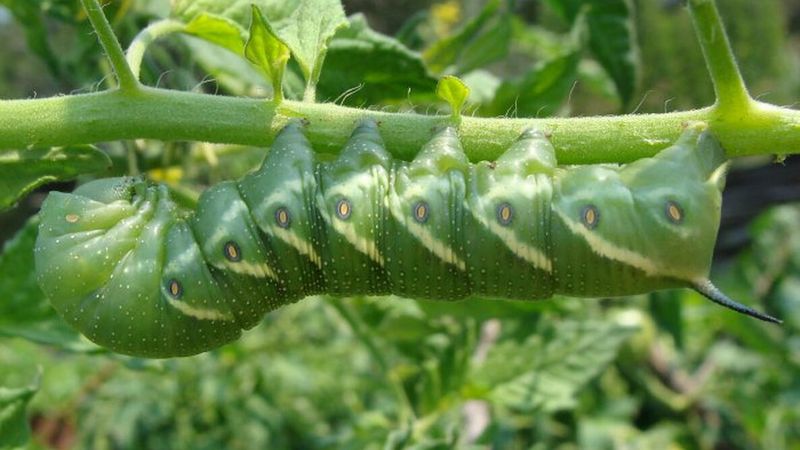
Once sunscald appears, the most useful question is not what you fed the plant last week – it is what happened to the leaves that used to shade the fruit. Working through the plant systematically gives you a much clearer answer than guessing from a distance. Start at the bottom and move upward, looking for leaves that are entirely missing, chewed to the midrib, or reduced to bare stems.
Hornworms are capable of stripping large sections of a tomato plant surprisingly fast, and their frass – dark green or brown pellets on leaves below – is often easier to spot than the caterpillars themselves. Aphid colonies cluster on new growth and leaf undersides and can cause curling and distortion in addition to weakening the plant over time. Penn State Extension’s tomato diseases and disorders guide explains that Septoria leaf spot and other fungal diseases can cause premature defoliation that leaves fruit suddenly exposed, even when the gardener has not pruned a single stem.
Colorado State’s guide to recognizing common tomato pests and problems notes that early blight and other foliar diseases follow characteristic patterns worth learning to recognize. Pay attention to whether damage appears first on old leaves or new ones, whether tissue is cleanly missing or diseased and yellowing, and whether you can find active pests or lesions that account for the canopy loss. That sequence of observations points you toward the right response rather than a generic fix that may not address the real cause.
Stabilize moisture and protect the remaining leaves
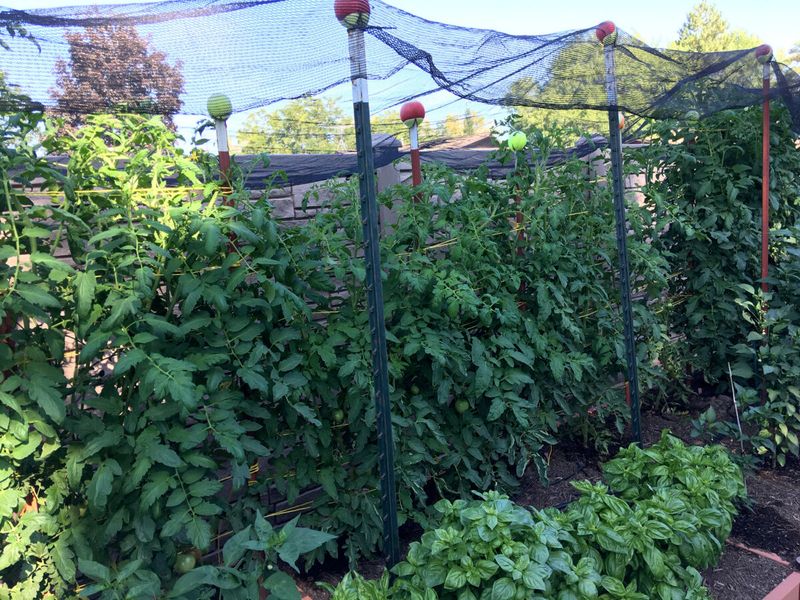
With the inspection done, a conservative response addresses several plausible stressors at once without making promises about a single cure. The first move is to pause any fertilizer application that is not clearly needed. Healthy leaves that are still shading the fruit should stay on the plant – avoid pruning for appearance or airflow in the middle of a heat wave when every leaf is doing protective work.
Water management matters more than most gardeners expect when leaves are rolling and fruit is getting scorched. Utah State University’s vegetable IPM advisory identifies heat, drought, excess moisture, and rapid swings in soil moisture as contributors to tomato leaf roll and related disorders. Deep, consistent watering that lets the top inch or two of soil dry between sessions – rather than shallow daily sprinkles or saturated soil – gives roots the steadiest environment. A two- to three-inch layer of mulch around the base of the plant slows evaporation and buffers soil temperature between waterings.
During intense heat, a supported shade cloth or screen placed above exposed fruit clusters can reduce direct light exposure without trapping heat against the plant. Penn State Extension’s heat stress and tomatoes guidance includes shade cloth as a practical option for reducing heat damage, with approximately 20 to 30 percent shade density cited in regional recommendations as a reasonable starting point rather than a universal requirement. Adding calcium, Epsom salt, or extra fertilizer at this stage is not a safe default; those applications can create nutrient imbalances or salinity problems, and overwatering to flush the soil can worsen root conditions rather than improve them.
Recognize symptoms that need another diagnosis
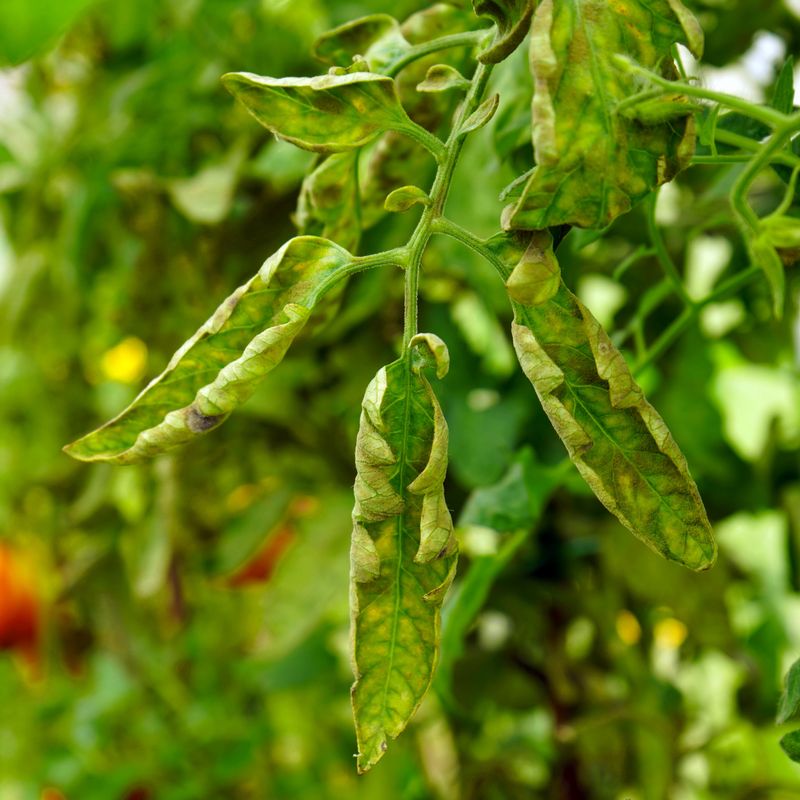
Physiological leaf roll is a relatively benign explanation, but it does not cover everything that can make tomato leaves look wrong. Several other causes produce curling that looks similar at a glance but behaves differently and requires a completely different response. Knowing which details to look for keeps you from treating the wrong problem.
Downward curling, severely distorted new growth, leaves that come in narrow or strap-like, mottled coloring, purple veins, unusual stunting, or misshapen fruit are not consistent with ordinary physiological roll. The University of Minnesota’s leaf curl diagnostic tool lists herbicide injury and viral infection among the causes of those more severe patterns. Lawn herbicides such as 2,4-D or dicamba can drift or move through soil and produce twisted, cupped, or shoestring-like growth on nearby tomatoes, sometimes weeks after the application. University of Minnesota’s tomato viruses page describes how viral infections can cause leaf curl, mottling, malformed or stunted growth, and abnormal fruit – symptoms that can resemble herbicide injury closely enough that a lab diagnosis may be necessary to tell them apart.
Regional conditions also shape which causes are most likely. Curly top virus, spread by the beet leafhopper, receives particular emphasis from extension programs in Utah, Colorado, and the Intermountain West. Utah State University’s curly top virus resource notes that the disease is not a universal explanation across the continental United States, but it is worth knowing about if you garden in an area where it is active. When distortion, mottling, or stunting appear alongside the curl, photograph the affected plant and contact your local cooperative Extension office for help narrowing down the cause before applying any treatment.
Monitor new growth instead of expecting old damage to vanish
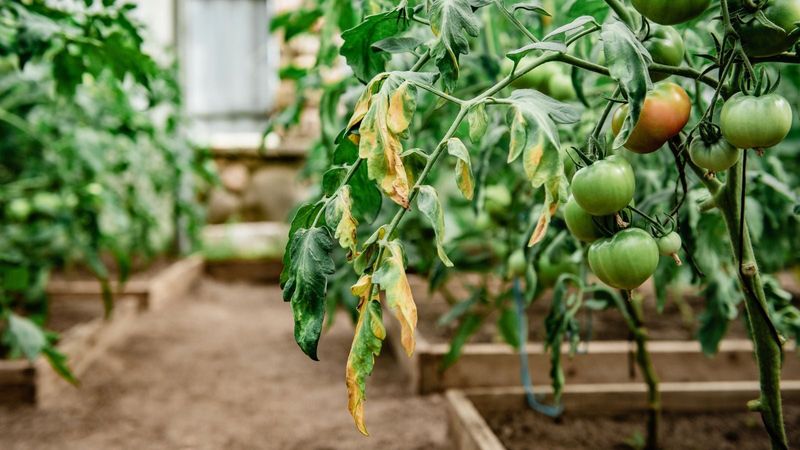
Realistic expectations make the next few weeks much less stressful. Existing sunscald patches will not lighten or fill back in – that tissue is gone, and waiting for it to heal is time that could go toward protecting the fruit that has not been exposed yet. Leaves that rolled during a period of heat or stress may also remain rolled even after conditions improve; that is normal and does not mean the plant is still in trouble.
What to watch instead is the new growth emerging at the tips and along the upper stems. Minnesota Extension’s tomato disorders guidance notes that physiological leaf roll generally does not reduce growth or yield noticeably, which means a plant that continues putting out normal new leaves and setting fruit is likely recovering from a temporary stress. Oregon State’s physiological leaf roll publication reinforces that correcting the underlying stress – rather than treating the rolled leaves directly – is the appropriate path forward.
Check the plant every few days: are new leaves coming in with a normal shape and color? Are existing lesions, pest colonies, or distortion spreading? Is the canopy holding? If symptoms stabilize and new growth looks healthy, the conservative steps are working.
If distortion, mottling, or canopy loss continues to spread, that is the signal to escalate – document what you see and reach out to your local Extension service. The plant’s next flush of healthy growth tells you far more than staring at leaves that already rolled last week. UC IPM’s sunscald guidance puts it plainly: prevention is the only real protection, and that protection comes from keeping the canopy intact going forward.