
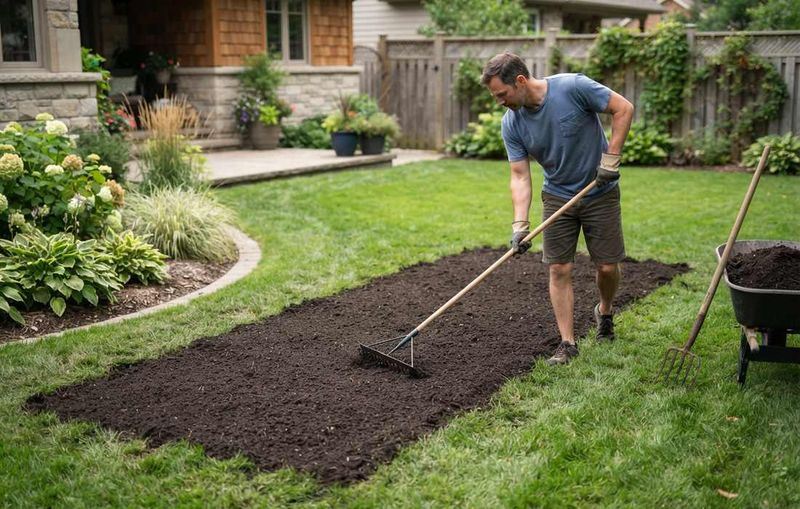
A little dip in the grass can trip you up, hold water, and make a mower scalp the turf. Many Southern homeowners wonder if they can fix those spots without renting equipment or hiring a crew.
For small, shallow low spots, a shovel, a rake, and a thin layer of the right soil can slowly help. The trick is knowing what this method can do, when to do it, and when to call for something bigger.
Topdressing can improve shallow dips, not reshape a yard
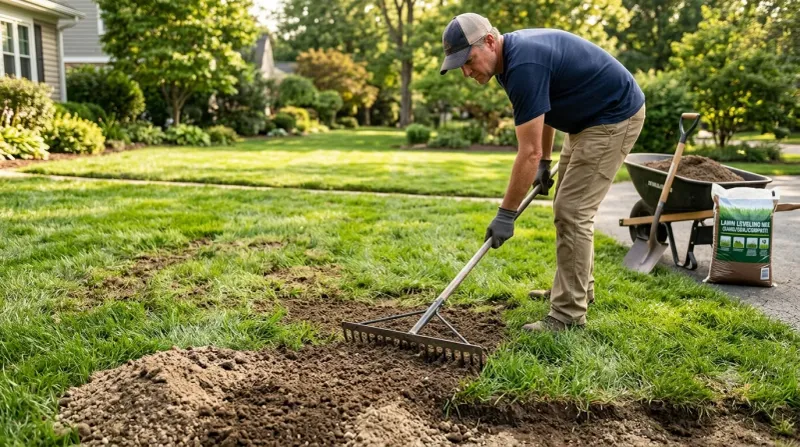
Think of topdressing as a slow touch-up rather than a makeover. Clemson Extension lists filling low or bare spots as one use for topdressing, which means small dips and minor surface bumps in established turf are fair targets.
Big problems are a different story. Deep depressions, large humps, and major grade changes are not something a simple rake-and-shovel repair has been shown to fix.
Those jobs may call for regrading, drainage work, or turf repair.
Expect gradual progress. A dip that is an inch or two shallow may need several light applications over a growing season or more, and the result may be better rather than perfectly smooth.
Leveling also does not mean making the yard dead flat. UF/IFAS lawn preparation guidance calls for a deliberate grade away from the house, so water keeps moving the right direction.
Choose timing by grass growth, not the calendar alone
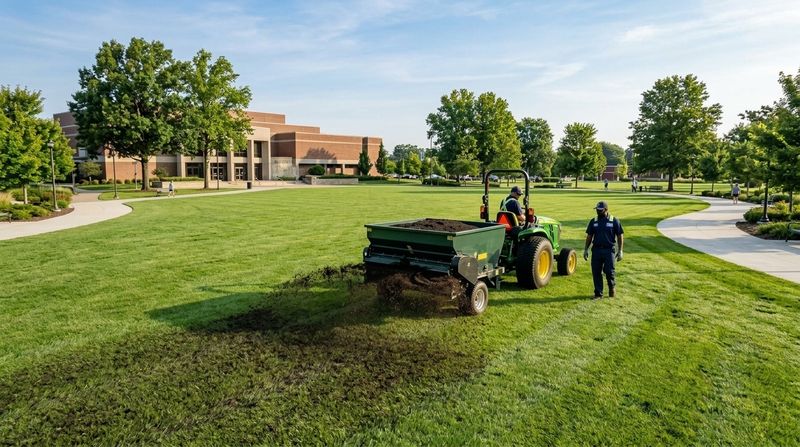
Before picking a weekend, figure out what grass you have and how it behaves where you live. Winter is not one uniform season across the South.
UF/IFAS says Florida warm-season grasses slow down in winter statewide, even though some lawns stay green.
Texas is similar. Texas A&M AgriLife describes warm-season lawns as dormant from late fall to early spring, with exceptions in southern Texas.
You may have seen winter topdressing advice. UGA’s winter instructions cover installing dormant sod, including filling seams and shallow depressions.
They do not show that winter is the best time to level an established lawn.
A more defensible general window is when the grass is actively growing and can push up through the soil. Check your own lawn for new growth and follow local conditions rather than a fixed date.
Match the topdressing material to the soil beneath the turf
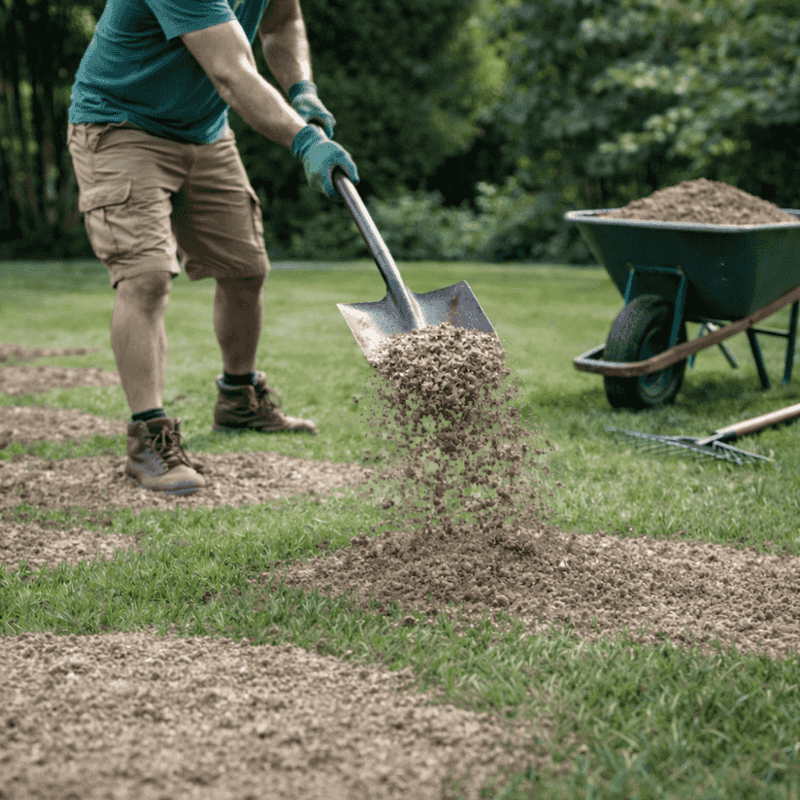
Bagged sand-soil mix sounds handy, but no single blend suits every yard. The safer choice is material that is similar to the soil already under your grass.
Texas A&M says topdressing should closely match the existing soil.
UF/IFAS adds that the soil should also be free of weed seeds and nematodes. Ask suppliers where their material comes from, and skip anything that looks weedy.
Sand is not a cure-all for clay. Mississippi State Extension discourages adding sand to high-clay soil to fix compaction, and Arkansas Extension notes that large amounts are needed to change soil texture.
A quick comparison of a handful of your soil with the supplier’s sample is a good start. No ratio is right for everyone.
Spread a thin layer and work it through the grass
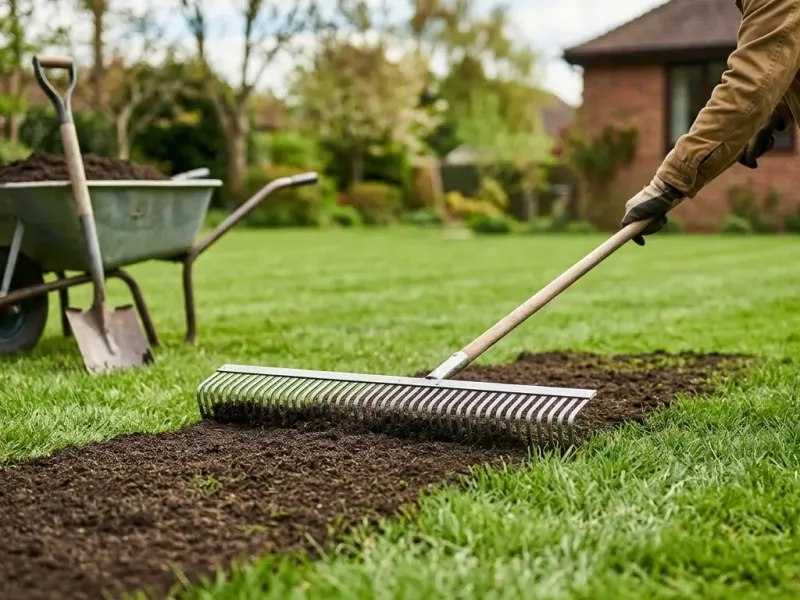
Go light. Use the shovel to place a small amount of compatible material on the low spot, then use the back of a rake to move it around until grass blades still show through.
A heavy mound can smother turf, so resist the urge to fill the whole dip at once.
Recommended depths vary by situation. A UF/IFAS St. Augustinegrass guide describes periodic applications of about one-quarter inch of similar soil.
In its thatch guidance, Texas A&M sets a thinner limit of one-eighth inch per application, warning that too much at once can form a layer that slows water movement.
Neither number is a universal leveling rule, so use them as a sign to stay thin. Mississippi State Extension describes redistributing topdressing across the turf to level the surface.
Water it in lightly, watch how the grass responds, and repeat later if the dip is still there.
Keep drainage and compaction problems separate from surface leveling
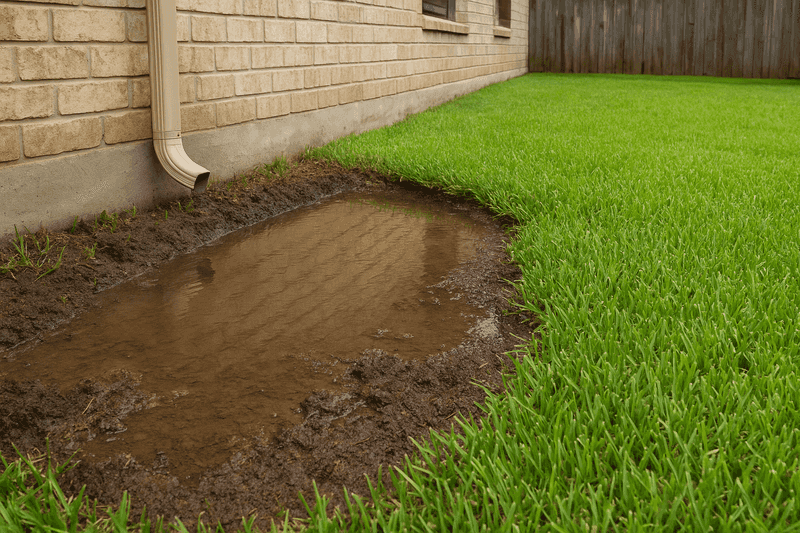
Not every dip is just a dip. If a spot holds water for days, the cause may be grade, drainage, or packed soil, and a thin layer of topdressing will not address any of those.
Watch where water goes after a heavy rain. Your lawn should still slope away from the house, and UF/IFAS recommends a 1 to 2 percent grade away from the foundation.
Filling a low spot should never flatten or reverse that slope.
Compaction is another look-alike. A screwdriver that barely pushes into the ground, or thin turf in a heavily walked patch, hints at tight soil.
Mississippi State Extension says topdressing organic material is slower and less effective for relieving compaction than mixing it into the soil, and it lists plug aeration as an option for existing turf.
Level the surface and relieve compaction as two separate jobs.
Know when a different repair is needed
Here is a simple stopping rule. Use thin, compatible topdressing and simple tools only for minor dips you can correct a little at a time, which is the kind of low-spot filling Clemson Extension describes.
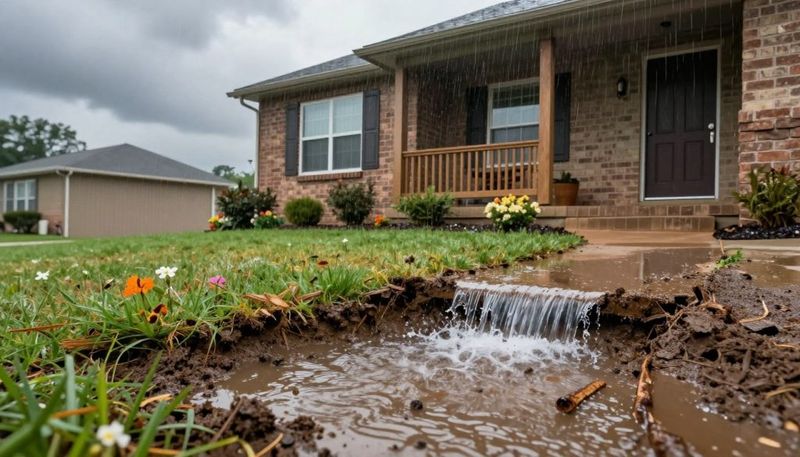
Look for a second opinion when a depression is deep, a hump is large, water keeps pooling or running toward the house, or the grade has shifted a lot. Those problems may call for regrading, drainage work, new turf, or equipment beyond a shovel and rake, and sometimes a professional.
A sound drainage slope matters more than a perfect surface, so keep the guidance on grading away from the house in mind before you add any soil.
Topdressing will not hand you a billiard-table lawn. It is a patient fix for small flaws, and knowing its limits saves you from burying good grass.