
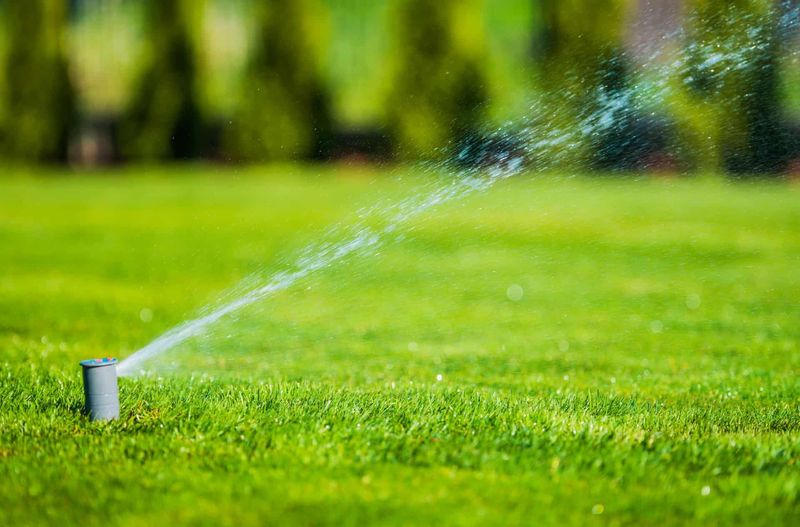
Most Southern homeowners have heard the warning: never water your lawn in the heat of the day, or the sun will burn the wet blades to a crisp. That warning sounds convincing, but the science behind it does not hold up for ordinary lawn grass.
Understanding what actually causes brown patches can save you water, money, and a lot of unnecessary worry about your sprinkler schedule.
Ordinary lawn grass usually does not scorch under midday watering
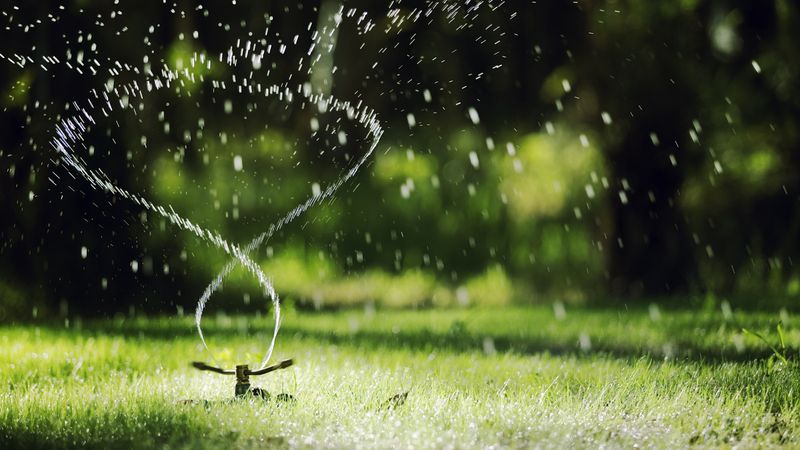
The verdict is qualified but clear: watering established turf in the midday sun does not normally burn ordinary lawn grass. The familiar warning, that water droplets act like tiny magnifying glasses and focus sunlight into burn spots, has been repeated for decades.
A peer-reviewed optics study found that drops sitting on smooth, hairless leaves did not cause burn damage under normal conditions. Burn only appeared when droplets were suspended above specialized, water-repellent leaf hairs on unusual plant surfaces, not on the flat, smooth blades of typical lawn grass.
Common turf types across the South, including bermudagrass, St. Augustinegrass, zoysiagrass, and centipedegrass, have smooth leaf surfaces that do not trap droplets in the elevated position needed to concentrate sunlight harmfully. That physical distinction matters.
The magnifying-glass story describes an exceptional laboratory condition, not what happens when your sprinklers run at noon on a Florida or Texas lawn.
That does not mean midday irrigation is ideal. Penn State Extension’s review of garden watering myths supports the conclusion that sun scorch from water is not a realistic explanation for typical lawn browning.
The more useful question to ask is whether the water you apply in the middle of the day is actually reaching the root zone efficiently, and that is where the real story begins.
Midday watering mainly increases water loss
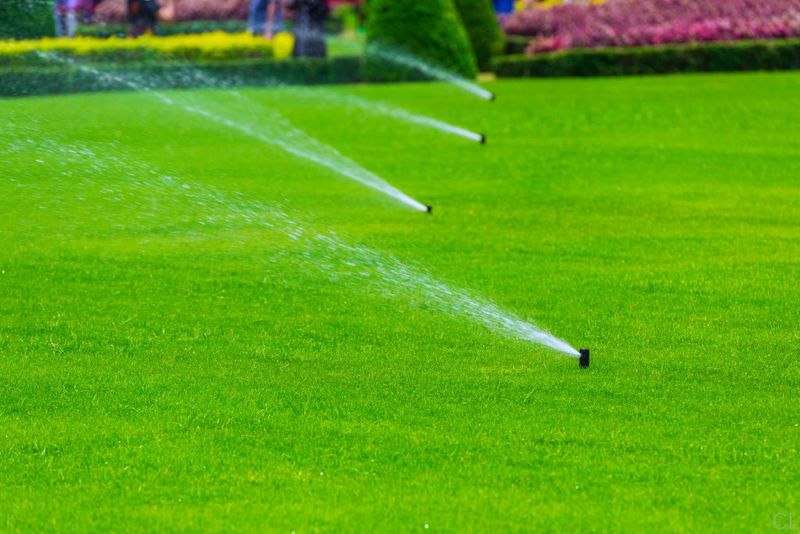
Heat, wind, and evaporation work against you when you irrigate during the hottest part of the day. Water that evaporates before it reaches the soil or root zone is water that does not help your grass, regardless of how long the system runs.
UC IPM turfgrass guidance identifies evaporation and wind drift as key reasons why midday irrigation can be less efficient than early-morning watering.
Early morning offers cooler air temperatures, lower wind speeds, and higher relative humidity, all of which reduce the amount of water lost before it soaks into the ground. Grass blades also have time to dry out during the day, which can reduce the window for fungal disease to take hold.
Iowa State University Extension recommends early morning as the preferred window for exactly these efficiency reasons.
That said, midday irrigation is not automatically harmful. UF/IFAS lawn watering guidance makes the practical point that if a lawn is already showing drought stress and early morning is not an option, withholding water solely because of the clock can make the problem worse.
The tradeoff at midday is reduced efficiency and potentially uneven coverage, not automatic scorching. Efficiency is the real concern, not a sun-and-water reaction that does not apply to ordinary turf.
A rigid schedule can create watering problems
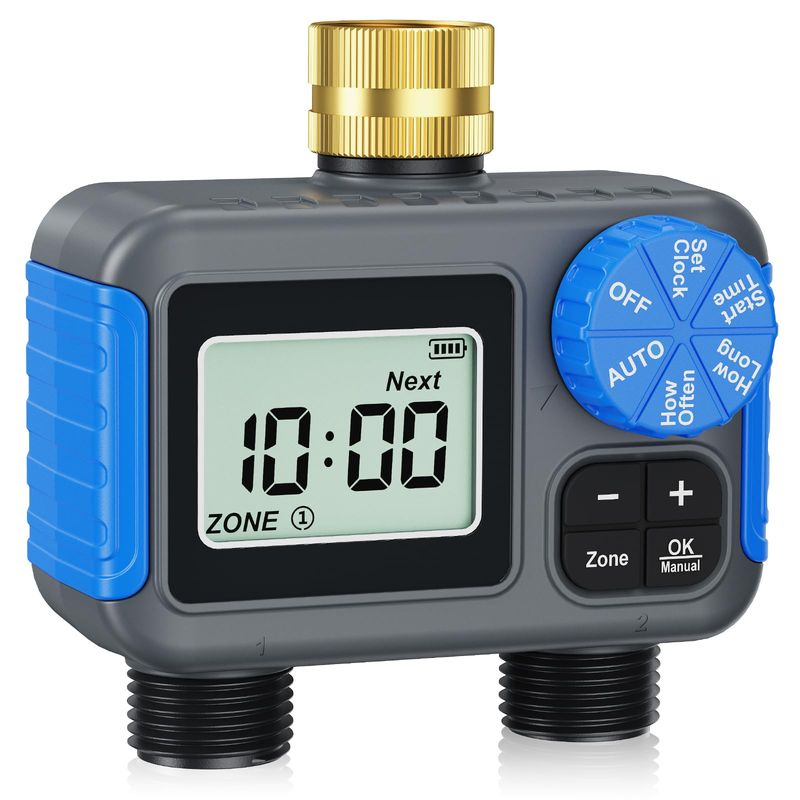
Watering your lawn on the same days and for the same duration every week, regardless of what the grass actually needs, is one of the more common and preventable mistakes a homeowner can make. It is not the only cause of brown grass, but the consequences of getting it wrong show up in several ways that are easy to overlook until the damage is done.
Frequent, shallow irrigation encourages grass roots to stay near the surface, where they are more vulnerable to heat and drought. UF/IFAS irrigation guidance explains that shallow watering can also increase disease pressure, promote weed growth, contribute to thatch buildup, and reduce the lawn’s ability to handle dry periods.
UF/IFAS’s Florida lawn irrigation guide notes that daily watering is generally unnecessary for established turf and that overwatering can encourage pest weeds like dollarweed and sedges while shortening root systems.
Excessive irrigation creates a different problem: saturated soil pushes oxygen out of the root zone, which can cause root injury and brown patches that look like drought stress but are caused by the opposite condition. University of Maryland Extension recommends shifting the decision rule away from the calendar and toward the lawn itself.
Check for signs of stress, inspect soil moisture, and water when the turf actually needs it rather than because the timer says so.
Your lawn may show drought stress before it turns brown
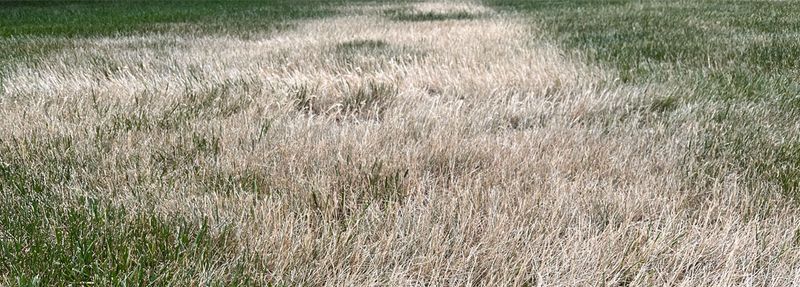
Catching drought stress early gives you a chance to water before the grass turns brown. Several visible clues can appear on established turf before color loss sets in, though their reliability depends on grass species, soil type, weather, and how shaded or exposed the lawn is.
Rolled or folded leaf blades are one of the earliest signs. Grasses fold inward to reduce water loss through their leaves, and that curling is visible if you crouch close to the turf.
A dull, blue-gray cast replacing the normal green color is another indicator. UF/IFAS drought management guidance for Florida lawns and Texas A&M’s bermudagrass management calendar both identify wilting and blue-gray color as useful early stress indicators for warm-season turf.
A simple footprint test can also help. Walk across the lawn, then look back.
Grass that springs back quickly has reasonable turgor pressure; footprints or mower tracks that stay visible for several minutes suggest the blades lack the water they need to recover. UF/IFAS water conservation guidance reinforces that rainfall should count toward your lawn’s water budget, reducing or eliminating the need for supplemental irrigation when meaningful rain has recently fallen.
Treat these signs as useful prompts rather than guarantees, because species and site conditions affect how quickly and clearly each symptom appears.
Moisten the root zone and measure sprinkler output
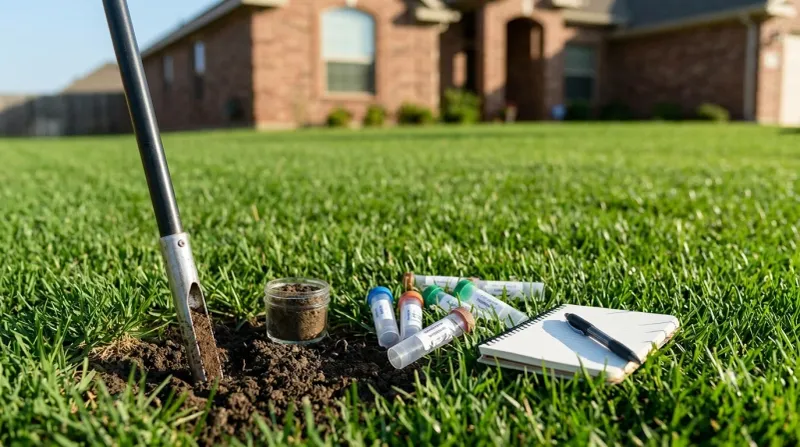
Knowing that your lawn may need water is only part of the job. Knowing how much water actually reaches the root zone, and whether your sprinkler system delivers it evenly, is where most homeowners benefit from a closer look.
A straightforward way to check soil moisture is to push a long screwdriver or soil probe into the ground after you irrigate. If it slides in easily to a reasonable depth, the water has penetrated.
University of Maryland Extension suggests checking for moisture around four inches deep as a practical reference point. UF/IFAS irrigation guidance discusses probing roughly six to eight inches after a thorough irrigation cycle on Florida lawns.
These are examples from different extension recommendations for different soil and turf situations, not targets that apply universally to every yard. Stop watering when runoff begins on the surface, because water running off the lawn is water not reaching the roots.
A catch-can test reveals how much water your system actually delivers and where the coverage is uneven. Place several straight-sided containers, such as tuna cans or small jars, across the irrigation zone in a grid pattern.
Run the system for a normal cycle, then measure the depth of water collected in each can. Texas A&M AgriLife Extension recommends irrigation audits to determine actual application rates rather than assuming that a fixed run time delivers a consistent amount.
Cans with noticeably less water than others point to dry spots caused by poor sprinkler coverage, which can cause browning that looks like drought stress but will not improve with more run time on the same zone.
Early morning helps, but Southern lawns need local adjustments
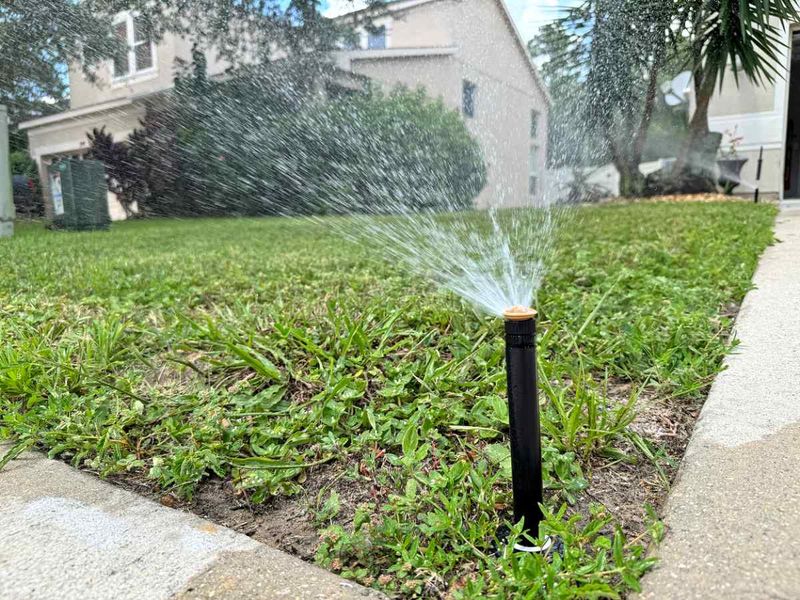
Early morning is the most efficient window for lawn irrigation across the South, and the reasoning goes beyond just evaporation. Foliage that stays wet through the night creates a longer window for fungal disease to develop, particularly in the warm, humid conditions common across Florida and coastal Texas.
University of Georgia Extension’s turfgrass trouble guide and UC IPM turfgrass irrigation timing guidance both flag late-evening and overnight watering as a higher-disease-risk window for exactly this reason.
For Florida warm-season lawns, UF/IFAS lawn watering guidance commonly suggests applying about one-half to three-quarters of an inch when a substantial portion of the lawn shows drought stress, then waiting until stress signs reappear before irrigating again. That approach ties irrigation to observed need rather than a fixed schedule.
But it is a regional example, not a universal rule. Turf species, soil type, slope, shade, rainfall, and season all shift the answer for any specific yard.
Florida’s sandy soils drain quickly and hold less water than clay-heavy soils, which makes irrigation particularly site-specific. UF/IFAS’s Florida lawn irrigation guide emphasizes that overwatering sandy soils can leach nutrients, shorten roots, and increase disease and weed pressure faster than in heavier soils.
Before changing your irrigation frequency, check your local water-management district, municipality, or utility for any restrictions that apply to your address. UF/IFAS drought lawn care guidance notes that local watering rules take priority over any general schedule, and Florida and Texas homeowners in particular should verify what days and times are permitted before adjusting their systems.
Brown grass can reflect drought, saturation, or another problem
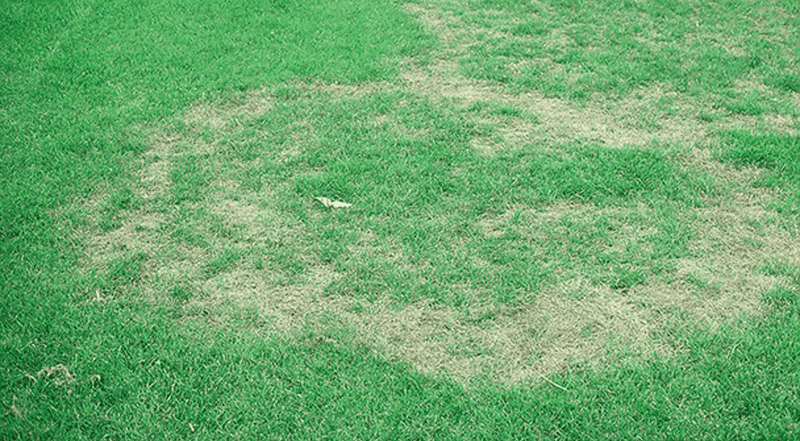
Brown grass is not always a watering failure, and adding more water is not always the right response. Natural warm-season dormancy is one of the most commonly misread situations.
Bermudagrass and other warm-season grasses common in Florida and Texas can turn tan or brown during extended drought while the crowns and roots remain alive. UF/IFAS water conservation guidance notes that dormant lawns can often recover when moisture returns, though species, mowing height, soil quality, and how long the drought lasts all affect whether recovery is complete.
Saturated soil creates a different kind of browning that can look identical to drought stress from a distance. When soil stays waterlogged, oxygen is displaced from the root zone, and roots can begin to die.
University of Georgia Extension’s lawn care bulletin and a UGA master gardener case study both describe saturated-soil damage as a real and sometimes overlooked cause of brown turf that watering more will only worsen.
The pattern and timing of damage can point toward other possibilities. Irregular patches near fence lines or in the same spot repeatedly suggest pet damage.
Circular rings or spots with a different texture may indicate fungal disease. Streaky dry lines that follow the same path as a sprinkler head often reflect poor coverage rather than drought.
UGA’s turfgrass trouble guide and Texas A&M’s bermudagrass calendar also list fertilizer injury, insects, compacted soil, and scalping as causes of browning that require diagnosis rather than automatic extra irrigation. On that last point: removing more than one-third of the leaf blade at a single mowing can cause immediate browning, especially in bermudagrass, and is often mistaken for drought stress.
Use observation to build a safer watering plan
A practical watering plan starts with what you can see and feel, not with a preset schedule. Walk the lawn when you suspect it may need water, check for rolled blades, a dull color, or footprints that stay pressed down.
Then probe the soil at a few inches depth to confirm whether moisture is actually low before running the system. University of Maryland Extension recommends this kind of observation-based approach over automatic clock-based irrigation for established turf.
Shift your irrigation start time toward early morning when your schedule allows, and run a catch-can audit to see whether your sprinkler system delivers water evenly across the zone. UF/IFAS’s Florida irrigation guide and Texas A&M AgriLife Extension both support auditing actual output rather than assuming run time equals consistent coverage.
Stop the system if runoff appears on the surface.
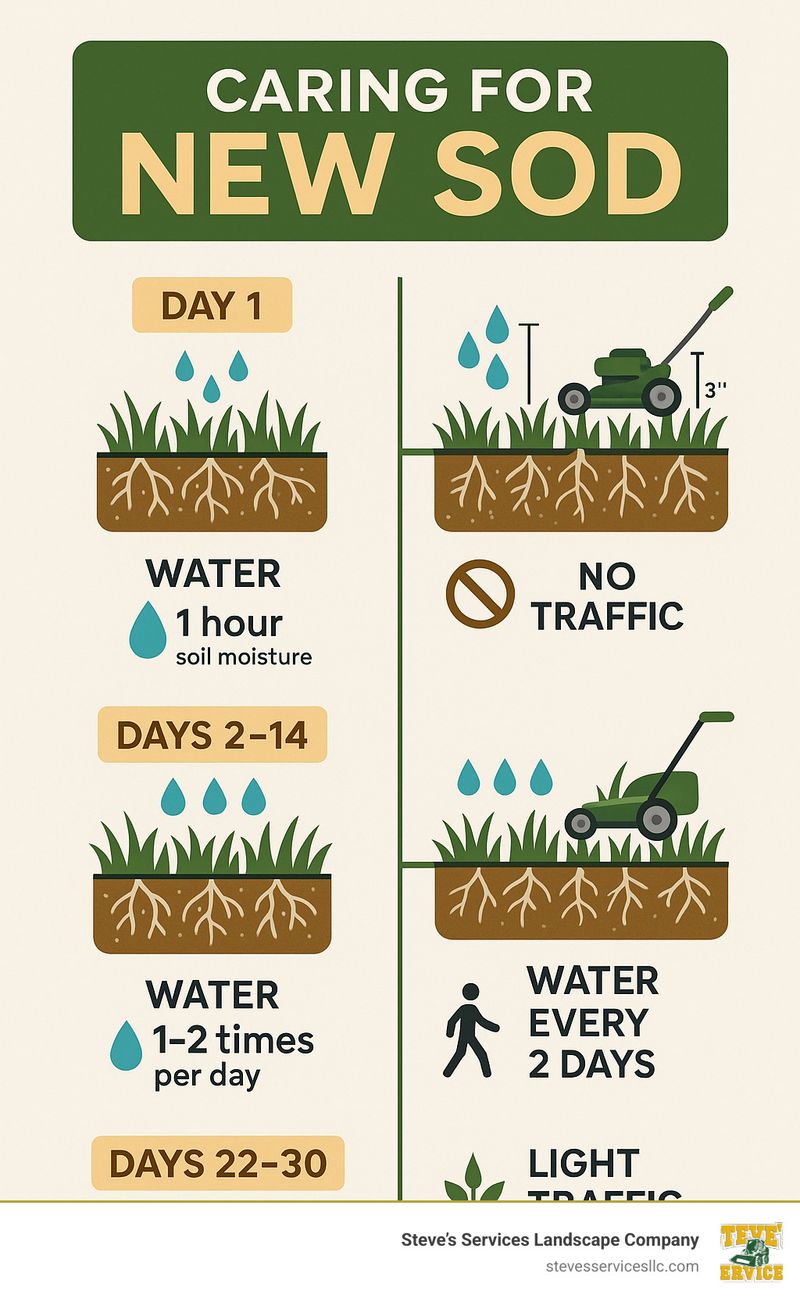
New seed, new sod, sandy or sloped sites, and compacted soil all require adjustments beyond what works for established turf in good condition. Texas A&M’s turfgrass establishment guide and UF/IFAS water restriction guidance remind homeowners to check local rules before changing irrigation frequency.
Ordinary midday droplets are not your lawn’s enemy; an unexamined, rigid watering habit is a much more common source of trouble, and a brown lawn usually has more to say than the sprinkler schedule alone can answer.