
Fall cleanup in a California yard can turn up a surprise: a plump, bumpy toad tucked under a flowerpot. Many gardeners hear that toads eat snails and wonder if the toad is quietly guarding the lettuce.
The real story is more mixed, and it changes how you handle both the toad and the slug damage. Here is how to treat the toad kindly and still protect your winter greens.
A western toad may eat snails, but it is not crop protection
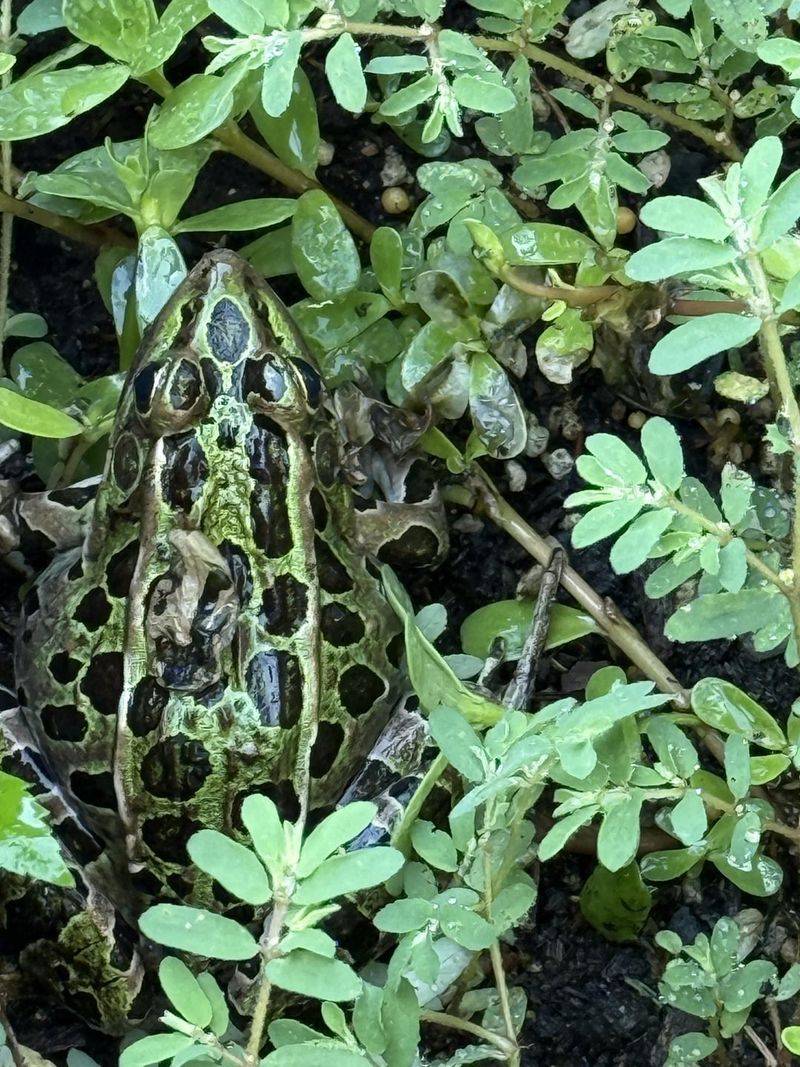
Finding a toad under a pot feels like good news, and in some ways it is. California Department of Fish and Wildlife species account says western toads do eat snails and slugs.
But it describes them as less common prey than terrestrial insects and other small arthropods.
That detail matters for your garden. A toad that sometimes eats a slug is not the same as a toad that clears your lettuce bed.
UC IPM lists toads among natural enemies of snails and slugs, but cautions that natural predators are rarely effective enough to give satisfactory control in a home garden.
No source we found shows that a toad sheltering under one pot protects winter greens. So the pot should not be treated as pest control, and the toad should not be expected to do that job.
The useful takeaway has two parts. Avoid needlessly disturbing the toad, since it is a wild animal using your yard.
Then confirm what is chewing your seedlings and deal with it directly. Your plants need a plan, and the toad can simply be a welcome visitor.
What western toads eat, where they shelter, and where they occur
Most of a western toad’s menu is small and crawly. Adults mostly eat terrestrial insects and other small arthropods, according to the California wildlife habitat account.
Earthworms, snails, and slugs show up less often.
Toads also spend long stretches inactive, tucked under cover. The same account lists boards, bark, logs, and rocks as places they use.
A flowerpot may offer similar cover, though the species account does not specifically mention pots.
Where you live matters too. Western toads occur across much of California, but the account says they are absent from deserts and the highest mountains.
Not every California yard will have one.
Be careful with names. Not every toad in a California yard is a western toad.
The National Park Service describes a toad with variable color and a light stripe along its back, but color varies and one feature alone is not enough for a sure answer. If you want a firm identification, take a photo from a distance and compare it with a regional field guide or ask a local wildlife group.
Florida and Texas have different native toads and different gardens, so this California evidence should not be stretched to them.
Check whether snails or slugs are damaging the greens
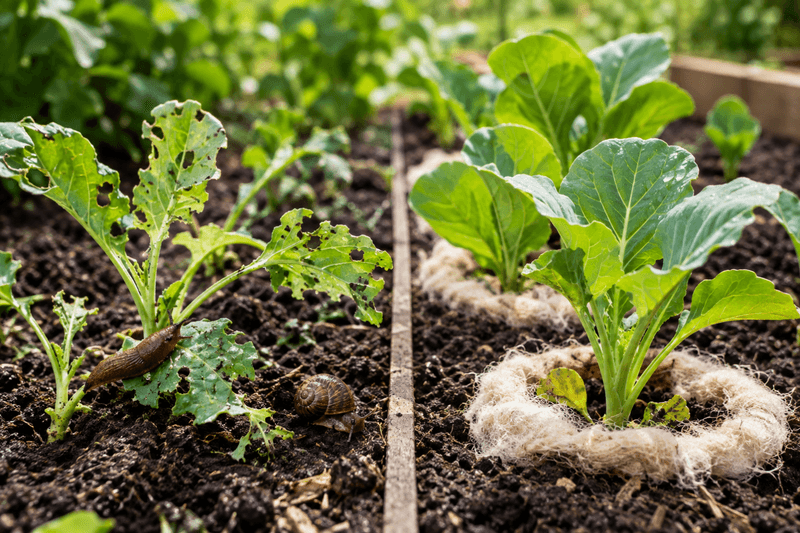
Before you act, look closely at the damage. UC IPM says snails and slugs leave silvery slime trails and chew irregular holes with smooth edges.
They can harm seedlings and leafy vegetables such as lettuce and cabbage.
Slime trails are your best clue. Check in the morning, when trails still shine, or go out after dark with a flashlight.
If you see no trails and the holes look ragged or the leaves are clipped cleanly, something else may be feeding, such as insects or birds.
Not every bit of winter-green damage comes from mollusks. Matching the damage to the culprit saves you from treating the wrong problem.
Timing varies across California. UC IPM notes that slugs and snails can stay active year-round in mild-winter southern coastal areas.
Inland valleys, foothills, and cooler regions may see pressure shift with rain, cold snaps, and irrigation.
Watch your own beds. Note when damage starts after the first rains or fall irrigation, and where the slime trails lead.
Trails that end at a pot, board, or pile of debris tell you where mollusks are hiding during the day.
Use direct, integrated controls for slug management
Slug control works best as a combination of small habits. UC IPM recommends several methods used together, and none is a guaranteed fix.
Start with hand-picking. Go out regularly, especially in the evening or early morning, and remove snails and slugs from the bed.
It takes persistence, but it is direct and keeps working while you keep at it.
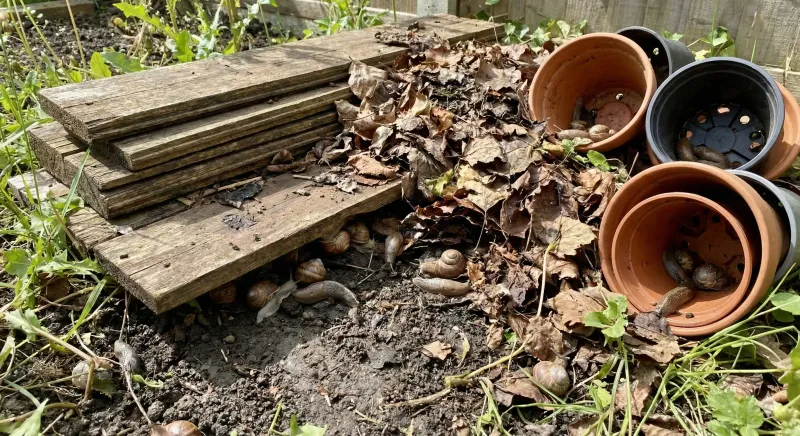
Traps are another option. A board or pot set on the soil gives mollusks a place to hide by day.
The catch is that you must check the trap daily and remove what gathers. An unchecked trap simply becomes a shelter, so use one only if you will look under it every day.
Reduce moisture where you can. Mollusks love persistently damp surfaces, so adjust irrigation timing and clear spots that stay wet.
In a California garden with wet winters and dry summers, that may mean watering earlier in the day and keeping drip lines away from leaf bases.
Barriers can help in the right places, such as around a raised bed or container. Choose them to suit your setup and inspect them for gaps.
Toads and other predators may take a few mollusks, but UC IPM says natural enemies rarely give satisfactory control alone. Think of them as a small bonus.
Inspect shelter during cleanup without disturbing the toad
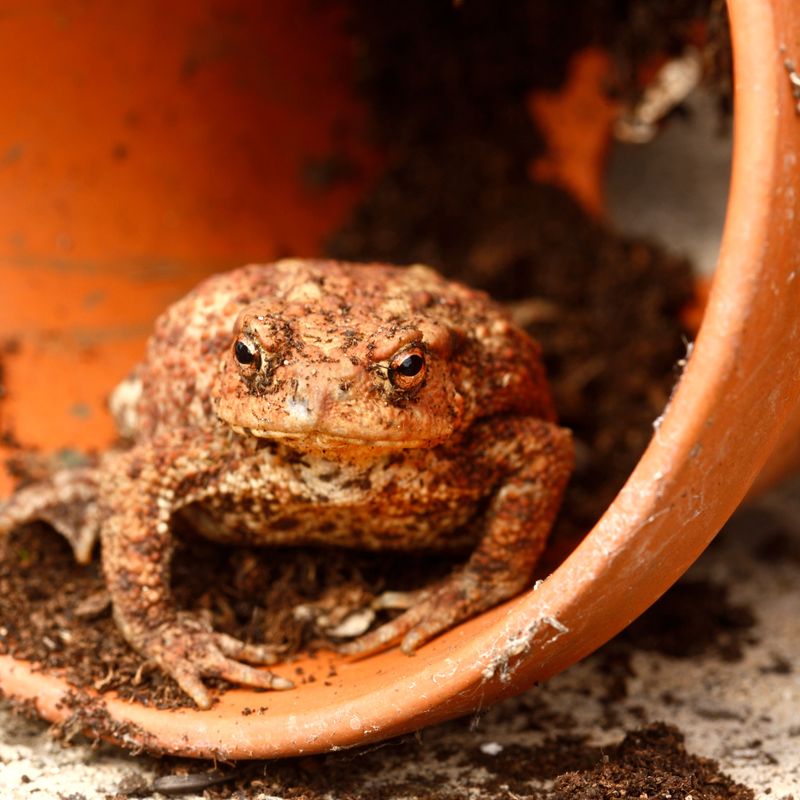
Here is the tension. A pot that shelters a toad may also shelter snails.
UC IPM names boards, stones, debris, and flowerpots as places where mollusks hide or can be trapped, so leaving a pot alone is not automatically good for your vegetable bed.
During cleanup, move slowly and lift items only as needed. If you spot a toad, stop and look.
The National Park Service advises watching amphibians without touching them, because they can absorb substances through their skin.
Do not pick the toad up or carry it elsewhere. If it is in a spot you must clear, wait for it to move on its own, or put the item back and work in another area first.
If you move pots near the bed, check underneath for snails and slugs and clear those out.
If you decide to use bait, follow the product label closely. UC IPM says baits alone do not give long-term control.
It describes iron phosphate baits as safer for wildlife than some alternatives, but safer does not mean harmless or risk-free.
UC IPM also warns that metaldehyde products can poison dogs and cats, so keep that in mind if pets share your yard.
Protect the greens with active management, not a promise from the toad
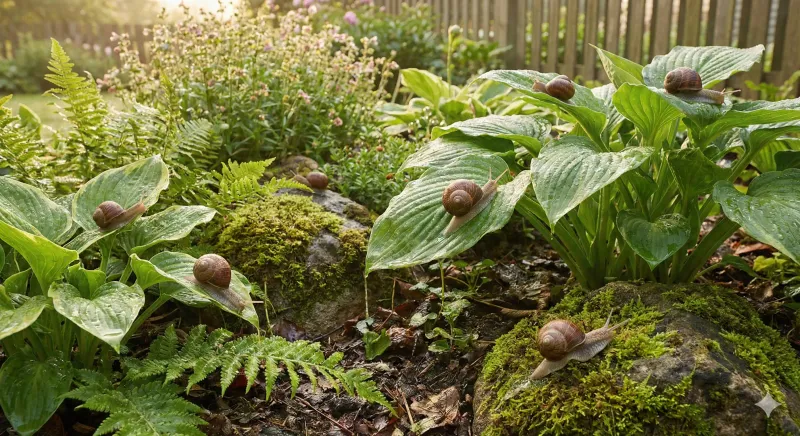
Give the toad space, and give your greens a plan. Confirm that slime trails and smooth-edged holes point to mollusks, then use hand-picking, daily trap checks, moisture reduction, and barriers as they fit your yard.
Check pots and debris near the bed rather than leaving them untouched by default. A toad does not need your help to be a good neighbor, only a little distance.
The greens need you, not the toad.