
You may have seen posts claiming California will make everyone rip out every plant next to their house. The real draft is more specific, and it leaves room for some plantings.
Knowing which mulch, shrubs, flowers, and trees the proposal actually targets can save you from tearing out a healthy garden. Here is what the August 2026 draft says, and what to do in the meantime.
The draft is narrower than the viral summary
The claim that California is banning every plant within five feet of every house does not match the draft. The proposal is aimed at specific hazard areas: State Responsibility Areas and Very High Fire Hazard Severity Zones in Local Responsibility Areas.
If your home sits outside those areas, the statewide proposal does not cover it.
Even inside those areas, the picture can differ from town to town. Local requirements may be stricter than the state text, so your city or fire district may add its own rules.
Your local fire agency is the best place to confirm what applies at your address.
Status matters too. The Board of Forestry’s Zone 0 status page says the package remains under final review by the Office of Administrative Law as of October 10, 2026.
That means these are proposed rules, not requirements already in force.
The wording has also shifted along the way. The October 2025 draft language broadly barred plants likely to ignite, including ornamental and native plants.
The August 2026 version instead permits certain non-woody plants in parts of Zone 0. An older explainer may be describing language that is no longer on the table.
Combustible mulch and loose debris are the clearest targets

Across Zone 0, the draft calls for removing combustible mulch, including bark and wood chips. It also lists fallen leaves and needles, firewood, stored wood, and other combustible material.
Those are the items that pile up against siding and fences and can catch blowing embers.
The August 2026 summary treats these as a separate category from live plants. A mulch restriction is not an order to strip a whole bed.
A rose or perennial bed can lose its wood chips without losing every plant in it.
CAL FIRE’s current defensible space guidance already says not to use combustible bark or mulch in the first five feet. That is homeowner guidance today, and it is distinct from the proposed regulation.
The guidance also recommends hardscape such as gravel, pavers, or concrete.
Those hardscape options are suggestions, not the only lawful surface. If you are swapping out wood chips, a gravel band or paver path along the wall is a common choice, but check the final text and local rules before pouring anything.
The five-foot zone has smaller, feature-specific plant-free buffers
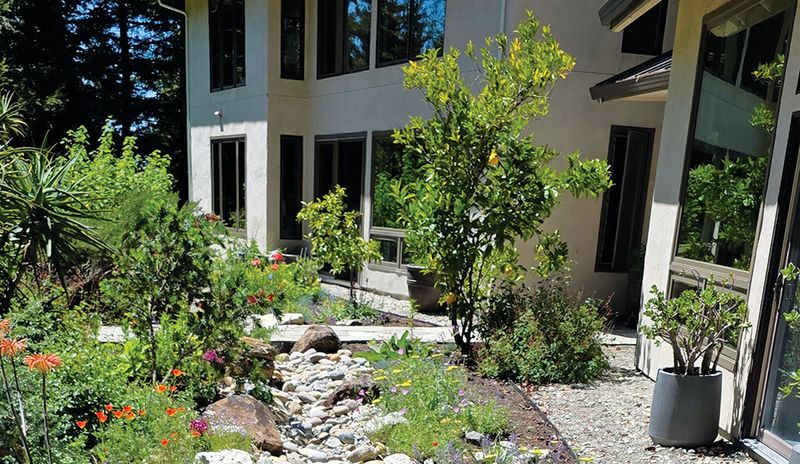
Picture the five-foot zone as a larger area with smaller no-vegetation pockets inside it. The draft sets those pockets by feature, and they are not all the same distance.
Along the structure itself, the buffer is at least one foot from the wall, extending to the eave drip line where applicable. Around windows, doors, and vents, the buffer is two feet.
Around attached decks and similar features, it grows to five feet.
Here is how that might look on a real house. A plant could sit three feet from a blank stretch of wall, but not within two feet of a crawlspace vent.
A shrub near a bare wall might be clear of the one-foot buffer yet still sit too close to a window.
These measurements come from the Board of Forestry draft summary. They describe vegetation-free buffers, not proof that everything in the five-foot area must go.
A walk around your house with a tape measure, noting each window, door, vent, and deck, is a good way to see where the buffers would fall.
Some maintained flowers and groundcovers can remain

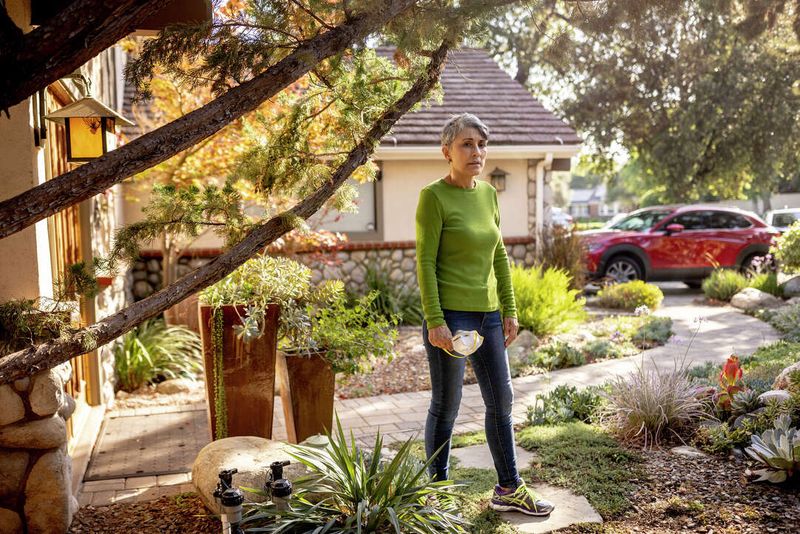
Outside the buffers, the draft allows some plants to stay. It names maintained, non-woody flowers and herbaceous plants in spaced groupings, low groundcovers, and lawns kept at three inches.
The examples it gives are bulbs, impatiens, begonias, poppies, yarrow, non-thatching succulents, beach strawberry, and creeping thyme. If your beds hold plants like these, the August 2026 draft does not call for blanket removal.
There are conditions, though. Plants have to meet the draft’s maintenance and spacing requirements, which means no dead growth and no thick, continuous mats connecting to the house.
A plant sold as fire-resistant is not automatically allowed, and a plant missing from the list is not automatically banned. The text is what counts.
The draft also makes a limited allowance for moveable plants in noncombustible pots, subject to height and spacing limits. A ceramic or metal pot of succulents near a patio could fit that allowance, while a wooden planter probably would not.
If you want to add flowers now, keep them out of the buffer zones, space them so they do not form a solid carpet, and clip spent stems promptly.
Woody shrubs and existing trees are not the same case
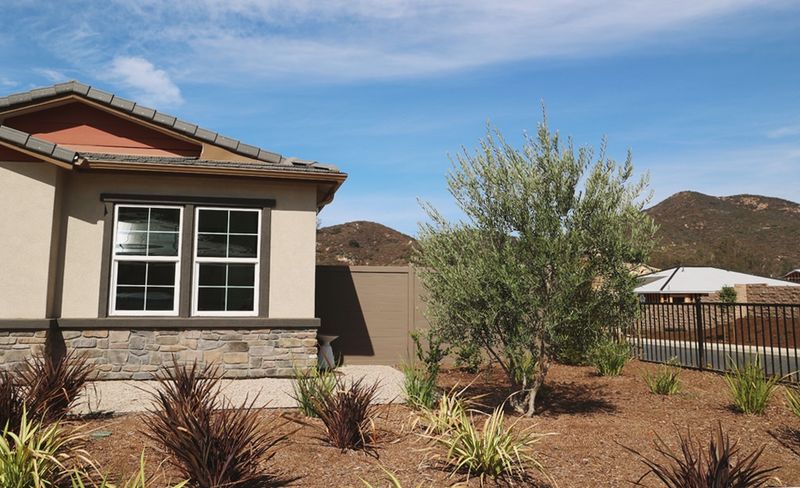
Shrubs are the question most gardeners ask, and the answer needs care. The draft identifies certain non-woody plants and low groundcovers, but it does not create a general exemption for woody shrubs.
That does not mean every shrub is banned, and it does not mean shrubs are fine. It means you should check the final text and local rules before deciding about a particular shrub.
Trees get different treatment. Under the draft, existing trees may remain if they are maintained according to the proposed requirements.
New trees would not be allowed in Zone 0 after the rule’s effective date.
Maintenance is the theme for trees you keep. That means removing dead wood, clearing ladder fuels such as low shrubs or branches that could carry fire upward, and maintaining branches as the proposal describes.
Nothing here is a reason to cut down a healthy, established tree. If you are planning a new planting, hold off on putting a tree near the house until the final rule is published, and ask your local fire agency which spots are acceptable.
Existing homes would get a proposed phase-in
Homeowners in the covered areas might wonder whether a deadline is already ticking. Under this draft, no. The proposal is not final, and its timelines are proposed ones.
For existing homes, the draft describes a phased approach. Combustible items and dead vegetation would be addressed within three years.
Additional safety-zone, fence, and shed requirements would be phased in within up to five years.
Those windows could change before the rule is final, and the clock would depend on the final effective date. Treat them as a planning guide rather than a date on your calendar.
A sensible approach is to spread the work out. Handle quick, low-cost jobs first, and save bigger decisions, like rebuilding a bed or replacing a fence, until the final text is out.
Breaking the work into stages also keeps you from making costly changes based on language that may shift.
A careful cleanup is useful, but Zone 0 is not a guarantee
Clearing combustible material next to a building addresses one part of wildfire exposure. It does not cover all of it.
A peer-reviewed study of home survival in the 2018 Camp Fire found several associated factors, including nearby burning structures and vegetation. The authors also noted limits in their vegetation data and said defensible-space work cannot guarantee survival under severe ember and radiant-heat exposure.
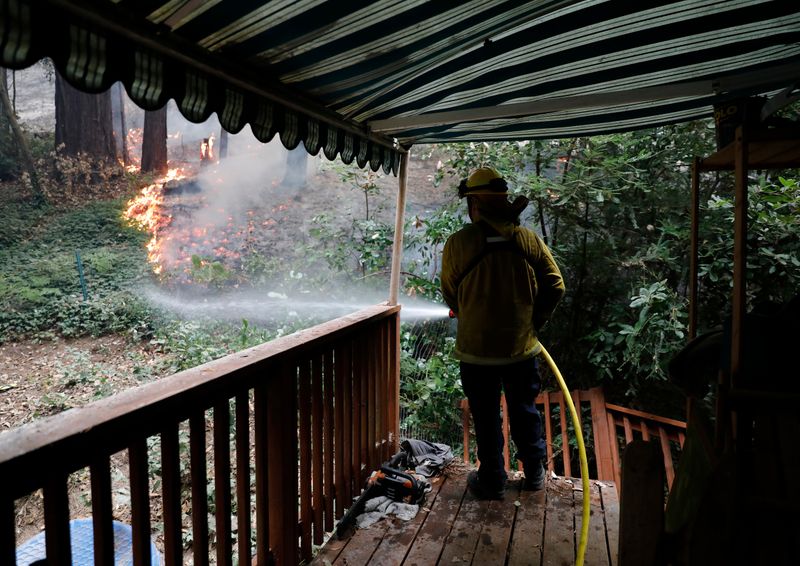
That means a cleared bed or a compliant Zone 0 does not promise a home will make it through a fire. Embers, neighboring buildings, and weak points in the house itself all play a part.
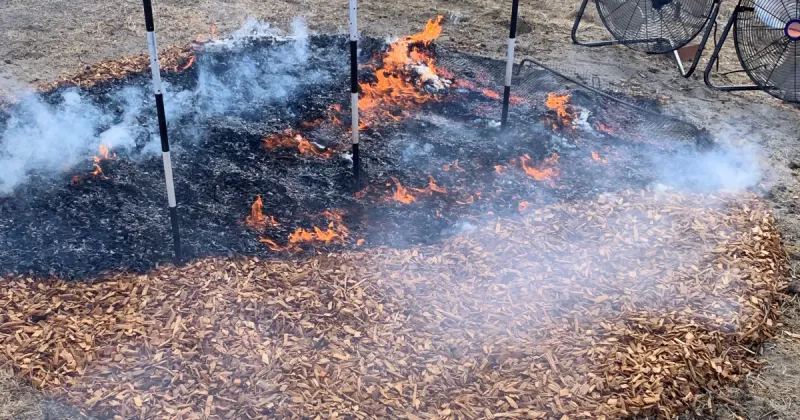
Mulch is a good example of why details matter. In a Marin County burn study described by UC ANR, composted mulch tended to smolder rather than flame.
It could still transition to flames when litter and twigs were present.
That finding does not make organic mulch fireproof, and it does not mean organic mulch is allowed in Zone 0. Cleanup is worth doing, but think of it as one layer of protection among several.
Check the latest rule before changing an established planting
Start with the easy wins. Rake dead leaves and needles away from the house, trim dead or dying growth, and skip adding new wood mulch in the first five feet, in line with CAL FIRE’s defensible space guidance.
Before pulling out an established plant or redesigning a bed, read the current text on the Board of Forestry’s Zone 0 page, then call your local fire agency about stricter local rules.
Rules written in a hurry tend to change, but dry leaves do not stop being fuel. A rake costs less than a redesign.