
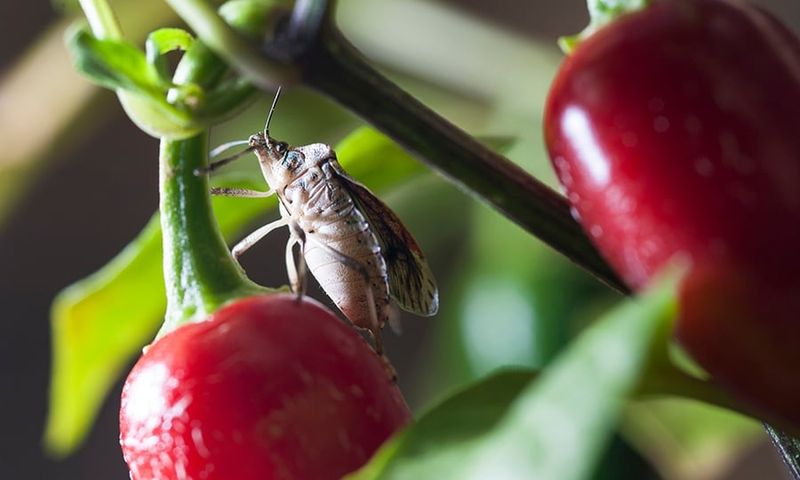
Walk out to your pepper patch in October and you may find a clump of stink bugs sitting on the last good fruit. It is easy to jump to a theory about weeds, dry soil, or the tree next door.
The truth is more modest, and knowing it can keep you from wasting effort or spraying for no reason. Here is how to sort out what you are seeing and protect the peppers you can still pick.
What does a crowd on peppers actually tell you?
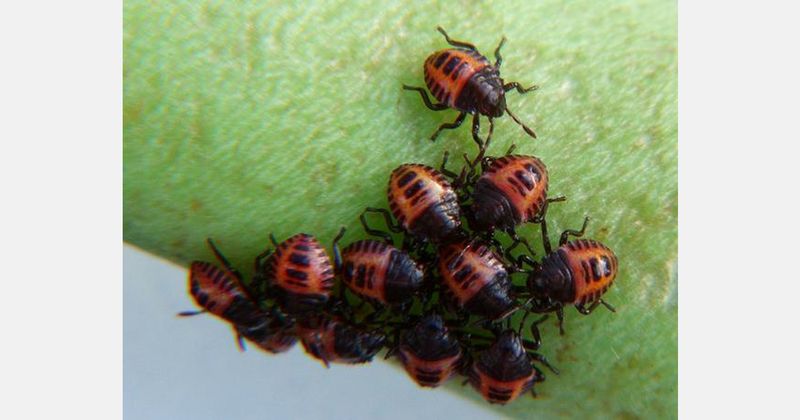
A pile of stink bugs on your peppers feels like a message, but it does not point to one problem in your yard. A crowd alone cannot tell you the cause is drought, weeds, or a certain tree.
It also does not prove the insects are brown marmorated stink bugs (BMSB), since several stink bug species live in North Carolina.
What we can say is narrower. If the bugs are BMSB, peppers are a plausible meal.
A multi-university vegetable-management guide describes peppers as a suitable food and reproductive host for this pest.
That is a host explanation, not a diagnosis of your yard. NC State Extension says the reasons behind local BMSB population swings are often unclear.
So if someone tells you the crowd proves one yard fix is needed, treat that with caution.
A better plan is to treat the crowd as a reason to look closer. Confirm the insect, check the fruit, and then pick a measured response.
The next sections walk through each step.
Identify the insect before you respond
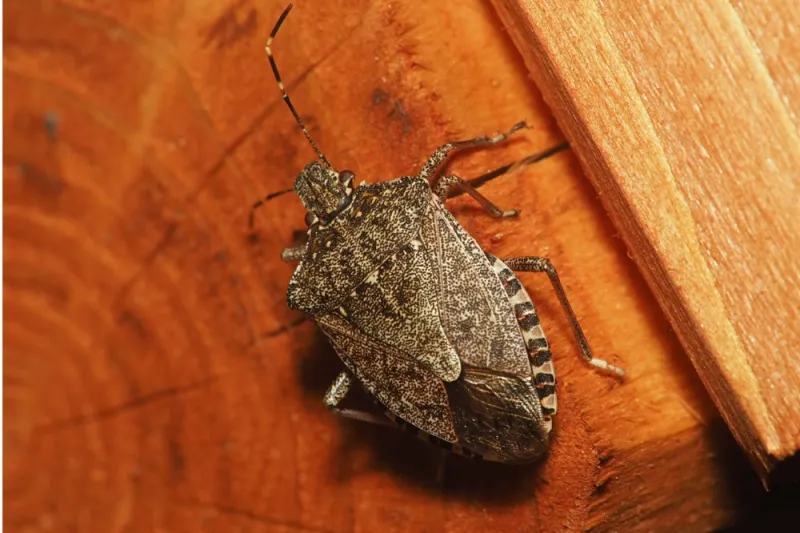
Before you pick, spray, or blame anything, find out which bug you have. North Carolina has native stink bugs that look a lot like BMSB, and some of them are helpful.
Some native species eat other insects, so removing them is not always a favor to your garden.
Look closely at an adult. NC State Extension points to two clues: white bands on the antennae and alternating light and dark marks along the edge of the abdomen.
Both features should be present before you call it a BMSB.
A phone camera with a zoom helps, since the bands are small. Take a photo and compare it with the pictures in the NC State BMSB FAQ.
If you are still unsure, your county Cooperative Extension office can help with identification.
Getting this right matters because pepper damage cannot be pinned on a bug you have not identified. It also keeps you from removing insects that may be working in your favor.
Once you know what you have, every later decision gets easier.
Why late peppers can attract them
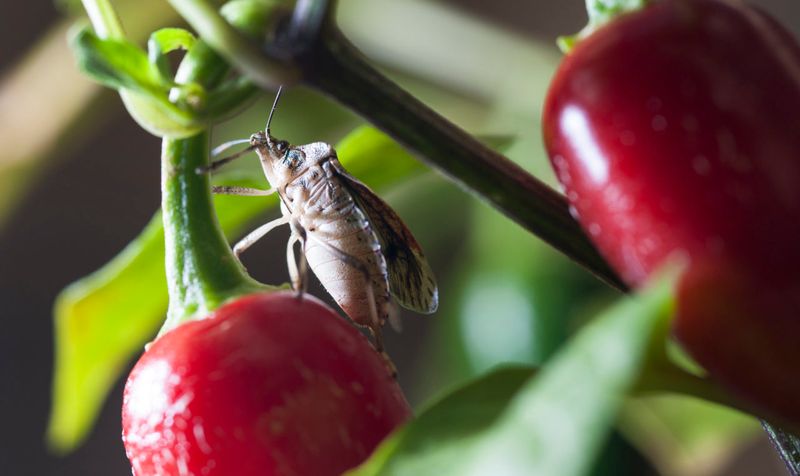
Peppers carry fruit well into the fall, and that fruit is food. The regional vegetable-management guide from the BMSB research team describes bell pepper as a preferred host, with fruit often available from mid-July through September.
That timing and host description come from that guide.
The same guide describes BMSB as a mobile insect that can switch among host plants. So a bug might feed on one plant for a while and then move on to another.
That makes a pepper plant a reasonable stop, but not a guaranteed target.
Keep the limits in mind. The guide is a regional document for vegetable growers, not a study of individual North Carolina yards.
It also does not say every pepper variety faces the same pressure, so your neighbor’s plants may look different from yours.
Think of it this way: late peppers give bugs something to eat, and that is a fair explanation for why they may show up. It does not tell you what is wrong with your soil, your mulch, or your landscape.
Treat it as background, then look at what the bugs are actually doing to your fruit.
Fall movement does not explain a particular plant
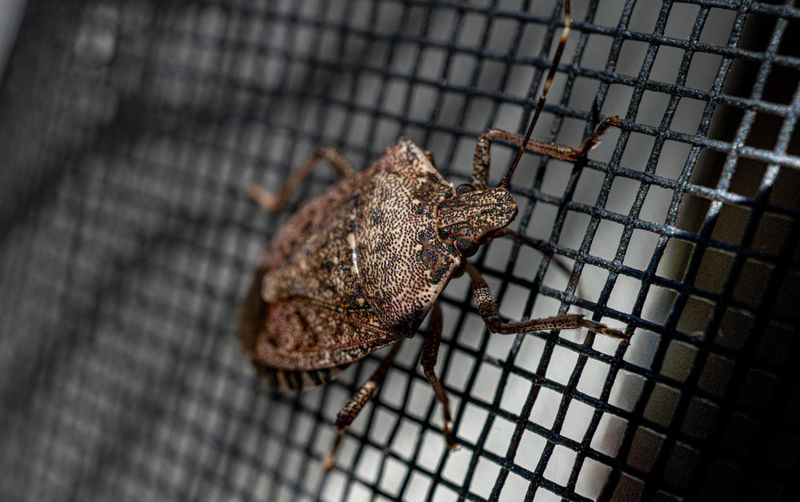
Two things happen in the fall, and they are easy to mix up. One is feeding on crops like peppers.
The other is adult BMSB looking for sheltered places to spend the winter, which NC State Extension places in September and October.
The timing overlaps, but overlap is not an explanation. Seasonal movement toward shelter does not tell you why bugs are on a certain pepper plant.
It also does not point to a problem in your yard.
Pressure also varies across the state. NC State reports lower BMSB prevalence in the coastal plain than in the mountains and Piedmont.
Even so, why numbers rise or fall in one place is usually not well explained.
You may have read that vegetable fields next to woodlots face more risk. That finding appears in the regional vegetable guide, and it describes commercial settings across a landscape.
It does not prove that one tree or woodland edge caused the bugs on your peppers.
So skip the blame game. If a crowd is on your peppers this week, deal with what you can see on the plants themselves.
Check the fruit, not just the bugs
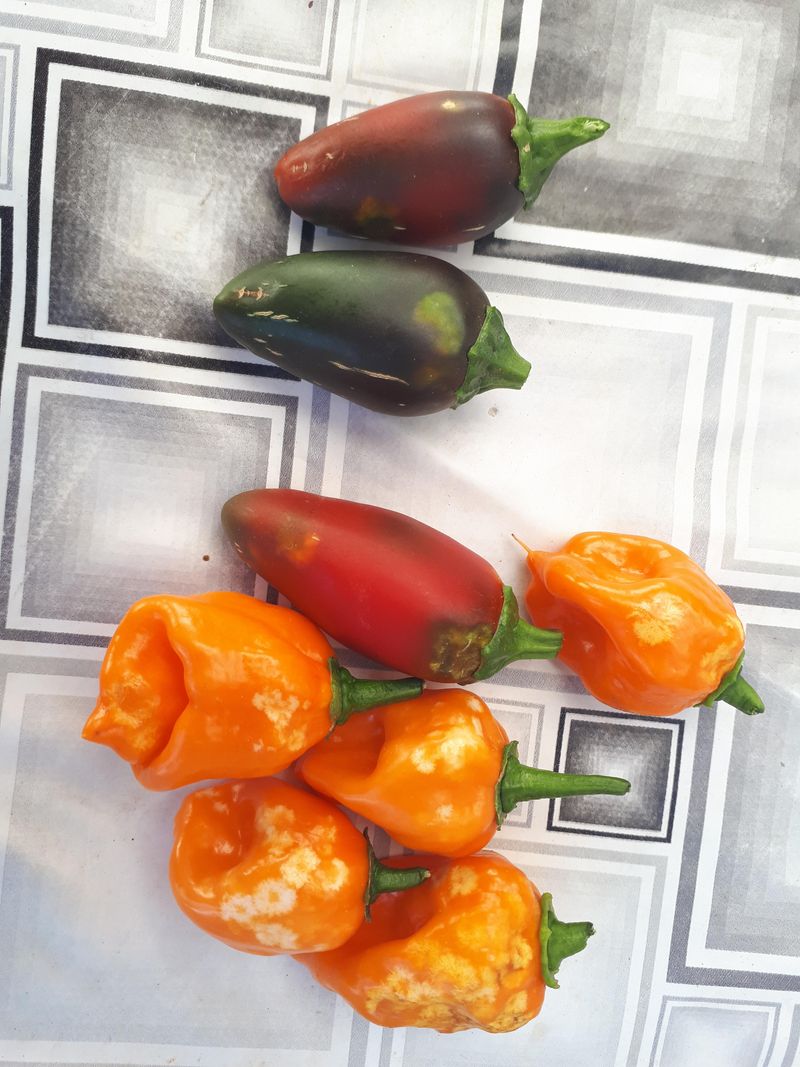
Bugs on a plant are not the same as damage on the fruit. BMSB feed with piercing-sucking mouthparts, and the regional vegetable guide notes that on peppers this can leave white marks on the surface and spongy tissue inside.
These are possible signs, not proof. Other stink bugs, other pests, and even plant problems can leave similar marks.
NC State stresses identifying the insect first, so match what you see on the fruit with what you found on the plant.
Go through the peppers one at a time. Press gently, look for pale spots, and cut a questionable fruit open.
UC IPM says a small spot or pithy area can simply be cut out.
That means a blemished pepper is not automatically a loss. If most of the flesh is firm and sound, trim the bad part and use the rest.
Toss only fruit that is badly damaged or spoiled.
Start with repeatable, low-impact controls
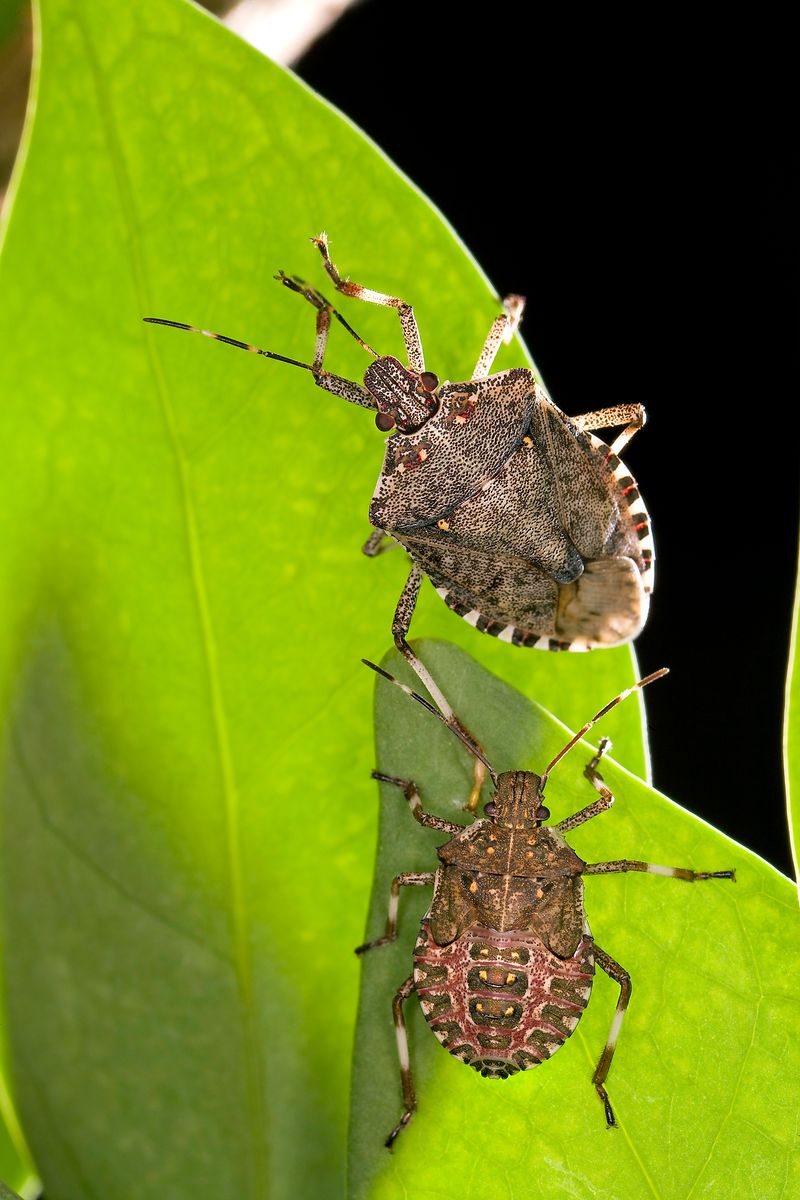
For a home garden, the simplest tools are your own hands. Once you have confirmed that the bugs are BMSB, pick them off and drop them into a bucket of soapy water.
UC IPM lists this as a practical home step.
Early morning is a good time to try it, when bugs tend to be slower. Wear gloves if you dislike the smell.
A short check every day or two works better than one long session.
Also flip leaves over and look at the undersides for egg masses. Removing eggs can reduce how many young bugs show up later.
Crushing or scraping them into the soapy water works fine.
Row covers are another option, since they can block bugs from reaching the fruit. The tradeoff is that covers can also keep pollinators away from flowers.
Peppers will still set some fruit on their own, but a cover on plants still blooming may reduce your harvest, so weigh it carefully late in the season.
None of these steps will wipe out the problem. They are steady, low-cost ways to cut the damage while keeping helpful insects safe.
Traps and sprays are not guaranteed harvest-savers
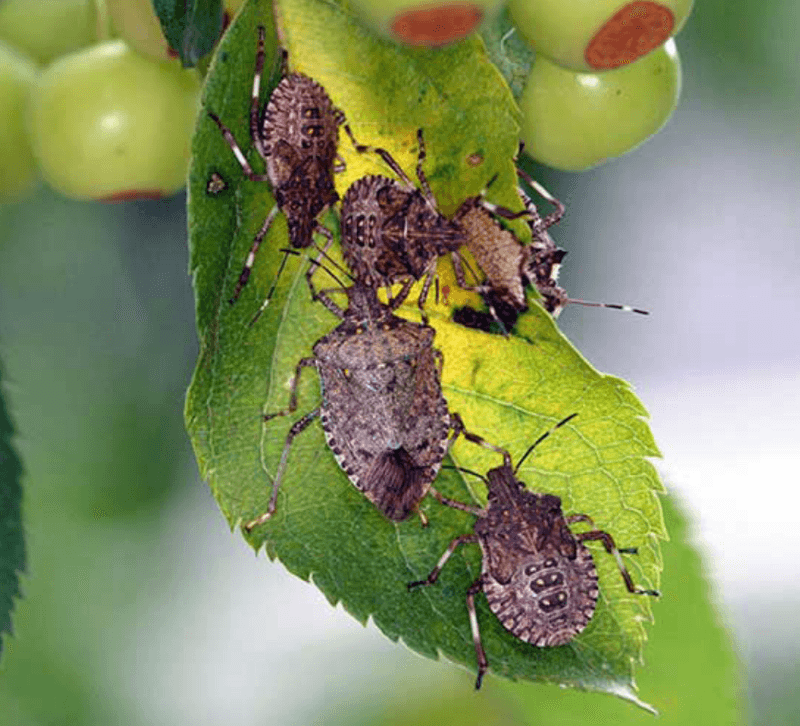
Pheromone traps sound like an easy answer, but they have limits. They can help detect or monitor BMSB, yet they may not protect your crop.
UC IPM cites a home-garden study that found more stink bugs and more damage on plants near traps.
No proven safe distance for placing a trap away from a garden has been established, so avoid guessing at one. If you want to monitor, treat a trap as a counting tool and not as protection for your peppers.
Sprays deserve the same caution. NC State Extension says insecticides can harm beneficial insects and should be saved for severe infestations.
Bugs can also move in from outside your garden after you spray, so a treatment cannot promise to save the last harvest.
If you do decide to use a pesticide, the product label must allow use on peppers in North Carolina. Follow its directions exactly, including any preharvest interval, which is the waiting time between spraying and picking.
The regional vegetable guide also warns against unnecessary use and says it is no substitute for the label.
Choosing a product by its active ingredient alone is not enough. Registration for peppers and your local rules are what count.
Protect the remaining peppers with a measured plan
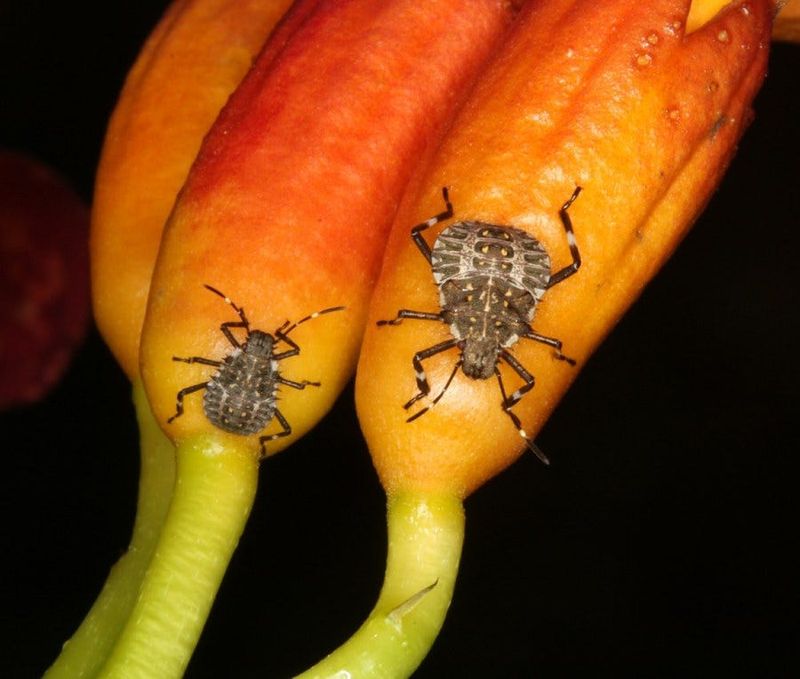
Start by identifying the bug, using the antennae bands and abdomen edge marks. Then inspect your peppers one at a time and cut away small damaged spots.
Hand-pick confirmed BMSB into soapy water and check leaf undersides for eggs, as UC IPM suggests.
Skip the assumption that a trap, a yard cleanup, or a spray will fix everything, since NC State says local causes are often unclear. Let the damage you actually see guide each choice.
A crowd of bugs is a reason to look, not a verdict on your yard.