
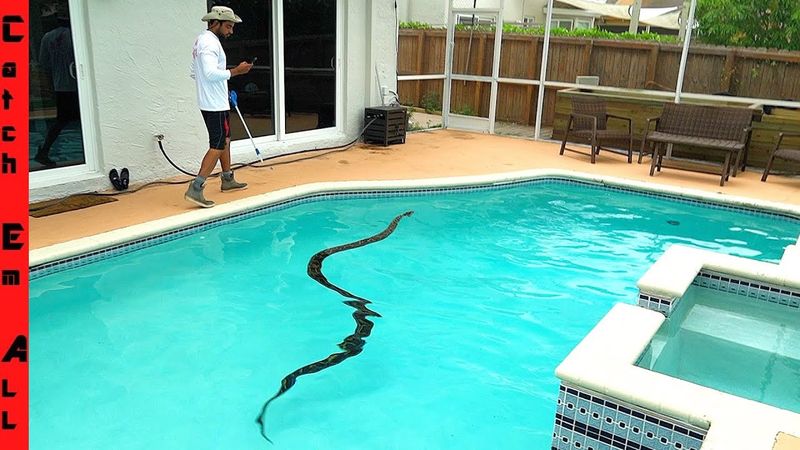
You step outside with your coffee and spot a snake curled up near the pool. Your heart jumps, and your mind races to the worst answers.
The truth is more nuanced, and knowing what one sighting can and cannot tell you helps you keep your family, pets, and yard safe without overreacting.
One poolside sighting is not a yard diagnosis
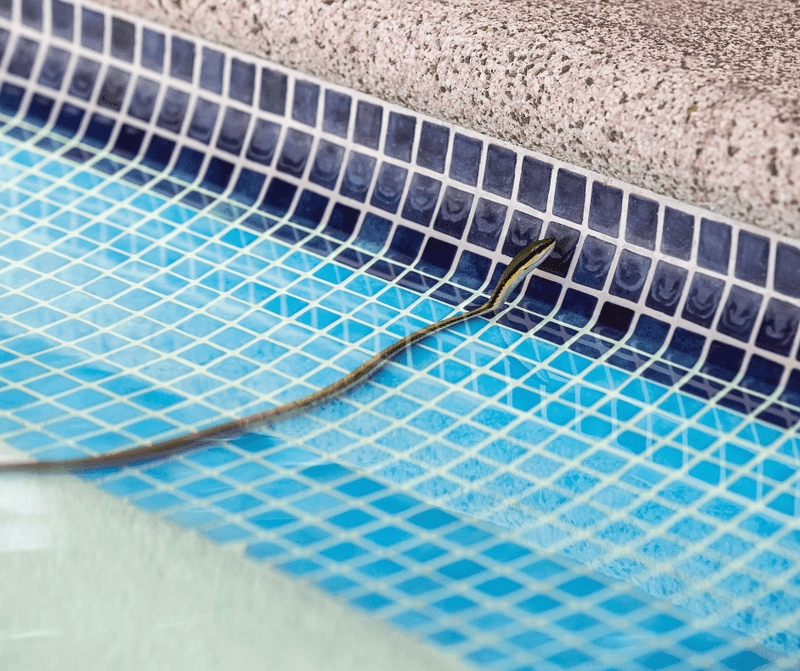
A snake on your pool deck feels like a verdict on your whole property. It is not one.
A single snake does not prove there is a nest, an infestation, aggression, or a rodent problem.
Think of it as one data point. The snake may have been passing through, resting, or hunting nearby, and one glimpse cannot tell you which.
Patterns are a different story. Florida Fish and Wildlife guidance says frequent snake sightings near buildings may indicate rodents are present.
Even then, it is a reason to look around, not proof of the cause.
So for now, take a breath. Keep people and pets back, and save your yard conclusions for what you notice over weeks, not what you saw in one startling minute.
A warm deck is one possible stop, not a proven fall pattern
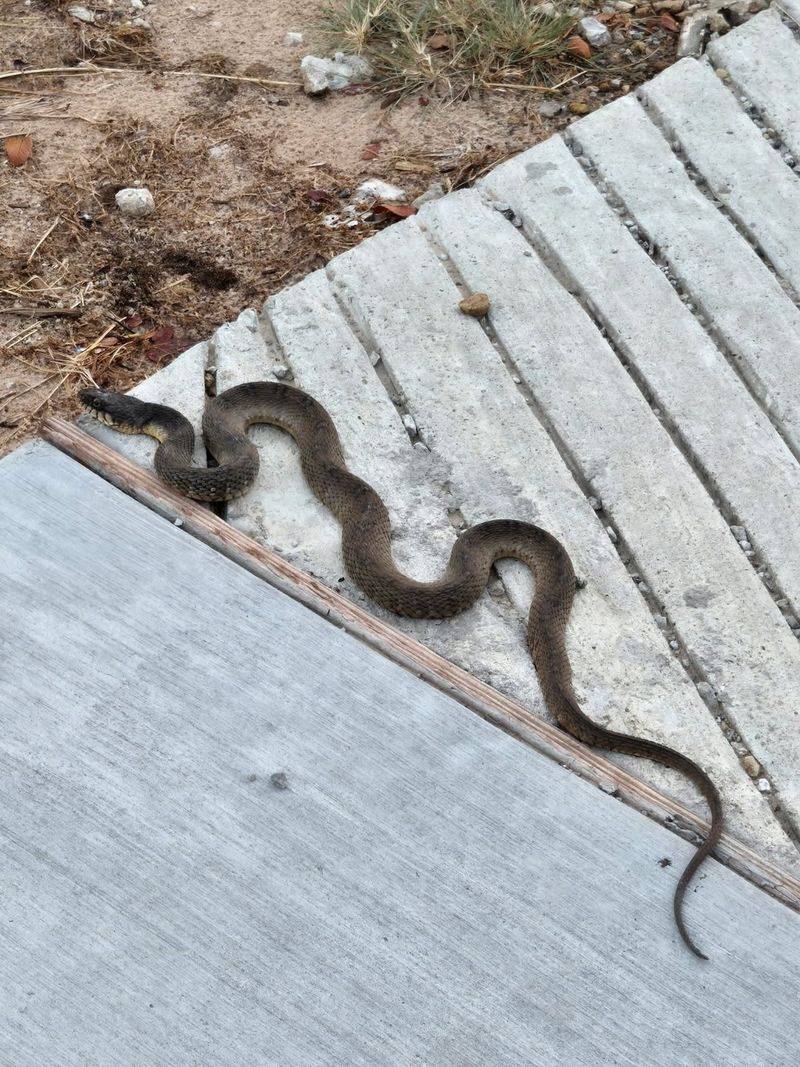
Snakes are ectotherms, meaning they rely on their surroundings to manage body temperature. As Florida Museum guidance explains, a sun-warmed surface can help a reptile warm up.
A sunny pool deck could offer exactly that kind of basking spot.
That is only one possibility, though. Nearby shelter, prey, water, or simple passage across your yard could also explain the visit, as UF/IFAS guidance on residential snake encounters and a UC Statewide IPM Program page both suggest in different ways.
The sources we reviewed do not show that snakes seek out Florida pool decks specifically after fall nights cool. Nobody can say why this particular snake stopped where it did.
Fall does not switch Florida snakes off, and they do not all act alike. One UF/IFAS Escambia County account notes a fall breeding season for some species in the western Panhandle.
That observation belongs to those species and that region, not to the whole state.
Why location and posture cannot identify the snake
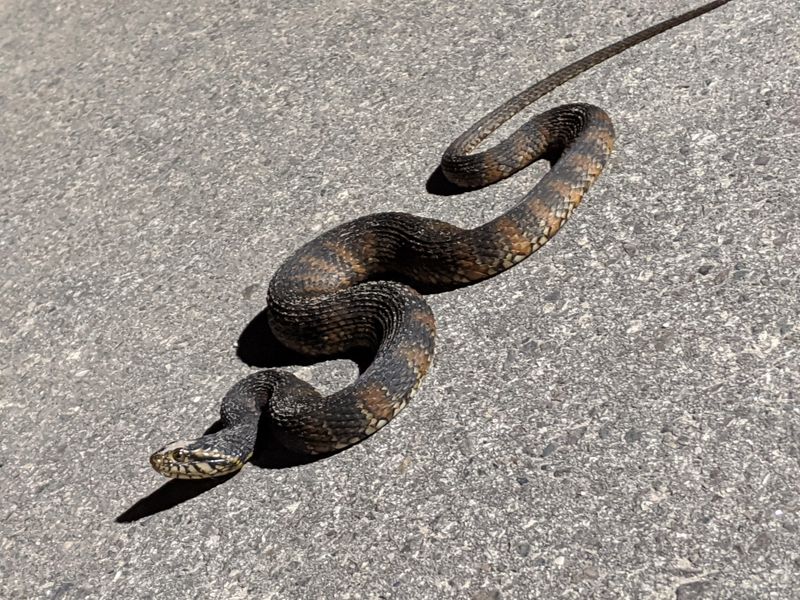
Water nearby makes many people say, “It must be a water snake.” That guess is shaky. FWC notes that several water snake species live in peninsular Florida, and they can be confused with cottonmouths.
Being near a pool, then, tells you very little. A snake by the water could be several different kinds, and the reverse is true too.
Posture is no better as a test. A coiled snake is not automatically venomous, and coiling does not reveal its species or whether it is about to strike.
It may simply be resting.
Even the numbers can mislead. FWC says six of Florida’s 50 snake species are venomous, but that does not help you judge the one on your deck.
The practical takeaway: skip the quick glance and the guesswork. Stay back, and if you need an identification, get it from a qualified wildlife professional, ideally from a photo taken at a distance.
Give the snake room, on the deck or in the pool
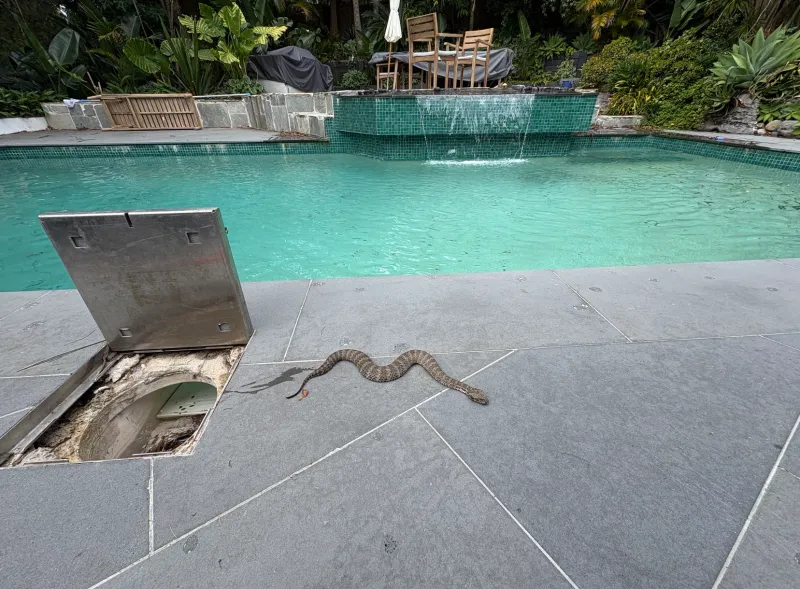
If the snake is on the deck, the first move is distance. Bring children and pets inside or well away, and stand back.
FWC says snakes generally avoid people, and the best approach is not to disturb them. Do not grab, corner, poke, or try to kill it.
Watch from afar. Most of the time, a snake left alone will move along when it is ready.
A snake in the water is a different situation. UF/IFAS guidance says it may be unable to climb out, especially if it is small or worn out.
A long-handled leaf skimmer can be used to gently lift it out, but only as a cautious option.
Never reach in or handle the snake. If using the skimmer would put you close to it, or you cannot confidently judge the situation, call a qualified wildlife professional instead.
Keep the pool off limits to swimmers and pets until the snake is gone.
Repeated visits are a reason to inspect the yard
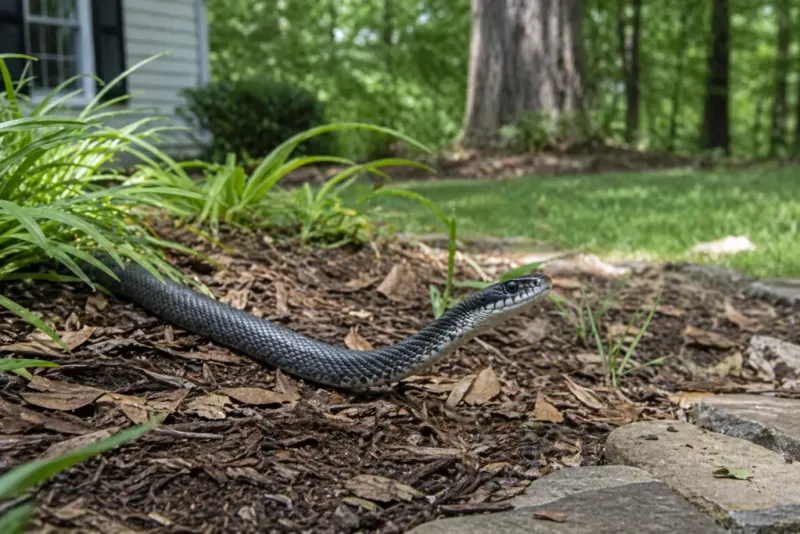
One snake is a story. Several snakes over a season start to look like a pattern worth checking.
Frequent sightings near buildings may point to rodents, according to FWC, though they do not prove it.
Walk your property with a snake’s-eye view. Look for places that offer cover close to the ground: stacked lumber, piles of leaves or clippings, stored pots and tarps, dense groundcover pressed against the pool cage or house foundation.
Next, look for food that could draw rodents. Check where pet food, bird seed, and trash are kept, and whether anything spills or sits out overnight.
Note any gaps or hiding spots along walls and fences.
Write down when and where you see snakes. Over a few weeks, a sunny corner or a particular brush pile may stand out.
UF/IFAS guidance on preventing encounters focuses on this kind of habitat awareness around homes.
Treat what you find as clues, not a diagnosis.
Reduce hiding places, but skip the mothballs
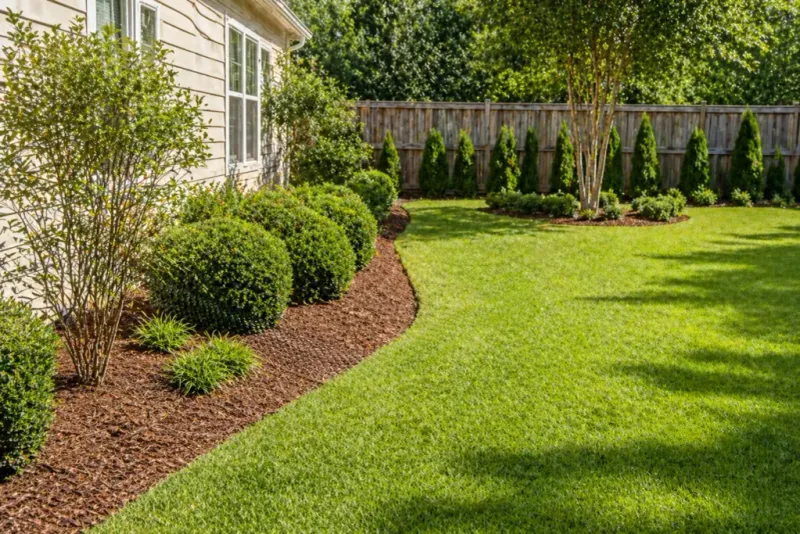
Once you know what to look for, tidy up. UF/IFAS property maintenance guidance points to clearing debris and materials close to the ground and managing heavy vegetation.
Fewer hiding places mean fewer reasons for a snake to linger.
Food matters too. Secure pet food, bird seed, and other items that can attract rodents, since rodents can attract snakes.
Store feed in sealed containers and sweep up spilled seed beneath feeders.
These steps can reduce encounters. They cannot promise a snake-free yard, because snakes also pass through on their way elsewhere.
As for mothballs, sulfur, and other homemade repellents, skip them. UF/IFAS says no snake repellents, toxicants, or fumigants are registered for this purpose.
Mississippi State Extension reported that tested home remedies, including mothballs and sulfur, did not work.
Spreading chemicals around a pool area can also put children, pets, and the water at risk for no proven gain.
A possible venomous bite is an emergency
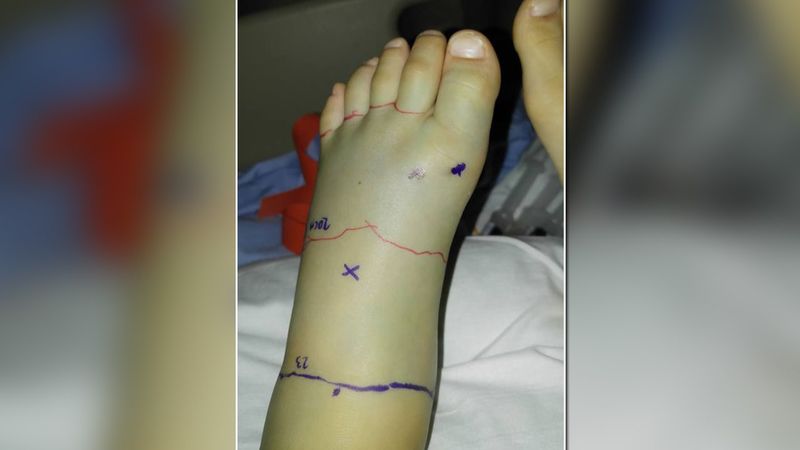
If someone is bitten and the snake might be venomous, call 911 and get emergency care right away. Florida’s health guidance says not to wait for symptoms, and UF/IFAS emergency planning advice points the same direction.
Do not try to catch or kill the snake. A bite victim needs help, not a second injury.
Everything else in this article rests on the same habit: keep your distance, skip the guessing, and bring in experts when needed. A calm yard plan beats a close call.