
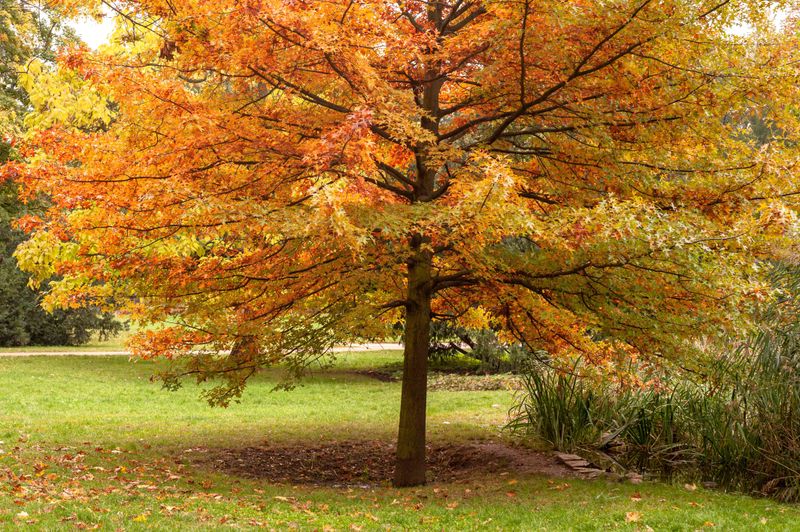
In Texas, the homeowner whose yard receives the oak leaves generally handles the cleanup on that property. The neighbor who owns the tree usually does not have to rake them, haul them off, or pay for it.
That simple answer settles most leaf drop arguments, but it does not cover every tree problem. Knowing where the everyday rule ends can keep a messy fall from turning into a bigger fight.
Who handles the fallen leaves?

Here is the everyday answer. For ordinary seasonal leaf fall, the homeowner whose yard receives the leaves generally handles cleanup on that property.
The sources reviewed for this article identify no Texas statute that gives the tree’s owner a duty to rake, haul away, or pay for naturally fallen leaves.
Texas A&M AgriLife Extension has described leaves, twigs, and small branches as natural litter with “no particular owner”. That wording is guidance from an extension publication.
It is not a statute, and it is not a court ruling, so it should be read as a practical rule of thumb rather than controlling law.
The lack of a leaf statute also does not mean Texas courts have said a tree owner can never be responsible in any situation. The Texas State Law Library explains that there is no statute directly addressing the related problem of branches and roots crossing a property line.
Tree disputes are largely handled through common law and local rules instead.
That is why it helps to keep the questions apart. Who rakes the leaves is one question.
Who owns the tree, whether overhanging limbs can be trimmed, whether something has been damaged, and whether the situation amounts to a nuisance are separate questions with their own rules.
Local ordinances, HOA or POA covenants, leases, and written agreements between neighbors can also change maintenance duties. A renter, for example, may have yard duties spelled out in a lease.
Check those documents before assuming the general answer fits your situation.
The trunk’s location answers a different question
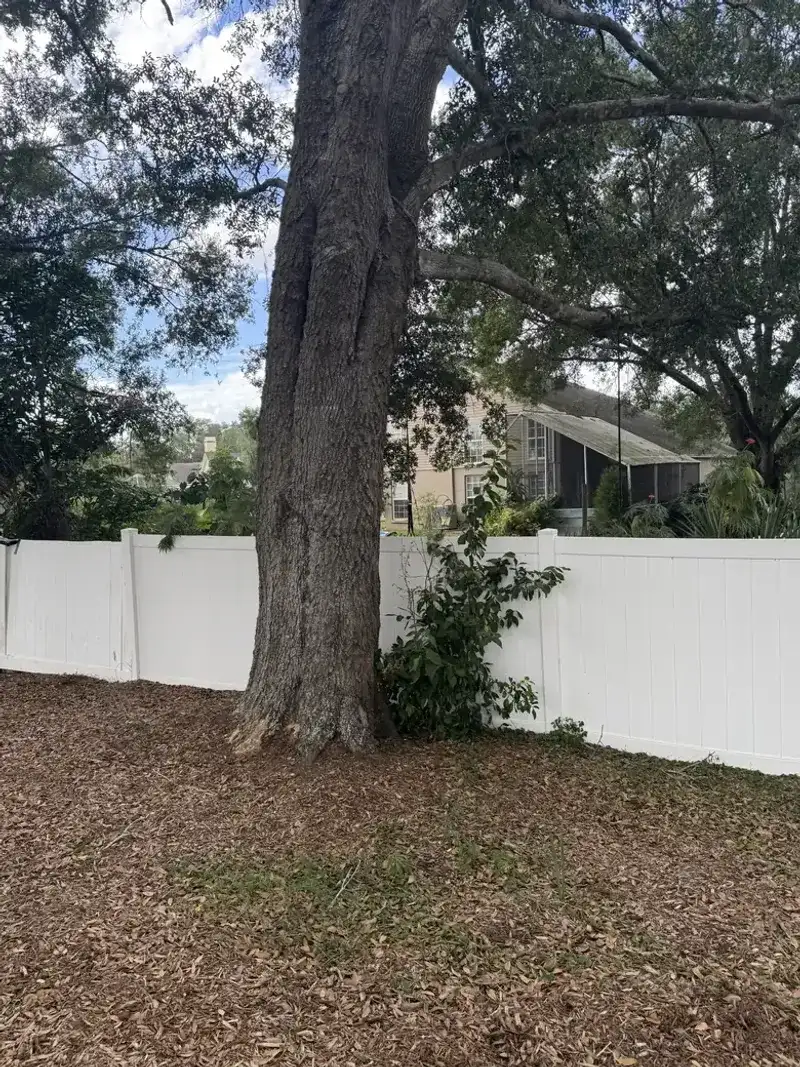
Ownership of a tree comes down to where the trunk stands. According to the Texas A&M Real Estate Research Center, a tree generally belongs to the landowner on whose property the trunk is located.
If the trunk sits on your neighbor’s side of the line, the oak is your neighbor’s, even when half of its canopy shades your roof.
Ownership, though, does not answer who deals with the leaves. Knowing who owns the oak tells you who is responsible for the tree itself.
It does not, on its own, create a duty to clean up routine leaf fall that lands somewhere else.
Ownership does matter in a different situation. The same Texas A&M source explains that a tree owner may be liable if encroaching limbs or roots damage a neighbor’s property.
Think of roots lifting a driveway or cracking a foundation, or a limb that scrapes through a fence or roof.
That is a property damage question, and it turns on facts such as what happened, what caused it, and how serious the harm is. A pile of leaves on a lawn is a very different thing from a broken sewer line.
A simple way to sort it out is to ask what the problem actually is. If it is seasonal litter, it is a cleanup chore.
If it is physical harm to your property from a limb or root, you are in damage territory, and it may be worth getting advice before you take any steps on your own.
Overhanging limbs have limits
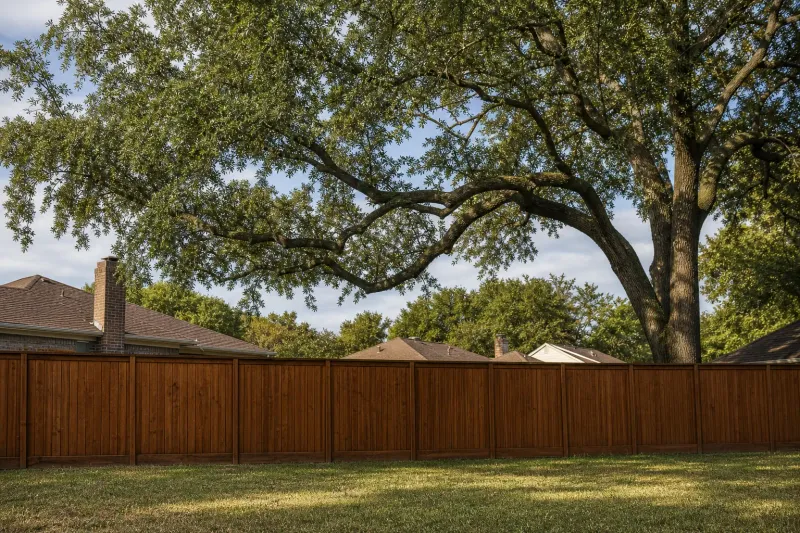
A branch hanging over the fence is annoying, but it does not automatically obligate your neighbor to cut it. Texas guidance indicates that a neighbor generally cannot be forced to trim healthy branches simply because they overhang or make a mess.
Trimming and leaf cleanup are two different matters.
What you can generally do is trim growth that crosses onto your property, back to the property line. The Texas State Law Library describes that self-help option, along with its limits.
Do not cross the boundary, and do not damage or kill the tree.
That last point matters more than many people realize. The Texas A&M Real Estate Research Center warns that a neighbor who trims overhanging limbs could be liable for harming the tree.
A heavy-handed cut that leaves the oak lopsided, stressed, or dying can turn you from the annoyed party into the defendant.
Local restrictions also come first. Some cities regulate work on certain trees, and oaks are often a focus.
HOA or POA covenants may add rules too, as noted in State Bar of Texas disaster guidance.
Before anyone climbs a ladder, check your city rules and community covenants. If the work is more than a few small branches, a certified arborist can tell you what is safe and what could hurt the tree.
A friendly conversation with your neighbor can sometimes lead to an agreement that avoids the issue altogether.
When can a leaf dispute become a nuisance?
Nuisance is a legal term, and it asks for more than ordinary annoyance. In a Texas Supreme Court opinion, the court described a private nuisance as a substantial interference with the use and enjoyment of land that causes unreasonable discomfort or annoyance to people of ordinary sensibilities.
Whether that standard is met depends on the circumstances. It is not a checklist, and it is not something a homeowner can decide alone.
Raking leaves each fall is the kind of ordinary chore most people expect with a yard, so routine leaf drop alone is a hard fit for that standard. Still, leaves cannot be called incapable of ever supporting a nuisance claim, because the answer depends on the facts.
Natural leaf fall is different from a neighbor who deliberately rakes or blows leaves across the boundary. That behavior could lead to a separate dispute, particularly if it is repeated or causes real problems such as clogged drains.
The sources reviewed, however, do not establish that every such act automatically creates trespass or nuisance liability.
Texas Law Help explains that nuisance can be framed in different ways, including intentional, negligent, and strict-liability theories. Each one looks at the facts differently.
If you think a situation has crossed the line, write down what is happening and when, take dated photos, and try a calm conversation first. A lawyer or legal aid service can help you judge whether the facts are strong enough to matter.
A hazardous tree raises a separate issue
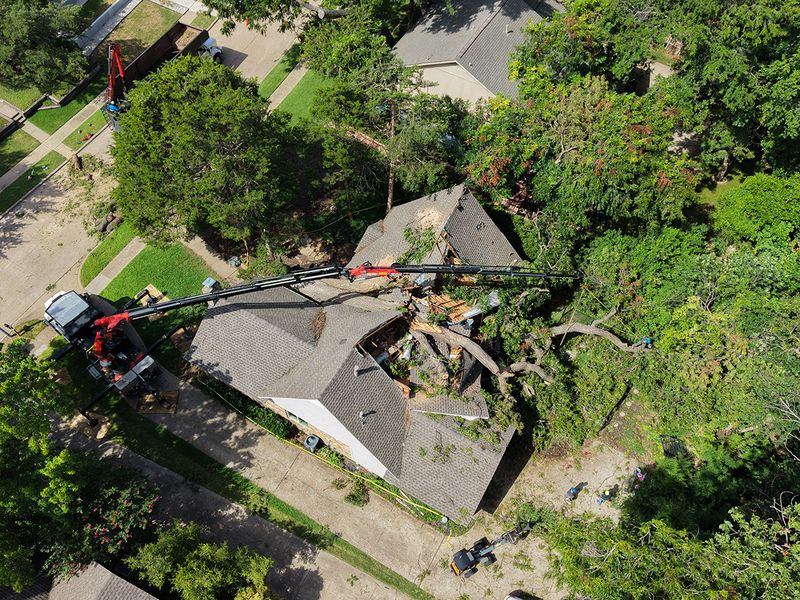
Leaf drop and a falling tree are not the same problem. A dead or rotting oak that crashes onto a fence, shed, or roof raises questions about damage and negligence, not about seasonal cleanup.
According to the State Bar of Texas disaster guidance, a tree owner may face liability when a dangerous, dead, diseased, or decayed tree causes damage. The condition of the tree and the circumstances of the damage both matter.
An owner who knew a tree was in bad shape may be in a different position than one with a seemingly healthy tree.
The same guidance cautions that a healthy tree brought down by a storm may be treated differently. In other words, not every storm-felled tree creates liability for the owner.
A strong wind can topple a sound tree without anyone being at fault.
Warning signs worth noticing include large dead branches, fungus growing at the base, deep cracks in the trunk, or a noticeable lean that is new. If you spot these on a neighbor’s tree, a polite note or conversation is a sensible start.
Photos with dates can help later if damage does occur.
If a tree has already caused damage, contact your insurance company and consider getting legal advice. Those steps belong to a different track than raking leaves, and keeping the two apart helps you respond to each one clearly.
Clear the house edge and dispose of leaves carefully
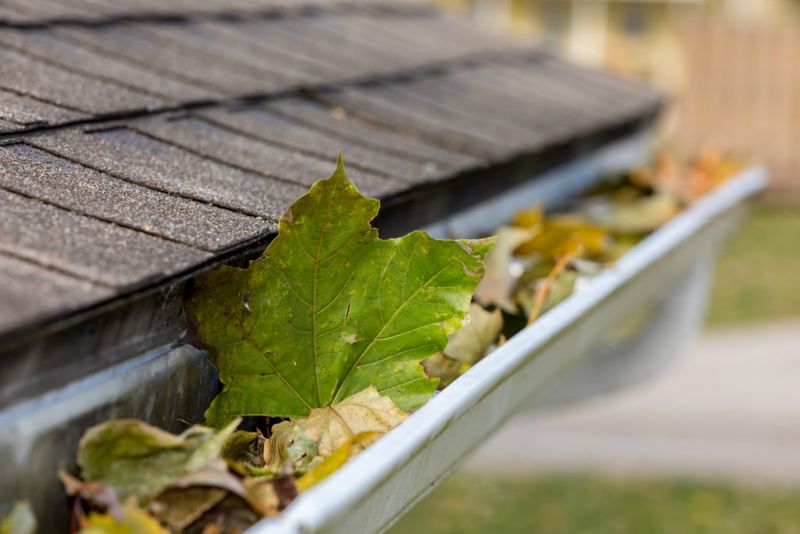
The most useful place to put your effort is right next to the house. Texas A&M Forest Service recommends clearing leaves and other fuel buildup from the first five feet around a home.
Pay special attention to gutters and to spots beside wooden decks, fences, and other attached structures, where dry leaves can feed a fire.
Beyond that zone, you have easy options. Leaves can be mulched into the lawn with a mower, spread under shrubs, or added to a compost pile.
Oak leaves break down more slowly than some others, so shredding them first helps.
Bagging is fine if your city collects yard waste, and many do. A quick look at your city’s website will show pickup rules and any bag requirements.
Keep piles away from storm drains so they do not clog.
Burning is where people get into trouble. Burning rules vary by county and location, and some local ordinances prohibit it inside city limits.
The TCEQ outdoor burning guide also says state rules impose conditions.
Before you light anything, check current local restrictions with your fire department or county, and confirm that any conditions apply to your situation. Burn bans can change quickly during dry spells.
When in doubt, mulch or compost instead.
Keep cleanup separate from the tree dispute
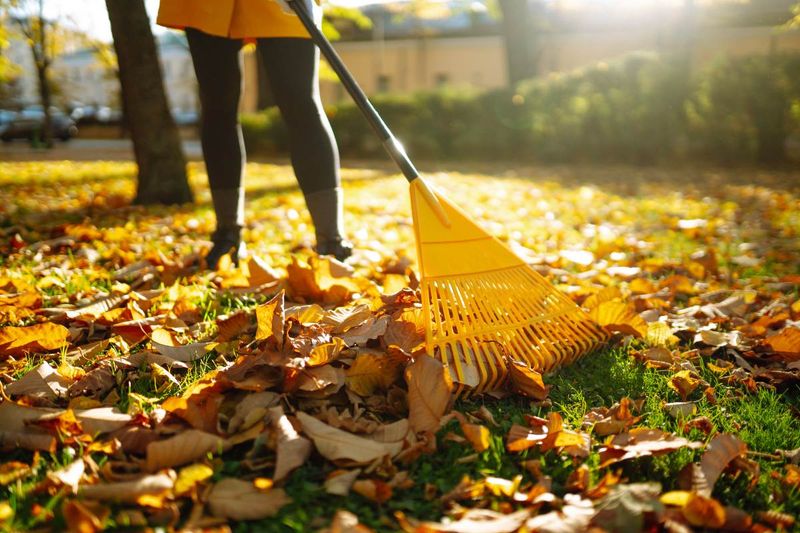
Ordinary fallen leaves are handled on the property where they land, using the cleanup habits above. Trimming, property damage, hazardous trees, and nuisance each get their own separate look, with their own rules and facts.
As the Texas State Law Library points out, local rules matter in tree disputes.
Before arranging any tree work, check city ordinances, HOA or POA covenants, leases, and any agreements with your neighbor. Do not treat blowing or raking leaves back over the fence as an established legal remedy, since it can simply start a new argument.
The extension guidance on natural litter is a useful starting point, not the last word. A rake costs far less than a feud, and most oak leaves are gone by winter.