
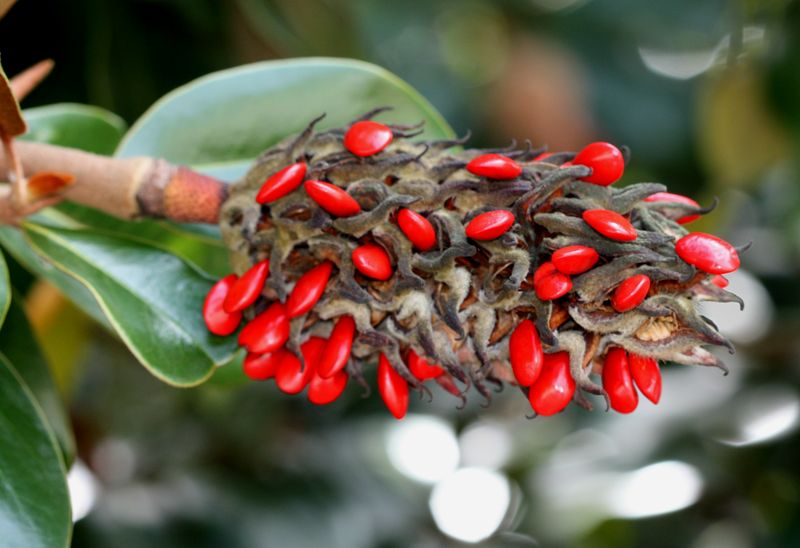
Walk under a Southern magnolia in late summer and you might spot something that looks almost alien: a bumpy, cone-like structure turning vivid red among the glossy leaves. Many North Carolina homeowners assume these “red seed pods” signal a disease, a pest, or that the tree needs urgent attention.
The good news is that what you are seeing is almost always a normal part of the magnolia’s life cycle, not a warning sign. Understanding what those red magnolia fruits actually are can save you an unnecessary trip to the garden center and help you make smarter decisions for the tree and the wildlife that depends on it.
The red structures are normal magnolia fruits
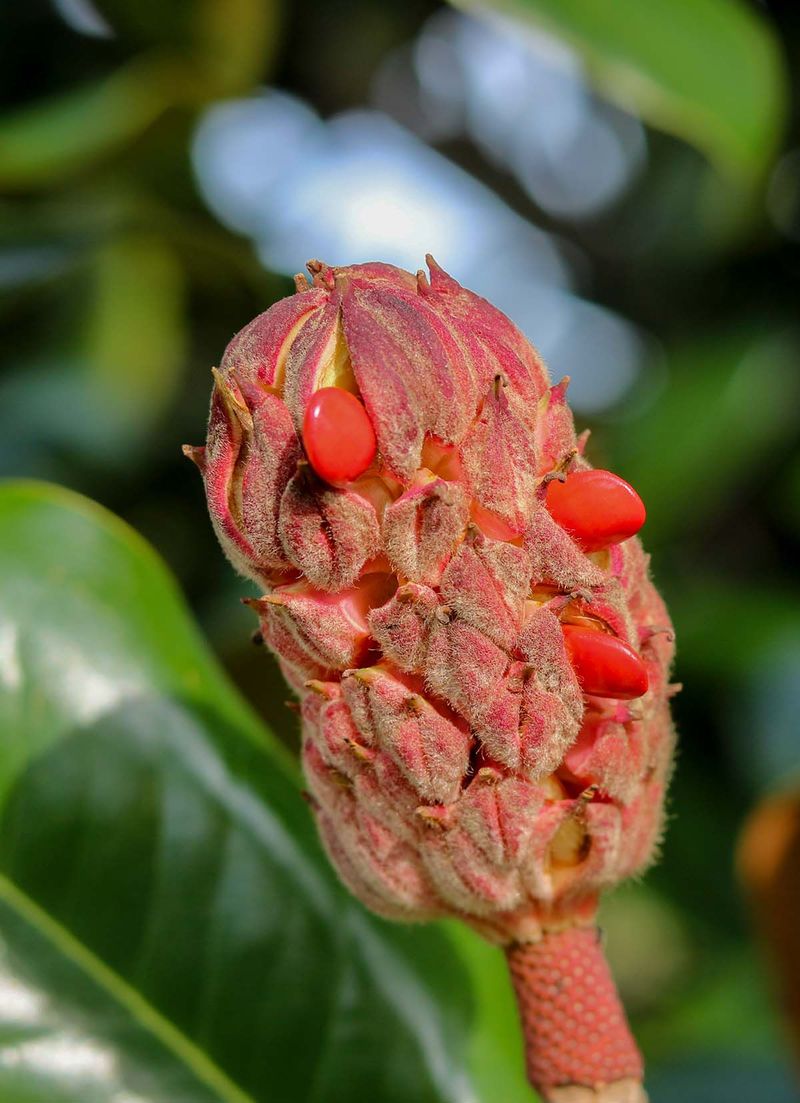
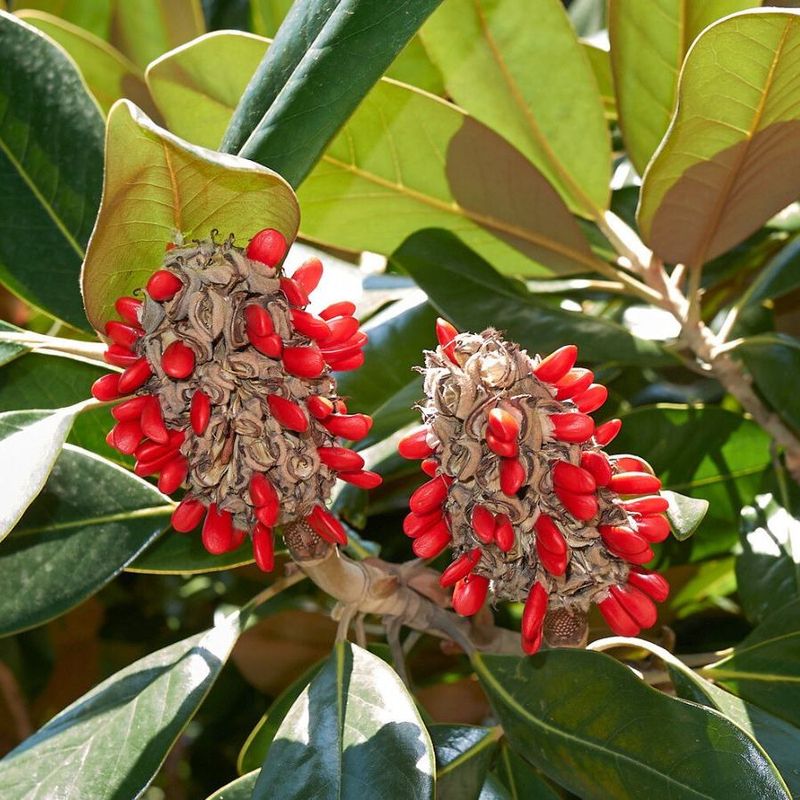
Spend a moment looking closely at one of those striking red structures and you will notice it is not a single pod at all. What you are seeing is a magnolia aggregate fruit, a cone-like cluster built from many individual units called follicles, all formed from a single magnolia flower.
As the fruit matures, each follicle splits open along a seam and exposes a seed dressed in a fleshy, rose-red outer covering. North Carolina Extension’s plant profile for Southern magnolia describes this structure as a cone-like aggregate of follicles that releases seeds typically from September into October.
The red material coating each seed is sometimes called a sarcotesta, a fleshy seed coat that gives the whole display its jewel-like appearance. Once a follicle opens, the hard inner seed may hang briefly from a slender thread-like structure before falling or being carried off by a bird.
The USDA Forest Service Woody Plant Seed Manual confirms that the exposed seed is suspended this way, making it easy for wildlife to spot and collect.
After the seeds are gone, the remaining follicle clusters dry out and turn brown. Arnold Arboretum botanists documenting magnolia seed dispersal note that empty, brown structures can persist on the tree after birds and mammals have already claimed the seeds.
The familiar phrase “red seed pods” is widely used, but these are not true single seed pods, berries, or galls. They are aggregate fruits doing exactly what magnolia fruits are supposed to do in fall, and their appearance alone is not a disease symptom, a sign of a pest infestation, or a reason to apply fertilizer or any other treatment.
Fruit production does not grade the tree’s health
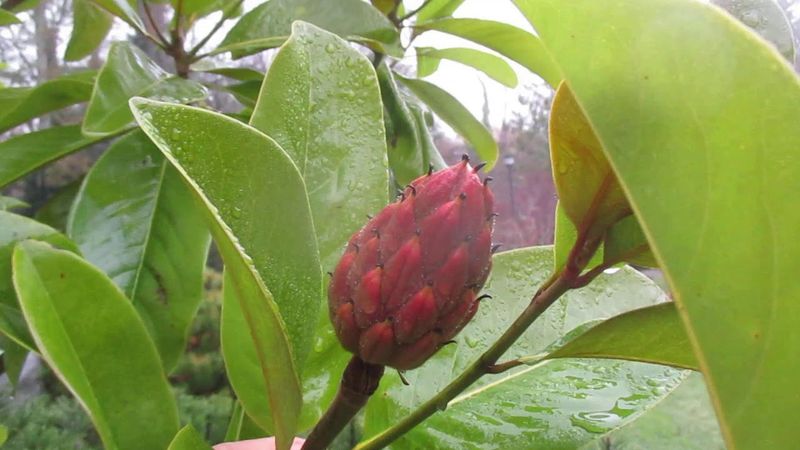
Seeing red magnolia fruits on your tree tells you one clear thing: enough flowers developed successfully to produce fruit, and the tree has moved into its seed-dispersal stage. That is a meaningful biological milestone, but it is a narrower message than many homeowners assume.
Fruit production does not independently confirm that the tree is thriving, perfectly nourished, completely pollinated, or free of pests. Magnolia pollination is insect-mediated, and some species are self-incompatible, meaning pollen from a different individual is required for full seed set.
USDA Forest Service silvics data for cucumber magnolia notes that fruit set varies with pollinator activity, pollen compatibility, weather during bloom, and the age and size of the tree. A crop of red fruits is not a report card on any of those variables.
Crop size is equally unreliable as a health indicator. A heavy display of red fruits in September does not mean the tree is especially vigorous, and a sparse or absent crop does not signal decline.
USDA silvics records for Southern magnolia describe the species as a regular and often prolific seed producer, but annual output still shifts with weather patterns, available pollinators, and the tree’s recent flowering cycle. Some years bring a striking display; others are quieter, with no underlying cause for concern either way.
The practical takeaway is to read the fruit as a seasonal marker rather than a health score. If the rest of the tree looks sound, normal red magnolia fruits in fall are a reason for mild satisfaction, not a trigger for soil tests, fertilizer applications, or spray programs.
Reserve closer attention for the tree as a whole, not for the fruit count.
Species determine when the fruit appears
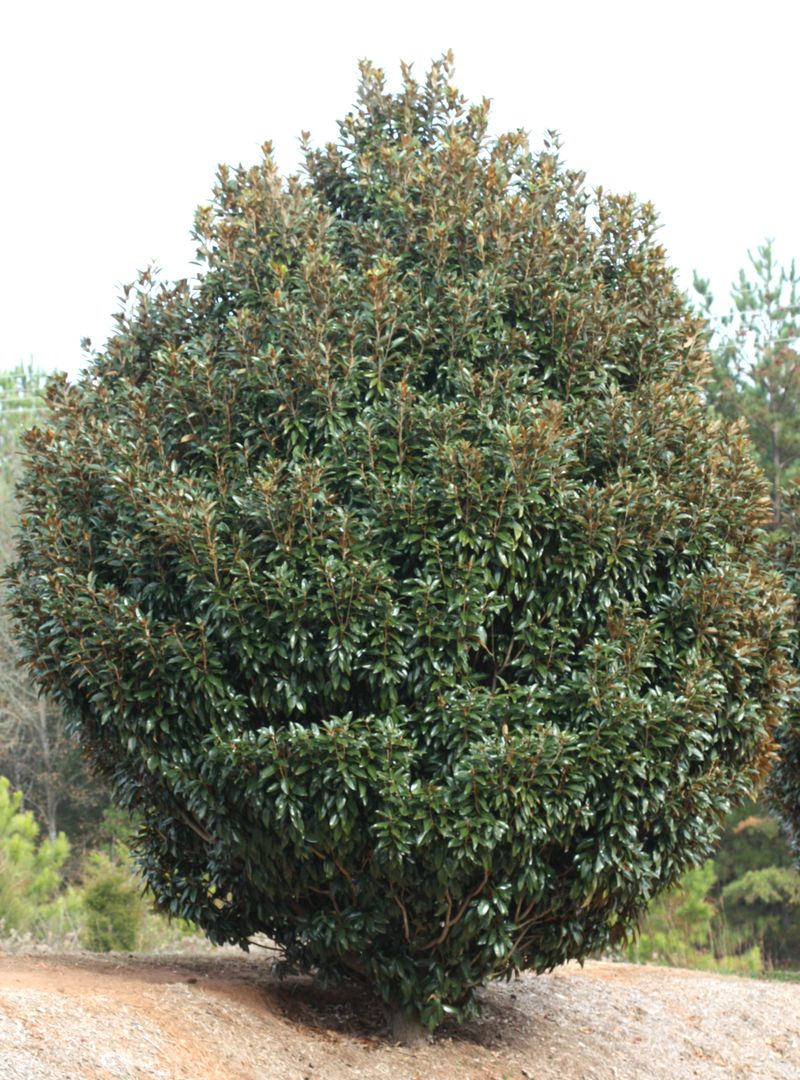
Not every magnolia in North Carolina follows the same fruiting calendar, and treating them all alike can lead to unnecessary worry or missed signals. The North Carolina Extension Gardener Plant Toolbox for the magnolia genus lists several native species in the state, including Southern magnolia, sweetbay, cucumber magnolia, Fraser magnolia, bigleaf magnolia, and umbrella magnolia.
Each one has its own fruit size, color intensity, preferred habitat, and ripening window.
Southern magnolia (Magnolia grandiflora) is the species most North Carolina homeowners picture when they think of a magnolia. Its aggregate fruits are typically 3 to 5 inches long, and the NC Extension profile for Southern magnolia places the common ripening window around September and October.
This species is native to the coastal plain and bottomlands but is widely planted across the Piedmont and even into the foothills, so September red fruits on a large-leaved evergreen magnolia fit a predictable pattern.
Sweetbay magnolia (Magnolia virginiana) tells a different story. It favors moist or wet soils and can be semi-evergreen or deciduous depending on how cold the winter gets.
USDA silvics data for sweetbay magnolia show that its smaller fruits can ripen from July into October, giving it a broader window that does not align neatly with the September Southern magnolia benchmark. Sweetbay also tends to produce smaller fruit crops overall.
Cucumber magnolia (Magnolia acuminata) follows yet another schedule. USDA silvics records for cucumber magnolia place its fruit ripening in late August or September, and its aggregate fruits have a distinctive cucumber-like shape when immature before turning pink to red at maturity.
Tree age, local weather during the bloom period, and elevation can all shift these windows by weeks in either direction. September is a reliable description of Southern magnolia’s typical pattern in North Carolina, not a universal rule for every magnolia in the state.
Birds and mammals may use the released seeds
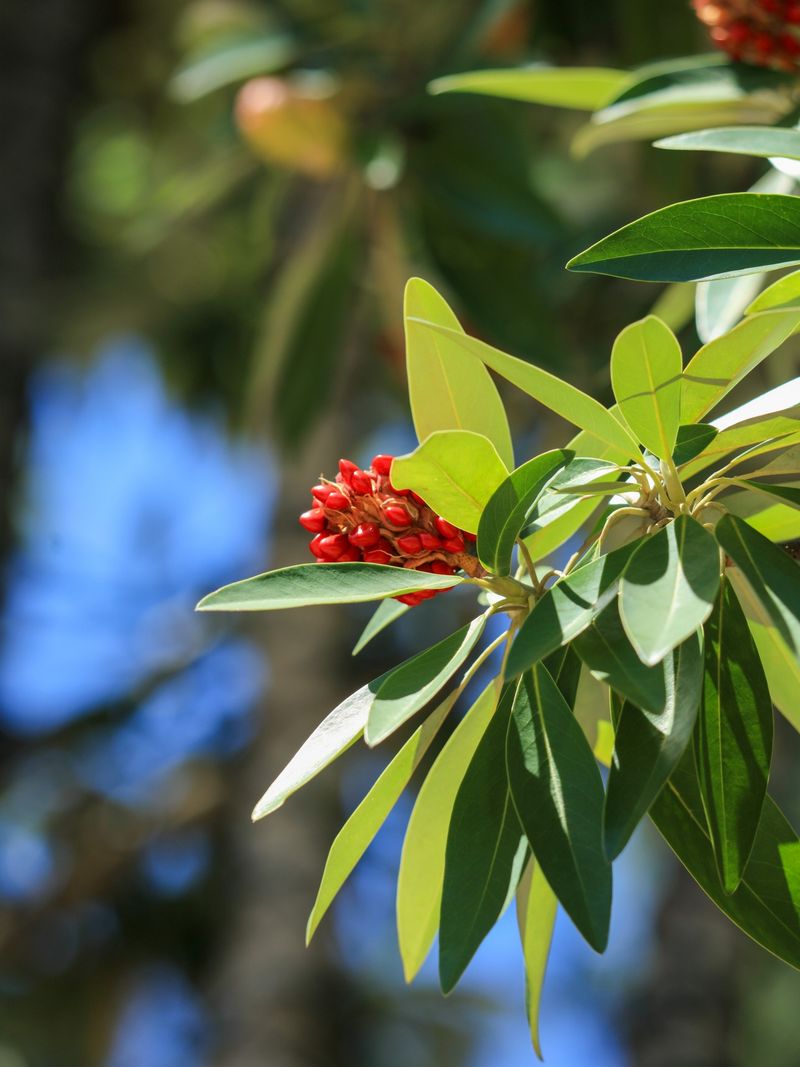
Once those follicles split and the red-coated seeds are exposed, the magnolia is essentially setting out a seasonal buffet. USDA Forest Service silvics records for Southern magnolia identify birds and small mammals as the primary consumers and dispersers of the seeds.
The fleshy red covering is the attraction, providing fat and nutrients that make the seeds worth the trip for species ranging from thrushes and vireos to squirrels and opossums.
North Carolina Extension lists Southern magnolia as a wildlife food source, with the seeds eaten by birds and small mammals. Sweetbay magnolia carries a similar endorsement as a bird-friendly fall food source, and Arnold Arboretum researchers tracking magnolia seed dispersal have documented how quickly the red seeds can disappear once wildlife discovers them, sometimes within days of the follicles opening.
If you want to support that activity, leaving some mature fruit or fallen seeds in a low-traffic corner of the yard preserves the food source without any extra effort on your part. The seeds that wildlife carries away also spread the tree’s genetics, connecting your yard to a broader dispersal network.
That said, wildlife response depends on what other food is available locally, what species use your particular yard, and how much cover and water the habitat offers. Leaving fruit is a reasonable stewardship choice, not a guarantee of a particular visitor list.
Homeowners who need to keep paths, play areas, or driveways clear can remove pods from those spots without guilt. Picking up fallen fruit from high-traffic areas is sensible maintenance, and doing so does not harm the tree or eliminate the wildlife value of seeds left elsewhere in the yard.
Normal fruit usually needs no treatment
Red magnolia fruits showing up in September call for observation, not intervention. No research supports fertilizing, spraying, or aggressively pruning a magnolia simply because it is producing fruit.
University of Georgia Cooperative Extension’s guide to growing Southern magnolia notes that the tree can be messy because it drops seed pods in late summer and sheds older leaves in spring, but neither event requires a chemical response.
Your practical options for this season are straightforward. In areas where fallen pods are not a nuisance, leave them alone and let wildlife and natural decomposition handle the cleanup.
Where pods land on walkways, play surfaces, or driveways, rake them up and place them in yard-waste compost where your local rules allow. Composting fallen pods is a tidy solution that keeps organic material out of the landfill without any special handling.
Pruning is another area where homeowners sometimes overreact to the sight of unusual fruit. UGA Extension’s guide to pruning ornamental landscape plants makes clear that established magnolias generally require little or no routine pruning.
When pruning is warranted, it should address dead, damaged, hazardous, or structurally problematic branches, not the removal of normal seasonal fruit. Cutting back healthy shoots to eliminate pods is unnecessary and can stress the tree or create entry points for disease.
USDA silvics records for Southern magnolia describe the species as a regular seed producer, which means the red fruit display will likely return each year. Building a simple fall routine around it, a quick rake of the path, a glance at the canopy for warning signs, and otherwise leaving the tree to its seasonal cycle, is all that most North Carolina yards require.
Check the whole tree for independent warning signs
Red magnolia fruits are frequently mistaken for something more alarming than they are. Extension experts responding to homeowner questions about magnolia trees specifically note that magnolia seed pods are often misidentified as galls or signs of disease.
The fruit itself is not evidence of an infestation, and a tree producing a normal crop of red aggregate fruits does not automatically need a diagnosis.
The important habit is separating what you see on the fruit from what you see on the rest of the tree. Normal magnolia fruit forms at the ends of flowering shoots and has a firm, cone-like or clustered appearance as it develops.
An immature fruit may look lumpy, green, or irregular and still be perfectly normal. The structures that should prompt a closer look are the ones appearing on stems, leaves, and bark, not on the fruit clusters themselves.
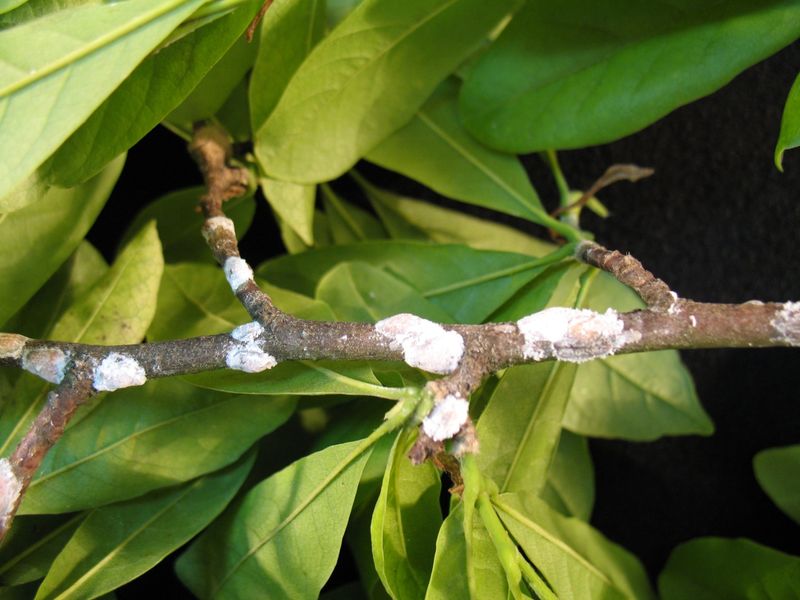
Specific symptoms worth investigating include widespread dieback of branches, premature yellowing of leaves that cannot be explained by seasonal change, heavy or sudden leaf drop outside the normal spring leaf exchange, and the presence of sticky honeydew on leaves or surfaces below the tree. Black sooty mold growing on honeydew deposits and visible bumps or crusty patches on stems are also signals that something beyond normal fruiting may be happening.
UGA Extension’s guide to magnolia scale biology and management explains that magnolia scale infestations can cause yellowing, premature leaf drop, reduced vigor, and branch dieback when the pest population is large enough to stress the tree.
Scale insects and the honeydew they produce are the warning signs to watch for, not the red fruit. North Carolina Extension’s Southern magnolia profile supports a clean bill of health for normal fruiting while acknowledging that pests and diseases are separate concerns requiring separate assessment.
If the canopy looks sound, the leaves are a normal color, and no sticky residue or mold is visible, the red display is almost certainly just fall doing its job.
Treat the seeds as wildlife food, not a snack
The red coating on a magnolia seed is visually appealing, and some sources note that Southern magnolia fruit has been listed as edible. However, North Carolina Extension’s Southern magnolia profile does not provide preparation instructions, serving guidance, or a safety protocol for human consumption.
Until clear culinary guidance exists from a reliable food-safety source, the safest approach is to treat the seeds and their red coverings as wildlife food rather than a foraged ingredient. Do not taste the seeds, offer them to children as a curiosity snack, or assume that what birds eat is automatically safe for people.
Pet owners should apply the same caution. The ASPCA lists star magnolia (Magnolia stellata) as non-toxic to dogs, cats, and horses, but that specific finding should not be extended into a blanket claim that every magnolia species or every quantity of plant material is harmless to every pet.
The ASPCA also notes that any plant material can cause gastrointestinal upset. If a child or pet has eaten an unidentified plant part or develops symptoms, contact a medical professional, veterinarian, or Poison Control, which is available in the United States at 1-800-222-1222.
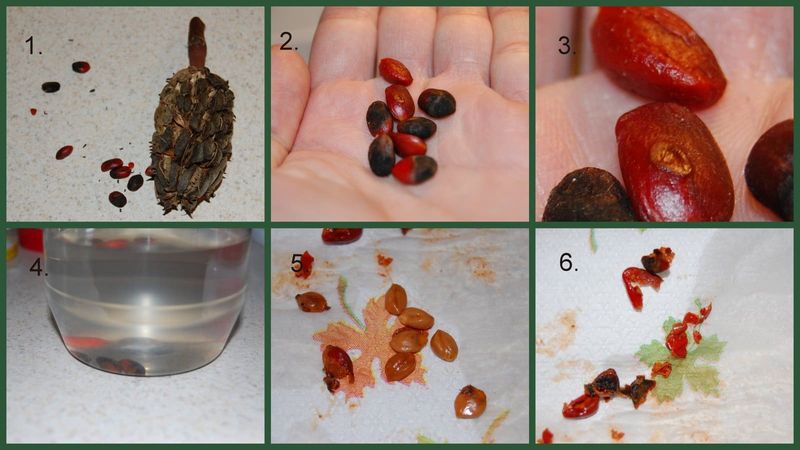
For homeowners interested in growing a new magnolia from seed, the process is rewarding but requires patience. Collect fully developed seeds promptly after the follicles open, since viability drops quickly once seeds dry out or are left exposed.
Remove the fleshy red covering by hand or by soaking, then rinse the seeds thoroughly. USDA silvics data for sweetbay magnolia indicate that sweetbay seeds generally require three to six months of moist cold stratification before germination.
Southern magnolia seeds commonly sprout in the first or second spring after planting, with average germination rates around 50 percent according to the USDA Woody Plant Seed Manual.
One expectation to set before you start: seedlings grown from collected magnolia seeds may not reproduce the exact form, leaf traits, or flowering behavior of a named cultivar. UGA Extension’s Southern magnolia guide explains that cultivars are typically propagated vegetatively to preserve their specific characteristics, while seedlings naturally show variation.
Propagating from seed is a worthwhile experiment, but go in knowing the results may pleasantly surprise you rather than perfectly replicate the parent tree.
Read the display as a seasonal signal, not an alarm
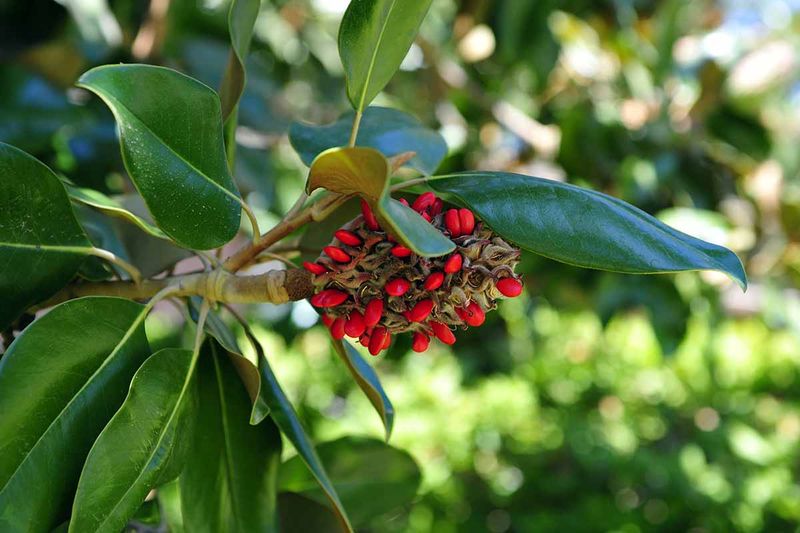
Red magnolia fruits in a North Carolina yard are almost always a seasonal marker rather than a distress signal. For Southern magnolia, North Carolina Extension confirms that the September-to-October fruiting window is a normal and expected part of the tree’s annual cycle, not an event that calls for intervention.
Other species follow their own schedules, so the timing you observe depends on which magnolia is growing in your yard.
The practical choices in front of you are simple. Leave some fruit in low-traffic areas if you want to support the birds and small mammals that use it.
Remove pods from paths, play spaces, and driveways where they create a cleanup or safety concern. Skip fertilizer, fungicide, and insecticide applications unless a soil test or pest diagnosis gives you a specific reason to act.
If you spot honeydew, sooty mold, widespread yellowing, or branch dieback alongside the fruit, those separate symptoms are worth a closer look with help from Extension resources on magnolia scale and pest management.
A magnolia producing red aggregate fruits has done something genuinely difficult: it flowered, attracted pollinators, set seed, and packaged those seeds for dispersal. USDA silvics records describe Southern magnolia as a regular seed producer, meaning this display is meant to repeat year after year.
The tree is not asking for help; it is finishing the season on its own terms.