
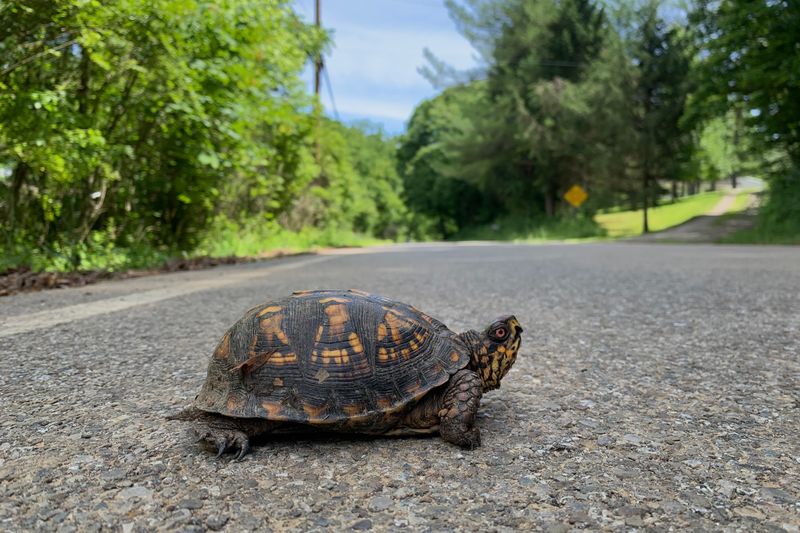
A slow, domed turtle plodding across your lawn can stop you in your tracks. Your first thought may be to scoop it up and carry it somewhere safer.
For an eastern box turtle in North Carolina, that kind helpful urge is usually the one to skip. A few simple steps will keep the turtle safe and save you from extra work.
A yard visit usually calls for space, not rescue
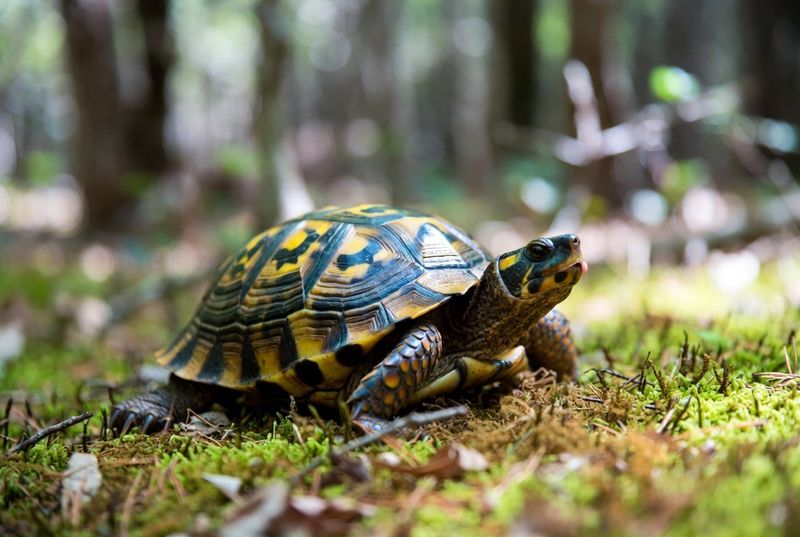
Spotting a box turtle in your grass feels like a rescue moment, but most of the time the turtle is simply going about its day. The best move is to leave it where it is and give it room.
Watch from a distance, keep pets back, and let it carry on.
The North Carolina Wildlife Resources Commission explains that box turtles live in small territories, usually under two acres, and have strong homing instincts. That means your yard is probably part of the turtle’s regular neighborhood.
It knows where its shady spots, berries, mushrooms, and hiding places are.
Because of this, a turtle in your yard is not proof that it is lost. It may be hunting for a snack after a rain, looking for a cool resting place, or heading back to a familiar patch of woods.
A turtle taken away from that home range may spend its energy trying to find its way back.
Think about what an ordinary visit looks like. The turtle is moving steadily, or resting under a shrub, and nothing around it is threatening.
A mower running nearby, a dog circling it, or a driveway with a car backing out is different. Those are immediate hazards, and the next section covers what to do about them.
If there is no danger, your job is easy. Mow around it later, keep the dog inside for a bit, and enjoy the visit.
A shady corner with leaf litter and native plants will make your yard even more welcoming for it.
Move it only as far as immediate safety requires

Sometimes a turtle really is in the wrong spot at the wrong time. A mower coming its way, a dog about to grab it, or a car backing down a driveway are all real, immediate hazards.
In those cases, a short move makes sense.
Put your own safety first, and only move the turtle if the danger is happening right now. Hold it gently by the sides of its shell with both hands and keep it level.
Then set it down just beyond the hazard, facing the same direction it was heading.
How far is far enough? The NC Wildlife Resources Commission says a necessary move should be as short as possible, and ideally less than 50 feet.
That is about the length of a typical driveway apron, so a hedge, a flower bed edge, or a tree line close by is usually plenty.
This small shift is a safety step, not a relocation plan. It does not mean carrying the turtle to a neighbor’s yard, a park, a creek, or a pond.
Box turtles are land animals that know their own patch, and a far-off drop point puts them in unfamiliar territory.
Once the danger has passed, step back and let the turtle choose its own path. Block the mower route with a few flags or pause your yard work for a while, and the turtle will likely wander off on its own schedule.
At a road, carry it across in the same direction
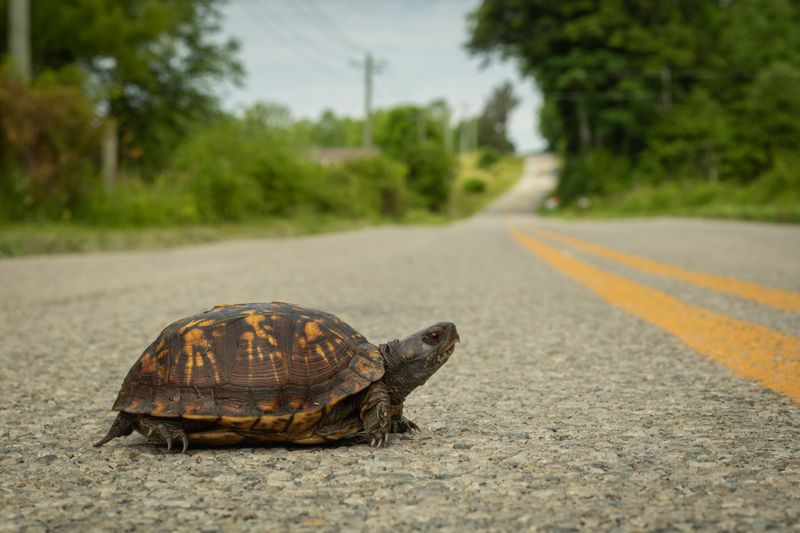
Roads are the one place where helping a turtle can be the right call. Before you do anything, check that traffic and your surroundings make it safe.
If cars are moving fast, the curve is blind, or there is no safe place to stand, it is better to leave the turtle alone than put yourself at risk.
When it is safe, pick the turtle up with both hands, one on each side of the shell, and keep it low. Never lift it by the tail, since that can injure it.
The U.S. Fish and Wildlife Service offers tips for helping a turtle cross the road, and the key rule is to move it in the direction it was already going.
That detail matters. A turtle on a road is usually headed to a specific spot, such as a nesting area, a food source, or its home range.
If you carry it back to the side it started from, it will probably just try again.
Set it down a few steps off the pavement on the far side, facing away from the road. Notice which way its head was pointing when you first saw it, and use that as your guide, even if the other side looks less appealing to you.
Keep the trip simple. The goal is across the road, not a better neighborhood.
As the NC Wildlife Resources Commission says, relocating a box turtle is not recommended, so a pond, park, or distant woodland is not the destination.
Stillness alone does not mean the turtle is injured
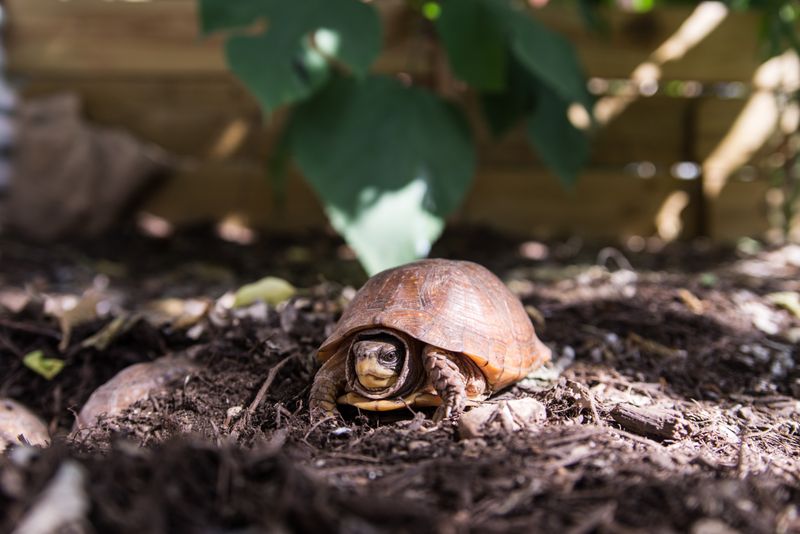
A box turtle that pulls into its shell and stays put may look like it is in trouble. Usually it is just being careful.
The NC Wildlife Resources Commission notes that a wild animal that looks frozen may be reacting to feeling threatened.
Box turtles have a hinged lower shell that can close up like a little box. That is their built-in defense.
If you walk up close, kids crowd around, or a dog sniffs nearby, the turtle may stay shut for a long while.
The fix is easy. Back away, call off the pets, and give it time.
Check again in an hour or so. Many turtles will open up and wander off once things are quiet.
Clear signs of serious injury look different. Think of active bleeding, a cracked or crushed shell, exposed flesh, or an animal that cannot move its limbs even after a long quiet stretch.
Those are not the same as simple stillness.
If a turtle is visibly hurt, contact a licensed reptile rehabilitator for advice before you try to capture or transport it. They can tell you whether it needs care and how to move it safely.
The state’s guidance also points out that some turtles heal without intervention, so a scar or an old shell mark is not always a reason to act. For handling basics, the commission’s eastern box turtle page is a good place to start.
Keep a wild box turtle out of the pet trade
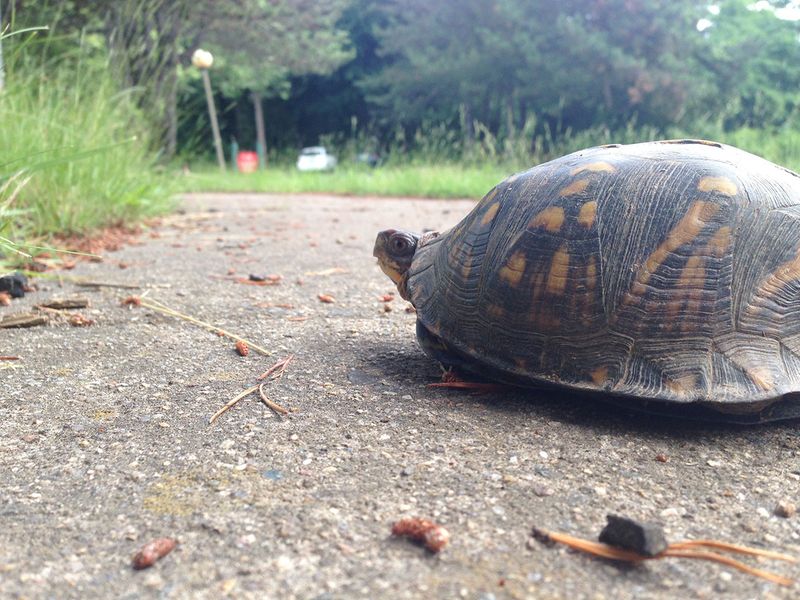
A friendly-looking turtle in the yard can tempt a family to keep it. Kids may beg, and a terrarium seems easy enough.
Still, the best thing for a wild box turtle is staying exactly where it found its way.
The state wildlife agency says taking a box turtle home is not recommended, and that even keeping fewer than five is discouraged because it removes turtles from the breeding pool. Box turtles are slow to mature and raise few young, so each adult counts.
What about the law? North Carolina’s rules are not as simple as a flat ban on one turtle.
The commission’s possession and collection rules describe a threshold-based approach, with an exception for having fewer than five reptiles in specified circumstances. Because the details depend on those circumstances, check with the agency before assuming anything.
Even where the rules allow it, the practical advice stays the same. A wild turtle used to a home range of a couple of acres does not settle well in a tank.
It may refuse food, stress easily, and keep trying to roam.
If your family wants to enjoy turtles, make the yard friendlier instead. Leave some leaf litter, plant native shrubs for shade, and keep a shallow water dish out in a quiet corner.
Then take photos, not turtles.
Wash your hands after any necessary handling

If you did have to move a turtle out of harm’s way, finish with a good hand wash. Use soap and running water, and scrub for at least 20 seconds.
Do the same for anything that touched the turtle, like gardening gloves or a towel.
The reason is simple. The CDC says reptiles can carry Salmonella germs even when they look healthy and clean.
The CDC also advises that children under 5 should not handle reptiles or their environments, so keep little ones back when an adult makes the move.
Avoid touching your face or eating until your hands are clean. If you are far from a sink, hand sanitizer can bridge the gap until you can wash properly.
With that done, you have handled the whole encounter well. Space first, a short move only when needed, and a quick wash afterward.
A box turtle may live for decades, and your lawn could be one small stop on a journey that began long before your house was built.