
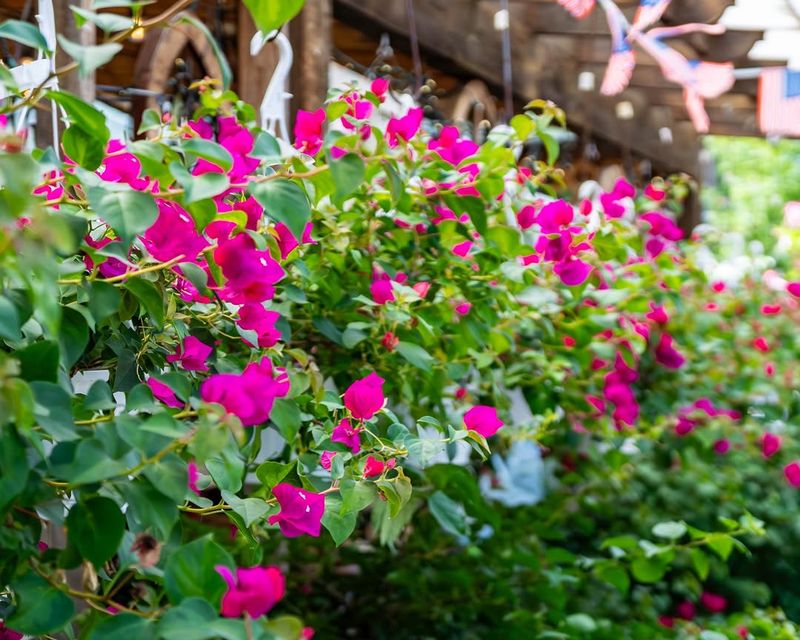
Bougainvillea is one of the most dramatic plants you can grow in Texas, but that explosion of color does not happen by accident. The plant rewards gardeners who understand one key principle: how you manage water right now, in the thick of summer heat, shapes whether you see fresh color in September. Get the routine right and you give your plant a real chance at continued or renewed flowering well into fall. Get it wrong, and you may end up with a stressed, leafless vine that sulks through the rest of the season.
Give the roots a moderate dry-down, not a drought
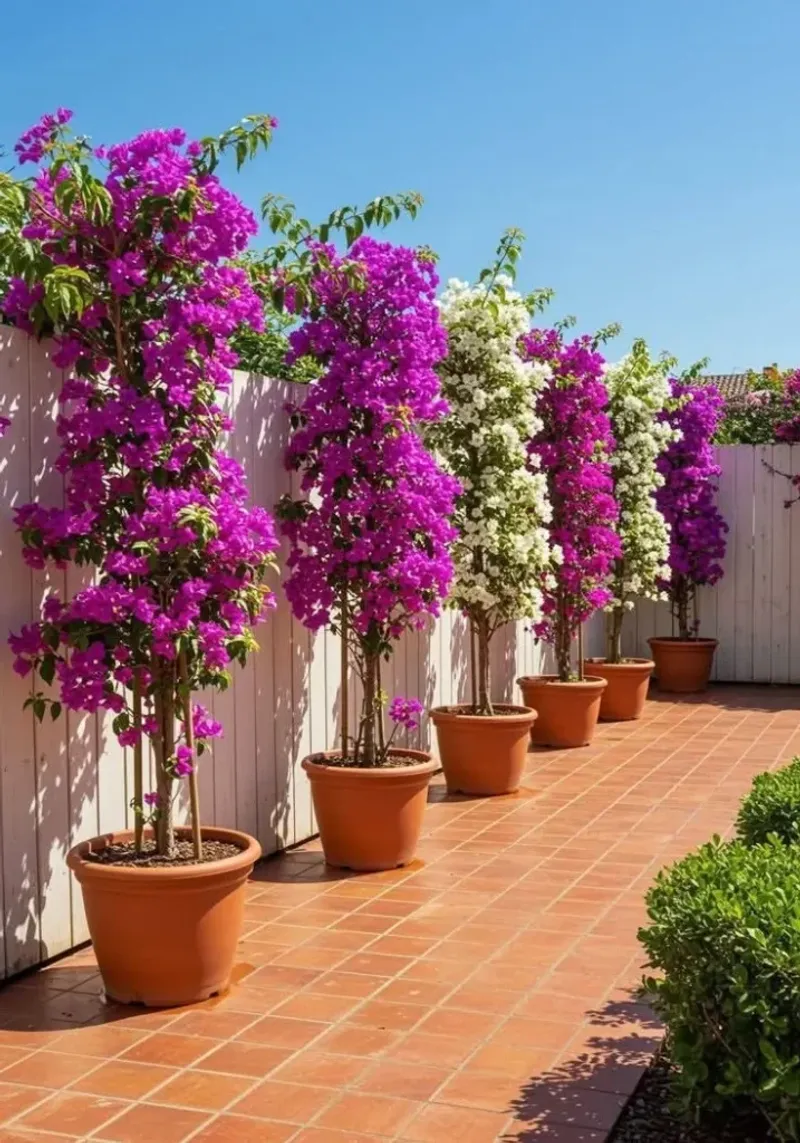
Bougainvillea has a reputation for thriving on neglect, and that reputation is partly earned. University of Hawaii CTAHR guidance notes that bougainvillea generally flowers better in full sun and in soil kept on the dry side, and that controlled water stress can promote earlier or heavier flowering. The critical word there is “controlled.” Excessive drying is a different matter entirely, and it can cause leaf drop, bud drop, dormancy, or outright plant injury.
The practical goal is a moderate dry-down between thorough waterings, not deliberate dehydration. Water deeply enough to moisten the root zone, then let the growing medium dry somewhat before you water again. You are not trying to punish the plant into blooming; you are keeping it from sitting in perpetually wet soil while still meeting its real water needs.
A potted-plant study of Bougainvillea ‘Taipei Red’ tested several water treatments and found that severe water restriction produced earlier and more flower buds in that cultivar, but it also reduced plant growth and increased leaf abscission. Bract longevity did not improve under the most restricted treatment. That result came from a specific potted cultivar under controlled conditions, so it should not be read as a universal moisture prescription for every Texas bougainvillea in every soil type or landscape setting.
What the research and extension guidance together support is a moderate, plant-specific dry-side rhythm. Let the soil dry somewhat, then water thoroughly. Avoid the extremes on both ends: chronically wet soil invites root problems, and severe wilting stress can set the plant back rather than push it forward. The goal is a steady, monitored routine that keeps the plant healthy enough to produce new growth, because new growth is exactly where the color comes from.
Water by root-zone conditions, not the calendar
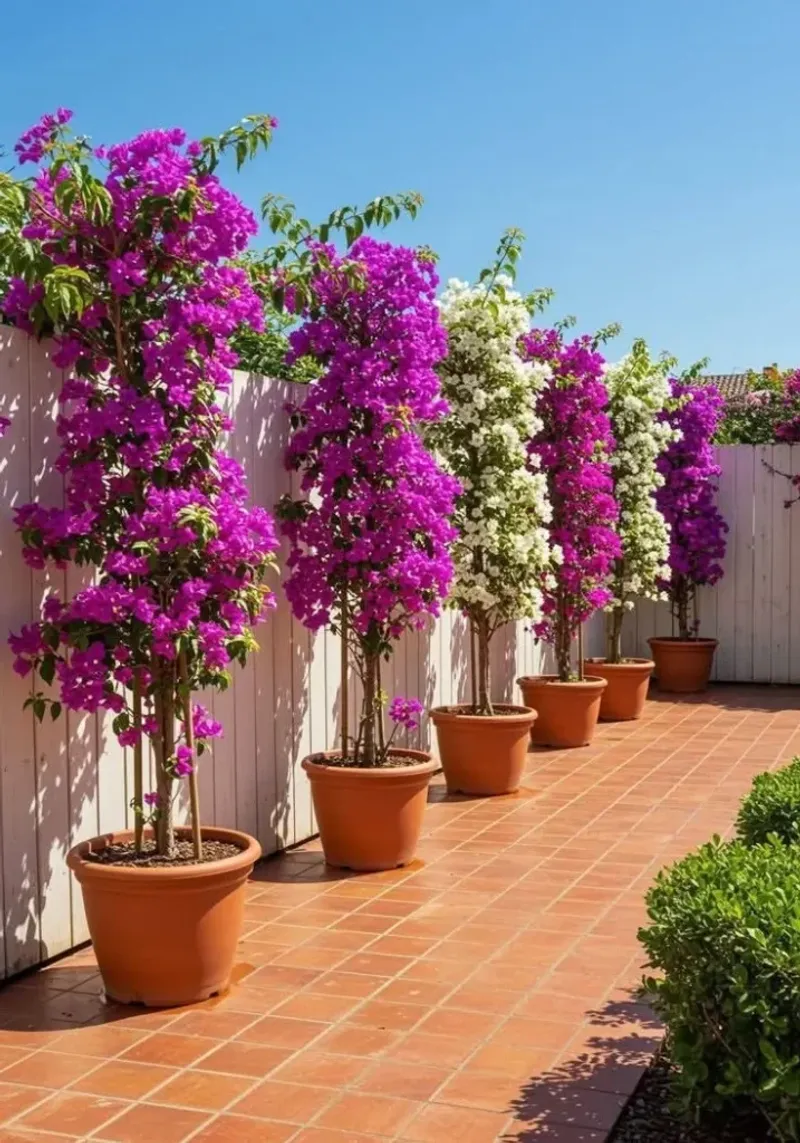
Forget the idea of a fixed watering schedule for your bougainvillea. Texas is too climatically variable for a statewide “water every seven days” rule to mean anything useful. A plant growing in heavy Austin clay dries at a completely different rate than one sitting in the sandy loam of East Texas or the alkaline soil of the Hill Country. Reflected heat from a concrete wall, a south-facing exposure, or an unusually brutal heat wave can drain a container dry in two days.
NC State Extension notes that bougainvillea is drought tolerant once established but remains vulnerable to overwatering and poor drainage. That drought tolerance applies to established landscape plants with a broad root zone, not to newly planted specimens or small containers still developing their roots. A plant put in the ground this spring needs closer attention than one that has been growing in the same bed for three years.
The practical check is straightforward. Push a finger or a soil probe a few inches into the root zone. If the soil still feels clearly moist, wait. If it has dried to the point where the top few inches feel dry and the plant shows no signs of stress, water thoroughly enough to moisten the entire root zone, not just the surface.
Texas Master Gardener guidance on bougainvillea reinforces that deep, effective watering beats shallow, frequent sprinkling every time.
Shallow watering encourages roots to stay near the surface, where they are most vulnerable to heat and rapid drying. A deep, thorough soak followed by a genuine dry-down period trains roots to go deeper and builds the kind of resilience that carries a Texas bougainvillea through August and into September without collapsing.
Fix light and drainage before chasing more flowers
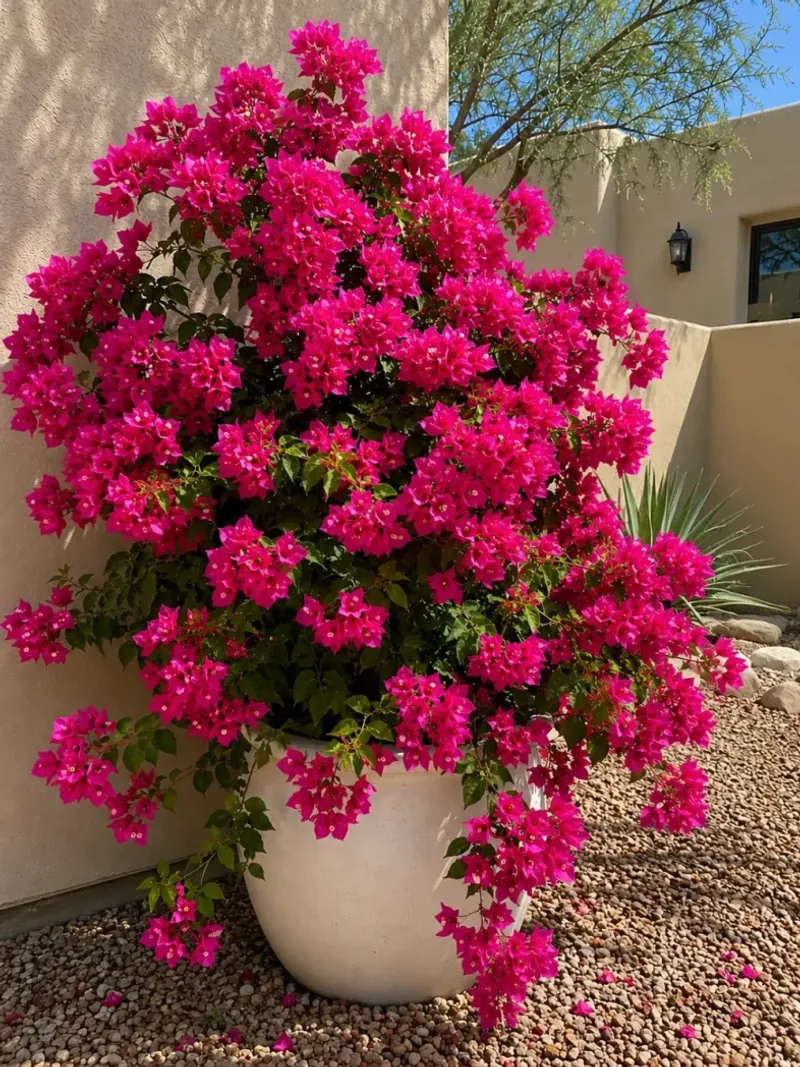
Adjusting your watering routine will not accomplish much if your bougainvillea is planted somewhere it cannot thrive. Texas A&M AgriLife Extension identifies insufficient light as one of the leading reasons bougainvillea produces foliage without abundant colorful bracts. The plant needs roughly four to six hours of direct sunlight daily, and more is generally better in Texas. A partially shaded spot that looks bright to human eyes may not deliver the light intensity bougainvillea actually needs to shift energy from leaves into bracts.
If your plant is pushing out plenty of green growth but the colorful display stays thin, check the light exposure before blaming water management. A vine grown against a fence that gets morning sun and afternoon shade may simply be in the wrong spot. Repositioning a container or selectively removing an overhead obstruction can make a more immediate difference than any watering adjustment. NC State Extension confirms that bougainvillea performs best in full sun and well-drained soil, and that those two conditions work together rather than independently.
Drainage matters just as much. The colorful display that most people associate with bougainvillea consists primarily of modified leaves called bracts, not the true flowers, which are small and inconspicuous. Those bracts develop on healthy new growth, and healthy new growth requires roots that are not sitting in waterlogged soil. Amend clay soil with coarse material before planting, raise beds if drainage is chronically poor, and choose containers with adequate drainage holes.
A plant that cannot drain properly will struggle regardless of how carefully you manage the watering interval.
Adjust the routine for containers and established plants
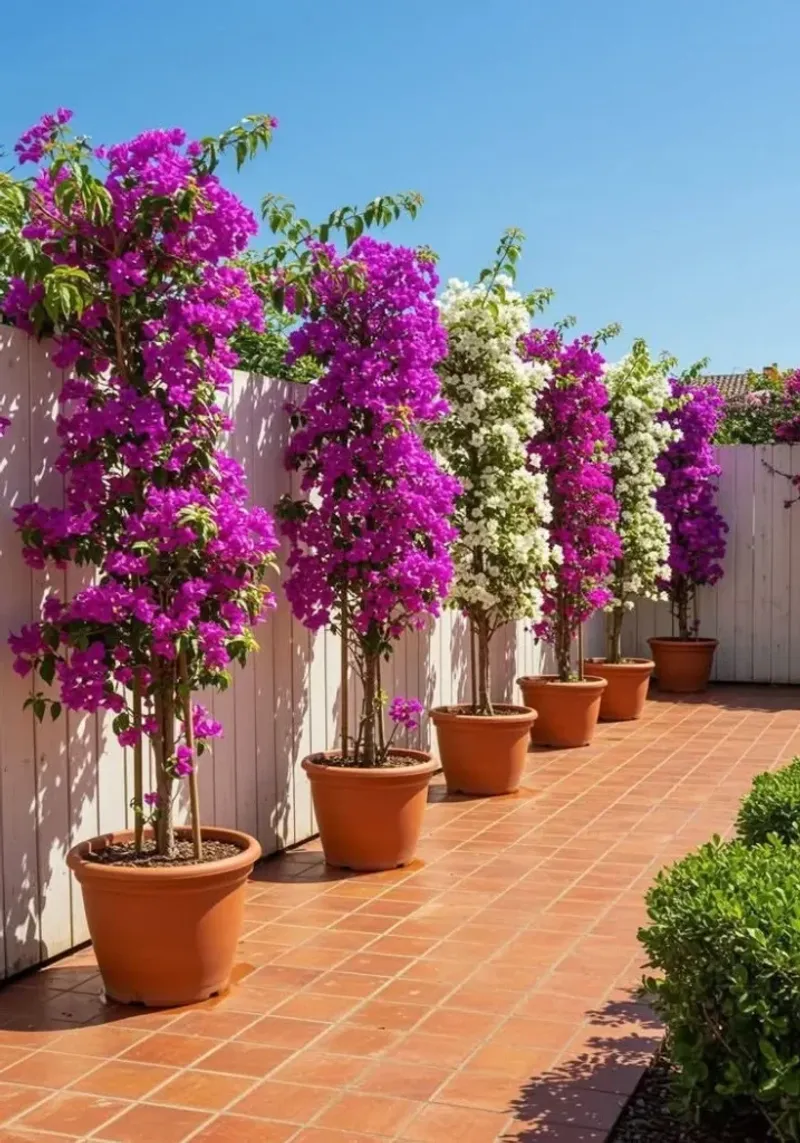
Container bougainvillea and in-ground plants look similar from a distance, but they behave very differently when Texas summer temperatures climb. Pots heat up quickly in direct sun and lose moisture far faster than a landscape bed. Mississippi State University Extension points out that container-grown bougainvillea performs well but requires closer monitoring, particularly during heat waves, because the root zone is small and the drying rate is rapid.
Apply the same moderate dry-side principle to containers, but check them more frequently. A large pot in a south-facing location may need attention every couple of days during a stretch of triple-digit heat, while the same plant in a slightly cooler, east-facing spot might go longer. The container itself is your guide; lift it if it is small enough, or probe the soil to feel whether the root zone has dried sufficiently before watering again. Never assume a container is fine just because it was watered recently.
Established in-ground plants draw from a much larger root zone and generally handle dry periods with more resilience. That does not mean they can go indefinitely without water during a Texas summer, but it does mean the monitoring interval is usually longer and the margin for error is wider. NC State Extension notes that established bougainvillea shows good drought tolerance, while newly planted specimens need more consistent attention until their roots expand. One practical advantage of containers for Texas gardeners in colder regions: when a freeze threatens, a potted plant can be moved indoors or into a protected space far more easily than a landscape specimen can be covered or wrapped.
Prune lightly after a flowering flush
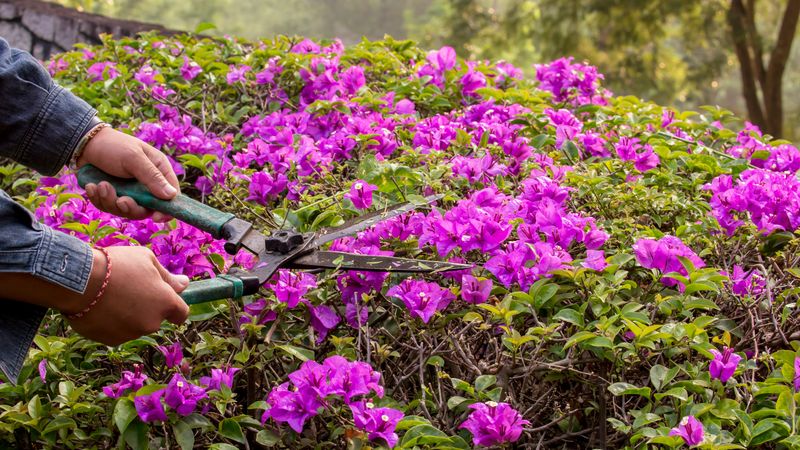
Bougainvillea blooms on new growth, and that single fact should shape every pruning decision you make between now and September. When a flush of bracts fades and the display looks spent, light pruning or pinching just behind the old flower clusters can prompt the plant to push out fresh lateral shoots. Those new shoots are where the next round of color will appear. The timing matters: prune after the flush has clearly finished, not while bracts are still developing or coloring up.
NC State Extension confirms that bougainvillea flowers on new growth and that selective pruning encourages branching. The key word is selective. Light pinching after a finished flush is very different from heavy renovation pruning, which removes large portions of established stems and forces the plant to spend weeks or months rebuilding structure before it can flower again. UF/IFAS Gardening Solutions recommends major pruning after flowering or before new growth resumes, not during the active summer display period when the goal is continued color.
Constant shearing is another trap to avoid. UC ANR guidance on bougainvillea notes that continuous heading-back can create dense, compact foliage at the expense of the flowering growth you actually want. The stop signal is straightforward: if bracts are still forming or coloring, leave those stems alone. Save the pruning for after the show is clearly over on that branch.
One more thing worth repeating every time pruning comes up with bougainvillea: the plant has sharp thorns, and they catch skin and clothing without warning. Wear heavy gloves, cover your arms with long sleeves, and handle cut stems carefully. A minor scratch from a bougainvillea thorn can turn into a more serious wound if you are moving quickly or working in a tangled section of the plant.
Feed conservatively when the goal is color
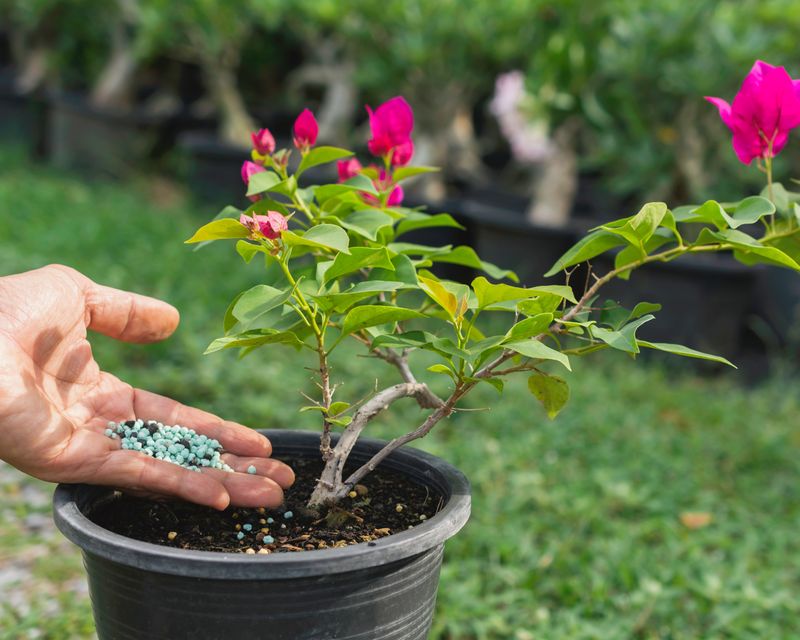
Fertilizer is easy to overdo with bougainvillea, and the consequences lean in the wrong direction. Excess nitrogen pushes the plant toward lush, dark green foliage and away from the colorful bract production most Texas gardeners are after. UF/IFAS Gardening Solutions warns that overfertilizing does not reliably trigger more blooms and can actually work against flowering by encouraging vegetative growth instead.
A balanced fertilizer applied at label-directed rates is a reasonable supporting step when nutrition is genuinely needed, such as for a container plant that has been in the same mix for a long time or a plant showing pale, weak growth. A product labeled specifically for bougainvillea or flowering tropicals can also work, provided you follow the directions rather than doubling the dose. What does not hold up is the idea that a high-phosphorus fertilizer functions as a guaranteed bloom switch. Phosphorus plays a role in plant nutrition, but applying extra phosphorus will not compensate for poor light, waterlogged soil, or a plant that simply has not had time to push new growth.
Fertilizer works best as a supporting tool in an otherwise sound care routine, not as a substitute for it. If your bougainvillea is getting full sun, draining well, and following a sensible dry-side watering pattern, a modest, correctly timed feeding can help maintain the energy the plant needs to keep producing new growth through summer. If those other conditions are not in place, more fertilizer is unlikely to help and may make things worse.
Treat September color as a possibility, then prepare for freezes
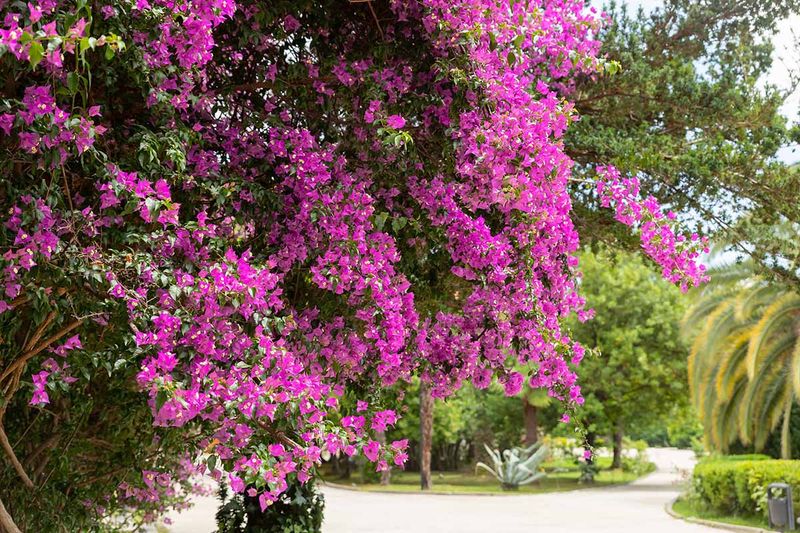
September color from a Texas bougainvillea is a real possibility, but it is worth understanding what that actually means. Individual bracts fade over time, and what you see in September is more likely continued or renewed flowering in fresh flushes rather than one unchanged display that has been holding on since May. Texas Master Gardener material describes bougainvillea as capable of blooming from late spring into early autumn, while noting that cultivar, sunlight, heat, water management, pruning, and winter damage all influence actual performance. No single summer routine guarantees a result.
Texas also covers a lot of ground climatically. In extreme southern Texas and along the Gulf Coast, bougainvillea can stay outdoors year-round with reasonable reliability. In colder parts of the state, including much of Central and North Texas, freeze exposure is a real annual threat. Texas Master Gardener Earth-Kind plant guidance specifically identifies outdoor bougainvillea as most reliable in the southernmost regions and recommends winter protection elsewhere.
NC State Extension confirms that bougainvillea is frost-sensitive, and winter injury can affect the following season’s growth and bloom potential significantly.
The practical takeaway for right now is to maintain the monitored moderate dry-down routine through the rest of summer, support new growth with conservative care, and start thinking about freeze protection well before the first cold front arrives. A successful August does not cancel out a damaging November freeze. Keep the care consistent, watch for new growth that signals another flush is building, and have a plan for your containers or landscape plants before the Texas weather shifts.