
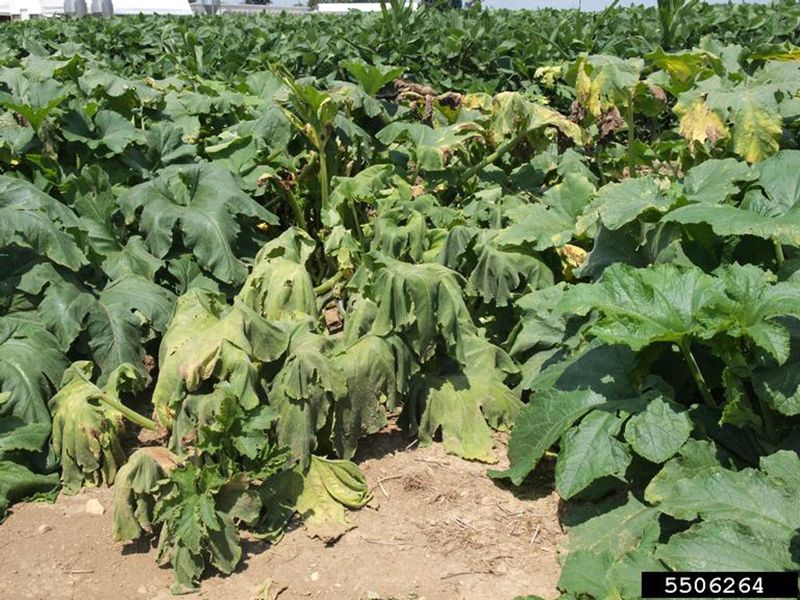
Walking out to your cucumber bed on a hot July morning and finding a vine that looks completely collapsed is a genuinely unsettling sight, especially when you watered just yesterday. The instinct to grab the hose is understandable, but progressive wilting that keeps getting worse despite moist soil can point to something happening inside the plant’s water-conducting tissue rather than in the ground. Cucumber beetles can carry a bacterium called Erwinia tracheiphila and pass it along while feeding, sometimes weeks before any visible symptoms appear. Knowing the difference between a thirsty plant and an infected one changes everything about what you do next.
First decide whether the wilt is temporary or progressive
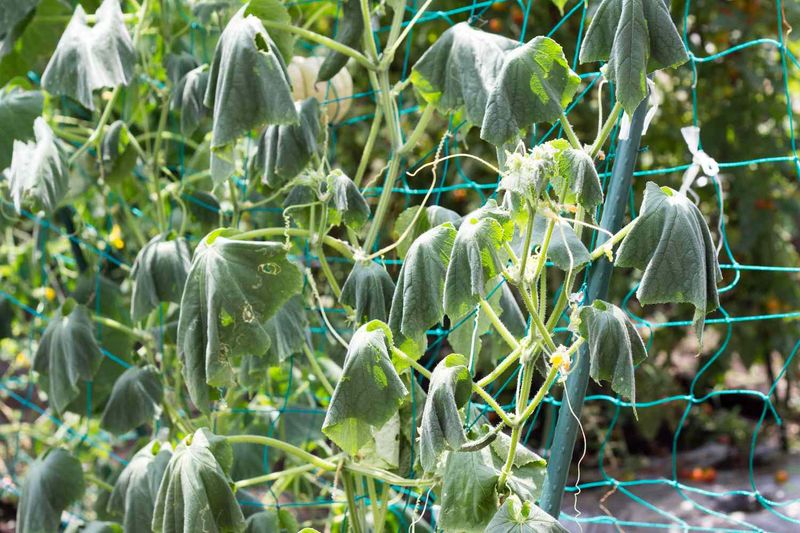
Midsummer heat can cause cucumber leaves to droop noticeably in the middle of the day, and that alone is not a cause for alarm. When soil moisture is genuinely adequate and a plant wilts during the hottest hours but recovers fully by the next morning, the most likely explanation is temporary heat stress rather than disease. A plant going through that cycle repeatedly, without any sign of progression, may simply need consistent watering and some afternoon shade rather than any kind of disease investigation.
Bacterial wilt tends to behave differently. According to UMN Extension’s bacterial wilt guide, early symptoms often include leaves that look dull or grayish before they wilt, and the wilt typically starts on individual leaves or runners before spreading to the entire vine over days or weeks. A plant that does not recover overnight, or where the wilting area keeps expanding, deserves closer attention regardless of how recently it was watered.
Adequate soil moisture does not rule out a vascular disease, but wilting alone does not prove one either. The UMN plant diagnostic tool for cucumber wilting lists multiple possible causes, from heat and drought to root problems to disease. The most useful first step is simply watching the plant overnight and checking whether the wilt is recovering or progressing before drawing any conclusions or changing your watering routine.
A cucumber beetle may have started the problem weeks earlier
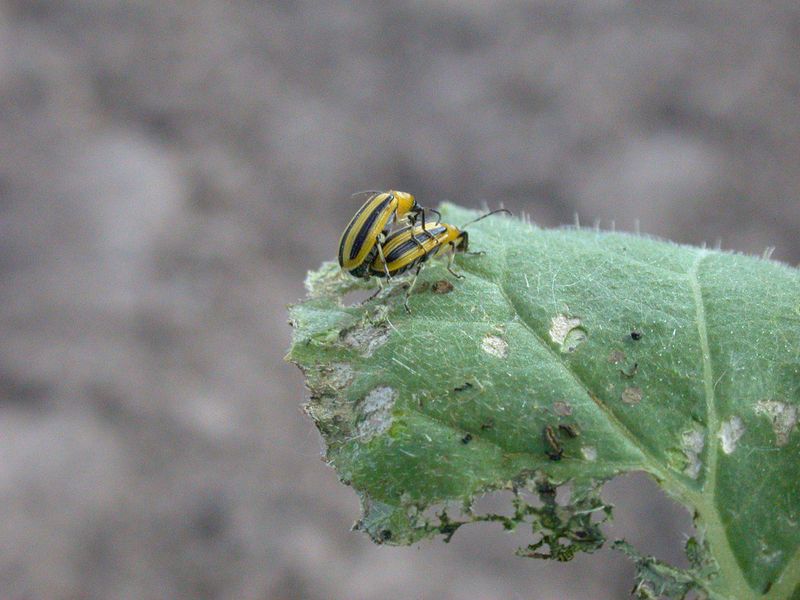
One reason bacterial wilt catches gardeners off guard is the gap between when infection happens and when symptoms appear. The bacterium responsible, Erwinia tracheiphila, is spread primarily by striped and spotted cucumber beetles that have fed on infected plant material. When an infected beetle feeds on a healthy plant, it can introduce the bacterium through feeding wounds or through contaminated frass left behind on leaf surfaces and stems.
Once inside the plant, Erwinia tracheiphila multiplies inside the water-conducting tissue and can physically obstruct the movement of water up through the stem. That blockage is what produces wilting even when the surrounding soil is moist, because the problem is not a lack of water in the ground but a breakdown in the plant’s ability to move water internally. UMN Extension explains that this vascular disruption is the core mechanism behind bacterial wilt’s progression.
The symptom delay matters for how gardeners interpret a summer collapse. UMN’s vegetable IPM blog notes that symptoms can take one to three weeks to develop after an infection event. A vine that collapses in late July may have been infected in early July or even late June. The beetle that caused the problem may have fed and moved on long before the plant showed any sign of distress, which is why searching for beetles at the moment of collapse does not always turn up the culprit.
Inspect for beetles and compare other possible causes
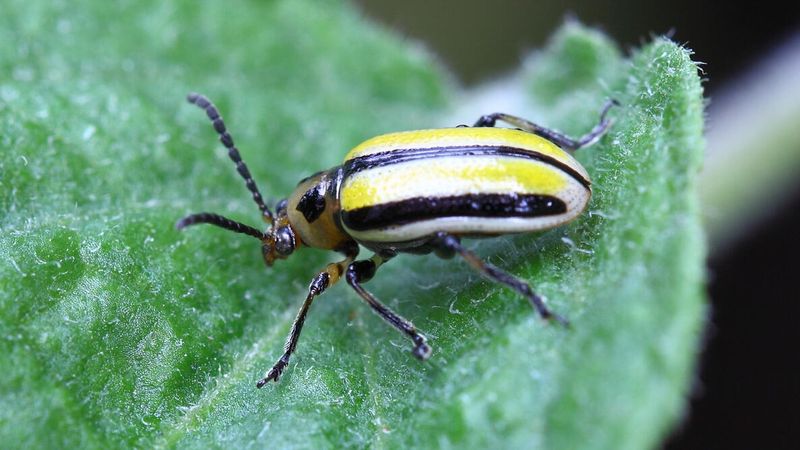
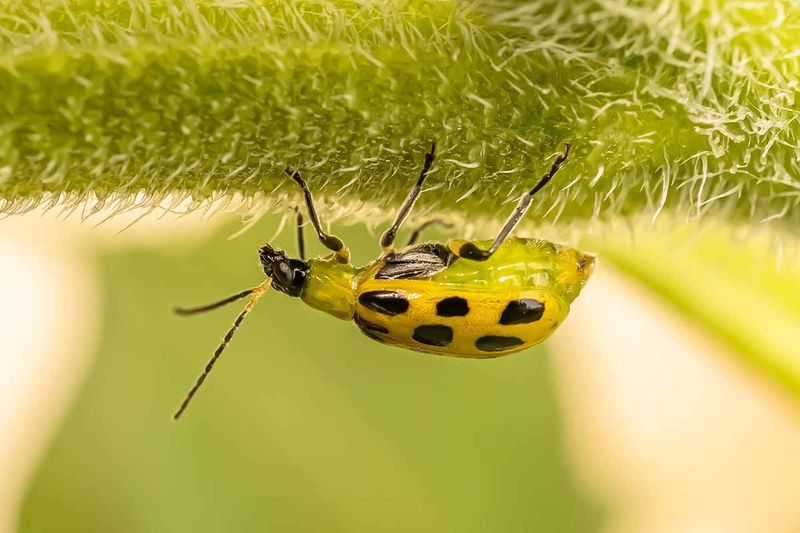
Before settling on bacterial wilt as an explanation, spend a few minutes looking at the whole plant rather than just the wilting leaves. Striped cucumber beetles are small, yellowish insects with three black stripes running lengthwise down their wing covers. Spotted cucumber beetles look similar in size and color but carry a pattern of eleven or twelve black spots instead. According to UC IPM’s cucumber beetle resource, both species feed on cucurbit foliage, flowers, and fruit, and finding them on a wilting plant raises the suspicion of bacterial wilt.
Their absence, however, does not clear the plant, since beetles may have fed and left days or weeks earlier.
Other causes deserve equal consideration before reaching a conclusion. Squash bugs feed on vascular tissue and can produce a wilt that closely resembles bacterial wilt; check the undersides of leaves and the base of stems for clusters of bronze-colored eggs or gray-brown adults. UC IPM’s squash bug guide describes how their feeding disrupts water movement in a way that can look nearly identical to disease-driven wilt. Root problems from overwatering, compacted soil, or fungal pathogens can also cause progressive wilting that does not respond to irrigation.
Cucurbit susceptibility to bacterial wilt is not uniform. Cucumbers and muskmelons are among the most vulnerable crops, while pumpkins and many squash varieties tend to show less severe disease. Watermelon is generally considered resistant. The UMN wilt diagnosis page reinforces that a full look at the plant, including the roots, stem base, and leaf undersides, gives a more reliable picture than any single symptom taken alone.
Use the cut-stem string test as supporting evidence
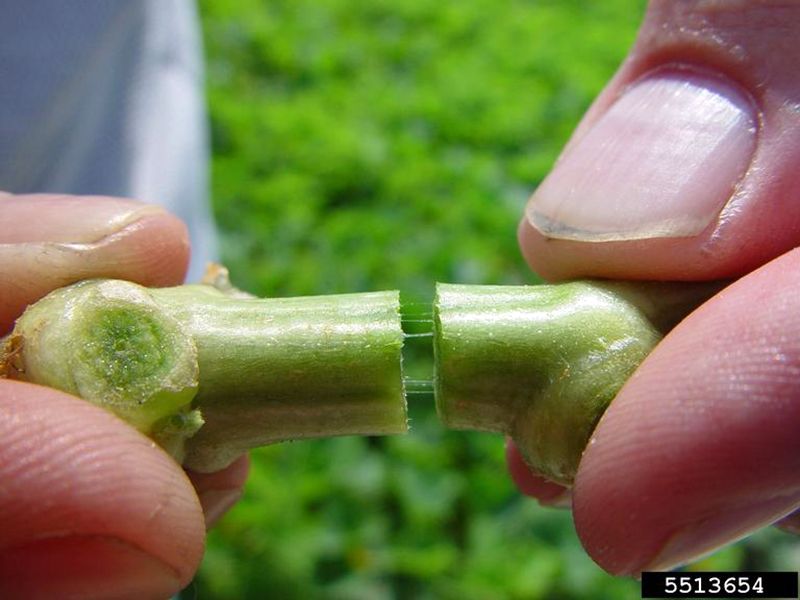
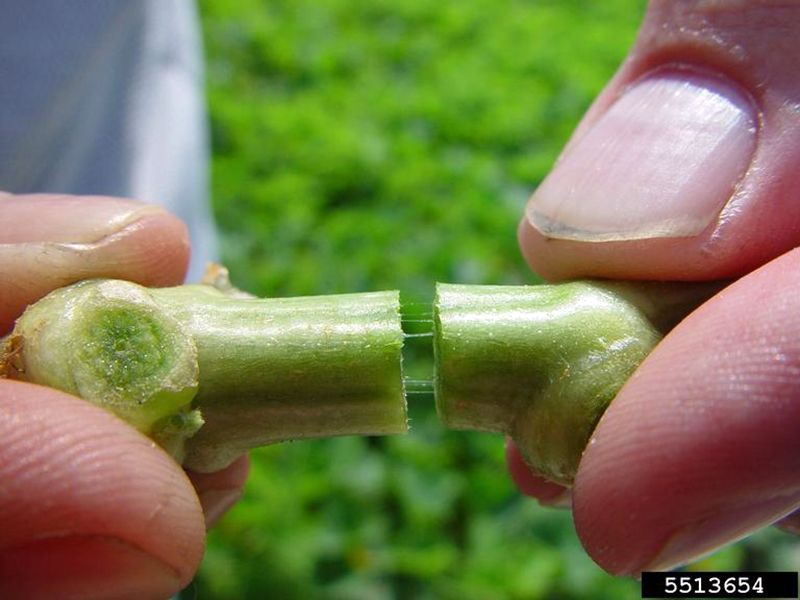
One field check that extension services commonly recommend is sometimes called the cut-stem string test. Cut the stem close to the crown of the plant, press the two cut surfaces firmly together for several seconds, then slowly pull them apart while watching the gap between the surfaces. If thin, thread-like strands of sticky material stretch between the two cut ends as they separate, that is a sign consistent with bacterial wilt in cucumbers.
The limits of this test are just as important as the method itself. UMN Extension notes that the strands are not always visible even when the disease is present, so a clean separation between the cut surfaces does not rule out bacterial wilt. The test provides supporting evidence rather than a definitive answer, and its reliability can vary with how advanced the infection is and where in the stem the cut is made.
When the distinction between bacterial wilt and another cause matters enough to change a management decision, laboratory diagnosis through a plant disease clinic is a more reliable option than any field test. Many land-grant university extension services offer plant disease diagnostic labs that can confirm the presence of Erwinia tracheiphila. Treat a positive-looking string test as a reason to act on strong suspicion, not as a confirmed diagnosis, and treat a negative result the same way rather than using it to dismiss the possibility entirely.
Remove a likely infected vine instead of trying to spray it back
Once you have gone through the inspection steps and bacterial wilt seems like the most likely explanation, the appropriate response is removal rather than treatment. UMN Extension is direct on this point: there is no reliable curative treatment for a cucumber plant already infected with bacterial wilt, and pesticides will not reverse a vascular infection. Leaving a strongly suspected infected vine in the garden does not give it a chance to recover; it keeps a potential source of the bacterium within reach of beetles that can carry it to other plants.
Pull the plant out carefully, bag it, and dispose of it in the trash rather than the compost pile. Composting infected material does not reliably eliminate the bacterium, and adding it back to the garden bed later risks reintroducing the pathogen. After handling the infected vine, wash your hands and any tools that contacted the plant before working with healthy cucumbers or other cucurbits nearby.
Watering still matters, but its role shifts depending on what is causing the wilt. For a plant confirmed or strongly suspected to have bacterial wilt, additional irrigation will not help because the problem is inside the vascular tissue, not in the soil. For plants that are wilting from heat or drought, consistent moisture remains the right response. The UMN diagnostic page lists heat and drought as genuine causes of cucumber wilt, so adequate watering for the remaining healthy vines is still worth maintaining throughout the season.
Protect healthy cucumbers before beetles feed again
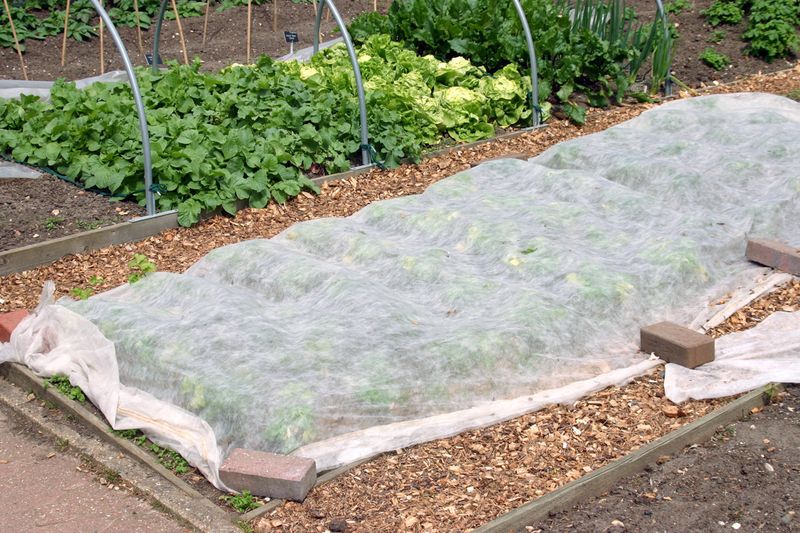
After removing a suspected infected plant, attention shifts to the cucumbers that still look healthy. Floating row covers are one of the most practical nonchemical tools available for keeping cucumber beetles away from young plants. A lightweight fabric cover draped over seedlings and secured at the edges creates a physical barrier that beetles cannot easily penetrate, reducing the chance that any beetle carrying Erwinia tracheiphila will reach the foliage.
The pollination tradeoff is real and cannot be ignored. Cucumbers need insect pollination to set fruit, so covers that stay in place through the flowering stage will reduce or eliminate fruit production unless the gardener hand-pollinates or uses another appropriate strategy. Iowa State Extension’s row cover research found that delaying cover removal on muskmelon by about ten days after flowering began reduced bacterial wilt incidence in some trials, but that finding applies to muskmelon under specific research conditions and should not be assumed to work identically for every cucumber variety or home garden situation. The practical takeaway is that covers offer protection early in the season, and the timing of removal requires a deliberate decision rather than a default.
Monitoring is a useful complement to physical barriers. Walk the garden regularly and look for beetles on foliage, flowers, and fruit. Kaolin clay, a fine mineral powder applied to leaf surfaces, may deter beetle feeding when applied before significant damage begins, according to UMN Extension’s cucumber beetle page. Kaolin does not kill beetles and will not help a plant that is already wilting, so it functions as an early-season deterrent rather than a rescue tool.
Use insecticides only for targeted, labeled prevention
Chemical controls occupy a narrow, specific role in managing cucumber beetles. Insecticides applied to uninfected plants may reduce beetle feeding and lower the chance that a beetle will transmit Erwinia tracheiphila to a healthy vine, but they cannot cure a plant that is already infected. Spraying a wilted cucumber with insecticide in hopes of reversing the disease is not an effective strategy and will not produce a recovery.
The decision to use an insecticide should be based on monitoring, not on seeing a single beetle. Regional IPM programs use action thresholds that vary by crop, plant age, and local beetle pressure. UMN Extension gives an example threshold of roughly one-half beetle per seedling or one beetle per older cucumber or melon plant as a point where treatment may be warranted in Minnesota, but other extension programs use different numbers. Applying those specific thresholds to a garden in a different region or at a different growth stage may not be appropriate.
Before using any pesticide, confirm that the current product label specifically lists both cucumber beetles and cucumbers as covered uses. EPA pesticide safety guidance emphasizes that the label is legally binding and must be followed exactly. Observe the preharvest interval listed on the label before harvesting cucumbers after any application. Avoid applying products to blooming plants or when bees are actively foraging if the label prohibits it, and take steps to prevent spray from drifting onto neighboring plants, water sources, or areas where pollinators are present.
EPA’s label-reading guide and EPA’s pollinator protection resources both provide practical guidance on these precautions. Nonchemical options such as row covers and monitoring should always be considered before reaching for a spray.
Reduce future risk without promising guaranteed protection
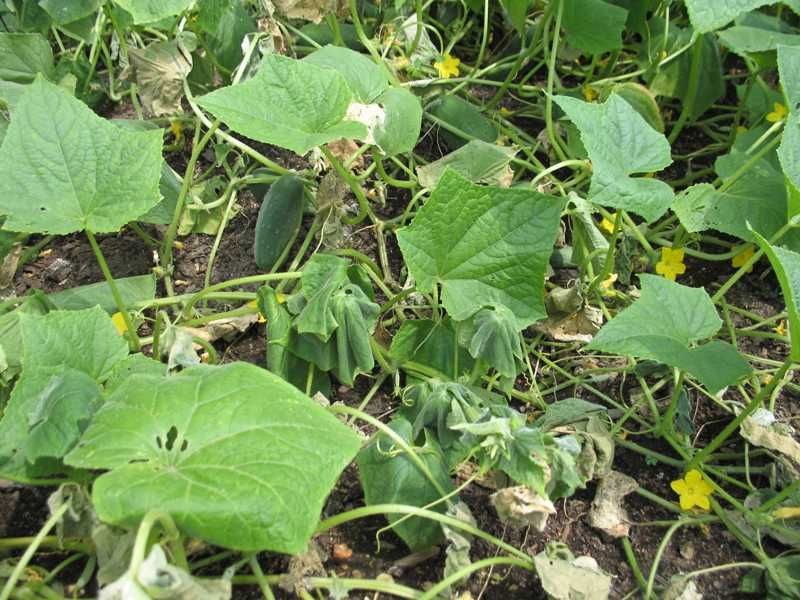
A practical decision path for next season starts with the same observation skills used this year. Check whether a wilting vine recovers fully overnight before assuming disease, and watch for progression across multiple leaves or runners before removing a plant. Inspect for striped and spotted cucumber beetles as well as competing explanations like squash bugs, root problems, and heat stress. Use the cut-stem string test as one piece of supporting information rather than a final verdict, and remove a strongly suspected infected plant promptly rather than waiting for certainty.
Crop rotation and tolerant varieties are worth considering as part of a broader strategy, but neither one guarantees protection. Penn State Extension notes that mobile adult beetles can move into new planting areas regardless of where cucumbers were grown the previous year, and that varietal tolerance alone is not sufficient as the sole management tool in high-pressure situations. Some cultivars show reduced susceptibility, but performance varies and resistance is not absolute.
Beetle species and disease pressure also differ across the country. UC IPM’s cucurbit beetle guide points out that species composition and disease risk in the western United States differ from Midwest and Northeast patterns described in much of the published extension guidance. Local extension resources remain the most reliable source for region-specific thresholds and management recommendations. The clearest protection comes from diagnosing before acting, because a plant wilting from heat stress and a plant infected with bacterial wilt call for completely different responses.
UMN Extension’s bacterial wilt page is a solid starting reference for any gardener working through the diagnosis.