
Growing a fig tree in a container gives you control over placement, portability, and even winter protection, but that convenience comes with a tradeoff: the roots eventually run out of room. The good news is that a snug pot does not automatically harm your tree – moderate root restriction can actually keep a fig compact and may support earlier or more efficient fruiting.
The trouble starts when crowding becomes severe, starving roots of water and nutrients and leaving the tree genuinely stressed. Learning to tell the difference between a healthy, well-fitted container and a dangerously overcrowded one is the most useful skill a container fig grower can develop.
A tight pot can stress a fig—but it is not automatically the cause
Container gardeners often assume that any fig showing weak growth or skimpy fruiting must be root-bound and needs a bigger pot right away. That assumption skips an important step.
University of Maryland Extension guidance on growing figs notes that restricting the root system can help keep figs compact and may improve yield efficiency or shorten the time to harvest. A fig sitting comfortably in a moderately sized container is not necessarily suffering.
The real concern is severe crowding, not a tight fit in general. When roots fill every corner of a pot and form a dense, tangled mat, they can struggle to absorb enough water and nutrients to keep up with the canopy above.
A Japanese study of root-zone-restricted figs found that fruit production under restricted soil volumes varied considerably depending on how much space was actually available and how well water needs were met. Restriction becomes a problem when the root mass can no longer support the tree’s demand.
The practical rule is straightforward: inspect the root ball and look at the tree’s watering pattern and growth together before concluding that the container is the problem. UGA Extension container plant guidance identifies circling roots, roots emerging from drainage holes, rapid drying, and declining vigor as useful warning signs – but warns against treating any single symptom as proof.
Start with observation, not with a new pot.
Use visible symptoms as clues, not as proof
Certain above-ground signals are worth paying attention to because they can point toward a root problem worth investigating. A pot that dries out much faster than it used to, a tree that has become noticeably top-heavy, or roots visibly pushing through the drainage holes are all reasonable prompts to take a closer look.
UGA Extension lists slowed new growth, a distorted or cracking container, and surface roots as additional clues that the root system may be pushing its limits.
None of those signs, however, are proof by themselves. Rapid drying can result from hot, windy weather rather than a packed root ball.
Slowed growth might reflect insufficient light, drought stress, or the natural rhythm of the tree’s season. University of Minnesota Extension winter plant guidance echoes this caution, noting that several container problems can produce overlapping symptoms.
Yellow leaves and poor fruiting deserve special mention because gardeners often read them as root-binding, but they rarely are on their own. UMD Extension container vegetable guidance points out that yellowing can stem from overwatering, poor drainage, nutrient deficiencies, or pest damage just as easily as from a crowded root zone.
Treat every visible symptom as a reason to investigate further, not as a diagnosis in itself.
Inspect the root ball before deciding to repot
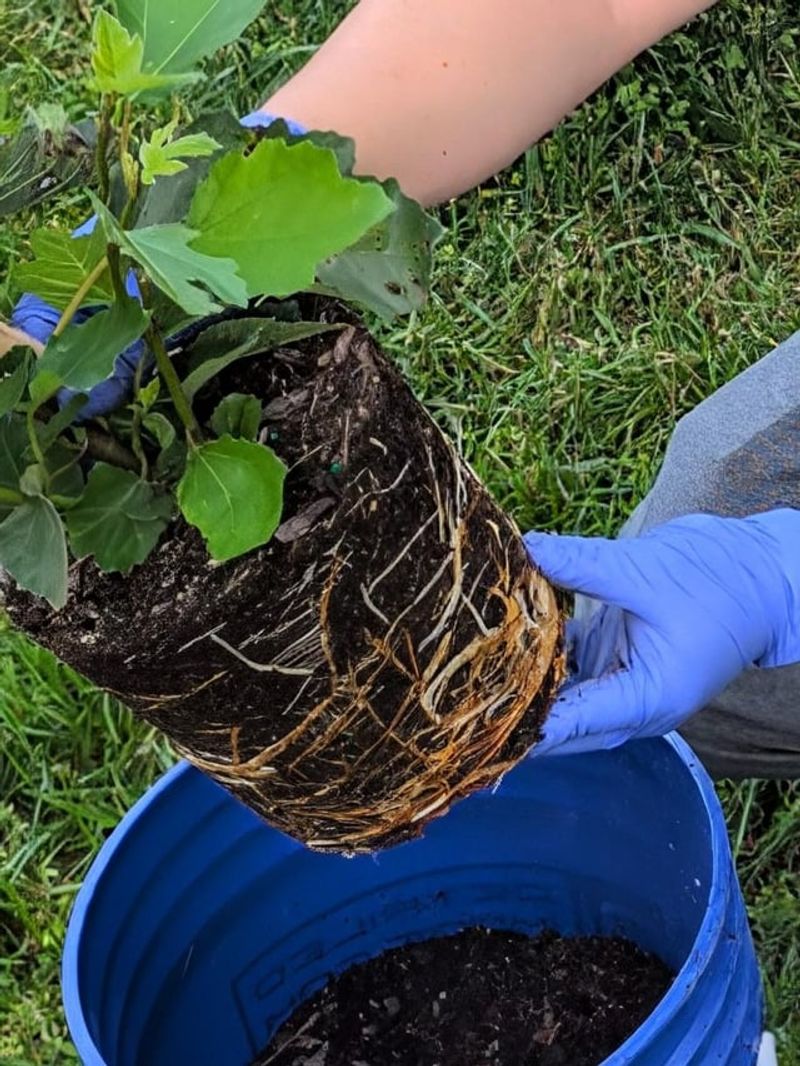
Pulling the tree out of its container and looking at the roots directly is the most reliable step you can take. No above-ground symptom tells the full story the way a root ball inspection does.
To do this safely, tip the pot on its side, support the main stem or trunk near the base, and ease the root mass out gently rather than yanking from the top.
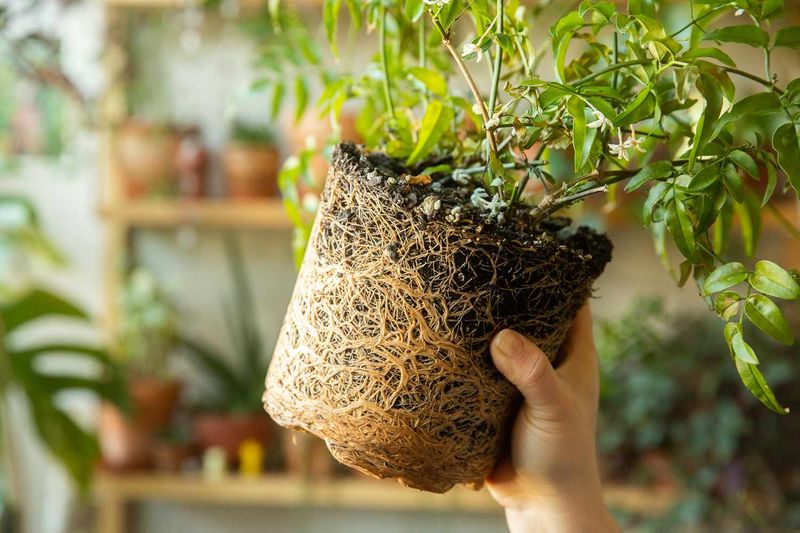
Once the root ball is exposed, you are looking for specific evidence of severe crowding. UGA Extension container guidance describes the clearest signs: a dense mat of roots circling the interior wall or bottom of the pot, roots that have turned upward and begun growing back on themselves, and very little loose potting medium remaining between the roots.
When you can barely see any mix and the roots have taken on the shape of the container, crowding has become severe enough to act on.
Roots emerging from the drainage holes are a familiar warning sign, but they do not automatically confirm severe binding. A single root exploring the drainage hole is common and may not reflect a fully packed interior.
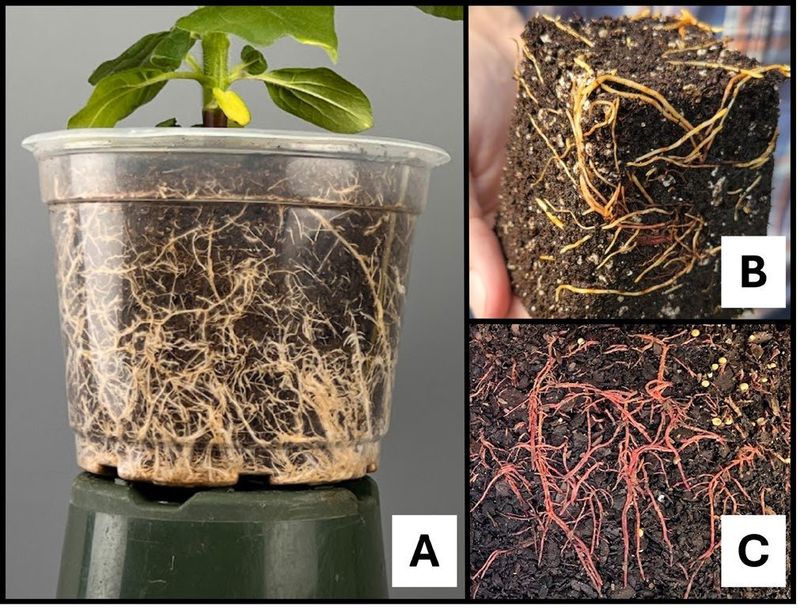
University of Maryland Extension reinforces that the full root ball picture matters more than any one indicator. If the interior shows open, moist medium and healthy white root tips, the tree may not need repotting yet even if a root or two has found the hole.
Choose a moderately larger container, not the biggest one
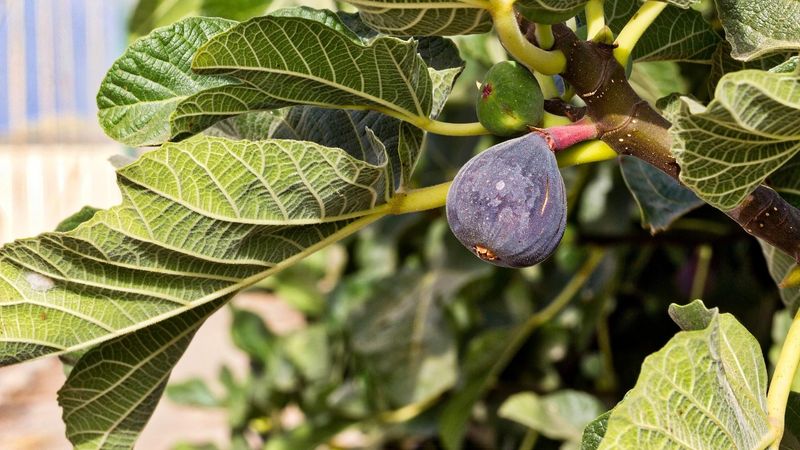
Once a root inspection confirms severe crowding, the next decision is container size. The temptation is to go large so the tree has plenty of room to grow, but that approach can backfire.
UGA Extension woody container guidance recommends moving to a pot only moderately larger than the current one, with a general increase of roughly 3 to 4 inches in diameter as a reasonable starting point for woody plants.
That guideline needs to be matched to your specific tree. A large, fast-growing fig with a substantial root mass may benefit from the full 4-inch step up, while a smaller or slower-growing tree might do fine with 2 to 3 inches.
The goal is to give roots room to expand into fresh medium without leaving a large volume of unused mix sitting wet around a relatively small root ball. Excess wet medium around the roots can raise the risk of root disease.
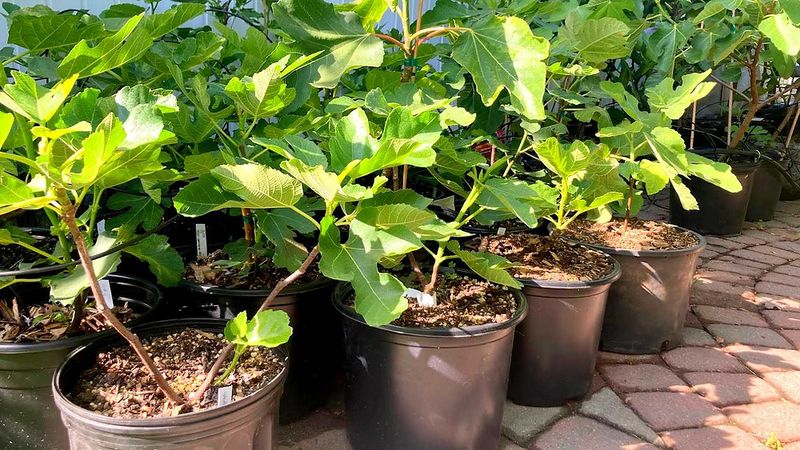
University of Maryland Extension suggests a minimum container size of approximately 15 gallons for figs and notes that larger containers can support larger plants and potentially heavier crops. That guidance reflects regional experience in Maryland and is a useful benchmark, not a universal rule for every cultivar, tree size, or Southern climate.
Larger pots also become significantly heavier and harder to move, which matters if you need to shift the tree for winter protection or to follow the sun.
Build a well-drained home for the roots
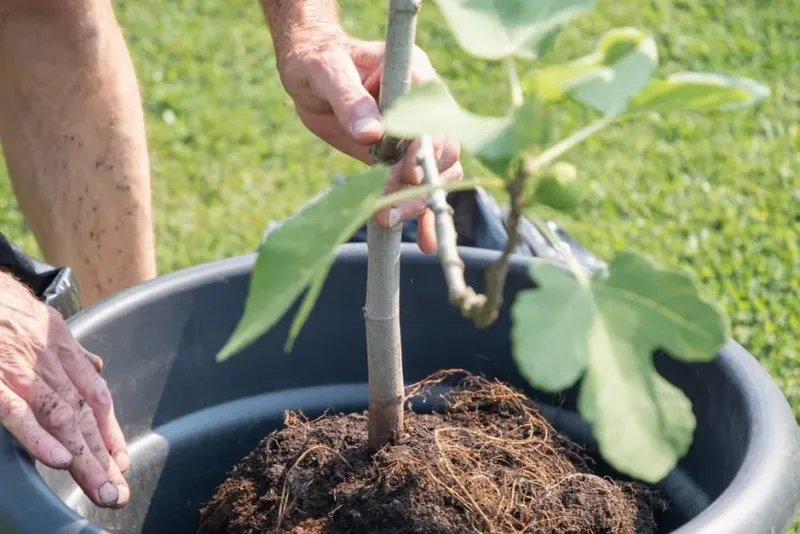
Preparing the new container correctly matters as much as choosing the right size. Start with a porous commercial potting mix designed for containers rather than dense garden soil pulled from a bed.
UGA Extension container media guidance specifies that a well-drained medium is essential for healthy container roots, and garden soil compacts over time in a pot, reducing air movement and drainage.
Check that every drainage hole in the new container is fully open and unobstructed before you add any medium. A common shortcut is to lay gravel or rocks across the bottom, with the idea that it will improve drainage.
UMD Extension container growing guidance explains why that does not work: a layer of coarse material beneath fine potting mix raises the saturated zone upward rather than moving water out faster, which can leave roots sitting in excess moisture longer than they should.
Root crown placement is the final preparation detail. UGA Extension advises keeping the root crown – the point where the trunk transitions into the main root system – at or slightly above the finished medium surface.
Burying the trunk base keeps that area consistently wet and can increase the risk of crown rot and other fungal problems. University of Maryland Extension fig guidance supports this positioning as a basic practice for healthy container figs.
Loosen crowded roots without removing healthy root mass
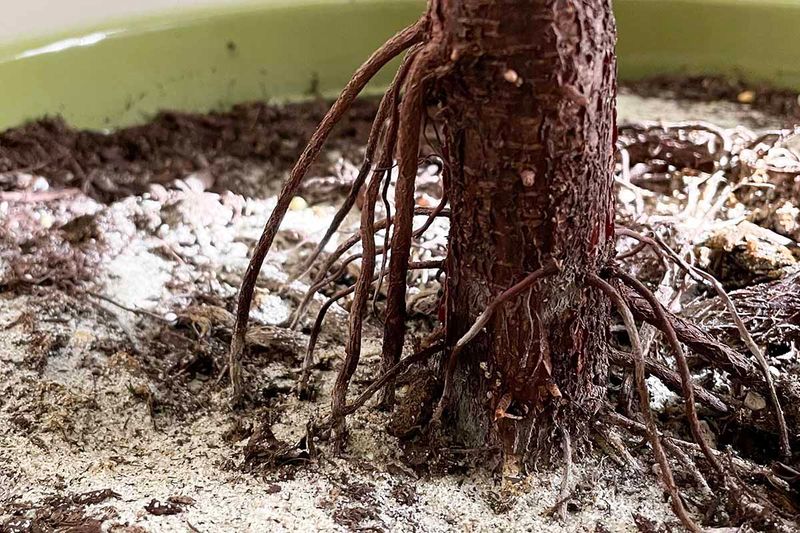
With the new container prepared and the tree out of its old pot, the root work can begin. Wear gloves before handling branches or roots if your skin is sensitive – fig sap can cause irritation on contact.
Once protected, hold the root ball with both hands and use your fingers or a blunt tool to gently tease apart the outer layer of roots, loosening the mat that has formed against the pot wall.
UGA Extension guidance for woody container plants recommends removing or trimming only roots that are dead, visibly damaged, or tightly circling in a way that could eventually girdle the trunk. Healthy white or tan roots should stay intact.
Cutting away large portions of healthy root mass is not safe as general practice and can set the tree back significantly during the recovery period.
Once the outer roots are loosened and any problem roots addressed, position the tree in the new container so the root crown sits at or just above the finished medium level. Add the prepared potting mix around the sides, pressing it gently to eliminate large air pockets without compacting it.
University of Maryland Extension notes that the goal after repotting is to give roots immediate contact with fresh, moist medium so they can begin extending outward without delay.
Adjust watering and timing for Southern conditions
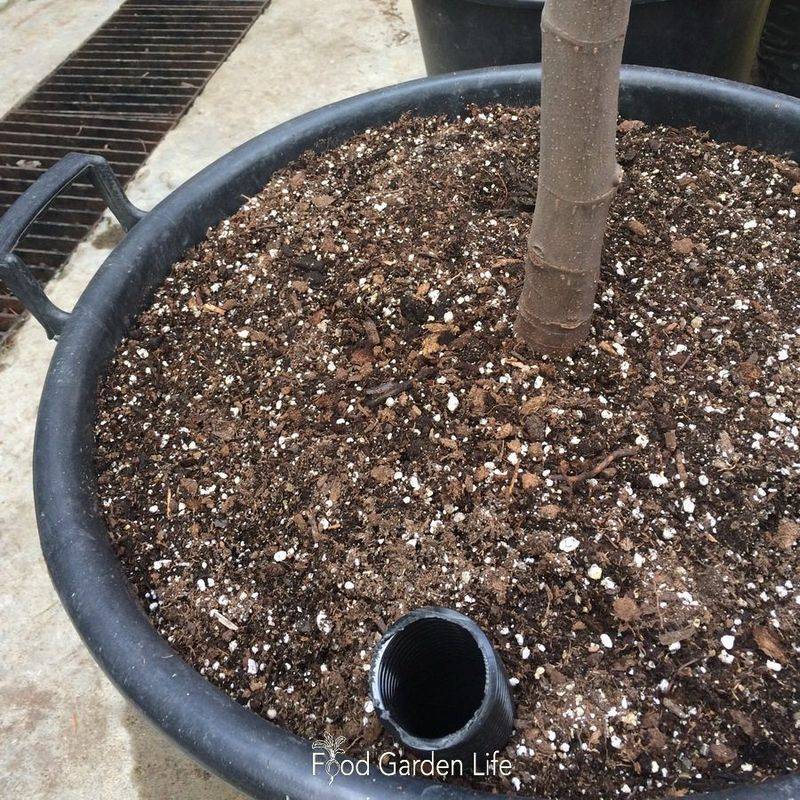
Right after repotting, water the tree slowly and thoroughly until water flows freely from every drainage hole. The goal is to moisten both the original root ball and the new surrounding medium evenly, since dry pockets in the new mix can leave roots without contact moisture.
University of Maryland Extension advises letting the mix become somewhat dry near the surface before watering again, rather than keeping the container continuously saturated.
In the Southern U.S., that balance requires active attention. Texas A&M AgriLife Extension describes figs as having shallow, fibrous roots that are relatively sensitive to drought stress, and containerized roots experience greater heat and temperature swings than roots in the ground.
During hot, windy Texas summers, a container can dry faster than you expect, and repeated wilting during fruiting can reduce crop quality. Check moisture daily in peak heat and use container color and placement to reduce heat load on the pot walls.
UMD Extension container guidance reinforces that neither chronic drought nor continuous saturation serves container plants well.
Timing the repotting thoughtfully also helps recovery. Dormancy or the period just before active growth resumes gives roots the best chance to establish in new medium before the canopy makes heavy demands.
In Florida, where UF/IFAS notes that figs may not experience a strong dormant period in warmer parts of the state, a fixed calendar date matters less than choosing mild weather, monitoring the root condition, and committing to reliable aftercare. EDIS guidance for Florida edible figs also emphasizes that heat management, drainage, and cultivar selection are ongoing priorities rather than one-time decisions.
UGA Extension supports dormancy-period repotting as a general best practice when conditions allow it.
When the roots look healthy, investigate other causes
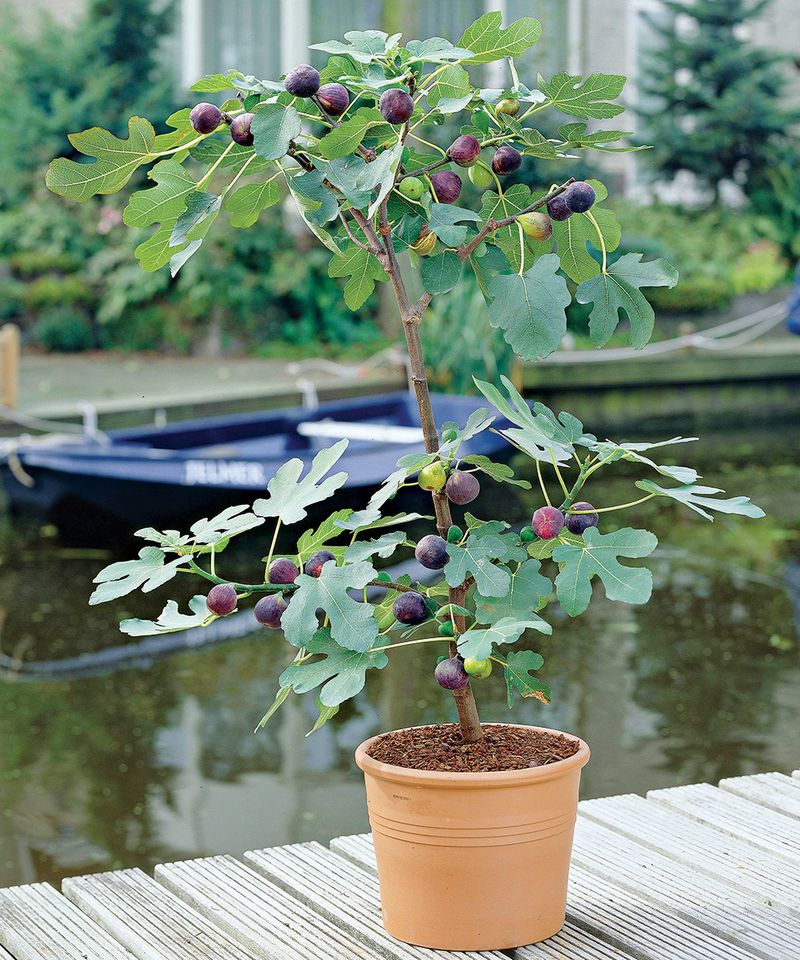
A root inspection that turns up a healthy, open root ball with good medium remaining is genuinely useful information – it tells you the container is not the problem and redirects your attention to other possible causes. Poor fruiting and weak growth in a container fig can come from many directions.
Texas A&M AgriLife Extension emphasizes drought sensitivity as a primary concern for figs in hot climates, while insufficient sun, overwatering, excessive nitrogen fertilizer, winter injury, cultivar characteristics, tree age, pruning timing, and crop load can all reduce performance independent of pot size.
UF/IFAS gardening solutions for Florida figs and EDIS Florida edible fig guidance both note that fruiting behavior and pruning response vary considerably by cultivar and local climate, meaning a tree that fruits poorly in one situation might perform well with a different variety or management approach. Before repotting, rule out the simpler fixes: check light exposure, review your watering log, and consider whether recent pruning or a heavy prior crop may have temporarily slowed the tree.
Container culture offers real advantages – portability, easier winter protection, and better control over soil conditions – but University of Maryland Extension points out that it also demands more frequent watering and root management than in-ground planting. Root evidence, not the pot’s age or last season’s harvest, should drive the repotting decision.
A fig that passes its root inspection and gets the right light, water, and nutrition often surprises its grower with a much better season ahead.